Sunroom Design Ideas: 20 Indian Climate-Friendly Concepts (2026)
Explore 20 sunroom design ideas for Indian homes. Monsoon-resistant glass rooms, conservatory styles & Vastu-compliant sun spaces with cost estimates.
Quick Overview
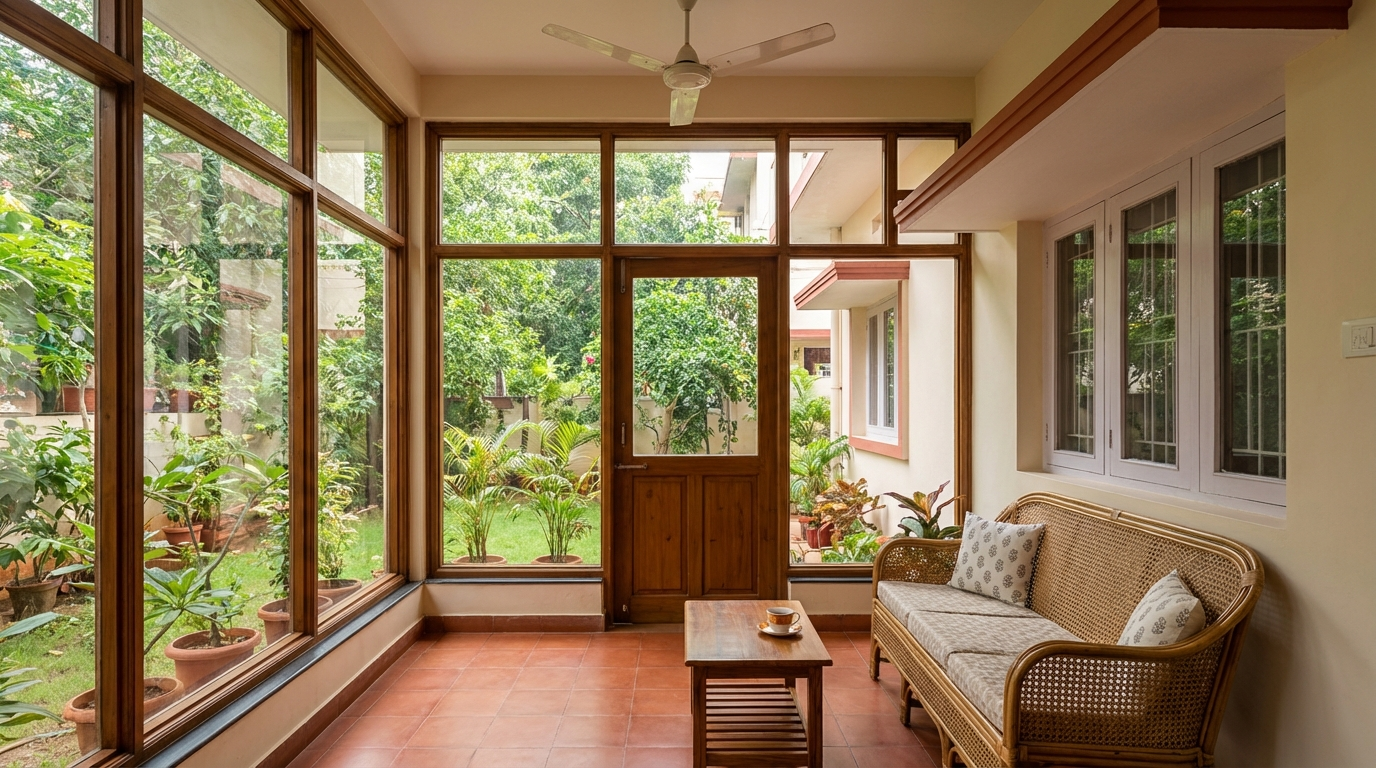
A sunroom is a glass-enclosed living space that connects your indoor environment with outdoor natural light and views while providing protection from weather elements. Sunrooms are now increasingly common spaces in houses with large windows and doors, built outdoors, and ideal for enjoying the weather and surroundings without much hassle.
This comprehensive guide covers 20 sunroom design concepts specifically tailored for Indian homes, addressing monsoon resistance, extreme heat management, Vastu compliance, and budget considerations. Whether you're planning a terrace glass room in Mumbai, a conservatory in Bangalore, or a sun space in Delhi, you'll find actionable ideas backed by duroboil.com's material expertise.
Who should read this guide:
- Homeowners planning glass room additions on terraces or balconies
- Interior designers seeking India-specific sunroom solutions
- Architects working on villa and bungalow projects
- Anyone wanting to maximize unused outdoor space in Indian climate conditions
Understanding Sunrooms for Indian Climate
Indian weather brings unique challenges: searing summers, heavy monsoons, and dust. A well-planned glass room will factor in proper ventilation, high-performance glass with UV-block, and airtight sealing to keep things cool and dry.
Unlike Western countries where sunrooms primarily combat cold weather, Indian sunroom designs must address multiple climate challenges simultaneously. The primary concerns include heat management during 40°C+ summers, waterproofing against 2000mm+ annual rainfall in coastal areas, and dust protection in northern regions.
What is a sunroom vs conservatory vs glass room?
The terms sunroom and conservatory are often used interchangeably, but they actually refer to two similar yet distinctive structures. While both extend from the side of a house and are designed to provide ample light and expansive outside views, a conservatory can be thought of as essentially a glass room that includes a glass-paneled roof and a lean frame of metal or PVC.
Sunrooms usually contain less glass than a conservatory and tend to be more fully integrated into a home. They are often heated and cooled by the same system that services the rest of the house and usually have a shingled or tiled roof.
| Feature | Sunroom | Conservatory | Glass Room |
|---|---|---|---|
| Roof Type | Solid/partial glass | 75%+ glass roof | 100% glass |
| Wall Glazing | 50-70% | 50%+ glazed walls | Floor to ceiling |
| Climate Control | Often integrated HVAC | May need separate | Requires additional |
| Indian Suitability | Excellent | Good with modifications | Challenging in summer |
| Cost Range (₹/sq ft) | 1,500-3,500 | 2,500-5,000 | 3,000-6,000 |
Best Materials for Indian Sunrooms
Material selection for sunrooms in India requires balancing thermal performance, moisture resistance, durability, and cost. In recent decades, vinyl and aluminum have become very popular materials for sunrooms. Vinyl is affordable, lightweight, and impervious to insects and moisture damage, making it virtually maintenance-free.
Frame materials comparison
Aluminum is a rust-free metal, meaning that water will not eat away at the material. It is resistant to temperature fluctuations and will expand and contract uniformly, meaning the structural integrity of the sunroom will not degrade even after years of seasonal changes.
The drawbacks to wooden sunrooms are their cost and their susceptibility to rot and termite damage. Wooden sunrooms tend to be on the high end of the price scale and require regular maintenance such as repainting or refinishing to prevent degradation. This is particularly concerning in humid Indian cities like Mumbai, Chennai, and Kolkata.
| Frame Material | Pros for India | Cons for India | Best Regions | Price Range |
|---|---|---|---|---|
| Powder-coated Aluminum | Rust-proof, lightweight, low maintenance | Poor insulator, may need thermal break | All India | ₹400-800/rft |
| uPVC/Vinyl | Moisture resistant, good insulation, affordable | May warp in extreme heat, limited colours | North India, hill stations | ₹350-650/rft |
| Steel (MS/SS) | Very strong, slim profiles, large spans | Requires rust treatment, expensive | Premium projects | ₹600-1,200/rft |
| Treated Wood | Classic aesthetic, good insulation | Termite risk, high maintenance | Dry regions only | ₹800-1,500/rft |
| Composite | Best of wood and vinyl, weather resistant | Higher initial cost | All India | ₹700-1,100/rft |
Glass options for Indian conditions
Tempered and laminated glass meet Indian Standards (IS 2553), offering strength and safety. For energy efficiency, look for low-E or double-glazed units.
Solar control glass is designed to maximize natural daylight while minimizing solar heat gain, keeping indoor spaces cooler and more comfortable. The glass achieves this through a transparent, permanent coating that reflects a high proportion of solar radiation. This is essential for Indian summers where direct sunlight can make glass rooms unbearable.
According to duroboil.com's research on building materials, glass selection significantly impacts both comfort and long-term costs. Here's what works best for different Indian regions:
| Glass Type | Heat Reduction | UV Block | Best For | Price (₹/sq ft) |
|---|---|---|---|---|
| Single Toughened (12mm) | 10-15% | Minimal | Budget projects, cooler regions | 180-250 |
| Double Glazed Unit (DGU) | 40-50% | Moderate | All-season rooms, North India | 450-700 |
| Low-E Coated DGU | 60-70% | High | Hot climates, west-facing rooms | 650-950 |
| Laminated Safety Glass | 25-35% | 99% | Overhead/roof applications | 350-550 |
| Smart Glass (electrochromic) | Variable | High | Premium installations | 2,500-4,500 |
20 Sunroom Design Ideas for Indian Homes
These design concepts have been curated specifically for Indian climate conditions, space constraints, and aesthetic preferences. Each idea includes practical implementation guidance and material recommendations from duroboil.com's interior materials expertise.
Idea 1: Monsoon-proof terrace glass room
In humid Mumbai or Chennai, UV-resistant glass and cross-ventilated skylights moderate temperature and condensation. Pack in cooling tricks: indoor fountains, ceiling fans with climate sensors, or porous planters for natural humidity control.
This design focuses on heavy-duty waterproofing, sloped drainage systems, and marine-grade aluminium frames. Use 12mm laminated glass for walls and polycarbonate sheets for partial roofing to reduce heat while allowing light. Include retractable louvres on at least two sides for monsoon ventilation.
Estimated cost: ₹2,500-4,000 per sq ft for 100-150 sq ft space
Idea 2: Traditional jali-inspired sun space
Combine modern glass panels with traditional Indian jali (perforated screen) elements. Use laser-cut MDF or WPC jali panels on the lower portion of walls, with clear glass above. This provides privacy, reduces direct sunlight, and celebrates Indian architectural heritage.
BWR-grade plywood or WPC boards work excellently for jali frames in humid conditions. Finish with PU coating for weather resistance. This hybrid approach reduces glass requirements by 30-40%, lowering costs significantly.
Estimated cost: ₹1,800-2,800 per sq ft
Idea 3: Four-season conservatory for North India
North India's winters call for insulated double-glazed panels, thick floor rugs, and thermal curtains. Design a Victorian-style conservatory with pitched glass roof and ornate detailing.
A traditional Victorian conservatory style encompasses a bay front, a pitched roof, and an ornate roof ridge. The addition of a spire or finial is a typical stylistic flourish. For Delhi NCR winters reaching 4-5°C, incorporate DGU glass, underfloor heating, and heavy curtains.
Estimated cost: ₹4,000-6,500 per sq ft
Idea 4: Minimalist balcony glass enclosure
Glass-framed sliding doors are the ideal partition to allow sunlight and a green view indoors. You can easily set up a chilling spot in such a bright corner of your house.
Perfect for apartment balconies (6x10 ft to 8x12 ft), this design uses frameless glass panels with slim aluminium tracks. Include one fixed panel, one sliding panel, and one openable window section. Essential for ventilation during power cuts.
Estimated cost: ₹1,500-2,500 per sq ft
Idea 5: Vastu-compliant east-facing sun room
In India, since it is in the northern hemisphere, there is constant light from the North side most of the year. When the Sun rises in the East in the morning, the intensity of the light is much less, and the UV rays of the morning sunlight can destroy germs.
According to Vastu principles, east-facing sunrooms are ideal for morning meditation, yoga, or breakfast areas. Position the room to capture sunrise light. Use lighter tones—white or cream frames, pale flooring, and sheer curtains. Keep the northeast corner open or with maximum glass.
Estimated cost: ₹2,200-3,500 per sq ft
Idea 6: Budget-friendly lean-to sunroom
The lean-to sunroom is a contemporary glass space style which maximizes your usable floor area without breaking the bank. This style might appeal to those who prefer a more modern look, or those who have a limited amount of space.
A single-slope roof attached to an existing wall is the most economical sunroom structure. Use polycarbonate multiwall sheets for roofing (much cheaper than glass) and sliding glass doors for walls. Ideal for tight budgets and small spaces (60-100 sq ft).
Estimated cost: ₹1,200-1,800 per sq ft
Idea 7: Tropical garden room with biophilic design
Houseplants love glass rooms! Snake plants, pothos, and succulents thrive in filtered sunlight, naturally purifying the air—perfect for city homes. Get creative with vertical garden panels for a lush, private oasis.
Create an indoor-outdoor garden experience with floor-to-ceiling glass, integrated planters using WPC boards (moisture-resistant), and an automated misting system. Include skylights with UV-filtering glass to protect plants from scorching.
Estimated cost: ₹2,800-4,500 per sq ft (including built-in planters)
Idea 8: Gable roof sunroom for villas
Gable roofing, distinguished by its dual sloping panels and central ridge, emerges as a superior choice for sunroom structures, providing excellent ventilation and efficient water runoff. The design ensures the effortless shedding of snow, water, and debris.
This grand design suits independent houses and villas with 200+ sq ft available. The peaked roof adds dramatic height (12-16 ft at center), creating an impressive living space. Use treated wood or steel trusses with glass panels, combining aesthetic appeal with structural integrity.
Estimated cost: ₹3,500-5,500 per sq ft
Idea 9: Smart glass automated sunroom
Integrate IoT-enabled features like automated blinds and climate control systems. Smart glass technology allows you to control opacity with a switch, providing instant privacy when needed while maximizing light otherwise.
This high-tech option includes electrochromic glass that tints automatically based on sunlight intensity, motorized ventilation, and app-controlled LED lighting. Perfect for tech-savvy homeowners in metros who want convenience without compromising aesthetics.
Estimated cost: ₹5,000-8,000 per sq ft
Idea 10: Rustic farmhouse style sunroom
Use distressed wood and white-washed furniture in your sunroom. Add gingham fabrics to create a cozy and lovely farmhouse style.
Combine exposed wooden beams (use treated teak or engineered wood for Indian conditions), whitewashed brick accents, and large French doors. This works beautifully for farmhouses and weekend homes in rural settings. Use natural stone or rustic tile flooring that handles dust easily.
Estimated cost: ₹2,500-4,000 per sq ft
Idea 11: Coastal-inspired beach house sunroom
Use colors like light blue, white, and beige. These will give a nautical element to your sunrooms and add a coastal ambiance.
For properties in Goa, Kerala, or other coastal areas, this design emphasizes salt-air resistance. Use marine-grade stainless steel or powder-coated aluminium frames, tempered glass with hydrophobic coating, and weather-resistant outdoor fabrics. Blue and white color palette with rope accents completes the look.
Estimated cost: ₹3,000-4,500 per sq ft
Idea 12: Home office sunroom
Design your balcony space with large glass windows to create a sunroom spot. You can set up your home office here and enjoy sunlit work sessions while enjoying an incredible view.
Post-pandemic work-from-home culture makes this design highly relevant. Include built-in desk systems using pre-laminated MDF, ergonomic considerations for screen glare (north-facing is ideal), and excellent cross-ventilation. Add acoustic panels if in noisy locations.
Estimated cost: ₹2,200-3,200 per sq ft
Idea 13: Dining conservatory extension
Transform your sunroom into a delightful dining area. Adding a table provides a cozy spot for casual dining and makes hosting a breeze. Imagine enjoying breakfast with the sun streaming in.
Extend your dining room into a glass-enclosed space for memorable meals. Include a skylight for natural overhead lighting, a ceiling fan for comfort, and sliding doors that open completely in pleasant weather. Use moisture-resistant flooring like vitrified tiles or engineered hardwood.
Estimated cost: ₹2,800-4,200 per sq ft
Idea 14: Yoga and meditation sanctuary
The northeast corner is one of the most positive directions as per Vastu Shastra. This direction receives early morning sun rays, which purify the atmosphere and improve mental clarity.
Create a peaceful retreat with east or northeast orientation. Use frosted glass for privacy on lower sections, clear glass above. Include built-in storage for yoga equipment, anti-slip bamboo or cork flooring, and soft ambient lighting. Keep the space minimal and clutter-free.
Estimated cost: ₹2,000-3,000 per sq ft
Idea 15: Retractable roof sunroom
Retractable roof systems—gaining popularity in Chennai and Hyderabad—offer further climate control flexibility.
This versatile design features a motorized retractable roof (polycarbonate or fabric) that opens during pleasant weather and closes during rain or extreme sun. Perfect for rooftop installations in metros where weather changes quickly. Requires sturdy structural support.
Estimated cost: ₹4,500-7,000 per sq ft
Idea 16: Children's play sunroom
Glass rooms are suitable for homes with young children, provided you use shatter-resistant, tempered or laminated glass and child-safe hardware.
Design a safe, bright play area with laminated safety glass throughout, rounded corners on all furniture, soft rubber flooring, and ample storage for toys. Include built-in seating with storage underneath. Use cheerful colours but keep the overall design adaptable for future use.
Estimated cost: ₹2,200-3,500 per sq ft
Idea 17: Entertainment lounge with bar
Create the ultimate entertainment space combining a bar counter, lounge seating, and panoramic views. Use dark-tinted glass for a moody ambiance, include a built-in bar using BWR plywood with laminate finish, and add smart lighting systems. Consider acoustic treatment if you'll play music.
Estimated cost: ₹3,500-5,500 per sq ft
Idea 18: Bohemian eclectic sunroom
Mix and match various patterns and colors to have a bohemian vibe. Use colorful textiles, eclectic furniture, and lots of greenery for a cozy and inviting ambiance.
This maximalist approach celebrates colour and texture. Use standard glass enclosure as a neutral shell, then layer with vibrant fabrics, hanging plants, rattan furniture, and ethnic rugs. This approach keeps construction costs low while achieving high visual impact through decor.
Estimated cost: ₹1,800-2,800 per sq ft (structure only)
Idea 19: Contemporary minimal glass box
A glass box extension is the ultimate modern luxury extension. It is made entirely of structural glass, including the roof, providing an uninterrupted view of the outdoors. Best for a sleek, contemporary space that maximises natural light.
This ultra-modern design uses structural glass technology with minimal frames for maximum transparency. Requires careful climate management—essential to include solar control glass and motorized external shading. Best suited for temperate hill station climates or as an evening-use space.
Estimated cost: ₹5,500-9,000 per sq ft
Idea 20: Orangery-inspired hybrid room
Simplistically a conservatory has a glass roof, an orangery has a solid roof around the perimeter, and one or more glazed roof lanterns. An orangery offers a more integrated look than a conservatory and blends beautifully with the existing home design.
This sophisticated design combines solid roof construction (reducing heat gain) with large glass walls and a central skylight or roof lantern. The solid perimeter roof allows for concealed lighting and air conditioning ducting, making it more practical for Indian summers than fully-glazed alternatives.
Estimated cost: ₹3,500-5,500 per sq ft
Cost Estimation for Indian Sunrooms
Costs for glass terrace rooms in India typically range from ₹2,000 to ₹6,000 per sq ft. Factors affecting price include glass quality (standard, low-E, double-glazed, UV-coated), frame material (aluminum is budget-friendly; steel and engineered wood are premium), and design complexity.
Budget breakdown by category
| Cost Category | Budget Option | Mid-Range | Premium |
|---|---|---|---|
| Frame System | ₹400-600/rft | ₹600-900/rft | ₹900-1,500/rft |
| Glass/Glazing | ₹180-350/sq ft | ₹350-650/sq ft | ₹650-2,500/sq ft |
| Flooring | ₹80-150/sq ft | ₹150-300/sq ft | ₹300-600/sq ft |
| Electrical | ₹150-250/sq ft | ₹250-400/sq ft | ₹400-800/sq ft |
| AC/Climate Control | Optional | ₹40,000-70,000 | ₹80,000-2,00,000 |
| Labour/Installation | ₹300-500/sq ft | ₹500-800/sq ft | ₹800-1,500/sq ft |
Project cost examples
| Sunroom Type | Size | Budget Estimate | Mid-Range Estimate | Premium Estimate |
|---|---|---|---|---|
| Balcony enclosure | 60 sq ft | ₹90,000-1,20,000 | ₹1,50,000-2,10,000 | ₹2,70,000-4,20,000 |
| Small terrace room | 100 sq ft | ₹1,50,000-2,00,000 | ₹2,50,000-3,50,000 | ₹4,50,000-7,00,000 |
| Medium sunroom | 150 sq ft | ₹2,25,000-3,00,000 | ₹3,75,000-5,25,000 | ₹6,75,000-10,50,000 |
| Large conservatory | 250 sq ft | ₹3,75,000-5,00,000 | ₹6,25,000-8,75,000 | ₹11,25,000-17,50,000 |
Note: Prices vary significantly based on location, dealer, and specific requirements. Metro cities typically cost 15-25% more than tier-2 cities. Always get multiple quotes.
Installation Guidelines for Indian Conditions
Start your project with a structural assessment by a qualified civil engineer to confirm your terrace's load capacity, then let function drive your layout choices.
Pre-construction checklist
- Structural assessment: Verify load-bearing capacity (minimum 200 kg/sq m for lightweight glass rooms)
- Waterproofing: Apply torch-applied membrane waterproofing before any construction
- Drainage planning: Ensure minimum 1:100 slope toward drains
- Permission and approvals: Most Indian cities require both society and local authority permits under their respective building bylaws. Always seek architectural and legal consultation before starting construction.
- Electrical planning: Pre-plan conduit routes for lighting, fans, AC, and power outlets
Best practices for monsoon resistance
Durability rests on quality waterproofing, proper slope for drainage, and sturdy fabrication. Schedule bi-annual inspections for leaks and structural shifts—especially after heavy monsoons.
- Use EPDM rubber gaskets (not silicone sealant alone) for all glass-to-frame joints
- Install aluminium drip channels above all openings
- Provide 6-inch kickplate/threshold at door entries
- Include weep holes in frame system for trapped water drainage
- Specify marine-grade stainless steel for all hardware in coastal areas
Maintenance Tips for Long-Lasting Sunrooms
Urban dust, occasional bird droppings, and monsoon grime require attention. Look for glass with hydrophobic or easy-wipe coatings. Schedule a deep clean every quarter, and install fine mesh insect screens.
Seasonal maintenance calendar
| Season | Maintenance Tasks | Frequency |
|---|---|---|
| Pre-monsoon (May-June) | Check seals, clear drains, inspect waterproofing, clean gutters | Annual |
| Post-monsoon (Oct-Nov) | Check for leaks, mold treatment, hardware lubrication | Annual |
| Summer (Mar-May) | Service AC, clean/replace filters, check blinds/shades | Annual |
| Winter (Dec-Feb) | Check heating systems (N. India), polish frames, wax tracks | Annual |
| Year-round | Glass cleaning, dust removal, check for pests | Monthly |
Common problems and solutions
- Condensation: Improve ventilation, add exhaust fans, use DGU glass
- Excessive heat: Install external blinds, add reflective film, improve cross-ventilation
- Water leakage: Reseal joints, check flashing, verify drainage slope
- Frame corrosion: Annual touch-up painting (for steel), check powder coating (for aluminium)
- Glass scratches: Use cerium oxide polish for minor scratches, replace for major damage
Common Mistakes to Avoid
Based on duroboil.com's analysis of failed sunroom projects across India, here are the most frequent mistakes:
Mistake 1: Underestimating heat gain
West-facing all-glass rooms without shading become unusable 8+ months yearly. Always include external shading, reflective glass, or solid roof portions.
Mistake 2: Ignoring ventilation
Don't forget airflow—roof vents, openable clerestories, or cross-ventilation keep the space pleasant, especially during power cuts or peak heat.
Mistake 3: Skimping on waterproofing
The most expensive glass system fails if the base isn't waterproofed properly. Budget 10-15% of project cost for professional waterproofing.
Mistake 4: Choosing aesthetics over function
All-glass conservatory designs from UK catalogues don't translate to Indian summers. Adapt designs for local climate realities.
Mistake 5: Not planning for furniture
As a sunroom design brings in uninterrupted sunlight, be specific about furniture choices. Fabrics like silk and leather might fade due to continuous sunlight. Use fade-resistant Sunbrella fabrics or outdoor furniture.
Mistake 6: Forgetting permissions
Unauthorized construction can result in penalties, demolition orders, and problems during property sale. Always secure necessary approvals.
Mistake 7: Choosing the cheapest contractor
Engage a registered architect or experienced contractor with verified project references. Ask about their compliance with IS 2553 (Indian Standard for Safety Glass) and experience in terrace waterproofing.
Mistake 8: No provision for AC
Even if you don't install AC initially, provide electrical points and drainage for future split AC installation. Retrofitting is expensive and messy.
Frequently Asked Questions
What is the best direction for a sunroom in India as per Vastu?
The northeast corner is one of the most positive directions as per Vastu Shastra. This direction receives early morning sun rays, which purify the atmosphere and improve mental clarity. East-facing sunrooms are ideal for morning activities like yoga, meditation, and breakfast. North-facing rooms receive consistent indirect light throughout the year, making them suitable for home offices. Avoid south and west-facing orientations unless you incorporate substantial shading, as these receive the harshest afternoon sun.
How much does a sunroom cost in India in 2026?
Sunroom costs in India range from ₹1,500 to ₹6,000 per square foot depending on materials, design complexity, and location. A basic 100 sq ft balcony enclosure costs approximately ₹1,50,000-2,50,000, while a premium 150 sq ft conservatory with climate control can cost ₹7,00,000-12,00,000. Metro cities like Mumbai, Delhi, and Bangalore typically see prices 15-25% higher than tier-2 cities. Always get at least three detailed quotes before finalizing.
What type of glass is best for sunrooms in hot Indian climate?
Low-E (low emissivity) is a film coating on glass that helps break down long wave ultra violet sun rays into short wave infrared, improving the thermal efficiency of the room. For Indian conditions, double-glazed units (DGU) with Low-E coating provide the best balance of light transmission and heat rejection. Laminated glass (6+6mm or 8+8mm) is mandatory for roof applications for safety reasons. Single toughened glass is adequate only for budget projects in cooler hill station climates.
Can I build a sunroom on my apartment terrace?
Yes, but with important conditions. Your top priorities: maximizing usable square footage, choosing safe and climate-appropriate glass, and ensuring lasting value. Start your project with a structural assessment by a qualified civil engineer to confirm your terrace's load capacity. You'll also need society permission, municipal approval in most cities, and compliance with building bylaws regarding setbacks and coverage. Prefabricated modular systems are often easier to get approved than permanent masonry-based constructions.
Are sunrooms worth the investment in India?
Glass rooms extend your usable living area—without complex renovations—and are flexible to lifestyle shifts. With their modern appeal, they can substantially boost property value. A well-designed sunroom can add 5-10% to property value while providing immediate lifestyle benefits. The key is appropriate design for Indian climate—a poorly designed sunroom that's unusable in summer represents wasted investment. Focus on year-round usability with proper climate management.
What frame material should I choose for coastal areas?
For coastal locations with salt-laden air, marine-grade aluminium (anodized or premium powder-coated) or stainless steel (SS316 grade) are the safest choices. Aluminum is a rust-free metal, meaning that water will not eat away at the material. However, ensure the powder coating is minimum 60 microns thick with proper pre-treatment. Avoid mild steel and standard galvanized steel which will corrode rapidly. uPVC/vinyl is acceptable but may degrade faster in intense coastal sun exposure.
How do I maintain a sunroom during Indian monsoons?
Pre-monsoon preparation is crucial. Clean all drainage channels and check that outlets are unblocked. Inspect all seals and gaskets—replace any that show cracks or gaps. Schedule bi-annual inspections for leaks and structural shifts—especially after heavy monsoons. During monsoons, keep windows closed during heavy rain, check for leaks weekly, and immediately address any water ingress. Post-monsoon, inspect for mold, clean thoroughly, and lubricate all hardware.
What flooring works best in Indian sunrooms?
Tile flooring is a great option for a sunroom as it is moisture-resistant and easy to clean. Stone tiles are durable and provide a natural look, while ceramic and porcelain tiles offer a wide range of styles and colors. For Indian conditions, vitrified tiles, natural stone (like Kota stone or granite), or engineered hardwood work well. Avoid solid hardwood which warps in humidity fluctuations. Consider anti-skid tiles if the room opens directly to outdoors, and ensure waterproof membrane under any flooring.
Do I need air conditioning in my sunroom?
In most Indian locations, yes—for year-round usability. Even with excellent glass and ventilation, peak summer temperatures make unclimactized glass rooms uncomfortable. A 100-150 sq ft sunroom typically needs a 1.5-2 ton split AC. However, if you plan to use the space only during mornings/evenings or in pleasant seasons (October-February), good ceiling fans and cross-ventilation may suffice. North-facing rooms with proper glass require less cooling than south or west-facing orientations.
How long does a sunroom last in Indian conditions?
A well-constructed sunroom with quality materials should last 25-40 years with proper maintenance. Critical factors affecting longevity include waterproofing quality (affects structural integrity), frame material quality (aluminium lasts longer than steel in most conditions), glass quality (safety glass remains stable; regular glass may develop scratches), and regular maintenance (annual inspections and timely repairs). Avoid cutting corners on waterproofing and structural elements—these failures are expensive to repair and can render the entire structure unusable.
Disclaimer: This content is provided for general informational purposes based on industry practices and publicly available information. Product specifications, standards, prices, and availability may vary by manufacturer, region, and time. Readers should independently verify details with manufacturers, dealers, or qualified professionals before making purchase or construction decisions.
Want Plywood Suggestions?
Share a few details and a Duro BOIL specialist will suggest suitable brands and connect you to responsive dealers.