How to verify Greenpanel MDF authenticity: 9 checks
How to verify Greenpanel MDF authenticity: 9 checks: a practical India-focused guide with checklists, FAQs and quick tables to help you choose the right board
Note: This page is independent informational content and is not affiliated with any manufacturer.
Quick Decision Summary
Verify Greenpanel MDF authenticity using 9 practical on-site checks focusing on labels, edges, density uniformity, and basic performance tests.
If you're in a hurry, prioritize buying from established local dealers with good turnover, insist on sealed bundles, and perform quick visual and tap tests at the site. Genuine boards typically show repeated edge branding, uniform thickness across all edges (within 0.2mm variation), smooth surfaces without pits, and a solid heft indicating even density around 700-800 kg/m³. Avoid loose singles or suspiciously cheap lots—opt for fresh stock to dodge storage degradation in humid Indian warehouses.
- Choose this if you need consistent quality for modular kitchens or wardrobes in moderate humidity zones.
- Avoid this if expecting plywood-level water resistance without exterior-grade specification.
If You’re Searching for Greenpanel, Here’s What People Usually Mean
Queries for Greenpanel often target their MDF boards known for uniform density and smooth finishes, used in cabinets, furniture, and paneling. Users typically seek interior-grade for dry areas, moisture-resistant for bathrooms, or exterior-grade for higher humidity. Common intent includes spotting fakes amid unorganized market mixes, confirming grade suitability for Indian monsoons, or comparing to particleboard alternatives for cost savings.
How to Compare Greenpanel-Type Options to Alternatives (Without Guesswork)
Compare by matching your exposure conditions, not brand hype—focus on verifiable traits like density, screw hold, and edge swell after basic tests.
| Condition | Greenpanel-Type Trait to Verify | Alternative Check (e.g., Generic MDF) |
|---|---|---|
| Dry interiors (living room cabinets) | Smooth face, strong screw hold | Similar if uniform, but test density |
| Humid kitchens/bathrooms | Minimal edge swell in water test | Expect more swelling; prefer HDHMR |
| Coastal/monsoon heavy | Exterior grade label + density >750kg/m³ | Stick to marine plywood |
| Budget-tight projects | Consistent calibration, no core voids | Local may warp faster |
| High scratch/impact | Hard surface, no dents on tap | Laminate overlay essential |
What This Term/Material Actually Means
Greenpanel MDF refers to medium-density fiberboards engineered from agro-wood fibers bonded under heat and pressure, offering a smooth, uniform surface ideal for laminates or painting. Interior grades suit dry zones, while moisture or exterior variants handle higher humidity via denser cores and resins.
Where Do People Get Confused with Greenpanel MDF?
- Mistaking it for plywood—it's denser but less bend-strong.
- Assuming all grades are waterproof—no, only exterior resists boiling water.
- Overlooking thickness impact: thinner boards flex more.
- Thinking higher price equals authenticity—check physical traits first.
- Confusing particleboard: MDF is smoother, heavier per volume.
- Ignoring calibration: uncalibrated leads to laminate bubbles.
India-Specific Reality Check
In monsoon-prone or coastal India, improper godown storage turns even good MDF spongy. Open stacks absorb humidity, causing core weakening before purchase. Coastal salt air accelerates delamination if unsealed. Contractor workflows favor quick cuts, but skipping edge sealing invites termite entry via moisture highways. Always demand recent manufacturing dates and test samples under site conditions.
How to Choose in 5 Steps
- Match grade to zone: Interior for bedrooms, exterior for kitchens—confirm via label immersion lines.
- Inspect bundle seals: Intact wrappers prevent tampering.
- Perform 3-tap test: Uniform thud across sheet rules out voids.
- Buy sample first: Test screw pull-out and water dip locally.
- Verify post-install: No swelling after 24-hour humidity exposure.
Skipping steps risks warping in first rains, inflating rework costs by 20-30%.
9 Checks to Verify Greenpanel MDF Authenticity
1. Edge Branding Inspection
Look for repeated "Greenpanel" printing along all four edges—fakes often lack this or show faded ink. Genuine ones have crisp, consistent logos every 20-30cm, visible even on wrapped bundles. Rub gently; quality ink resists smudging. This quick check confirms factory origin without tools.[[1]](http://www.hdhmr.in/blog/identify-genuine-hdhmr-boards-dealer-guide/)[[2]](https://khidkihomes.com/blogs/know-your-materials/how-to-identify-a-genuine-mdf-board-a-comprehensive-guide?srsltid=AfmBOoqTqqkuZHEOvVK7xZdYYmJs2hWcWjIglxARFfErb0MNU_XsKuvg)
2. Packaging and Label Clarity
Genuine sheets arrive in branded, sealed plastic wraps with batch codes, grade (e.g., IS 12406 compliant), and thickness printed boldly. Fakes have blurry stickers or missing dates. Verify manufacture within 3-6 months for freshness in humid depots.
3. Uniform Thickness Measurement
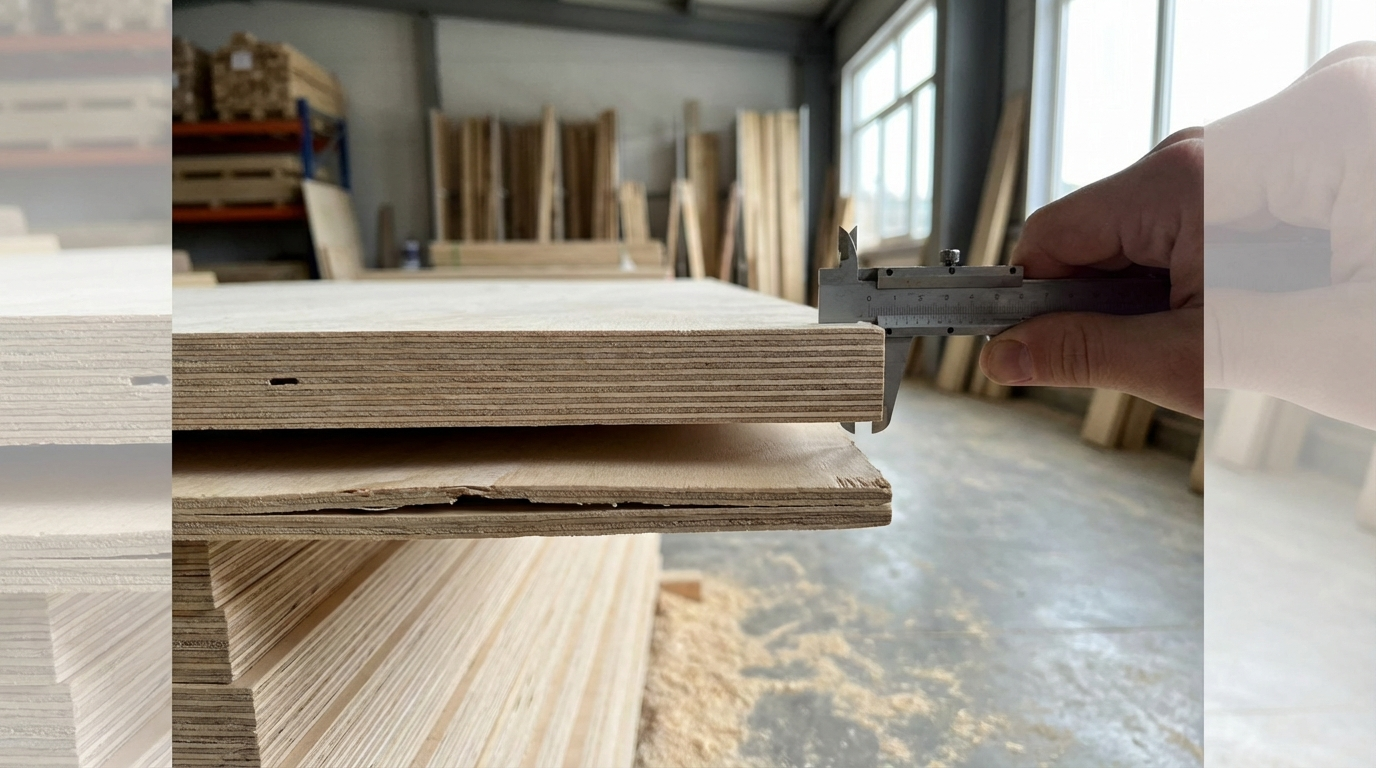
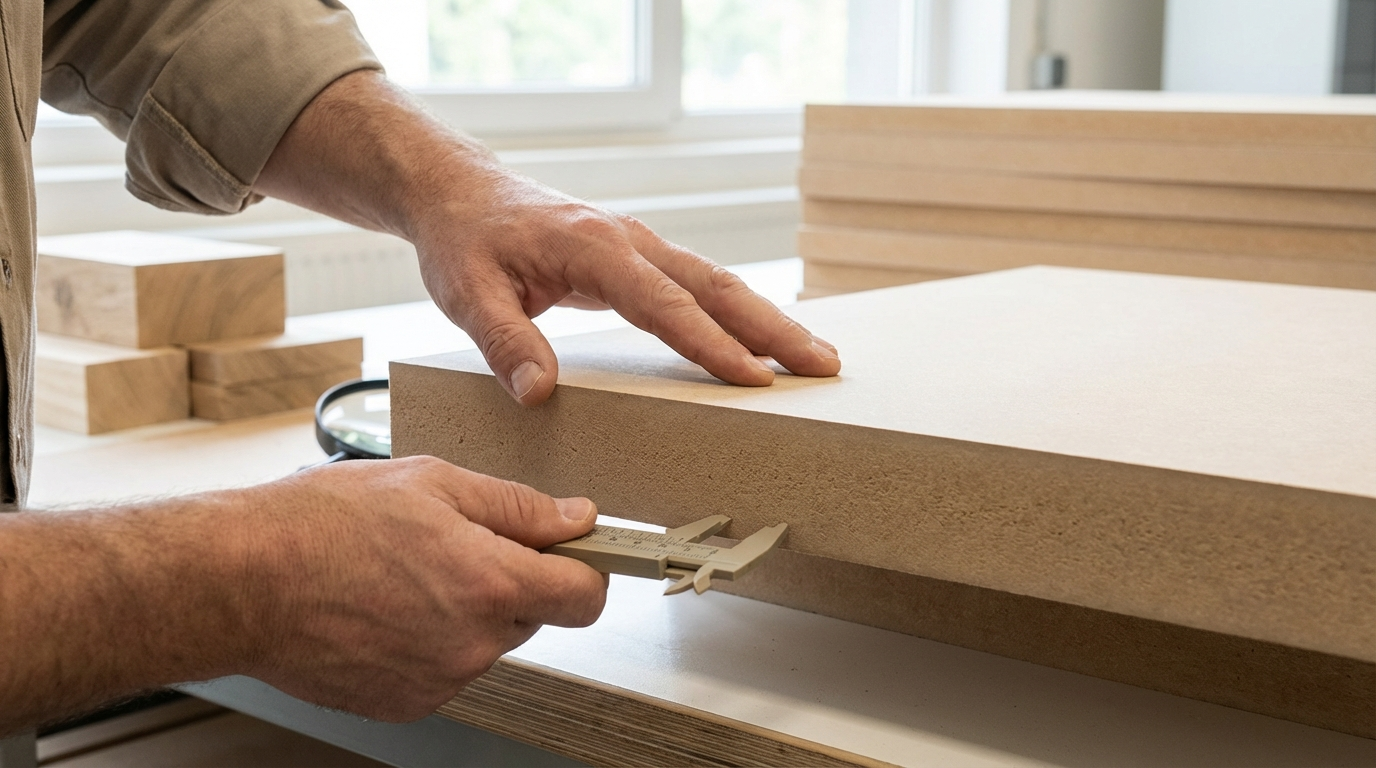
Use a caliper or straight edge: all four corners and center should match within 0.2mm. Variations signal recycled fillers or poor pressing—common in counterfeits.
4. Surface Smoothness and Uniformity
Run palm flat—no gritty patches, pits, or waves. Genuine MDF sands mirror-flat; fakes show fiber clumps or bubbles under light.
5. Weight and Heft Test
Lift corners: should feel solidly dense (700-850kg/m³ typically). Lightweight sheets indicate low fiber content or voids.
6. Tap Sound Uniformity
Knock across surface and edges—consistent solid "thud" everywhere. Hollow echoes betray air pockets from sloppy manufacturing.
7. Screw Holding Power
Drill a test screw into edge: strong grip without crumbling. Weak pull-out flags dilute resins.
8. Edge Swell Water Test
Dip sample edge in water 24hrs: genuine swells <8% (MR) or <5% (exterior). Excessive puffing means fake resins.
9. Color and Core Consistency
Cut scrap: uniform light brown core, no dark streaks or chunks. Streaks suggest mixed waste materials.
Trade-offs and Limitations
MDF excels in finish quality but absorbs moisture faster than plywood in direct wet zones—seal edges religiously. Heavy weight suits stationary furniture but hikes transport costs 10-15% vs. particleboard. Excellent for paint/laminate adhesion, yet scratches show on naked surfaces without overlays.
Common Buyer Mistakes and How to Avoid Them
- Mistake 1: Buying loose sheets—happens via shady middlemen. Fix: Insist on full bundles.
- Mistake 2: Ignoring storage date—old stock warps. Fix: Check batch codes.
- Mistake 3: Skipping thickness check—leads to sagging shelves. Fix: Measure multiple spots.
- Mistake 4: Trusting verbal grade claims. Fix: Demand labels.
- Mistake 5: No sample test—post-buy regrets. Fix: Buy one sheet first.
- Mistake 6: Poor edge sealing in humid areas. Fix: Apply epoxy pre-install.
- Mistake 7: Overloading thin boards. Fix: Span rules: 18mm for 60cm shelves.
- Mistake 8: Cheap dealer lots. Fix: Compare 3 quotes with specs.
- Mistake 9: No post-rain inspection. Fix: Monitor first monsoon.
Failure Modes and Fixes
- Symptom: Edge swelling. Cause: Humidity ingress. Prevent: Seal with putty. Fix: Sand and re-seal.
- Symptom: Screw loosening. Cause: Low density. Prevent: Pre-drill. Fix: Insert anchors.
- Symptom: Surface bubbles. Cause: Moisture under laminate. Prevent: Dry storage. Fix: Replace section.
- Symptom: Cracking on bend. Cause: Overstress. Prevent: Reinforce joints. Fix: Brace underneath.
- Symptom: Termite nibbles. Cause: Unsealed pores. Prevent: Termite oil treatment. Fix: Isolate and spray.
- Symptom: Sagging shelves. Cause: Thin span. Prevent: Add ribs. Fix: Support brackets.
How Much Does Greenpanel MDF Cost in India?
Expect ₹50-120 per sq ft depending on thickness (6-25mm), grade (interior vs exterior), and city (metros 15-20% higher). Cost drivers: core density, calibration accuracy, bundle size, and logistics from northern mills. For a 100 sq ft kitchen cabinet, budget ₹7,000-12,000 material-only—confirm quotes listing grade, ISI marks, and delivery terms.
Quality Checks You Can Do Without Lab Tests
Before buying: scan for edge prints, measure caliper uniformity, tap for echoes. After cutting: check core color consistency, screw-test scraps. Post-install: expose to steam/humidity 48hrs—no delam. Red flags: faded labels, uneven heft, gritty feel.
Tips for Homeowners
Clean with dry microfiber—avoid wet wipes to prevent swelling. For durability: laminate all exposed edges, space from walls 5cm for air. Don't overload cabinets beyond 20kg/shelf without braces.
Tips for Carpenters
Cut with fine blade (60T), pre-drill 3mm holes for screws. Edge-band immediately post-cut. Handle by edges to avoid fingerprints on faces. In humid sites, acclimatize 48hrs before fixing.
Tips for Architects
Spec exterior grade for RH>70%, detail 2mm edge returns. Prefer 18mm+ for spans >50cm. Include QC clause: tap test pass rate 100%.
Tips for Modular OEMs
Batch-test density via weight/volume. Standardize scraps for screw hold >100kg pull. Track complaints: swelling <2% target via sealed packaging.
FAQs
Does Greenpanel MDF have a hologram or QR code for verification?
No standard hologram noted, but genuine packs feature clear batch-printed labels and edge branding. Scan for uniformity and contact local reps for batch traceability if doubtful. Pair with physical tests like heft and tap for confidence—beats relying on apps alone in remote areas.
Is Greenpanel MDF suitable for coastal homes?
Exterior grade handles high humidity well if edges sealed, outperforming interior variants. In salty air, combine with melamine finishes and ventilation. Test samples: dip edges weekly first monsoon to gauge local resilience.
How to tell if Greenpanel MDF is calibrated?
Measure four corners and center—variation under 0.3mm confirms. Uncalibrated causes wavy laminates. Always caliper-check before loading; reject if inconsistent, saving fitting headaches.
What's the difference between Greenpanel interior and exterior MDF?
Exterior uses denser fibers/resins for boil-water resistance (IS 12406 Grade 1), suiting kitchens. Interior suits dry zones but swells more. Verify via label immersion rating; mismatch risks failure in 6 months.
Can I do a density test at home?
Weigh a known volume scrap (e.g., 10x10x1cm): genuine hits 700+ g. Compare to water displacement for accuracy. Low weight flags fillers—test before bulk buy.
Why does my Greenpanel MDF feel light?
Possible low-grade or old stock absorbing moisture inversely. Heft against known good sheet; light ones crumble on screw. Return and demand fresh bundles.
Is Greenpanel MDF termite-proof?
Resistant via resins, but not proof—unsealed edges invite attacks. Treat with oil annually in termite zones. Monitor nibbles post-install; prevention beats cure.
How to store Greenpanel MDF before use?
Vertical racks, wrapped, away from ground/floors. Acclimatize 72hrs in install room. Monsoon tip: silica packs inside wraps curb humidity spikes.
Greenpanel MDF vs HDHMR: which for kitchens?
HDHMR edges out in wet zones for higher density/screw hold, but MDF laminates smoother. Choose per test: water-dip both; minimal swell wins. Budget MDF ₹10/sqft less typically.
What if my Greenpanel MDF warps after install?
Likely poor acclimatization or unsealed edges. Fix: brace, sand high spots, re-laminate. Prevent: site-condition boards 7 days prior, epoxy edges.
Best thickness for wardrobe shutters?
18mm balances strength vs weight for 2x2ft panels. Thinner sags; thicker hikes cost 30%. Verify flatness post-cut for hinge alignment.
Disclaimer: This content is provided for general informational purposes based on industry practices and publicly available information. Product specifications, standards, prices, and availability may vary by manufacturer, region, and time. Readers should independently verify details with manufacturers, dealers, or qualified professionals before making purchase or construction decisions.Want Plywood Suggestions?
Share a few details and a Duro BOIL specialist will suggest suitable brands and connect you to responsive dealers.