Latest Kitchen Trolley Designs: 20 Space-Saving Ideas (2026)
Discover 20 latest kitchen trolley designs for Indian kitchens. Space-saving pullout, basket & organizer ideas with prices & installation guide.
Quick Overview: Kitchen Trolley Designs for Indian Homes
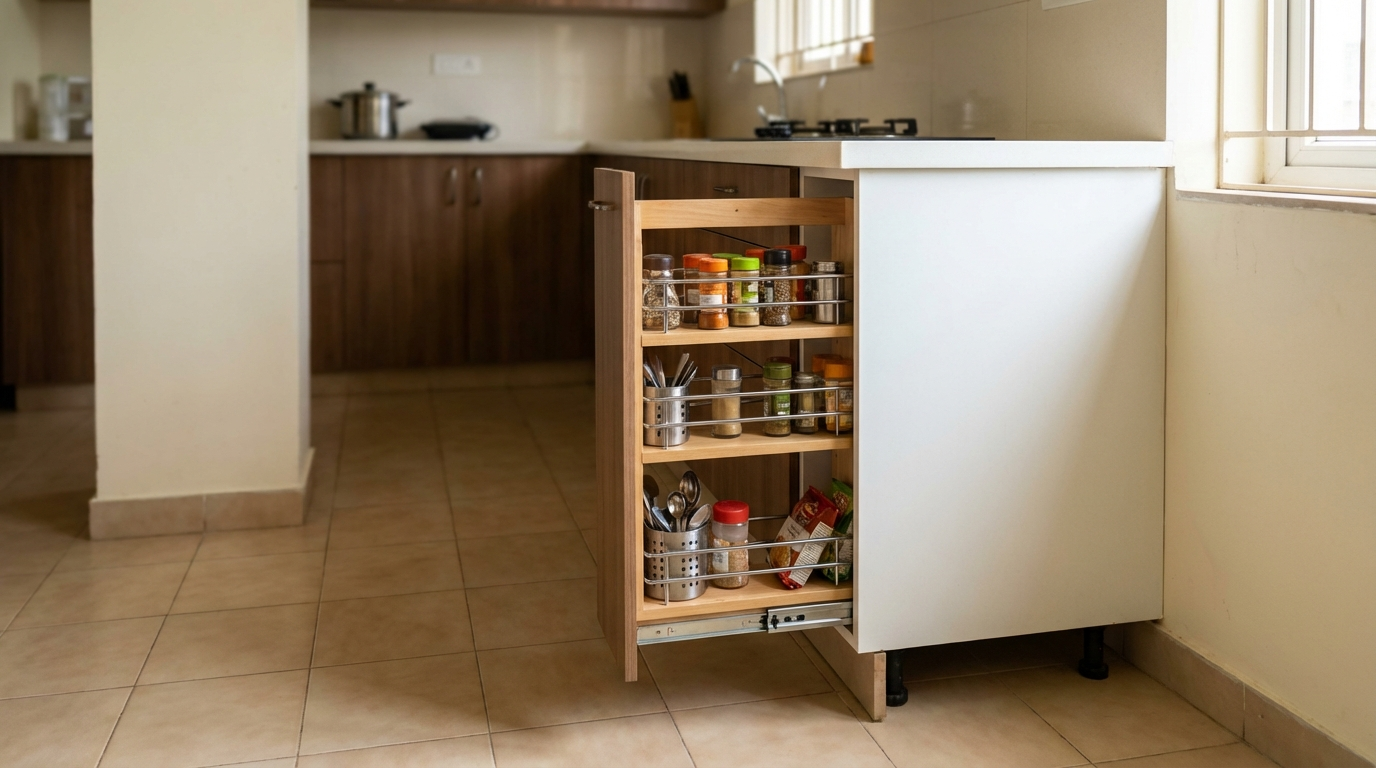
Kitchen trolleys are modular storage solutions with pull-out mechanisms that maximize cabinet space utilization by 40-60% compared to fixed shelving. These ingenious systems transform dead corner spaces and narrow cabinet interiors into fully accessible storage zones, making them essential for Indian kitchens where space optimization is critical.
Modern kitchen trolley designs have evolved far beyond simple wire baskets. Today's options include soft-close mechanisms, anti-rust coatings suitable for humid Indian climates, and specialized configurations for everything from spices to heavy cookware. Whether you're renovating an existing kitchen or planning a new modular setup, the right trolley selection can dramatically improve your cooking workflow.
This comprehensive guide from duroboil.com covers 20 practical kitchen trolley designs suited to Indian cooking habits, budget considerations, and space constraints. You'll find detailed specifications, realistic price ranges, and installation guidance to make informed decisions.
- Pull-out trolleys increase storage accessibility by up to 80% in deep cabinets
- Stainless steel options last 15-20 years with proper maintenance
- Entry-level trolleys start from ₹1,500 while premium systems can exceed ₹25,000
- Corner units recover 70% of otherwise wasted corner cabinet space
- Soft-close mechanisms add ₹500-1,500 to base trolley prices
- Most trolleys fit standard 8x4 feet plywood cabinet construction
Understanding Kitchen Trolley Systems
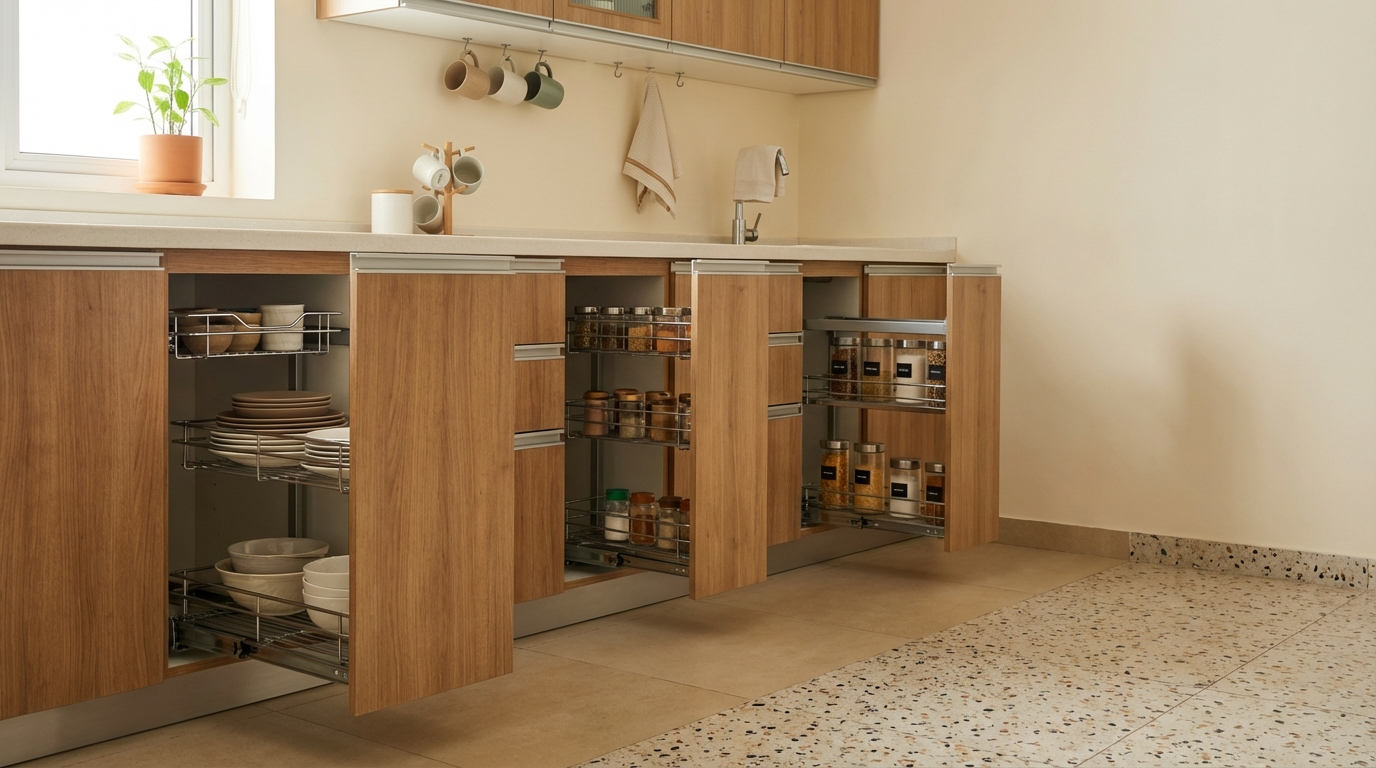
A kitchen trolley is a pull-out storage unit mounted on sliding channels or runners inside kitchen cabinets, enabling full access to stored items without bending or reaching into dark cabinet depths. Unlike fixed shelves where items at the back remain inaccessible, trolleys bring entire storage compartments forward with a single pull.
The basic components include a frame (usually mild steel or stainless steel), storage baskets or shelves, mounting channels, and sliding mechanisms. Premium versions add soft-close dampers, full-extension slides, and specialized compartments for specific storage needs.
Why Kitchen Trolleys Matter in Indian Kitchens
Indian cooking involves extensive spice collections, multiple cookware sizes, and frequent ingredient access that Western kitchen designs don't always accommodate. Traditional fixed shelving forces homemakers to stack items, making daily cooking more tedious and time-consuming.
Trolley systems address uniquely Indian requirements: tall masala containers that need upright storage, heavy kadhai and pressure cookers requiring sturdy support, and the need to keep frequently used items within arm's reach during busy meal preparation.
Key Components and Terminology
| Component | Function | Material Options | Quality Indicator |
|---|---|---|---|
| Frame | Structural support for baskets | Mild steel, SS 202, SS 304 | Welding quality, coating thickness |
| Baskets/Shelves | Item storage | Wire mesh, perforated sheet, solid tray | Wire gauge, mesh density |
| Channels/Runners | Sliding mechanism | Ball bearing, roller type | Extension percentage, weight capacity |
| Mounting Hardware | Cabinet attachment | Zinc-plated, stainless | Screw quality, bracket thickness |
| Dampers | Soft-close function | Hydraulic, pneumatic | Closing speed, cycle rating |
20 Latest Kitchen Trolley Designs for 2026
The following designs represent the most practical and popular options for Indian kitchens in 2026. Each selection considers durability in humid conditions, compatibility with Indian cooking needs, and value for money across different budget segments.
1. Classic Pull-Out Basket Trolley
The most common and affordable option featuring 2-3 wire baskets mounted on a single pull-out frame. Ideal for storing utensils, small appliances, and groceries in base cabinets. Available in widths from 300mm to 600mm, these versatile units suit most standard cabinet sizes.
Best for: Budget-conscious setups, rental apartments, basic storage needs
Price range: ₹1,500-4,000
Cabinet requirement: Minimum 450mm depth
2. Tall Unit Pantry Trolley
Full-height pull-out systems for tall cabinets (1800mm-2100mm height) with 5-6 basket levels. These maximize vertical space utilization and keep grocery items, packets, and containers organized. The full-extension slides allow complete basket access even at top levels.
Best for: Large families, bulk grocery storage, dedicated pantry areas
Price range: ₹8,000-18,000
Cabinet requirement: Minimum 500mm width, full-height cabinet
3. Corner Carousel (Lazy Susan) Unit
Rotating circular shelves that utilize corner cabinet dead space. Available in 270-degree swing-out or full 360-degree rotating versions. The rotating mechanism brings items from the back to the front without requiring deep reaching.
Best for: L-shaped and U-shaped kitchen corners
Price range: ₹6,000-15,000
Cabinet requirement: 900mm x 900mm corner cabinet minimum
4. Magic Corner Unit
Advanced corner solution with interconnected trays that swing out sequentially when the cabinet door opens. Unlike carousels, magic corners provide flat storage surfaces suitable for heavy items like pressure cookers and large vessels.
Best for: Premium kitchens, heavy cookware storage in corners
Price range: ₹12,000-28,000
Cabinet requirement: Blind corner cabinet with 450mm door opening
5. Cup and Saucer Trolley
Specialized pull-out designed for crockery with adjustable plate holders, cup hooks, and saucer slots. Prevents chipping and keeps daily-use items organized. Often installed in wall units for easy access at standing height.
Best for: Tea and coffee lovers, households with fine crockery
Price range: ₹3,500-8,000
Cabinet requirement: 600mm width wall cabinet
6. Grain Storage Trolley
Indian-specific design featuring deep containers or bins for rice, dal, flour, and other staples. Better versions include airtight lids and measuring scoops. Essential for Indian households that store bulk grains.
Best for: Traditional Indian cooking, bulk grain storage
Price range: ₹4,000-12,000
Cabinet requirement: 500-600mm base cabinet
7. Bottle Pull-Out Trolley
Narrow vertical trolley (150-200mm width) designed for oil bottles, sauces, and condiments. Fits in slim spaces beside cooktops or refrigerators. Wire dividers keep bottles upright and prevent toppling.
Best for: Utilizing narrow gaps, keeping cooking oils accessible
Price range: ₹2,500-6,000
Cabinet requirement: 150-200mm narrow cabinet
8. Spice Pull-Out (Masala Trolley)
Multi-tier trolley specifically designed for spice containers with shallow shelves that display all masalas at a glance. Some versions include built-in masala boxes. A must-have for Indian kitchens with extensive spice collections.
Best for: Indian cooking enthusiasts, spice organization
Price range: ₹3,000-7,500
Cabinet requirement: 300-450mm base or wall cabinet
9. Under-Sink Trolley
L-shaped or U-shaped trolley designed to work around sink plumbing pipes. Utilizes the typically wasted space under kitchen sinks for cleaning supplies, garbage bags, and detergents.
Best for: Maximum space utilization, cleaning supply organization
Price range: ₹3,500-9,000
Cabinet requirement: Standard sink cabinet (600-900mm)
10. Thali and Plate Holder Trolley
Vertical dividers designed specifically for Indian thali plates, dinner plates, and serving trays. Keeps plates standing upright for easy selection and prevents stacking damage.
Best for: Large families, frequent entertaining
Price range: ₹2,500-6,500
Cabinet requirement: 450-600mm base cabinet
11. Detergent Pull-Out
Compact trolley for dishwashing liquid, scrubbers, and cleaning supplies positioned near the sink. Often includes hooks for hanging cleaning cloths and sponges to dry.
Best for: Sink-adjacent organization
Price range: ₹1,800-4,500
Cabinet requirement: 200-300mm cabinet beside sink
12. Cutlery Trolley with Organizer
Pull-out drawer with built-in compartmentalized tray for spoons, forks, knives, and serving utensils. Premium versions include wooden or velvet-lined inserts for better organization.
Best for: Organized cutlery access, modern kitchen setups
Price range: ₹2,000-7,000
Cabinet requirement: 450-600mm drawer space
13. Cooktop Below Storage Trolley
Heat-resistant trolley installed directly below the cooking hob for storing frequently used cookware. Requires proper ventilation gaps and heat-resistant coating on upper basket.
Best for: Quick cookware access during cooking
Price range: ₹4,500-10,000
Cabinet requirement: 600mm cabinet below cooktop
14. Double-Tier Slide-Out Shelf
Two independent sliding shelves in a single cabinet space, allowing access to both levels without moving items. Ideal for heavy mixer-grinders and appliances that are difficult to lift.
Best for: Heavy appliance storage, elderly-friendly kitchens
Price range: ₹3,000-8,000
Cabinet requirement: 500-600mm base cabinet
15. Waste Bin Pull-Out
Integrated dustbin system with single or dual bins for waste segregation. Concealed within cabinet, maintaining kitchen aesthetics while providing convenient waste disposal near the prep area.
Best for: Modern kitchens, waste segregation compliance
Price range: ₹2,500-8,500
Cabinet requirement: 300-450mm base cabinet
16. Oil-Can and Container Trolley
Heavy-duty trolley designed for large oil tins (15-litre cans) commonly used in Indian households. Features reinforced bottom shelf and drip tray for spill management.
Best for: Households buying oil in bulk
Price range: ₹3,500-7,000
Cabinet requirement: 450-500mm deep base cabinet
17. Mid-Height Appliance Trolley
Designed for installing at counter height with appliance platforms for mixers, toasters, and food processors. Pull-out mechanism brings appliances to comfortable working height.
Best for: Frequent appliance users, ergonomic kitchens
Price range: ₹5,000-12,000
Cabinet requirement: 600mm tall cabinet at counter level
18. Tandem Box System
High-end drawer system with solid metal sides, glass or metal bottoms, and full-extension runners. Offers premium aesthetics with silent operation and high weight capacity (40-65kg).
Best for: Premium modular kitchens, heavy-duty requirements
Price range: ₹6,000-15,000 per drawer
Cabinet requirement: Standard base cabinet dimensions
19. Wicker Basket Pull-Out
Natural cane or synthetic rattan baskets on metal frames for a rustic aesthetic. Suitable for storing vegetables, onions, and potatoes that need air circulation.
Best for: Traditional kitchen aesthetics, vegetable storage
Price range: ₹4,000-9,000
Cabinet requirement: 450-600mm base cabinet
20. Combination Unit Trolley
Multi-function pull-out combining different storage types: wire baskets, solid shelves, bottle holders, and cutlery organizers in a single unit. Maximizes functionality in limited cabinet space.
Best for: Small kitchens needing multiple storage types
Price range: ₹7,000-18,000
Cabinet requirement: 600mm wide base cabinet minimum
Kitchen Trolley Design Comparison Table
Selecting the right trolley requires understanding how different designs compare across key parameters. This comprehensive comparison helps identify which options suit your specific requirements and budget constraints.
| Design Type | Space Efficiency | Weight Capacity | Durability | Price Range | Best Application |
|---|---|---|---|---|---|
| Classic Pull-Out Basket | Good | 15-25 kg | Good | ₹1,500-4,000 | General storage |
| Tall Unit Pantry | Excellent | 30-50 kg | Very Good | ₹8,000-18,000 | Pantry items |
| Corner Carousel | Very Good | 20-35 kg | Good | ₹6,000-15,000 | Corner utilization |
| Magic Corner | Excellent | 35-50 kg | Excellent | ₹12,000-28,000 | Heavy items in corners |
| Cup and Saucer | Good | 10-15 kg | Good | ₹3,500-8,000 | Crockery |
| Grain Storage | Good | 40-60 kg | Very Good | ₹4,000-12,000 | Staples storage |
| Bottle Pull-Out | Excellent | 8-12 kg | Good | ₹2,500-6,000 | Narrow spaces |
| Spice Trolley | Very Good | 8-15 kg | Good | ₹3,000-7,500 | Masala organization |
| Under-Sink | Very Good | 15-20 kg | Good | ₹3,500-9,000 | Cleaning supplies |
| Tandem Box | Good | 40-65 kg | Excellent | ₹6,000-15,000 | Premium setups |
Material Selection for Kitchen Trolleys
Kitchen trolley durability depends heavily on material quality, especially in Indian conditions with high humidity, spice exposure, and frequent cleaning. Understanding material options helps avoid premature rusting and degradation that affects cheaper trolleys within 2-3 years.
Stainless Steel Options
SS 202 Grade: Most common in mid-range trolleys, offering reasonable rust resistance for dry kitchen areas. Contains lower nickel content, making it susceptible to corrosion in high-humidity coastal regions or near sink areas.
SS 304 Grade: Premium option with 18% chromium and 8% nickel content, providing excellent corrosion resistance suitable for all Indian climate conditions. Recommended for sink-adjacent and coastal area installations. Costs 30-40% more than SS 202.
SS 316 Grade: Marine-grade stainless steel rarely used in residential kitchens due to high cost. Only necessary for commercial kitchens or extremely corrosive environments.
Mild Steel with Coating
Powder-Coated: Budget-friendly option where mild steel receives electrostatic powder coating. Quality depends on coating thickness (minimum 60 microns recommended) and pre-treatment quality. Can last 8-10 years in dry conditions but prone to chipping and subsequent rusting.
Zinc-Plated: Electroplating process adding zinc layer for rust protection. More durable than powder coating but less aesthetic. Common in economy-segment trolleys.
Chrome-Plated: Shiny, mirror-finish coating popular for visible trolleys. Requires good base preparation; poor-quality chrome plating peels within 2-3 years. Look for triple-layer chrome plating for durability.
Material Selection Guide by Location
| Installation Location | Recommended Material | Avoid | Reason |
|---|---|---|---|
| Near sink area | SS 304 | Powder-coated MS | Constant moisture exposure |
| Below cooktop | SS 202/304 | Chrome-plated | Heat and oil exposure |
| Tall pantry units | SS 202, quality powder-coat | Thin gauge materials | Weight-bearing requirements |
| Wall cabinets | Any quality option | Heavy gauge (unnecessary) | Light load applications |
| Coastal areas | SS 304 only | MS options | Salt air corrosion |
| Dry interior areas | SS 202, powder-coat | None specifically | Lower corrosion risk |
Sliding Channel and Runner Types
The sliding mechanism determines how smoothly trolleys operate and how long they last. According to duroboil.com's research, runner quality is the most common point of failure in kitchen trolleys, making this component crucial for long-term satisfaction.
Roller Runners
Basic runners using nylon or metal rollers. Provide 75% extension (not full pull-out) and support 15-25 kg loads. Most economical option suitable for light-duty applications. Expect 5-7 years of service life with moderate use.
Ball Bearing Runners
Premium runners using steel ball bearings for smooth, silent operation. Available in different extension types:
- Partial extension (75%): Budget ball bearing option, most basket area accessible
- Full extension (100%): Complete pull-out, all contents fully visible and accessible
- Over-extension (125%): Extends beyond cabinet face for maximum access, premium pricing
Soft-Close Mechanisms
Hydraulic or pneumatic dampers that slow down closing motion in the final few centimeters. Prevents slamming, reduces noise, and extends runner lifespan. Available as integrated systems or add-on accessories. Quality soft-close should handle 10,000+ cycles without degradation.
Runner Quality Indicators
| Quality Level | Extension Type | Load Capacity | Cycle Rating | Price Impact |
|---|---|---|---|---|
| Economy | Roller, 75% | 15-20 kg | 15,000 cycles | Base price |
| Standard | Ball bearing, 75% | 25-30 kg | 30,000 cycles | +25-35% |
| Premium | Ball bearing, 100% | 35-45 kg | 50,000 cycles | +50-70% |
| Luxury | Ball bearing, 100% + soft-close | 45-65 kg | 80,000+ cycles | +80-120% |
Kitchen Trolley Prices in India (2026)
Kitchen trolley prices vary significantly based on material quality, brand, mechanism type, and size. The following price guide helps set realistic budget expectations for different quality tiers and applications.
Budget Segment (₹1,500-5,000)
Powder-coated mild steel construction with roller runners. Suitable for dry storage areas with light to moderate use. Brands in this segment include local manufacturers and unbranded options from hardware markets. Expect basic functionality without premium features like soft-close.
Mid-Range Segment (₹5,000-12,000)
SS 202 construction or high-quality powder-coated options with ball bearing runners. Includes partial soft-close on some models. Brands like Hafele, Hettich, and Indian manufacturers like Ebco offer reliable options. Good balance of durability and value for most households.
Premium Segment (₹12,000-25,000+)
SS 304 grade with full-extension soft-close runners. International brands like Blum, Grass, and premium Hettich lines. Includes advanced features like synchronized soft-close, tool-free adjustment, and extended warranties. Justified for heavy-use applications and premium kitchen installations.
Complete Kitchen Trolley Budget Estimate
| Kitchen Size | Trolley Units Needed | Budget Range | Mid-Range | Premium Range |
|---|---|---|---|---|
| Small (50-80 sq ft) | 4-6 units | ₹8,000-15,000 | ₹20,000-40,000 | ₹50,000-80,000 |
| Medium (80-120 sq ft) | 6-10 units | ₹12,000-25,000 | ₹35,000-65,000 | ₹80,000-1,50,000 |
| Large (120+ sq ft) | 10-15 units | ₹20,000-40,000 | ₹55,000-1,00,000 | ₹1,20,000-2,50,000 |
Space Planning for Kitchen Trolleys
Effective trolley selection requires understanding your cabinet dimensions and cooking workflow. Poorly planned trolleys create more problems than they solve, with units that don't fully open or conflict with adjacent cabinets.
Standard Cabinet Dimensions in India
Indian modular kitchens typically follow these standard dimensions that affect trolley selection:
- Base cabinet width: 450mm, 500mm, 600mm, 900mm modules
- Base cabinet depth: 550-600mm (560mm most common)
- Base cabinet height: 720mm or 850mm (including legs)
- Wall cabinet width: 300mm, 450mm, 600mm, 900mm modules
- Wall cabinet depth: 300-350mm
- Tall unit height: 1950mm or 2100mm
Clearance Requirements
Every pull-out trolley needs adequate clearance to open fully without obstruction. Consider these clearances during kitchen planning:
- Front clearance: Minimum 600mm for full trolley extension plus user standing space
- Adjacent cabinet conflict: Check that trolley handles don't hit adjacent unit doors
- Island clearance: Minimum 900mm between trolley cabinets and kitchen island
- Passage requirement: Allow 1000-1200mm clear passage even with trolleys extended
Workflow-Based Trolley Placement
Strategic trolley placement follows the kitchen work triangle principle—connecting refrigerator, sink, and cooktop efficiently:
Near cooktop: Spice trolley, cooking oil pull-out, utensil basket
Near sink: Under-sink trolley, detergent pull-out, waste bin
Near refrigerator: Pantry trolley, grain storage, vegetable baskets
Prep area: Cutlery drawer, plate holder, cup and saucer unit
Installation Requirements and Process
Kitchen trolley installation requires precise measurement and proper cabinet preparation. While DIY installation is possible for simpler units, complex systems like magic corners benefit from professional installation.
Cabinet Preparation
Before trolley installation, verify these cabinet requirements:
- Internal dimensions: Measure actual internal space (not external cabinet size)
- Square and level: Check cabinet is plumb and square; trolleys malfunction in twisted cabinets
- Side panel thickness: Standard 18mm plywood/MDF required for screw holding
- Reinforcement: Heavy-duty trolleys may need additional support blocks
Tools Required
Basic installation requires:
- Electric drill with 3mm, 4mm pilot bits
- Phillips head screwdriver bits
- Spirit level (300mm minimum)
- Measuring tape and pencil
- Square for marking
- Soft mallet for adjustments
Installation Steps
- Measure and mark: Mark channel positions on both cabinet sides, ensuring equal height and parallel alignment
- Pilot drilling: Create pilot holes slightly smaller than screw diameter
- Mount channels: Attach sliding channels using provided screws, checking level
- Test slide: Verify smooth sliding before mounting basket frame
- Attach frame: Connect trolley frame to channel sliders per manufacturer instructions
- Adjust alignment: Fine-tune using adjustment screws if provided
- Test operation: Verify full extension, retraction, and soft-close function
Common Installation Mistakes
Uneven channel mounting: Results in binding, difficult operation, and premature wear
Incorrect screw selection: Using longer screws that penetrate cabinet exterior
Ignoring clearances: Trolley hits cabinet door or adjacent units
Overloading immediately: Stressing new mechanisms before break-in period
Maintenance and Care Guidelines
Proper maintenance extends kitchen trolley lifespan significantly. Most quality trolleys should provide 15-20 years of service with basic care, but neglected units fail within 5-7 years.
Regular Cleaning
Clean trolley baskets monthly using:
- Mild dish soap solution with soft cloth
- Avoid abrasive scrubbers that damage coatings
- Dry completely after cleaning to prevent water spots
- For stainless steel, wipe in grain direction
Lubrication Schedule
Runners and sliding mechanisms require periodic lubrication:
- Ball bearing runners: Light machine oil or silicone spray every 6 months
- Roller runners: Silicone spray every 3-4 months
- Soft-close dampers: Usually maintenance-free; don't oil
- Pivot points: Light oil at any squeaking point
Preventing Common Problems
Rust prevention: Wipe spills immediately, especially acidic substances like lemon, vinegar, or tamarind
Overloading prevention: Distribute weight evenly across baskets; don't exceed rated capacity
Alignment maintenance: Check and tighten mounting screws annually; vibration loosens connections over time
Selecting Trolleys for Small Kitchens
Indian apartments frequently feature compact kitchens under 80 square feet where every inch matters. Duroboil.com recommends prioritizing multi-function trolleys that serve multiple purposes rather than single-purpose specialized units.
Space-Maximizing Strategies
Vertical utilization: Tall pantry pull-outs use height effectively where floor space is limited
Corner recovery: Install corner carousels or magic corners to use dead corner space
Narrow gaps: Bottle pull-outs fit in 150-200mm gaps beside appliances
Under-sink usage: Don't waste sink cabinet space; install U-shaped trolleys around plumbing
Recommended Trolley Combination for Small Kitchens
| Priority | Trolley Type | Why Essential | Estimated Cost |
|---|---|---|---|
| 1 | Under-sink trolley | Recovers wasted sink cabinet space | ₹4,000-7,000 |
| 2 | Corner carousel | Uses otherwise dead corner space | ₹6,000-12,000 |
| 3 | Combination pull-out | Multiple storage types in one unit | ₹7,000-14,000 |
| 4 | Bottle pull-out | Uses narrow gaps effectively | ₹2,500-5,000 |
| 5 | Spice trolley | Essential for Indian cooking | ₹3,000-6,000 |
Brand Comparison: Popular Kitchen Trolley Manufacturers
Multiple brands serve the Indian kitchen trolley market across different price points. This comparison helps identify suitable options based on budget and quality requirements.
Note: This is independent editorial content. Duroboil.com is not affiliated with any brand mentioned below.
International Premium Brands
Hettich: German engineering with India manufacturing, excellent quality-to-price ratio, wide service network
Hafele: Comprehensive range from mid to premium, strong design options, good availability
Blum: Austrian premium brand, industry-leading soft-close technology, highest price point
Grass: Premium Austrian systems, excellent for high-end projects, limited India presence
Indian Brands
Ebco: Good mid-range options, wide dealer network, competitive pricing
Sleek: Kitchen-focused brand with integrated trolley solutions
Godrej: Reliable quality, service network advantage, conservative designs
Kaff: Modern designs, good premium segment presence
Brand Selection by Budget
| Budget Tier | Recommended Brands | What to Expect |
|---|---|---|
| Economy | Local brands, Olive, unbranded | Basic function, 5-8 year life |
| Mid-range | Ebco, Hettich Standard, Hafele Basic | Good quality, 10-12 year life |
| Premium | Hettich Premium, Hafele Pro, Blum | Excellent quality, 15-20 year life |
Common Mistakes to Avoid
Understanding frequent errors helps ensure satisfactory kitchen trolley selection and installation. These mistakes often become apparent only after installation, making prevention crucial.
Buying Based on Price Alone
The cheapest trolley option often costs more in the long run through replacements and repairs. Runners fail, baskets rust, and coating deteriorates on low-quality products within 3-4 years. Invest in mid-range quality minimum for kitchen trolleys that see daily use.
Ignoring Cabinet Compatibility
Trolley dimensions must match actual internal cabinet dimensions, not nominal sizes. A "600mm trolley" may not fit a "600mm cabinet" due to variations in panel thickness and construction. Always measure internal dimensions before purchasing.
Overlooking Weight Requirements
Indian cooking involves heavy items: pressure cookers, cast iron kadhai, stone grinding equipment. Standard 20kg capacity trolleys fail under such loads. Specify actual intended storage and select appropriate load ratings.
Forgetting Climate Considerations
Coastal areas, humid regions, and kitchens without exhaust ventilation need SS 304 grade trolleys. Powder-coated options rust rapidly in such environments, regardless of initial appearance.
Neglecting Workflow Planning
Installing trolleys without considering cooking workflow creates inefficiency. Spices should be near the cooktop, cleaning supplies near the sink, and groceries near the refrigerator. Plan trolley placement around how you actually cook.
Future Trends in Kitchen Trolley Designs
Kitchen trolley technology continues evolving with smart features and improved materials. Understanding emerging trends helps make future-proof selections.
Smart Integration
Emerging trolleys include built-in LED lighting, sensor-activated opening, and integration with kitchen management systems. Currently expensive but expected to become mainstream in premium segments by 2027-2028.
Sustainable Materials
Bamboo-based baskets, recycled stainless steel, and bio-based coatings are gaining traction among environmentally conscious consumers. Indian manufacturers are beginning to offer eco-friendly options.
Modular Flexibility
Newer systems allow reconfiguring basket arrangements within installed frames, adapting to changing storage needs without complete replacement. This modularity adds 15-20% to base prices but improves long-term value.
Frequently Asked Questions
What is the best material for kitchen trolleys in humid Indian conditions?
SS 304 grade stainless steel offers the best corrosion resistance for humid Indian kitchens, particularly in coastal areas or near sink installations. This marine-grade stainless steel contains 18% chromium and 8% nickel, providing excellent protection against rust even with daily moisture exposure. While SS 304 costs 30-40% more than SS 202 or powder-coated alternatives, the extended lifespan of 15-20 years versus 8-10 years makes it economical long-term.
How much should I budget for kitchen trolleys in a modular kitchen?
Kitchen trolley budgets typically range from ₹15,000 to ₹1,50,000 depending on kitchen size and quality tier selected. For an average 80-100 square foot kitchen requiring 6-8 trolley units, budget ₹30,000-50,000 for mid-range quality with ball bearing runners and decent corrosion resistance. Premium installations with soft-close mechanisms throughout can reach ₹80,000-1,20,000. Economy setups can achieve basic functionality for ₹15,000-25,000 but expect shorter service life.
Can kitchen trolleys be installed in existing cabinets or only in new modular kitchens?
Kitchen trolleys can be retrofitted into existing cabinets provided the cabinet structure is sound and meets minimum requirements. The cabinet must have 18mm thick side panels for secure screw anchoring, adequate internal depth (minimum 450mm), and structurally intact construction. Older wooden cabinets may need reinforcement. Professional assessment is recommended before retrofit installation to identify any modifications needed.
What is the difference between soft-close and regular kitchen trolleys?
Soft-close trolleys incorporate hydraulic or pneumatic dampers that slow the closing motion in the final 30-50mm of travel, preventing slamming. This feature reduces noise, prevents damage to stored items, and extends mechanism lifespan by eliminating impact stress. Soft-close systems add ₹800-2,000 to trolley prices but are considered essential in premium installations. They're particularly valuable in households with children or for night-time kitchen use.
How do I maintain kitchen trolleys to prevent rust?
Rust prevention requires immediate wiping of spills (especially acidic substances like lemon, vinegar, or tamarind), monthly cleaning with mild soap solution followed by thorough drying, and ensuring kitchen ventilation to reduce humidity. Apply food-grade silicone spray to runners every 6 months. For powder-coated trolleys, inspect coating regularly and touch up any chips immediately with matching enamel paint to prevent underlying rust.
Which kitchen trolley design is best for storing heavy items like pressure cookers?
Heavy item storage requires trolleys with reinforced frames, high-capacity ball bearing runners (minimum 35kg rating), and solid bottom shelves rather than wire mesh. Magic corner units, tandem box systems, and dedicated cookware trolleys are specifically designed for heavy loads. Ensure runner specifications mention dynamic load capacity, not just static rating. Full-extension runners allow easier loading and unloading of heavy items compared to partial-extension types.
Are corner carousel and magic corner trolleys worth the extra cost?
Corner solutions recover 70% of otherwise wasted corner cabinet space, making them valuable investments in L-shaped and U-shaped kitchens. For corners measuring 900mm x 900mm, a carousel recovers approximately 0.45 square meters of usable storage. Given per-square-foot costs of ₹2,000-4,000 for modular kitchen installation, a ₹12,000-15,000 corner solution provides equivalent value while improving functionality significantly.
How long do quality kitchen trolleys typically last?
Quality kitchen trolleys with SS 304 construction and premium ball bearing runners typically last 15-20 years with proper maintenance. Mid-range SS 202 options provide 10-12 years of service. Powder-coated trolleys vary widely—quality options last 8-10 years in dry conditions, while economy versions may show rust within 3-4 years. Runner cycle ratings provide guidance: 50,000-80,000 cycle ratings indicate 15+ year service life with normal household use.
Can I install kitchen trolleys myself or do I need professional help?
Basic pull-out basket trolleys can be DIY installed with standard tools (drill, screwdriver, level) and reasonable handyman skills. Installation typically takes 30-60 minutes per unit. However, complex systems like magic corners, tall pantry units, and synchronized multi-drawer systems benefit from professional installation due to precise alignment requirements. Incorrect installation causes binding, premature wear, and warranty issues. Most dealers include installation in premium product pricing.
What size kitchen trolley do I need for my cabinet?
Kitchen trolley size must match internal cabinet dimensions, not nominal cabinet size. Measure the clear internal width between side panels and subtract 3-5mm for clearance. Common matches: 450mm cabinet typically fits 400-420mm trolley, 600mm cabinet fits 550-570mm trolley. Internal depth should be minimum 450mm for standard trolleys. Height depends on basket count desired—allow 150-200mm per basket level plus frame height. Always verify specific product dimensions against measured cabinet internals before purchasing.
Conclusion: Making the Right Kitchen Trolley Choice
Kitchen trolleys represent a crucial investment in kitchen functionality that affects daily cooking experience for years. The ideal selection balances budget constraints with quality requirements, considers local climate conditions, and matches specific storage needs.
For most Indian households, a mid-range approach using SS 202 grade trolleys in dry areas and SS 304 near wet zones provides optimal value. Prioritize corner utilization and under-sink solutions for maximum space recovery. Invest in soft-close mechanisms for frequently used trolleys—the daily convenience and noise reduction justify the premium.
Remember that trolley selection should follow kitchen workflow planning, not precede it. Identify where you need specific items during cooking, then select trolley types and locations that support efficient movement patterns. With proper selection and maintenance, quality kitchen trolleys from reputable manufacturers will provide 15+ years of reliable service, making them among the most valuable components in any modular kitchen investment.
Disclaimer: This content is provided for general informational purposes based on industry practices and publicly available information. Product specifications, standards, prices, and availability may vary by manufacturer, region, and time. Readers should independently verify details with manufacturers, dealers, or qualified professionals before making purchase or construction decisions.Want Plywood Suggestions?
Share a few details and a Duro BOIL specialist will suggest suitable brands and connect you to responsive dealers.