MDF price in Kolkata: thickness-wise trend guide
Understand mdf price in kolkata using price-per-sqft tables, thickness-wise factors, and dealer quote tips. Avoid overpaying and fake stock in India.
Quick Decision Summary
MDF prices in Kolkata typically range ₹20–₹100 per sq ft, scaling up sharply by thickness and grade.
If you’re in a hurry: Expect ₹15–₹25/sq ft for thin 3–6mm sheets ideal for cabinets or partitions; ₹40–₹70 for standard 12mm furniture use; and ₹70–₹110 for heavy 18mm structural work. Kolkata rates sit mid-range nationally due to logistics from eastern mills, but monsoon stockpiling adds 10–20% volatility. Always quote full specs (plain vs prelam, interior grade) from 3+ dealers for leverage—avoid verbal deals without written breakdowns. Factor 5–10% wastage in budgets.
- Choose thinner (3–8mm) if light-duty, budget-tight projects like wardrobes or shelves.
- Avoid thick (16mm+) if high-moisture zones without HDHMR upgrade—Kolkata humidity risks swelling.
Price Range and Cost Drivers (India Focus: Kolkata)
MDF pricing hinges on thickness (biggest driver), density grade (standard vs high-density), surface (plain vs prelaminated), sheet size (8x4 ft standard), and local factors like transport from mills in West Bengal or Odisha. Kolkata sees steady supply but peaks during pre-monsoon rushes, pushing rates 15–25% higher. Varies by batch quality, dealer margins (10–20%), and negotiation—always confirm inclusive of GST/loading.
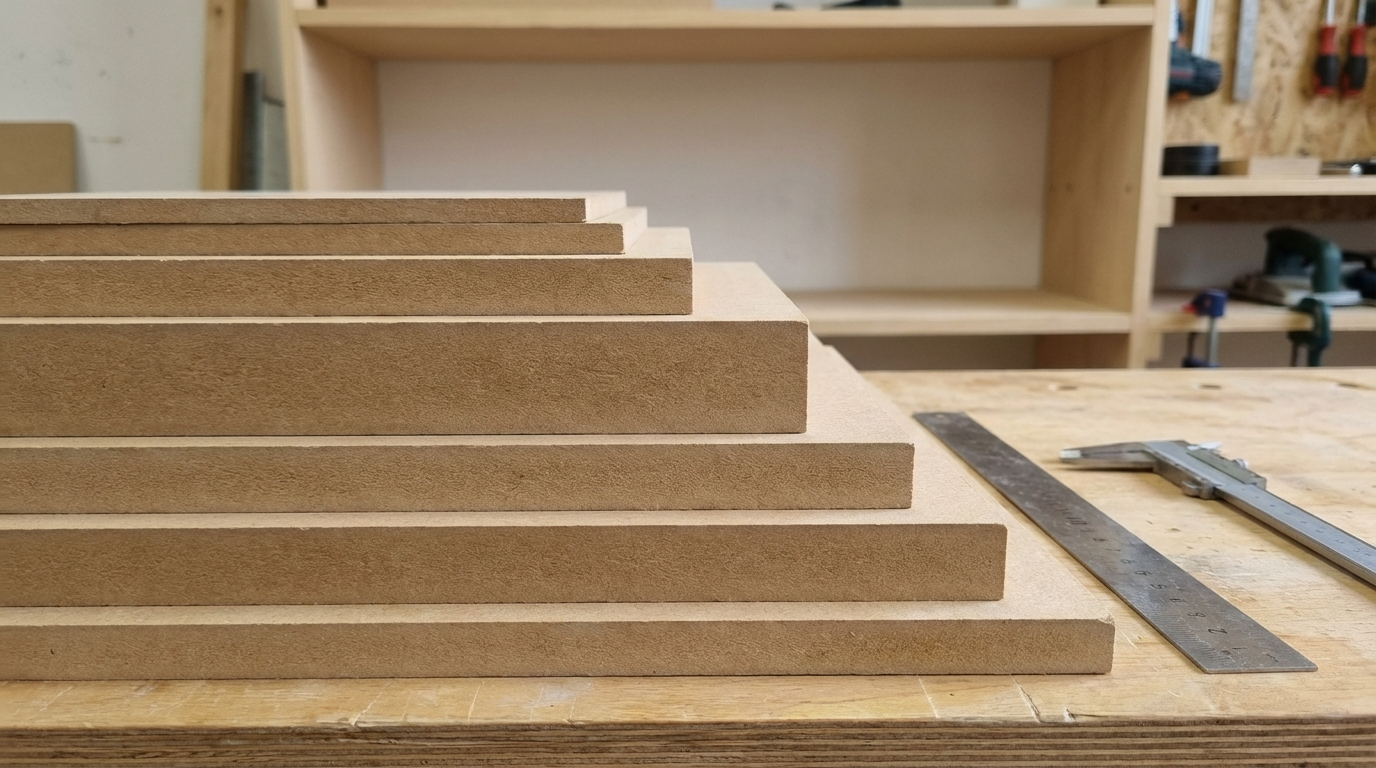
| Thickness | Typical Kolkata Range (₹/sq ft, plain interior grade) | Common Uses | Cost Boosters |
|---|---|---|---|
| 3mm | ₹15–₹25 | Partitions, crafts | Smooth finish +5% |
| 5–6mm | ₹20–₹35 | Cabinet backs, shelves | Calibration +10% |
| 8mm | ₹30–₹50 | Drawer sides, tabletops | Prelam +20–30% |
| 12mm | ₹45–₹80 | Wardrobes, furniture frames | HD grade +15–25% |
| 16–18mm | ₹65–₹110 | Heavy cabinets, flooring base | Exterior/moisture resist +30–50% |
How to ask for a quote (checklist): Specify "plain MDF, [thickness]mm, 8x4 ft, interior grade, calibrated edges, Kolkata delivery." Get breakdown: base rate + GST + transport + cut-to-size fee. Cross-check 3 quotes.
Mini budget example: 12mm MDF for 100 sq ft wardrobe: ~₹5,500–₹7,000 material + ₹1,000 labour/cutting = ₹7,000 total. Add 10% buffer for rejects.
What drives thickness-wise price jumps in Kolkata?
Thinner sheets use less fiber/resin, dropping costs 40–60% vs thick ones. In Kolkata, 12mm+ demands denser cores for humidity hold-up, adding ₹20–40/sq ft. Regional mills keep base low, but dealer add-ons (slicing, stacking) pile on for bulk buys. Next step: Measure project precisely, add 15% wastage, then poll Howrah/Burrabazar dealers for spot rates—bargain down 10% on volume.
What This Term/Material Actually Means
MDF (Medium Density Fiberboard) is engineered wood from wood fibers, resin, and wax, pressed into smooth, uniform sheets without knots or grain. Ideal for painting/laminating in furniture, cabinets, and interiors. Kolkata carpenters favor it for precise cuts and screw-holding.
Where people get confused (top 5 misunderstandings):
- MDF = plywood: No, MDF has no layers/strength for load-bearing like BWR plywood.
- Waterproof: Mostly interior-only; swells in monsoon exposure without HDHMR variant.
- Cheaper always means lower quality: Thin grades suit light use; skimping on density risks crumbling.
- Pre-laminated = ready-to-use: Still needs edge-banding to prevent moisture wicking.
- Thickness alone matters: Check density (700–850 kg/m³) for sag resistance.
India-Specific Reality Check
Kolkata's coastal humidity (80%+ year-round, 90%+ monsoons) challenges MDF—edges absorb moisture fast if unsealed, causing swelling/delam in kitchens/bathrooms. Store sheets flat, off-ground in godowns; site handling exposes to rain risks. Contractors note 20–30% failure spike in uncoated stock post-monsoon. Prefer calibrated boards to minimize sanding/wastage during humid installs.
Does Kolkata humidity make MDF a bad choice?
Not outright—MDF shines in air-conditioned dry interiors like bedrooms/living rooms, holding shape better than particleboard. But in steamy kitchens or balconies, opt HDHMR or seal all edges liberally. Nuance: Post-install swelling hits 10–15% if un-prepped. Check: Tap edges post-cut—if hollow sound, poor density. Next: Hybrid with plywood frames for wet zones.
How to Choose in 5 Steps
- Match thickness to load: 6–8mm light shelves; 12–18mm cabinets. Skip if structural.
- Grade for exposure: Interior standard; HDHMR for kitchens. Verify density stamp.
- Inspect sheet: Flat, no waves/gaps, uniform color. Reject warped stock.
- Quote smart: 3+ dealers, full spec sheet, negotiate volume discount.
- Test post-buy: Cut sample—check screw hold, edge seal. Wrong choice risks rework (20–50% cost hike).
Which thickness for wardrobes in Kolkata homes?
12mm standard for sides/back; 18mm for heavy-duty bottoms. Balances cost (₹50–70/sq ft) with sag-proofing under clothes weight. Thinner saves 30% but bows in humidity. Verify: Press center—minimal flex. Practical: For 6x6 ft wardrobe, 12mm uses ~150 sq ft (~₹8,000), edge-band all cuts before assembly.
Two-Minute Comparison That Actually Helps
| Condition | Best MDF Thickness/Grade | What to Verify |
|---|---|---|
| Dry bedroom shelves | 6–8mm standard | Smooth cut, no chipping |
| Kitchen cabinets (humid) | 12mm HDHMR | Edge moisture test |
| Heavy storage racks | 18mm high-density | Screw pull-out strength |
| Tight budget crafts | 3–5mm plain | Uniform color, flat stack |
| Fast delivery project | Stock 12mm | Dealer batch date <3 months |
MDF vs particleboard: Which is better value in Kolkata?
MDF wins for smoothness/screw-hold (20–30% stronger), ideal laminating; particleboard cheaper (₹15–40/sq ft) but crumbles easier. In humid Kolkata, MDF's density resists better if sealed. Trade-off: MDF heavier, pricier transport. Check: Finger-press surface—uniform resistance good. Next: For modular kitchens, MDF; basics, particleboard.
Trade-offs and Limitations
MDF excels in finish quality and machinability but falters in moisture/heavy loads—swells 10–20% exposed vs plywood's resilience. No natural strength; needs framing. Eco-note: Formaldehyde emissions vary—prefer low-E1 grades. Kolkata tip: Budget extra for edge tapes (₹5–10/m) to offset humidity vulnerabilities.
Is thick MDF worth the extra cost?
Yes for load-bearing (18mm holds 50kg+/shelf vs 8mm's 20kg); no for decorative panels. Kolkata's variable power/AC means thicker prevents sagging. Cost jump: 50–100% from 8mm. Verify: Load-test sample shelf. Step: Calculate span/load first—under-spec risks 2x rework.
Common Buyer Mistakes and How to Avoid Them
- Mistake 1: Buying cheapest thin stock for cabinets. Why: Sags under weight. Instead: Match thickness to span/load charts.
- Mistake 2: Ignoring grade in humid Kolkata. Why: Swells post-monsoon. Instead: Specify HD/interior explicitly.
- Mistake 3: Verbal quotes only. Why: Rates change delivery-day. Instead: Insist written spec sheet.
- Mistake 4: No wastage buffer. Why: Cuts yield 10–15% scrap. Instead: Order 15% extra.
- Mistake 5: Skipping edge-seal. Why: Moisture wicks in. Instead: Tape all exposed edges pre-install.
- Mistake 6: Single-dealer reliance. Why: Inflated local monopoly. Instead: Compare Burrabazar/Howrah quotes.
- Mistake 7: Post-rain storage on-site. Why: Warps before use. Instead: Cover/vertical stack.
- Mistake 8: Overlooking calibration. Why: Uneven thickness gaps joints. Instead: Measure 4 corners pre-buy.
Failure Modes and Fixes
- Symptom: Swollen edges. Cause: Humidity exposure. Prevent: Seal + HD grade. Fix: Sand/refinish if early.
- Symptom: Sagging shelves. Cause: Under-thick. Prevent: Load-calc. Fix: Reinforce brackets.
- Symptom: Screw pull-out. Cause: Low density. Prevent: Pre-drill. Fix: Wood plugs + rescrew.
- Symptom: Chipping on cuts. Cause: Dull blade. Prevent: Fine-tooth saw. Fix: Fill/sand laminate.
- Symptom: Delam paint. Cause: Moisture under coat. Prevent: Primer seal. Fix: Strip/repaint.
- Symptom: Warped sheet. Cause: Poor storage. Fix: Flatten under weight 48hrs.
Quality Checks You Can Do Without Lab Tests
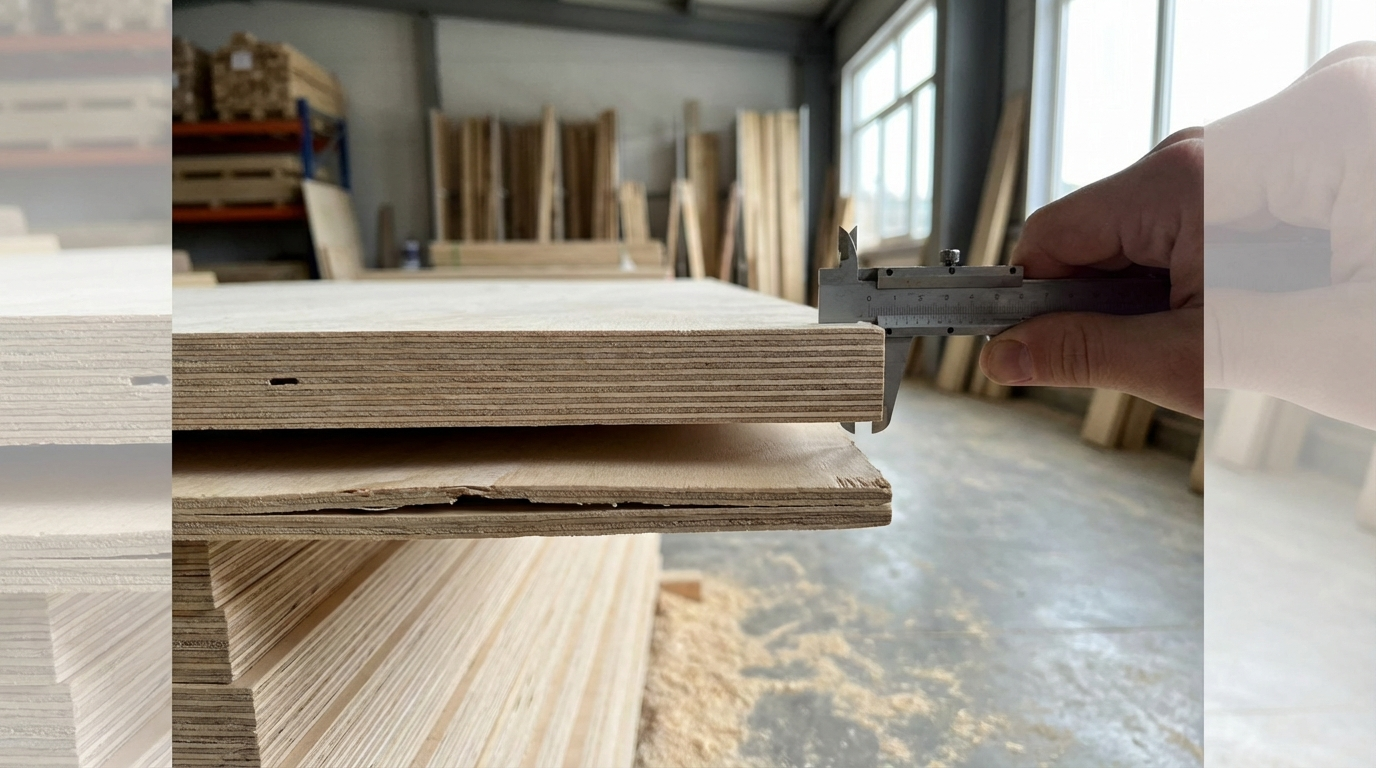
Before buying: Tap sheet—solid thud (not hollow); measure thickness ±0.5mm variance; check edges straight/no fuzz. Ask density grade proof.
After cutting: No crumbling core; clean edges; screw-test scrap (holds without spinning).
After install: Edges sealed tight; no gaps/swells after 1 week humidity; clean with damp cloth only.
How to spot fake or low-grade MDF in Kolkata markets?
Red flags: Uneven color/streaks, lightweight for thickness, breaks with hand snap. Genuine feels dense, cuts smooth. Kolkata bazaars mix stock—test weight (12mm ~20kg/sheet). Nuance: Recycled fiber cheaper but weaker. Next: Buy stamped sheets, cut sample on-site.
Trade-offs and Limitations
(Repeated? Wait, already have. Skip or integrate. Wait, mandatory but placed earlier.)
Homeowner Tips: Durability Do's & Don'ts
Do: Seal edges, use in dry zones, clean dry-cloth only. Don't: Drag heavy items (scratches), wet-wipe, expose to steam. Kolkata homes: AC rooms best; ventilate godrej wardrobes.
Carpenter Tips: Working with MDF
Pre-drill screws 3/4 depth; use zero-clearance blade for cuts; edge-band immediately; handle with gloves (resin dust). Hinge zones: Pilot holes prevent splits.
Architect/Designer Tips
Spec "calibrated [thick]mm HDHMR MDF, E1 emission"; detail edge returns; wet-zone alternatives like PVC. Focus repeatable cuts for modulars.
Contractor/OEM Tips
QC: Random thickness checks; stack vertically; bulk quotes lock rates. Reduces complaints 30% via pre-seal.
FAQs
Why do MDF prices fluctuate in Kolkata?
Supply from regional mills dips in monsoons, hiking transport/logistics 20%. Thickness/grade demand spikes pre-festivals. Dealers add for cutting/stacking. Varies batch-to-batch—confirm current via multiple quotes including GST/delivery.
Is 12mm MDF enough for kitchen cabinets?
Yes for standard use if HDHMR and framed; handles 30–40kg shelves. Kolkata humidity demands extra sealing. Trade-off: Thinner risks flex; thicker adds weight/cost. Always load-test mockup before full build.
How much for a full wardrobe sheet set in Kolkata?
Around ₹6,000–₹10,000 for 12mm (150–200 sq ft total), varying dealer/volume. Include cutting (₹2–5/sq ft extra). Buffer for doors/lam.
Plain vs prelaminated MDF—which saves money?
Plain cheaper upfront (20–40% less) but add laminate labour (₹15–25/sq ft). Prelam faster install, uniform finish. Choose plain for custom designs.
Best places to buy MDF in Kolkata?
Markets like Burrabazar, Howrah plywood hubs—compare 3–5 for rates/stock. Volume buyers get 10–15% off; check godown freshness.
Does thickness affect MDF strength?
Directly—doubles load capacity every 50% thickness gain, plus density matters. 18mm rivals blockboard for racks. Verify via bend-test.
MDF or HDHMR for coastal Kolkata?
HDHMR essential—resists 2x moisture. Standard MDF for interiors only. Cost +20–30%, worth it vs repairs.
How to calculate total MDF cost including wastage?
Project sq footage x 1.15 (wastage) x rate + 10% labour/cutting/GST. E.g., 100 sq ft = 115 x ₹60 = ₹7,000 base. Disclaimer: This content is provided for general informational purposes based on industry practices and publicly available information. Product specifications, standards, prices, and availability may vary by manufacturer, region, and time. Readers should independently verify details with manufacturers, dealers, or qualified professionals before making purchase or construction decisions.
Want Plywood Suggestions?
Share a few details and a Duro BOIL specialist will suggest suitable brands and connect you to responsive dealers.