51 Modern Main Door Designs with Vastu Tips & Price Guide (2026)
Discover 51 stunning modern main door designs for Indian homes. Main entrance ideas with Vastu guidelines, smart lock options & price estimates.
Quick Overview
Your main door is more than an entry point—it's the face of your home and the first impression visitors form about your taste, style, and attention to security. "Your main entrance door is much more than just a way to enter your home. It actually sets the first impression for visitors, adds to your home's aesthetic appeal and provides security and durability."
This comprehensive guide brings you 51 modern main door designs perfectly suited for Indian homes in 2026, covering everything from material choices and Vastu compliance to smart lock integration and realistic price estimates. Whether you're building a new home, renovating an existing entrance, or simply exploring design possibilities, duroboil.com's expert curation ensures you find the perfect door that balances aesthetics, functionality, and budget.
What this guide covers:
- 51 trending main door designs categorized by style and material
- Complete Vastu guidelines for door placement and direction
- Material comparison: wood, steel, WPC, and glass options
- Smart lock recommendations and security features
- Price estimates for every budget range
- Standard door sizes for Indian homes
Main Door Design Requirements in India
A well-designed main door must satisfy three critical requirements: visual appeal that complements your home's architecture, robust security features, and practical durability against India's diverse climate conditions.
What size should your main door be?
The standard size of a main entrance door in India is typically 3 feet 6 inches to 4 feet wide and 7 feet high (42 to 48 inches by 84 inches). People in India commonly use standard door sizes for residential properties, with 7 ft height and 3 ft width being the most common. However, larger properties like bungalows or villas prefer 8 ft height and 4 ft width.
| Door Type | Standard Width | Standard Height | Best For |
|---|---|---|---|
| Single Main Door | 3 ft – 3.5 ft (36-42") | 7 ft (84") | Apartments, builder floors |
| Double Main Door | 5 ft – 6 ft (60-72") | 7-8 ft (84-96") | Villas, independent houses |
| Premium Double Door | 6 ft – 7 ft (72-84") | 8 ft (96") | Bungalows, luxury homes |
Maintain uniform door height (7 ft) across the house for visual symmetry. Use 30–35 mm thickness for flush doors; 40–45 mm for solid wood doors.
What are the functional requirements?
Indian main doors face unique challenges: monsoon humidity in coastal areas, extreme summer heat in northern regions, termite threats across the country, and security concerns in urban settings. Your door selection must account for these region-specific factors.
Best Materials for Main Doors in India
The choice of material fundamentally determines your door's longevity, maintenance requirements, security level, and cost. Each material has distinct advantages that make it suitable for specific Indian home contexts.
Solid Wood Doors
"Teak wood is the best material for Indian main doors due to its durability, strength, and traditional appeal. It's termite-resistant and ages well." Solid wood doors remain the preferred choice for homeowners seeking classic elegance and natural warmth.
Popular wood types for main doors:
- Teak (Sagwan): Premium option with natural oil content providing termite and moisture resistance. Teak wood is incredibly strong and resistant to wear. Its natural oils protect it from moisture, rot, and warping. Teak is naturally termite-proof, ideal for Indian homes.
- Sal Wood: Sal wood is heavy, coarse, and durable, and it is often favoured in main entrance door design for strong frames.
- Mahogany: Mahogany is reddish, easy to carve, and adds elegance to a modern wooden door design.
- Sheesham (Indian Rosewood): Sheesham has a dark grain and is easy to polish, making it a common choice in wooden door design for the home.
- Cedar: Cedar is light, fragrant, and naturally decay-resistant, making it a good choice for modern main door design near coastal areas.
Steel Doors
Steel doors offer unmatched security and are increasingly popular in urban apartments. Metal doors offer security but lack warmth. Modern steel doors now come with wood-finish laminations that provide the aesthetic appeal of timber with superior strength.
WPC Doors (Wood Plastic Composite)
WPC doors are highly durable with a lifespan typically ranging from 25 to 50 years. They offer the appearance and texture of wood with the stability and water resistance of resin products.
WPC features include: Waterproof & Termite-Proof—ideal for kitchens, bathrooms, and outdoor furniture. Low Maintenance—no need for regular polishing or repainting. Fire Retardant—safe for residential and commercial applications. Environmentally Responsible—made using recycled materials, reducing the carbon footprint.
Material Comparison Table
| Parameter | Solid Wood (Teak) | Steel | WPC | Flush Door |
|---|---|---|---|---|
| Durability | Excellent (50+ years) | Excellent | Very Good (25-50 years) | Good (15-20 years) |
| Moisture Resistance | Good (with treatment) | Excellent | Excellent | Poor |
| Termite Resistance | Excellent (teak) | Not applicable | Excellent | Poor without treatment |
| Aesthetic Appeal | Excellent | Good | Good | Moderate |
| Maintenance | High (annual polishing) | Low | Very Low | Low |
| Price Range | ₹25,000 – ₹1,50,000+ | ₹15,000 – ₹45,000 | ₹8,000 – ₹25,000 | ₹5,000 – ₹15,000 |
| Best For | Premium homes, traditional settings | Apartments, high-security needs | Humid areas, budget-conscious | Internal doors, basic use |
51 Modern Main Door Designs for 2026
According to duroboil.com's research, the following design categories represent the most sought-after styles for Indian homes this year. Minimalism continues to dominate in 2025. Simple doors with clean lines are highly prominent. You can expect some features like smooth surfaces without excessive carvings or decorations or neutral colors like matte black grey white or wood tones.
Category 1: Minimalist and Contemporary Designs (Designs 1-10)
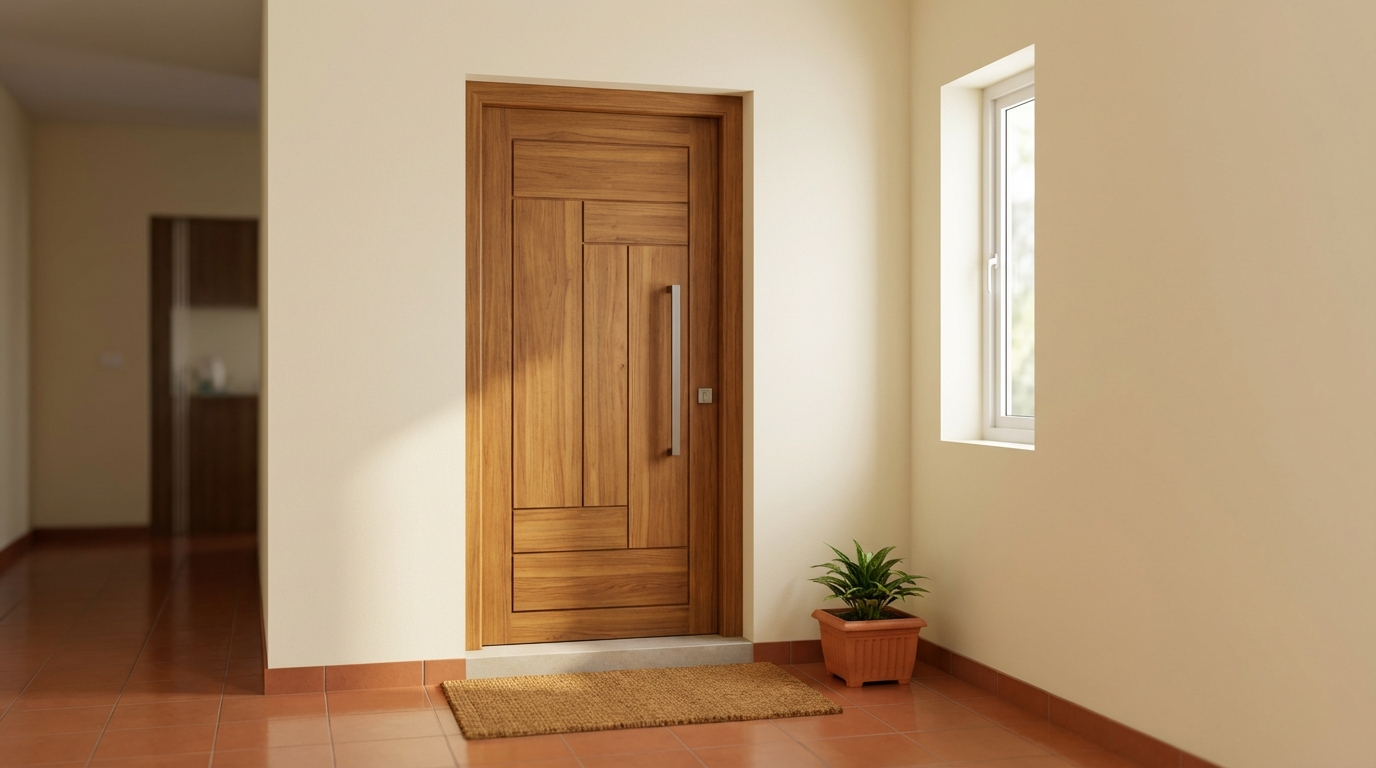
Clean shutters in light tones define this style. A modern main door design like this avoids heavy ornamentation, instead highlighting smooth surfaces and subtle finishes. It creates a fresh, uncluttered look that blends well with contemporary façades while remaining practical for daily use.
Design 1: Flush Panel with Vertical Grooves
Clean, vertical lines etched into a solid wood or laminated surface create depth without overwhelming detail. Ideal for modern apartments and minimalist homes. Works exceptionally well in white, walnut, or matte black finishes.
Design 2: Geometric Cutout Door
Angular patterns carved or routed into the door surface add visual interest while maintaining a contemporary aesthetic. Perfect for urban villas seeking a statement entrance.
Design 3: Horizontal Slat Design
Parallel horizontal grooves or planks create a sleek, elongated appearance that makes entrances appear taller and more imposing. Excellent for homes with standard ceiling heights wanting to create an illusion of grandeur.
Design 4: Two-Tone Contrast Door
Combining two complementary colours—such as dark walnut with cream panels or black frame with wood insert—creates visual drama without ornate detailing.
Design 5: Metal Accent Minimalist
A simple wooden or WPC door with subtle brass, copper, or black metal strips adds a touch of luxury to an otherwise understated design.
Design 6: Fluted Panel Door
"Modern trends include panelled teak doors with fluted or grooved patterns, PU or laminate finishes, and metal-accented inlays. Many Indian homes are opting for smart digital locks, doorbell cameras, and geometric cut-outs with frosted glass."
Design 7: Pivot Entry Door
Traditional swing doors are being replaced by pivot and sliding doors for contemporary homes. You can expect some features like pivot doors rotating around a central or off center hinge and sliding doors glide smoothly and save space. It adds modern luxurious touch to entrances.
Design 8: Asymmetric Panel Door
Breaking the traditional symmetry with offset panels or handles positioned unconventionally creates a unique statement piece that reflects modern design sensibilities.
Design 9: Textured Laminate Door
High-pressure laminates mimicking concrete, leather, or fabric textures bring tactile interest to minimalist designs while offering excellent durability and easy maintenance.
Design 10: Shadow Gap Frame Door
A door set within a frame with deliberate shadow gaps creates a floating effect, adding architectural sophistication to any entrance.
Category 2: Traditional and Heritage Designs (Designs 11-20)
Traditional wooden doors made from solid timber and usually carved with intricate patterns remain a classic choice. They are strongly linked to the Indian house main door design and carry an auspicious feel for many families. Known for their durability and cultural value, they suit both heritage-style homes and modern spaces that want a touch of tradition.
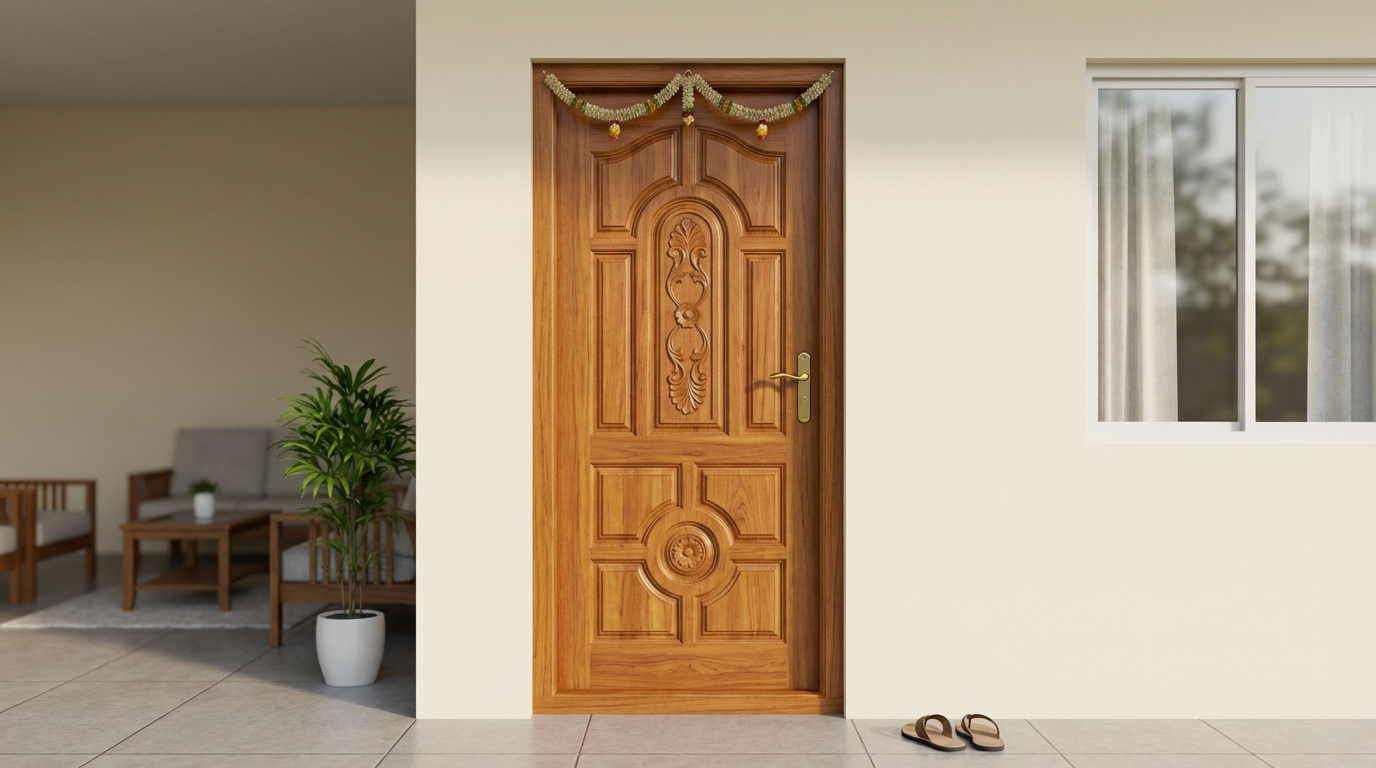
Design 11: Classic Carved Teak Door
A classic wooden main door design with brass embellishments adds a regal feel to your entrance. The rich woodgrain paired with intricate brass handles or knockers creates a timeless charm. This traditional door design works well for modern Indian main door designs and heritage homes. Opt for teak or mahogany for durability.
Design 12: Temple-Style Carved Door
Inspired by traditional craftsmanship, this Indian main door design features hand-carved floral or temple-style patterns. These fancy door designs are often crafted in teakwood and finished with natural polish or gold accents.
Design 13: Brass Studded Wooden Door
Solid wood doors with decorative brass studs arranged in traditional patterns evoke royal Rajasthani or South Indian architectural styles.
Design 14: Antique Fort-Inspired Door
These doors are inspired by grand fort entrances. Historically influenced, these entrances are for those who want to add some Indian culture and heritage into their interiors. To stay true to the origin of this style, stick with distressed finishes for your main door design.
Design 15: Chettinad Style Double Door
Originating from Tamil Nadu's Chettinad region, these doors feature intricate carvings, typically in teak, with Burma teak frames and traditional iron handles.
Design 16: Kerala Style Carved Door
Characterized by intricate floral and elephant motifs carved in jackfruit or teak wood, reflecting the rich artistic heritage of Kerala craftsmanship.
Design 17: Mughal Arch Door
Incorporating the distinctive Mughal arch shape at the top of the door frame, often with geometric or floral jali work within the arch section.
Design 18: Peacock Motif Carved Door
Intricate carvings featuring floral, geometric, and mythological motifs (e.g., peacocks, vines) in traditional Indian styles. The peacock, India's national bird, remains one of the most popular motifs for main door carvings.
Design 19: Kolhapuri Style Door
Traditional Maharashtra design featuring robust teak construction with minimal carving but distinctive iron studs and heavy brass handles.
Design 20: Pooja Room Inspired Main Door
Incorporating sacred symbols like Om, Swastika, or lotus motifs in a respectful, aesthetic manner that aligns with Vastu principles.
Category 3: Modern Wooden Doors (Designs 21-30)
Contemporary wooden door designs blend the natural warmth of timber with modern design principles, creating entrances that feel both inviting and sophisticated.
Design 21: Veneer Finish Designer Door
High-quality natural veneer applied over engineered wood core provides the beauty of exotic wood grains at a fraction of solid wood cost.
Design 22: PU Polish Wooden Door
Polyurethane polish provides a mirror-like finish that enhances wood grain while offering superior protection against moisture and scratches.
Design 23: CNC Carved Modern Door
CNC carvings for precision enable intricate geometric patterns impossible to achieve through hand carving, perfect for contemporary homes wanting detailed designs.
Design 24: Wood and Resin Combination Door
Incorporating translucent epoxy resin sections within wood creates stunning visual effects, particularly when backlit.
Design 25: Live Edge Wood Door
Preserving the natural edge of the wood slab creates an organic, one-of-a-kind entrance that celebrates nature's imperfections.
Design 26: Herringbone Pattern Door
Wood pieces arranged in a classic herringbone pattern add texture and visual interest while maintaining clean lines.
Design 27: Mixed Wood Species Door
Combining different wood species with contrasting colours and grains creates a unique artistic statement.
Design 28: Burnt Wood (Shou Sugi Ban) Door
The Japanese technique of charring wood creates a distinctive black finish with enhanced durability and unique texture.
Design 29: Reclaimed Wood Door
Using salvaged wood from old structures adds character, history, and environmental consciousness to your entrance.
Design 30: Wood with Metal Frame Door
Combining warm wood panels with industrial black metal framing creates a perfect fusion of rustic and modern aesthetics.
Category 4: Jali and Lattice Designs (Designs 31-35)
Inspired by traditional Indian architecture, these house main door designs feature intricate wooden lattice (jali) work. The delicate cut-out patterns allow airflow while keeping the entrance stylish.
Design 31: Traditional Wooden Jali Door
A half-timbered, half-intricately designed metal jali door is a fabulous option for an aesthetic look with privacy. It gives the entrance a substantial look. This is one of the highly recommended wooden jali door designs for Indian homes for the main door as per Vastu.
Design 32: Modern Geometric Jali Door
Contemporary reinterpretation of traditional jali using geometric patterns rather than traditional florals.
Design 33: Laser-Cut Metal Jali Door
Precision laser cutting allows intricate patterns in metal that were previously impossible, offering both security and artistic expression.
Design 34: Glass-Backed Jali Door
Combining jali work with frosted or tinted glass backing provides privacy while allowing natural light penetration.
Design 35: Solar-Themed Jali Door
Vastu recommends this solar theme for the main entrance design with golden metallic bars associated with a plain wooden door inside the entrance frame.
Category 5: Glass Combination Doors (Designs 36-40)
Combining glass and wood is a major trend. These doors allow natural light to enter while maintaining privacy and style. You can expect frosted or tinted glass panels for privacy besides wood frames and different finishes. It brings natural light to the entrance hall.
Design 36: Frosted Glass Panel Door
The combination of frosted glass and wood in Indian style main doors offers a modern solution that balances transparency with privacy. The use of frosted glass introduces a contemporary flair, making it a popular choice among homeowners looking for modern elegance.
Design 37: Stained Glass Accent Door
Incorporating colourful stained glass panels adds artistic expression and filters light beautifully into entrance foyers.
Design 38: Full Height Glass Door with Frame
Floor-to-ceiling glass panels framed in wood or metal create dramatic, light-filled entrances ideal for homes with scenic views.
Design 39: Etched Glass Design Door
Add more variety to your door design with etched glass. This pristine single door can be etched with religious symbols. The LED lighting ensures that you can't miss it!
Design 40: Sidelight Glass Panel Door
Main door flanked by narrow glass panels on one or both sides creates an elegant, well-lit entrance typical of premium homes and villas.
Category 6: Steel and Metal Doors (Designs 41-45)
Modern steel doors have evolved significantly, offering wood-like aesthetics with superior security and weather resistance.
Design 41: Wood-Finish Steel Door
Wooden Style Steel Main doors are made of Galvanized Steel Sheet externally and infill contains Steel mesh, Honeycomb paper and Polyurethane foam. This door weighs less than wooden doors and meant for safety and eco-friendly features which comes along with frame and security lock system.
Design 42: Copper Patina Finish Door
Steel doors treated with copper patina finish develop a beautiful aged appearance that adds character to contemporary homes.
Design 43: Corten Steel Door
Weathering steel that develops a protective rust layer creates industrial-chic entrances with minimal maintenance requirements.
Design 44: Stainless Steel Modern Door
Brushed or polished stainless steel panels offer ultra-modern aesthetics with exceptional durability and weather resistance.
Design 45: Perforated Metal Door
Steel sheets with decorative perforations create privacy screens that allow airflow and filtered light.
Category 7: Bold and Statement Doors (Designs 46-51)
Minimalism is popular but 2025-2026 also sees statement doors in bold colors making a mark. You can expect bright colors like Navy blue, deep green and maroon. Contrasts with neutral exteriors are also here for a striking appearance.
Design 46: Navy Blue Statement Door
Deep navy blue doors create sophisticated contrast against white or cream facades, becoming increasingly popular in contemporary Indian homes.
Design 47: Burgundy Red Heritage Door
Bold Colors: Red (traditional warmth) and black (modern drama) for statement entrances. Rich burgundy evokes traditional warmth while making a bold statement.
Design 48: Forest Green Entry Door
Deep green doors connect interiors with nature, working beautifully with both traditional and modern architecture.
Design 49: Matte Black Pivot Door
Oversized matte black pivot doors create dramatic entrances that are both bold and timeless.
Design 50: Yellow Pop Entrance Door
You can go for a modern main door design that is colourful and bright. Shades like sunshine yellow, deep red, or teal can instantly brighten your facade and make a confident statement. A pop of colour works especially well for minimalist or contemporary homes.
Design 51: Mint Green Contemporary Door
Mint Green: A fresh, trendy choice for urban homes. This refreshing colour adds a youthful, modern touch to any entrance.
Complete Vastu Guidelines for Main Doors
In Vastu Shastra, the main door of a house is considered a crucial aspect as it is considered the beginning point for positive energy and prosperity. The correct placement, direction, and design of the main door play a significant role in creating a harmonious and welcoming atmosphere within the home.
Which direction is best for main door?
The east, north, or northeast directions are considered highly auspicious. These main door directions, as per Vastu, are believed to allow the inflow of positive energy and abundance into the house, ensuring the well-being of its occupants.
As per Vastu, the entrance of the house should be in these ideal directions: Northeast—this is the most auspicious direction due to its exposure to the morning sun. North—the second-best direction, associated with high energy levels and bringing fortune to the residents. East—ideal for those seeking power and luck. For better Vastu, place your entrance as close as possible to the north side of the east wall. Northwest—this direction is beneficial as it brings in plenty of evening sun and wealth.
| Direction | Vastu Rating | Benefits | Recommended Colours |
|---|---|---|---|
| Northeast | Most Auspicious | Morning sun, positive energy | Light wood, cream, yellow |
| North | Highly Auspicious | Wealth, prosperity (Kubera's direction) | Blue, brown, black |
| East | Auspicious | Health, growth, powerful connections | Green, brown |
| West | Neutral to Good | Stability, financial gains | Grey, white, metallic |
| South | Requires Remedies | Can bring fame if placed correctly | Red, maroon, orange, brown |
| Southeast/Southwest | Not Recommended | Generally avoided | Consult Vastu expert |
Vastu tips for main door design
Make the main door of a home the largest door. A two shuttered main door opening inside and clockwise is auspicious.
According to main door opening rules as per Vastu, the entrance should ideally face the north, northeast, east or west, as these facilitate prosperity. According to the main door vastu principles, it should always open inwards in the clockwise direction.
It is best to make a wooden door and avoid metallic doors. Wood being a natural material has high energy vibrations. The main door of the house should be the largest among all. The main entrance should have sufficient and proper lighting. The main door should always open clockwise.
Essential Vastu do's for main door:
- Door should be the largest and tallest in the house
- Open inwards in clockwise direction
- Prefer wooden material over metal
- Keep entrance well-lit and clutter-free
- Use auspicious symbols like Om, Swastika, or lotus
- Install a beautiful nameplate
Vastu don'ts for main door:
- According to Vastu for the main door, it is best not to place any mirror opposite the entrance as it causes energy to bounce back.
- Don't keep shoes in front of main entrance, keep them at a side. Don't keep garbage or dustbin near main entrance as they emit negative energy.
- Avoid black colour for main door. Avoid obstructing things like poles, trees, wires etc, in front of main entrance. Avoid arched windows and doors as they distort positive energy pattern.
- The main door of the house should not be below ground level. There should not be an underground water tank, septic tank, or canal under the main entrance.
Auspicious decorations as per Vastu
Traditional Indian symbols like Swastik, Om, Kalash, or lotus motifs are considered highly auspicious for the main door. You can also use torans (bandhanwars) made of mango leaves or bells. Nameplates with vastu-friendly fonts, wood carvings, or rangoli patterns on the threshold invite positive energy and good fortune into Indian homes.
Smart Lock Options for Main Doors
In 2025, the demand for advanced door locks in India is soaring with the rise of smart homes and security concerns. According to duroboil.com's analysis, smart locks represent one of the most significant upgrades you can make to your main door.
Types of smart locks available
A smart door lock is an electronic locking system that allows you to lock/unlock your door using digital keys like fingerprints, passcodes, or mobile apps instead of traditional keys. They are safer, keyless, and easy to control remotely.
Digital door locks offer a smarter alternative to traditional mechanical locks. They provide keyless entry, remote access, biometric unlocking, and enhanced security features that are difficult to replicate or tamper with. Advanced Security features include biometric fingerprint access, RFID card authentication, PIN code, and mobile app control.
Top smart lock brands in India
With over 125 years of trust, Godrej is India's most recognized lock brand. They offer everything from traditional latch locks to advanced digital locking systems.
Yale is part of the global security leader ASSA ABLOY. Known for digital door locks, Yale offers keyless entry and smart app control.
Hafele provides high-end European lock designs in India. Known for premium finishes and reliable performance, they're ideal for modern interiors.
Smart lock price guide
Entry-Level (₹3,000 – ₹10,000): Smart locks in this range typically have basic keypad or Bluetooth functions. Mid-Range (₹10,000-₹30,000): Locks in this category offer feature-rich options with fingerprint and RFID access, often with remote connectivity. Premium-Range (₹30,000+): Locks in this range have high-end models with world-class features like fully automatic operation, face ID, and robust built quality.
| Price Range | Features | Recommended Brands | Best For |
|---|---|---|---|
| ₹3,000 – ₹10,000 | Keypad, Bluetooth | Qubo, Lavna | Budget homes, apartments |
| ₹10,000 – ₹30,000 | Fingerprint, RFID, App control | Godrej, Yale, Philips | Most homes, balanced needs |
| ₹30,000+ | Face ID, WiFi, Auto-lock | Samsung, Hafele, Solity | Premium homes, maximum security |
Key features to look for
Battery Life & Emergency Power: Batteries are the powerhouse of smart locks. Some locks provide less than 6-month warranty, while other smart locks provide long-lasting battery life that lasts up to 6-12 months. Go for locks that have low-battery indicators and an emergency power option, such as a USB port.
Most digital door locks are designed for wooden doors with a specific thickness, typically between 35mm and 80mm. They are usually not suitable for glass, sliding, or double doors without special adapters. Always check the product specifications for door compatibility.
Price Guide for Main Doors in India
A designer wooden main door in India typically costs between ₹25,000 to ₹1.5 lakhs, depending on the material (teak, Sal, or engineered wood), carvings, size, and finish.
Budget-wise main door options
You can purchase wooden doors at a minimum price of Rs 50-300 per sq ft. The price increases as per the type, wood type, size, pattern, etc.
| Budget Category | Price Range | Best Options | What to Expect |
|---|---|---|---|
| Economy | ₹5,000 – ₹15,000 | Flush doors, basic WPC | Simple designs, basic durability |
| Mid-Range | ₹15,000 – ₹40,000 | Steel doors, quality WPC, veneer | Good durability, decent aesthetics |
| Premium | ₹40,000 – ₹80,000 | Solid wood (non-teak), designer steel | Excellent quality, good designs |
| Luxury | ₹80,000 – ₹2,00,000+ | Teak, imported wood, custom carved | Exceptional quality, bespoke designs |
Additional costs to consider
Beyond the door itself, budget for these additional expenses:
- Door frame: ₹5,000 – ₹25,000 depending on wood type and size
- Hardware: ₹2,000 – ₹15,000 for hinges, handles, locks
- Installation: ₹2,000 – ₹8,000 for professional fitting
- Finishing: ₹3,000 – ₹15,000 for polish, paint, or lamination
- Smart lock: ₹3,000 – ₹50,000 depending on features
Design Considerations for Different Home Types
Apartments and builder floors
For city flats, the home door design may need to be simple, moisture-resistant, and with smart locks. Consider steel doors with wood finish or quality WPC doors for optimal security and durability.
Independent houses and villas
For villas, a broader door with sidelights, or even a pivot style, can add presence and elegance. Double doors with traditional or contemporary designs work best for creating grand entrances.
Bungalows and premium homes
Oversized pivot doors, custom carved teak designs, or designer double doors with glass panels and sidelights create appropriately impressive entrances for luxury properties.
Installation Guidelines
Professional vs DIY installation
Duroboil.com strongly recommends professional installation for main doors. Proper installation ensures optimal security, weather sealing, and door longevity. Poor installation can lead to warping, security vulnerabilities, and premature wear.
What to verify during installation
- Frame is perfectly level and plumb
- Door opens and closes smoothly without scraping
- Adequate gap clearance (3-5mm) for expansion
- Weather stripping is properly sealed
- All hardware is securely fastened
- Lock mechanism operates correctly from both sides
Maintenance Tips for Main Doors
Wooden door maintenance
Teak doors require regular maintenance to keep them looking their best. They need to be oiled or treated periodically to maintain their natural color and prevent weathering. In areas with high humidity or direct sunlight, the maintenance frequency may increase.
Recommended maintenance schedule:
- Weekly: Dust with soft cloth
- Monthly: Clean with mild wood cleaner
- Annually: Polish or oil treatment
- Every 3-5 years: Refinish if needed
Steel door maintenance
Steel/PVC: Wipe with damp cloth; avoid harsh chemicals. Steel doors require minimal maintenance—periodic cleaning and occasional lubrication of hinges and locks.
WPC door maintenance
WPC doors are low-maintenance. You can simply wipe them clean with a damp cloth and mild detergent. There's no need for special treatments or regular oiling.
Common Mistakes to Avoid
When selecting and installing main doors, avoid these frequently made errors:
Mistake 1: Choosing based solely on aesthetics
While appearance matters, neglecting security, durability, and climate suitability leads to regret. Always balance form with function.
Mistake 2: Ignoring Vastu considerations
For many Indian families, Vastu compliance is essential. Plan door direction and design during the construction phase rather than attempting corrections later.
Mistake 3: Underestimating climate impact
A door suitable for dry North India may fail in humid Kerala. Consider your local climate conditions when selecting materials and finishes.
Mistake 4: Skimping on hardware quality
Premium doors with cheap hinges and locks underperform. Invest in quality hardware that matches your door's grade.
Mistake 5: Not considering future technology integration
If you plan to add smart locks later, ensure your door's thickness and material can accommodate electronic lock systems.
Mistake 6: Ignoring sound and thermal insulation
Main doors significantly impact noise transmission and heat transfer. Consider these factors, especially in urban areas and extreme climate regions.
Frequently Asked Questions
Which wood is best for main door in India?
Teak wood (Sagwan) is widely considered the best choice for main doors in Indian homes due to its natural termite resistance, moisture resistance, and exceptional durability. While expensive, teak doors can last 50+ years with proper maintenance. For budget-conscious options, Sal wood offers excellent durability at lower cost, while Sheesham provides good aesthetics and moderate durability. According to duroboil.com's research, your choice should consider local climate—teak excels in humid coastal areas, while Sal performs well across various conditions.
What is the ideal main door size as per Vastu?
As per Vastu Shastra, the main door should be the largest door in the house, ideally with standard dimensions of 7 feet height and 3-4 feet width. For double doors in larger homes, 5-6 feet total width is recommended. The door should be proportionate to the house—neither too small nor excessively large. Vastu suggests the main door should be slightly larger than other internal doors and should open inwards in a clockwise direction for optimal energy flow.
Is steel door better than wooden door for main entrance?
Both materials have distinct advantages. Steel doors offer superior security, fire resistance, and lower maintenance, making them excellent for apartments and high-security needs. However, wooden doors provide better insulation, natural aesthetics, and align with Vastu principles that recommend natural materials. Modern wood-finish steel doors attempt to combine both benefits. Choose steel for security-focused urban apartments; choose wood for traditional aesthetics or when Vastu compliance is priority.
How much does a good quality main door cost in India?
A quality main door in India typically ranges from ₹25,000 to ₹1.5 lakhs depending on material, design complexity, and size. Basic flush doors start around ₹5,000-8,000, while mid-range veneer or WPC doors cost ₹15,000-30,000. Quality steel security doors range from ₹20,000-45,000. Designer teak doors with carving can cost ₹50,000-2,00,000+. Remember to budget an additional 30-40% for frame, hardware, installation, and finishing.
What are the best smart lock brands for main doors in India?
The leading smart lock brands in India include Godrej (trusted Indian brand with comprehensive range), Yale (global leader with advanced features), Samsung (premium Korean technology), Hafele (German engineering), and Qubo (good value option). For most Indian homes, Godrej and Yale offer the best balance of features, reliability, and after-sales service. Budget ₹8,000-15,000 for quality smart locks with fingerprint and app control features.
Which direction main door is best as per Vastu?
Northeast is considered the most auspicious direction for main doors as per Vastu Shastra, followed by North (associated with wealth god Kubera), East (brings health and prosperity), and West (offers stability). South-facing doors are traditionally considered less favourable but can be made Vastu-compliant with proper placement and remedies. The key is ensuring the door opens inward, is well-lit, and faces no obstructions.
How do I maintain a wooden main door?
Wooden main doors require regular maintenance for longevity: dust weekly with a soft cloth, clean monthly with mild wood cleaner, and apply polish or oil annually. Teak requires less maintenance due to natural oils, while softer woods need more frequent attention. Avoid water accumulation at the base, ensure proper weather sealing, and address any termite signs immediately. In humid areas, consider applying anti-fungal treatments during monsoon.
Are WPC doors good for main entrance?
WPC (Wood Plastic Composite) doors are excellent for main entrances, especially in humid coastal areas or moisture-prone regions. They offer termite resistance, waterproofing, and require minimal maintenance compared to solid wood. While they may lack the premium feel of teak, modern WPC doors closely mimic wood aesthetics. They're more affordable than quality wooden doors and last 25-50 years. However, for traditional aesthetics or strict Vastu compliance requiring natural materials, solid wood remains preferable.
What is the standard main door frame thickness?
The standard door frame thickness for main doors in India is typically 4-5 inches (100-125mm) for wooden frames. This provides adequate strength to support heavy main doors and accommodate standard locks and hinges. For steel frames, 60-80mm is common. Always ensure the frame material and thickness match your door weight—heavier carved wooden doors require robust teak or Sal frames, while lighter doors can use hardwood alternatives.
Can I install a smart lock on any main door?
Most smart locks require doors with specific thickness (typically 35-80mm) and adequate material strength. Wooden doors 38-45mm thick are ideal for smart lock installation. Very thin flush doors may not accommodate the lock mechanism properly. Steel doors may require specific mounting adapters. Before purchasing a smart lock, verify your door's thickness, material, and ensure it can support the lock's weight and mechanism. Professional installation is recommended for optimal security.
Note: This is independent editorial content by duroboil.com. We are not affiliated with any door manufacturer or brand mentioned in this guide. Prices and availability vary by region and dealer—always verify current information before purchase.
Disclaimer: This content is provided for general informational purposes based on industry practices and publicly available information. Product specifications, standards, prices, and availability may vary by manufacturer, region, and time. Readers should independently verify details with manufacturers, dealers, or qualified professionals before making purchase or construction decisions.Want Plywood Suggestions?
Share a few details and a Duro BOIL specialist will suggest suitable brands and connect you to responsive dealers.