47 Stunning Plywood Mandir Designs for Indian Homes (2026 Gallery)
Explore 47 beautiful plywood mandir designs for Indian homes. Wall-mounted, floor-standing & compact temple ideas with Vastu tips, materials & price guide.
Quick Overview: Plywood Mandir Designs for Indian Homes
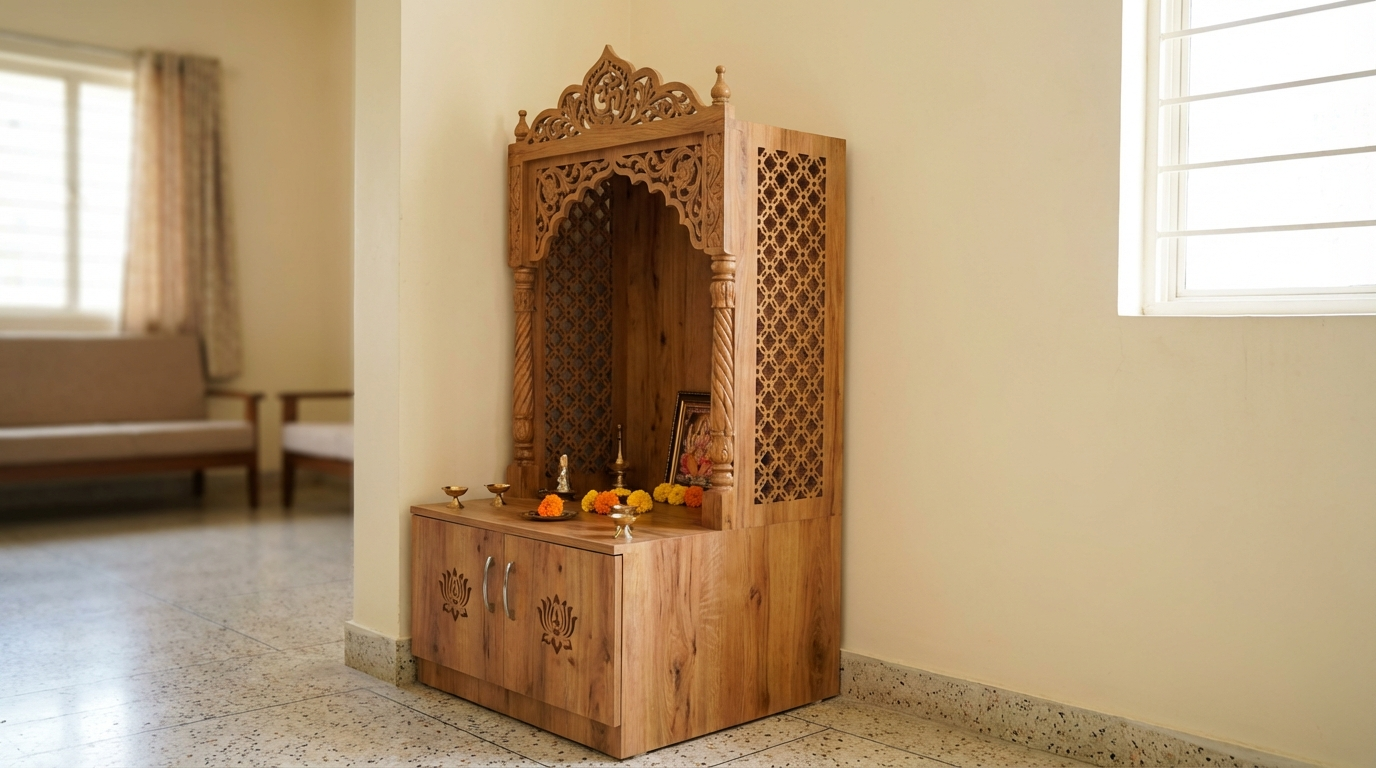
Plywood wooden mandir designs are key in Indian homes, mixing spiritual value with beauty, and plywood's strength and affordability make it a great choice for families wanting a peaceful space for prayer. Whether you live in a compact apartment or a spacious bungalow, plywood mandirs offer the perfect blend of tradition and modern functionality.
This comprehensive guide covers 47 stunning plywood mandir designs across wall-mounted, floor-standing, compact, and luxury categories. You'll also find Vastu placement tips, material recommendations, and a complete budget guide to help you create the perfect sacred space in your home.
Who Should Read This Guide?
- Homeowners planning a new mandir or pooja room renovation
- Interior designers seeking India-specific mandir inspiration
- Carpenters looking for modern and traditional design ideas
- Families wanting budget-friendly yet elegant temple solutions
- Anyone seeking Vastu-compliant mandir placement guidance
Why Choose Plywood for Your Home Mandir?
Plywood mandirs are lightweight, durable, and budget-friendly. They are versatile, easy to customize, and blend seamlessly with modern interiors. Before exploring the 47 designs, understanding why plywood has become India's preferred material for home temples will help you make an informed choice.
Key Advantages of Plywood Mandirs
| Feature | Plywood Mandir | Solid Wood Mandir | MDF Mandir |
|---|---|---|---|
| Cost (Approximate) | ₹8,000 - ₹50,000 | ₹25,000 - ₹2,00,000+ | ₹5,000 - ₹30,000 |
| Durability | 15-25 years | 30-50 years | 8-15 years |
| Weight | Moderate | Heavy | Light |
| Moisture Resistance | Good (with BWR grade) | Excellent | Poor |
| Customization | Highly flexible | Limited | Good |
| Carving Capability | Good (CNC/Router) | Excellent | Limited |
| Termite Resistance | Good (treated) | Variable | Good |
| Wall-Mount Suitability | Excellent | Difficult | Excellent |
Plywood emerges as a versatile medium, transcending the limitations often associated with traditional wood. Its inherent flexibility allows craftsmen and designers to explore intricate detailing and experiment with diverse design possibilities. Unlike rigid materials, plywood bends to the creator's imagination, enabling the realisation of mandir designs that are both aesthetically pleasing and functional.
What Plywood Grade Works Best for Mandirs?
According to duroboil.com's research, the plywood grade you choose significantly impacts your mandir's longevity, especially in Indian climate conditions:
- MR Grade (Moisture Resistant): Suitable for dry areas like living rooms and bedrooms. Most economical option.
- BWR Grade (Boiling Water Resistant): Recommended for most mandirs, especially in humid regions or near kitchens.
- BWP/Marine Grade: Best for coastal areas or mandirs placed in high-humidity zones.
As of 2025, plywood prices in India vary based on factors such as grade, thickness, brand, and region. MR Grade Plywood (Moisture Resistant) ranges from ₹60 – ₹150 per sq ft.
Vastu Guidelines for Plywood Mandir Placement
According to Vastu, the ideal mandir direction in a home is the northeast. If the northeast direction is otherwise occupied, you can go with either north or east directions. Before selecting your mandir design, understanding Vastu principles ensures your sacred space radiates positive energy.
Best Directions for Mandir Placement
| Direction | Suitability | Vastu Significance | Recommendation |
|---|---|---|---|
| Northeast (Ishan Kona) | Most Auspicious | Divine energy zone, receives morning sun | First choice for all homes |
| East | Highly Favorable | Direction of rising sun, new beginnings | Excellent alternative |
| North | Favorable | Associated with prosperity and wealth | Good alternative |
| West | Acceptable | Can be used if east/north unavailable | Use with Vastu remedies |
| South/Southwest | Avoid | Considered inauspicious for worship | Not recommended |
Essential Vastu Tips for Wall-Mounted Mandirs
For wall-mounted mandirs (small temple), place them in the northeast corner of your room or at least on an east or north-facing wall. Avoid placing it on a wall that is shared with a bathroom or kitchen, and keep it at a height where idols are at eye level when seated.
Idol and Prayer Direction Guidelines
- While placing or designing the mandir face direction in home, make sure you are arranging the idols in such a way that you always face north or east while praying.
- As per Vastu Shastra, it is suggested to avoid placing the mandir directly in front of the main door. Idols should be kept at least an inch away from the walls, not directly touching them, to maintain sacredness and energy flow.
- The idols should not be more than 15 inches in height. Avoid overly large or imposing idols in home mandirs.
What to Avoid in Mandir Placement
- Avoid placing the Mandir in bedrooms, bathrooms, or under staircases.
- Never place mandirs on walls shared with toilets
- Avoid placing mandirs below or above bathrooms on different floors
- According to Vastu Shashtra, a puja unit must always have two doors or shutters. Keep the unit in an airy place that allows the doors to open completely.
47 Plywood Mandir Designs: Complete Gallery
Duroboil.com has curated 47 beautiful plywood mandir designs across different styles, sizes, and budgets. Each category includes designs suitable for various Indian home types – from compact 1BHK apartments to spacious independent houses.
Category 1: Wall-Mounted Plywood Mandirs (Designs 1-12)
Wall-mounted designs save space, perfect for small Indian homes. These designs are ideal for apartments, compact flats, and homes where floor space is limited.
Design 1-3: Minimalist Floating Mandirs
A trendy, new age design that blends spiritual touch without compromising on style and functionality. These wall simple plywood mandir designs are wall mounted, and create a floating look that gives a modern touch to your interiors. Floating plywood mandir designs come with shelves for keeping idols and pooja items.
Features:
- Clean geometric lines with 18mm plywood construction
- Backlit LED panels for ambient lighting
- Compact size: 24" x 18" to 36" x 24"
- Best for: Modern apartments, studio flats, bedrooms
- Budget range: ₹8,000 - ₹15,000
Design 4-6: Traditional Wall Mandirs with Jaali Work
Plywood mandir design with jali doors and intricate designs gives a perfect blend of privacy and elegance. The jali work allows light to seep through which creates beautiful patterns in the mandir. These usually have triangular roofing and carvings that give it traditional charm. The closed-door design maintains sanctity and keeps the mandir dust-free.
Features:
- CNC-cut jaali patterns inspired by temple architecture
- Traditional dome or pyramid top styling
- Two-door design as per Vastu recommendations
- Size range: 30" x 24" to 42" x 30"
- Budget range: ₹12,000 - ₹25,000
Design 7-9: Compact Storage Mandirs
A plywood pooja mandir that comes with storage is ideal for families that have several pooja items, religious texts and need a specific place to keep them without any clutter, this plywood mandir design with storage has upper shelves for idols and lower cabinets for storing essentials like incense sticks, diya holders, and religious books.
Features:
- Multiple compartments for organized storage
- Drawer for smaller pooja essentials
- Upper shelf for idols with lower cabinet
- Size range: 36" x 24" to 48" x 30"
- Budget range: ₹15,000 - ₹30,000
Design 10-12: Contemporary Wall Panel Mandirs
This custom pooja room will add a dash of drama to any home! Crafted in plywood with frosted glass shutters and a backlit panel with an etched 'om' incantation, this plywood mandir design sets the mood for prayer.
Features:
- Frosted glass or acrylic panels with religious motifs
- Integrated LED backlighting
- Extends from wall to ceiling for dramatic effect
- Size range: 48" x 36" to full wall installations
- Budget range: ₹25,000 - ₹60,000
Category 2: Floor-Standing Plywood Mandirs (Designs 13-24)
Floor-standing mandirs are traditional favourites in Indian homes, offering a dedicated worship space with ample room for multiple idols and pooja accessories.
Design 13-16: Traditional Temple-Style Mandirs
The traditional temple is a grand temple and a prestigious temple design. Inside the temple, there is a main platform for the presiding deity, then a small place for the other deities, and a place for religious texts.
Features:
- Ornate dome (gopuram) style top
- Multiple deity platforms at varying heights
- Carved pillar details on sides
- Decorative brass fittings and bells
- Size: 48" W x 24" D x 72" H
- Budget range: ₹35,000 - ₹80,000
Design 17-20: Modern Floor Mandirs
A modern mandir is a great way to bring a touch of contemporary style to your home. Modern mandir designs often feature lines, various geometric shapes, and a minimal aesthetic appeal.
Features:
- Clean lines with minimal ornamentation
- Combination of plywood with glass or acrylic
- Built-in lighting systems
- Modular design for easy relocation
- Size: 36" W x 18" D x 60" H
- Budget range: ₹25,000 - ₹55,000
Design 21-24: Premium Floor Mandirs with Storage
These designs combine worship functionality with practical storage, featuring spacious cabinets for religious books, pooja thalis, and seasonal decorations.
Features:
- Full-height design with multiple storage zones
- Soft-close drawers and cabinet doors
- Premium veneer or laminate finish
- Integrated bell and diya holders
- Size: 48" W x 24" D x 84" H
- Budget range: ₹50,000 - ₹1,20,000
Category 3: Corner Mandirs (Designs 25-32)
Corner mandirs maximize unused corner spaces while following Vastu recommendations for northeast placement. These designs are particularly popular in Indian apartments where space optimization is crucial.
Design 25-28: Compact Corner Units
The Pooja Mandir depicts an innovative and space-saving design thoughtfully incorporated inside a cupboard. It is practical and cost-effective, making it an excellent solution for homes with limited space or budget constraints. It features two shelves, providing ample room to house sacred idols, religious texts, and other essentials. It allows you to create a sacred space for your daily prayers and rituals without needing a dedicated room, making it an ideal choice for apartments or smaller homes.
Features:
- L-shaped or triangular design to fit corners
- Wall-mounted or floor-standing options
- Efficient use of typically wasted corner space
- Size: 24" x 24" corner footprint
- Budget range: ₹10,000 - ₹25,000
Design 29-32: Full-Height Corner Mandirs
These elaborate corner installations transform an entire corner into a dedicated pooja zone, often incorporating seating space for comfortable worship.
Features:
- Floor-to-ceiling corner installation
- Integrated seating ledge
- Multiple shelf levels for deity placement
- Storage cabinets at base
- Size: 36" x 36" corner footprint, 96" height
- Budget range: ₹40,000 - ₹90,000
Category 4: Compact Apartment Mandirs (Designs 33-40)
In small homes, space-efficient mandir designs are perfect. These designs are specifically created for 1BHK and 2BHK apartments where every square foot matters.
Design 33-36: Ultra-Compact Wall Shrines
The minimalist wall-mounted mandir is a modern and elegant mandir design. Plywood mandir design is small in size and easily mounted on the wall, in which separate places are made to keep the idols of God and a box is also made in which other items of worship can be kept.
Features:
- Smallest footprint designs (18" x 12" to 24" x 18")
- Single or dual shelf configurations
- Easy DIY installation
- Lightweight design suitable for any wall
- Budget range: ₹5,000 - ₹12,000
Design 37-40: Foldable and Convertible Mandirs
Innovative designs that can be closed or converted when not in use, ideal for multipurpose rooms.
Features:
- Folding doors that conceal the mandir
- Designs that double as decorative wall panels
- Pull-out or flip-down altar options
- Size: Variable based on design
- Budget range: ₹12,000 - ₹30,000
Category 5: Luxury Designer Mandirs (Designs 41-47)
Premium plywood mandir designs that combine exceptional craftsmanship with luxury finishes. These mandirs become the centrepiece of any home's spiritual space.
Design 41-44: Corian and Plywood Combination
These designs blend plywood structure with Corian accents, LED integration, and premium finishes for a contemporary luxury look.
Features:
- Plywood core with Corian/solid surface cladding
- Programmable RGB LED lighting
- CNC-machined intricate patterns
- Premium hardware and fittings
- Budget range: ₹80,000 - ₹2,00,000
Design 45-47: Custom Architectural Mandirs
Fully customized designs that integrate with your home's architecture, often extending across walls and ceilings.
Features:
- Wall-to-wall or room-sized installations
- Marble or stone flooring integration
- Custom veneer matching with home interiors
- Architectural ceiling treatments
- Budget range: ₹1,50,000 - ₹5,00,000+
Best Materials for Plywood Mandirs
The versatility of plywood opens up numerous design possibilities. Quite effortlessly, it harmonises with the contemporary aesthetics of both compact apartments and expansive bungalows to elevate your spiritual place.
Recommended Plywood Specifications
| Component | Recommended Plywood | Thickness | Why This Choice |
|---|---|---|---|
| Main Structure | BWR Grade Plywood | 18mm | Strength and moisture resistance |
| Back Panel | MR Grade Plywood | 6mm or 9mm | Cost-effective, not exposed to moisture |
| Shelves | BWR Grade Plywood | 12mm or 18mm | Load-bearing capacity for idols |
| Doors/Shutters | Flexible or Standard Plywood | 6mm or 9mm | Weight management, ease of movement |
| Decorative Elements | MDF or Flexible Plywood | 6mm | Easy CNC carving for patterns |
Finish Options for Plywood Mandirs
Plywood mandirs can be painted or finished with a wood stain to give them a unique look that complements your home decor.
- Natural Wood Veneer: Teak, sheesham, or walnut veneer for traditional look
- Laminate Finish: Matte or glossy laminates in wood tones or solid colors
- PU Polish: Polyurethane polish for premium wood-like finish
- Duco Paint: High-gloss painted finish for modern designs
- Acrylic Panels: Backlit acrylic with religious motifs
Design Considerations for Indian Homes
When selecting a plywood mandir design, consider these India-specific factors that duroboil.com recommends for long-lasting performance:
Climate Considerations by Region
| Region | Climate Challenge | Recommended Solution |
|---|---|---|
| Coastal Areas (Mumbai, Chennai, Kolkata) | High humidity, salt air | BWP/Marine grade plywood, stainless steel hardware |
| North India (Delhi, Lucknow, Jaipur) | Extreme temperature variation | BWR grade, proper sealing of edges |
| South India (Bangalore, Hyderabad) | Moderate humidity, termite risk | Termite-treated BWR plywood |
| Western India (Ahmedabad, Pune) | Dry climate, dust | MR grade sufficient, easy-clean finishes |
| Eastern India (Guwahati, Bhubaneswar) | Heavy monsoon, high humidity | BWP grade essential, waterproof adhesives |
Space Planning Guidelines
A Pooja room should have a minimum size of 2.5 feet by 2.5 feet to allow for the storage of necessary religious artifacts and to create a calm atmosphere for praying and doing meditation.
- 1BHK Apartment: Wall-mounted designs (18" x 18" to 24" x 24")
- 2BHK Apartment: Corner or compact floor mandirs (24" x 18" footprint)
- 3BHK Apartment: Dedicated corner or wall panel designs
- Independent House: Full-sized floor mandirs or dedicated pooja room
Installation Guidelines
Proper installation ensures your plywood mandir remains stable and safe for years. Follow these guidelines based on mandir type:
Wall-Mounted Mandir Installation
- Wall Assessment: Check if wall is brick, concrete, or partition. Use appropriate anchors.
- Load Calculation: Calculate total weight including idols. Use minimum 4 anchor points for mandirs over 10kg.
- Height Placement: Position so that idols are at seated eye level (typically 36"-42" from floor).
- Level Check: Use spirit level to ensure perfectly horizontal installation.
- Hardware Selection: Use stainless steel or brass screws to prevent rust stains.
Floor-Standing Mandir Placement
- Floor Leveling: Ensure floor is level; use adjustable feet if needed.
- Wall Anchoring: For tall mandirs (over 60"), anchor to wall for stability.
- Ventilation: Leave 2-3 inch gap from wall for air circulation.
- Protection: Use felt pads under legs to protect flooring.
Cost Estimation Guide
Cost of plywood sheet in India ranges from ₹60-300 per sq ft. Here's a comprehensive budget breakdown for plywood mandirs:
Material Cost Breakdown
| Mandir Size | Plywood Required | Material Cost | Labour Cost | Total Estimate |
|---|---|---|---|---|
| Small Wall-Mounted (24"x18") | 8-10 sq ft | ₹2,000-4,000 | ₹3,000-5,000 | ₹5,000-12,000 |
| Medium Wall-Mounted (36"x24") | 15-20 sq ft | ₹4,000-8,000 | ₹6,000-10,000 | ₹12,000-25,000 |
| Compact Floor (36"x18"x60") | 30-40 sq ft | ₹8,000-15,000 | ₹12,000-20,000 | ₹25,000-45,000 |
| Full-Size Floor (48"x24"x72") | 50-70 sq ft | ₹15,000-30,000 | ₹20,000-35,000 | ₹45,000-85,000 |
| Premium Custom | 80-120 sq ft | ₹30,000-60,000 | ₹40,000-80,000 | ₹80,000-2,00,000+ |
Additional Cost Factors
- Veneer Finish: Add ₹150-400 per sq ft
- Laminate Finish: Add ₹80-200 per sq ft
- CNC Carving: Add ₹2,000-8,000 based on complexity
- LED Lighting: Add ₹1,500-5,000
- Premium Hardware: Add ₹1,000-3,000
- Glass/Acrylic Panels: Add ₹2,000-6,000
Maintenance Tips for Plywood Mandirs
Clean the plywood wooden mandir for home with a dry or slightly damp cloth to remove dust. Use no harsh chemicals to maintain the finish and polish.
Daily Care
- Wipe down surfaces with dry or slightly damp soft cloth
- Remove flower petals and prasad residue promptly
- Ensure proper ventilation to prevent moisture buildup
- Use coasters or plates under diyas to prevent heat damage
Weekly Maintenance
- Clean all shelves and remove accumulated items
- Check for any water damage or staining
- Dust intricate carvings with soft brush
- Wipe glass or acrylic panels with appropriate cleaner
Monthly Care
- Apply furniture polish to maintain finish (avoid near flame areas)
- Inspect hinges and hardware for loosening
- Check for any signs of termite activity
- Clean and organize storage compartments
Monsoon-Specific Care
- Increase ventilation around mandir
- Use moisture absorbers in closed cabinets
- Check for any swelling or warping
- Avoid wet cleaning during high humidity periods
Common Mistakes to Avoid
Based on duroboil.com's extensive research on Indian home interiors, here are the most common mistakes homeowners make with plywood mandirs:
Design Mistakes
- Ignoring Vastu: Placing mandir in south or southwest directions
- Wrong Proportions: Mandir too large for room or too small for idol collection
- Poor Lighting: Not planning for adequate illumination
- Ignoring Storage: Insufficient space for pooja essentials
- Clashing Styles: Mandir design not matching home interiors
Material Mistakes
- Wrong Grade: Using MR plywood in humid areas
- Cheap Hardware: Iron fittings that rust and stain
- Poor Edge Banding: Exposed plywood edges absorbing moisture
- Ignoring Termite Treatment: Especially critical in South India
Installation Mistakes
- Weak Wall Anchoring: Wall-mounted mandirs falling or tilting
- No Ventilation Gap: Moisture trapped behind mandir
- Wrong Height: Idols not at proper eye level for seated worship
- Near Heat Sources: Placing too close to kitchen or direct sunlight
Frequently Asked Questions
Is plywood mandir good according to Vastu?
Opt for mandirs made of wood or marble, as they are considered auspicious. Yes, plywood mandirs are fully Vastu-compliant as plywood is derived from natural wood. Mostly wooden plywood temples are found in Indian homes, wooden temples are also considered good in Vastu Shastra. The key Vastu consideration is placement direction (northeast preferred) rather than the material itself. Ensure your plywood mandir has two doors/shutters as recommended by Vastu Shastra.
Which plywood grade is best for mandir making?
For most Indian homes, BWR (Boiling Water Resistant) grade plywood is recommended for mandir construction. Also known as BWR (Boiling Water Resistant) plywood, this type resists moisture and humidity. It's best for kitchen and bathroom furniture where exposure to water is frequent. For coastal or high-humidity areas, upgrade to BWP/Marine grade. Use minimum 18mm thickness for structural components and 12mm for shelves.
What is the ideal size for a home plywood mandir?
The ideal size depends on your space and requirements. For apartments, wall-mounted mandirs of 24" x 18" to 36" x 24" work well. For independent houses with dedicated pooja rooms, floor-standing mandirs of 48" x 24" x 72" offer ample space. A Pooja room should have a minimum size of 2.5 feet by 2.5 feet to allow for the storage of necessary religious artifacts and to create a calm atmosphere for praying and doing meditation.
How much does a plywood mandir cost in India?
Plywood mandir costs vary significantly based on size, design complexity, and finish. Simple wall-mounted designs start from ₹5,000-8,000, while mid-range floor mandirs cost ₹25,000-50,000. Attractive Look Pooja Mandir plywood is available at approximately ₹43,000 for mid-range designs. Premium custom mandirs can range from ₹80,000 to ₹2,00,000 or more. Always get detailed quotes from 2-3 carpenters before finalizing.
Can plywood mandir be placed in kitchen?
While not ideal, a plywood mandir can be placed in the kitchen if you have no other option. Set aside the northeastern corner of the kitchen when using a temple. Use BWP grade plywood and ensure the mandir is away from the cooking area to prevent heat and grease damage. Many modern kitchens have a dedicated corner shelf for small mandirs. Ensure proper ventilation and regular cleaning.
How to protect plywood mandir from termites?
Protection from termites is crucial, especially in South and East India. Use only ISI-marked, termite-treated plywood from reputed brands. Apply borax solution or commercial anti-termite spray during installation. Keep the mandir area dry and well-ventilated. Avoid placing directly on ground floor without proper elevation. Inspect quarterly for any signs of termite activity.
What is the best finish for plywood mandir?
Plywood mandirs can be painted or finished with a wood stain to give them a unique look that complements your home decor. For traditional look, natural wood veneer (teak or sheesham) with PU polish is recommended. For modern homes, laminate finishes in wood tones work well. Duco paint provides a contemporary, glossy finish. Avoid high-gloss finishes near diya areas as they may discolor from heat.
Should plywood mandir have doors?
According to Vastu Shashtra, a puja unit must always have two doors or shutters. Yes, having doors on your plywood mandir is recommended both for Vastu compliance and practical reasons. Doors protect idols from dust, maintain sanctity, and allow the mandir to blend with interiors when closed. Choose designs with proper hinges that allow doors to open fully without obstruction.
Can I install plywood mandir myself (DIY)?
Plywood pooja mandir designs for home are not only durable but also easy to maintain, making them a practical and long-lasting choice for creating sacred spaces. Small wall-mounted mandirs can be installed DIY with proper tools and wall anchors. However, for medium to large mandirs, professional installation is recommended to ensure proper wall anchoring, leveling, and stability. For floor-standing mandirs over 60" height, always secure to wall for safety.
How long does a plywood mandir last?
With its durability and affordability, a plywood mandir can be a great investment for your home. A well-made plywood mandir using BWR grade plywood with proper finish can last 15-25 years with appropriate maintenance. Factors affecting longevity include plywood quality, climate exposure, finish quality, and maintenance routine. Premium BWP grade mandirs with quality veneer can last even longer with proper care.
Expert Recommendations from Duroboil.com
After analyzing hundreds of plywood mandir installations across India, here are duroboil.com's top recommendations:
Best Value Choices
- For Apartments: Wall-mounted traditional design with jaali doors (₹15,000-25,000)
- For Independent Houses: Floor-standing mandir with storage cabinet (₹35,000-50,000)
- For Modern Interiors: Floating mandir with backlit panel (₹20,000-35,000)
Premium Choices
- For Luxury Homes: Custom architectural mandir with Corian and LED (₹1,00,000+)
- For Traditional Settings: Full temple-style mandir with carved details (₹80,000+)
Final Tips
- Always prioritize plywood quality over decorative elements
- Get designs that can accommodate future additions to your idol collection
- Include adequate storage in your design from the start
- Choose timeless designs over trendy ones for a mandir that ages gracefully
- Invest in good lighting – it transforms any mandir design
Note: This is independent editorial content. Duroboil.com is not affiliated with any plywood brand or manufacturer mentioned in this guide. Prices are indicative and may vary based on location, material quality, and carpenter rates. Always verify current prices and specifications before purchasing.
Disclaimer: This content is provided for general informational purposes based on industry practices and publicly available information. Product specifications, standards, prices, and availability may vary by manufacturer, region, and time. Readers should independently verify details with manufacturers, dealers, or qualified professionals before making purchase or construction decisions.Want Plywood Suggestions?
Share a few details and a Duro BOIL specialist will suggest suitable brands and connect you to responsive dealers.