Plywood price in Chennai: grade-wise trend guide
Understand plywood price in chennai using price-per-sqft tables, thickness-wise factors, and dealer quote tips. Avoid overpaying and fake stock in India.
Quick Decision Summary
Plywood prices in Chennai typically range ₹40–₹150 per sq ft for standard 8x4 sheets, driven by grade, thickness, and core quality.
If you’re in a hurry: Focus on MR grade for dry interiors (₹45–₹80/sq ft, 18mm) or BWR/BWP for moisture zones (₹70–₹140/sq ft). Always verify calibration and face veneer at dealers—ask for current quotes with full specs like "18mm BWR hardwood core, calibrated." Chennai's coastal humidity pushes up waterproof grade demand by 10–20%, so compare 3–5 local quotes. Budget extra 15% for transport/logistics in city traffic. Avoid unbranded without ISI mark to dodge delamination risks.
- Choose MR grade if dry rooms, tight budget, light use.
- Choose BWR/BWP if kitchens, bathrooms, coastal exposure.
- Avoid thin under 12mm for load-bearing; skip non-calibrated for modular fits.
Price Range and Cost Drivers (Chennai Focus)
Plywood pricing in Chennai follows national trends but runs 5–15% higher due to port logistics and humidity-driven demand for water-resistant grades. Expect variations by dealer location (e.g., Parrys vs suburbs) and batch freshness.
| Grade | Typical Range (₹/sq ft, 18mm) | Best For |
|---|---|---|
| MR (Moisture Resistant) | ₹45–₹80 | Dry interiors, furniture |
| BWR (Boiling Water Resistant) | ₹65–₹110 | Kitchens, low-moisture baths |
| BWP/Marine (Boiling Water Proof) | ₹85–₹150 | High-humidity, coastal zones |
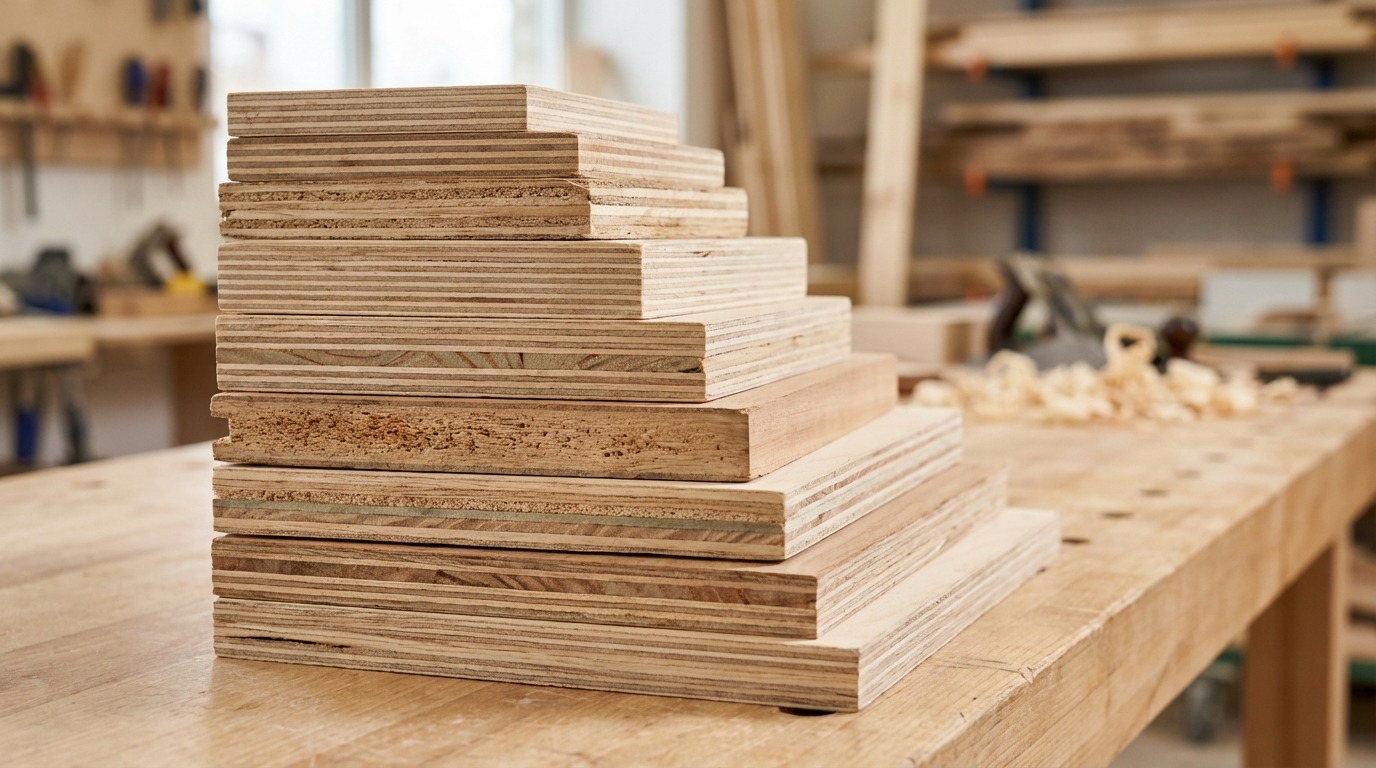
Thickness impact: 6mm often ₹25–₹50/sq ft (shelves); 12mm ₹40–₹90; 18–19mm ₹55–₹140. Cost drivers include glue lines (more in BWP), core wood (eucalyptus cheaper than hardwood), face/back veneer (teak premium adds ₹20+/sq ft), and calibration (saves carpenter time, +₹10–15/sq ft).
How Much Does Thickness Change Plywood Price in Chennai?
Thicker sheets cost more per sq ft due to material volume—6mm suits partitions (₹25–₹50), 12mm for cabinets (₹40–₹90), 18mm for structural (₹55–₹140). In Chennai, demand spikes for 18mm BWP during monsoons, pushing premiums. Check quotes for "per sq ft landed cost" including stacking fees. Practical step: Measure your project sq footage first (e.g., wardrobes need 20–30 sheets), then multiply by mid-range and add 10% buffer for cuts/wastage.
Why Are Chennai Plywood Prices Higher Than Inland Cities?
Coastal import duties, humid storage needs, and traffic delays add 10–20%. Monsoon stockpiling inflates rates temporarily. Verify by asking dealers for "today's mill rate vs retail" and compare across 3 spots like George Town vs Ambattur. Next step: Visit during weekdays for bulk discounts; negotiate on volume over 50 sheets.
How to Ask for Accurate Dealer Quotes in Chennai
- Specify full details: "18mm BWR, hardwood core, calibrated, brown film face."
- Ask per sq ft + sheet total + GST + delivery to site.
- Request ISI mark proof and batch date (under 6 months old).
- Compare 3 quotes on same spec; haggle 5–10% on volume.
- Add-ons: edge sealing tape, transport insurance for suburbs.
Mini budget example: Small kitchen (50 sq m cabinets) needs ~20 sheets 18mm BWR. At ₹80/sq ft mid-range: ~₹50,000 base + ₹5,000 logistics/cuts = ₹55,000 total. Confirm locally as rates shift monthly.
What Plywood Grades Actually Mean for Chennai Buyers
MR grade handles normal humidity but not submersion; BWR survives boiling tests once (short boils); BWP/marine (IS 710 logic) endures repeated boiling—ideal for Chennai's 80%+ monsoon humidity. Confusion spots: "Waterproof" often mis-sells MR as BWP; ignore color (brown/red not grade proof); veneer grade (A/B) separate from core/glue.
MR vs BWR vs BWP: Which Grade for What Room?
MR for bedrooms/ceilings (dry, low cost); BWR for kitchens (splashes, steam); BWP for bathrooms/showers (direct wet). In Chennai, upgrade to BWR+ for all but closets due to salt air. Check: Boil scrap in water 2hrs—MR swells, BWP holds. Step: List rooms by moisture risk, match grade, verify glue smell (weak=poor adhesive).
India-Specific Reality Check: Chennai Edition
Chennai's tropical climate (30–40°C, 70–90% RH year-round) accelerates delamination in subpar glue. Open godowns expose stock to rain; contractor delays mean 2–4 week site exposure. Use BWP for ground floors/coastal; seal edges on-site. Workmanship: Local carpenters favor calibrated to cut monsoon swelling risks.
How to Choose Plywood in 5 Steps
- Assess exposure: Dry=MR; splash=BWR; wet=BWP.
- Pick thickness/load: 12mm shelves; 18mm doors.
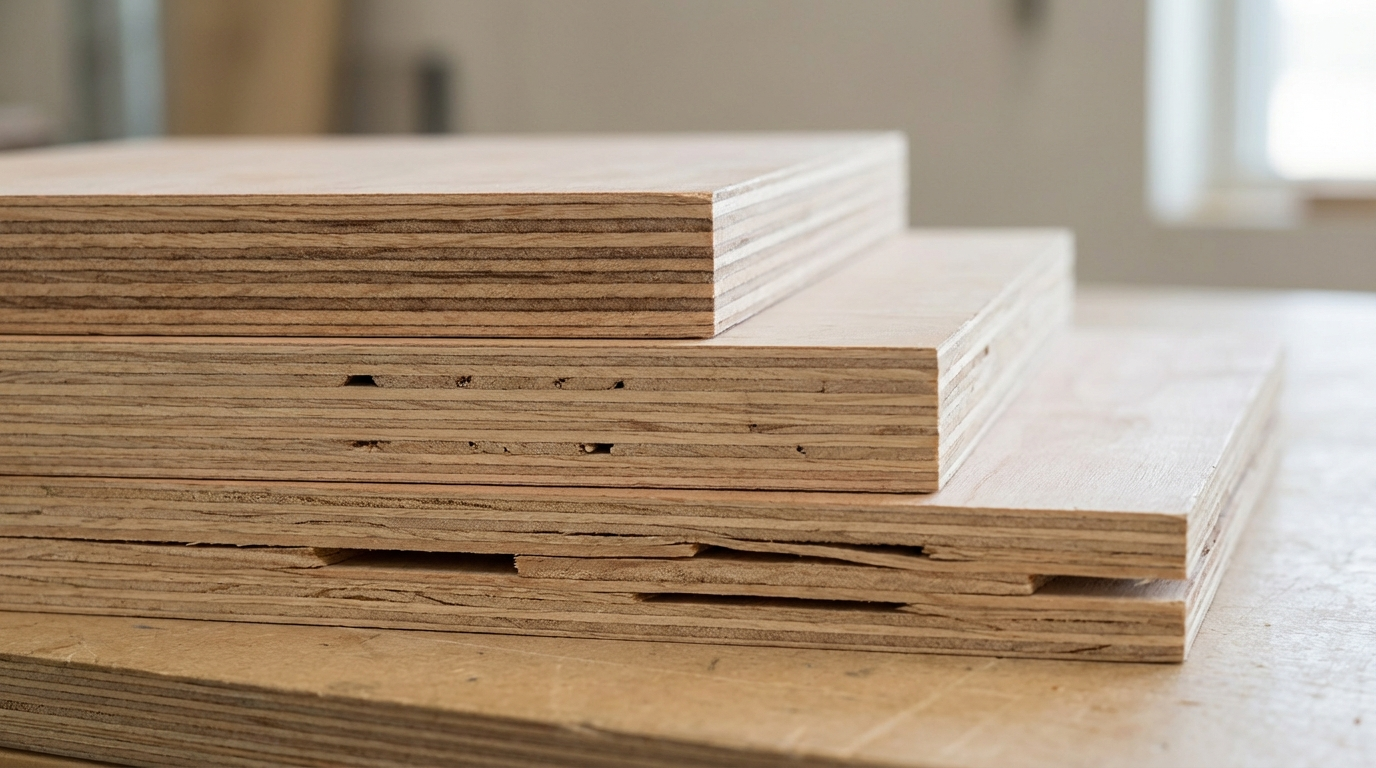
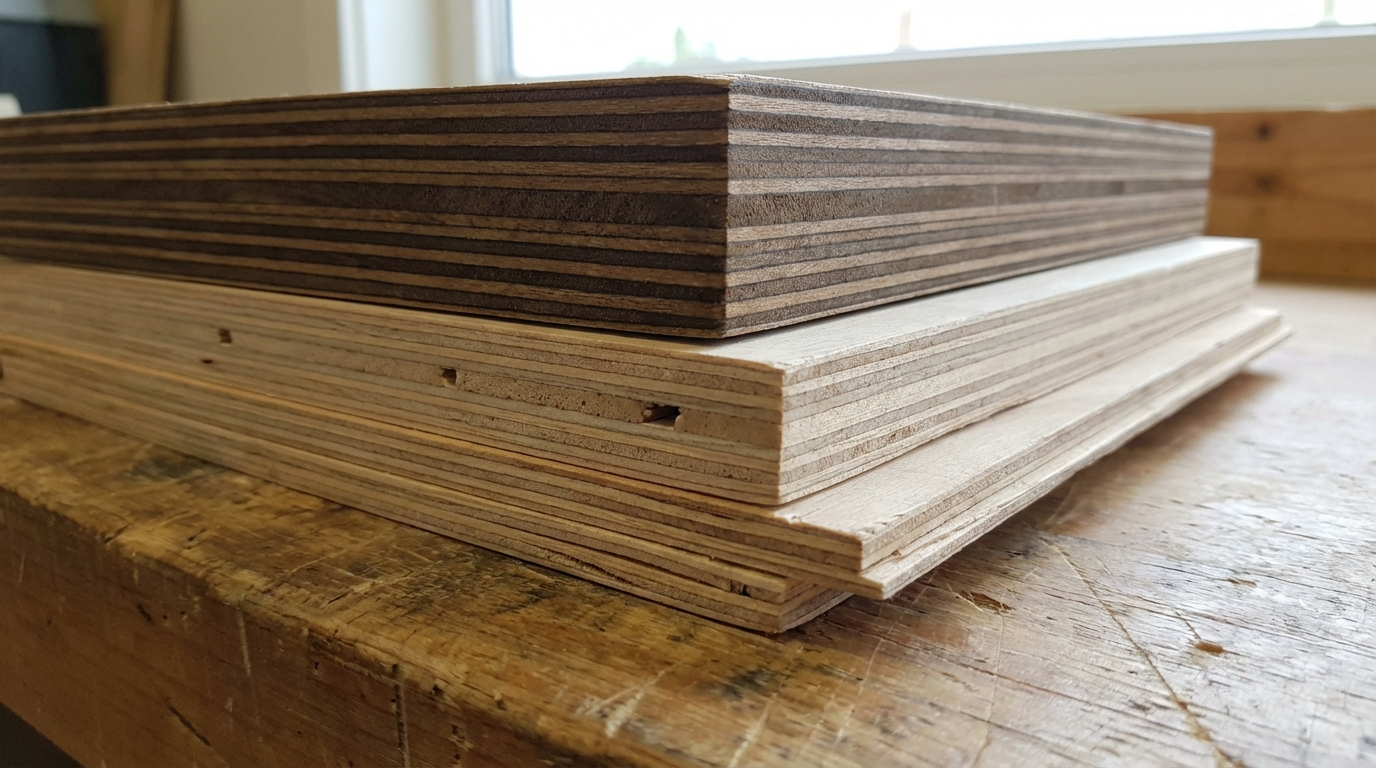
- Inspect core: No gaps, uniform layers.
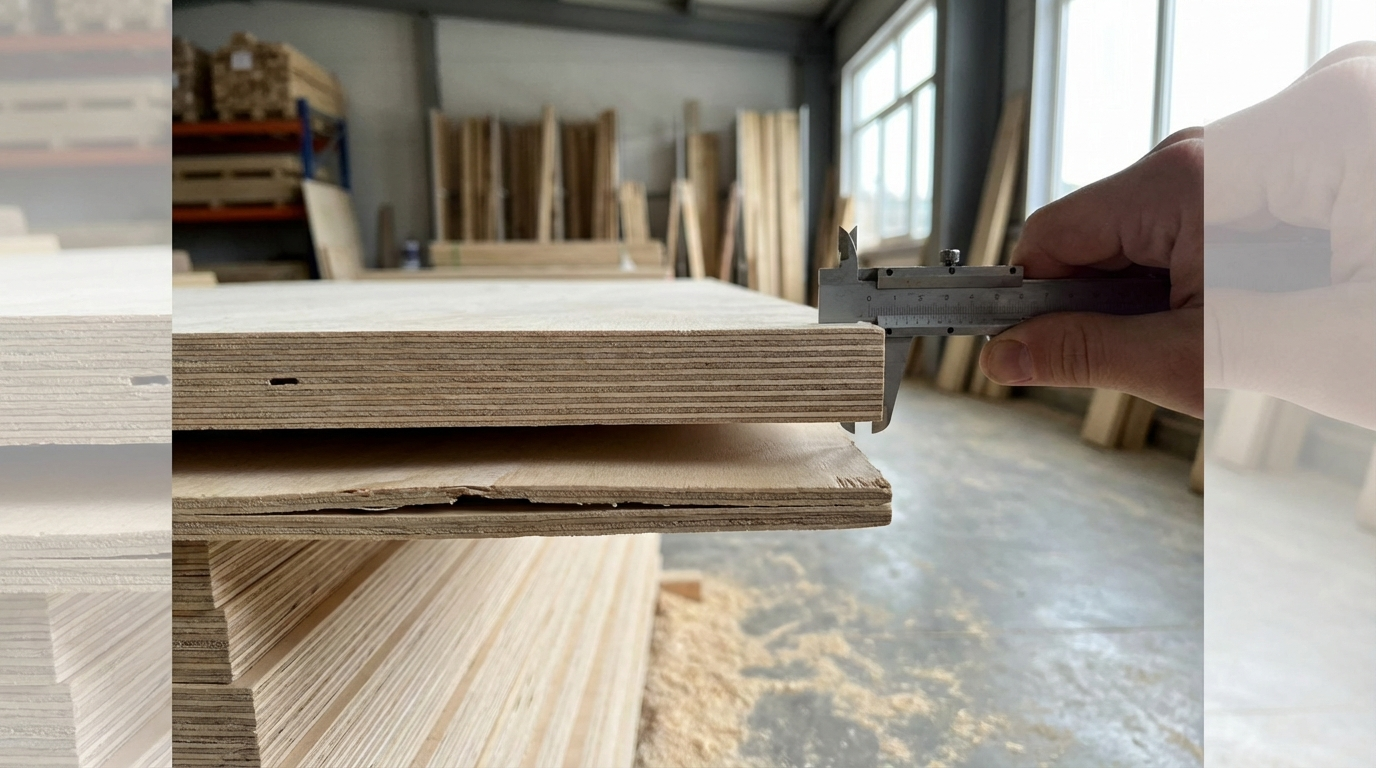
- Test calibration: Stack flat, ruler even.
- Quote match: Specs first, price second.
Skip= warped cabinets post-monsoon.
Best Plywood Thickness for Common Chennai Projects?
Partitions: 6–9mm MR; cabinets: 12mm BWR; shutters: 18mm BWP. Thicker resists sagging in humid racks. Chennai tip: Calibrated versions prevent hinge misalignment. Measure spans, consult carpenter for load calc. Always cut 2–3mm clearance for swelling.
Decision Framework: Match Conditions to Choices
| Project Condition | Recommended Grade/Verify |
|---|---|
| Coastal home, bathrooms | BWP 18mm; check boil test scrap, ISI 710 |
| Budget interiors, dry rooms | MR 12mm; even core, calibrated edges |
| Kitchen cabinets, heavy use | BWR 18mm; hardwood core, no glue bleed |
| Fast delivery, suburbs | MR calibrated; fresh batch, delivery incl. |
| High scratch/scratch risk furniture | BWR with A-grade veneer; sand test smooth |
| Tight budget, non-structural | MR 9–12mm; visual gaps absent, weight check |
Trade-offs and Limitations
Cheaper MR saves 30–40% upfront but risks 2x repair costs in humidity. BWP lasts 15+ years but doubles price—no middle ground for extreme wet. All plywood swells 5–10% uncut edges; none fully termite-proof without treatment. Calibrated cuts waste 20% less but pricier upfront.
Common Buyer Mistakes and How to Avoid Them
- Mistake: Buying by color/brand hype. Why: Hides poor core. Do: Demand cross-section cut.
- Mistake: Ignoring thickness for load. Why: Sags post-install. Do: Span/load rule—18mm over 1m.
- Mistake: Single quote trust. Why: Inflated retail. Do: 3+ dealers, spec-matched.
- Mistake: Skipping calibration check. Why: Uneven cabinets. Do: Ruler on edges.
- Mistake: Dry storage assumption. Why: Chennai godowns humidify. Do: Batch date <3 months.
- Mistake: No edge sealing. Why: Monsoon peels. Do: Tape all cuts Day 1.
- Mistake: Veneer over core priority. Why: Pretty but weak. Do: Tap test resonance.
- Mistake: Bulk without discount. Why: Per-sheet overpay. Do: Negotiate 50+ sheets.
Failure Modes and Fixes
- Symptom: Bulging layers. Cause: Poor glue. Prevent: BWR+ grades. Fix: Replace sheet.
- Symptom: Edge swelling. Cause: Exposed cuts. Prevent: Seal immediately. Fix: Trim/sand.
- Symptom: Core gaps cracking. Cause: Low-density fill. Prevent: Hardwood core. Fix: Fill epoxy.
- Symptom: Warping post-install. Cause: Uneven moisture. Prevent: Calibrated/AC store. Fix: Realign hinges.
- Symptom: Veneer peeling. Cause: Steam exposure. Prevent: Kitchen BWR. Fix: Reglue clamp.
- Symptom: Sagging shelves. Cause: Thin ply. Prevent: 18mm loads. Fix: Add braces.
Quality Checks You Can Do Without Lab Tests
Before: Tap sheet (hollow=bad core); weigh (light=poplar filler); flex test (bend resistance); smell glue (chemical=poor). After cutting: Even kerf, no tear-out. Post-install: Check flatness weekly first monsoon; wipe dry daily.
How to Spot Fake ISI Mark on Plywood?
ISI emboss should be deep, uniform, numbered—scratch test doesn't fade. Hologram tilts colors. Chennai red flag: Stickers only. Step: Snap photo, cross-check stamp details with carpenter; reject if vague.
Homeowner Tips: Durability Do's and Don'ts
Do: Seal edges, use coasters, AC rooms. Don't: Drag furniture, direct hose, overload shelves. Chennai: Ventilate post-rain.
Carpenter Tips: Handling and Prep
Cut with zero-clearance blade; pre-drill hinges; fasten 50mm from edges. Prefer calibrated for straight miters.
Architect Tips: Spec Writing
Detail "18mm BWP IS710, 0.5mm tolerance." Wet zones: Dado joints over butt.
FAQs
Is 18mm plywood enough for Chennai wardrobes?
Yes for standard heights under 2.5m, especially BWR grade to handle humidity swings. Thinner 12mm risks sagging with clothes weight. Always add cross-braces every 600mm. In coastal Chennai, opt calibrated to maintain alignment during monsoons—check dealer stock for even stacking.
Why do plywood prices fluctuate monthly in Chennai?
Raw wood supply, fuel logistics, and seasonal demand (pre-monsoon spikes) cause 5–15% swings. Track by quoting bi-weekly. Stabilize with framework contracts for projects; verify fresh imports via batch codes.
Commercial vs branded plywood: worth the premium?
Branded often adds consistent calibration and glue (₹20–40/sq ft more), reducing site rejects 30%. Commercial suits dry/low-risk if visually checked. Test both scraps; choose based on warranty logic, not name.
How to calculate total plywood cost for a room?
Measure walls/furniture sq m, add 15% wastage/cuts, multiply mid-range/sq ft, include delivery/GST. E.g., 100 sq m at ₹70=₹7,000 base. Factor Chennai traffic delays into timeline.
Best plywood for Chennai kitchen cabinets?
BWR 18mm calibrated, hardwood core—resists steam/splashes without BWP cost. Seal joints with silicone. Avoid MR here; swells in 6 months. Carpenter prep: Laminate immediately post-cut.
Does plywood price per sq ft include GST?
Usually quoted exclusive; add 18% GST + 5–10% transport. Always clarify "landed cost" in quotes to avoid surprises at checkout.
Poplar vs hardwood core: price impact?
Poplar lighter/cheaper (–₹15/sq ft) for non-structural; hardwood denser (stronger, pricier) for doors. Chennai humidity favors hardwood to prevent core rot. Tap test: Solid thud=good.
When to choose calibrated plywood?
Always for modular/false ceilings—saves 20% labor, fits laminates flush. Adds ₹10/sq ft but cuts rework. Essential in humid Chennai for swelling tolerance.
Termite treatment: built-in or extra?
Most grades claim basic; verify by dealer spray log. Chennai termite hotspots need extra coat (₹2–5/sq ft). Post-install: Elevate off floor 150mm.
Disclaimer: This content is provided for general informational purposes based on industry practices and publicly available information. Product specifications, standards, prices, and availability may vary by manufacturer, region, and time. Readers should independently verify details with manufacturers, dealers, or qualified professionals before making purchase or construction decisions.Want Plywood Suggestions?
Share a few details and a Duro BOIL specialist will suggest suitable brands and connect you to responsive dealers.