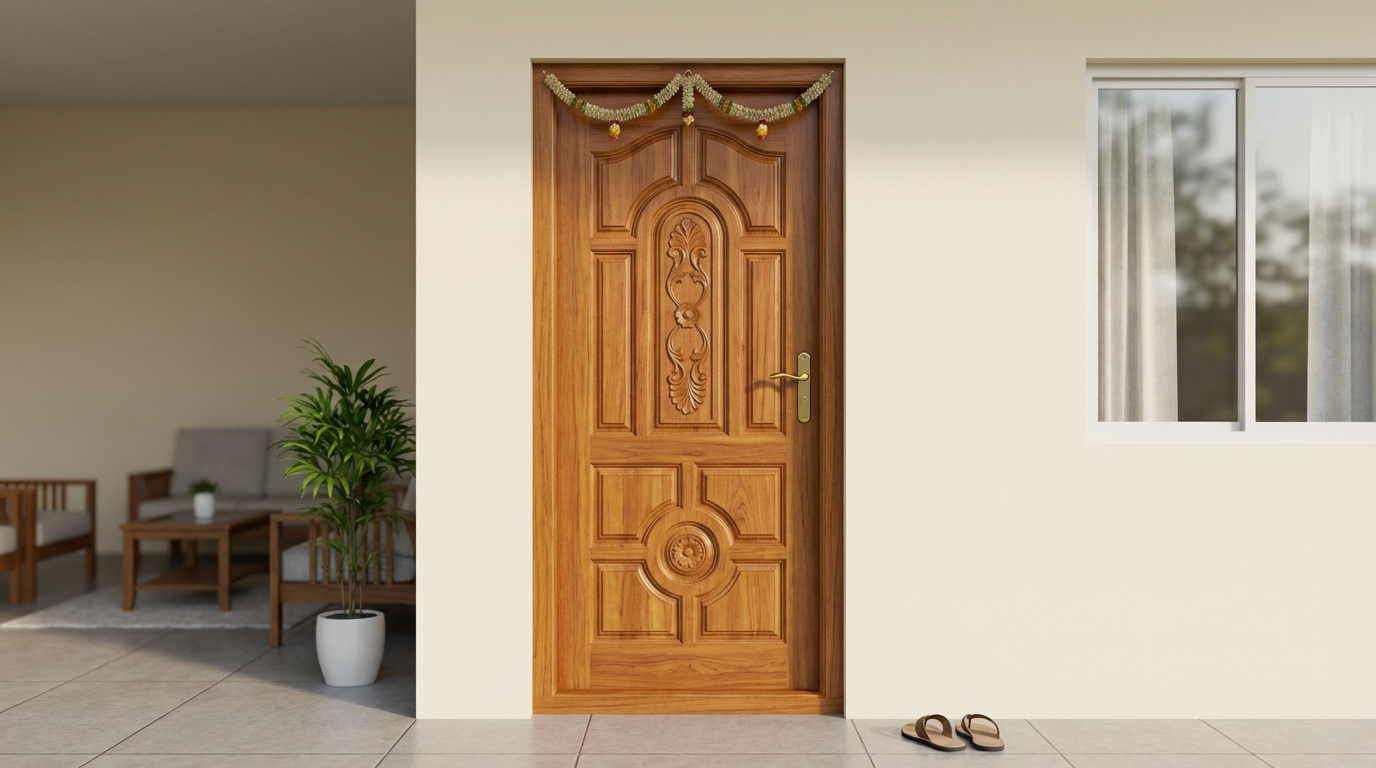
30 Simple Door Designs for Homes: Budget-Friendly Ideas (2026)
Explore 30 simple door designs for Indian homes. Budget-friendly main door, bedroom & bathroom door ideas with prices starting ₹3,000.
Quick Overview
Simple door designs offer the perfect balance between aesthetics, functionality, and affordability for Indian homeowners. This comprehensive guide covers 30 budget-friendly door designs suitable for main entrances, bedrooms, bathrooms, and interior spaces, with prices starting from ₹3,000 and extending to ₹15,000 for premium simple designs.
Whether you're building a new home, renovating an existing property, or simply replacing worn-out doors, understanding simple door design options helps you make informed decisions without overspending. According to duroboil.com's extensive research across Indian markets, homeowners can achieve stunning results with straightforward designs that don't compromise on durability or visual appeal.
Who Should Read This Guide?
- First-time homeowners looking for practical, affordable door solutions
- Renovation planners seeking cost-effective upgrades without major structural changes
- Budget-conscious families who want decent aesthetics within ₹3,000–₹15,000 per door
- Rental property owners needing durable, low-maintenance doors
- DIY enthusiasts exploring simple designs that local carpenters can easily execute
What Makes a Door Design "Simple"?
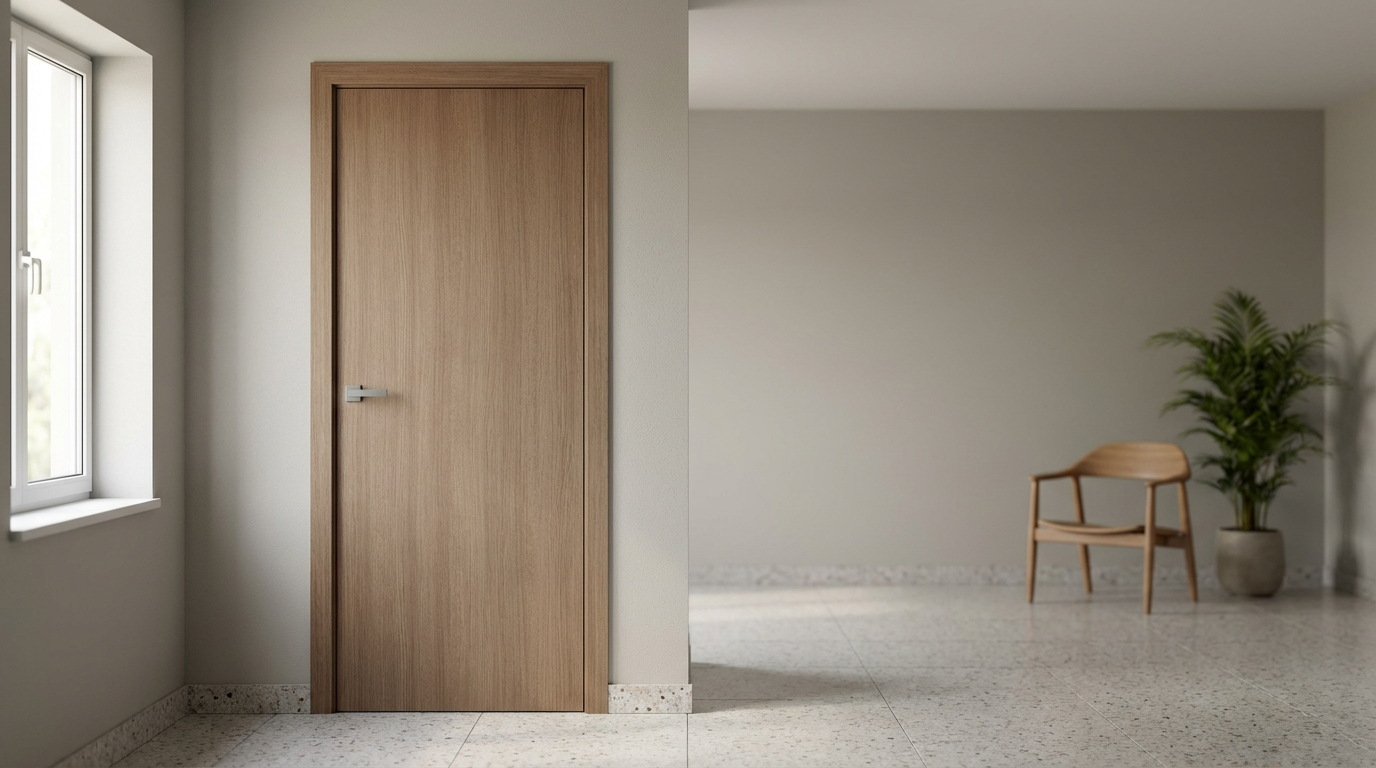
A simple door design is characterised by clean lines, minimal ornamentation, and straightforward construction methods that reduce both material costs and labour charges. Unlike heavily carved or intricate panel designs, simple doors focus on functionality while maintaining visual cleanliness.
The defining features of simple door designs include flat or minimally textured surfaces, single-tone or dual-tone colour schemes, basic geometric patterns if any, and standard hardware requirements. These characteristics make simple doors easier to manufacture, install, and maintain over their lifespan.
Why Simple Designs Work Better for Indian Homes
Indian climate conditions—particularly humidity during monsoons and dust accumulation in dry months—favour simple door designs. Intricate carvings and detailed mouldings trap moisture and dust, leading to faster deterioration. Simple flat surfaces are easier to clean and less prone to moisture-related warping.
Additionally, simple designs accommodate various finishing options including paint, laminate, veneer, and PVC sheets. This flexibility allows homeowners to update door appearances without replacement, simply by changing the surface finish every few years.
30 Simple Door Designs Categorised by Application
The following designs are organised by intended use—main entrance, bedroom, bathroom, and interior doors—with specific material recommendations and price ranges for each category. All prices reflect 2026 market rates across tier-1 and tier-2 Indian cities.
Main Entrance Door Designs (10 Options)
Main entrance doors require higher durability, better security features, and stronger visual impact compared to interior doors. Simple designs for main entrances balance these requirements without excessive ornamentation.
| Design Name | Material | Thickness | Price Range | Best For |
|---|---|---|---|---|
| Flat Flush with Metal Strips | BWR Plywood + Laminate | 32-35mm | ₹8,000–₹12,000 | Modern apartments |
| Single Horizontal Groove | Solid Core Plywood | 35mm | ₹9,000–₹14,000 | Contemporary homes |
| Two-Tone Laminate Flush | Block Board + HPL | 32mm | ₹7,500–₹11,000 | Budget-conscious buyers |
| Vertical Line Pattern | BWR Plywood + Veneer | 35mm | ₹10,000–₹15,000 | Traditional-modern mix |
| Plain Flush with Brass Handle | Marine Plywood | 32mm | ₹9,500–₹13,000 | Coastal areas |
| Minimalist Panel (2-Panel) | Engineered Wood | 35mm | ₹8,500–₹12,500 | Semi-urban homes |
| Glass Strip Insert | BWR Plywood + Frosted Glass | 35mm | ₹11,000–₹15,000 | Homes needing natural light |
| Rustic Wood Finish Flush | Block Board + Wood Grain Laminate | 32mm | ₹7,000–₹10,000 | Village/farmhouse style |
| Charcoal Grey Flat Door | HDHMR + PU Paint | 30mm | ₹8,000–₹11,500 | Urban minimalist homes |
| Teak Veneer Simple Flush | BWR Plywood + Teak Veneer | 35mm | ₹12,000–₹15,000 | Premium simple aesthetics |
Design 1: Flat Flush Door with Metal Strips
This design features a completely flat BWR plywood core with horizontal or vertical metal strips (usually stainless steel or aluminium) creating subtle visual interest. The metal strips serve dual purposes—aesthetic enhancement and edge protection against impact damage.
Installation requires standard door frame fitting with additional routing for metal strip inlays. Local carpenters can execute this design with basic tools, keeping labour costs between ₹800–₹1,500 depending on your city.
Design 2: Single Horizontal Groove
A single horizontal groove running across the door at approximately one-third height creates visual division without complexity. This design works exceptionally well with solid-colour laminates in shades like walnut brown, ivory white, or slate grey.
The groove depth should be 8-10mm for visual impact without compromising structural integrity. Deeper grooves risk moisture accumulation during monsoons, particularly in humid coastal regions.
Design 3: Two-Tone Laminate Flush
Combining two complementary laminate colours—typically a darker shade at the bottom third and lighter shade above—creates visual interest on an otherwise flat surface. Popular combinations include charcoal-white, walnut-cream, and teak-ivory.
This design requires precise laminate cutting and seamless joining at the colour transition line. Most plywood dealers offer pre-laminated sheets, but custom two-tone work needs skilled application.
Design 4: Vertical Line Pattern
Multiple shallow vertical grooves (3-5 lines spaced evenly) create a contemporary ribbed appearance without heavy routing. This design pairs beautifully with natural wood veneers, allowing grain patterns to show through the linear texture.
Groove spacing should be 150-200mm for balanced aesthetics. Tighter spacing creates a more industrial look, while wider spacing appears more traditional.
Design 5: Plain Flush with Premium Hardware
Sometimes the simplest approach works best—a completely flat marine plywood door with high-quality brass or antique finish hardware becomes a statement piece. The hardware becomes the design element, allowing easy style updates by simply changing handles and knockers.
Invest 15-20% of your door budget in quality hardware for this design. Cheap handles on premium doors create visual inconsistency that undermines the minimalist aesthetic.
Bedroom Door Designs (8 Options)
Bedroom doors prioritise privacy, noise reduction, and aesthetic harmony with interior décor. Simple bedroom door designs typically use lighter materials than main entrance doors since security requirements are lower.
| Design Name | Material | Thickness | Price Range | Best For |
|---|---|---|---|---|
| Plain White Flush | MR Plywood + White Laminate | 30mm | ₹3,500–₹5,500 | Minimal bedrooms |
| Wood Grain Laminate Flush | Block Board + Decorative Laminate | 30mm | ₹4,000–₹6,000 | Warm bedroom aesthetics |
| Pastel Colour Flush | MDF + Duco Paint | 28mm | ₹4,500–₹7,000 | Children's bedrooms |
| Single Panel Depression | HDHMR + Laminate | 30mm | ₹5,000–₹7,500 | Traditional touch |
| Frosted Glass Top Panel | MR Plywood + Glass Insert | 32mm | ₹6,000–₹9,000 | Rooms needing light flow |
| Matte Finish Solid Colour | HDF + PU Matte Paint | 28mm | ₹5,500–₹8,000 | Contemporary bedrooms |
| Natural Veneer Simple | MR Plywood + Oak/Ash Veneer | 30mm | ₹7,000–₹10,000 | Premium bedrooms |
| Membrane Door Plain | Membrane Skin on MDF Core | 30mm | ₹3,000–₹4,500 | Budget bedrooms |
Design 6: Plain White Flush Door
The timeless white flush door remains the most popular bedroom door choice across Indian homes. White laminate on MR-grade plywood creates a clean, bright appearance that complements any wall colour or bedroom furniture style.
Choose matte or satin finish white laminate rather than high-gloss options. High-gloss surfaces show fingerprints and scratches more prominently, requiring frequent cleaning in family homes.
Design 7: Wood Grain Laminate Flush
Wood grain decorative laminates simulate natural timber appearance at a fraction of solid wood cost. Popular grain patterns include oak, walnut, maple, and teak—each creating distinct aesthetic moods from Scandinavian minimal to Indian traditional.
Match your bedroom door's wood grain pattern with wardrobe shutters and study table finishes for cohesive interior design. Most laminate brands offer coordinated collections specifically for this purpose.
Design 8: Pastel Colour Flush for Children's Rooms
Children's bedrooms benefit from cheerful pastel-coloured doors in shades like sky blue, mint green, soft pink, or lavender. Duco paint on MDF core provides smooth, wipeable surfaces essential for homes with young children.
Consider adding a small chalkboard panel or magnetic strip at child height for interactive functionality without compromising the simple design aesthetic.
Bathroom Door Designs (7 Options)
Bathroom doors face the harshest conditions in any home—constant moisture exposure, temperature fluctuations, and frequent use. Simple designs for bathroom doors must prioritise water resistance above all other considerations.
| Design Name | Material | Thickness | Price Range | Moisture Resistance |
|---|---|---|---|---|
| WPC Plain Door | Wood Plastic Composite | 30mm | ₹4,500–₹7,000 | Excellent |
| PVC Flush Door | PVC Foam Board | 28mm | ₹3,000–₹5,000 | Excellent |
| UPVC Panel Door | Unplasticised PVC | 32mm | ₹5,500–₹8,500 | Excellent |
| Marine Plywood Laminate | BWP Plywood + Waterproof Laminate | 30mm | ₹6,000–₹9,000 | Very Good |
| Fibre Door Plain | FRP (Fibreglass Reinforced Plastic) | 28mm | ₹3,500–₹5,500 | Excellent |
| HDHMR Water Resistant | HDHMR + Laminate + Edge Sealing | 30mm | ₹5,000–₹7,500 | Good |
| Aluminium Frame Glass | Aluminium + Frosted Glass | 35mm | ₹7,000–₹11,000 | Excellent |
Design 9: WPC Plain Door
Wood Plastic Composite doors have emerged as the preferred choice for Indian bathrooms due to their complete water resistance and termite-proof composition. Plain WPC doors in wood-tone colours provide natural aesthetics without moisture-related risks.
WPC doors don't require edge sealing or special waterproofing treatments, reducing both initial costs and ongoing maintenance. Their dimensional stability prevents the swelling and jamming common with plywood bathroom doors during monsoons.
Design 10: PVC Flush Door
PVC foam board doors offer the most economical waterproof solution for bathrooms, starting at just ₹3,000 for standard sizes. While they lack the premium appearance of wood or laminate finishes, modern PVC doors come in various colours and textures including convincing wood grain prints.
PVC doors work best in guest bathrooms, servant quarters, and utility areas where budget constraints outweigh aesthetic priorities. For master bathrooms, consider WPC or marine plywood alternatives.
Design 11: UPVC Panel Door
UPVC doors provide superior rigidity compared to standard PVC while maintaining excellent moisture resistance. The panel design adds visual interest without compromising waterproof properties, making UPVC suitable for bathrooms in premium apartments and independent houses.
Ensure your UPVC door includes proper weather sealing at the bottom edge to prevent water seepage into adjacent rooms during bathroom use.
Interior/Partition Door Designs (5 Options)
Interior doors separating living areas, kitchens, pooja rooms, and study spaces require moderate durability with emphasis on noise reduction and design cohesion with surrounding interiors.
| Design Name | Material | Thickness | Price Range | Best Application |
|---|---|---|---|---|
| Sliding Flush Door | MR Plywood + Laminate | 25mm | ₹6,000–₹10,000 | Space-saving partitions |
| Frosted Glass Full | Aluminium Frame + Glass | 8mm glass | ₹8,000–₹12,000 | Study/home office |
| Folding Door Simple | PVC Accordion Style | Variable | ₹4,000–₹7,000 | Temporary partitions |
| Pooja Room Jaali Pattern | MDF + CNC Cut Pattern | 18mm | ₹5,500–₹9,000 | Prayer room entrance |
| Kitchen Swing Door | BWR Plywood + Easy-Clean Laminate | 28mm | ₹4,500–₹7,000 | Kitchen-dining separation |
Design 12: Sliding Flush Door
Sliding doors maximize space utilization in compact Indian apartments where traditional swing doors consume valuable floor area. A simple flush sliding door on top-mounted tracks creates modern aesthetics while solving space constraints.
Track quality determines sliding door longevity more than the door panel itself. Invest in stainless steel or aluminium tracks with ball-bearing rollers rather than cheap plastic alternatives that fail within 2-3 years.
Design 13: Pooja Room Simple Jaali Door
Pooja rooms traditionally feature ornate carved doors, but simple geometric jaali (lattice) patterns offer contemporary alternatives. CNC-cut MDF panels with repeating square, diamond, or floral cutouts allow incense smoke ventilation while maintaining visual separation.
Apply multiple coats of primer and paint to exposed MDF edges in jaali designs. Unsealed edges absorb humidity, causing swelling and finish deterioration over time.
Material Selection Guide for Simple Doors
Choosing the right material determines your simple door's longevity, maintenance requirements, and total cost of ownership. Duroboil.com recommends matching material selection to specific application requirements rather than defaulting to the cheapest option available.
Plywood-Based Door Materials
Plywood remains the most versatile and widely used material for door construction in India. Different plywood grades suit different applications based on moisture exposure and structural requirements.
| Plywood Grade | Full Form | Best Application | Price Range (per sq ft) | Moisture Handling |
|---|---|---|---|---|
| MR Grade | Moisture Resistant | Bedrooms, living areas | ₹45–₹75 | Moderate humidity only |
| BWR Grade | Boiling Water Resistant | Kitchens, main doors | ₹65–₹110 | High humidity, occasional water |
| BWP/Marine Grade | Boiling Water Proof | Bathrooms, external doors | ₹85–₹150 | Direct water contact |
Engineered Board Alternatives
MDF, HDHMR, and HDF boards offer smoother surfaces than plywood, making them ideal for painted finishes and membrane skins. However, their moisture sensitivity limits application areas.
HDHMR (High Density High Moisture Resistant) boards bridge the gap between MDF smoothness and plywood moisture resistance, making them suitable for kitchen cabinets and interior doors in humid climates. Standard MDF should never be used in bathrooms or kitchens regardless of surface finish.
Waterproof Material Options
For bathrooms and wet areas, consider these completely waterproof alternatives to wood-based materials:
- WPC (Wood Plastic Composite): Best balance of aesthetics and water resistance; costs ₹150–₹250 per sq ft
- PVC Boards: Most economical waterproof option; costs ₹80–₹150 per sq ft
- UPVC: Premium PVC with better rigidity; costs ₹180–₹280 per sq ft
- FRP: Industrial-grade waterproofing; costs ₹120–₹200 per sq ft
Surface Finish Options for Simple Doors
The surface finish transforms basic door cores into finished products. Simple door designs particularly benefit from quality finishes since the design itself provides minimal visual complexity.
Laminate Finishes
High Pressure Laminate (HPL) provides the most durable surface finish for simple flush doors. Available in hundreds of colours, patterns, and textures, laminates suit every aesthetic preference from ultra-modern solid colours to traditional wood grains.
Laminate thickness matters significantly for door applications. Use minimum 0.8mm thickness for doors; thinner decorative papers (0.4-0.6mm) lack sufficient durability for daily handle-and-push contact.
Veneer Finishes
Natural wood veneers add authentic timber beauty to simple flush doors without solid wood costs. Popular veneer options include teak, oak, walnut, ash, and maple—each offering distinct grain patterns and colour tones.
Veneer requires protective topcoats (melamine or PU finish) and periodic maintenance to prevent moisture damage. In humid climates, veneer doors need annual inspection and touch-up to maintain appearance.
Paint Finishes
Painted doors offer unlimited colour customization but require specific base materials and application techniques for lasting results:
- Duco Paint: High-gloss automotive-style finish; requires spray application; best on MDF/HDHMR
- PU Paint: Polyurethane-based finish; excellent durability; available in matte to high-gloss
- Enamel Paint: Budget-friendly option; brush-applicable; suitable for interior doors
- Acrylic Paint: Water-based, low-odour option; moderate durability; good for bedrooms
Cost Breakdown: Understanding Door Pricing
Simple door prices comprise multiple components beyond the basic material cost. Understanding this breakdown helps budget accurately and identify areas for cost optimization.
| Cost Component | Percentage of Total | Typical Range | Where to Save |
|---|---|---|---|
| Core Material | 35-45% | ₹1,200–₹5,500 | Match grade to application; don't over-specify |
| Surface Finish | 20-30% | ₹600–₹3,000 | Consider paint over premium laminate |
| Hardware | 10-20% | ₹400–₹2,500 | Quality handles; basic hinges |
| Labour/Fabrication | 15-25% | ₹500–₹2,000 | Local carpenter vs branded showroom |
| Installation | 5-10% | ₹300–₹800 | Bundle with other carpentry work |
Budget Category Expectations
Economy (₹3,000–₹5,000 per door): PVC or membrane doors, MR plywood with basic laminate, standard hardware. Suitable for rental properties, servant quarters, and utility areas.
Mid-Range (₹5,000–₹10,000 per door): BWR plywood with quality laminate or veneer, WPC for bathrooms, decent hardware. Appropriate for most bedroom and interior applications in owner-occupied homes.
Premium Simple (₹10,000–₹15,000 per door): Solid-core plywood, natural veneer or Duco finish, premium hardware, professional installation. Ideal for main entrances and master bedrooms in premium homes.
Installation Guidelines for Simple Doors
Proper installation determines how well your simple door functions over its lifespan. Even the best door materials fail prematurely when installed incorrectly.
Frame Preparation
Door frames should be installed and cured for minimum 48-72 hours before hanging door shutters. Rushing this process causes alignment issues as frames settle. Verify frame squareness using diagonal measurements—both diagonals should be equal within 3mm tolerance.
For renovation projects, check existing frame condition before ordering new doors. Damaged or warped frames require replacement or repair before new door installation; otherwise, new doors will inherit alignment problems.
Gap Requirements
Maintain proper gaps between door and frame to allow smooth operation and accommodate seasonal expansion:
- Top gap: 3-5mm
- Side gaps: 3-4mm each side
- Bottom gap (interior): 8-12mm for ventilation and floor clearance
- Bottom gap (bathroom): 15-20mm for water drainage and ventilation
Hinge Placement
Standard doors require three hinges—top hinge at 150mm from top edge, bottom hinge at 200mm from bottom edge, and middle hinge centred between them. This distribution prevents door sagging over time.
Use 4-inch (100mm) butt hinges for standard interior doors and 5-inch (125mm) hinges for heavier main entrance doors. Ball-bearing hinges provide smoother operation but cost 3-4x more than plain butt hinges.
Maintenance Tips for Long-Lasting Simple Doors
Simple doors require minimal maintenance compared to ornate designs, but basic care significantly extends their functional lifespan and appearance.
Daily Care Practices
Wipe door surfaces weekly with slightly damp cloth to remove dust accumulation. Avoid harsh chemical cleaners on laminate surfaces; mild soap solution works for stubborn marks. Never use abrasive scrubbers that scratch protective finishes.
Operate doors using handles rather than pushing on door surfaces. Direct hand contact transfers oils that stain light-coloured finishes over time. This is particularly important for white and pastel-coloured doors.
Seasonal Maintenance
Before monsoon season (May-June), inspect door edges and bottoms for finish damage. Touch up any exposed wood surfaces with matching paint or sealant to prevent moisture absorption during humid months.
Post-monsoon (October-November), check hinges for rust development and lubricate with light machine oil. Tighten any loose screws in hinges and handles that may have worked loose during humid expansion-contraction cycles.
When to Replace vs Repair
Consider repair when: surface finish is damaged but core material remains sound, hinges or hardware need replacement, minor warping can be corrected with adjustments.
Consider replacement when: core material shows water damage or delamination, warping exceeds 5mm across door width, termite damage is evident, door no longer fits frame despite adjustments.
Design Considerations for Indian Homes
Indian homes have unique requirements that influence simple door design choices. Regional climate variations, cultural preferences, and practical lifestyle factors all affect optimal design selection.
Climate-Based Recommendations
North India (Delhi, Punjab, UP, MP): Extreme temperature variations between seasons cause significant wood expansion and contraction. Choose dimensionally stable materials like HDHMR or well-seasoned plywood. Allow slightly larger gaps during installation to accommodate summer expansion.
Coastal Areas (Mumbai, Chennai, Kerala, Goa): High humidity and salt air accelerate corrosion and moisture damage. Prioritize marine-grade plywood or WPC materials. Use stainless steel or brass hardware rather than iron or zinc-coated options. Ensure adequate ventilation gaps at door bottoms.
South India (Karnataka, Tamil Nadu, Andhra): Consistent high humidity throughout the year demands moisture-resistant materials for all doors, not just bathrooms. BWR grade minimum for interior doors; marine grade for main entrances and wet areas.
Vastu Considerations
Many Indian homeowners consider Vastu principles when selecting door designs. Simple doors align well with Vastu recommendations since they avoid excessive ornamentation that might conflict with directional guidelines.
Common Vastu preferences include: main door opening inward and clockwise, odd number of door panels (1 or 3), door height greater than width, threshold slightly raised from floor level. These requirements are easily accommodated within simple design parameters.
Joint Family Considerations
Joint family homes require doors that balance privacy with accessibility. Consider simple doors with basic locks for bedrooms, easy-operate handles for elderly family members, and durable finishes that withstand higher usage frequency.
For homes with children, avoid glass panel designs in high-traffic areas and choose scratch-resistant laminate finishes over delicate veneers or painted surfaces.
Where to Buy Simple Doors in India
Multiple sourcing options exist for simple doors, each with distinct advantages regarding price, quality assurance, and customization flexibility.
Local Plywood Dealers and Carpenters
Traditional plywood markets offer maximum flexibility for custom sizes and finishes. Skilled local carpenters can fabricate simple flush doors on-site or in their workshops, allowing close supervision of material quality and construction.
Advantages: Lower prices, custom sizing, material choice control, local warranty support. Limitations: Quality varies significantly between carpenters, no standardized specifications, potential delays.
Branded Readymade Doors
National brands like Greenply, Century, Action Tesa, and regional manufacturers offer factory-made flush doors in standard sizes. These doors feature consistent quality, documented specifications, and manufacturer warranties.
Advantages: Consistent quality, standard sizes fit most frames, manufacturer warranty, immediate availability. Limitations: Limited customization, premium pricing, may not fit non-standard frames.
Online Door Retailers
E-commerce platforms and door-specific websites offer extensive catalogues with home delivery. Online buying suits informed buyers who know exact specifications needed.
Advantages: Wide variety, competitive pricing, customer reviews, convenient delivery. Limitations: Cannot inspect before purchase, return logistics complicated, installation separate.
Questions to Ask Any Seller
- What is the exact plywood/material grade used in core?
- What is the thickness of surface laminate/veneer?
- Is edge banding included or extra cost?
- What warranty applies and what does it cover?
- Are lock and handle cutouts included in price?
- What is the delivery timeline for custom sizes?
Common Mistakes to Avoid
Understanding frequent errors helps first-time buyers navigate simple door selection more effectively. Duroboil.com has compiled the most common mistakes based on user feedback and industry experience.
Mistake 1: Choosing Material Based Only on Price
The cheapest door is rarely the most economical over its lifespan. A ₃,000 MR plywood door in a humid kitchen will fail within 2-3 years, requiring replacement at additional cost. Spending ₹5,500 initially on BWR grade saves money long-term.
Mistake 2: Ignoring Frame Condition
New doors in old, damaged frames never function properly. Budget for frame repair or replacement when renovating—attempting to save by reusing compromised frames wastes the entire door investment.
Mistake 3: Selecting Wrong Thickness
Standard 30mm thickness suits most interior applications, but main entrance doors require 32-35mm for adequate security and durability. Conversely, bathroom doors rarely need more than 28-30mm thickness.
Mistake 4: Forgetting Edge Treatment
Exposed plywood edges absorb moisture and deteriorate rapidly. Always ensure edges are sealed with laminate strips, edge banding, or paint. This seemingly minor detail significantly impacts door longevity.
Mistake 5: Mismatching Hardware Quality
Premium doors with cheap hardware look unfinished and function poorly. Equally, expensive hardware on budget doors creates awkward visual contrast. Match hardware quality tier to door quality tier.
Mistake 6: Not Accounting for Installation Costs
Door prices often exclude installation labour, hardware, and frame modifications. A ₹6,000 quoted door easily becomes ₹8,500 installed. Request complete installed pricing for accurate budgeting.
Mistake 7: Ordering Without Frame Measurements
Standard door sizes (32×80 inches, 36×84 inches) don't fit all frames—especially in older buildings. Measure actual frame dimensions before ordering, accounting for required clearance gaps.
Mistake 8: Ignoring Ventilation Requirements
Bathroom and kitchen doors need adequate bottom gaps or ventilation cutouts for air circulation. Sealing these gaps to "improve appearance" creates moisture accumulation and mould growth problems.
Frequently Asked Questions
What is the cheapest simple door design for Indian homes?
The most affordable simple door option is a PVC flush door, available from ₹3,000–₹4,500 for standard sizes. These doors suit utility areas, servant quarters, and budget bathrooms where aesthetics are secondary to functionality. For slightly better appearance, membrane doors on MDF core start around ₹3,500–₹5,000 and work well for bedrooms in budget-conscious projects. However, avoid PVC or membrane doors for main entrances where durability and visual impact matter more.
Which simple door design is best for main entrance?
For main entrances, a flat flush door with BWR or marine plywood core and laminate/veneer finish offers the best balance of durability, aesthetics, and cost. Budget ₹8,000–₹12,000 for a quality main entrance door that withstands weather exposure and daily use. The single horizontal groove design or vertical line pattern adds visual interest without complexity, making them popular choices. Ensure 32-35mm thickness for adequate security and sound insulation.
How much does a simple bedroom door cost in India?
Simple bedroom doors typically cost ₹3,500–₹7,500 depending on material and finish quality. MR plywood with laminate finish at 30mm thickness provides adequate performance for bedroom applications where moisture exposure is minimal. White laminate flush doors remain most popular due to their neutral appearance and easy coordination with any interior décor. For children's rooms, budget an additional ₹1,000–₹1,500 for Duco paint finishes in colours.
What is the best material for bathroom doors in humid Indian climate?
WPC (Wood Plastic Composite) is the best material for bathroom doors in Indian conditions, offering complete water resistance without the cheap appearance of PVC alternatives. WPC doors cost ₹4,500–₹7,000 but last significantly longer than plywood in bathroom environments. For budget options, quality PVC doors at ₹3,000–₹5,000 work adequately. Marine plywood with waterproof laminate provides a premium wood-look option at ₹6,000–₹9,000 but requires perfect edge sealing.
How do I know if a simple door is good quality?
Check these indicators: uniform thickness across the door (measure at multiple points), straight edges without bowing, consistent surface finish without bubbles or delamination, proper edge banding on all four sides, and weight appropriate to stated material (very light doors indicate hollow or inferior cores). Ask dealers for core cutaway samples to verify actual material. Reputable sellers willingly demonstrate quality; evasive responses suggest inferior products.
Can simple door designs be customized for non-standard frame sizes?
Yes, local carpenters and many branded door manufacturers offer custom sizing for simple door designs. Expect 15-30% cost premium for non-standard sizes plus 7-15 day lead time for fabrication. Provide exact frame measurements (height, width, depth) with 3-5mm deducted for clearance gaps. Custom doors particularly make sense when multiple doors in a property need identical non-standard sizing, spreading the setup cost across units.
How long do simple plywood doors last in Indian conditions?
Properly specified and maintained simple plywood doors last 15-25 years in dry interior applications and 8-15 years in kitchen/bathroom environments. Lifespan depends heavily on material grade selection (marine > BWR > MR), edge treatment quality, and maintenance practices. Signs of replacement need include visible warping exceeding 5mm, delamination of surface finish, core material swelling at edges, and hardware mounting points becoming loose due to material degradation.
Should I choose readymade or custom simple doors?
Choose readymade doors if your frame dimensions match standard sizes (32×80 or 36×84 inches), you need immediate availability, and consistent factory quality appeals to you. Choose custom doors if frames are non-standard sizes, you want specific material/finish combinations not available readymade, or you're working with a skilled local carpenter whose quality you trust. Readymade doors cost 20-40% less than equivalent custom options due to manufacturing scale.
What hardware should I use with simple door designs?
For simple doors, hardware becomes a key design element since the door surface itself is minimal. Use quality mortise locks (₹800–₹2,500) rather than surface-mounted options, choose handle designs that complement your interior style (lever handles for modern, knobs for traditional), and invest in ball-bearing hinges (₹150–₹400 per hinge) for smooth, lasting operation. Stainless steel finishes work universally; brass or antique finishes suit traditional interiors.
How do I maintain white laminate doors without yellowing?
White laminate doors resist yellowing when you avoid direct sunlight exposure (use curtains on windows near doors), clean regularly with mild soap solution rather than harsh chemicals, and choose UV-resistant laminate grades initially. Yellowing typically results from chemical reactions with certain cleaning agents or prolonged UV exposure. If yellowing occurs, professional polish or complete laminate replacement are the only solutions—paint over laminate rarely works satisfactorily.
Disclaimer: This content is provided for general informational purposes based on industry practices and publicly available information. Product specifications, standards, prices, and availability may vary by manufacturer, region, and time. Readers should independently verify details with manufacturers, dealers, or qualified professionals before making purchase or construction decisions.Want Plywood Suggestions?
Share a few details and a Duro BOIL specialist will suggest suitable brands and connect you to responsive dealers.