Where to buy MDF in Ahmedabad: dealer checklist
How to find a genuine MDF/plywood dealer in your city: authenticity checks, invoice questions, storage tips and delivery checklist. India-focused.
Quick Decision Summary
Visit established plywood markets or industrial hubs, verify IS-marked stock in covered storage, and demand full invoices with batch details.
If you're in a hurry: Head to wholesale markets during business hours, inspect sheets for uniform density and smooth edges, ask about moisture content under 12%, and negotiate delivery with protection. Prioritize dealers with multiple grades in stock and transparent sourcing—avoid impulse buys from unverified roadside spots. Expect 10-20% variation in quotes based on volume and thickness; always cross-check two quotes locally.
- Choose wholesale market dealers if you need bulk at competitive rates and quick pickup.
- Avoid roadside or tiny shops if your project demands consistent quality for cabinets or furniture.
What MDF Actually Means
MDF stands for Medium Density Fiberboard, an engineered wood panel made by compressing wood fibers with resin under heat and pressure. Unlike plywood with visible layers, MDF has a smooth, uniform surface ideal for laminates, paint, or carving. In India, it's popular for wardrobes, kitchen cabinets, and partitions due to affordability and machinability.
Where people get confused: It's not solid wood (prone to warping less but swells in moisture); not the same as particleboard (denser, smoother); not waterproof without lamination (MR grade only for dry areas); calibrated versions are pre-sanded for precision; thickness matters (6-25mm common); core quality varies by fiber uniformity.
Why do Ahmedabad buyers often mix up MDF with plywood?
Many assume MDF is just cheaper plywood, but plywood uses veneers for strength while MDF relies on fiber density for flatness. In humid monsoons, plywood delaminates faster, but untreated MDF edges swell if not sealed. Check density: tap for solid thud (good) vs hollow (poor). Next step: Weigh a sample sheet—genuine 18mm MDF feels heavy (around 40-50kg per 8x4 sheet, varies by brand). Homeowners save rework by clarifying this upfront with dealers.
India-Specific Reality Check
Ahmedabad's hot summers (up to 45°C) and monsoon humidity spike MDF swelling risks if stored openly. Dust from construction sites clogs edges, worsening finish adhesion. Contractor workflows favor quick-loading dealers near Odhav or Narol hubs, but poor stacking leads to edge damage. Coastal proximity isn't direct, but trucked stock from humid ports absorbs moisture en route—always inspect under cover.
How does Ahmedabad's climate affect MDF storage at dealers?
High heat expands resins unevenly, causing internal cracks; monsoons demand elevated, covered stacks. Poor dealers pile sheets flat on ground, inviting termites and warping. Verify: sheets should be vertical or palletized, 150mm off ground, wrapped. Practical check: Press edges—no softness means good storage. Contractors, insist on recent stock rotation to dodge batch failures.
MDF Price Range and Cost Drivers in Ahmedabad
Typically Rs 40-140 per sq ft for 8x4 sheets, varying by thickness (6mm low-end, 18-25mm premium), density (700-850 kg/m³), finish (raw vs pre-laminated), and calibration. City logistics add 5-10% over Mumbai rates; bulk buys drop 15-25%.
How to ask for a quote: Specify thickness, quantity, delivery distance, and "IS 12406 compliant." Example: 50 sheets 18mm for wardrobes—budget Rs 2-3 lakh total, plus transport.
What makes MDF pricier in Ahmedabad vs other cities?
Transport from southern mills, local taxes, and demand from furniture hubs drive costs up 10-15%. Thicker, calibrated boards cost more due to precision pressing. Nuance: Off-season monsoons see dips, peaks in winter. Next: Get three quotes listing density and glue type—spot outliers for negotiation. Architects, factor 20% wastage in quotes for accurate BOQs.
How to Choose a Genuine MDF Dealer in 5 Steps
- Locate via networks: Ask carpenters or visit wholesale markets—avoid Google-only searches prone to fakes.
- Initial screening: Check shop size, stock variety (multiple thicknesses/grades), and covered godown.
- On-site inspection: Tap sheets, check edges, verify markings (density, batch).
- Invoice drill: Demand GST bill with supplier details, no generic receipts.
- Test delivery: Confirm strapped loads, rain covers, and unloading help.
Skipping steps risks substandard stock swelling post-install.
Dealer Selection Decision Framework
| Project Condition | Recommended Dealer Type | Key Verification |
|---|---|---|
| Bulk order (>100 sheets), tight budget | Wholesale market hub | Volume discount proof, multiple supplier invoices |
| Small custom job, finish-critical | Branded showroom | Sample cuts, calibration tolerance <0.5mm |
| Urgent delivery, coastal route | Local stockist | Moisture meter reading <12%, recent batch codes |
| High scratch/wear risk (kitchen) | HDHMR specialist | Density test (sink nail easily), edge sealing demo |
| Fast project, low volume | Retailer with delivery | Packed transport trial, return policy verbal |
| Tight budget, dry interiors only | Basic trader | Visual uniformity, no core gaps |
Should I buy MDF from wholesale markets or branded showrooms in Ahmedabad?
Wholesale suits bulk savings (20% less) but demands your checks; showrooms offer consistency for premium fits. Trade-off: markets faster for contractors, showrooms warranty-like support (verbal). Condition-based: Dry wardrobes → market; kitchens → showroom. Next: Visit both, compare two samples—uneven density flags market risks. Carpenters note cutting ease in showroom stock.
Trade-offs and Limitations
Wholesale: Cheaper, vast stock but inconsistent quality, self-pickup hassle. Showrooms: Reliable but 15-25% pricier, limited evening access. Traders: Flexible delivery yet small stock, higher per-unit cost. Limitation: No dealer guarantees zero defects—always your on-site QC.
Common Buyer Mistakes and How to Avoid Them
- Mistake: Buying cheapest without tapping. Why: Hollow sound signals low density. Instead: Test 3 sheets per stack.
- Mistake: Ignoring storage. Why: Ground piles warp in heat. Instead: Demand elevated racks.
- Mistake: Generic invoices. Why: No recourse for defects. Instead: Insist on batch/manufacturer details.
- Mistake: No delivery check. Why: Rain damages en route. Instead: Specify tarps/straps.
- Mistake: Single quote. Why: Misses gouges. Instead: Compare 3 locals.
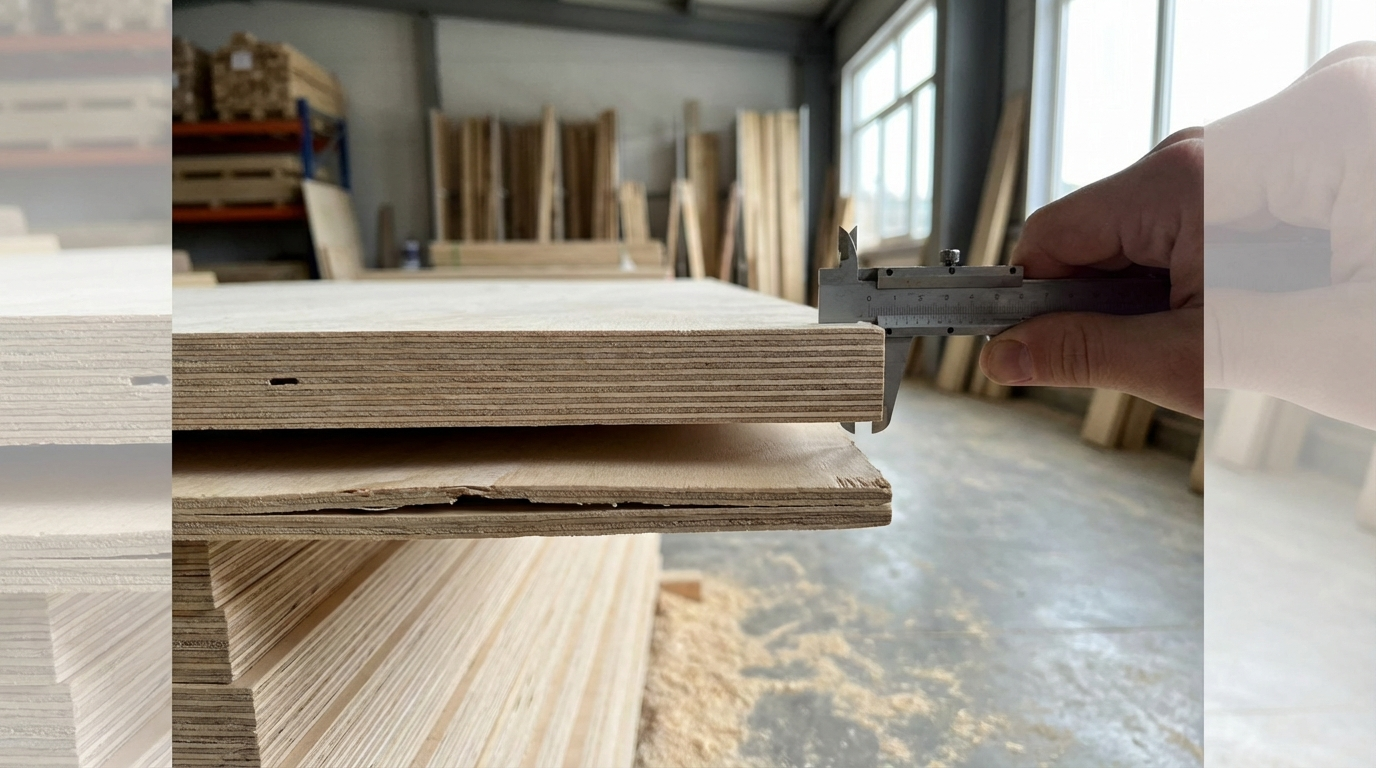
- Mistake: Overlooking thickness tolerance. Why: Uneven cabinets. Instead: Measure 4 corners.
- Mistake: Roadside impulse. Why: Stale stock. Instead: Stick to hubs.
- Mistake: No edge inspection. Why: Swells post-laminate. Instead: Press for smoothness.
Failure Modes and Fixes
- Symptom: Swelling edges post-install. Cause: High moisture stock. Prevent: <12% reading. Fix: Sand, reseal edges.
- Symptom: Delamination in cabinets. Cause: Low resin. Prevent: Nail sink test. Fix: Replace panels.
- Symptom: Uneven cuts. Cause: Poor calibration. Prevent: Measure variance. Fix: Shim gaps.
- Symptom: Sagging shelves. Cause: Low density. Prevent: Weight test. Fix: Add supports.
- Symptom: Dust clogs finish. Cause: Open storage. Prevent: Covered godown. Fix: Clean pre-laminate.
- Symptom: Cracks in heat. Cause: Inferior fibers. Prevent: Tap solidity. Fix: Fill, repaint.
Quality Checks You Can Do Without Lab Tests
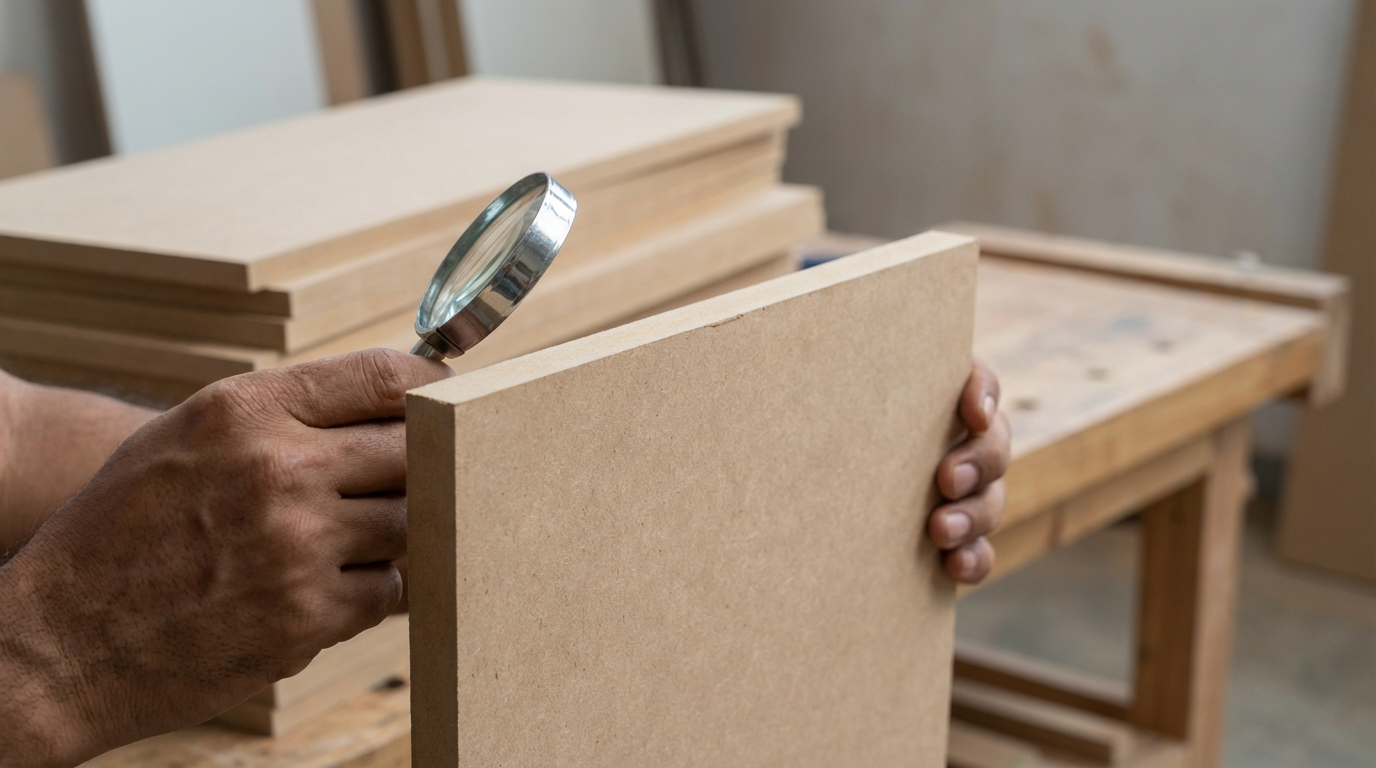
Before buying: Tap for thud, press edges (firm), measure thickness (uniform), check markings (IS, density). Red flags: Soft spots, discoloration, musty smell.
After cutting: Smooth machine cuts, no fiber tear-out, consistent screw hold.
After install: Flat alignment, sealed edges, no moisture bubbles.
Can I check MDF quality just by looking and touching?
Yes—uniform color, heavy feel, sharp edges signal good pressing. Nuance: Heat-warped shows waves. Next: Drop-test corner (no crumble). Saves carpenters blade dulling on junk.
Tips for Homeowners Buying MDF
Focus durability: Seal all edges, avoid wet zones, clean with damp cloth only. Don't overload shelves without brackets.
Tips for Carpenters Handling MDF
Cut with fine blade, pre-drill screws, edge-band immediately, handle in pairs to avoid sags.
Tips for Contractors and Architects Specifying MDF
Detail moisture limits in BOQ, specify HDHMR for kitchens, add 10% extra for wastage, inspect deliveries on-site.
How do carpenters spot bad MDF before cutting?
Vibration on saw (porous) or tear-out means low density. Conditions: Always for kitchens. Step: Carbide blade + vac, test scrap first. Reduces callbacks 50%.
FAQs
What are the best areas to find MDF dealers in Ahmedabad?
Industrial zones and plywood wholesale markets cluster reliable stockists—network via local carpenters for current hotspots. These spots offer variety but vary in QC; always inspect personally. Trade-off: Closer to sites saves logistics but check transport padding. Homeowners start here for samples; confirm covered storage to beat dust/heat issues.
Is it safe to buy MDF without an invoice?
No—full GST invoices with batch codes enable returns for defects. Without, you're stuck with swelling risks. Nuance: Verbal deals common but risky in disputes. Demand details upfront; cross-check with supplier names later if issues arise. Contractors, file digitally for tax ease.
How much extra for delivery in Ahmedabad?
Typically 5-15% of order value, depending on distance and load size. Insist on rain covers in monsoons. Varies by truck availability; negotiate for free over 50 sheets. Architects, include in BOQ with clauses for delays.
What's the minimum order for good rates?
Often 20-50 sheets unlocks discounts; smaller gets retail markup. Bulk logic: Shared transport cuts costs. Check locally—Ahmedabad hubs competitive. Homeowners club with neighbors.
Does thickness affect MDF quality?
Yes—thicker holds screws better but swells more if wet. 18mm standard for cabinets; verify tolerance. Conditions: Shelves need 25mm. Measure on-site.
Can MDF be used outdoors in Ahmedabad?
Not raw—needs marine-grade or sealing, but even then limited by heat cycles. Prefer alternatives for verandahs. Seal edges thrice; test small.
How to store MDF sheets before use?
Vertical, covered, off-ground in dry shade. Avoid flat stacking in garages. Monsoon tip: Plastic wrap extras. Prevents 80% warping.
Why do some MDF sheets feel heavier?
Higher density (better load/scratch resistance). Tap/weigh to confirm. Premium for kitchens; budget for partitions. Always verify uniformity. Disclaimer: This content is provided for general informational purposes based on industry practices and publicly available information. Product specifications, standards, prices, and availability may vary by manufacturer, region, and time. Readers should independently verify details with manufacturers, dealers, or qualified professionals before making purchase or construction decisions.
Want Plywood Suggestions?
Share a few details and a Duro BOIL specialist will suggest suitable brands and connect you to responsive dealers.