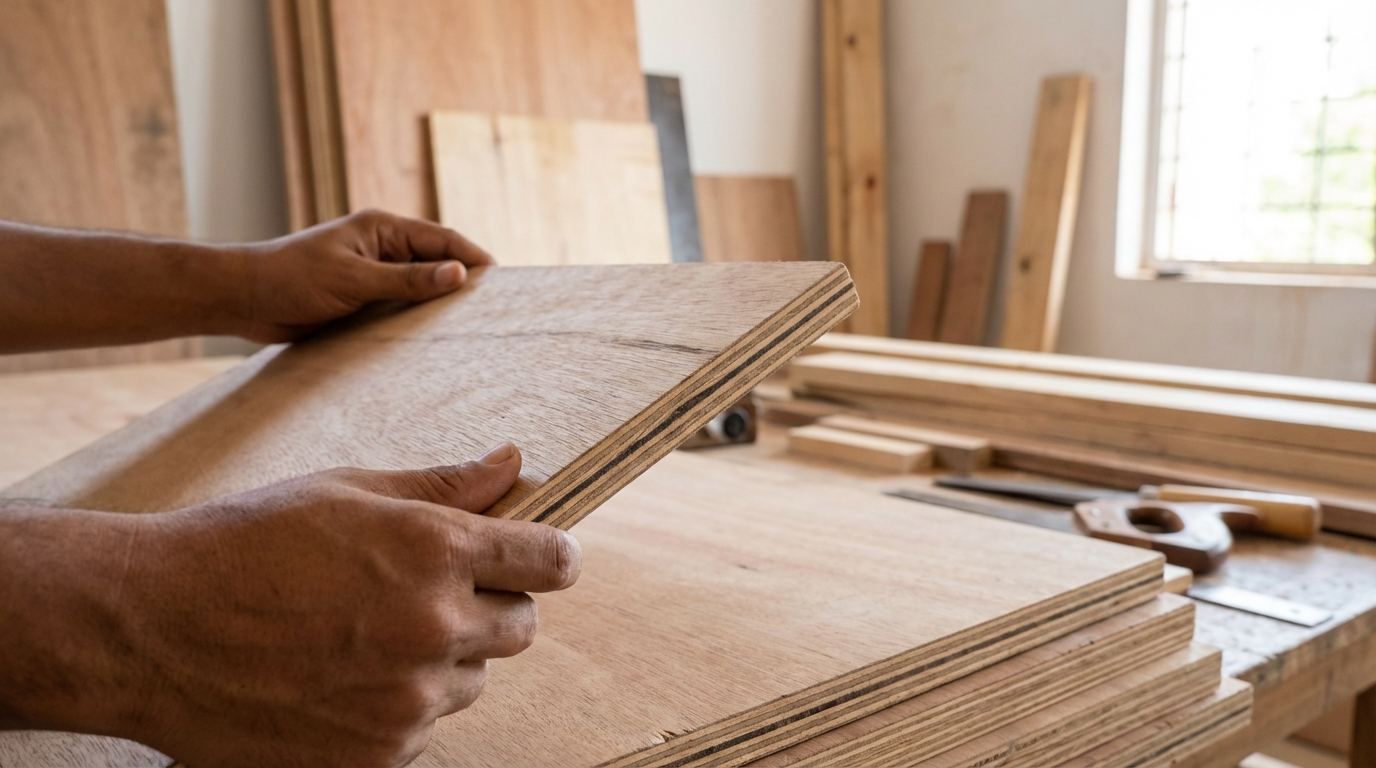
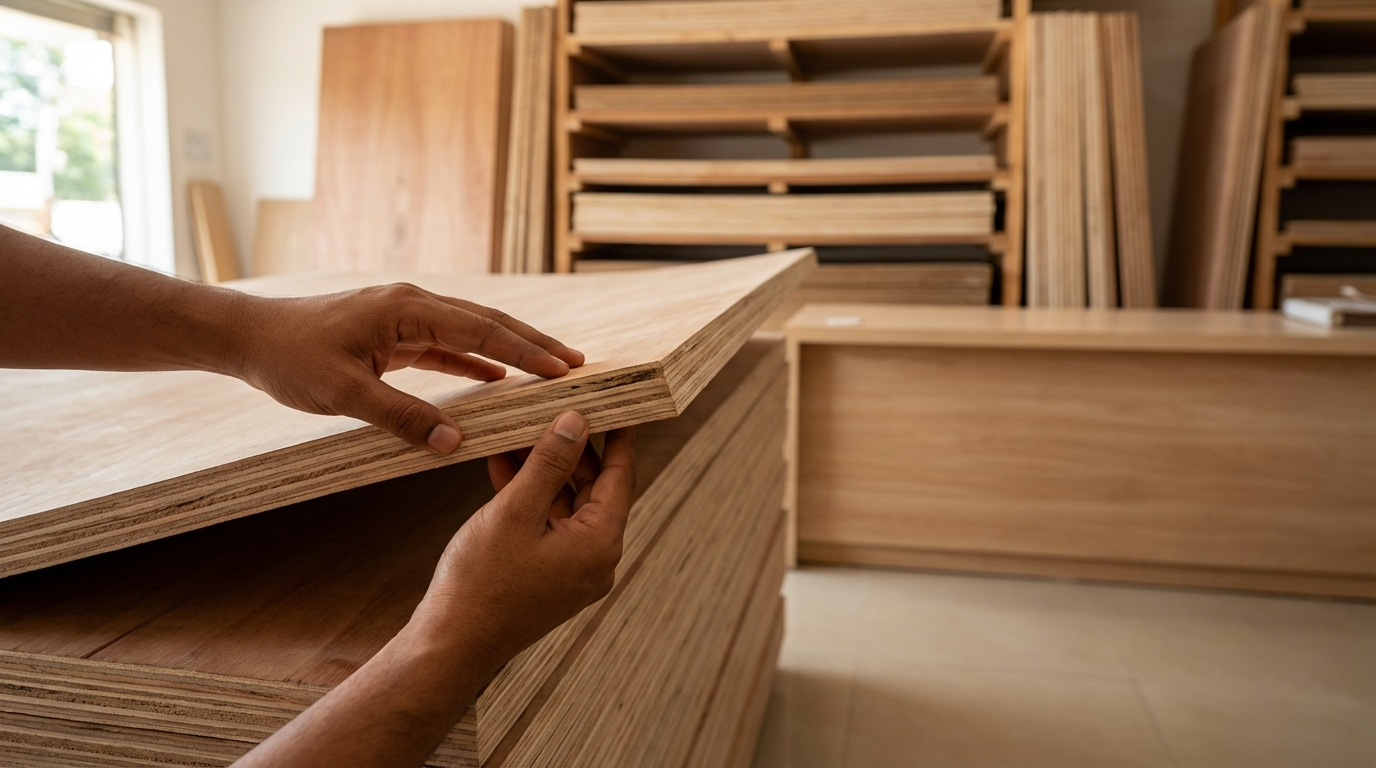
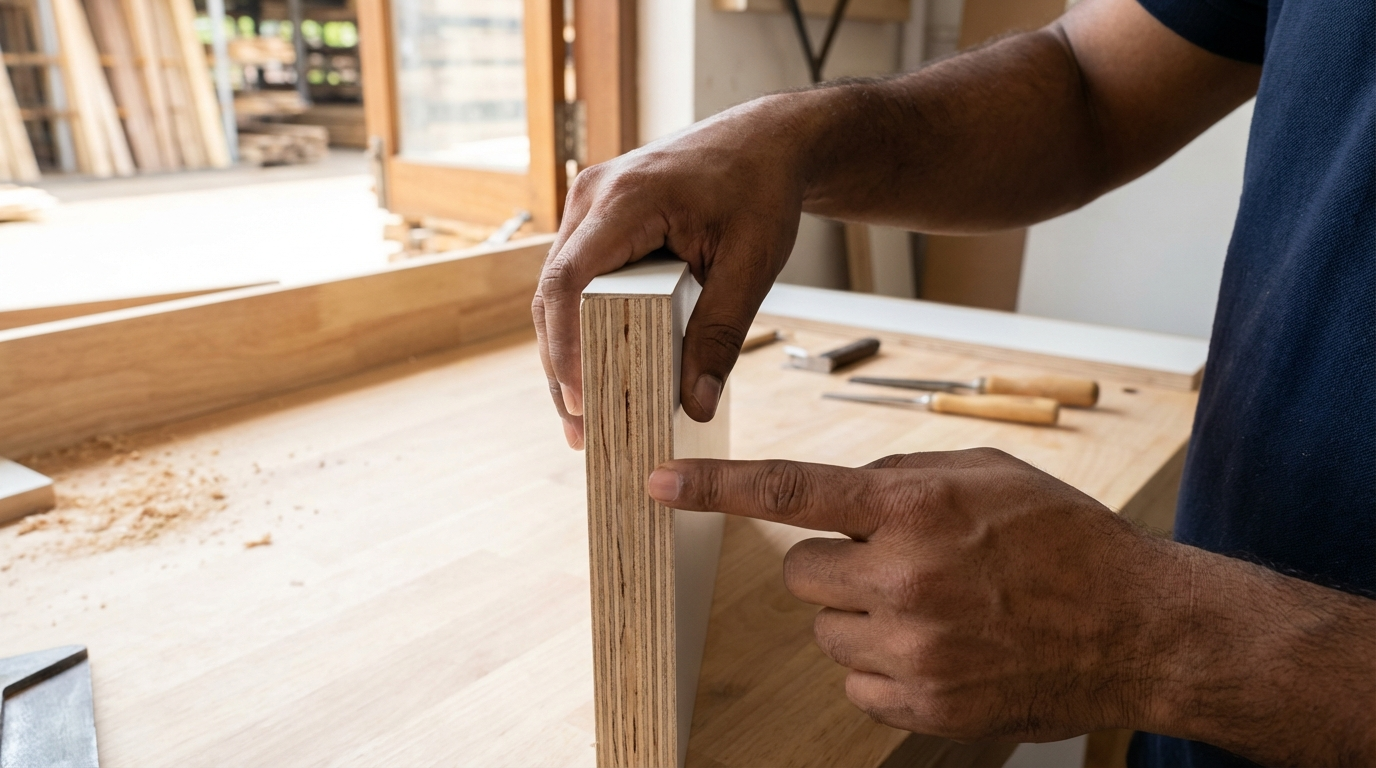
12mm plywood price per sq ft: grade-wise guide
Understand 12mm plywood price per sq ft using price-per-sqft tables, thickness-wise factors, and dealer quote tips. Avoid overpaying and fake stock in India.
Quick Decision Summary
12mm plywood typically costs ₹55–₹140 per sq ft across MR, BWR, and BWP grades, varying by quality, location, and features.
If you're in a hurry, opt for MR grade (₹55–₹95/sq ft) for dry indoor furniture like wardrobes or shelves in low-humidity areas. Upgrade to BWR (₹75–₹115/sq ft) for kitchens or bathrooms with occasional moisture, and choose BWP (₹85–₹140/sq ft) only for high-exposure zones like coastal homes during monsoons. Always verify calibration (true 12mm thickness) and core gaps on-site. Factor in 8x4 sheet size (32 sq ft) for quotes, add 10–15% for wastage, and compare 3 local dealers for city-specific rates—Mumbai often 20% higher than inland cities. This avoids overpaying for subpar stock.
- Choose MR grade if budget-tight, dry interiors, light use.
- Choose BWR if moderate moisture, kitchens, faster install needed.
- Avoid MR in wet zones or heavy-load shelves—it delaminates quickly.
- Avoid unbranded if quality checks fail; stick to verified stock.
What 12mm Plywood Actually Means (Grades Explained)
12mm plywood refers to engineered wood sheets about 12mm thick (with ±0.5–1mm tolerance), made by gluing 9–11 veneers. Standard size is 8x4 ft (32 sq ft), used for furniture, partitions, cabinets. Grades define glue and moisture resistance: MR (basic synthetic resin, dry areas only), BWR (phenol-formaldehyde, boiling water resistant up to 3 cycles), BWP/marine (IS 710-grade phenolic glue, boil-proof for coastal/wet use).
Where people get confused:
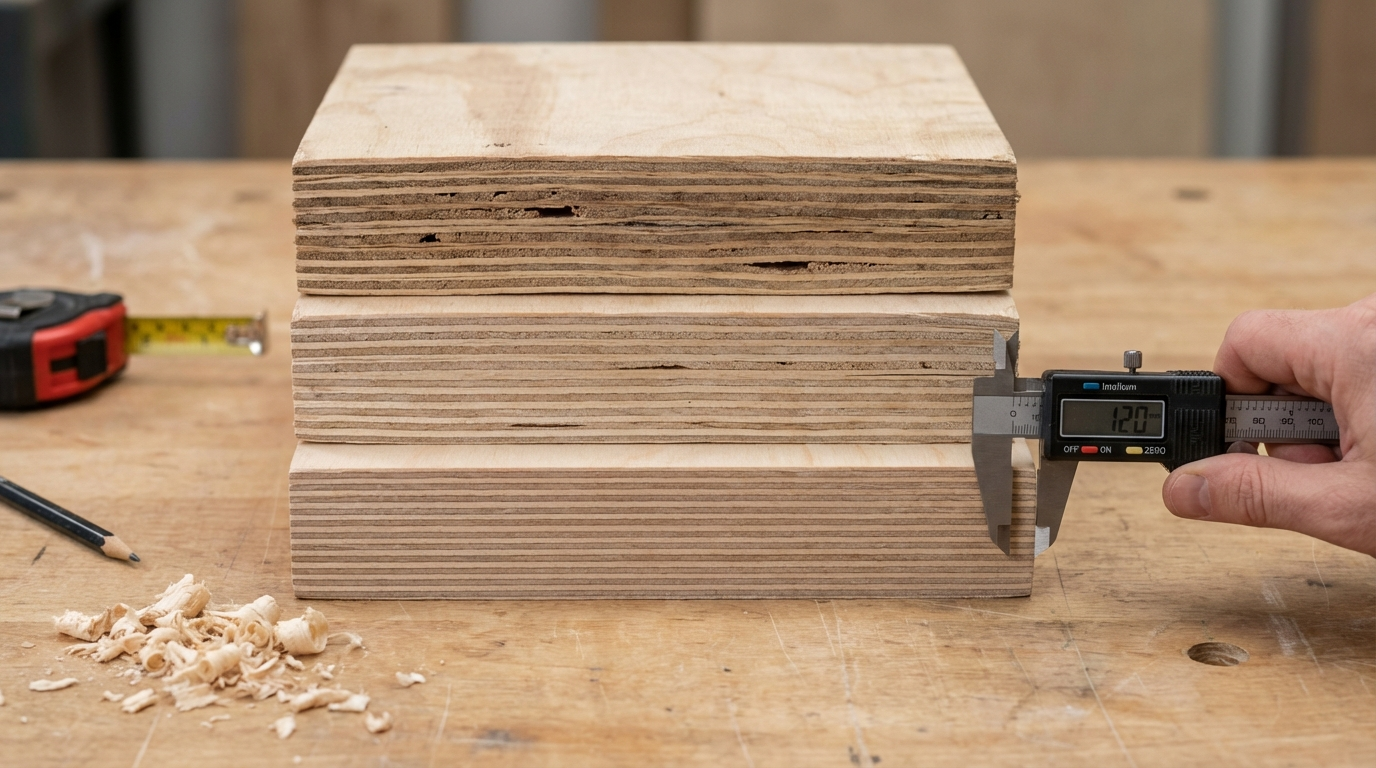
- True thickness—often 11–11.5mm despite "12mm" label; measure with caliper.
- MR vs waterproof—MR handles humidity but not spills; only BWP is truly waterproof.
- Face veneer quality—cheap "A" grade hides BWR core with gaps.
- Calibrated vs standard—calibrated sands to exact 12mm for flush laminates.
- Sheet vs cut-to-size—dealers charge extra for trimming, inflating per sq ft.
Is 12mm the right thickness for most furniture?
Yes, 12mm suits 90% of home projects like wardrobes, beds, or kitchen cabinets for strength without excess weight. It spans 24–30 inches between supports without sagging under normal loads (books, clothes). Thinner 9mm flexes too much for shelves; thicker 18mm adds unneeded cost/weight for uppers. In India, confirm load needs: heavy storage wants cross-bracing. Next, check if your carpenter plans reinforcements—poor framing wastes even good plywood.
India-Specific Reality Check
Monsoon humidity (70–90% RH) and coastal salt air accelerate delamination in low-grade 12mm plywood, especially stored outdoors at dealer yards. Inland cities like Delhi see dry winters but humid summers; Mumbai/Chennai demand BWR minimum. Improper site storage (direct sun/rain) causes 20–30% warping pre-install. Contractor workflows favor full sheets to minimize cuts, but urban logistics add transport costs. Always insist on covered stacking and acclimatize sheets 48 hours before cutting.
12mm Plywood Price Range Per Sq Ft in India (Grade-Wise)
Prices fluctuate 10–20% yearly due to timber costs, but typical 2026 ranges for 8x4 sheets (ex-factory, before transport):
| Grade | Price Range (₹/sq ft) | Best For |
|---|---|---|
| MR | ₹55–₹95 | Dry bedrooms, wardrobes |
| BWR | ₹75–₹115 | Kitchens, bathrooms |
| BWP | ₹85–₹140 | Coastal, heavy moisture |
Cost drivers: Core material (hardwood/poplar—poplar cheaper but softer), face/back veneer (teak/birch premium), calibration (+₹10–15/sq ft), finish (pre-laminated +20%), city (metros +15–25%), batch/brand variance. Non-calibrated saves ₹5–10 but risks laminate bubbles.
What makes 12mm BWP plywood more expensive than MR?
BWP uses superior phenolic glue surviving 72+ hour boils (IS 710), plus denser hardwood cores resisting termites/moisture—vital for India's 6-month monsoons. MR's urea-formaldehyde fails after 2–4 hours boiling. Expect ₹30–45/sq ft premium for longevity (10x cycles). Verify by asking for glue-line test demo. If coastal, pay up; else BWR suffices. Compare quotes specifying "12mm calibrated BWP, poplar core, A-grade face."
How much for a basic wardrobe using 12mm plywood?
A standard 6x4x2 ft wardrobe needs 8–10 sheets (256–320 sq ft), costing ₹14,000–₹35,000 total (MR to BWP). Add ₹2,000–4,000 for laminate/edges, 10% wastage. Mumbai: +20%; tier-2: lower. Quote line: "10 sheets 12mm BWR calibrated, 8x4, delivered." Saves haggling—focus on verification.
How to Ask Dealers for Accurate Quotes (Checklist)
- Specify grade (MR/BWR/BWP), thickness (12mm calibrated), size (8x4), core (hardwood/poplar), face grade (A/B).
- Ask per sq ft + sheet total + GST + transport.
- Request sample inspection: measure thickness, tap for gaps, check edges.
- Compare 3 quotes; negotiate 5–10% off bulk.
- Confirm delivery timeline/stock freshness.
How to Choose 12mm Plywood in 5 Steps
- Assess exposure: dry=MR, moisture=BWR, wet=BWP.
- Budget check: calculate sq ft needed +15% wastage.
- Verify specs on-site: caliper thickness, visual core uniformity.
- Test moisture: sprinkle water—repels in BWR/BWP.
- Match to project: reinforce shelves if heavy use.
Skip steps? Risks delamination post-monsoon, costing rework.
MR or BWR for kitchen cabinets in humid cities?
BWR for cabinets—handles steam/spills better than MR, which swells at edges. In Pune/Hyderabad (humid summers), MR limits to 1–2 years; BWR lasts 5+. Verify glue smell (phenolic sharp). Prep edges with sealant. If budget caps, use MR with extra lamination, but inspect yearly.
Quick Decision Framework: 12mm Plywood by Project Conditions
| Condition | Recommended Grade | Key Verifications |
|---|---|---|
| Dry bedroom wardrobe | MR | Uniform veneers, no core gaps |
| Kitchen with spills | BWR | Water bead test, calibrated edges |
| Coastal bathroom | BWP | Hardwood core, dense feel |
| Heavy shelf loads | BWR/BWP | Load test sample, 11.8+mm thick |
| Tight budget | MR calibrated | ISI mark, straight edges |
| Fast delivery needed | Local MR/BWR | Stock check, no backlog |
Trade-offs and Limitations
12mm saves vs 18mm (30% cheaper) but sags under point loads >50kg without bracing. MR cheapest but fails wet; BWP premium yet overkill indoors. Calibrated fits laminates perfectly but costs more. All plywood scratches easier than solid wood; needs edge banding. Termite risk if untreated—add oil annually.
Common Buyer Mistakes and How to Avoid Them
- Mistake: Buying cheapest unbranded—porous cores delaminate. Avoid: Stick to ₹55+ MR with checks.
- Mistake: Ignoring thickness tolerance—11mm labeled 12mm warps. Avoid: Measure 3 spots.
- Mistake: No wastage buffer—cuts waste 15%. Avoid: Plan layout first.
- Mistake: Dry storage oversight—yard rain swells sheets. Avoid: Inspect on delivery.
- Mistake: Over-relying on labels—fake ISI common. Avoid: Tap for hollows.
- Mistake: Metro-only quotes—ignores local variance. Avoid: Check 2–3 nearby dealers.
- Mistake: Skipping acclimatization—install direct from truck. Avoid: 48hr room stack.
- Mistake: Wrong grade for zone—MR in kitchen. Avoid: Match to humidity.
Failure Modes and Fixes
- Symptom: Edge swelling. Cause: MR in humidity. Prevent: BWR + sealant. Fix: Sand, re-laminate.
- Symptom: Delamination bubbles. Cause: Poor glue lines. Prevent: Tap test pre-buy. Fix: Clamp, inject glue.
- Symptom: Sagging shelves. Cause: No bracing. Prevent: 24" spans max. Fix: Add battens.
- Symptom: Core gaps cracking. Cause: Poplar core overload. Prevent: Hardwood spec. Fix: Fill epoxy.
- Symptom: Laminate peel. Cause: Uncalibrated base. Prevent: Sand to 12mm. Fix: Re-apply.
- Symptom: Termite trails. Cause: Untreated veneers. Prevent: PF-treated grade. Fix: Fumigate, replace.
Quality Checks You Can Do Without Lab Tests
Before buying: Weigh sample (heavier=denser), flex test (minimal bend), water sprinkle (beads up), edge straightness, veneer knots (<5%). Ask glue type, treatment.
After cutting: Even kerf, no tear-out, core uniform.
Post-install: Level alignment, edge-seal gaps, clean dry only.
Can you spot fake 12mm plywood quickly?
Tap sides—hollow thud means gaps; genuine rings solid. Edges rough/uneven? Reject. Weight: good 12mm sheet ~25–30kg. Sprinkle water: absorbs fast=MR low-grade. Measure: under 11.5mm=off. Next, demand recent batch—no bloom/whiteout. Saves returns.
Tips for Homeowners, Carpenters, Contractors, Architects
Homeowners: Durability Do's and Don'ts
Do: Wipe spills instantly, use coasters, ventilate monsoon. Don't: Drag cleaners, overload shelves >30kg, expose to AC drips. Inspect edges yearly.
Carpenters: Handling and Prep
Cut with zero-clearance blade, pre-drill screws, edge-band immediately, reinforce hinges with blocks. Acclimatize 48hrs.
Contractors: Workflow Wins
Quote with 15% buffer, stack covered, verify per sheet on unload. Bulk negotiate calibration.
Architects: Spec Smart
Detail wet-zone BWP, 12mm min spans, sealant notes. Avoid generic "plywood"—specify grade/thickness.
FAQs
Which 12mm plywood grade for bedroom furniture?
MR grade works well for bedrooms—handles normal humidity without swelling. It's lightweight for easy handling and laminates smoothly. In low-rain areas like Rajasthan, it lasts 7–10 years with care. Verify calibration to avoid fitting issues. If adding heavy drawers, brace bottoms. Compare local rates; upgrade to BWR only if spills common.
Does city affect 12mm plywood prices?
Yes, metros like Delhi/Mumbai charge 15–25% more due to logistics/demand—₹80+ for MR vs ₹60 inland. Tier-2 like Jaipur lower. Always get delivered quotes including transport. Factor monsoon surcharges. Shop nearby dealers for savings.
12mm vs 18mm: When to pick 12mm?
Choose 12mm for uppers/cabinets—saves 25–30% cost, lighter. 18mm for floors/base. Both need bracing. 12mm standard for modular kitchens.
Is calibrated 12mm plywood worth extra cost?
Absolutely for laminates—exact thickness prevents bubbles/air gaps. Non-calibrated varies 0.5–1mm, causing rework. Pays off in pro finish. Spec it always.
How to calculate total 12mm plywood for a room?
Measure walls/furniture, add 15% wastage, divide by 32 sq ft/sheet. Draw layout for cuts. E.g., 10x10 room partition: 100 sq ft +15=115/32=4 sheets.
What if 12mm plywood warps after install?
Usually moisture imbalance—acclimatize next time. Fix: remove, dry 1 week, re-fix with sealant. Prevent with BWR+.
Termite-proof 12mm plywood options?
PF-treated grades (all BWR/BWP usually). Check label. Oil edges annually. Avoid ground contact.
Best finish for 12mm plywood furniture?
Laminate for easy clean/moisture barrier. Veneer for wood look. Seal edges regardless.
12mm plywood for outdoor use?
No—even BWP limited; use treated alternatives. Indoor only.
Disclaimer: This content is provided for general informational purposes based on industry practices and publicly available information. Product specifications, standards, prices, and availability may vary by manufacturer, region, and time. Readers should independently verify details with manufacturers, dealers, or qualified professionals before making purchase or construction decisions.Want Plywood Suggestions?
Share a few details and a Duro BOIL specialist will suggest suitable brands and connect you to responsive dealers.