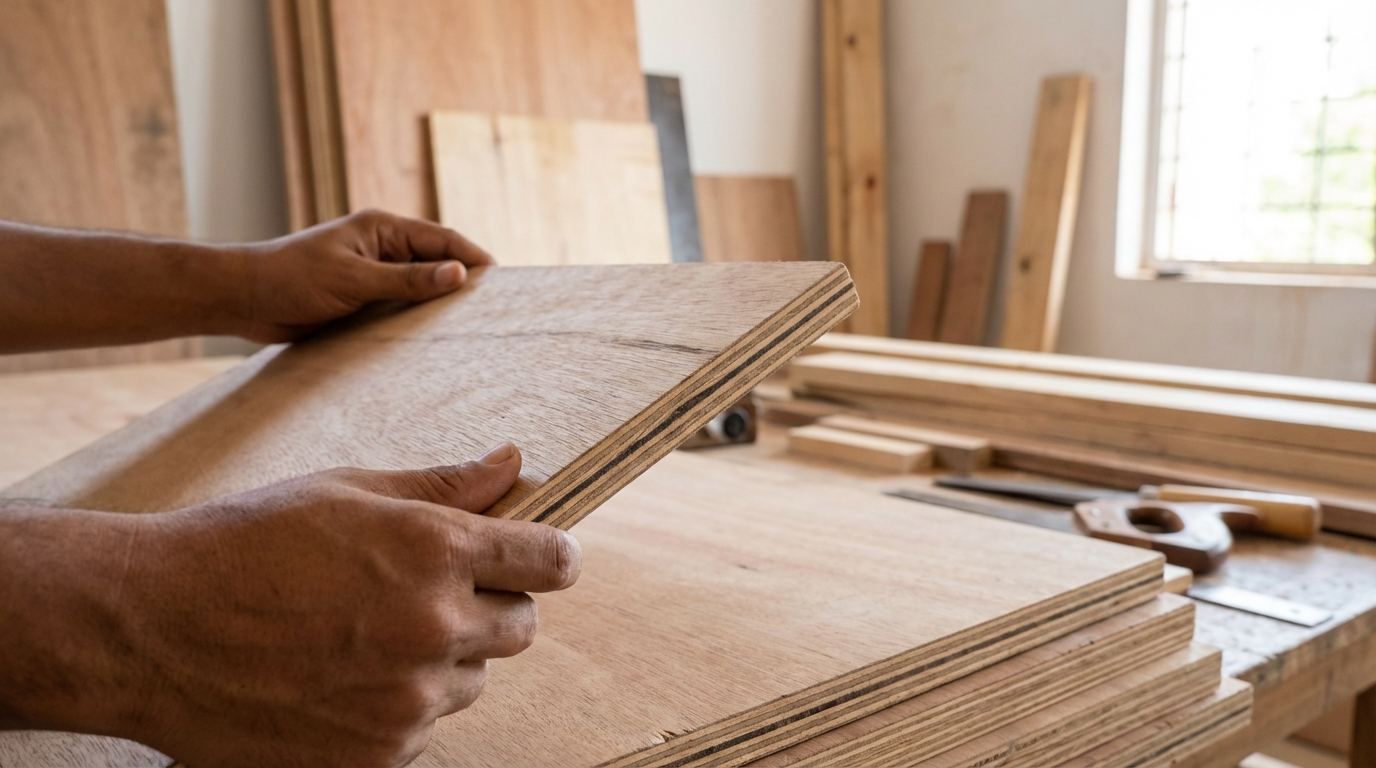
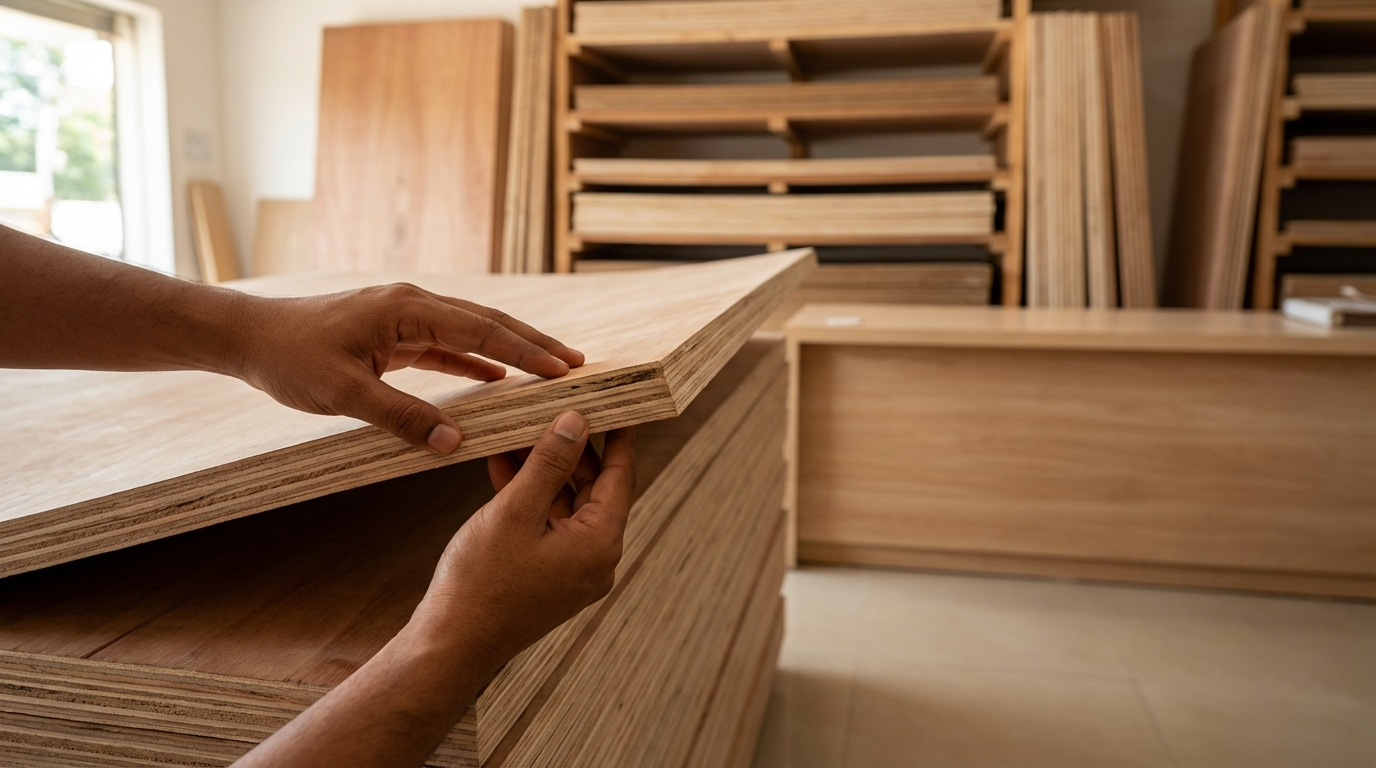
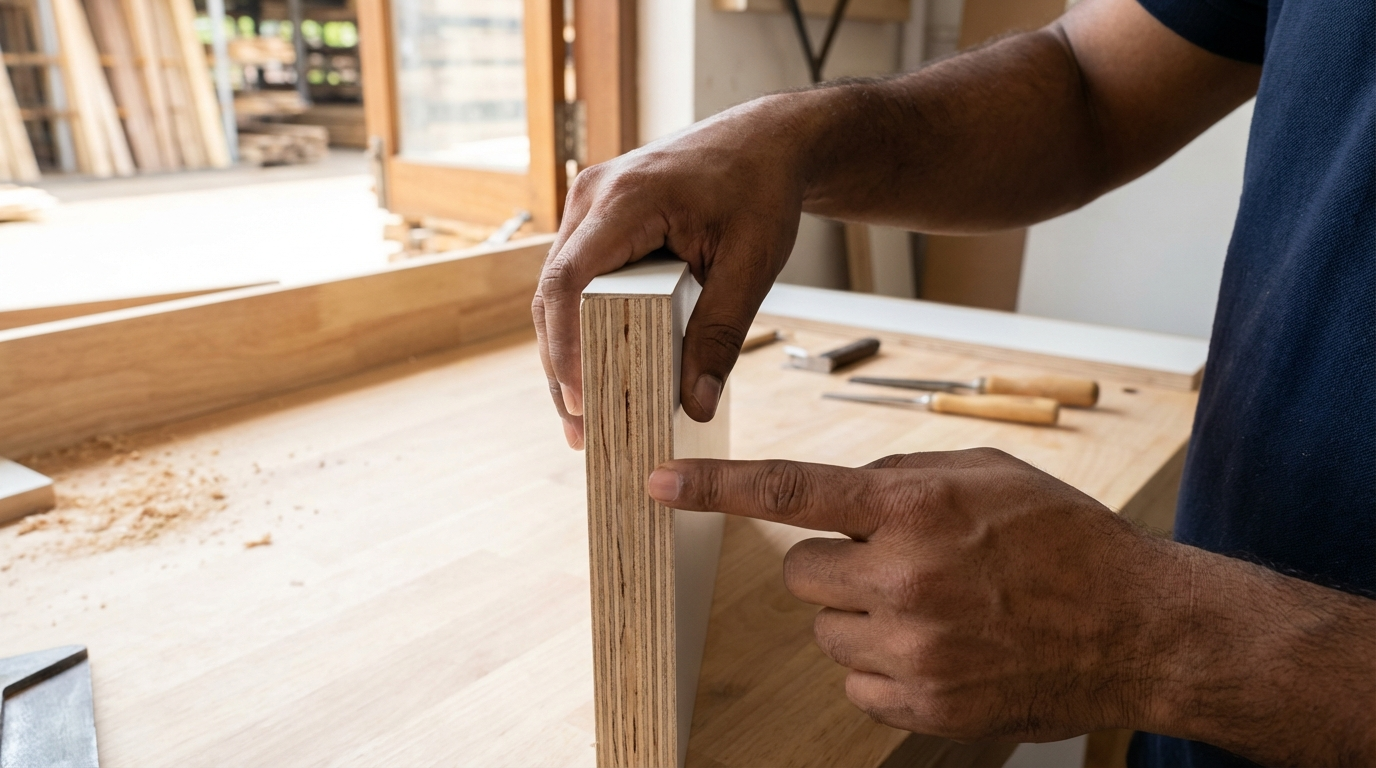
18mm MDF Board Price and Buying Guide
Find current 18mm MDF board prices. Compare costs across brands and learn when to use 18mm MDF for your furniture and interior projects.
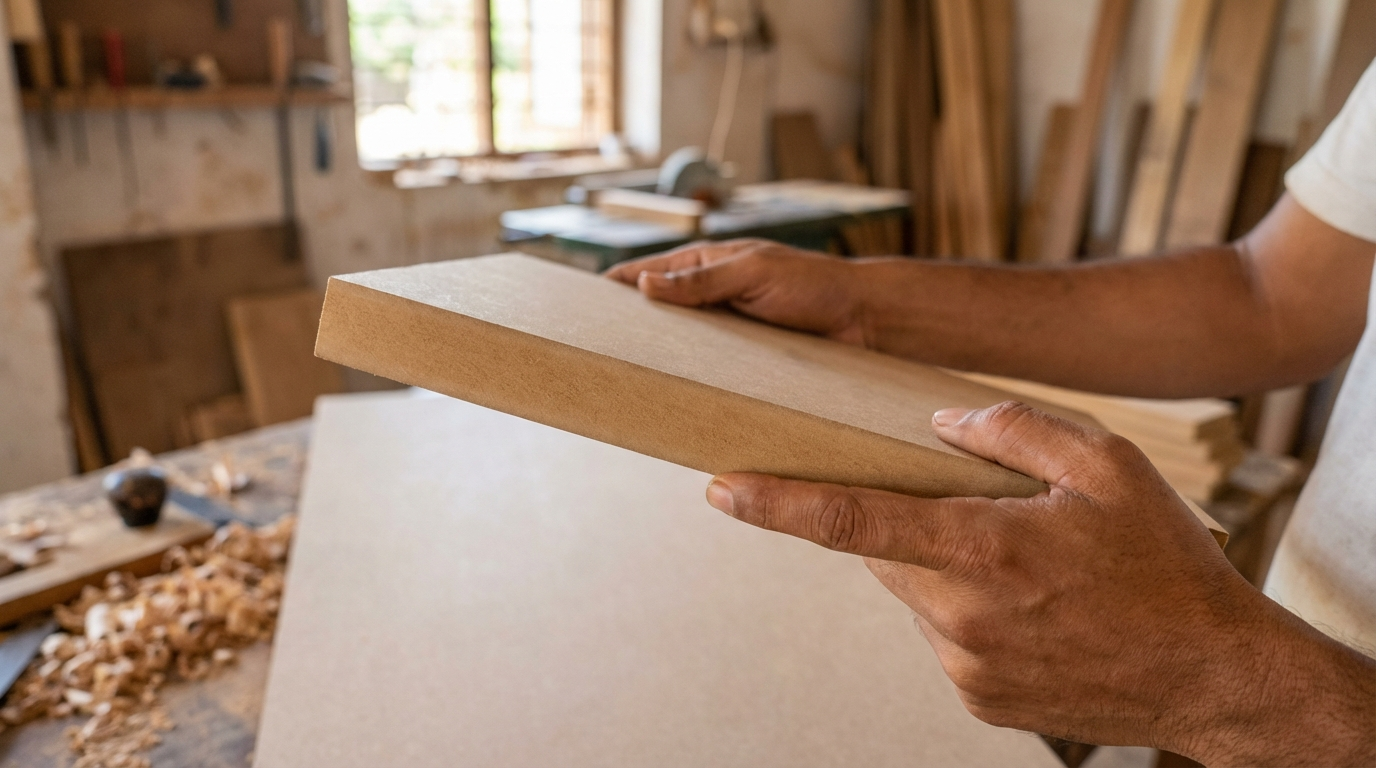
Quick Buying Decision
One-line recommendation: Choose 18mm MDF for furniture carcasses, shelving, and painted finishes where moisture exposure is minimal.
If you're in a hurry: For most indoor furniture projects in India, 18mm plain MDF from established brands like Action Tesa, Greenpanel, or Century Prowud works well and costs between ₹45-65 per square foot. If your project involves kitchen cabinets or any area with occasional moisture, upgrade to moisture-resistant (MR) grade MDF. Always check the board's density by lifting it—heavier boards indicate better quality. Buy from authorized dealers who can provide proper invoices and confirm the manufacturing date is within six months.
Quick picks:
- Best for kitchen cabinets: 18mm MR Grade MDF - because kitchens experience humidity and occasional water splashes that plain MDF cannot handle
- Best for wardrobe carcasses: 18mm Plain MDF - because bedrooms are dry environments and plain MDF offers excellent value with smooth finish
- Best budget option: 18mm Commercial Grade MDF - because it delivers acceptable performance for non-critical applications at lower cost
- Best premium option: 18mm HDHMR (High Density High Moisture Resistant) - because it combines superior density with moisture protection for demanding applications
How to Choose 18mm MDF Board in 5 Steps
Selecting the right 18mm MDF board requires systematic evaluation. Follow these steps to ensure you purchase the appropriate product for your specific project requirements.
Step 1: Identify Your Application
Before visiting any dealer, clearly define where the MDF will be used. This single decision determines everything else.
Wet area vs dry area decision tree:
- Dry areas (bedrooms, living rooms, study rooms): Plain MDF is suitable and cost-effective
- Semi-wet areas (kitchens, dining areas near kitchen): MR grade MDF is necessary
- High moisture areas (bathrooms, utility areas): Consider HDHMR or avoid MDF entirely—plywood may be better
Heavy use vs light use:
- Heavy use furniture (kitchen cabinets, wardrobes with heavy loads): Choose higher density boards with density above 720 kg/m³
- Light use applications (decorative panels, TV unit backs, false ceiling): Standard density boards work fine
Step 2: Determine the Right Grade/Type
Based on your application assessment, select the appropriate MDF grade:
Simple decision matrix:
- Plain MDF: Dry indoor furniture, wall paneling, decorative elements
- MR Grade MDF: Kitchen cabinets, areas with occasional humidity, coastal region homes
- HDHMR: Premium kitchen installations, modular furniture in humid climates, commercial applications
- Pre-laminated MDF: When you want ready-to-use boards without additional finishing work
According to [centuryply.com](https://www.centuryply.com/blog/what-is-the-difference-between-mdf-and-plywood), MDF offers a very smooth surface ideal for painting and veneering, making it excellent for furniture that will receive painted finishes.
Step 3: Choose Correct Thickness
While this guide focuses on 18mm boards, understanding when 18mm is appropriate versus other thicknesses is crucial.
Thickness guide by application:
| Application | Recommended Thickness | Why 18mm Works |
|---|---|---|
| Wardrobe sides and shelves | 18mm | Provides adequate strength for hanging clothes and storing items |
| Kitchen cabinet carcasses | 18mm | Standard industry thickness offering good screw holding and durability |
| Table tops | 18mm or 25mm | 18mm suitable for smaller tables; larger surfaces may need reinforcement |
| Door shutters | 18mm | Appropriate weight for hinges while providing solid feel |
| Decorative panels | 12mm or 18mm | 18mm offers more substantial appearance and better acoustic properties |
Why thickness matters: Thicker boards resist bending under load, hold screws more securely, and provide better sound insulation. However, they also weigh more and cost more. The 18mm specification represents a balance point that works for most furniture applications.
Step 4: Check Quality Indicators
Quality varies significantly between manufacturers and even between batches. Here's what to inspect at the shop:
Visual inspection:
- Check edges for uniform density—no visible layers or gaps
- Surface should be perfectly smooth without bumps or depressions
- Look for consistent colour throughout the board
- Verify thickness at multiple points using a measuring tape
Tests you can do at shop:
- Weight test: Lift the board—quality 18mm MDF should feel noticeably heavy (approximately 14-16 kg for a 8x4 feet sheet)
- Knock test: Tap the surface—should produce a solid, dense sound, not hollow
- Edge check: Run your finger along cut edges—quality boards have uniform, fine particles without visible chunks
- Flex test: Quality MDF should resist bending when supported at ends
Step 5: Compare Prices and Get Quotes
How to ask for quotes properly:
- Specify exact dimensions needed (8x4 feet is standard, but 6x4 feet and other sizes exist)
- Mention the grade required (plain, MR, HDHMR)
- Ask for brand options with prices for each
- Request delivery charges separately
- Inquire about cutting charges if you need custom sizes
What should be included in quote:
- Per sheet and per square foot pricing
- GST inclusion or exclusion clarity
- Delivery timeline and charges
- Return policy for defective sheets
- Available warranties or guarantees
Decision Framework: What to Buy for Each Situation
Use this comprehensive table to quickly identify the right 18mm MDF variant for your specific situation:
| Your Situation | Recommended Option | Why | What to Verify |
|---|---|---|---|
| Kitchen cabinets | 18mm MR Grade MDF or HDHMR | Steam and moisture exposure during cooking requires water-resistant boards | Look for green/blue core colour indicating moisture treatment; ask for MR certification |
| Bathroom vanity | 18mm HDHMR or marine plywood alternative | Constant high humidity demands superior moisture resistance | Confirm density above 850 kg/m³; ensure edges will be properly sealed during installation |
| Bedroom wardrobe | 18mm Plain MDF | Dry environment makes premium moisture grades unnecessary; plain MDF offers excellent painted finish | Check surface smoothness for laminate or paint application; verify consistent thickness |
| Living room TV unit | 18mm Plain MDF | Decorative application in controlled environment; smooth surface ideal for finishing | Inspect for surface defects that would show through paint; check weight capacity requirements |
| Coastal area home | 18mm HDHMR | High ambient humidity year-round affects even bedroom furniture | Ask specifically about salt air resistance; confirm the board is genuinely HDHMR, not just MR |
| Tight budget | 18mm Commercial Grade Plain MDF | Lower cost while maintaining acceptable performance for non-critical applications | Test density carefully; commercial grade varies widely in quality between manufacturers |
| Premium quality need | 18mm HDHMR from top brands | Highest density and moisture resistance for maximum durability and longevity | Request test certificates; verify manufacturing date; check brand authorization of dealer |
Price Guide and Budget Planning
Prices for 18mm MDF boards vary considerably based on multiple factors. Understanding these variations helps you budget accurately and identify fair pricing.
Price range by type/grade (per sheet of 8x4 feet):
- Plain MDF (Commercial): ₹1,400 - ₹1,800 per sheet
- Plain MDF (Premium brands): ₹1,800 - ₹2,400 per sheet
- MR Grade MDF: ₹2,200 - ₹3,000 per sheet
- HDHMR: ₹3,200 - ₹4,500 per sheet
- Pre-laminated MDF: ₹3,500 - ₹5,500 per sheet depending on laminate quality
What affects price:
- Thickness: 18mm costs more than 12mm but less than 25mm
- Brand reputation: Established brands command 15-30% premium
- Grade: MR grade costs 25-40% more than plain; HDHMR costs 50-80% more
- City and transport: Prices higher in cities farther from manufacturing hubs
- Market conditions: Wood fibre and resin costs fluctuate seasonally
Budget estimation for common projects:
- 10x10 feet modular kitchen (material only): Approximately ₹35,000 - ₹55,000 for MDF sheets
- Standard 6-feet wardrobe: Approximately ₹12,000 - ₹20,000 for MDF sheets
- TV unit with storage: Approximately ₹5,000 - ₹10,000 for MDF sheets
How to get accurate quotes checklist:
- Visit at least 3 dealers for comparison
- Provide exact measurements from your carpenter's cutting list
- Ask for itemized quotes showing quantity, rate, and grade clearly
- Confirm prices are valid for at least 15 days
- Get quotes in writing, not just verbal
Why do prices vary so much between shops?
Price variations between dealers stem from multiple factors. Authorized distributors purchasing directly from manufacturers typically offer better rates than smaller retailers buying through multiple intermediaries. Location matters significantly—shops in commercial areas have higher overheads passed to customers. Stock age affects pricing too; dealers may discount older inventory. Volume purchasing arrangements, credit terms with suppliers, and even relationships with contractors who bring business all influence the final price you're quoted. Additionally, some dealers mix genuine branded products with lesser-known alternatives, making direct comparison difficult without brand-specific enquiry.
Red Flags: When to Walk Away
Recognizing problematic dealers and poor-quality products saves money and project headaches. Watch for these warning signs:
- Inconsistent thickness: If measurements vary by more than 0.5mm across a sheet, manufacturing quality is compromised
- Unusually light boards: Low density indicates inferior raw materials and reduced strength
- Strong chemical odour: While new MDF has some smell, overwhelming formaldehyde odour suggests poor emission control
- Visible core defects: Gaps, chunks, or layering visible at edges indicate manufacturing problems
- No brand marking: Legitimate manufacturers mark their products; unmarked boards are suspect
- Refusal to show certification: Reputable dealers readily provide test certificates and brand authorizations
- Cash-only insistence: Dealers avoiding proper invoicing may be selling unauthorized or counterfeit products
- Pressure to decide immediately: "Price only valid today" tactics often hide quality issues
What bad quality looks like: Poor MDF exhibits rough, fibrous edges when cut, crumbles easily when screws are inserted, and swells disproportionately with minor moisture exposure. Surface may show subtle waviness under careful inspection.
Common Buying Mistakes (And How to Avoid)
Mistake 1: Ignoring moisture requirements
Why people make this mistake: Plain MDF costs less, and humidity effects aren't immediately visible. What goes wrong: Boards swell, deform, and deteriorate within months in unsuitable environments. What to do instead: Honestly assess moisture exposure of the installation area and choose MR or HDHMR grades for any kitchen or humid location application.
Mistake 2: Buying based on price alone
Why people make this mistake: MDF looks similar across brands, making cheapest options tempting. What goes wrong: Lower density boards fail under load, don't hold screws, and finish poorly. What to do instead: Compare density and quality alongside price; pay moderate premium for recognized brands.
Mistake 3: Not calculating quantity accurately
Why people make this mistake: Estimating without proper cutting layout leads to underbuying or overbuying. What goes wrong: Running short mid-project causes delays and mismatched batches; excess becomes waste. What to do instead: Get carpenter's cutting list before purchasing and add 10% for waste.
Mistake 4: Skipping the physical inspection
Why people make this mistake: Trusting brand names and dealer assurances without verification. What goes wrong: Defective sheets, storage damage, or old stock goes unnoticed until installation. What to do instead: Personally inspect boards or send your carpenter to verify before accepting delivery.
Mistake 5: Choosing wrong thickness
Why people make this mistake: Assuming thicker is always better or thinner saves money without consequence. What goes wrong: Undersized boards sag; oversized boards add unnecessary weight and cost. What to do instead: Match thickness to specific application requirements—18mm suits most furniture carcasses.
Mistake 6: Not considering edge treatment
Why people make this mistake: Focusing on surface finish while forgetting edges will be visible or exposed. What goes wrong: MDF edges are porous and absorb moisture, paint, and finishes unevenly. What to do instead: Plan edge banding or sealing; budget for this in project costs.
Mistake 7: Improper storage after purchase
Why people make this mistake: Treating MDF like solid wood and storing carelessly before installation. What goes wrong: Boards absorb humidity, warp, or develop surface damage. What to do instead: Store flat, off ground, in dry covered area until installation.
Mistake 8: Forgetting about formaldehyde emissions
Why people make this mistake: Emissions aren't visible, and cheaper boards don't advertise their emission levels. What goes wrong: Higher emissions affect indoor air quality, particularly concerning for bedrooms. What to do instead: Ask for E1 or E0 rated boards; established brands typically meet emission standards.
Questions to Ask Your Dealer
These questions help verify product quality and dealer reliability:
- "What is the density of this 18mm MDF board?" Good answer: Specific number above 700 kg/m³. Concerning answer: Vague response or inability to provide specification.
- "Can you show the manufacturer's test certificate?" Good answer: Ready production of relevant documentation. Concerning answer: Excuses or claims that certificates aren't necessary.
- "What is the manufacturing date of this batch?" Good answer: Recent date within 6 months. Concerning answer: Unknown or very old stock.
- "Is this board E1 rated for formaldehyde emissions?" Good answer: Yes, with documentation available. Concerning answer: Confusion about emission ratings.
- "What's your return policy for defective sheets?" Good answer: Clear policy with reasonable timeframe. Concerning answer: No returns or inspection required before you leave.
- "Are you an authorized dealer for this brand?" Good answer: Yes, with authorization letter available. Concerning answer: Evasive or claims authorization unnecessary.
- "What's the difference between your MR and plain MDF?" Good answer: Technical explanation of core treatment and applications. Concerning answer: Only price difference mentioned.
- "How should I store these boards before installation?" Good answer: Specific guidance on flat storage and humidity control. Concerning answer: Dismissive "anywhere is fine" response.
- "Do you provide delivery, and how are boards protected during transport?" Good answer: Details about packaging and transport care. Concerning answer: "We just load them on the truck."
- "Can you provide GST invoice?" Good answer: Immediate agreement. Concerning answer: Hesitation or offer of discount for cash without invoice.
After Purchase: Handling and Storage
Proper handling between purchase and installation prevents damage and ensures optimal performance.
How to transport without damage:
- Boards must remain flat during transport—never stand them on edge in a moving vehicle
- Use cardboard or cloth padding between boards and against vehicle surfaces
- Secure boards to prevent sliding and edge damage
- Avoid transport during rain; cover boards completely if weather threatens
- For large quantities, ensure vehicle capacity matches load weight
Storage requirements before installation:
- Store in a dry, covered area away from direct sunlight
- Keep boards flat on a level surface, not leaning against walls
- Elevate from ground on timber battens to prevent moisture absorption from floor
- Maintain consistent temperature—avoid storage in areas with extreme fluctuations
- Keep away from windows where rain might enter
Acclimatization period: Allow MDF boards to acclimatize to the installation environment for 48-72 hours before cutting and installation. This is particularly important in air-conditioned spaces or areas with different humidity levels than the storage location. Boards that haven't acclimatized may expand or contract after installation, causing joint failures or warping.
Frequently Asked Questions
Which brand is best for 18mm MDF boards?
Several established brands produce quality 18mm MDF in India, including Action Tesa, Greenpanel, Century Prowud, Merino, and Rushil Décor. Brand superiority depends on regional availability and specific product lines. Action Tesa and Greenpanel have wide distribution networks and consistent quality. Rather than fixating on one brand, focus on verifying density, moisture grade, and emission ratings. Purchase from authorized dealers who can provide proper documentation and warranty support regardless of brand chosen.
How to identify original vs duplicate MDF boards?
Genuine MDF boards carry manufacturer markings printed or embossed on the surface, typically including brand name, grade, thickness, and manufacturing details. Check edges for consistent, fine particle distribution—counterfeit products often show irregular particle sizes or visible gaps. Weight is a reliable indicator; quality 18mm MDF weighs approximately 14-16 kg per 8x4 sheet. Request to see original packaging and verify batch numbers match any test certificates provided. When possible, purchase from manufacturer-authorized dealers.
What warranty should I expect on MDF boards?
MDF board warranties typically cover manufacturing defects rather than performance guarantees. Standard warranty periods range from 1-5 years depending on brand and grade, with HDHMR products usually carrying longer coverage. Warranty claims require proof of purchase and typically exclude damage from improper storage, installation errors, or use in unsuitable environments (like using plain MDF in wet areas). Understand that warranty doesn't guarantee replacement—manufacturers first assess whether the issue constitutes a genuine defect.
How much 18mm MDF do I need for my project?
Calculate requirements based on your carpenter's detailed cutting list rather than rough room measurements. A standard 8x4 feet sheet provides 32 square feet of material, but cutting layouts determine actual usable area—typically expect 15-20% waste depending on design complexity. For a standard 6-foot wardrobe, you'll need approximately 4-6 sheets. A 10x10 kitchen requires 15-25 sheets depending on design. Always add 10% to calculated requirements for unforeseen needs and cutting errors.
Should I buy MDF online or offline?
Offline purchasing remains preferable for MDF because physical inspection before buying prevents quality issues. You can verify thickness, check surface condition, and assess weight—none of which translate through online listings. Online purchases make sense only when buying from manufacturer-direct portals with clear return policies and quality guarantees. If buying online, ensure the platform offers delivery inspection rights and easy returns. For project quantities, local dealers typically match online prices while providing better after-sale support.
When is the best time to buy MDF boards?
MDF prices fluctuate based on raw material costs rather than seasonal demand patterns. However, avoiding purchases during peak construction seasons (October-March in most regions) may yield better service and attention from dealers. End of financial year (March) sometimes brings dealer clearance on older stock at reduced prices—verify manufacturing dates carefully. Monsoon season purchases require extra attention to storage conditions. Overall, buy when your project timeline requires rather than waiting for price drops.
How to negotiate better prices on MDF boards?
Volume purchasing provides the strongest negotiating position—project quantities of 10+ sheets justify requesting dealer discounts. Collect quotes from multiple dealers and use competing offers in negotiations. Ask about cash payment discounts but ensure you still receive proper GST invoice. Consider purchasing additional project materials (hardware, laminates) from the same dealer as bundled purchases often yield better overall pricing. Building relationships with dealers through repeat business or contractor referrals creates ongoing pricing advantages.
What if I receive damaged MDF material?
Inspect boards upon delivery before signing acceptance. Document any damage immediately with photographs showing the defect and delivery vehicle. Refuse visibly damaged sheets and note rejection on delivery documents. For damage discovered after delivery acceptance, contact the dealer immediately with photographs. Most reputable dealers replace genuinely defective material, though policies vary. Having proper GST invoices and purchase documentation strengthens your position significantly. Understand that installation-related damage or post-delivery storage problems typically aren't covered.
Note: This is independent content, not affiliated with any manufacturer. Prices and specifications mentioned are indicative and vary by region and market conditions. Always verify current rates and product specifications with local authorized dealers.
Disclaimer: This content is provided for general informational purposes based on industry practices and publicly available information. Product specifications, standards, prices, and availability may vary by manufacturer, region, and time. Readers should independently verify details with manufacturers, dealers, or qualified professionals before making purchase or construction decisions.
Want Plywood Suggestions?
Share a few details and a Duro BOIL specialist will suggest suitable brands and connect you to responsive dealers.