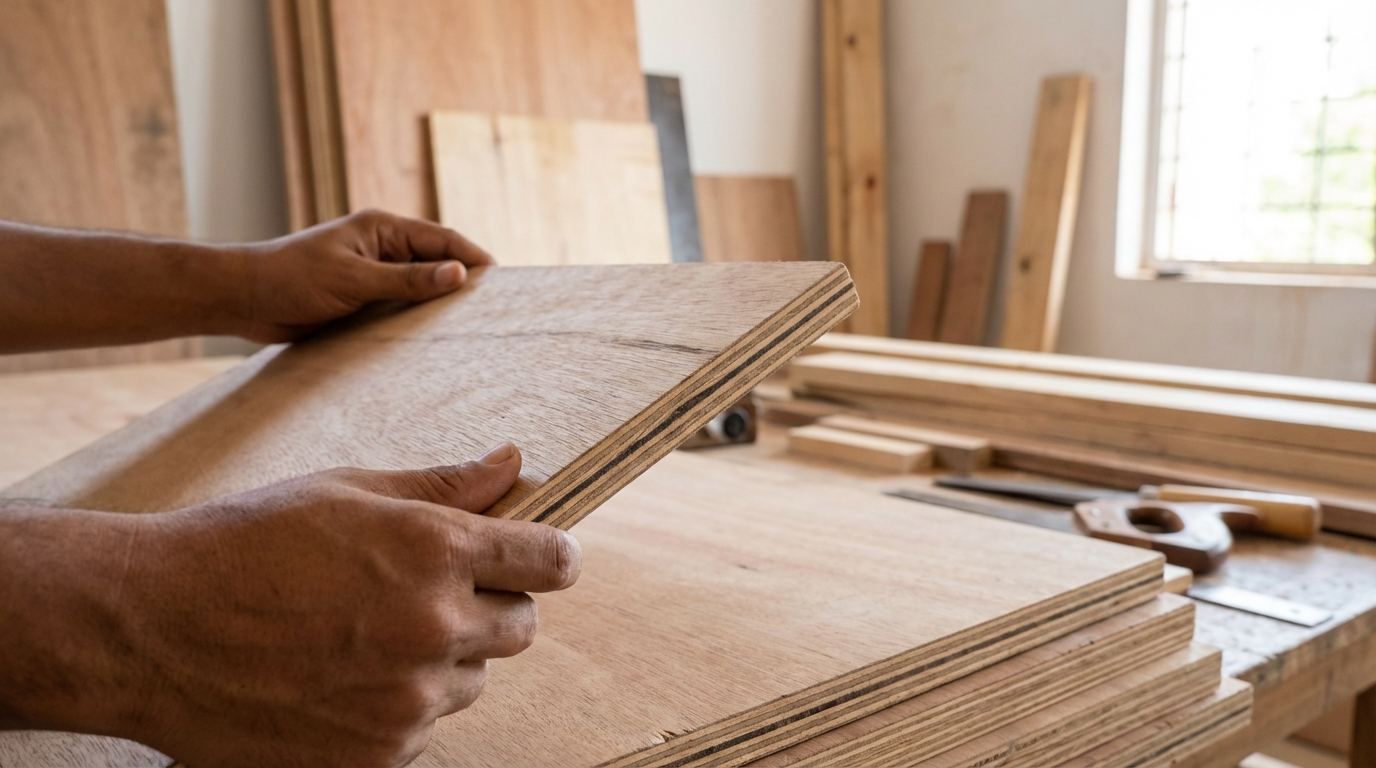
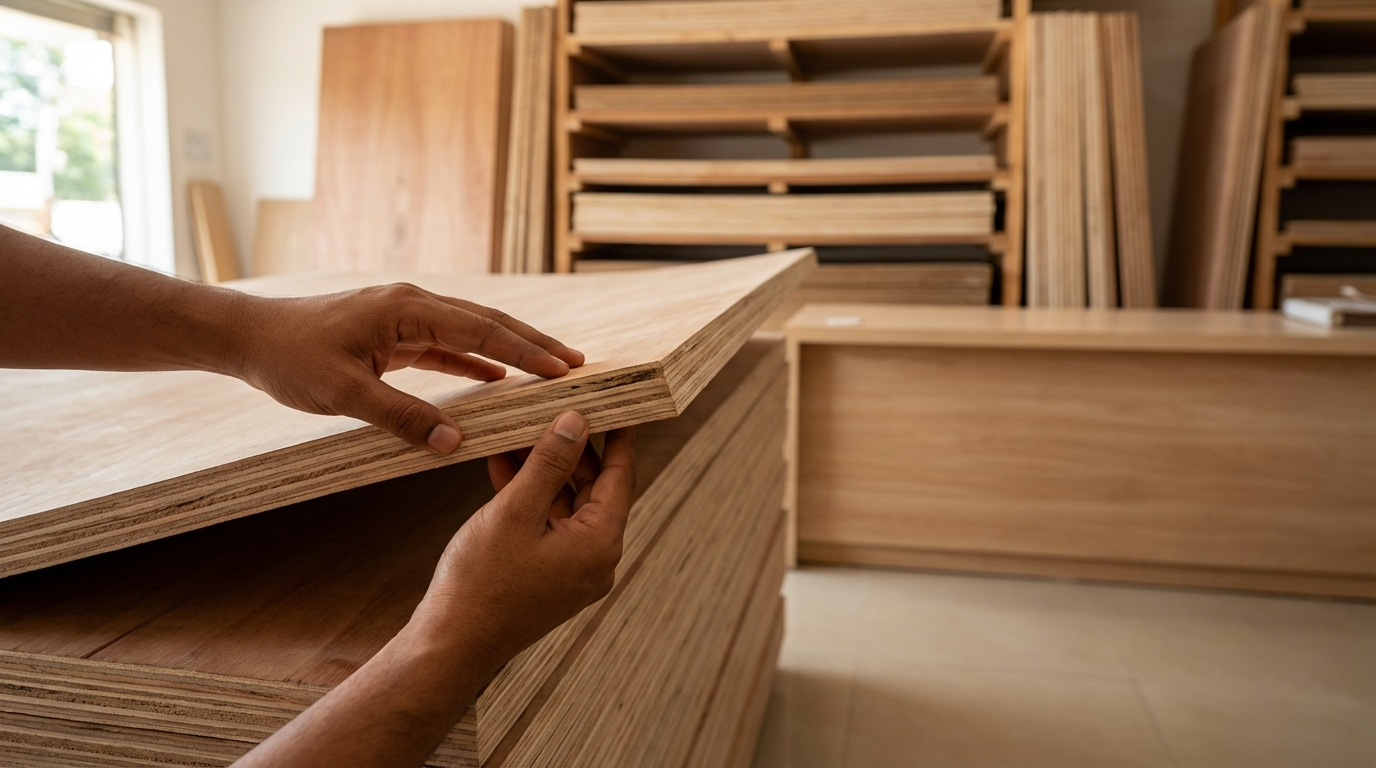
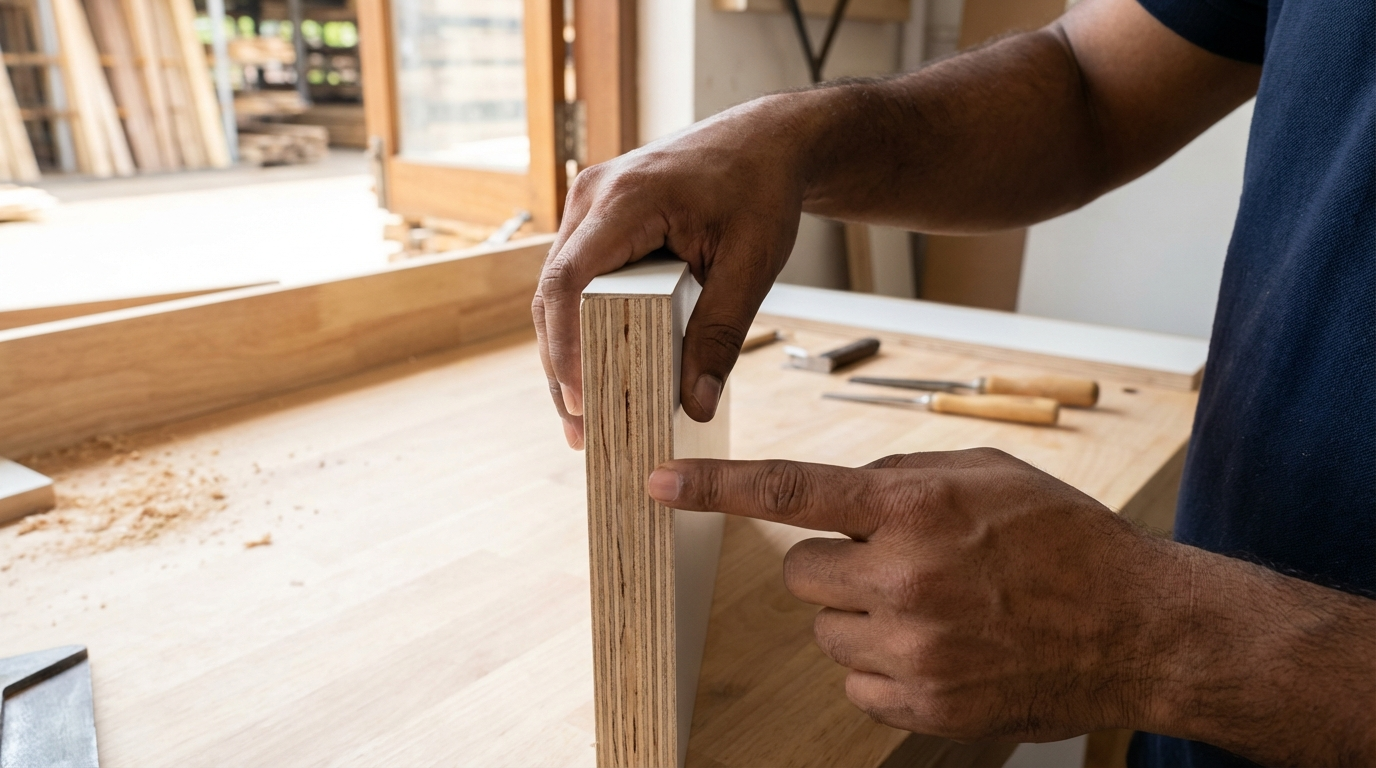
18mm plywood price per sq ft: grade-wise guide
Understand 18mm plywood price per sq ft using price-per-sqft tables, thickness-wise factors, and dealer quote tips. Avoid overpaying and fake stock in India.
Quick Decision Summary
18mm plywood typically costs ₹80–₹250 per sq ft in India, varying by grade, quality, region, and quantity.
If you’re in a hurry: For basic furniture or partitions in dry interiors, opt for MR grade at the lower end (around ₹80–₹130/sq ft). Semi-exposed areas like kitchens need BWR (₹100–₹170/sq ft). High-moisture zones such as bathrooms or coastal homes demand BWP/marine grade (₹140–₹250/sq ft). Always factor in 10–15% extra for wastage, edges, and transport. Get quotes specifying core type, calibration tolerance, and face veneer quality—prices fluctuate 20–30% between cities like Mumbai and Lucknow. Prioritize calibrated sheets to minimize cutting losses.
- Choose MR grade if your project is indoors with low humidity and tight budget.
- Choose BWR if moderate moisture exposure like kitchens or balconies is expected.
- Avoid non-calibrated sheets if precise joinery is needed; opt for BWP only in wet zones to prevent delamination.
What 18mm Plywood Actually Means
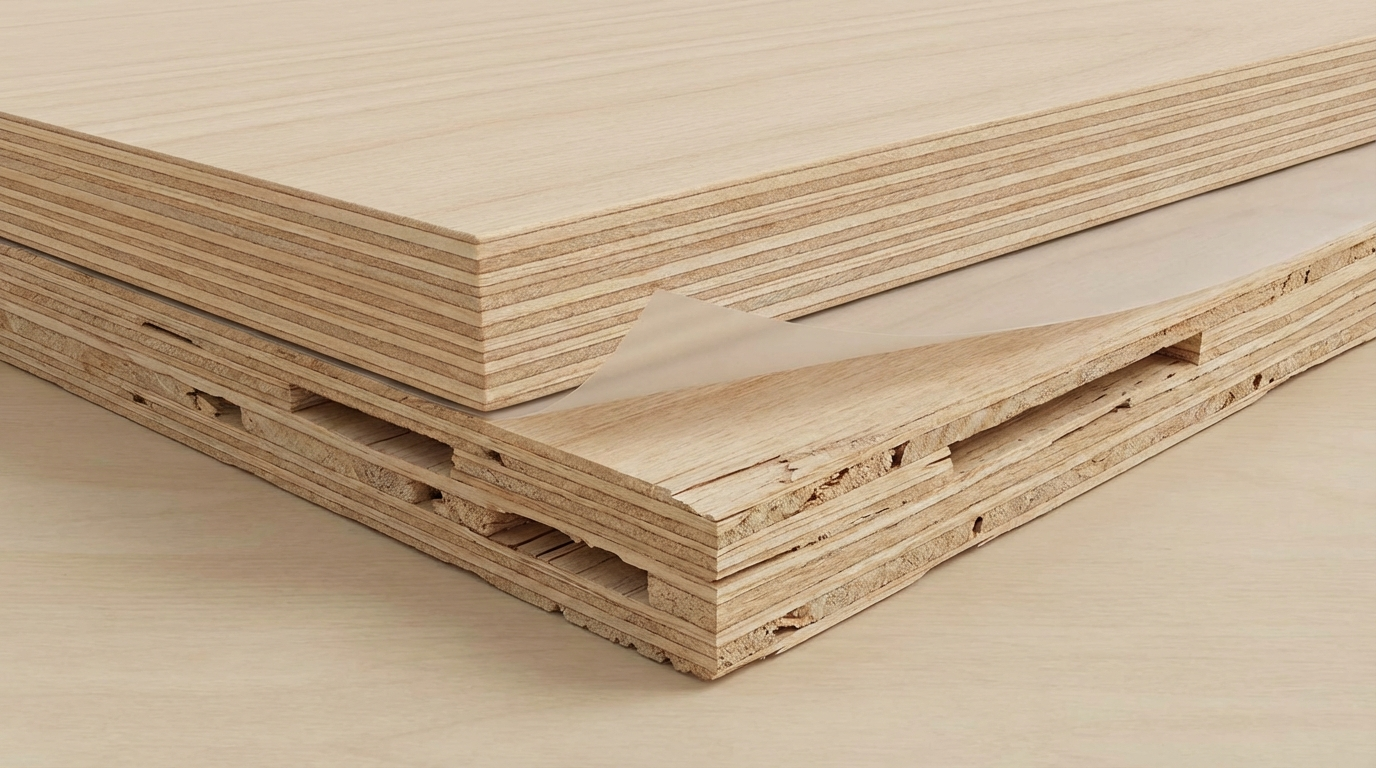
18mm plywood refers to engineered wood sheets exactly 18mm thick (with minor tolerance), made by gluing 13–15 layers of thin veneers under pressure. It's a structural staple for heavy-duty uses like wardrobes, beds, shelves, partitions, and false ceilings in Indian homes and offices. The "grade" (MR, BWR, BWP) defines moisture resistance, not thickness.
Where people get confused:
- Thinking 18mm is always "stronger" than thinner options—strength depends on core gaps and glue lines, not just thickness.
- Mixing up MR (moisture-resistant for dry areas) with BWP (boiling water-proof for submersion risks).
- Assuming all 18mm sheets are calibrated (sanded to uniform thickness)—non-calibrated ones cause wavy surfaces and extra sanding time.
- Believing price per sq ft includes cutting/edges—it's usually for full 8x4 ft sheets.
- Overlooking face/back veneer quality—cheap faces warp faster in monsoons.
India-Specific Reality Check
In India's diverse climates, 18mm plywood faces monsoon humidity (70–90% RH), coastal salt air, and poor godown storage leading to pre-warping. Inland cities like Delhi see dry winters but humid summers; Mumbai/Kochi demand marine grades year-round. Contractor workflows often involve open-site stacking, inviting rain damage—always cover stacks. Transport via trucks exposes sheets to jolts, cracking edges. Workmanship issues like uneven screwing amplify failures in humid zones.
Price Range and Cost Drivers (India)
18mm plywood prices per sq ft typically span ₹80–₹250, but expect 15–25% variation by city (higher in metros like Bangalore/Mumbai due to logistics). Bulk buys (50+ sheets) shave 10–20%.
| Grade | Typical Price Range per Sq Ft | Best For |
|---|---|---|
| MR (Moisture Resistant) | ₹80–₹130 | Dry interiors: bedrooms, offices |
| BWR (Boiling Water Resistant) | ₹100–₹170 | Semi-wet: kitchens, laundry |
| BWP/Marine | ₹140–₹250 | Wet/coastal: bathrooms, exteriors |
Key Cost Drivers: Core material (poplar cheaper than hardwood), face veneer (teak/imported pricier), calibration (adds ₹10–20/sq ft), finish (laminated/pre-veneered ups 20–40%), quantity, and region (add 20% for islands like Andaman).
How to Ask for a Quote (Checklist):
- Specify grade, core (hardwood/poplar), calibration tolerance (±0.5mm).
- Mention sheets size (8x4 ft standard), quantity, delivery site.
- Ask for face/back veneer details and glue line count.
- Request sample or edge knock test demo.
Mini Budget Example: For a 10x6 ft wardrobe (60 sq ft coverage +20% wastage = 72 sq ft), MR grade at ₹100/sq ft totals ₹7,200 + ₹1,000 transport/edges = ₹8,200. BWP version: ₹16,000+.
What Affects 18mm Plywood Price the Most?
Grade and moisture rating top the list, followed by core quality and calibration. MR stays cheapest for dry use, but BWP justifies premium in humid India due to delamination resistance. City logistics add 15–30%—inland cheaper than ports. Bulk orders and negotiation drop rates, but skip unbranded for hidden costs like gaps. Verify quotes by comparing 3–5 dealers; ask for breakdown to spot padding.
Is 18mm Plywood Price Per Sq Ft Fixed Across India?
No, it varies widely by region, grade, and batch—₹80 inland vs ₹120+ in metros. Monsoon season hikes transport costs 10%. Always get local quotes specifying your specs; use apps or calls for real-time rates. Factor GST (18%) and loading/unloading. Pro tip: Visit 2–3 godowns for hands-on checks before committing.
How to Choose in 5 Steps
- Match Grade to Exposure: Dry=MR, semi-wet=BWR, full-wet=BWP. Skip if unsure—test knock sound for solidity.
- Check Calibration: Measure edges with caliper; uniform 18mm prevents sagging.
- Inspect Core and Veneer: No visible gaps, smooth faces without bubbles.
- Get Multiple Quotes: Specify all details; compare per sq ft loaded price.
- Plan for Extras: Add 15% wastage, edges, hardware. Test sample on-site if possible.
Skipping steps risks 20–50% cost overrun from rework.
Quick Decision Framework
| Project Condition | Recommended 18mm Grade | What to Verify On-Site |
|---|---|---|
| Tight budget, dry bedroom furniture | MR | Calibration, face smoothness, core gaps absent |
| Kitchen cabinets, moderate humidity | BWR | Glue line strength (nail test), veneer adhesion |
| Bathroom vanity or coastal home | BWP/Marine | Edge moisture resistance, hardwood core |
| Heavy shelves, high load | BWR or BWP | Thickness uniformity, deflection test |
| Fast delivery needed | MR (widely available) | Stock freshness, no storage warp |
| Scratch-prone kids' room | BWR with laminate | Face hardness (scratch test), finish quality |
Which 18mm Plywood Grade for Furniture?
BWR grade suits most furniture due to balanced moisture resistance and cost. MR works for enclosed wardrobes but delaminates in humid storage. BWP overkill unless coastal/heavy steam. Verify by glue shear (nail pull test) and veneer grain consistency. For India homes, add laminate for scratch protection—extends life 2x in daily use.
Trade-offs and Limitations
18mm offers strength but weighs 40–50kg per sheet, straining solo handling—risks back injury on sites. Higher thickness means more material cost vs 12mm for light partitions. Moisture grades trade price for durability; MR cheapest but fails in 6–12 months humid exposure. Non-calibrated wastes 10% on sanding. Laminates add beauty but trap moisture if edges unsealed.
Common Buyer Mistakes and How to Avoid Them
- Buying cheapest MR for kitchens: Happens due to upfront savings; delaminates fast. Instead: Upgrade to BWR, verify exposure first.
- Ignoring calibration: Leads to uneven cabinets. Measure before buying.
- Not accounting wastage: Short 10–15 sheets. Calculate precisely with layout.
- Trusting verbal warranties: Vague promises fail. Focus on physical checks.
- Single quote reliance: Overpay 20%. Get 3–5 written breakdowns.
- Site storage neglect: Rain warps stock. Cover and elevate stacks.
- Overlooking core quality: Gappy cores sag. Knock for hollow sounds.
- Forgetting edges/transport: Hidden 15% cost. Quote inclusive.
Failure Modes and Fixes
- Symptom: Bulging face. Root: Poor glue/moisture ingress. Prevent: BWR+ sealing. Fix: Sand/refinish or replace panel.
- Symptom: Edge cracks. Root: Transport jolts. Prevent: Corner protection. Fix: Fill/epoxy, reinforce.
- Symptom: Sagging shelves. Root: Core gaps/under-spec load. Prevent: Load test sample. Fix: Add supports.
- Symptom: Delamination in monsoon. Root: Wrong grade. Prevent: Match BWP for wet. Fix: Dismantle/dry, seal anew.
- Symptom: Wavy surface. Root: Non-calibrated. Prevent: Measure tolerance. Fix: Extra sanding (time sink).
- Symptom: Screw pull-out. Root: Soft core. Prevent: Hardwood core. Fix: Plug/oversize screws.
Quality Checks You Can Do Without Lab Tests
Before Buying: Knock edges (solid thud=no gaps), flex sheet (minimal bend), check veneer for bubbles/cracks. Ask: "Core type? Glue lines? Calibration cert?" Red flags: Excessive dust, musty smell.
After Cutting: Even edges, no feather veneers, glue holds on scraps.
After Install: Check flatness with straightedge, seal all edges with putty/tape.
Homeowner Tips: Durability Do's and Don'ts
Do: Wipe spills immediately, use coasters, seal edges yearly. Don't: Drag heavy items, expose to direct steam. In monsoons, run dehumidifier near furniture. Expect 10–15 years with BWR; clean with damp cloth only—no abrasives that scratch veneers.
Carpenter Tips: Handling and Prep
Cut with zero-clearance blade to avoid tear-out. Pre-drill screws in hinge zones. Sand edges before assembly for tight joints. For 18mm, use 2.5-inch screws in load areas. Handle vertically to prevent bow—stack flat max 10 high.
Architect/Designer Tips: Spec Writing
Specify "IS-marked BWR calibrated 18mm ±0.5mm, hardwood core, teak face." Detail edge banding, wet-zone clearances. Recommend BWP for coastal bids. Include deflection limits in drawings for shelves.
Contractor Tips: Workflow Efficiency
Order 15% extra for breakage. QC batch: Random knock/moisture feel. Negotiate delivery timing to avoid site rain. Track per sq ft landed cost for quotes.
FAQs
How much is 18mm plywood per sheet?
Standard 8x4 ft sheet (32 sq ft) typically costs ₹2,500–₹8,000 total, or ₹80–₹250/sq ft equivalent. Varies by grade/location—MR cheapest. Confirm sheet size and quote inclusive of GST/transport to avoid surprises. Bulk reduces per unit.
Why is 18mm BWP plywood pricier?
BWP uses superior phenolic glue and denser cores for boiling resistance, vital in humid India. Premium adds 40–100% over MR. Worth it for longevity in baths/coast—prevents costly replacements. Verify by edge boiling test demo if offered.
Does plywood price include cutting?
No, per sq ft is for uncut sheets; cutting/edges extra ₹5–10/linear ft. Plan layouts to minimize waste. Dealers sometimes bundle for volume—ask upfront.
MR vs BWR 18mm: Price and use difference?
MR ₹80–₹130/sq ft for dry zones; BWR ₹100–₹170 for kitchens. BWR holds in 70% humidity longer. Switch to BWR if any steam exposure—MR fails faster in India summers.
How to calculate total plywood cost for a room?
Measure walls/furniture area, add 15% wastage/joints, multiply by per sq ft rate +10% extras. Example: 100 sq ft partition at ₹110 = ₹12,100 base. Get carpenter sketch first.
Is calibrated 18mm plywood worth extra cost?
Yes, uniform thickness saves 20% labor—no filler sanding. Non-calibrated warps cabinets. Insist on it for modular work; check with scale on arrival.
What’s the average 18mm plywood price in Mumbai?
Typically higher at ₹100–₹280/sq ft due to port logistics. Varies by season—monsoon up 10%. Compare godowns in suburbs for deals; specify needs clearly.
Can 18mm plywood be used outdoors?
Only BWP grade with sealing/paint; still limited vs dedicated exteriors. Indoor preferred—outdoor UV/humidity degrade even marine in 2–3 years. Use alternatives like WPC for full exposure.
How does thickness affect 18mm plywood price?
18mm costs 40–50% more than 12mm same grade due to extra veneers/weight. Strength justifies for spans over 60cm. Thinner for panels; verify load needs.
Disclaimer: This content is provided for general informational purposes based on industry practices and publicly available information. Product specifications, standards, prices, and availability may vary by manufacturer, region, and time. Readers should independently verify details with manufacturers, dealers, or qualified professionals before making purchase or construction decisions.Want Plywood Suggestions?
Share a few details and a Duro BOIL specialist will suggest suitable brands and connect you to responsive dealers.