Action Tesa MDF: checklist review for wardrobes
A practical review of action tesa mdf: specs checklist, pros/cons, best-use cases, warranty checks, and what to verify at the dealer in India.
Quick Decision Summary
Action Tesa MDF works well for budget wardrobes in dry interiors, prioritizing smooth carving and affordability over heavy moisture exposure.
If you’re in a hurry: Opt for Action Tesa interior-grade MDF (16-18mm thick) for wardrobe shutters and panels if your space stays below 70% humidity and gets good ventilation. It offers uniform density for easy routing of designs, lighter weight for modular installs, and pre-lam options for quick finishes. Expect screw-holding suitable for light-to-medium loads like clothes storage. Verify edge sealing and density at purchase to avoid swelling risks during monsoons. For coastal or steamy bathrooms-adjacent wardrobes, upgrade to their HDHMR variant or BWR plywood alternatives. Always check batch consistency on-site.
- Choose this if: Building cost-effective sliders/carcasses in air-conditioned bedrooms, need paintable surfaces, or want lightweight panels under Rs 80/sqft range.
- Avoid this if: High-humidity zones without sealing, heavy tool storage, or budget allows denser HDHMR for 20% better screw grip.
Note: This page is independent informational content and is not affiliated with any manufacturer.
If You’re Searching for Action Tesa MDF, Here’s What People Usually Mean
Queries for Action Tesa MDF often target its plain or pre-laminated boards for furniture like wardrobes, focusing on density, carving ease, and low-emission grades. Users want checklists for spotting genuine sheets amid fakes, thickness options (8-25mm), and suitability for Indian wardrobes with sliding shutters or loft shelves. Common intents include price per sqft verification, moisture grades (interior vs exterior), and comparisons to HDHMR or particle boards. They seek practical tests like screw pull-out or edge swelling to decide for modular vs carpenter-built setups.
How to Compare Action Tesa-Type Options to Alternatives (Without Guesswork)
Focus on wardrobe needs: shelf load (10-20kg), humidity exposure, and finish type. Test screw-holding by inserting/removing 3-4 screws in edges; measure deflection under weight. Check swelling by wetting a sample corner overnight.
| Condition | Action Tesa MDF (Interior) | Action Tesa HDHMR | BWR Plywood Alternative |
|---|---|---|---|
| Dry bedroom wardrobe | Good; smooth for lamination | Overkill but stronger | Excellent stability |
| Monsoon-prone (70%+ RH) | Average; seal edges heavily | Best; minimal swell | Strong contender |
| Heavy shelves (kids' toys) | Fair; reinforce with battens | Superior grip | Top load bearer |
| Budget under Rs 70/sqft | Ideal starter | 20% higher | Often pricier |
What This Term/Material Actually Means
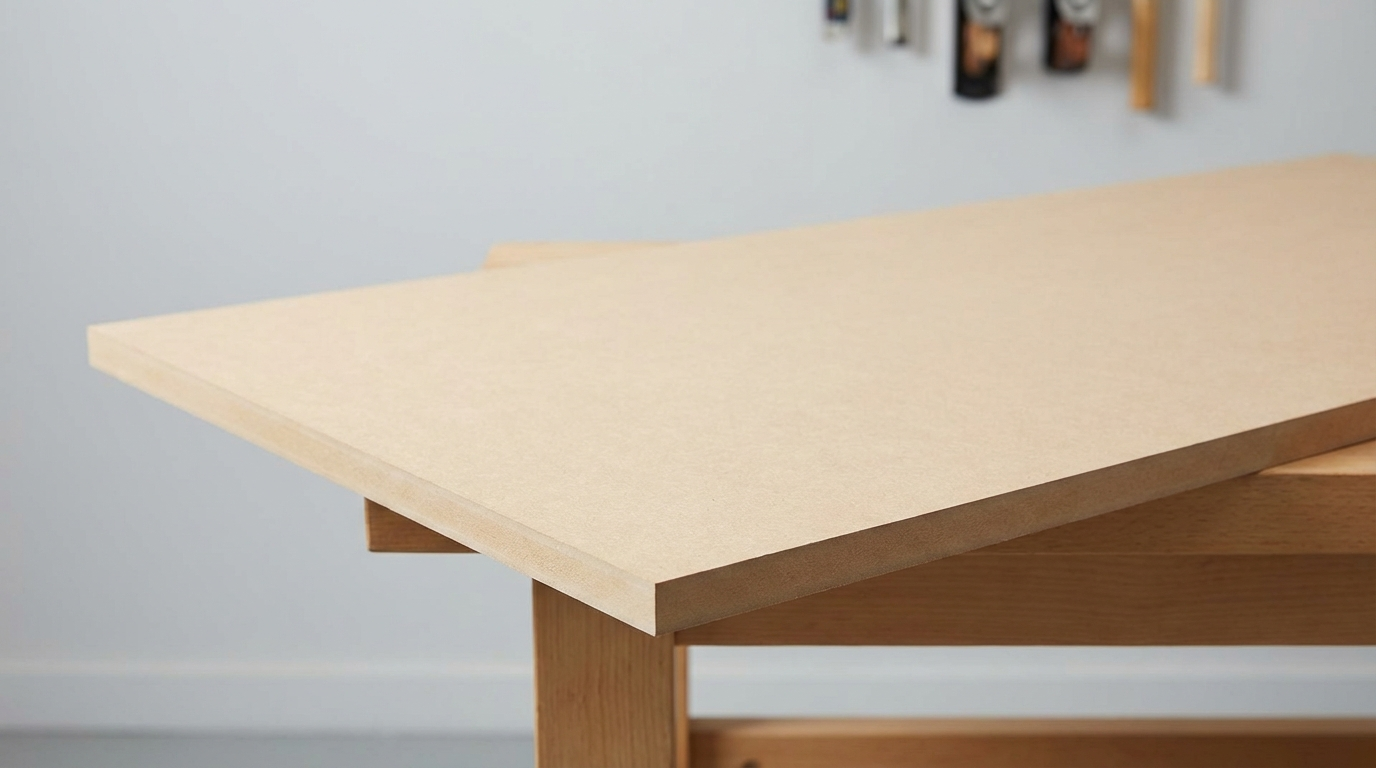
Action Tesa MDF refers to their Medium Density Fiberboard lines—engineered panels from compressed wood fibers (often eucalyptus) and resins, pressed under heat for uniform density around 700-850 kg/m³. Available plain for painting/laminating or pre-lam with prints, in interior (dry use) or moisture-resistant exterior grades. Sizes typically 8x4 ft, thicknesses 3-25mm suit wardrobe panels/shutters.
Where People Get Confused (Top 5 Misunderstandings)
- MDF = waterproof: No, interior grades swell if unsealed; use HDHMR for semi-wet.
- HDHMR is just thick MDF: Denser (850+ kg/m³) with better moisture/screw hold.
- Pre-lam skips carpenter work: Still needs edge banding to prevent chipping.
- All MDF termite-proof: Resins help, but confirm urea-formaldehyde low-emission.
- Cheaper than particle: Often similar, but MDF smoother for carving mouldings.
India-Specific Reality Check
In monsoon-heavy India (Mumbai/Chennai 80%+ RH), unsealed MDF edges absorb moisture, causing wardrobe shutters to warp or sag shelves. Coastal storage risks fungus if stacked wet; always elevate sheets 6 inches off godown floors. Contractor workflows favor pre-cut calibrated sheets to minimize sawdust in tight apartments. Hot-dry Delhi sees less swell but termite risks in plinth-level wardrobes—pair with repellents.
Price Range and Cost Drivers (India)
Plain interior MDF (16-18mm, 8x4ft) typically Rs 55-85 per sqft in metros like Delhi/Bengaluru; HDHMR adds 15-25% (Rs 70-110). Thinner 12mm drops 20%, pre-lam adds Rs 10-20/sqft. Drivers: thickness, grade (interior/exterior), city logistics (North cheaper by 10%), batch density, finish (UV-coated higher). Quote checklist: “8x4ft, 18mm plain interior MDF, CARB E1, calibrated ±0.5mm, current batch density cert.” Budget example: 40sqft wardrobe carcass at Rs 70/sqft = Rs 2800 base, plus 20% lam/wastage.
How to Choose in 5 Steps
- Assess space: Dry AC bedroom? Standard MDF. Steamy? HDHMR.
- Load test needs: Clothes only? 16mm. Toys/books? 18mm+ battens.
- Inspect sheet: Uniform color, no lumps, edges straight.
- Screw/weight check: Holds 4 screws without crumbling?
- Seal plan: Edge tape mandatory; skip risks 6-month swell.
Skipping step 3 leads to wavy panels post-lam, wasting 15% material.
Is Action Tesa MDF good for wardrobes?
Yes for interiors, offering smooth surfaces ideal for laminate designs in ventilated bedrooms. Density supports shutter sliders up to 50kg total. In humid India, pair interior MDF with PVC edge bands and avoid floor-level storage. Next: Wet a sample edge 24hrs; under 8% swell means viable. Upgrade to HDHMR if wardrobe abuts bathrooms—prevents sagging shelves during rains. Verify dealer batch via weight check (heavier = denser).
Which thickness for wardrobe shelves?
16mm for light clothes, 18mm for mixed loads. Balances weight vs strength; thinner risks deflection under 15kg. In apartments, lighter helps door frames. Check: Stack 10kg bricks centered—minimal bend? Good. Thicker adds cost/stability for lofts. Confirm calibration to avoid uneven sliders.
Trade-offs and Limitations
Affordable vs plywood but weaker edges (needs banding); smooth carving vs grain charm of veneer. Interior MDF limits wet zones—swells faster than BWP. Lighter (easier install) but lower fire resistance without additives. Pre-lam saves time but hides core flaws.
Common Buyer Mistakes and How to Avoid Them
- Mistake 1: Buying thinnest/cheapest without load test. Why: Bedroom humidity buckles shelves. Instead: Simulate 10kg load on sample.
- Mistake 2: Skipping edge sealing. Why: Monsoon vapor creeps in. Instead: PVC tape all cuts pre-install.
- Mistake 3: Ignoring density variation. Why: Light batches crumble screws. Instead: Weigh sheet (850kg/m³ target for HDHMR).
- Mistake 4: Dry-use in kitchens. Why: Steam delams. Instead: HDHMR only.
- Mistake 5: No calibration check. Why: Gaps in sliders. Instead: Measure ±0.5mm tolerance.
- Mistake 6: Bulk buy without storage plan. Why: Godown damp ruins stack. Instead: Vertical, covered racks.
- Mistake 7: Veneer over MDF without primer. Why: Peels in AC flux. Instead: 2-coat sealer.
- Mistake 8: Overlooking screw zones. Why: Hinges fail. Instead: Pilot holes + inserts.
Failure Modes and Fixes
- Symptom: Shutters swell/stick. Cause: Unsealed edges. Prevent: Full banding. Fix: Plane + reseal.
- Symptom: Screw pull-out. Cause: Low density. Prevent: HDHMR. Fix: Wooden plugs + rescrew.
- Symptom: Shelf sag. Cause: Thin span. Prevent: 18mm + supports. Fix: Add battens underneath.
- Symptom: Lam peel. Cause: Poor bond. Prevent: Press properly. Fix: Scrape + relam.
- Symptom: Chipping on cuts. Cause: Dull blade. Prevent: Carbide saw. Fix: Fill + sand.
- Symptom: Termite trails. Cause: Untreated core. Prevent: Certified grade. Fix: Spray + replace panel.
Quality Checks You Can Do Without Lab Tests
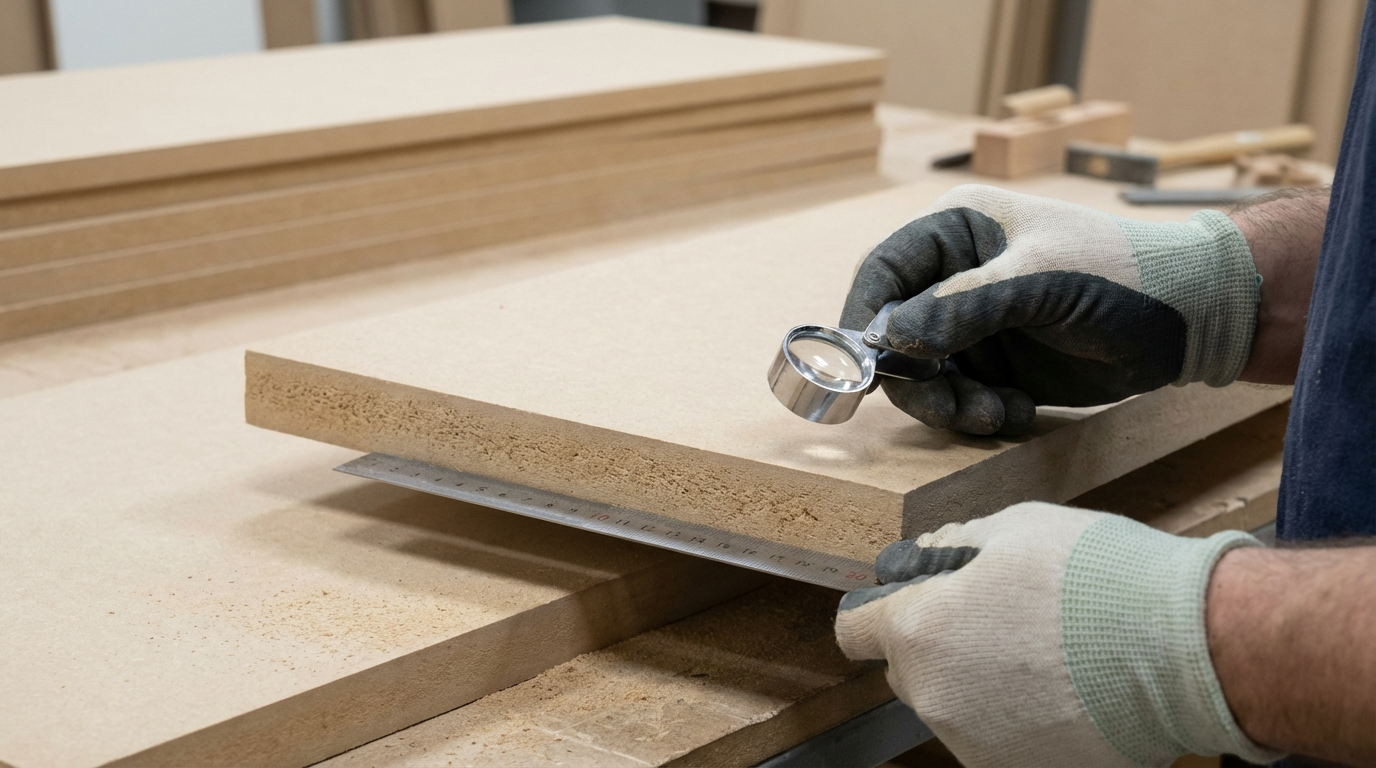
- Before buying: Tap sheet—uniform thud? No hollows. Edges straight/rule test. Color even, no dark veins.
- Questions to dealer: “Batch density? Emission grade? Calibration mm?” Red flag: Vague answers.
- After cutting: Edges crisp, no fuzz? Screw 4x in scrap—holds firm?
- Post-install: Wipe wet cloth on edge—no darkening? Sliders align ±1mm.
Decision Framework for Wardrobes
| Condition | Recommended Action Tesa Option | What to Verify |
|---|---|---|
| Coastal/high humidity | HDHMR 18mm | Sample swell <5% after wet test |
| Budget bedroom, light use | Interior MDF 16mm pre-lam | Uniform density tap test |
| Heavy load lofts | HDHMR 19mm plain | Screw hold 20kg static |
| Tight budget/fast delivery | Standard MDF 12-16mm | Calibration ±0.3mm |
| High scratch risk (kids) | Pre-lam HDHMR | Surface scratch resistance wipe |
| Custom carving designs | Plain interior MDF | Smooth routing on scrap |
Tips for Homeowners: Durability and Cleaning
Do: Seal all edges, use soft cloths/dry mop spills immediately. Don’t: Drag heavy items, expose to direct steam, use abrasives. Vacuum crevices monthly to prevent dust nests in humid wardrobes.
For Carpenters: Cutting, Edge Prep, Fastening
Cut with zero-clearance blade for crisp edges; pre-drill hinges 2mm bits. Edge-band hot-melt PVC 2mm thick. Fasten with 40mm screws + washers in 50mm zones. Handle vertically to avoid bends.
For Architects/Designers: Specs and Detailing
Spec: “18mm CARB E1 MDF, density 750+ kg/m³, moisture <10%.” Detail wet zones with 3mm reveals, ventilate backs. Finish: PU topcoat for AC swings.
For Modular/OEM Makers: Repeatability and QC
QC: Weigh each sheet, log batches. Use CNC for tolerance, test 5% screw pull. Reduces complaints 30% via consistent density.
FAQs
Can Action Tesa MDF handle wardrobe sliders?
Yes, 16-18mm grades support smooth operation for 50kg doors with proper tracks. Lighter than plywood eases alignment in prefab units. In humid belts, HDHMR variant cuts friction from minor swells. Next step: Test slider weight on sample track; add nylon guides if sticky. Confirm straight edges prevent binding.
Action Tesa MDF vs particle board for wardrobes?
MDF denser/smoother for better carving/lam adhesion, particle cheaper but crumblier. MDF suits painted shutters, particle basic carcasses. Weigh trade-off: MDF 20% stronger screws. Check: Nail scrap—particle splinters more. Ideal for India: MDF in visible zones.
How to spot fake Action Tesa MDF?
Real sheets uniform beige, heavy per sqft, crisp logo stamp. Fakes lighter, patchy fibers. Tap test uniform; smell mild resin not chemical. Dealer tip: Ask production date/batch—recent <3 months best. Avoid if no weight match.
Best finish for Action Tesa MDF wardrobes?
Pre-lam for speed/budget, laminate for durability, paint for custom. Seal primer mandatory. In monsoons, UV acrylic resists fading. Apply 2x sealer + topcoat; cures 48hrs. Test: Finger rub—no powder.
Does it warp in Indian summers?
Minimal if AC-maintained (<30°C); edges sealed block expansion. HDHMR best for fluctuations. Store flat/covered. Monitor: Measure width monthly first year. Fix early with clamps.
Suitable for kids' wardrobes?
Yes with 18mm + rounded edges; HDHMR for climbs. Laminate hides scratches. Reinforce shelves. Avoid open shelves for small toys. Clean: Mild soap only.
Storage tips before install?
Vertical racks, 20% RH room, cover plastic. Acclimatize site 72hrs pre-cut. Monsoon: Dehumidifier near stack. Rotate stock FIFO.
Compare to plywood for wardrobes?
MDF lighter/cheaper/smoother vs plywood stronger/grainier. MDF for designs, plywood heavy loads. Cost: MDF 30% less. Test both for your humidity.
Warranty checks without papers?
No claims, but test durability yourself: Swell, screw, load. Consistent performance > promises. Local confirm varies by grade/dealer.
Disclaimer: This content is provided for general informational purposes based on industry practices and publicly available information. Product specifications, standards, prices, and availability may vary by manufacturer, region, and time. Readers should independently verify details with manufacturers, dealers, or qualified professionals before making purchase or construction decisions.Want Plywood Suggestions?
Share a few details and a Duro BOIL specialist will suggest suitable brands and connect you to responsive dealers.