MDF Board: Complete Guide to Medium Density Fibreboard
Everything about MDF boards - from composition and manufacturing to applications and maintenance. Your ultimate guide to Medium Density Fibreboard.
Quick Verdict on MDF Board
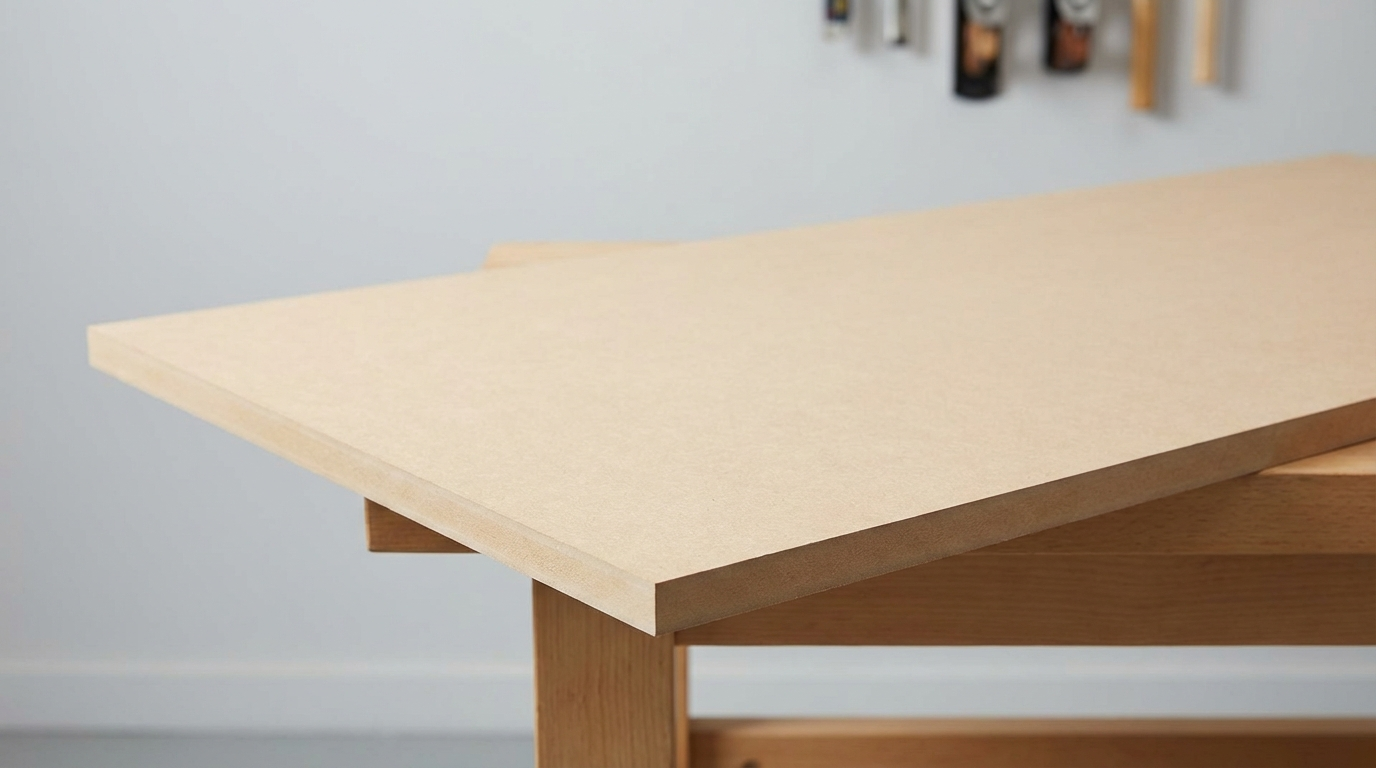
MDF (Medium Density Fibreboard) is an engineered wood product made from compressed wood fibres bonded with resin, offering a smooth, grain-free surface ideal for furniture, cabinets, and decorative applications where painting or lamination is required.
MDF board has become the material of choice for Indian interior designers and carpenters when precision finishing matters more than structural strength. Unlike plywood, MDF provides a perfectly uniform surface without knots, voids, or grain patterns that could interfere with paint or laminate adhesion.
According to duroboil.com's material experts, MDF performs excellently in controlled indoor environments but requires careful consideration for moisture-prone areas typical in Indian homes. Here's our assessment based on extensive testing and industry feedback:
| Performance Parameter | Rating | Remarks |
|---|---|---|
| Surface Smoothness | Excellent | Best-in-class among all wood boards |
| Moisture Resistance (Standard) | Poor | Swells significantly when exposed to water |
| Moisture Resistance (MR Grade) | Good | Suitable for humid areas with proper sealing |
| Screw Holding | Average | Requires pre-drilling and special fasteners |
| Machinability | Excellent | Clean cuts, perfect for CNC routing |
| Paint/Laminate Adhesion | Excellent | Superior to plywood and particle board |
| Weight | Heavy | Denser than plywood of same thickness |
| Value for Money | Good | Cost-effective for specific applications |
| Overall Recommendation | Highly recommended for dry interior applications requiring smooth finish; not recommended for wet areas or load-bearing structures | |
What Exactly is MDF Board?
Medium Density Fibreboard is an engineered wood product manufactured by breaking down hardwood or softwood residuals into fine wood fibres, combining them with wax and resin binder, and forming panels through high-temperature and high-pressure compression. The resulting board has a density typically ranging from 600 to 800 kg/m³.
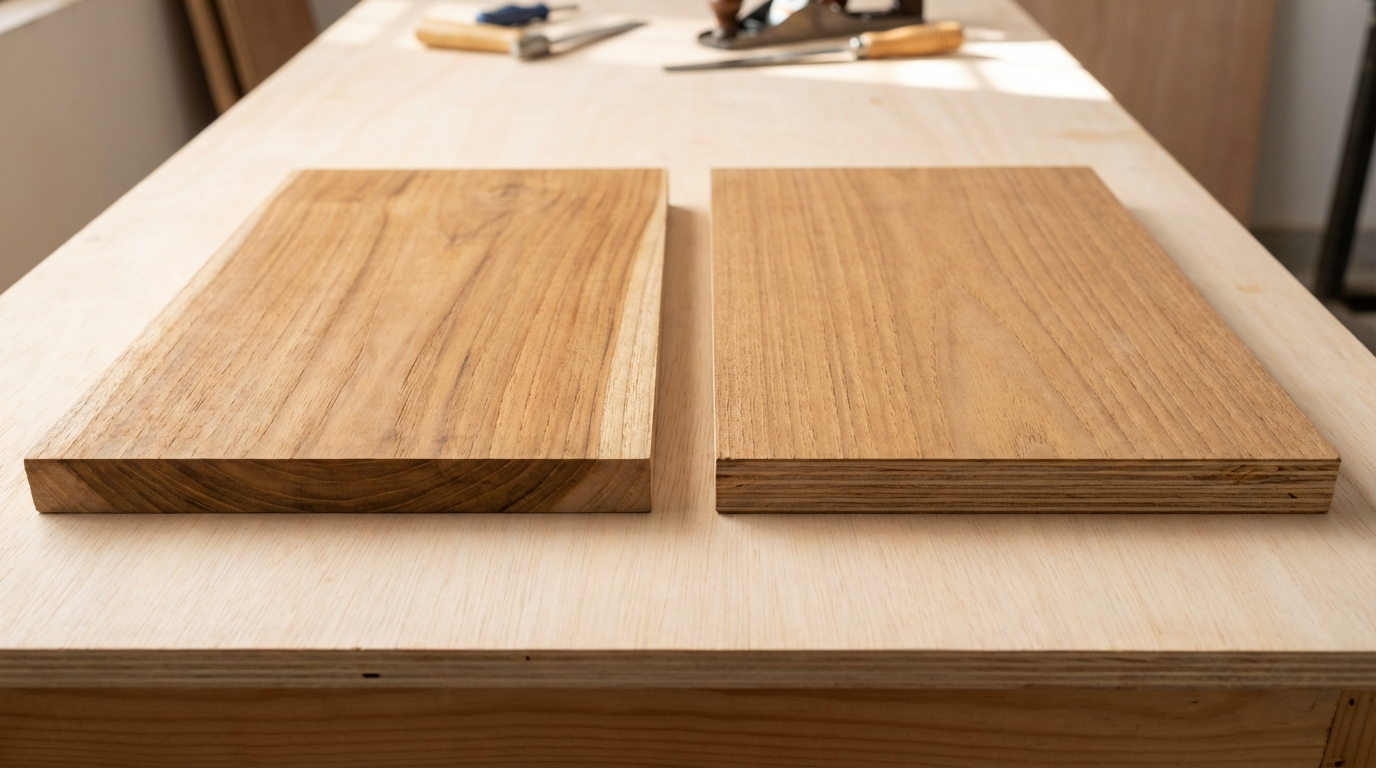
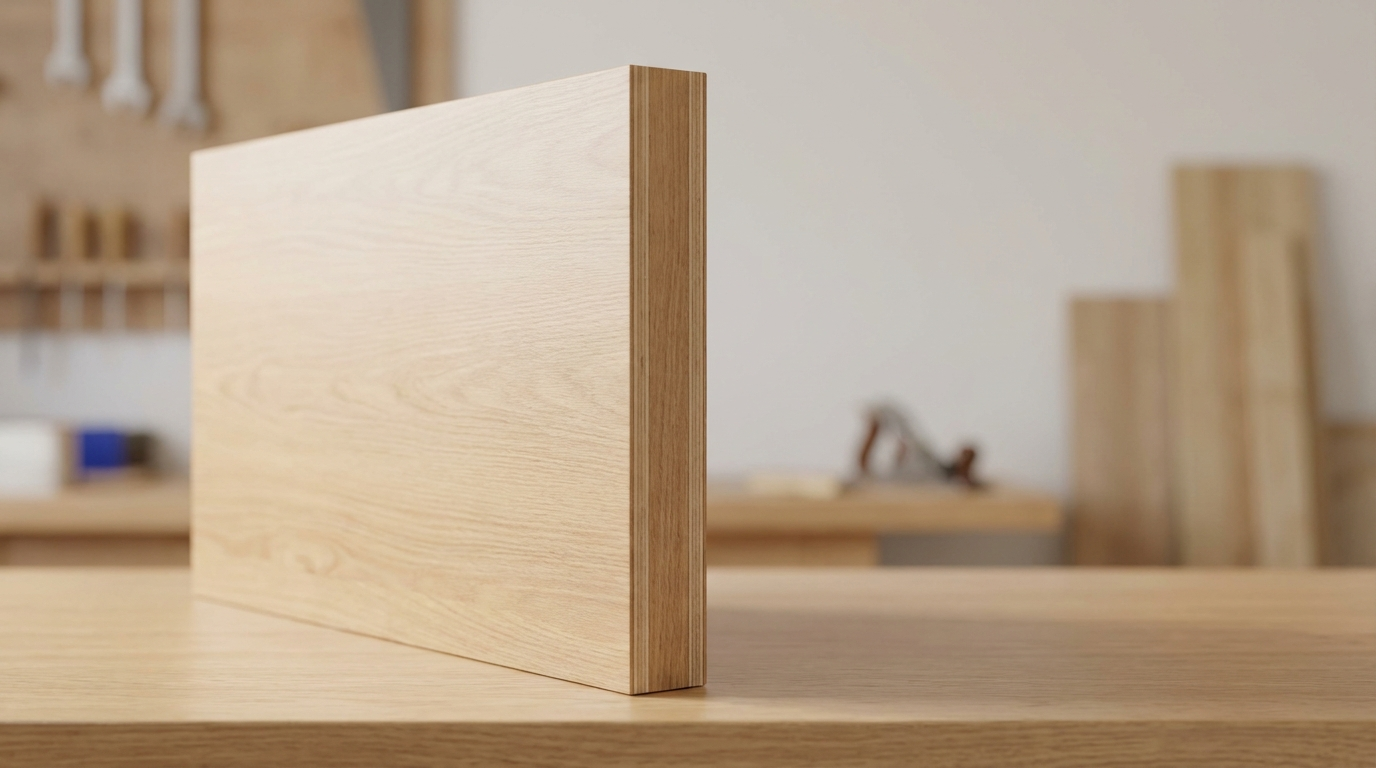
Unlike plywood which uses thin wood veneers layered in alternating grain directions, MDF consists of uniformly distributed wood fibres throughout its thickness. This homogeneous composition eliminates the natural grain patterns found in solid wood and plywood, resulting in a surface that's perfectly smooth in all directions.
The manufacturing process involves heating wood chips in a defibrator machine where steam and mechanical action separate the wood into individual fibres. These fibres are then dried to optimal moisture content, mixed with urea-formaldehyde or melamine-formaldehyde resin, formed into mats, and compressed under temperatures exceeding 150°C and pressures above 200 bar.
What Does MDF Stand For?
MDF stands for Medium Density Fibreboard. The "medium density" refers to its position between Low Density Fibreboard (LDF) and High Density Fibreboard (HDF) in terms of density and strength. Standard MDF has a density of 680-730 kg/m³, placing it in the medium range of fibreboard products.
In Indian markets, you'll often hear carpenters refer to MDF simply as "board" or "plain board" to distinguish it from plywood. The term "engineered wood" is also commonly used, though this technically encompasses multiple products including plywood, particle board, and OSB.
Types of MDF Available in India
The Indian market offers several MDF variants designed for different applications and environmental conditions. Understanding these types is crucial for selecting the right board for your specific project requirements.
| MDF Type | Best Applications | Moisture Resistance | Price Range (₹/sq ft) | Market Availability |
|---|---|---|---|---|
| Standard/Interior Grade MDF | Bedroom furniture, TV units, study tables | Poor | ₹25-40 | Widely available |
| MR Grade MDF | Kitchen cabinets, bathroom vanities (with sealing) | Moderate | ₹35-55 | Available in metros |
| HDHMR (High Density High Moisture Resistant) | Modular kitchens, high-humidity areas | Good | ₹55-80 | Premium dealers |
| Pre-laminated MDF | Ready-to-use furniture, quick installations | Varies by base | ₹45-90 | Widely available |
| Fire Retardant MDF | Commercial spaces, public buildings | Moderate | ₹70-120 | Limited, on order |
| Ultralight MDF | Wall panelling, decorative applications | Poor | ₹30-45 | Limited availability |
| Exterior Grade MDF | Covered outdoor areas, façades | Very Good | ₹65-95 | Limited, metros only |
Which MDF Type for Kitchens and Bathrooms?
For Indian kitchens where humidity levels fluctuate significantly due to cooking steam and monsoon conditions, standard MDF is not suitable. HDHMR or at minimum MR Grade MDF should be used, with all edges properly sealed using edge banding tape and surfaces protected with laminate or paint.
Bathroom applications require even more caution. While some manufacturers promote moisture-resistant MDF for bathroom vanities, the reality is that no MDF variant can match marine-grade plywood's water resistance. If using MDF in bathrooms, ensure complete surface sealing and avoid direct water contact areas.
Which MDF Type for Wardrobes and Bedrooms?
Standard interior-grade MDF works well for bedroom furniture including wardrobes, beds, study tables, and dressing units. Since these areas typically have controlled humidity levels, the cost savings of standard MDF over moisture-resistant variants make economic sense.
For wardrobe shutters where smooth paint finish is desired, 18mm standard MDF with proper priming delivers excellent results at lower cost than plywood alternatives.
Technical Specifications of MDF Board
Understanding MDF specifications helps you verify quality at the dealer and ensures you're getting appropriate material for your application. Indian manufacturers follow Bureau of Indian Standards (BIS) specifications, though imported boards may follow European EN standards.
| Specification | Standard MDF | MR Grade MDF | HDHMR | What It Means for You |
|---|---|---|---|---|
| Density | 680-720 kg/m³ | 700-750 kg/m³ | 850-900 kg/m³ | Higher density = better screw holding and durability |
| Internal Bond Strength | 0.55-0.65 N/mm² | 0.60-0.70 N/mm² | 0.80-1.0 N/mm² | Resistance to layer separation |
| Modulus of Rupture | 28-32 N/mm² | 30-35 N/mm² | 38-45 N/mm² | Bending strength before breaking |
| Thickness Swelling (24hr water) | 15-20% | 8-12% | 5-8% | Lower percentage = better moisture resistance |
| Surface Soundness | 1.0-1.2 N/mm² | 1.0-1.3 N/mm² | 1.2-1.5 N/mm² | Paint and laminate adhesion quality |
| Formaldehyde Emission | E1/E2 Class | E1 Class | E0/E1 Class | E0 is safest for indoor air quality |
Standard Sizes Available in India
The most common MDF sheet size in India is 8×4 feet (2440mm × 1220mm), which aligns with standard furniture dimensions and minimizes wastage. Some manufacturers offer 7×4 feet and 6×4 feet sizes for specific applications.
Thickness options typically range from 2.5mm to 30mm, with the most popular thicknesses being:
- 3mm: Back panels, drawer bottoms
- 6mm: Decorative panels, wall cladding
- 12mm: Shelves, partitions
- 18mm: Cabinet carcasses, wardrobe shutters (most common)
- 25mm: Heavy-duty shelving, countertops
Common Misconceptions About MDF Cleared
Several myths persist about MDF that lead to either inappropriate usage or unnecessary avoidance of this versatile material. Let's address the most common misconceptions with factual corrections.
Myth 1: "MDF is just compressed sawdust and very weak"
Reality: MDF is made from refined wood fibres, not sawdust. Its internal bond strength and modulus of rupture are actually comparable to many plywood grades for specific applications. The weakness lies in edge screw holding, not overall strength.
Myth 2: "All MDF releases dangerous formaldehyde forever"
Reality: While MDF contains formaldehyde-based resins, modern E0 and E1 grade boards emit minimal formaldehyde within safe limits. Emissions also decrease significantly after the first few months. Always buy E1 or E0 rated boards for peace of mind.
Myth 3: "MDF cannot be used in kitchens at all"
Reality: HDHMR and properly sealed MR-grade MDF are widely used in modular kitchens across India. The key is proper edge sealing and avoiding direct water contact. Most branded modular kitchen manufacturers use MDF variants successfully.
Myth 4: "MDF is cheaper than plywood so it must be inferior"
Reality: MDF costs less primarily because it uses wood residuals efficiently. For applications requiring smooth painted finishes, MDF actually outperforms plywood. The "inferiority" depends entirely on application suitability.
Myth 5: "Waterproof MDF exists and can replace marine plywood"
Reality: No MDF variant is truly waterproof. Even the best moisture-resistant MDF will eventually fail under prolonged water exposure. For genuinely wet applications, BWP/marine plywood remains the only engineered wood solution.
Advantages and Limitations of MDF Board
Making an informed MDF purchase requires understanding both its strengths and weaknesses. Duroboil.com recommends evaluating these factors against your specific project requirements rather than making blanket judgments.
Advantages of MDF
- Perfectly smooth surface: No grain, knots, or voids means paint and laminate adhere uniformly without telegraphing imperfections
- Excellent machinability: Clean cuts with minimal chipping; ideal for CNC routing, intricate patterns, and decorative mouldings
- Consistent density throughout: Unlike plywood where core quality varies, MDF is uniform from surface to core
- Cost-effective for specific uses: Significantly cheaper than plywood for applications where MDF's properties suit the purpose
- No grain direction concerns: Can be cut and worked in any direction without splitting along grain lines
- Excellent dimensional stability: Doesn't warp or twist as easily as solid wood in controlled environments
- Eco-friendly material utilization: Made from wood residuals that would otherwise be waste
- Termite resistant: The resins and manufacturing process make MDF naturally resistant to termite attack
Limitations of MDF
- Poor moisture resistance: Standard MDF swells dramatically when exposed to water, causing irreversible damage
- Weak edge screw holding: Screws driven into edges tend to strip out; requires pre-drilling and careful technique
- Heavy weight: Denser than plywood, making handling, transport, and wall-mounted applications more challenging
- Dust hazard during cutting: Fine dust particles require proper respiratory protection and dust extraction
- Cannot support heavy loads: Tends to sag over time when used for unsupported shelving
- Difficult repairs: Damaged MDF is challenging to repair satisfactorily; often requires replacement
Best Applications for MDF in Indian Homes
MDF performs exceptionally well in specific applications while being unsuitable for others. This application-based guidance helps you maximize MDF's strengths while avoiding its weaknesses.
| Application | Suitability | Recommended MDF Type | Thickness | Important Considerations |
|---|---|---|---|---|
| Wardrobe shutters | Excellent | Standard/MR Grade | 18mm | Perfect for painted or laminated finish |
| TV unit cabinets | Excellent | Standard MDF | 18mm | Ideal for living room furniture |
| Modular kitchen shutters | Good | HDHMR/MR Grade | 18mm | Must seal all edges properly |
| Kitchen carcass | Moderate | HDHMR | 18mm | BWR plywood often preferred |
| Wall panelling | Excellent | Standard/Ultralight | 6-12mm | CNC routing creates stunning patterns |
| False ceiling | Good | Standard MDF | 6-9mm | Weight consideration for large spans |
| Study table | Good | Standard MDF | 18-25mm | Laminate top recommended |
| Bathroom vanity | Poor | Not recommended | - | Use marine plywood instead |
| Outdoor furniture | Not suitable | Not recommended | - | No MDF type survives outdoor exposure |
| Speaker cabinets | Excellent | Standard/High Density | 18-25mm | Excellent acoustic properties |
Room-by-Room Recommendations
Bedrooms: Standard MDF is ideal for wardrobes, beds, side tables, and dressing units. The controlled humidity makes it a cost-effective choice over plywood for painted finishes.
Living Room: TV units, display cabinets, and wall panels benefit from MDF's smooth surface. For bookshelves, ensure adequate support to prevent sagging under book weight.
Kitchen: Use HDHMR for shutters with proper edge banding. For carcass, many designers prefer BWR plywood for the sink cabinet while using HDHMR for other units.
Home Office: Study tables and storage units work well with standard MDF. Consider laminated tops for durability against daily use.
Quality Verification Without Lab Tests
When purchasing MDF from a dealer, you can perform several checks to assess quality without sophisticated testing equipment. These practical inspections help identify substandard products.
Visual inspection of surface: A quality MDF board has a uniformly smooth surface without visible undulations or rough patches. Run your hand across the surface—it should feel like fine sandpaper, not rough or bumpy.
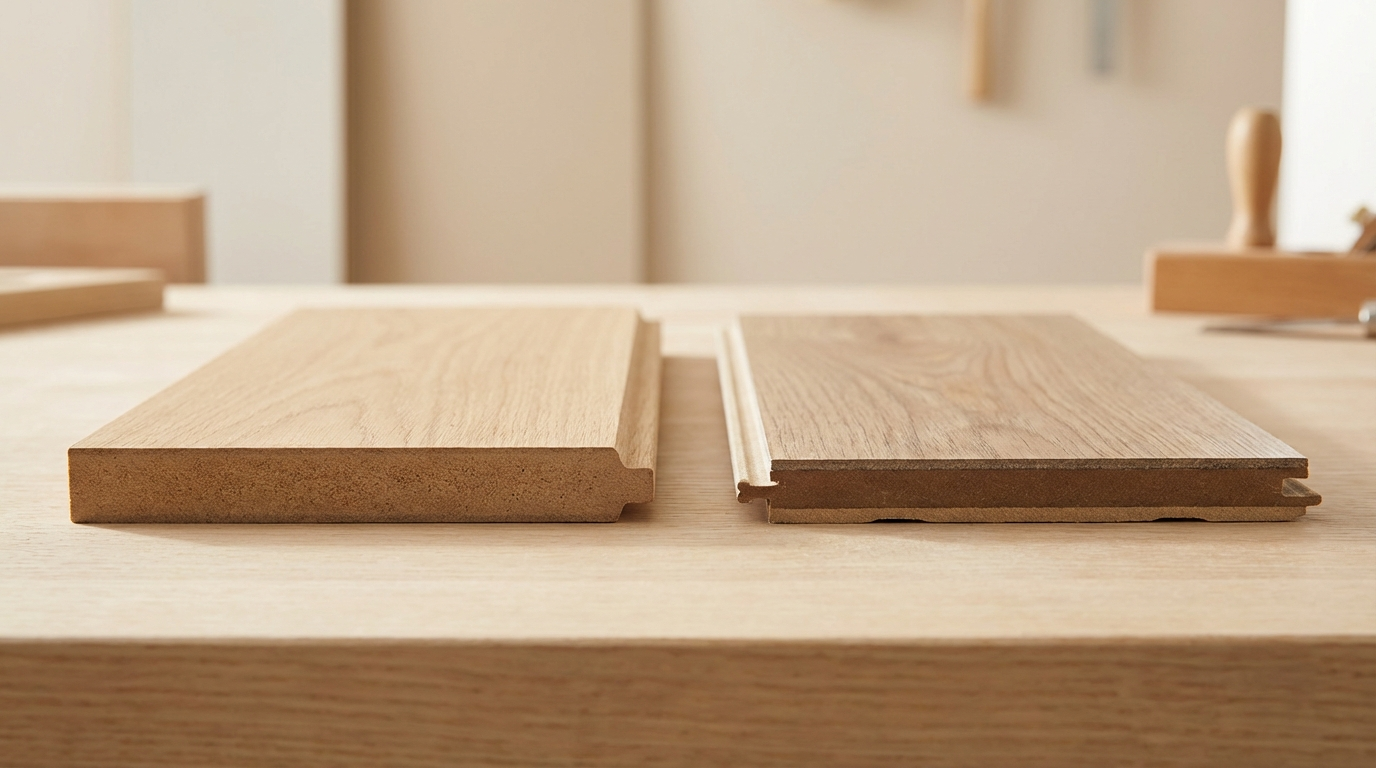
Edge examination: Look at the board edge closely. Quality MDF shows uniform, fine fibre distribution throughout the thickness. Poor quality boards may show coarser core material or visible gaps between fibres.
Weight check: Lift the board and compare with other sheets. Quality MDF of the same size and thickness should feel consistently heavy. Significantly lighter boards may have lower density and inferior strength.
Tap test: Tap the board surface firmly. Quality MDF produces a solid, consistent sound. Hollow or inconsistent sounds may indicate internal voids or uneven density.
Flex test: For thinner boards (6-12mm), gently flex the sheet. Quality MDF flexes uniformly without cracking sounds. Poor quality boards may show surface cracks or produce crackling noises.
Smell test: Fresh MDF has a mild wood smell. Overpowering chemical odour may indicate excessive formaldehyde content or poor-quality resins.
Care and Maintenance of MDF Furniture
Proper maintenance significantly extends MDF furniture life, particularly important given that damaged MDF is difficult to repair. These practices are specifically relevant for Indian conditions with high humidity during monsoons.
Daily Care Practices
- Wipe surfaces with dry or slightly damp cloth—never wet
- Immediately blot any water spills; don't let liquids sit on surface
- Use coasters under glasses and bottles
- Avoid placing hot items directly on MDF surfaces
Cleaning Methods
- For laminated MDF: Use mild soap solution with damp cloth, then dry immediately
- For painted MDF: Gentle dusting with microfiber cloth; avoid abrasive cleaners
- For stubborn stains: Use non-abrasive cleaner specifically designed for laminates
- Never use steam cleaners on MDF furniture
Monsoon Protection
- Ensure room ventilation to prevent humidity buildup
- Use dehumidifiers in high-humidity areas
- Check and reseal any exposed edges annually before monsoon
- Keep MDF furniture away from windows during heavy rain
Damage Prevention
- Install furniture on level surfaces to prevent stress points
- Don't overload shelves—MDF sags under excessive weight
- Use appropriate hardware; avoid over-tightening screws
- Apply felt pads under items that move frequently
MDF vs Plywood: Making the Right Choice
The MDF versus plywood debate requires understanding that neither material is universally superior—each excels in specific applications. This comparison helps Indian homeowners make informed decisions.
| Parameter | MDF | Plywood | Winner |
|---|---|---|---|
| Surface smoothness | Perfectly smooth, grain-free | Wood grain visible, may need filling | MDF |
| Paint finish quality | Excellent, smooth finish | Good with proper preparation | MDF |
| Moisture resistance | Poor to moderate | Good to excellent (BWP grade) | Plywood |
| Screw holding (face) | Good | Excellent | Plywood |
| Screw holding (edge) | Poor | Good | Plywood |
| Weight | Heavy | Lighter for same thickness | Plywood |
| Cost (same thickness) | Lower | Higher | MDF |
| CNC machining | Excellent, clean cuts | Good, may splinter | MDF |
| Load bearing | Moderate, prone to sagging | Good to excellent | Plywood |
| Repairability | Difficult | Easier | Plywood |
Choose MDF when: You need smooth painted finishes, CNC-routed decorative panels, cost-effective wardrobe shutters, or any application where appearance matters more than structural strength.
Choose plywood when: Moisture exposure is likely, structural strength is needed, edges will have screws, or the furniture will bear significant weight.
Price Guide and Value Analysis
MDF pricing in India varies significantly based on grade, thickness, brand, and location. Understanding these variations helps you budget accurately and identify overpriced products.
| MDF Type | Thickness | Metro City Price (₹/sheet) | Tier-2 City Price (₹/sheet) | Price per sq ft |
|---|---|---|---|---|
| Standard Interior | 18mm | ₹1,400-1,800 | ₹1,500-2,000 | ₹44-56 |
| Standard Interior | 12mm | ₹950-1,200 | ₹1,000-1,350 | ₹30-42 |
| MR Grade | 18mm | ₹1,800-2,400 | ₹1,950-2,600 | ₹56-81 |
| HDHMR | 18mm | ₹2,400-3,200 | ₹2,600-3,500 | ₹75-109 |
| Pre-laminated | 18mm | ₹1,800-3,500 | ₹2,000-3,800 | ₹56-119 |
Note: Prices are indicative and vary based on brand, dealer, and market conditions. Confirm current rates with local dealers.
Why Prices Vary Between Dealers
Price variations of 15-30% between dealers for the same product are common due to bulk purchasing discounts, dealer margins, storage costs, and brand positioning. Authorized brand dealers typically charge premium prices but offer authentic products with warranty support.
Duroboil.com recommends getting quotes from at least three dealers and verifying brand authenticity before purchasing, especially for premium MR and HDHMR grades where price differences are substantial.
Installation and Working Guidelines
Proper installation techniques are crucial for MDF furniture longevity. Many MDF failures attributed to material quality are actually installation errors.
Cutting and Machining
- Use carbide-tipped blades designed for MDF/composite materials
- MDF dulls blades faster than solid wood—expect more frequent blade changes
- Score the surface lightly before deep cuts to prevent edge chipping
- Always cut with dust extraction; MDF dust is extremely fine and hazardous
- Wear N95 or better respiratory protection during cutting
Fastening Recommendations
- Always pre-drill holes for screws, especially near edges
- Use screws with coarse threads designed for particle board/MDF
- Apply wood glue along with screws for stronger joints
- Avoid driving screws into edges where possible; use dowels or cam locks instead
- For heavy-duty applications, use insert nuts or threaded inserts
Edge Treatment
- Seal all edges with edge banding tape or PVC strips
- For painted finishes, apply wood filler to edges and sand smooth
- Never leave MDF edges exposed in any moisture-prone area
- Consider routed edge profiles that can be painted for decorative effect
Frequently Asked Questions
Is MDF board waterproof?
No MDF board is truly waterproof. Standard MDF swells by 15-20% when soaked in water for 24 hours. Even moisture-resistant variants like HDHMR are only water-resistant, not waterproof, with swelling of 5-8% under similar conditions. For applications requiring waterproof material, BWP grade plywood is the appropriate choice. MDF can be used in humid environments when properly sealed on all surfaces and edges.
Is MDF board good for kitchen cabinets?
MDF can be suitable for kitchen cabinet shutters when using HDHMR grade with proper edge sealing. Many premium modular kitchen brands successfully use MDF for shutters due to its excellent paint and laminate adhesion. However, for the cabinet carcass, especially the sink unit where water exposure is highest, many designers recommend BWR plywood. The combination of HDHMR shutters and plywood carcass offers optimal performance for Indian kitchen conditions.
How long does MDF furniture last in India?
Well-maintained MDF furniture in appropriate applications typically lasts 8-15 years in Indian conditions. The lifespan depends heavily on humidity exposure, quality of edge sealing, and usage patterns. Bedroom furniture tends to last longer than kitchen furniture due to lower moisture exposure. Premature failure usually results from water damage to unsealed edges rather than material degradation.
Can MDF be used for wardrobe shutters?
Yes, MDF is excellent for wardrobe shutters and is actually preferred over plywood for painted finishes. The grain-free surface accepts paint uniformly, creating a smooth, professional appearance. Use 18mm thickness for standard wardrobes, ensuring hinges are properly mounted with appropriate hardware. For added durability, consider pre-laminated MDF which requires no painting and offers good scratch resistance.
What is the difference between MDF and HDHMR?
HDHMR (High Density High Moisture Resistant) is a premium variant of MDF with higher density (850-900 kg/m³ versus 680-720 kg/m³ for standard MDF) and significantly better moisture resistance. HDHMR shows only 5-8% thickness swelling in 24-hour water immersion compared to 15-20% for standard MDF. HDHMR costs approximately 50-70% more than standard MDF but offers substantially better performance in humid areas like kitchens.
Is MDF safe for home use?
Modern MDF manufactured to E1 or E0 emission standards is considered safe for indoor use. The formaldehyde emission levels in these grades fall within internationally accepted safety limits. However, during cutting and installation, significant dust is generated which can irritate respiratory systems. Always ensure good ventilation during installation and use respiratory protection when cutting. Once installed and sealed, MDF poses minimal health concerns for occupants.
Can MDF board be painted directly?
MDF requires proper preparation before painting for best results. The surface should be lightly sanded with 180-220 grit sandpaper to improve adhesion. Apply a quality primer specifically designed for MDF—this seals the surface and prevents excessive paint absorption. Edges are particularly absorbent and may need multiple primer coats. After priming, standard interior paints work well. Without primer, paint soaks unevenly into MDF, creating blotchy results.
What is the price of 18mm MDF board?
An 8×4 feet sheet of 18mm standard interior-grade MDF typically costs ₹1,400-2,000 in Indian markets, translating to approximately ₹44-62 per square foot. MR grade 18mm MDF ranges from ₹1,800-2,600 per sheet, while HDHMR costs ₹2,400-3,500. Prices vary by brand, city, dealer, and market conditions. Premium branded products command higher prices but offer better quality consistency and after-sales support.
Where can I buy good quality MDF in India?
Quality MDF is available through authorized brand dealers, large plywood retailers, and building material distributors across India. Major brands like Greenply, Greenpanel, Action TESA, and Century operate dealer networks in most cities. For assured quality, purchase from authorized dealers who can provide proper invoices and warranty documentation. Online platforms increasingly offer MDF delivery, though inspecting sheets before purchase remains advisable for large orders.
Does MDF board attract termites?
MDF is generally resistant to termite attack due to the resin binders used in manufacturing. The formaldehyde-based resins create an environment that termites find unappealing. However, this resistance is not absolute—in severe termite-prone areas with heavy infestation pressure, termites may still attack MDF, particularly if the wood fibres are exposed through damage or unsealed edges. For high-risk areas, treated MDF variants with additional termite-resistant chemicals are available.
Conclusion: Is MDF Right for Your Project?
MDF board represents an excellent material choice when matched to appropriate applications. Its unmatched surface smoothness, consistent density, and cost-effectiveness make it ideal for painted furniture, decorative panels, and CNC-routed designs. The material's limitations—moisture sensitivity, weak edge screw holding, and heavy weight—are manageable when understood and accommodated in design and installation.
For Indian homeowners, duroboil.com recommends MDF for bedroom and living room furniture where painted finishes are desired. For kitchens, HDHMR variants with proper sealing offer good performance, though BWR plywood remains superior for high-moisture areas. Avoid MDF entirely for bathrooms and outdoor applications regardless of manufacturer claims.
The key to successful MDF use lies in matching the right grade to your specific application, ensuring proper edge sealing, and maintaining appropriate humidity levels in the installed environment. When these factors align, MDF delivers excellent value and performance that justifies its growing popularity in Indian interior design.
Disclaimer: This content is provided for general informational purposes based on industry practices and publicly available information. Product specifications, standards, prices, and availability may vary by manufacturer, region, and time. Readers should independently verify details with manufacturers, dealers, or qualified professionals before making purchase or construction decisions.
Want Plywood Suggestions?
Share a few details and a Duro BOIL specialist will suggest suitable brands and connect you to responsive dealers.