Teak Plywood Guide: Types, Prices & Natural vs Engineered Comparison
Complete teak plywood guide with natural vs engineered comparison. Learn about teak veneer types, prices, applications & how to identify genuine teak ply.
Quick Verdict
Teak plywood is engineered plywood featuring a thin teak veneer face bonded to a plywood core, offering the luxurious appearance of solid teak at 60-70% lower cost. It is the preferred choice for premium furniture, doors, and wall paneling in Indian homes where authentic teak aesthetics are desired without the budget strain of solid teak wood.
Our take: Teak plywood delivers exceptional value for interior applications in India. The combination of genuine teak veneer surface with a stable plywood core eliminates the warping and cracking issues common with solid teak in varying Indian climatic conditions. For most residential furniture including wardrobes, doors, and decorative panels, quality teak plywood from reputable manufacturers outperforms solid teak in practicality while maintaining visual authenticity. However, buyers must carefully verify veneer thickness and core quality, as market variations are significant.
Rating Summary:
- Aesthetic appeal: Excellent – Genuine teak grain and color depth
- Moisture resistance: Good – Depends on grade (MR/BWR/BWP)
- Durability: Very Good – 15-25 years with proper care
- Value for money: Excellent – Premium look at mid-range cost
- Overall: Highly recommended for interior furniture, doors, and decorative paneling; not suitable for outdoor or high-moisture structural applications
What Exactly is Teak Plywood?
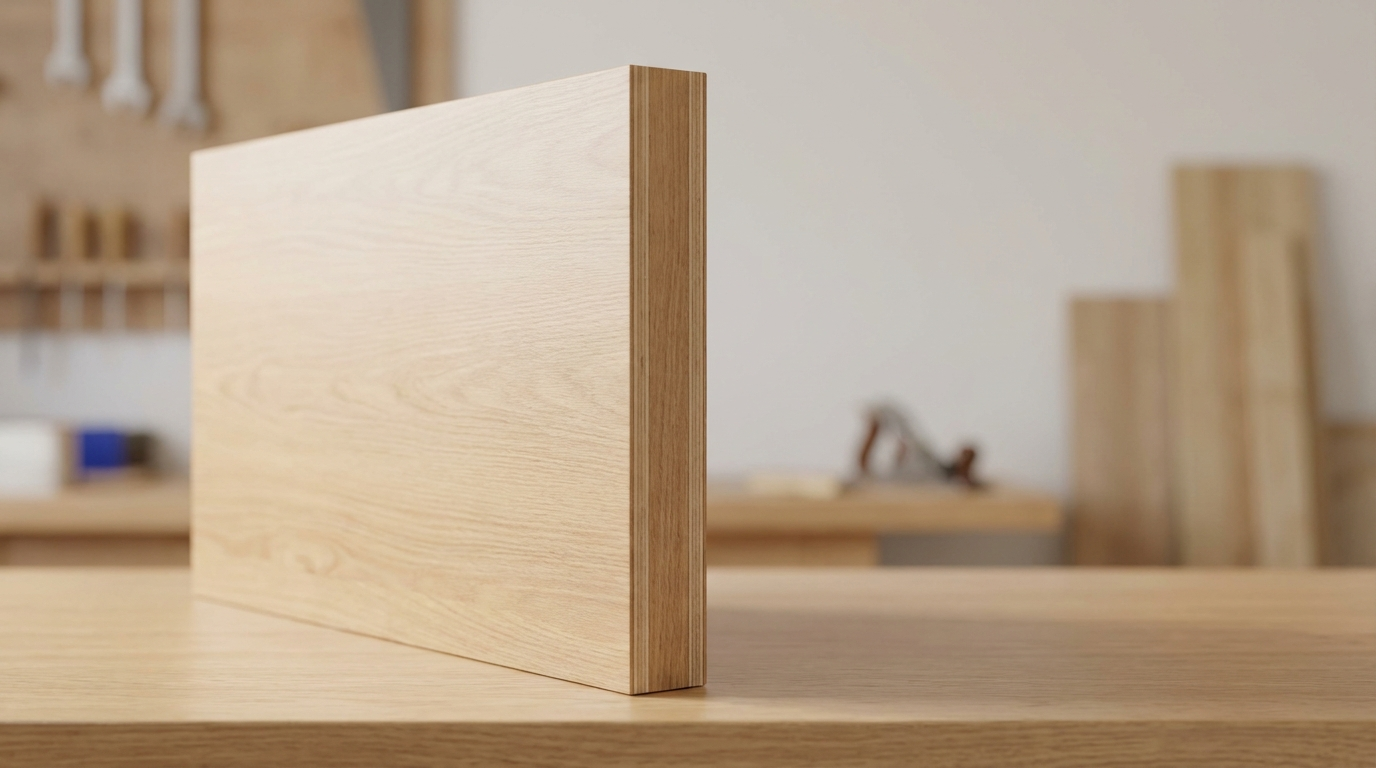
Teak plywood is a composite wood product where thin slices of genuine teak wood (veneer) are bonded to the surface of standard plywood sheets. According to mrswoodcraft.com, teak plywood is manufactured from the wood of the teak tree (Tectona grandis), with thin veneers layered and glued together to form a strong, stable sheet.
The construction involves multiple layers: the face veneer is sliced teak wood ranging from 0.25mm to 0.6mm thickness, while the core consists of standard plywood made from species like gurjan, poplar, or eucalyptus. This combination provides the visual beauty of teak with the structural stability of engineered plywood.
Understanding teak plywood requires distinguishing it from two related products that often cause confusion in Indian markets. Solid teak wood refers to furniture made entirely from teak timber, while teak veneer sheets are thin teak slices sold separately for application on existing surfaces. Teak plywood comes as a ready-to-use sheet with veneer already factory-bonded to the plywood substrate.
Why Teak Plywood Matters for Indian Interiors
The appeal of teak plywood in India stems from the cultural significance of teak wood in Indian households. Teak has been the traditional choice for premium furniture for generations, associated with durability, prosperity, and timeless aesthetics. However, genuine solid teak has become increasingly expensive and scarce.
Teak plywood bridges this gap by offering authentic teak appearance at accessible price points. The material also performs better than solid teak in Indian conditions where humidity fluctuates dramatically between seasons, as the plywood core provides dimensional stability that prevents warping.
Technical Specifications of Teak Plywood
Teak plywood specifications vary based on the intended application and manufacturer standards. The following specifications table provides comprehensive details that duroboil.com recommends verifying before purchase.
| Parameter | Standard Range | Premium Range | Significance |
|---|---|---|---|
| Sheet Size | 8 x 4 feet | 10 x 4 feet | Standard Indian market sizes |
| Total Thickness | 4mm, 6mm, 9mm, 12mm | 16mm, 18mm, 25mm | Thicker for structural applications |
| Veneer Thickness | 0.25mm - 0.35mm | 0.45mm - 0.6mm | Higher thickness = better durability |
| Veneer Cut | Rotary cut | Crown/Quarter cut | Affects grain pattern visibility |
| Core Material | Poplar, Eucalyptus | Gurjan, Hardwood | Premium cores offer better strength |
| Density | 500-600 kg/m³ | 650-750 kg/m³ | Higher density = better screw holding |
| Moisture Content | 8-12% | 8-10% | Lower is better for stability |
| Bonding Standard | IS 303 (MR Grade) | IS 710 (BWR/BWP) | Determines moisture resistance |
Understanding Veneer Thickness
The face veneer thickness is perhaps the most critical specification for teak plywood quality. As noted by duroply.in, premium teak veneers at 0.55mm thickness ensure no de-lamination or sanding off during polishing processes. This matters because thinner veneers can be completely sanded away during finishing, exposing the plywood core beneath.
For door applications and high-wear surfaces, always specify minimum 0.35mm veneer thickness. For decorative wall panels with minimal contact, 0.25mm may suffice. Premium handcrafted varieties with 0.45-0.6mm thickness are recommended for furniture surfaces that will receive regular use.
Understanding Veneer Cut Types
The method of slicing teak logs significantly affects the final appearance. Crown cut (also called flat cut) produces prominent, cathedral-like grain patterns preferred for traditional aesthetics. Quarter cut creates straighter, more uniform grain lines suitable for contemporary designs. The choice between cuts depends entirely on design preference rather than quality differences.
Types of Teak Plywood Available in India
The Indian market offers several distinct categories of teak plywood, each serving specific applications and budget requirements. Understanding these types helps in selecting the right product for your project.
| Type | Best Applications | Moisture Resistance | Price Range (per sq ft) | Market Availability |
|---|---|---|---|---|
| Commercial Grade Teak Plywood | Wardrobes, cabinets, general furniture | Moderate (MR Grade) | ₹55-85 | Widely available |
| BWR Grade Teak Plywood | Kitchen cabinets, bathroom vanities | High (Boiling Water Resistant) | ₹85-120 | Major dealers |
| Marine Grade Teak Plywood | Boat interiors, coastal applications | Very High (BWP) | ₹150-250 | Specialized dealers |
| Decorative Teak Veneer Plywood | Doors, wall panels, feature walls | Varies by base | ₹70-150 | Premium stores |
| Handcrafted Premium Teak Plywood | High-end furniture, luxury interiors | High | ₹120-200 | Authorized dealers only |
Commercial Grade Teak Plywood
This entry-level category uses thinner teak veneer (typically 0.25mm) on standard MR grade plywood cores. According to mrswoodcraft.com, commercial teak plywood is a more affordable option suitable for standard applications, though it may not offer the same durability or visual appeal as higher-grade variants.
Commercial grade works well for bedroom wardrobes, study tables, and living room shelving where moisture exposure is minimal. Avoid using this grade in kitchens, bathrooms, or humid environments.
BWR Grade Teak Plywood
Boiling Water Resistant grade teak plywood uses phenolic resin bonding that withstands humidity and occasional moisture contact. This is the recommended minimum grade for Indian kitchens where steam and water splashes are common occurrences.
BWR grade teak plywood is manufactured conforming to IS 303 standards and offers significantly better longevity in humid conditions compared to commercial MR grade alternatives.
Marine Grade Teak Plywood
The highest specification, marine grade (BWP - Boiling Water Proof) teak plywood uses waterproof adhesives throughout and premium hardwood cores. mrswoodcraft.com notes that marine-grade teak plywood is engineered to withstand high humidity and moisture, making it ideal for environments exposed to water.
This grade is essential for bathroom applications, outdoor covered areas, and coastal region installations where salt air accelerates moisture damage.
Decorative Teak Veneer Categories
Within decorative teak plywood, several named varieties exist based on grain characteristics and color depth. duroply.in categorizes their teak offerings into distinct types including Choco Forest, Choco Fondant, Marvallo Teak, Royal Teak, Teak Quarter, and Grainless Tectonia – each with specific visual characteristics suited to different design requirements.
Natural Teak vs Engineered Teak Plywood: Complete Comparison
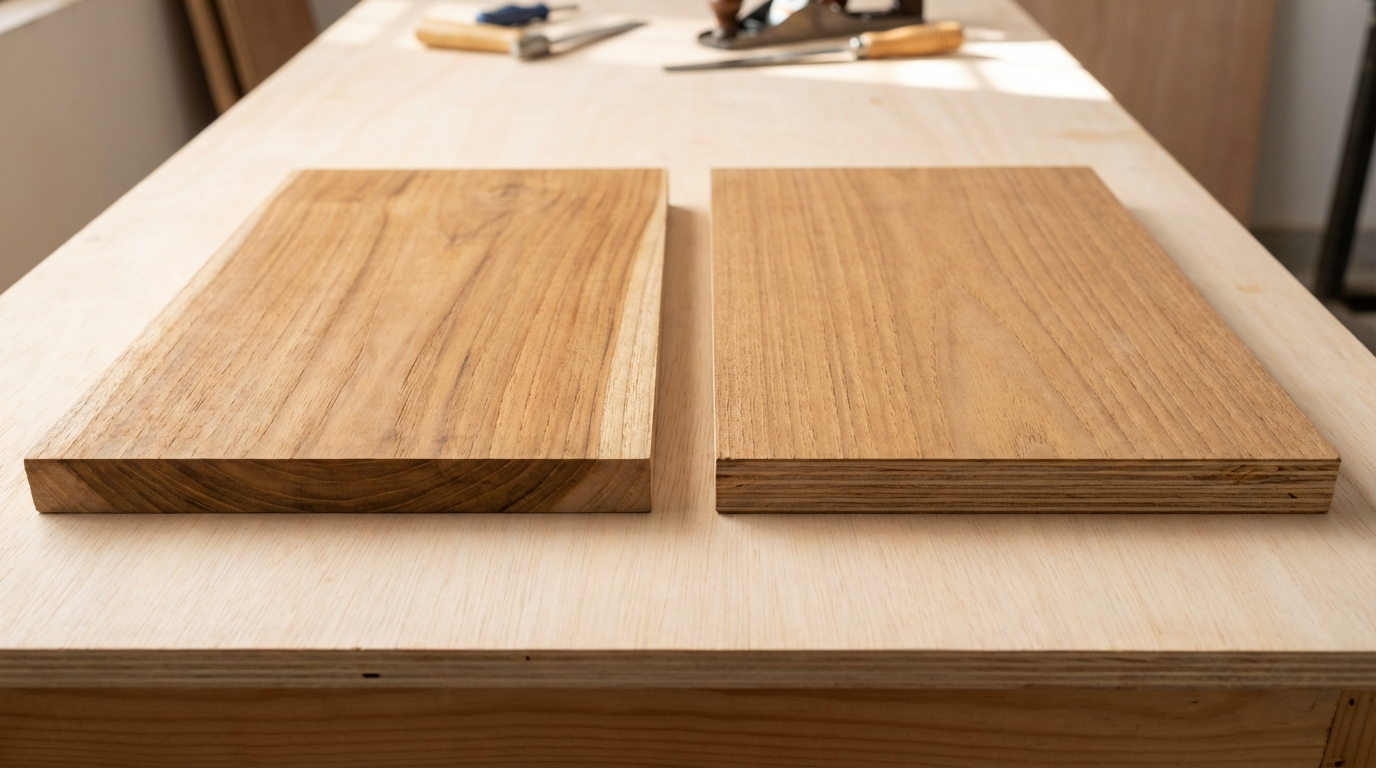
The choice between solid natural teak wood and engineered teak plywood represents one of the most common dilemmas for Indian homeowners planning furniture projects. Both materials have distinct advantages depending on application requirements.
| Factor | Solid Natural Teak | Teak Plywood | Winner |
|---|---|---|---|
| Initial Cost | ₹2,500-4,500 per cubic foot | ₹55-200 per sq ft | Teak Plywood |
| Natural Appearance | 100% authentic throughout | Authentic surface only | Solid Teak |
| Dimensional Stability | Prone to warping/cracking | Highly stable | Teak Plywood |
| Weight | Very heavy | Moderate | Teak Plywood |
| Workability | Requires skilled carpenter | Standard carpentry skills | Teak Plywood |
| Repair Potential | Can be refinished multiple times | Limited refinishing (1-2 times) | Solid Teak |
| Lifespan | 50-100+ years | 15-25 years | Solid Teak |
| Termite Resistance | Excellent (natural oils) | Good (treatment required) | Solid Teak |
| Environmental Impact | Higher (more wood used) | Lower (efficient wood use) | Teak Plywood |
| Availability | Limited, often imported | Readily available | Teak Plywood |
| Appreciation Value | Increases over time | Depreciates | Solid Teak |
| Installation Flexibility | Limited by wood dimensions | Large uniform sheets | Teak Plywood |
When to Choose Solid Natural Teak
According to appleplywoods.com, teak wood is a tropical hardwood known for its dense yet smooth texture, strength, durability, and ability to withstand almost any weather condition. Choose solid teak when:
- Budget is not a constraint and you want heirloom-quality furniture
- The piece will be displayed as a statement item where solid wood edges are visible
- Outdoor furniture is planned (garden benches, patio sets)
- You want furniture that appreciates in value over decades
- Multiple refinishing cycles are anticipated over the furniture's lifetime
When to Choose Teak Plywood
Teak plywood becomes the superior choice in scenarios where practicality and budget efficiency matter. Choose teak plywood when:
- Large surface areas need coverage (wardrobes, wall panels, kitchen cabinets)
- Budget optimization is important without sacrificing aesthetics
- Dimensional stability is critical (Indian climate with seasonal humidity variations)
- Faster project completion is required
- Modern furniture designs requiring uniform large panels are planned
The Cost Reality
appleplywoods.com confirms that compared to plywood, teak wood is more expensive because it's solid wood. For perspective, a standard 8x4 feet wardrobe using solid teak might cost ₹1.5-2.5 lakhs, while the same dimensions in quality teak plywood would range from ₹45,000-80,000 – a 60-70% cost difference for visually similar results.
Performance Analysis of Teak Plywood
Understanding real-world performance helps set appropriate expectations for teak plywood in Indian conditions. Duroboil.com's analysis covers the critical performance parameters that matter for Indian homes.
Moisture Handling Performance
Teak plywood's moisture performance depends primarily on two factors: the plywood grade (MR/BWR/BWP) and the veneer's natural properties. The teak veneer surface itself offers excellent moisture resistance due to the wood's natural oil content. blog.lituo-plywood.com notes that teak plywood is resistant to moisture, termites, and wear, meaning projects will last longer.
However, the overall moisture performance is limited by the weakest component. An MR grade core with excellent teak veneer will still fail in humid conditions because moisture penetrates through edges and any surface damage. For consistent moisture resistance, always specify BWR grade minimum for any application where humidity is a concern.
Durability and Longevity Assessment
Well-maintained teak plywood in appropriate applications typically lasts 15-25 years. The veneer surface, if protected from excessive abrasion and moisture, maintains its appearance throughout this period. blog.lituo-plywood.com highlights that teak wood has a Janka hardness rating significantly higher than many other wood types, indicating excellent resistance to dents and damage.
Factors reducing lifespan include: improper edge sealing allowing moisture entry, use of MR grade in humid areas, physical damage to veneer surface exposing core, and poor initial bonding quality causing veneer separation.
Surface Quality Evaluation
Quality teak plywood presents a surface virtually indistinguishable from solid teak to casual observation. The natural grain patterns, color variations, and tactile warmth are all present. duroply.in emphasizes that teak veneers feel as good as natural wood, making them a top choice for those who want their home to have a natural appeal.
Premium manufacturers employ triple heat treatment (THT) processes to ensure sanitized veneer with controlled resin/oil content, resulting in surfaces ready for immediate polishing or finishing.
Workability for Carpenters
Teak plywood offers significant advantages over solid teak for fabrication. The material cuts cleanly with standard power tools, accepts screws and hardware without pre-drilling in most cases, and edges can be finished with edge banding or solid teak lipping.
Indian carpenters generally prefer teak plywood for modular furniture because it eliminates the unpredictable grain directions and hardness variations of solid teak that require specialized skills and tools.
Honest Advantages and Limitations
Genuine Advantages of Teak Plywood
- Cost efficiency: Delivers teak aesthetics at 30-40% of solid teak furniture cost, making premium looks accessible to middle-class budgets
- Dimensional stability: Cross-laminated plywood core resists warping, twisting, and seasonal movement better than solid wood in fluctuating Indian humidity
- Consistent quality: Factory-manufactured sheets provide uniform thickness, flatness, and surface quality impossible to achieve with natural timber
- Large panel availability: 8x4 and 10x4 feet sheets enable seamless large surfaces without visible joints required in solid wood construction
- Resource efficiency: Single teak log yields many more square feet of veneer than solid lumber, making better use of increasingly scarce teak resources
- Faster installation: Standard sheet sizes and predictable behavior reduce carpentry time and project duration
- Natural beauty: Genuine teak veneer provides authentic grain patterns, color depth, and warmth that laminates cannot replicate
- Termite resistance: Teak's natural oils in the veneer provide inherent pest resistance superior to most other wood species
Honest Limitations You Should Know
- Limited refinishing potential: Thin veneer (especially under 0.4mm) can only withstand 1-2 light sandings before core exposure, unlike solid wood's unlimited refinishing
- Edge vulnerability: Cut edges require proper treatment (edge banding, lipping, or sealing) to prevent moisture entry and delamination
- Quality inconsistency: Significant variations exist between manufacturers; low-quality products with paper-thin veneers or weak bonding are common in unorganized markets
- No appreciation value: Unlike solid teak which appreciates over decades, teak plywood depreciates as any manufactured product
- Repair limitations: Damaged veneer sections cannot be patched invisibly; significant damage often requires panel replacement
- Core dependency: Overall performance limited by plywood core quality; excellent veneer on poor core still fails prematurely
Best Applications for Teak Plywood in Indian Homes
Selecting appropriate applications maximizes teak plywood's benefits while avoiding its limitations. This application guide reflects practical experience in Indian residential contexts.
Ideal Applications (Highly Recommended)
Main entrance doors: Teak plywood with thick veneer (0.35mm+) creates impressive entry doors at fraction of solid teak cost. duroply.in specifically recommends their Choco Forest, Royal Teak, and Teak Quarter varieties for door applications.
Bedroom wardrobes: Large wardrobe surfaces benefit from uniform plywood sheets, and bedroom humidity levels are typically manageable with MR grade.
Living room wall panels: Decorative teak plywood feature walls create luxurious backdrops. duroply.in suggests that adding a teak veneer panel to living rooms creates a luxurious touch appropriate for family spaces.
Study tables and home office furniture: Moderate use surfaces where teak's warmth enhances work environments without requiring extreme durability.
Pooja room interiors: Traditional teak appearance aligns with cultural expectations for worship spaces while managing costs.
Suitable Applications (With Grade Selection)
Kitchen cabinets: Use BWR grade minimum. Teak plywood works well for kitchen cabinetry when proper grade selection and edge sealing are ensured.
Bathroom vanities: BWR or BWP grade only, with additional waterproof finish on all surfaces and edges. Not suitable for areas with direct water contact.
Dining furniture: Table tops require thick veneer and protective finish to withstand daily use, spills, and occasional impacts.
Avoid These Applications
Outdoor furniture: Even marine grade teak plywood is not suitable for direct outdoor exposure. Solid teak is the only appropriate choice for garden furniture.
Wet areas: Shower enclosures, pool decks, or any area with standing water will damage any plywood product regardless of grade.
Floor applications: Teak plywood lacks the wear resistance and structural properties needed for flooring. Engineered teak flooring is a different product category.
Price Guide and Budget Planning for India
Teak plywood prices in India vary significantly based on quality parameters, regional factors, and market conditions. The following represents typical price ranges observed across major Indian markets in 2026.
| Category | Thickness | Price Range (₹ per sq ft) | Typical Applications |
|---|---|---|---|
| Economy MR Grade | 4-6mm | ₹45-60 | Backing panels, non-visible surfaces |
| Standard MR Grade | 12mm | ₹55-75 | Wardrobes, cabinets |
| Standard MR Grade | 18mm | ₹70-95 | Furniture carcass, shelving |
| BWR Grade | 12mm | ₹85-110 | Kitchen cabinets |
| BWR Grade | 18mm | ₹100-130 | Premium kitchen, bathroom vanities |
| Premium Decorative | 12-18mm | ₹120-180 | Doors, feature panels |
| Marine Grade BWP | 12-18mm | ₹150-250 | High-moisture areas, coastal regions |
| Handcrafted Premium | Various | ₹150-200+ | Luxury interiors, high-end projects |
Price Factors Explained
mrswoodcraft.com identifies several factors affecting teak plywood prices: quality of teak wood (higher grades with fewer knots cost more), thickness and size, number of veneer layers, processing and finishing treatments, and source/availability of the teak.
Regional variations: Prices in metros like Mumbai, Delhi, and Bangalore typically run 10-15% higher than tier-2 cities due to higher operational costs. Remote areas may see premium pricing due to transportation costs.
Brand premium: Established brands command 15-30% premium over unbranded alternatives, but typically offer better quality consistency, warranties, and after-sales support.
Budget Estimation for Common Projects
For a standard 3BHK apartment furniture project using teak plywood:
- Master bedroom wardrobe (8x8 feet): ₹25,000-45,000 material cost
- Modular kitchen (100 sq ft): ₹35,000-65,000 material cost
- Main door with frame: ₹8,000-15,000 material cost
- Living room TV unit: ₹12,000-25,000 material cost
Note: Above estimates are material costs only. Carpenter labor, hardware, and finishing add 40-60% to total project cost.
Quality Verification Before Buying
Identifying quality teak plywood without laboratory testing requires careful visual inspection and informed questioning. These verification methods help distinguish genuine quality products from inferior alternatives.
Visual Inspection Checklist
Veneer surface examination: Look for consistent color and grain pattern across the sheet. Genuine teak shows natural variation, but patches of significantly different color indicate mixed veneers or artificial staining.
Edge inspection: Examine cut edges to verify veneer thickness. Veneer should be visible as distinct layer; if surface appears to be mere coating, quality is questionable. Count core layers – more layers generally indicate better quality.
Flatness test: Place sheet on flat floor. Gaps exceeding 5mm at any point indicate moisture issues or manufacturing defects that will worsen over time.
Surface finish: Quality teak plywood should have smooth, uniform surface without rough patches, sanding marks, or visible glue lines at veneer joints.
Smell test: Fresh teak has distinctive pleasant smell. Strong chemical or formaldehyde odor indicates excessive adhesive use or low-quality manufacturing.
Questions to Ask Your Dealer
- What is the face veneer thickness? (Acceptable answer: specific measurement, not "standard")
- What is the core wood species? (Gurjan or hardwood indicates quality)
- Does product conform to IS 303 or IS 710? (Should have definitive answer)
- Is the teak veneer naturally colored or stained? (Both are acceptable, but should be disclosed)
- What warranty is provided, and what does it cover? (Quality products have specific warranty terms)
- Can you provide test certificates? (Reputable manufacturers can provide documentation)
Red Flags to Avoid
- Prices significantly below market range (typically indicates compromised quality)
- Vague answers about specifications ("imported quality" without specifics)
- Reluctance to show cut edges or allow close inspection
- No brand marking, batch numbers, or manufacturing details on sheet
- Surface feels cold or plastic-like rather than natural wood warmth
- Visible delamination at edges or corners even on display pieces
Installation and Maintenance Guidelines
Pre-Installation Requirements
Acclimatization: Store teak plywood sheets horizontally in the installation room for 48-72 hours before fabrication. This allows material to adjust to local humidity conditions, reducing post-installation movement.
Storage conditions: Keep sheets away from direct ground contact (use wooden runners), protect from direct sunlight, and ensure adequate ventilation. Never store in waterlogged or extremely damp locations.
Edge treatment planning: Decide edge finishing method before cutting – edge banding, solid wood lipping, or aluminum profiles. Cut edges must be sealed or covered to prevent moisture entry.
Installation Best Practices
Cutting: Use sharp carbide-tipped blades for clean cuts. Score veneer surface lightly before cutting to prevent tear-out. Support sheet properly to avoid veneer cracking from flexing.
Hardware installation: Pre-drill for screws near edges to prevent core splitting. Use appropriately sized hardware – overly large screws can cause surface bulging near veneer.
Edge sealing: All exposed edges should be sealed with appropriate edge band, solid wood lipping, or at minimum, wood sealer to prevent moisture entry into core.
Maintenance Guidelines
Daily care: Dust regularly with soft, dry cloth. Avoid wet mopping; instead, use slightly damp cloth wrung nearly dry for cleaning.
Cleaning products: Use mild, wood-safe cleaners. Avoid harsh chemicals, abrasives, or excessive water. Never use all-purpose cleaners containing ammonia or bleach.
Spill management: Wipe spills immediately. Standing liquids can penetrate veneer seams and damage underlying plywood even on waterproof grades.
Polish and refinishing: Apply quality furniture polish 2-3 times yearly to maintain luster. For dull surfaces, light buffing with fine steel wool followed by polish can restore appearance.
Damage prevention: Use coasters under hot or cold items. Apply felt pads under decorative objects. Avoid dragging items across surfaces. Keep away from direct prolonged sunlight to prevent veneer fading.
Alternatives to Consider
Understanding alternatives helps make informed decisions when teak plywood may not be the optimal choice for specific requirements or budget constraints.
Teak Laminate Plywood
High-pressure laminates (HPL) printed with teak patterns offer teak appearance at lower cost. Significantly more scratch and moisture resistant than natural veneer, but lacks authentic warmth and natural variation. Best for high-traffic areas where durability trumps authenticity.
Other Wood Veneer Plywoods
Oak, walnut, maple, and ash veneer plywoods offer alternative aesthetics at varying price points. Some imported veneers may be more affordable than teak while offering similar quality characteristics.
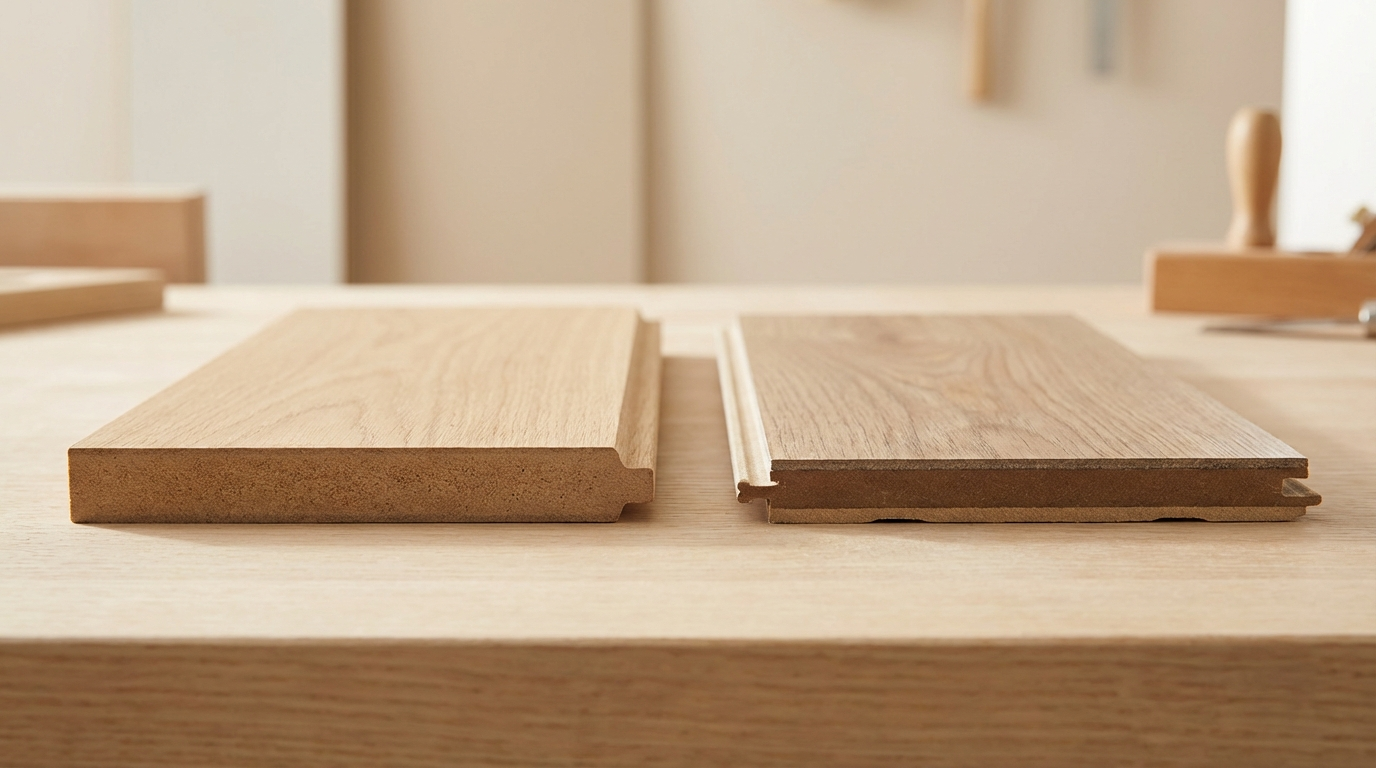
Pre-Laminated MDF/HDHMR
For applications where edges will be completely concealed, pre-laminated engineered boards offer smoother surfaces and better consistency at lower cost. Not suitable where plywood's strength characteristics are required.
Solid Wood Alternatives
For those specifically wanting solid wood but finding teak cost-prohibitive, Sheesham (Indian Rosewood), Mango wood, or Rubberwood offer solid wood characteristics at lower price points, though with different aesthetic properties.
Frequently Asked Questions
Is teak plywood waterproof?
No, standard teak plywood is not waterproof. Only marine grade (BWP – Boiling Water Proof) teak plywood offers waterproof bonding, and even then, prolonged submersion will eventually cause damage. BWR grade is water resistant, suitable for humid areas but not direct water contact. MR grade should only be used in dry interior applications. The teak veneer surface itself resists moisture well, but the plywood core determines overall water resistance.
How can I identify genuine teak plywood from fake products?
Genuine teak plywood shows natural grain variations with characteristic golden-brown color and pleasant woody smell. Check cut edges – real veneer appears as distinct wood layer, typically 0.25-0.6mm thick. Fake products may use printed paper or extremely thin coating that feels cold. Reputable products have brand markings, IS standard conformity, and batch information. When in doubt, purchase only from authorized dealers who can provide documentation.
What is the typical lifespan of teak plywood furniture?
Quality teak plywood furniture in appropriate applications typically lasts 15-25 years with proper care. Lifespan depends on grade selection (BWR in humid areas, MR in dry areas), veneer thickness (thicker veneers allow limited refinishing), quality of edge treatment, and maintenance practices. Kitchen cabinets may show wear sooner due to humidity, while bedroom furniture often exceeds 20 years. Solid teak, by comparison, can last 50-100+ years.
Can teak plywood be used for kitchen cabinets?
Yes, teak plywood is excellent for kitchen cabinets when correct grade is selected. Always use BWR grade minimum for kitchen applications due to cooking steam and humidity. Marine grade (BWP) is recommended for areas near sink. Ensure all cut edges are properly sealed with edge banding or wood lipping. With proper grade selection and installation, teak plywood kitchens perform well for 12-18 years in typical Indian households.
What is the price difference between teak plywood and solid teak?
Teak plywood costs approximately 60-70% less than solid teak for equivalent visible surface area. A standard 8x4 feet wardrobe might cost ₹1.5-2.5 lakhs in solid teak versus ₹45,000-80,000 in quality teak plywood (material costs only). Per square foot, solid teak lumber ranges ₹150-250+ while teak plywood ranges ₹55-200 depending on grade and quality. The cost advantage increases for large furniture pieces with extensive surface area.
Is teak plywood termite resistant?
The teak veneer surface has natural termite resistance due to teak's inherent oils. However, overall termite resistance depends on the plywood core, which is typically made from other wood species. Most quality teak plywood undergoes preservative treatment providing termite resistance, but this should be verified. For maximum protection, especially in ground floor applications or termite-prone areas, request specific termite treatment certification or use borate-treated variants.
Can teak plywood be polished like solid teak?
Yes, teak plywood accepts polish excellently and achieves finish quality comparable to solid teak. The natural teak veneer responds to standard wood polishes, lacquers, and PU finishes. However, unlike solid teak that can be sanded and refinished repeatedly, teak plywood veneer allows only 1-2 light sandings before core exposure – depending on veneer thickness. For best results, avoid aggressive sanding and opt for gentle refinishing techniques.
What thickness of teak plywood should I use for wardrobes?
For wardrobe carcass (structure), use 18mm thickness for sides, top, and bottom panels providing adequate strength and screw-holding capacity. For back panels and internal partitions, 12mm thickness is typically sufficient. Shelves supporting heavy loads may require 18mm. For doors, 12mm works for small doors while 18mm is better for large shutters to prevent warping. Always verify carpenter recommendations based on specific wardrobe dimensions and load requirements.
How do I clean and maintain teak plywood furniture?
Regular dusting with soft dry cloth is sufficient for daily maintenance. For cleaning, use slightly damp cloth wrung nearly dry – never wet mop teak plywood surfaces. Apply quality furniture polish 2-3 times yearly to maintain luster. Wipe spills immediately to prevent veneer damage. Avoid harsh chemicals, abrasive cleaners, or ammonia-based products. Keep furniture away from prolonged direct sunlight to prevent fading. Use coasters under hot/cold items and felt pads under decorative objects.
Where can I buy quality teak plywood in India?
Quality teak plywood is available through authorized brand dealers in most Indian cities, local plywood retailers in timber markets, and increasingly through online platforms. For best results, purchase from authorized dealers of established brands who can provide warranty documentation and quality certificates. Duroboil.com recommends verifying ISI marking, checking physical samples before bulk purchase, and comparing quotes from multiple sources. Avoid extremely low-priced options as quality is typically compromised.
Note: This is independent editorial content. Duroboil.com is not affiliated with any plywood brand mentioned in this article. Prices and specifications are indicative and vary by region, dealer, and market conditions. Always verify current pricing and specifications with authorized dealers before purchase.
Disclaimer: This content is provided for general informational purposes based on industry practices and publicly available information. Product specifications, standards, prices, and availability may vary by manufacturer, region, and time. Readers should independently verify details with manufacturers, dealers, or qualified professionals before making purchase or construction decisions.Want Plywood Suggestions?
Share a few details and a Duro BOIL specialist will suggest suitable brands and connect you to responsive dealers.