Archidply plywood: checklist review for doors & furniture
A practical review of archidply plywood: specs checklist, pros/cons, best-use cases, warranty checks, and what to verify at the dealer in India.
Quick Decision Summary
Archidply plywood works well for mid-range furniture and interior doors in low-to-moderate humidity homes, prioritizing core strength over extreme waterproofing.
If you're in a hurry: Opt for their MR grade (like Classic or Gold) for bedroom cupboards and wardrobes, or BWR for kitchen cabinets—both use hardwood cores for stability. Always verify glue adhesion by a quick tap test and check for uniform thickness at the dealer. Expect consistent performance in dry interiors but pair with edge sealing in humid areas. Not the top pick for coastal bathrooms without BWP upgrade. Total project cost hinges on thickness (12-18mm typical) and quantity; get quotes specifying grade and size.
- Choose this if: You need reliable, termite-resistant boards for furniture in non-wet zones on a moderate budget.
- Avoid this if: Your site faces constant water exposure like coastal marine areas—go for certified BWP instead.
Note: This page is independent informational content and is not affiliated with any manufacturer.
If You’re Searching for Archidply, Here’s What People Usually Mean
Queries for Archidply often target their popular MR and BWR plywood lines, like Classic MR for general furniture or Gold BWR for semi-exposed cabinets. Homeowners seek these for wardrobes, beds, and flush doors; contractors want bulk options for interiors. Confusion arises between their grades—MR isn't fully waterproof, so many check if it's suitable for kitchens. Ultimately, users decide based on site humidity, budget, and finish needs, comparing to similar hardwood-based boards.
How to Compare Archidply-Type Options to Alternatives (Without Guesswork)
Focus on verifiable traits: core wood type (hardwood vs poplar), glue shear strength via boiling test demo, and veneer uniformity. Archidply-style boards emphasize hardwood for stability, but match to your needs.
| Condition | Archidply-Type (MR/BWR) | Budget Alternative | Premium Alternative |
|---|---|---|---|
| Dry interiors (bedroom furniture) | MR Gold; check smooth faces | Local MR; tap for hollow sounds | BWP entry-level; edge-seal anyway |
| Kitchen cabinets (occasional spills) | BWR Classic; verify glue lines | MR with sealant; risk delam | BWP Marine; full immersion test |
| Door frames (hinge stress) | 18mm BWR; uniform thickness | Blockboard; core gaps common | Engineered door skin; alignment focus |
What This Term/Material Actually Means
Archidply plywood refers to layered hardwood sheets bonded with synthetic resins, available in MR (moisture-resistant for interiors), BWR (boiling water-resistant for kitchens), and BWP (marine-grade for high moisture). Each layer, or ply, contributes to strength; faces are finer veneers for finishing.
Where people get confused:
- Assuming all grades are "waterproof"—MR handles humidity but not submersion.
- Thinking brand name guarantees no termites—verify chemical treatment via smell test.
- Overlooking core material—poplar cores warp easier than gurjan hardwood.
- Believing thicker always means stronger—calibration matters more than mm alone.
- Mixing with blockboard—plywood has cross-grain for stability, blockboard suits heavy loads but gaps form.
India-Specific Reality Check
Monsoon humidity (70-90%) tests MR limits quickly, causing edge swelling if unsealed. Coastal sites amplify salt corrosion on hinges paired with plywood doors. Poor godown storage leads to warped sheets; insist on covered transport. Contractor workflows favor 18mm for doors to handle alignment issues from uneven walls. Workmanship gaps, like skipped edge taping, spike failures in 6-12 months.
Price Range and Cost Drivers (India)
Typically ₹60-₹90 per sq ft for 18mm MR, ₹80-₹130 for BWR, and ₹100-₹170 for BWP—varies by city (higher in metros like Mumbai/Bengaluru), thickness (6-19mm), core quality (hardwood adds 20%), and face veneer grade. Logistics from North India hikes South prices 10-15%.
How to ask for a quote checklist:
- Specify grade (MR/BWR/BWP), size (8x4 ft standard), thickness.
- Mention quantity, delivery site, and "calibrated ±0.5mm".
- Ask "hardwood core? Boiling test demo?"
- Compare 2-3 dealers for batch-fresh stock.
Mini budget example: 100 sq ft 18mm BWR kitchen cabinets ~₹10,000-₹15,000 material (excl. labor/finish), plus 10% wastage.
Is Archidply plywood good for doors?
Yes, their 18-25mm BWR grades suit interior flush doors, offering stability for hinges and locks. Nuance: Avoid MR for entrance doors facing rain; coastal use needs BWP. Next step: Measure frame gaps pre-buy, check sheet squareness with diagonal tape. Seal edges with 2 coats putty for 5+ year life amid monsoons. Pair with SS hinges to cut rust risks 50%.
How to Choose in 5 Steps
- Assess exposure: Dry=MR, spills=BWR, wet=BWP.
- Pick thickness: 12mm shelves, 18mm cabinets/doors.
- Inspect at dealer: Tap for solid tone, flex minimally.
- Confirm calibration: Ruler check ±0.3mm variance.
- Test glue: Wet edge 30min, no separation.
Skip steps? Delamination in year 1 from poor matching.
What thickness of Archidply plywood for furniture?
12mm for light shelves/cabinets, 18mm for wardrobes/beds—balances weight and strength. Thinner risks sagging under India loads (books/clothes); thicker adds cost without gain in dry zones. Verify: Stack weights on sample; no bow over 1m span. For carpenters, 18mm cuts cleanest with zero splintering on table saws.
Trade-offs and Limitations
Strong in uniform cores but faces scratch easier without laminate; MR grade swells 10-15% in humidity vs BWP's 2%. Heavier than MDF (20-30% more), raising door install effort. Limited custom sizes mean more cuts/wastage (5-10%). BWR handles boils but not prolonged submersion like marine.
Can Archidply plywood handle termites in India?
Typically yes, via chemical impregnation in cores—hardwood base resists better than softwood. But surface treatments fade; reapply annually in termite hotspots. Check: Rub edge; uniform color no powdery residue. Prevention beats cure: Elevate furniture 6 inches off floors, ventilate godowns.
Common Buyer Mistakes and How to Avoid Them
- Mistake 1: Buying MR for kitchens—why: Spills delam fast. Instead: Demand BWR demo.
- Mistake 2: Ignoring calibration—uneven cuts ruin laminates. Instead: Measure 4 corners.
- Mistake 3: Skipping edge sealing—monsoon entry. Instead: 2-coat melamine post-cut.
- Mistake 4: Cheaper thin cores—sag under weight. Instead: Tap core plies.
- Mistake 5: No storage check—warped stock. Instead: Vertical stack inspect.
- Mistake 6: Over-relying on brand—batch varies. Instead: Fresh manufacture date.
- Mistake 7: Wrong thickness for doors—misalign. Instead: 18mm min, frame-match.
- Mistake 8: Bulk without sample—surprises later. Instead: Buy/test 1 sheet first.
Failure Modes and Fixes
- Symptom: Edge swelling. Cause: Humidity ingress. Prevent: Seal immediately. Fix: Sand, re-seal; replace if core wet.
- Symptom: Delamination bubbles. Cause: Weak glue. Prevent: Boiling test. Fix: Clamp/epoxy; full sheet swap.
- Symptom: Warping bow. Cause: Uneven moisture. Prevent: Flat storage. Fix: Weight down 48hrs; discard severe.
- Symptom: Core gaps cracking. Cause: Poor lamination. Prevent: Visual ply count. Fix: Filler + clamp; redo frame.
- Symptom: Termite trails. Cause: Untreated wood. Prevent: Smell test. Fix: Professional fumigation; replace infested.
- Symptom: Hinge pull-out. Cause: Thin edge. Prevent: 18mm+ reinforce. Fix: Longer screws/plugs; new door.
Quality Checks You Can Do Without Lab Tests
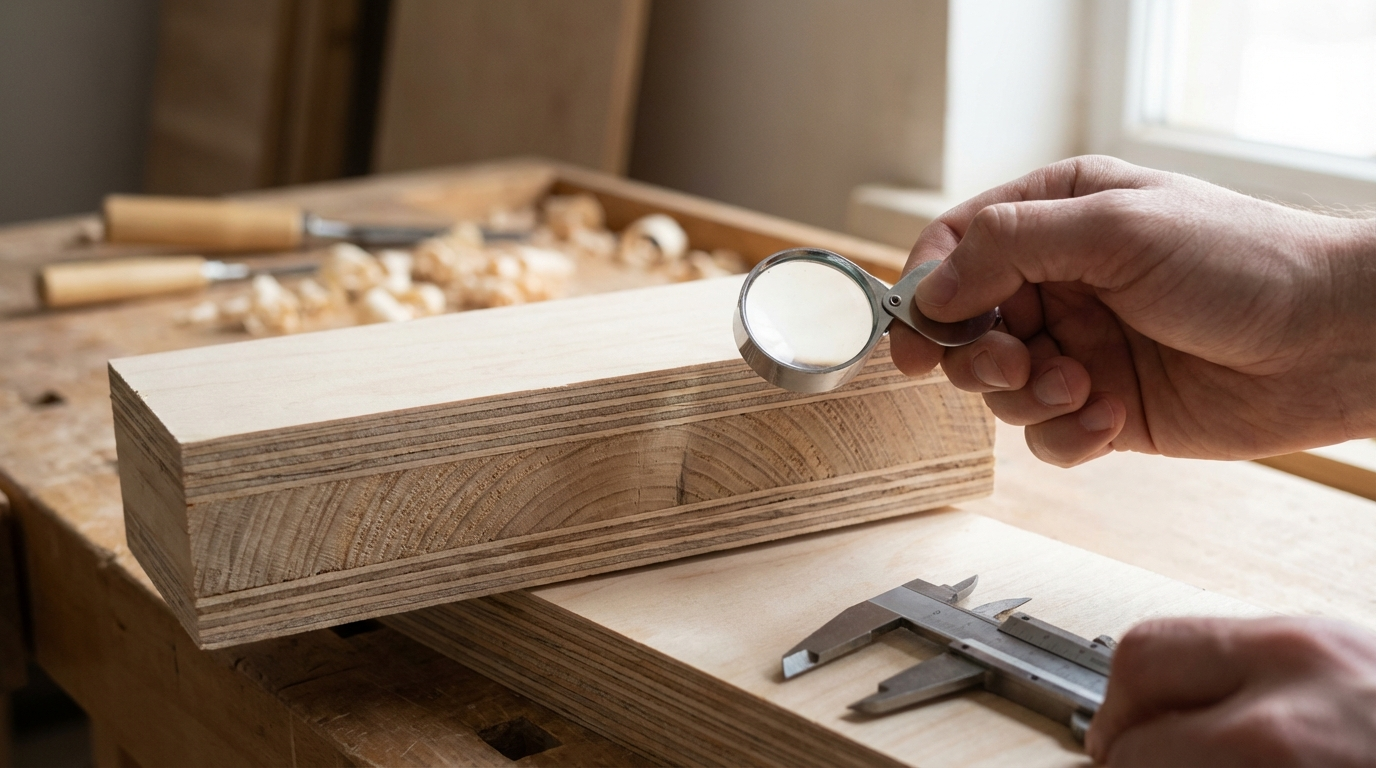
Before buying: Tap sheet—uniform thud no drums; flex ends—minimal bend; sniff—mild resin not chemical burn; measure thickness allover.
After cutting: Exposed core plies tight, no voids; screw test—holds without crumble.
After install: Doors swing true, no gaps; wipe spills—quick dry no mark.
Red flags: Patchy faces, sticky glue, over 1mm variance.
Which Archidply grade for bedroom furniture?
MR Classic or Gold—handles dry air fine, lightweight for easy handling. Nuance: Add laminate for scratch resistance in kids' rooms. Check: Face veneer smoothness for paint adhesion. Next: Store flat pre-cut; homeowners, dust weekly with microfiber to extend life 2x.
Decision Framework Table
| Site Condition | Recommended Grade/Thickness | What to Verify at Dealer |
|---|---|---|
| Low humidity interiors | MR 12-18mm | Smooth faces, solid tap |
| Coastal/monsoon kitchens | BWR 18mm | Glue line even, wet edge hold |
| Heavy-use doors | BWR/BWP 18-25mm | Squareness, core density |
| Tight budget furniture | MR 12mm | Calibration, no patches |
| High scratch risk | BWR 18mm + laminate | Veneer grade, flex test |
| Fast project delivery | Stock MR/BWR | Batch date <3 months |
Persona-Specific Tips
For Homeowners: Durability Do’s and Don’ts
Do: Wipe spills instantly, ventilate wardrobes, elevate off floors. Don’t: Drag furniture, expose to direct AC drip, skip annual polish.
For Carpenters: Handling and Prep
Cut with fine blade for clean edges; pre-drill hinges 5mm from edge; fasten screws in core plies; seal cut edges same day.
For Architects: Spec and Detailing
Specify "BWR calibrated hardwood core"; detail edge returns 50mm; wet zones get BWP + membrane; finish with PU for UV hold.
For Modular OEMs: QC and Repeatability
Batch-test 5% sheets; standardize 18mm for cabinets; track complaints to glue variance; bulk seal reduces returns 30%.
Is Archidply better than local plywood?
Often yes for consistency in hardwood cores, less voids. But locals suit dry zones if verified. Compare: Flex both—stiffer wins; boil scrap 30min. Step: Buy mixed for test project; scale up reliable one. India variation means dealer demo trumps brand alone.
FAQs
What makes Archidply plywood different for furniture?
Hardwood plies provide better screw hold and less sag vs poplar-heavy options, suiting heavy wardrobes. Varies by batch/grade; BWR adds moisture edge. Verify: Load test sample shelf. Ideal for India homes with seasonal humidity—pair laminate for 10-year aesthetics.
Can I use Archidply for flush doors?
Yes, 18mm BWR grades handle frame stresses well, with cross-grain preventing twists. Entrance needs weather seal extra. Check squareness pre-hang; use 3 hinges min. Monsoon-proof by taping joints; avoids common misalignment in sloppy installs.
How to spot fake Archidply plywood?
Real has uniform logo stamps, consistent thickness, solid core tone on tap. Fakes flake edges, smell off. Ask manufacture date, batch no.; compare weights—genuine denser. Test wet corner overnight; no bloat confirms.
Does Archidply plywood need special finishing?
Standard laminate or veneer works; prime edges first for adhesion. In humid belts, 2-coat PU seals best. Avoid oil-based in kitchens—stains hold. Carpenters note: Sand 180-grit pre-finish for smooth hold.
What's the lifespan of Archidply furniture plywood?
10-15 years in dry use, 7-10 in kitchens with care. Depends on sealing, load, climate. Extend by avoiding overloads, monthly cleans. Failures drop 40% with proper storage/install.
Archidply for coastal homes?
BWP grades only—MR/BWR risk salt swell. Verify immersion hold; reinforce doors. Combine SS hardware; annual inspect seals. Better than untreated but not eternal.
How much Archidply for a standard wardrobe?
20-30 sq ft 18mm BWR for double-door unit. Factor 10% cuts. Quote with "calibrated no gaps"; shop tier-2 cities for 10% less.
Compare Archidply MR vs BWR for cabinets?
MR cheaper for dry, BWR safer spills (holds 4-6 boils). Pick BWR always in India; verify by dealer demo. Trade: BWR 20-30% costlier but halves failures.
Disclaimer: This content is provided for general informational purposes based on industry practices and publicly available information. Product specifications, standards, prices, and availability may vary by manufacturer, region, and time. Readers should independently verify details with manufacturers, dealers, or qualified professionals before making purchase or construction decisions.Want Plywood Suggestions?
Share a few details and a Duro BOIL specialist will suggest suitable brands and connect you to responsive dealers.