Best board for modular kitchen in India: MDF, plywood or WPC?
Best board for modular kitchen in India: MDF, plywood or WPC? with a clear decision table on grade, thickness, moisture performance, warranty and price
Quick Decision Summary
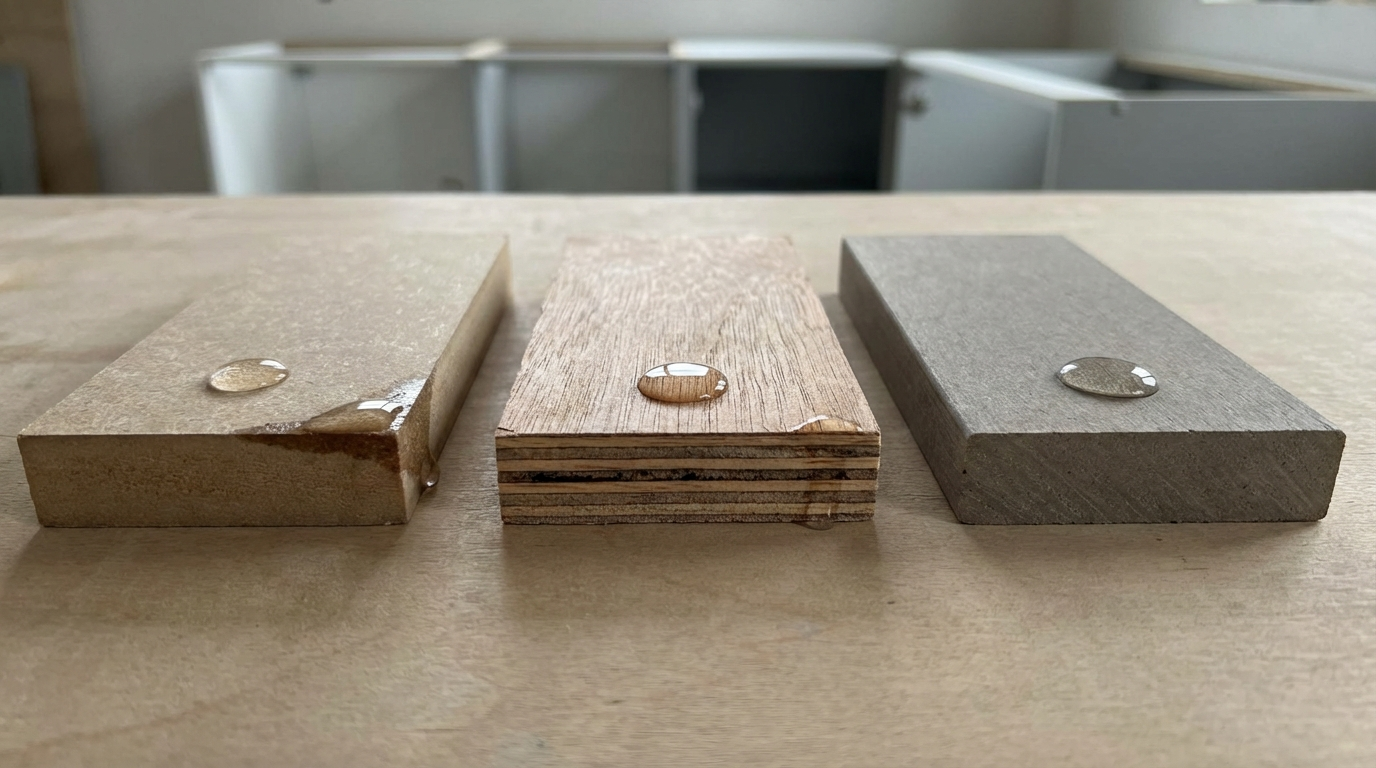
BWR or BWP grade plywood typically edges out MDF and standard WPC for most Indian modular kitchens due to balanced moisture resistance, strength, and value.
If you're in a hurry: Indian kitchens face daily spills, steam, and monsoon humidity, so prioritize boards with proven glue-line durability over smooth finishes. Standard MDF swells easily without lamination; plywood (BWR/BWP) handles wet zones better with proper sealing; WPC resists water but adds weight and cost. For 10x20 ft cabinets, opt for 18mm BWR plywood if budget allows—verify calibration and core gaps first. Avoid untreated MDF in coastal areas.
- Choose BWR/BWP plywood if: moderate-to-high moisture exposure, need for load-bearing shelves, or balanced cost-strength.
- Choose HDHMR/MDF if: dry interiors, painted/laminated finishes, or tight budgets with good ventilation.
- Choose WPC if: extreme wet zones like sinks or fully waterproof needs, despite higher upfront cost.
- Avoid standard MDF if: spills, humidity above 70%, or heavy utensils.
- Avoid WPC if: weight-sensitive installs or screw-holding is critical.
What These Materials Actually Mean
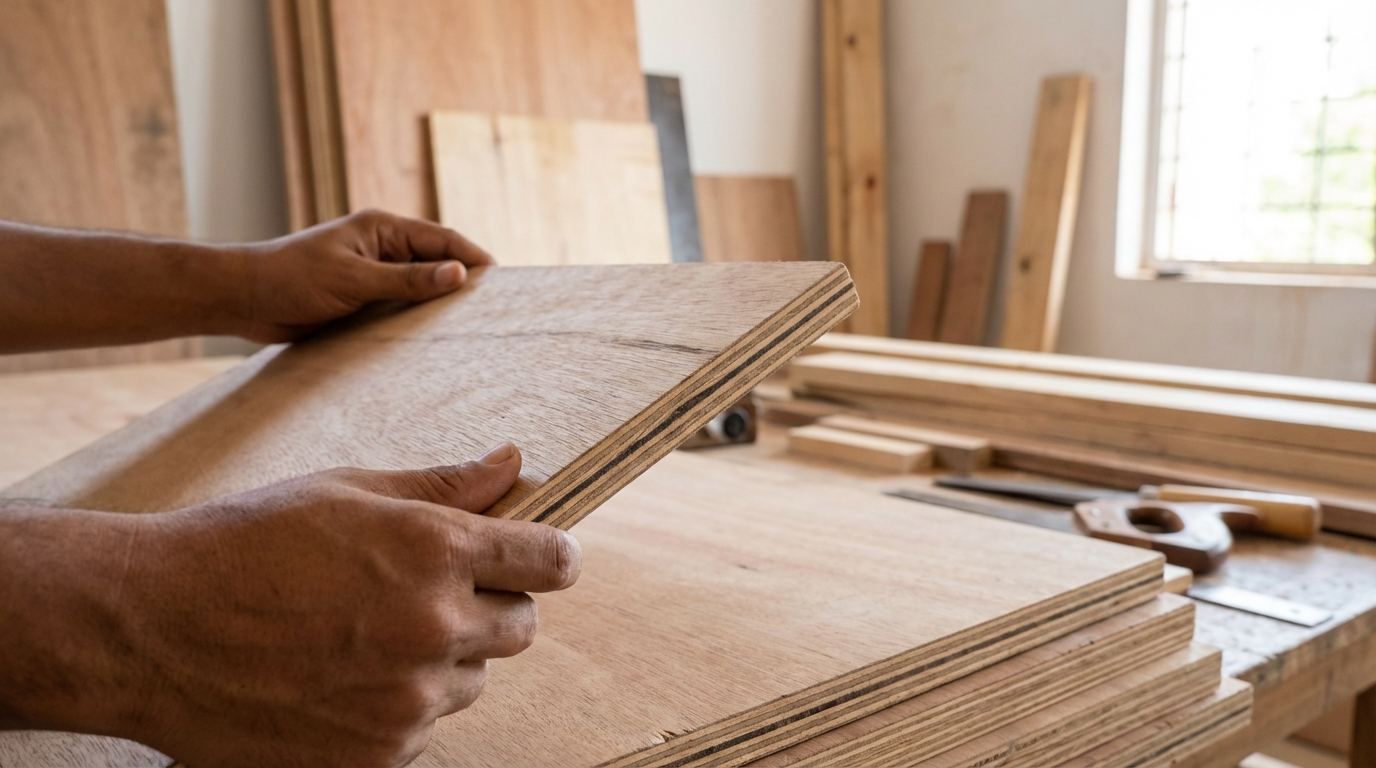
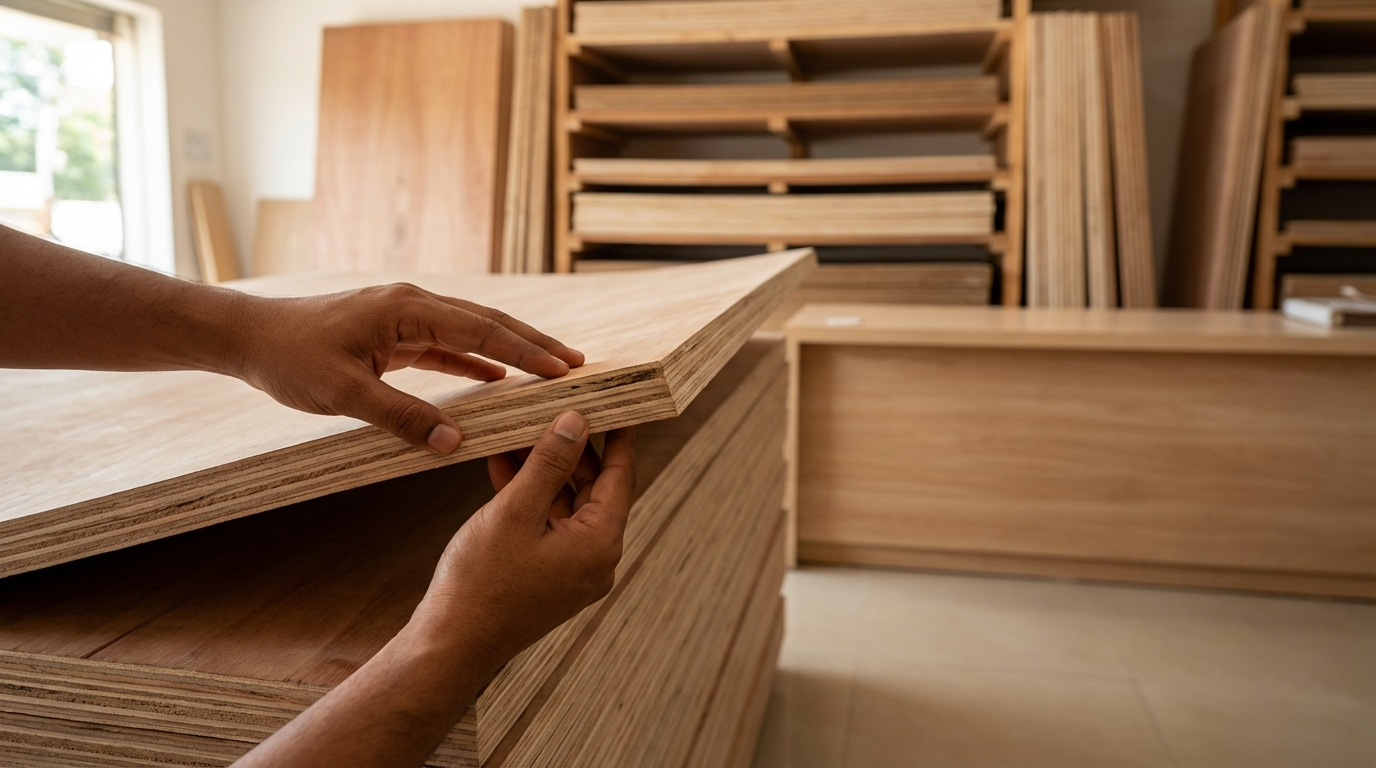
MDF (Medium Density Fiberboard) is engineered from wood fibers compressed under high pressure with resins, creating a uniform, smooth surface ideal for laminates or paint. Plywood stacks thin wood veneers glued cross-grain for strength, graded by moisture resistance (MR for interiors, BWR for humid/boiling water short-term, BWP/marine for prolonged wet exposure). WPC (Wood Plastic Composite) blends wood powder with plastic polymers, making it dense, waterproof, and termite-resistant like PVC but warmer in feel.
Where people get confused:
- Assuming all "MDF" is moisture-proof—only HDHMR variants resist humidity.
- Thinking plywood always warps—depends on grade and sealing, not inherent flaw.
- Believing WPC is "maintenance-free"—it scratches easier and needs polishing.
- Mixing up thickness ratings—18mm isn't equal across boards due to density differences.
- Overlooking core quality—hollow MDF or gappy plywood cores fail under load.
- Confusing BWR with BWP—BWR suits kitchens; BWP for bathrooms/showers.
Is MDF strong enough for modular kitchen cabinets?
MDF provides decent compressive strength for light shelves but lacks plywood's screw-holding power for repeated door slams. In Indian homes, where cabinets hold heavy kadhais, 18mm HDHMR holds up if edges are sealed thickly. Nuance: Density matters—low-grade MDF crumbles at hinges; test by pressing core firmly. Next step: Ask suppliers for calibrated sheets and knock-test for uniformity before cutting.
India-Specific Reality Check
Monsoon humidity (80-95% in Mumbai/Kochi) and kitchen steam turn standard boards into swelling risks. Plywood's cross-layers resist delamination better than MDF's uniform fibers, which absorb water radially. Coastal storage often means godown dampness—WPC shines here but heats up in summer. Contractor workflows favor plywood for easy routing; MDF dust clogs tools in humid sites. Poor ventilation amplifies failures, so pair any board with exhaust fans and silicone edge seals.
Two-Minute Comparison That Actually Helps
| Factor | MDF/HDHMR | Plywood (BWR/BWP) | WPC |
|---|---|---|---|
| Moisture Resistance | Fair (sealed OK; untreated fails fast) | Good (BWR humid; BWP wet zones) | Excellent (fully waterproof) |
| Strength/Load | Moderate (shelves sag heavy loads) | High (shelves/doors hold 50kg+) | High (but brittle edges) |
| Weight (18mm) | Light (easy handling) | Medium | Heavy (install challenges) |
| Surface Finish | Smooth (laminate heaven) | Textured (needs veneer) | Smooth (embossable) |
| Termite Risk | Low (if treated) | Medium (use termite-grade) | Negligible |
| Cut/Shape Ease | Best (no splinter) | Good (calibrated best) | Fair (plastic dust) |
Choose based on conditions: Plywood for versatile kitchens; MDF for budget laminates; WPC for sink surrounds.
Which board lasts longer in humid Indian kitchens?
BWP plywood often outlasts others in steam-heavy setups, as cross-glue lines prevent bubbling unlike MDF's edge swelling. WPC endures water but yellows from oils. Conditions: Ventilation boosts all by 2x. Check: Tap edges post-install—if hollow, redo seals. Verify supplier's batch moisture test cues during quote.
Price Range and Cost Drivers (India)
Expect Rs 70-140/sq ft for 18mm boards (tier-2/3 cities lower; metros 20% more). MDF starts lowest (Rs 70-110), BWR plywood mid (Rs 90-130), WPC highest (Rs 120-200). Drivers: Thickness (add 20%/mm), grade (BWP +30%), calibration/face veneer (+15%), city logistics (North vs South varies 10-25%), lamination finish (+Rs 20-50/sq ft). Wastage from poor cutting adds 10%.
How to ask for a quote checklist:
- Specify thickness/grade (e.g., 18mm BWR calibrated).
- Mention kitchen sq footage + wet zones.
- Ask core density, glue line count, edge sealing extras.
- Request transport to site + cut-to-size options.
Mini budget: 100 sq ft cabinets at Rs 110/sq ft = Rs 11,000 base; +lamination Rs 3,000; total Rs 15,000-18,000 varying locally.
How to Choose in 5 Steps
- Assess exposure: Spills/heavy use? Skip standard MDF.
- Match thickness: 18mm shelves, 12mm backs—calibrated only.
- Grade check: BWR min for kitchens; feel glue shear strength.
- Finish plan: Laminate hides MDF flaws; veneer suits plywood.
- Verify on-site: Knock for gaps, weigh sample, seal edges Day 1.
Skip steps? Expect bubbling in 6 months.
Can WPC replace plywood entirely in kitchens?
WPC works for moisture but not always—poorer screw grip leads to loose hinges over time. Ideal for bases; plywood better for uppers. Trade-off: WPC's density resists termites without sprays. Next: Test screw pull-out on samples; combine for hybrid savings.
Decision Framework Table
| Condition | Recommended Board | What to Verify |
|---|---|---|
| Wet zone (sink/steam) | BWP plywood or WPC | Glue lines (8+), edge seal thickness |
| Coastal humidity | BWP or WPC | Core uniformity (no gaps), batch date |
| Heavy utensils | BWR plywood | Load test shelf sample (20kg) |
| Tight budget | HDHMR | Density stamp, laminate adhesion |
| High scratch risk | Laminated MDF | Finish thickness (0.8mm+) |
| Fast delivery | Stock MDF/plywood | Calibration tolerance (<0.5mm) |
Trade-offs and Limitations
MDF: Smoothest but swells 10x faster unsealed. Plywood: Strongest but veneer mismatches if low-grade. WPC: Waterproof but 20-30% heavier, conducts heat, harder to repair dents. All need sealing; none are "bulletproof" without workmanship.
Does thickness alone make a board "kitchen-ready"?
No—18mm BWR plywood outperforms 25mm MDF in humidity due to veneer structure. Thicker adds weight/cost without proportional gains. Check: Stack samples; uneven sag signals poor core. Prioritize grade over bulk for longevity.
Common Buyer Mistakes and How to Avoid Them
- Mistake 1: Picking cheapest MDF. Why: Swells in Week 1. Do: Insist on HDHMR grade.
- Mistake 2: Ignoring calibration. Why: Uneven cabinets. Do: Measure edges (<1mm variance).
- Mistake 3: Skipping edge sealing. Why: Water wicks in. Do: Silicone all cuts Day 1.
- Mistake 4: Overloading shelves early. Why: Sag sets. Do: Season 1 week empty.
- Mistake 5: Poor ventilation. Why: Steam buildup. Do: Install exhaust + gaps.
- Mistake 6: Wrong screws. Why: Pull-out fails. Do: Coarse wood screws for plywood.
- Mistake 7: No termite check. Why: Hidden eats. Do: Knock core, ask treatment.
- Mistake 8: Bulk buy without sample. Why: Batch variance. Do: Test one sheet first.
- Mistake 9: Laminate on wet plywood. Why: Bubble traps. Do: Dry 48hrs post-cut.
Failure Modes and Fixes
- Symptom: Edge swelling. Cause: Unsealed MDF. Prevent: Thick PVC edges. Fix: Sand, reseal ASAP.
- Symptom: Shelf sag. Cause: Thin/low-density core. Prevent: 18mm+ calibrated. Fix: Reinforce brackets.
- Symptom: Delamination. Cause: MR grade in steam. Prevent: BWR min. Fix: Clamp, dry, epoxy.
- Symptom: Hinge pull-out. Cause: Weak screw hold. Prevent: Pilot holes. Fix: Longer screws/plugs.
- Symptom: Scratches showing. Cause: Thin laminate. Prevent: 1mm+ finish. Fix: Polish or overlay.
- Symptom: Termite dust. Cause: Untreated ply. Prevent: Borate spray. Fix: Fumigate section.
- Symptom: Warping doors. Cause: Uneven humidity. Prevent: Balance both sides. Fix: Realign hinges.
Why do modular kitchen boards fail after monsoon?
Absorbed moisture delaminates glue lines in subpar grades. Plywood fares best if BWR+; MDF needs constant AC. Prevention: Elevate storage, use dehumidifiers. If failing: Dry fully, inspect core—if gappy, replace panel.
Quality Checks You Can Do Without Lab Tests
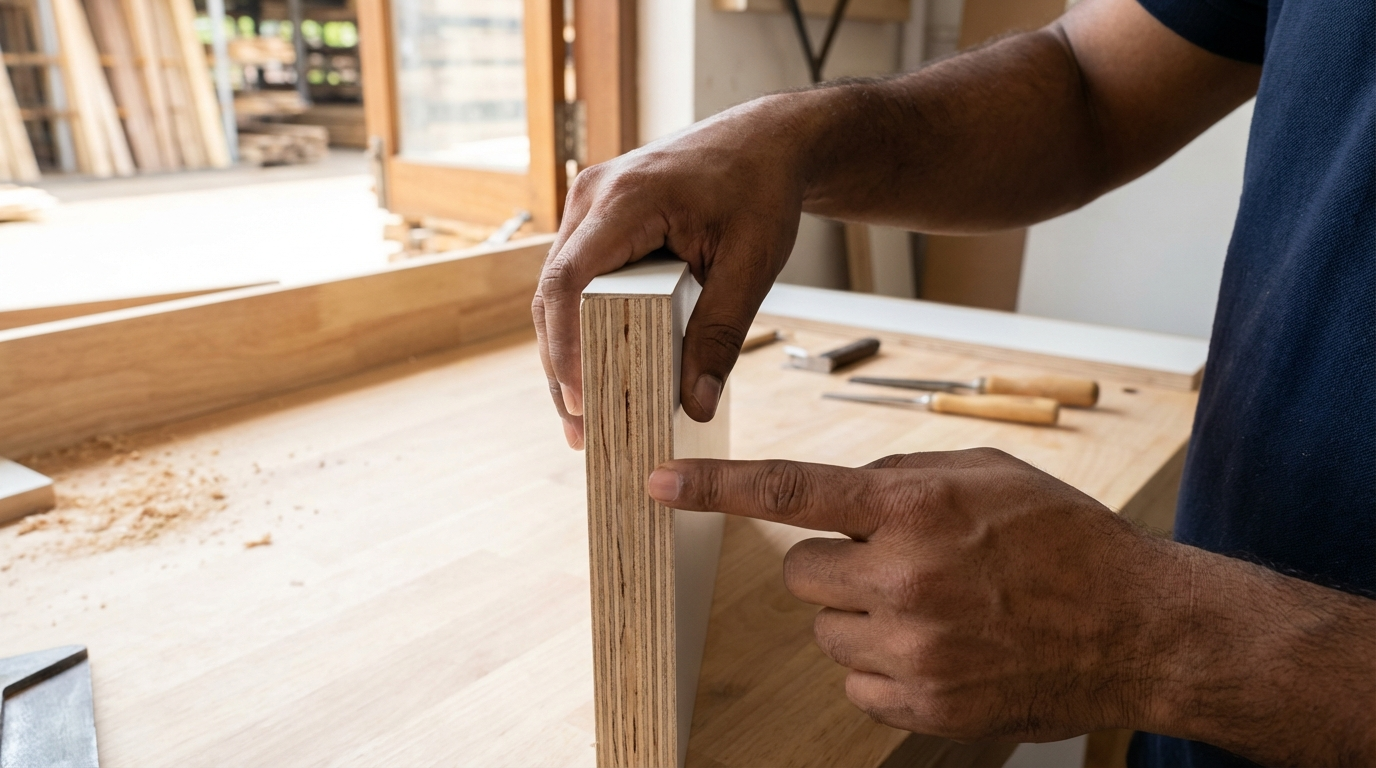
Before buying: Knock sheet (solid thud = good core); flex corner (minimal bend); check face/back evenness. Ask: Glue shear strength? Calibration cert? Questions red flag: Vague grades, no samples.
After cutting: Exposed core uniform? No voids? Sand smooth?
After install: Doors align <1mm gap? Edges wipe-clean? Load test shelves.
Tips for Homeowners: Durability Do's and Don'ts
Do: Wipe spills instantly, use soft cloths, ventilate post-cooking. Don't: Abrasive cleaners, heavy direct pots, skip mats. Expect 10+ years with care; coastal homes add silica packs.
Carpenter Tips: Working with These Boards
Cut MDF dust-free with vacuum; pilot-drill plywood 70%; route WPC slow to avoid melting. Hinge zones: Pre-fill MDF holes. Handle plywood edges taped to prevent splinter.
Architect/Designer Specs for Modular Kitchens
Spec BWR 18mm calibrated, 0.8mm laminate, silicone edges. Detail wet zones with WPC upstands. Finish: Matte anti-fingerprint. QC: Mockup one cabinet.
OEM/Modular Makers: Reducing Complaints
Standardize QC: Core gap <2mm, screw hold test. Batch-trace for returns. Hybrid: Plywood carcass, MDF doors. Cuts warranty calls 40%.
FAQs
Is plywood better than MDF for Indian modular kitchens?
Plywood (BWR grade) usually outperforms standard MDF in strength and humidity tolerance, handling spills without rapid swelling. MDF suits dry, laminated setups if HD variant. Trade-off: Plywood costs more but lasts in monsoons. Verify by flex-testing samples—minimal bend wins. Homeowners see fewer repairs long-term.
Can WPC boards get wet in kitchens?
Yes, WPC resists water immersion better than plywood or MDF, ideal for sink bases. Limitation: Heavier weight strains cabinets. Seal joints anyway for oils/steam. Test: Splash sample overnight—no change signals quality. Pairs well with plywood for cost balance.
What thickness for kitchen cabinets?
18mm standard for carcasses/shelves; 12mm shutters. Thicker adds stability but weight. Match to load—utensil shelves need 18mm min. Calibrated sheets ensure flush fits. Check variance on arrival to avoid rework.
How to prevent modular kitchen boards from swelling?
Seal all edges with silicone/PVC, choose BWR+, ventilate kitchen. Avoid floor contact. Monsoon tip: Dehumidify storage. If swelling starts, dry and reseal promptly to salvage.
Which is cheapest for budget modular kitchen?
MDF offers lowest upfront at similar thicknesses, especially laminated. Factor total: Plywood reduces long-term fixes. Quote multiple with specs; city variations swing 20%.
Does modular kitchen need marine-grade boards?
Not entire kitchen—BWP only for wettest zones like sinks. BWR suffices elsewhere. Overkill adds cost without gains. Assess steam/spill patterns first.
Are termite-proof boards necessary for kitchens?
Recommended in ground-floor/termite-prone areas; WPC inherent, plywood needs treatment. Inspect godown storage. Annual spray maintains all types effectively.
How long do these boards last in kitchens?
10-15 years typical with care; BWP/WPC push 20 in dry climates. Failures from poor sealing cut to 3-5. Regular checks extend life—wipe, ventilate, reload lightly.
Disclaimer: This content is provided for general informational purposes based on industry practices and publicly available information. Product specifications, standards, prices, and availability may vary by manufacturer, region, and time. Readers should independently verify details with manufacturers, dealers, or qualified professionals before making purchase or construction decisions.Want Plywood Suggestions?
Share a few details and a Duro BOIL specialist will suggest suitable brands and connect you to responsive dealers.