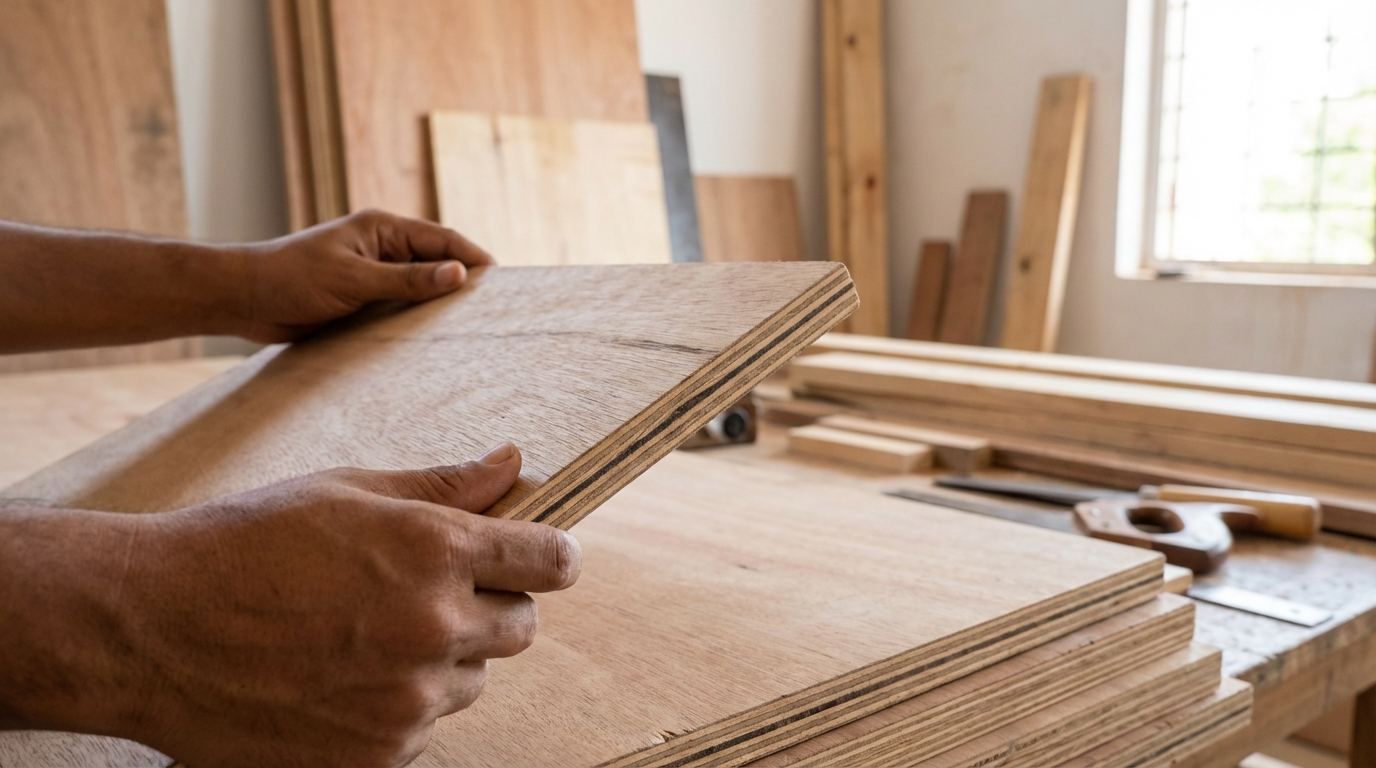
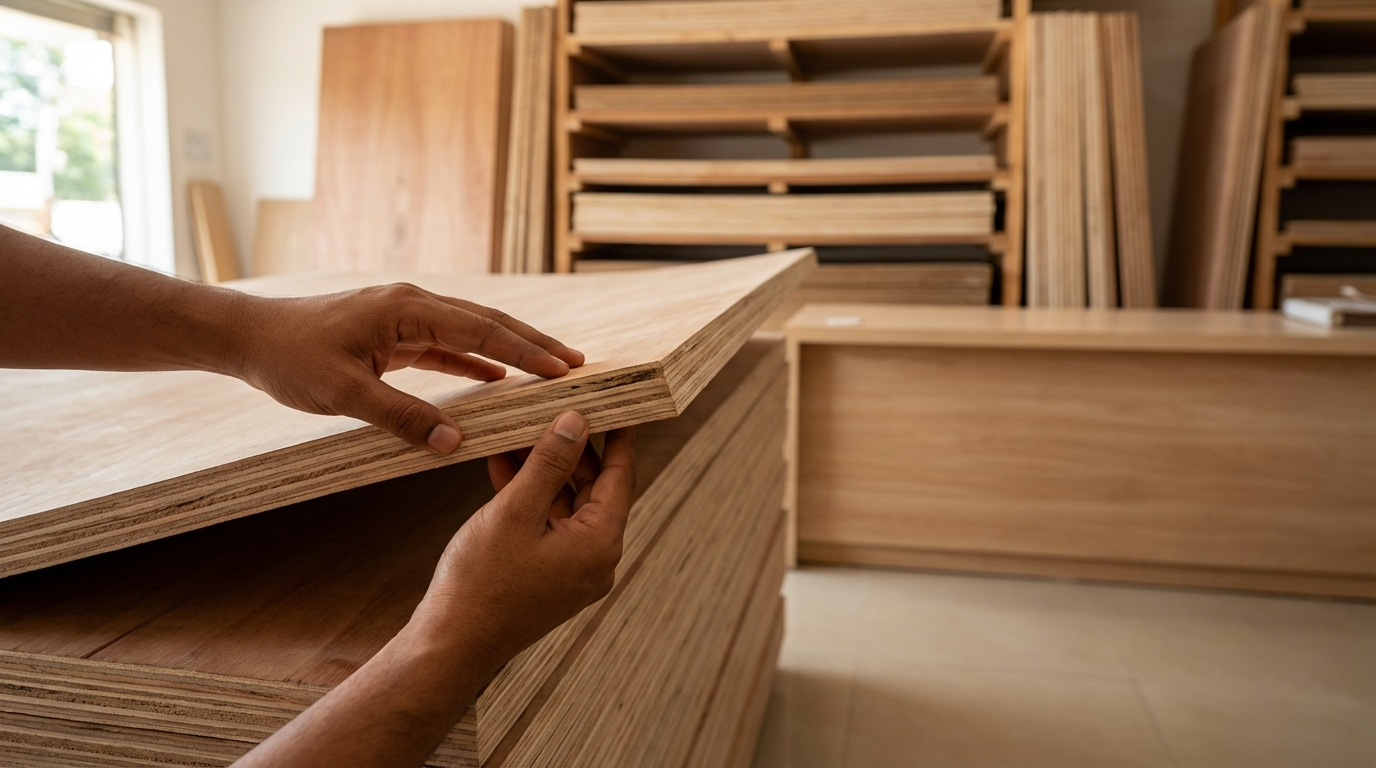
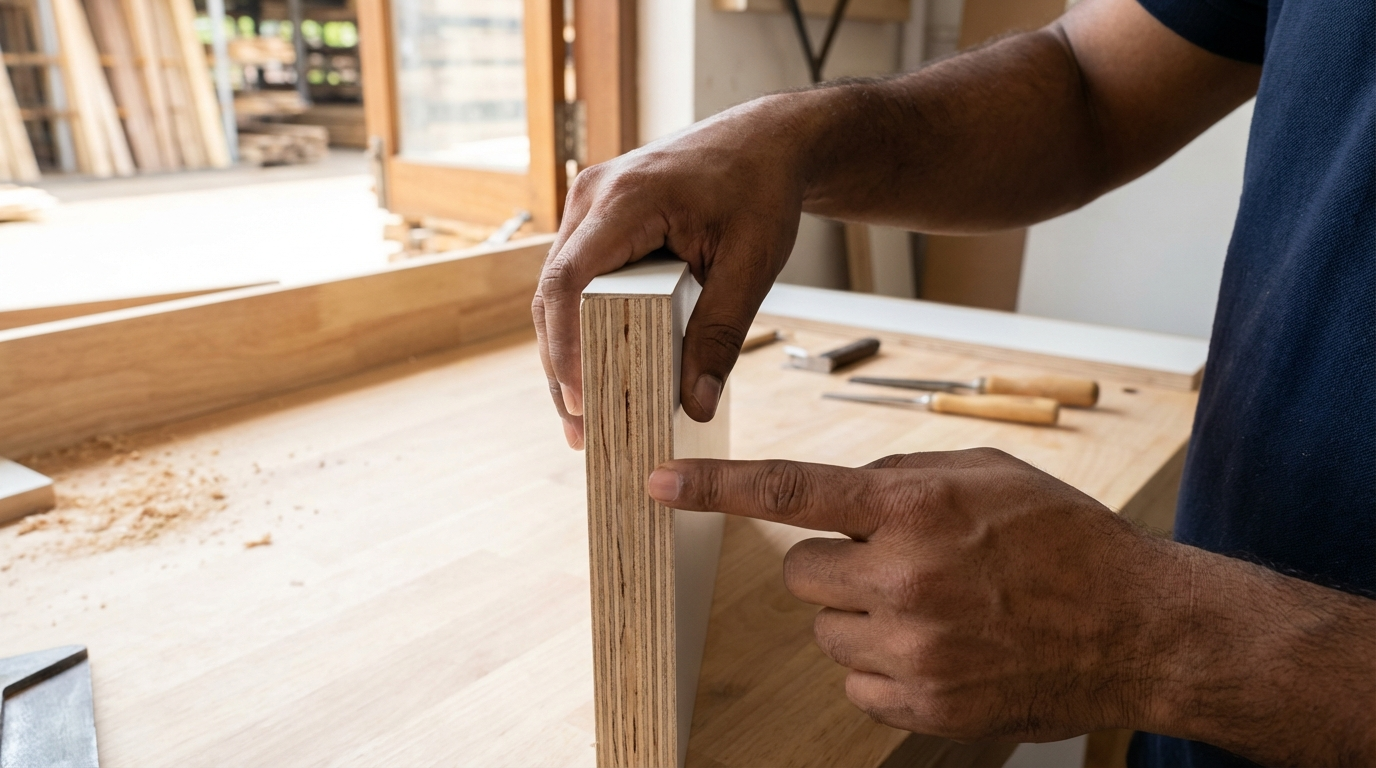
Best MDF for wardrobes: moisture, screws & finishing
Best MDF for wardrobes: moisture, screws & finishing: a practical India-focused guide with checklists, FAQs and quick tables to help you choose the right
Quick Decision Summary
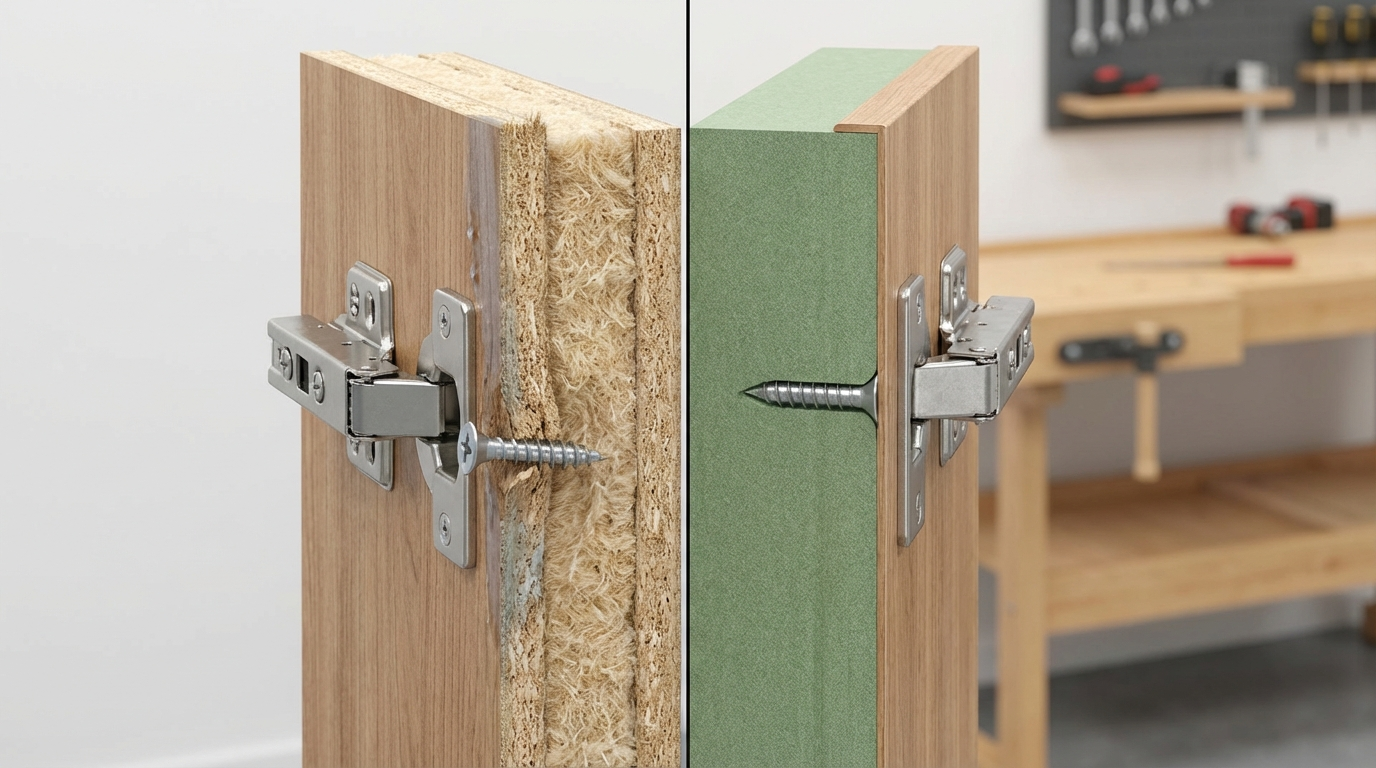
HDHMR (High Density High Moisture Resistant) MDF, 18mm thick, pre-laminated or with sealed edges, excels for Indian wardrobes balancing moisture, screw hold, and finish.
If you're in a hurry: Opt for HDHMR over standard MR MDF for wardrobes, especially in humid areas. Prioritize 18-19mm thickness for strong screw holding in hinges and shelves. Verify uniform density by tapping—no hollow sounds—and ensure edges are factory-sealed to block monsoon moisture. Pre-laminated surfaces save finishing hassle and resist scratches better than paint. Expect 10-20% higher cost than basic MDF but fewer callbacks from swelling or loose fittings. Always check calibration (flatness within 0.5mm) on-site before cutting. This combo handles daily use, coastal humidity, and typical carpenter workflows without major failures.
- Choose HDHMR if: wardrobe in bedroom/kids' room, moderate humidity, need laminate finish, budget allows premium density.
- Avoid standard MDF if: high humidity zone, heavy shelf loads, or exposed to steam/bathroom proximity.
What MDF Actually Means for Wardrobes
MDF stands for Medium Density Fiberboard, an engineered wood made from wood fibers, resin, and wax compressed under heat and pressure. For wardrobes, it's favored for smooth surfaces ideal for laminates, paints, or veneers, plus consistent density for clean cuts. Wardrobe-specific grades include MR (Moisture Resistant) for general use and HDHMR for tougher humidity.
Where people get confused:
- MR vs BWR/HDHMR: MR suits dry interiors; HDHMR needed for monsoon-prone areas.
- Density myths: Higher density doesn't always mean heavier—focus on screw pull-out tests visually via density uniformity.
- Pre-laminated vs raw: Pre-lam saves time but check adhesion quality; raw needs pro finishing to avoid bubbling.
- Thickness overload: 16mm feels light for shutters; 18mm+ prevents sagging.
- Waterproof claims: No MDF is fully waterproof—always seal edges regardless of grade.
- Vs particleboard: MDF cuts smoother but particleboard cheaper for carcasses if loads low.
India-Specific Reality Check
In India, wardrobes face relentless monsoon humidity (70-90% RH), coastal salt air, and poor storage at depots leading to pre-warping. MDF swells 2-3x faster than plywood in these conditions if unsealed. Contractor delays mean boards sit site-exposed, amplifying risks. Workmanship varies—city carpenters excel at edge banding, but rural ones skip it, causing edge crumble. Finishing fails if ambient dust/humidity high during install. Solution: Buy local or from climate-controlled yards, insist on immediate sealing post-cut, and choose denser HDHMR to buffer 20-30% moisture swings common in Mumbai/Delhi summers.
Is HDHMR MDF Always Better Than Regular MR for Wardrobes?
HDHMR outperforms MR MDF in screw holding (up to 30% stronger pull resistance) and edge swelling resistance, making it ideal for wardrobe shutters and shelves in humid India. MR suffices for fully enclosed, dry AC rooms with light use. Nuance: HDHMR's higher resin content aids finishing adhesion but costs more. Next step: Tap boards—HDHMR rings solid, MR duller. Verify by pressing edges after 24hr water exposure simulation (damp cloth test) for minimal swelling. If coastal or kids' heavy-use wardrobe, default to HDHMR; else MR saves budget without regrets.
Price Range and Cost Drivers (India)
MDF prices typically range Rs 800-1600 per sheet (8x4 ft) depending on grade, thickness, and finish. MR 18mm: Rs 900-1200; HDHMR 18mm: Rs 1200-1600; pre-laminated adds Rs 200-400. Cost drivers: density/grade (HDHMR 20-30% premium), thickness (per mm +10-15%), lamination quality/type, city (metros 15-20% higher than Tier-2), logistics/wastage (5-10% extra), and calibration/finish uniformity. Varies by batch and region—confirm locally.
How to ask for a quote checklist:
- Specify grade (HDHMR/MR), thickness (18mm), size (8x4), quantity.
- Mention finish (pre-lam or raw), edge sealing.
- Ask density uniformity, calibration tolerance (<0.5mm).
- Request delivery timeline, stacking protection.
- Negotiate bulk discount, wastage allowance.
Mini budget example: 10x6 ft wardrobe (2 sheets carcass + 4 shutters) in HDHMR 18mm pre-lam: Rs 10,000-15,000 material, varies by city.
What Thickness of MDF is Best for Wardrobe Shutters and Carcasses?
18mm HDHMR for shutters (strong screw hold for hinges/handles); 16-18mm for carcasses/shelves if loads under 20kg. Thinner 12mm risks sagging in humid conditions. Nuance: Thicker boosts durability but adds 15-20% weight/cost, harder for carpenters to handle solo. Next step: Measure span—shelves >900mm need 18mm reinforcement. Test screw hold on sample: 3+ turns without cracking. In India, 18mm standard prevents monsoon flexing; pair with tower bolts for stability.
How to Choose the Best MDF for Wardrobes in 5 Steps
- Assess exposure: Humidity zone? Choose HDHMR. Dry interior? MR ok. Skip if skips swelling risk.
- Check density/screw hold: Tap for solid tone; try screwing sample edge—firm grip, no crumble. Wrong: Loose fittings later.
- Evaluate finish readiness: Smooth face for lamination; pre-sealed edges. Post-cut bubbling if ignored.
- Verify flatness: Place on flat surface—no rocking over 0.5mm. Warps during install if bad.
- Get samples: 1x1 ft test pieces for moisture/screw/finish trials at home/site.
Does Pre-Laminated MDF Work Better for Wardrobes Than Raw MDF?
Pre-laminated HDHMR simplifies wardrobes with factory-applied surfaces resisting scratches/peeling better than site-painted raw MDF, saving 1-2 days labor. Nuance: Quality varies—cheap lams bubble in humidity; premium ones (0.8mm thick) endure 5+ years. Next step: Scratch test with key/nail on sample; check edge wrap adhesion. In India, pre-lam avoids dust-contaminated site finishing, ideal for modular wardrobes. If custom colors needed, raw MDF with pro lamination booth works but verify carpenter's setup first.
Two-Minute Comparison: MDF Types for Wardrobe Use
| MDF Type | Moisture Resistance | Screw Hold | Finishing Ease | Best For |
|---|---|---|---|---|
| Standard | Low (indoor dry) | Moderate | Good (paint ok) | Budget carcasses |
| MR | Medium (humid rooms) | Good | Very good | Basic wardrobes |
| HDHMR | High (monsoon/coastal) | Excellent | Excellent (pre-lam) | Heavy-duty shutters |
Decision Framework: Match MDF to Your Wardrobe Needs
| Condition | Recommended MDF | Key Verifications |
|---|---|---|
| High humidity/coastal | HDHMR 18mm sealed | Edge swell test; solid tap sound |
| Heavy shelf loads | HDHMR 19mm | Screw pull test; no deflection |
| Tight budget | MR 16-18mm pre-lam | Flatness check; basic density |
| Scratch-prone (kids) | Pre-lam HDHMR | Lam thickness >0.6mm; scratch test |
| Fast install | Pre-lam MR/HDHMR | Factory edges; calibration cert |
| Custom finish | Raw HDHMR | Smooth face; pro laminator lined up |
Tips for Homeowners: Durability and Maintenance
- Do: Wipe spills immediately; use soft cloths; ensure ventilation.
- Don't: Drag heavy items; expose to direct steam; overload shelves unevenly.
- Check yearly: Hinge tightness, edge seals; reapply edge tape if peeling.
- Cut with fine blade (60 teeth); vacuum dust to avoid resin gumming.
- Edge band within hours; use PVA glue for laminates.
- Fasten in dense zones; pre-drill hinges (4mm bit).
- Handle flat/stacked; cover during rains.
For Architects and Designers: Spec It Right
- Detail edge returns (2cm min); specify HDHMR for wet-adjacent.
- Call out calibration (<0.5mm/m); pre-lam codes.
- Wet-zone buffer: 150mm gap from bathrooms.
- Skipping moisture grade: Why: Dry-area assumption. Do: Humidity map your room.
- Thin sheets for shutters: Why: Cost cut. Do: Min 18mm load test.
- No edge sealing: Why: Trust "MR" label. Do: Factory-sealed only.
- Raw MDF site-paint: Why: Color flexibility. Do: Pro booth or pre-lam.
- Ignoring density: Why: Visual uniformity. Do: Tap/screw sample.
- Bulk buy without samples: Why: Price lure. Do: 1-sheet trial first.
- Overloading shelves: Why: Design oversight. Do: 15kg max per meter.
- Poor storage: Why: Site delays. Do: Tarped/vertical stack.
- Wrong screws: Why: Hardware mismatch. Do: 35-40mm wood screws.
- Symptom: Swollen edges. Cause: Unsealed moisture ingress. Prevent: Factory PVC tape. Fix: Sand/rebond if minor.
- Loose hinges. Cause: Poor screw hold. Prevent: Pre-drill HDHMR. Fix: Longer screws/epoxy.
- Lam peeling. Cause: Weak glue/humidity. Prevent: 0.8mm thick lam. Fix: Heat gun reapply.
- Sagging shelves. Cause: Thin span. Prevent: 18mm + ribs. Fix: Metal brackets.
- Finish scratches. Cause: Abrasive clean. Prevent: Lam over paint. Fix: Polish/buff.
- Warped panel. Cause: Uneven storage. Prevent: Flat stack. Fix: Clamp/heat flatten.
- Dust-filled cuts. Cause: No vacuum. Prevent: Shop vac. Fix: Clean before glue.
- Tap across surface: Uniform solid thud, no hollows.
- Flex corner: Minimal bend.
- Eye edges: Smooth, no voids.
- Ask: Resin type, calibration sheet.
Why Do MDF Wardrobe Edges Crumble at Screw Points?
Low density or unsealed edges absorb moisture, weakening fiber bonds around screws. Happens faster in India due to site humidity. Nuance: HDHMR resists better, but all need edge sealing + pre-drilling. Next step: Test sample—drill/screw 5x; no chip. If crumbling, reinforce with wooden inserts or switch to blockboard hybrids. Prevention: Carbide bits, 70% RH max during work.
Trade-offs and Limitations
HDHMR MDF offers top screw hold/moisture resistance but 20% costlier/heavier than MR, limiting for lightweight designs. No MDF matches plywood's termite resistance—pair with treatments. Finishing shines on smooth faces but edges demand banding (extra labor). In heavy flex zones, add reinforcements. Not ideal for outdoor/very wet—use marine plywood there. Calibration varies by batch; always measure.
Common Buyer Mistakes and How to Avoid Them
Failure Modes and Fixes
How Do You Test MDF Screw Holding Without Tools?
Drive a 35mm screw by hand into edge/face; it should take 4-5 full turns firmly without stripping. HDHMR pulls out harder than MR. Nuance: Fresh boards test best; aged ones weaken. Next step: Compare samples side-by-side. In India, reject if chips on entry—signals low density. For wardrobes, prioritize face/edge zones for hinges/locks.
Quality Checks You Can Do Without Lab Tests
Before buying:
After cutting: Check dust color (fine brown ok, chunky bad); ends square.
After install: Level doors; no gaps >1mm; wipe test for finish.
Red flags: Price too low (<Rs 900/18mm MR), rough faces, warped stack.
Can MDF Wardrobes Handle Indian Monsoons If Sealed Properly?
Yes, sealed HDHMR withstands 80%+ RH for years with minimal swelling if edges/laminates intact. Nuance: Gaps from poor workmanship let vapor in. Next step: Inspect yearly seals; re-tape cracks. Use silica packs inside for extra buffer. Avoid bathroom-adjacent without 300mm setback.
FAQs
What's the difference between MR and HDHMR MDF for wardrobes?
MR MDF handles moderate humidity with basic resin for indoor wardrobes, while HDHMR uses denser fibers and advanced resins for superior screw holding and swelling resistance in monsoon-heavy India. HDHMR costs 20-30% more but cuts failure risks like loose fittings. Choose MR for dry bedrooms; HDHMR for coastal/kids' rooms. Always verify by density tap test and edge moisture simulation. This ensures wardrobe longevity matching plywood without termite worries.
Should wardrobe carcasses use the same MDF as shutters?
Often yes for uniformity, but carcasses can use cheaper 16mm MR if enclosed/low-load, saving 10-15%, while shutters need 18mm HDHMR for hinge strength. Nuance: Matching prevents aesthetic mismatch post-lam. In humid sites, uniform HDHMR avoids differential swelling. Test screw zones on both; align thicknesses for flush fits. Contractors favor this for quick modular builds.
How to finish MDF wardrobe edges to prevent moisture damage?
Apply 2mm PVC/ABS edge banding with hot-melt glue immediately post-cut, overlapping corners. Seal cutouts with silicone. Nuance: Factory edges best; site ones need clamps 24hr. India tip: Do in shaded area to avoid resin softening. Check adhesion by pull test. This blocks 90% moisture entry, vital for wardrobe bases near floors.
Is 18mm MDF thick enough for heavy wardrobe shelves?
Yes for spans under 1m with 15-20kg loads, but add cleats for longer/heavier. HDHMR 18mm resists sag better than MR. Nuance: Particleboard hybrids cheaper for carcasses. Measure your max load; test deflection on sample. In India, reinforce with aluminum channels for safety amid power fluctuations affecting AC humidity control.
Why choose pre-laminated over painting MDF for wardrobes?
Pre-lam provides durable, factory-sealed finish resisting peels/scratches better than site-paint, which bubbles in dust/humidity. Saves labor, consistent colors. Nuance: Custom paints allow design flex but need booths. Scratch-test samples; prefer 0.8mm lam. Ideal for busy Indian homes avoiding repaint hassles.
Can standard MDF be used in humid Indian bedrooms?
Limited—seal aggressively and ventilate, but upgrade to HDHMR for reliability. Standard swells edges faster in 70% RH. Nuance: AC rooms ok short-term. Damp cloth test 48hr; minimal change passes. Pair with dehumidifiers for coastal beds.
How much does MDF quality affect wardrobe screw holding?
High—HDHMR holds 25-40% tighter than standard, preventing hinge wobble over time. Low density crumbles. Nuance: Pre-drill always. Hand-screw test; 5 turns firm. Key for Indian wardrobes with frequent opens.
What's the best screw type and size for MDF wardrobes?
35-40mm coarse-thread wood screws for hinges/handles; self-tapping for shelves. Nuance: Pilot hole 3/4 diameter. Test pull-out; no spin. Avoid metal screws direct—strip fibers. India staple for durability.
Do MDF wardrobes need termite treatment?
Yes, resins deter but not fully—apply oil-based termicide post-install, especially ground floors. Nuance: HDHMR denser, less prone. Annual spray; elevate bases 150mm. Combines with moisture control for full protection.
Disclaimer: This content is provided for general informational purposes based on industry practices and publicly available information. Product specifications, standards, prices, and availability may vary by manufacturer, region, and time. Readers should independently verify details with manufacturers, dealers, or qualified professionals before making purchase or construction decisions.
For Carpenters and Contractors: Working with MDF
Want Plywood Suggestions?
Share a few details and a Duro BOIL specialist will suggest suitable brands and connect you to responsive dealers.