Best plywood brands in India for 2026: how to choose
Best plywood brands in India for 2026: how to choose: a practical India-focused guide with checklists, FAQs and quick tables to help you choose the right
Quick Decision Summary
Focus on BWP or boiling water resistant plywood from brands with consistent calibration and core quality for 2026 Indian conditions.
If you're in a hurry, prioritize brands offering IS-marked BWP grades (often 710 equivalent logic) with uniform 5.2mm veneer faces and gap-free cores. These handle monsoon humidity better than MR grades, reducing delamination risks in coastal or high-use areas. Check for calibrated thickness (true 18mm measures 17.8-18mm) and ask for glue line samples. Typical cost: higher upfront but lower long-term fixes. Verify locally via touch-test for evenness and edge straightness before bulk buy.
- Choose BWP/Marine-grade brands if kitchens, bathrooms, or coastal exposure—verify boiling test claims via sample immersion.
- Avoid basic MR brands if moisture exposure expected; opt for mid-tier BWR instead for budget balance.
How to Choose Plywood Brands in 5 Steps
- Match grade to location: Dry interiors? MR suffices. Wet zones like kitchens? BWR minimum. Monsoon coasts? BWP/Marine essential.
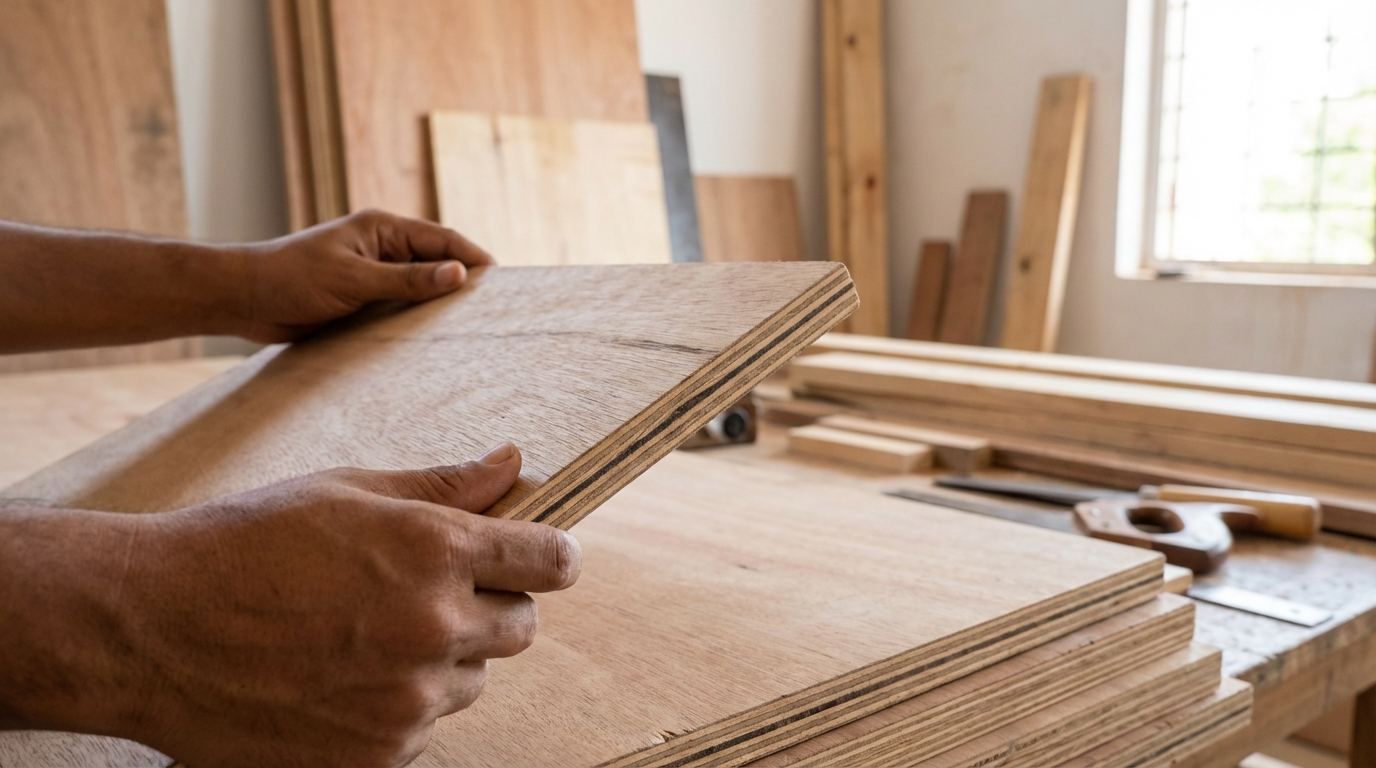
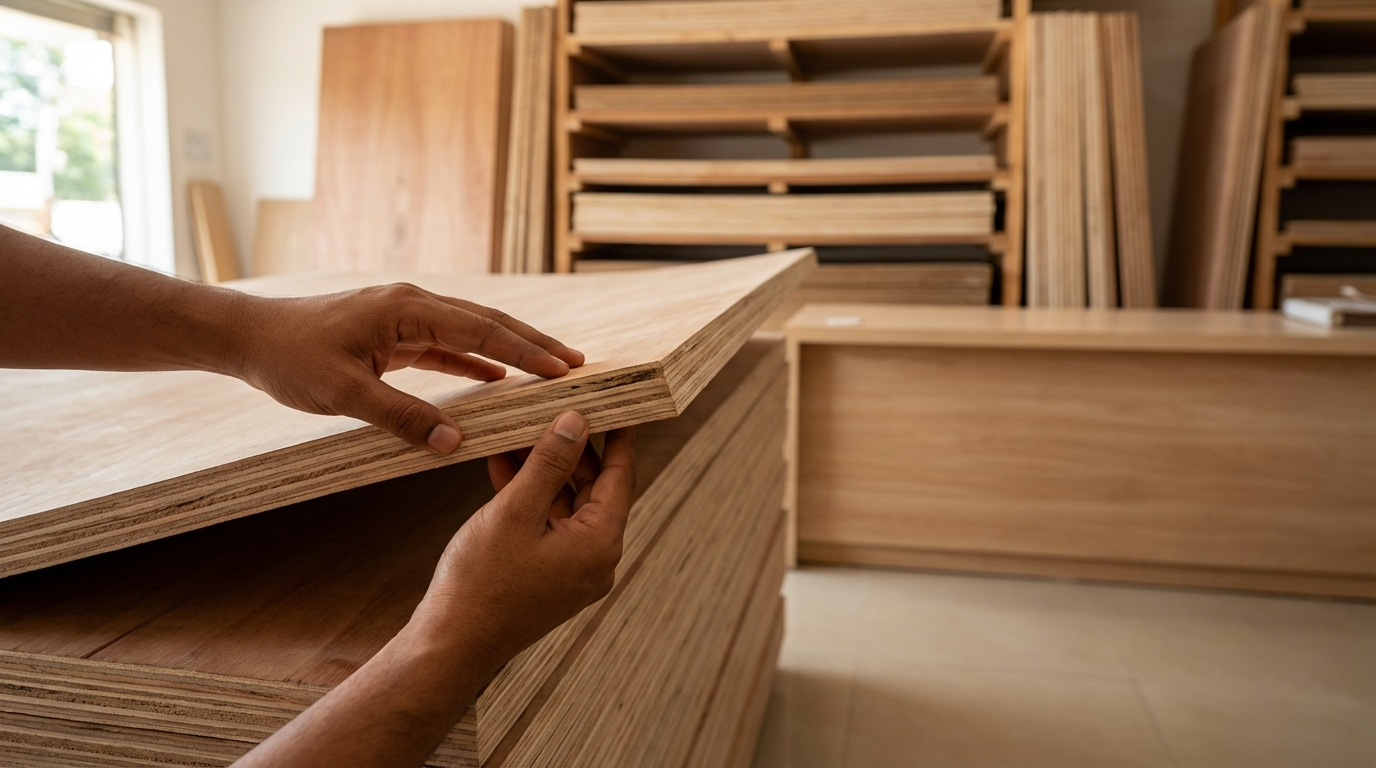
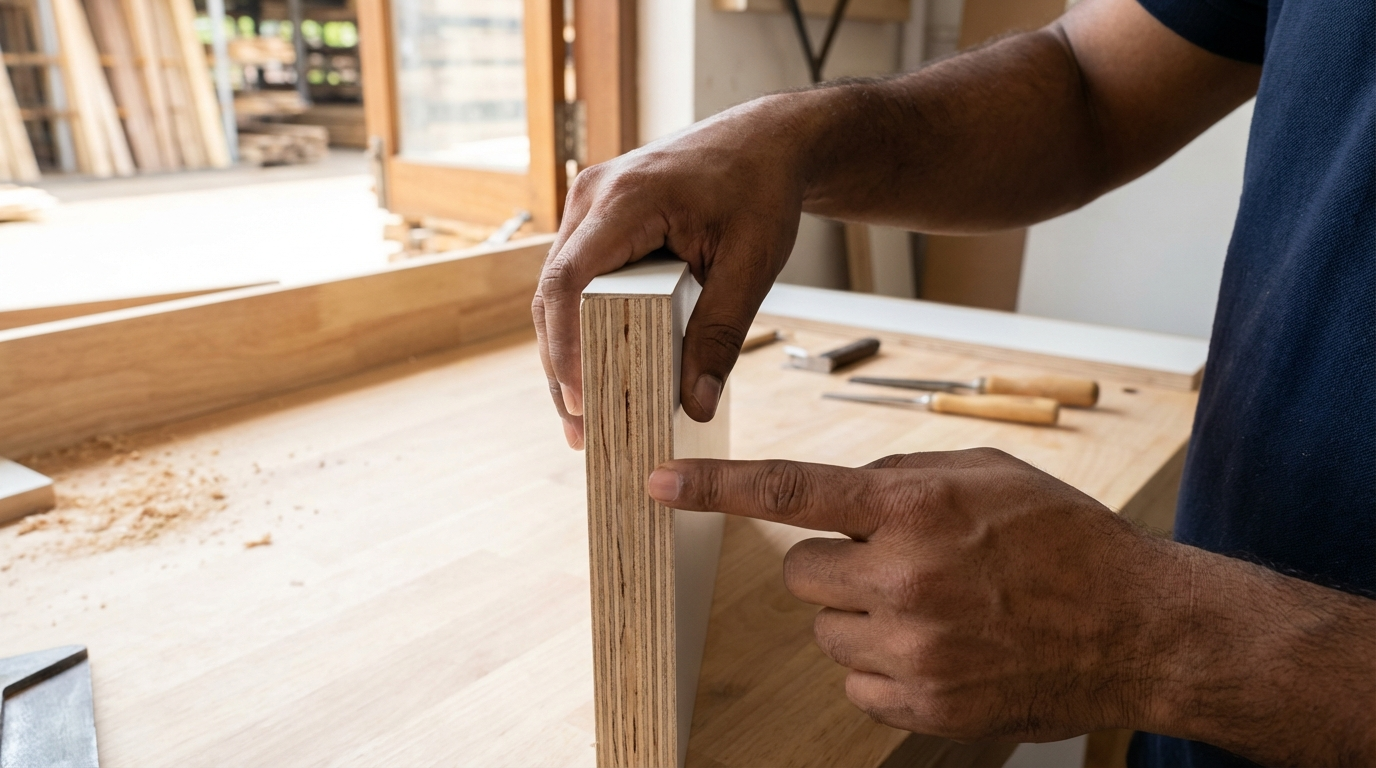
- Inspect calibration and core: Measure sheets; reject if over/under by more than 0.5mm. Tap for hollow sounds indicating gaps.
- Verify face/back veneers: Smooth, consistent grain without knots. Ask for glue line count (7-9 for 18mm).
- Check brand consistency: Visit multiple dealers; compare batch variations. Favor those with regional QC reps.
- Test small buy first: Cut and expose sample to humidity 48hrs; watch for swelling.
Skipping steps risks warping post-monsoon, costing rework. Each verifies real performance over brand hype.
Which plywood grade is best for Indian kitchens?
BWR or BWP grades work best for Indian kitchens due to cooking steam and spills. MR delaminates quickly in humid conditions. Nuance: In dry inland homes, BWR suffices; coastal needs BWP with phenolic glue. Next step: Ask dealer for 24-hour water soak test on sample—edges should stay firm, no bubbling. Pair with HDHMR frames for extra moisture barrier. Costlier but avoids ₹10,000+ cabinet refits.
What makes a plywood brand "best" in India?
Consistency in calibration, core solidity, and grade adherence defines top brands, not ads. They deliver true-thickness sheets with minimal batch variance. Conditions: Monsoon tests durability; poor brands swell unevenly. Verify by measuring 5 sheets from different stacks—variance under 0.3mm signals reliability. Practical check: Hammer test for solid thud, no echoes.
Price Range and Cost Drivers (India)
Plywood prices vary widely by grade, thickness, and region—typically ₹60-150 per sq ft for 18mm sheets. MR starts lower (₹60-90), BWR mid (₹80-120), BWP highest (₹110-150+). Cost drivers: core material (hardwood vs poplar), face veneer quality (5+mm thick), calibration precision, city logistics (metros 10-20% pricier), and finish (veneer/laminate adds 15-25%).
How to ask for a quote:
- Specify thickness (12/18mm), grade (BWP), size (8x4ft), quantity (sq ft).
- Mention delivery, stacking protection.
- Request calibrated + emission-tested samples.
Mini example: 100 sq ft kitchen cabinets (18mm BWR) ~₹10,000-15,000 base, plus 20% for edges/wastage. Confirm locally as fuel hikes shift rates quarterly.
India-Specific Reality Check
Monsoon humidity (80%+ RH) and coastal salt air amplify plywood failures—MR buckles in weeks if stored flat outdoors. Contractor workflows often skip edge sealing, worsening gaps. Hot inland summers dry cores unevenly, causing cracks. Solution: Acclimatize sheets 72hrs in site humidity. Prefer elevated storage racks. In Kerala/Tamil Nadu, BWP mandatory; Delhi interiors tolerate BWR. Workmanship reality: Carpenters cut without clamps, splintering edges—buy pre-sanded calibrated to minimize.
Is marine plywood worth it for coastal India?
Yes, marine (BWP/IS 710 logic) resists boiling water and humidity far better than BWR in coastal areas like Mumbai or Chennai. Standard grades fail via core rot. Trade-off: 30-50% costlier, but lasts 10+ years vs 2-3. Verify: Soak edge 30min—no separation. Next: Seal all cuts with epoxy; use SS hinges to block salt corrosion.
Two-Minute Comparison That Actually Helps
| Condition | MR Grade | BWR Grade | BWP/Marine |
|---|---|---|---|
| Dry bedroom walls | Good, budget pick | Overkill | Premium waste |
| Kitchen cabinets | Avoid—swells | Solid choice | Best longevity |
| Coastal bathroom | Fails fast | Risky | Essential |
| Budget priority | ₹60-90/sqft | ₹80-120 | ₹110-150 |
| Scratch/heavy use | Weak veneers | Better | Thickest faces |
Choose by exposure: Wet/heavy = BWP; light/dry = MR. Always verify calibration.
Plywood Decision Framework
| Your Situation | Recommended Grade/Brand Trait | Key Verifies |
|---|---|---|
| Coastal home, high humidity | BWP/Marine, solid hardwood core | 72hr boil test sample, no gaps |
| Urban kitchen, steam exposure | BWR, calibrated 18mm | Edge soak firm, true thickness |
| Budget bedroom interiors | MR, even veneers | Smooth faces, no knots |
| Heavy kids' room use | BWP, thick faces | Hammer solid, scratch test |
| Tight timeline delivery | Local stock BWR brands | Batch consistency check |
| Low scratch risk office | MR laminated | Glue line evenness |
Quality Checks You Can Do Without Lab Tests
Before buying: Stack sheets—measure height for true thickness. Tap edges; solid ring means no voids. Smell for low-formaldehyde. Ask: "Show recent monsoon-exposed sample."
After cutting: Edges straight? Glue oozes evenly? No delam on saw line.
Post-install: Wipe spills immediately; check alignment after rains.
Homeowner Tips: Durability Do's and Don'ts
Do: Seal all edges with putty/epoxy. Use SS hardware. Acclimatize 3 days. Don't: Drag furniture; expose to direct water; store horizontally. Clean with damp cloth only. Expect 7-10 year life with care in humid zones.
Carpenter Tips: Handling and Prep
Cut with fine blade, clamp securely. Sand edges before finishing. Fasten 50mm from edges. Reinforce hinges with blocks. Handle vertically to avoid bends. Pre-drill for screws in wet zones.
Architect Tips: Spec and Detail
Specify "BWP 18mm calibrated ±0.3mm, 5.5mm faces." Detail edge returns, wet-zone lips. Call for shop drawings with QC holds. Logic: Match finishes to grades for uniform swell.
Common Buyer Mistakes and How to Avoid Them
- Chasing cheapest MR for everywhere: Why: Ignores humidity. Do: Zone-grade match.
- Brand name only, no sample check: Why: Batch variance. Do: Test 3 sheets.
- No acclimatization: Why: Site vs factory humidity mismatch. Do: 72hr lean stack.
- Skipping edge sealing: Why: Cut ends absorb fast. Do: Epoxy all.
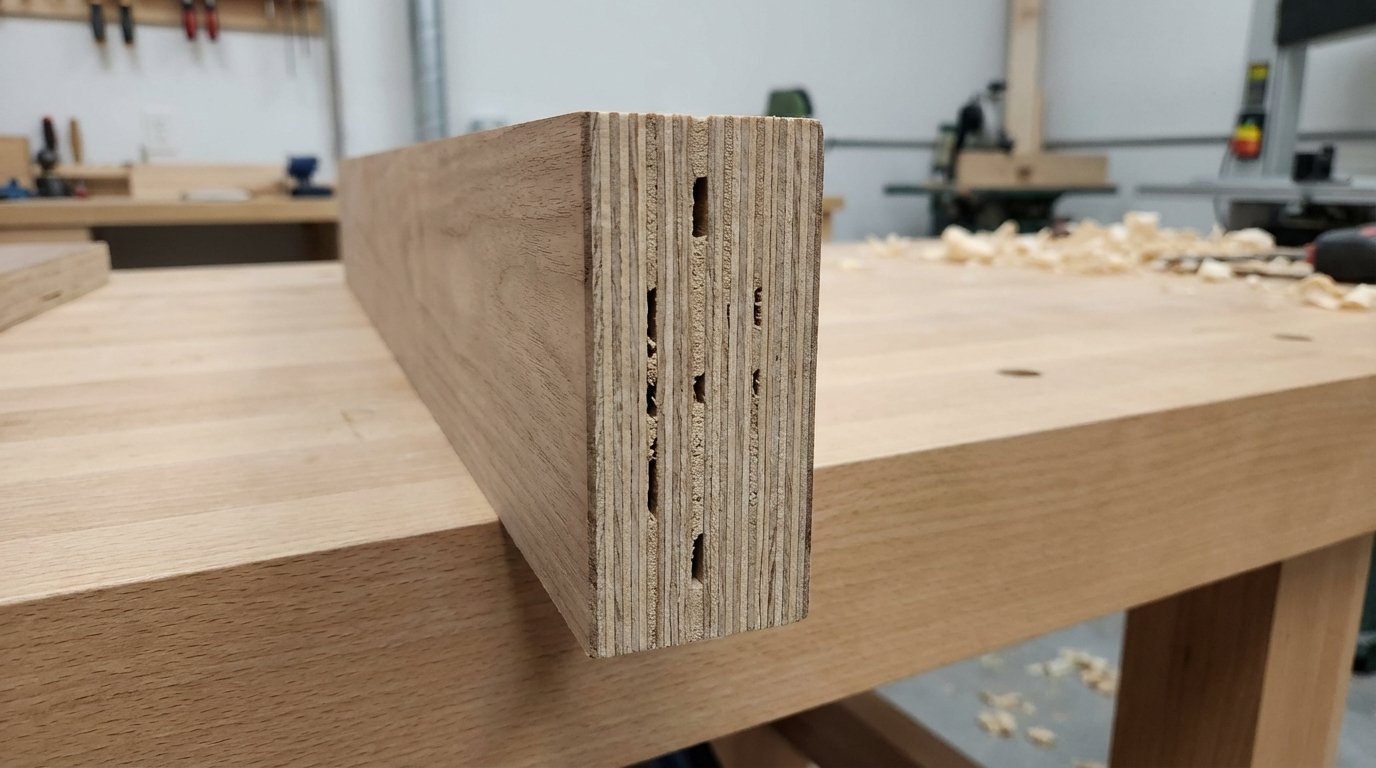
- Overlooking core gaps: Why: Hollow = weak. Do: Tap test every sheet.
- Thin plywood for load: Why: Sags over time. Do: 18mm min shelves.
- Ignoring storage post-buy: Why: Warps pre-install. Do: Vertical racks.
- No thickness measure: Why: "18mm" often 16.5. Do: Vernier caliper.
Failure Modes and Fixes
- Symptom: Edge swelling post-monsoon. Cause: Unsealed cuts. Prevent: Epoxy seal. Fix: Sand, re-seal.
- Symptom: Delamination bubbles. Cause: Weak glue/MR in wet. Prevent: BWP upgrade. Fix: Replace panel.
- Symptom: Core sagging. Cause: Gaps/poplar core. Prevent: Hardwood verify. Fix: Reinforce blocks.
- Symptom: Face veneer peels. Cause: Thin veneers. Prevent: 1.5mm+ check. Fix: Laminate over.
- Symptom: Uneven thickness. Cause: Poor calibration. Prevent: Measure stacks. Fix: Shim levels.
- Symptom: Formaldehyde smell lingers. Cause: Cheap glues. Prevent: Smell test. Fix: Ventilate heavily.
Trade-offs and Limitations
BWP excels in wet but costs 40% more, heavier to handle. MR cheap/light but fails humid—trade longevity for savings. Calibrated sheets cut cleaner but pricier. All plywood warps if unsealed; no grade is "indestructible." Laminates hide flaws short-term but chip. Balance: 70% site prep trumps 30% material spend.
Can imported plywood beat Indian brands?
Imported often matches BWP specs but logistics inflate costs 2x. Indian top-makers now calibrate equally via local mills. Condition: For bulk, local wins delivery. Verify: Same tap/thickness tests. Step: Source via trusted wholesalers, not direct import hassles.
How to spot fake IS-certified plywood?
Fakes mimic stamps but fail basic tests. Look: Faded ink, wrong font. Test: Water doesn't bead on real BWP. Always cross-check with independent measure. Dealers swap grades—insist on full sheet inspect.
FAQs
Which are reliable plywood brands for Indian homes?
Reliable ones consistently deliver graded sheets with calibration and solid cores, handling local humidity. Focus on those stocking BWR/BWP regionally. Homeowners favor uniform batches; contractors value quick restock. Varies by city—metros have more options. Always sample-test; no brand is flawless across batches. Check dealer feedback on recent deliveries.
What thickness plywood for furniture in India?
18mm standard for cabinets/shelves; 12mm for partitions. Thicker resists sag in humid India. 6mm risky for spans. Nuance: Calibrated true-size matters more than nominal. Carpenter tip: Pair with blockboard frames. Budget: Thicker adds 20-30% cost but cuts failures.
MR vs BWR vs BWP: Which for wardrobes?
BWR best for wardrobes—balances cost/moisture resistance. MR for dry AC rooms only; BWP overkill unless coastal. Test: Humidity expose sample. Avoid MR in non-AC; swells clothes-side. Seal joints regardless for 8+ year life.
How much does good plywood cost per sheet in 2026?
Expect ₹2,500-5,000 for 8x4ft 18mm BWP, varying by city/grade. Drivers: Veneer grade, core, logistics. Quote with specs; negotiate bulk. Includes 10% wastage buffer. Track quarterly as timber fluctuates.
Best plywood for moisture-prone areas?
BWP/Marine grades shine here—boil-resistant glue/cores. BWR secondary. Prep: Edge-seal, ventilate. Coastal must; inland kitchens ok with BWR. Failure if unsealed: Replace every 2 years. Verify sample soak.
How to check plywood quality at dealer?
Measure thickness/flatness; tap for solidity; flex test bend resistance. Smell low VOC. Ask batch date. Reject wavy edges. Post-buy: Cut test for clean lines. Builds confidence over labels.
Is Greenpanel or Duroply type plywood different?
These refer to popular BWR/BWP offerings—judge by grade traits, not name. Users seek moisture logic, calibration. Compare via checks: Same as any—core solidity, thickness. Alternatives match if verified similarly. Neutral pick based on local stock.
What if plywood warps after install?
Root: Humidity mismatch or poor grade. Fix: Shim levels, seal anew. Prevent: Acclimatize, BWP use. Contractor error common—document pre-install. Long-term: Better upfront grade saves.
Blockboard vs plywood: When to choose?
Plywood for wet/framing; blockboard for doors/screws holding. Plywood stronger spans. India: Plywood monsoon-proof if graded. Verify core strips solid in blockboard. Trade: Plywood pricier but versatile.
Disclaimer: This content is provided for general informational purposes based on industry practices and publicly available information. Product specifications, standards, prices, and availability may vary by manufacturer, region, and time. Readers should independently verify details with manufacturers, dealers, or qualified professionals before making purchase or construction decisions.Want Plywood Suggestions?
Share a few details and a Duro BOIL specialist will suggest suitable brands and connect you to responsive dealers.