Best plywood for bathroom: what actually survives moisture
Best plywood for bathroom: what actually survives moisture: a practical India-focused guide with checklists, FAQs and quick tables to help you choose the
Quick Decision Summary
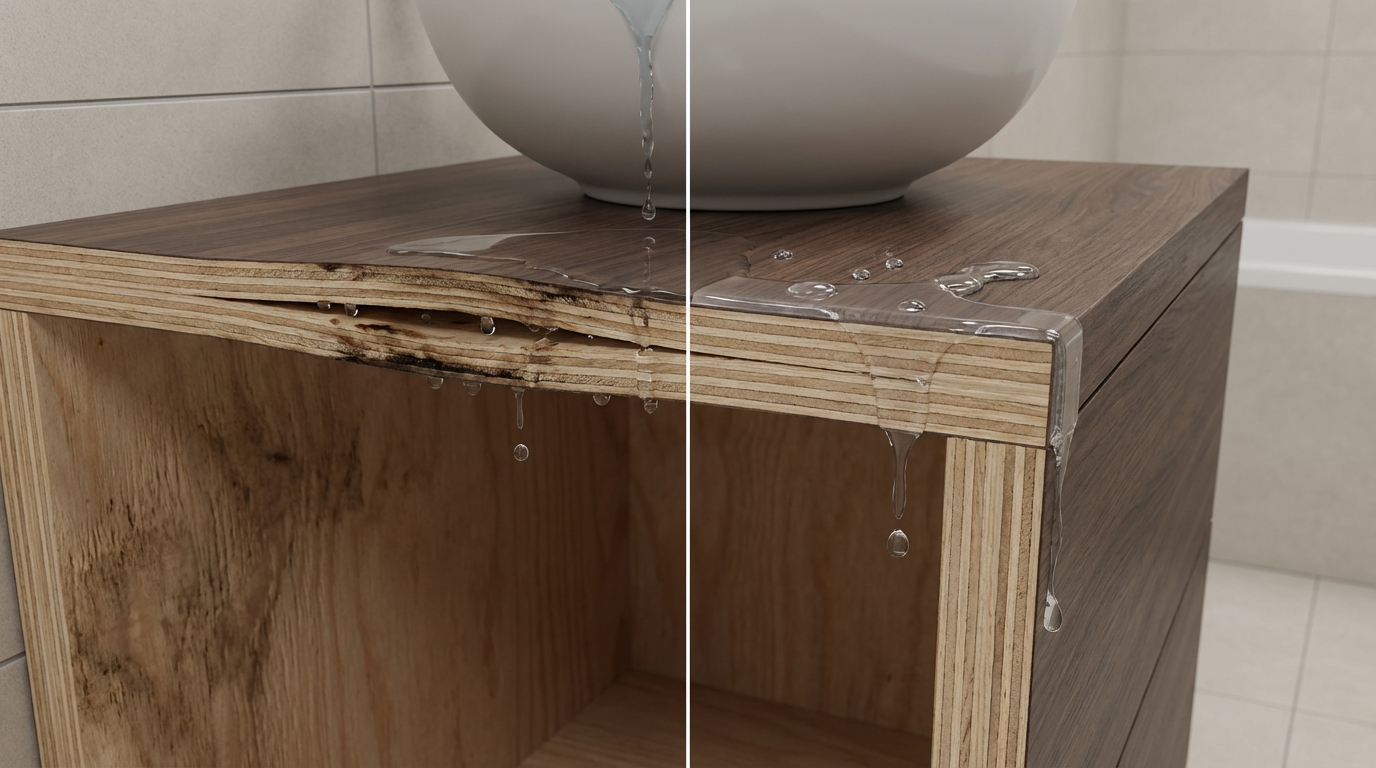
For bathrooms, BWP (boiling water proof) or equivalent marine-grade plywood survives best, as it handles constant humidity and splashes without delaminating.
If you're in a hurry: Prioritize BWP grade (IS 710 compliant in concept) at 18mm thickness for vanities, cabinets, or wall panels. Expect 20-50% higher cost than MR but 3-5x longer life in wet zones. Verify glue lines by knocking test and face veneer uniformity. Skip MR entirely—it's for dry interiors only. In coastal or monsoon areas, pair with edge sealing and proper ventilation to cut failure risk by half.
- Choose BWP if: high moisture exposure, coastal home, long-term durability needed.
- Choose BWR if: occasional splashes, budget tight, good ventilation exists.
- Avoid MR if: any water contact expected—delams in months.
India-Specific Reality Check
Bathrooms in India face relentless humidity from monsoons (80-100% RH), poor ventilation in compact urban flats, and steam from hot showers. Coastal regions like Mumbai or Chennai add salt-laden air that accelerates glue breakdown. Improper site storage—sheets stacked in open godowns—leads to pre-warping. Contractor shortcuts like skipping edge polish expose cores to swelling. Real fix: select based on exposure level, insist on calibrated sheets (uniform thickness), and enforce 24-hour drying post-install.
Can normal MR plywood handle a bathroom?
No, MR (moisture resistant) plywood fails quickly in bathrooms due to its urea-formaldehyde glue, which softens above 70% humidity and delaminates with direct water. In dry zones like wardrobes, it works fine, but bathrooms demand phenolic resins in BWR or BWP. Nuance: If your bathroom has exhaust fans running 24/7 and no floor-level splashes, MR might last 1-2 years—but expect bubbling edges. Next step: Test a sample by soaking edge in water for 2 hours; no swelling means viable, but always upgrade for peace of mind. In India, 90% of MR complaints stem from bathroom misuse.
How to Choose in 5 Steps
- Assess exposure: Steam-only (low)? BWR suffices. Splashes/showers (high)? BWP mandatory. Skip if ventilation poor.
- Pick thickness: 12mm for shelves, 18mm for cabinets—calibrated to avoid sagging.
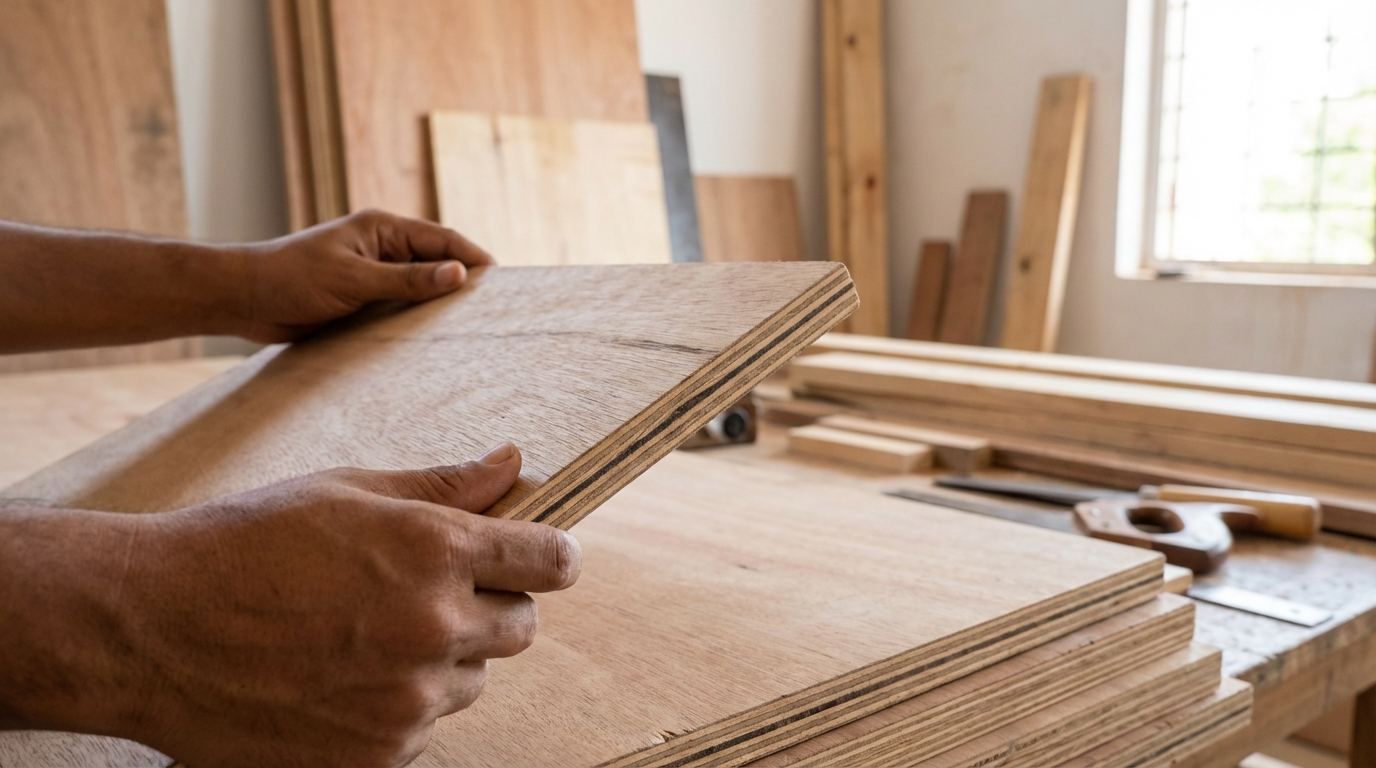
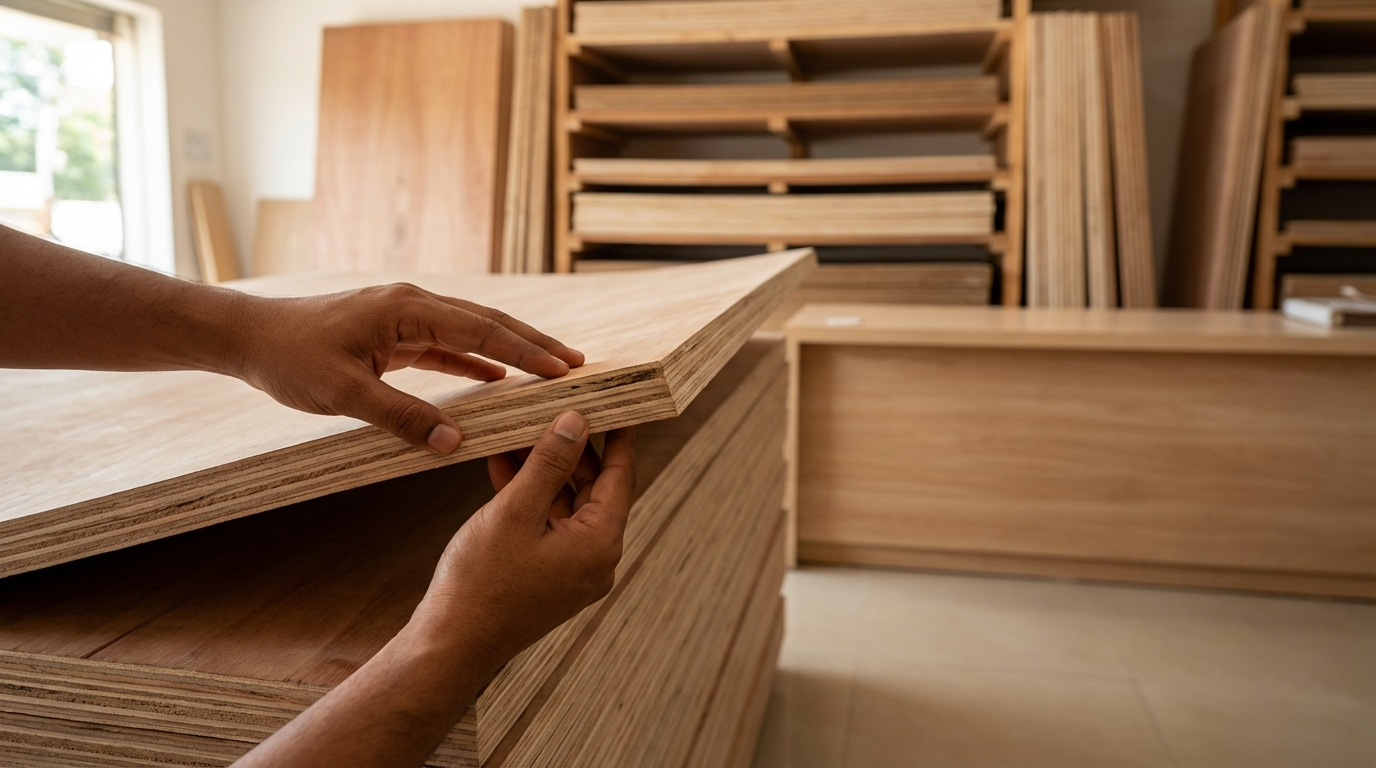
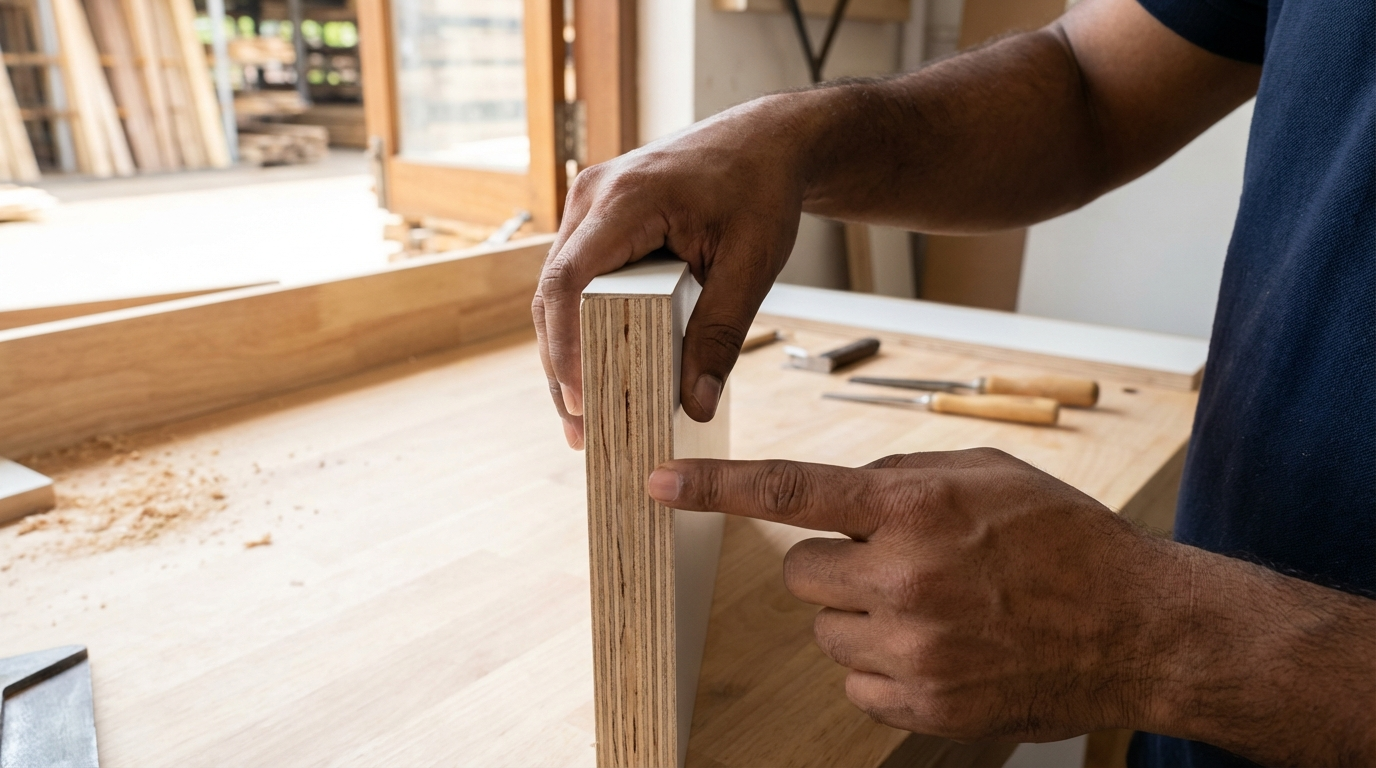
- Inspect grade: Knock for solid glue lines, check core gaps (<2mm), uniform veneer.
- Plan finishes: Laminate or epoxy seal all edges/surfaces—prevents 80% failures.
- Verify source: Ask for batch consistency proof; reject warped stock. Wrong step 3 causes 60% regrets.
Two-Minute Comparison That Actually Helps
| Grade | Glue Type | Bathroom Fit | Humidity Tolerance | Cost Relative |
|---|---|---|---|---|
| MR | Urea | Poor (dry only) | Low (interiors) | Base |
| BWR | Phenolic (water resistant) | Fair (ventilated) | Medium | 20-30% more |
| BWP/Marine | Phenolic (boiling proof) | Excellent (wet zones) | High | 40-60% more |
Choose BWP for heavy-use Indian bathrooms; BWR for light if budget limits and fans work.
Price Range and Cost Drivers (India)
Typically Rs 100-200/sqft for 18mm BWP, varying by city (Mumbai 20% higher), core (hardwood vs poplar), and calibration. MR starts at Rs 60-100, BWR Rs 80-140. Drivers: thickness (+30%/mm), face veneer quality (+15%), sealing finish (+10%). Quote checklist: Specify "BWP 18mm calibrated, gurjan face, no core gaps." Budget example: 50sqft vanity = Rs 8,000-12,000 material; add 20% for logistics/wastage in Tier-2 cities.
Is BWP plywood overkill for Indian bathrooms?
Not if showers splash walls or humidity lingers—BWP's boiling-proof glue endures 100+ hours submersion equivalent, vs BWR's 72. For minimal wet areas with fans, BWR saves 30% without much risk. Conditions: Coastal? BWP. Apartment with AC? BWR ok. Check by pressing edges; soft means poor grade. Next: Get supplier to demo soak test on scrap. Most users regret skimping as repairs cost 2x material.
Trade-offs and Limitations
BWP excels in wet but costs more, weighs heavier (harder handling), and needs pro finishing to shine. BWR cheaper but risks edge swelling in monsoons. All plywood warps if not sealed; no grade is "bulletproof" without ventilation. Limitation: Thin sheets (<12mm) sag under weight regardless of grade.
What thickness is best for bathroom cabinets?
18mm strikes balance: rigid for 1m spans, not overly heavy. 12mm for light shelves, 25mm for vanities over sinks. Nuance: Calibrated versions prevent hinge pull-out. In humid India, thicker means less flex but +40% cost. Verify: Measure 5 spots per sheet (<0.5mm variance). Step: Match to load—utensils heavy? Go 18mm+.
Common Buyer Mistakes and How to Avoid Them
- Mistake 1: Buying MR for "saving"—happens from low quotes. Instead: Demand BWP quote with specs.
- Mistake 2: Ignoring storage—warps en route. Instead: Inspect on arrival, reject bowed sheets.
- Mistake 3: No edge sealing—absorbs moisture. Instead: Epoxy all cut edges pre-install.
- Mistake 4: Skipping calibration check—uneven laminates peel. Instead: Ruler test thickness uniformity.
- Mistake 5: Poor ventilation planning—traps steam. Instead: Spec exhaust + gap under doors.
- Mistake 6: Thin plywood for cabinets—sags. Instead: Load-test sample at site.
- Mistake 7: Coastal no-upgrades—salt eats glue. Instead: Marine + anti-fungal coat.
- Mistake 8: Carpenter-led choice—bias to cheap. Instead: Homeowner approves grade first.
- Mistake 9: No post-install dry time—traps moisture. Instead: 48hrs ventilation.
Failure Modes and Fixes
- Symptom: Bubbling edges. Cause: Unsealed cuts. Prevent: Varnish day 1. Fix: Sand + reseal.
- Symptom: Delamination layers. Cause: MR in wet. Prevent: BWP only. Fix: Replace section.
- Symptom: Warping bow. Cause: Uneven humidity. Prevent: AC storage. Fix: Plane + clamp.
- Symptom: Hinge pull-out. Cause: Thin/soft core. Prevent: 18mm calibrated. Fix: Reinforce blocks.
- Symptom: Veneer peel. Cause: Poor glue line. Prevent: Knock test pre-buy. Fix: Patch + clamp.
- Symptom: Mold spots. Cause: Trapped steam. Prevent: Ventilation gaps. Fix: Clean + anti-fungal spray.
- Symptom: Sagging shelf. Cause: Under-thick. Prevent: Span calc. Fix: Add supports.
Quality Checks You Can Do Without Lab Tests
Pre-buy: Knock sheet—hollow = gaps; weigh edge—uniform heft. Ask: "Boiling test cycles?" Red flag: Vague answers.
Post-cut: Check glue squeeze-out (shiny = good); core evenness no voids.
Post-install: Level cabinets; seal gaps; run fan test for condensation.
Does BWR plywood work for bathrooms with good ventilation?
Yes, for low-splash zones—its water-resistant glue holds in 80% RH with fans. But direct water? Delams faster than BWP. India nuance: Monsoon spikes push to BWP. Check: Soak scrap 30min; minimal swell ok. Next: Install with 5mm expansion gaps + silicone seal. Saves 25% vs BWP without high regret.
Decision Framework: Match Your Bathroom to the Right Plywood
| Condition | Recommended Grade | Verify This |
|---|---|---|
| High splashes, poor vent | BWP 18mm | Glue knock solid, calibrated |
| Coastal humidity | BWP/Marine | Face veneer crack-free |
| Heavy use cabinets | BWP 18-25mm | No core gaps, uniform thick |
| Tight budget, fans ok | BWR 18mm | Edge water test pass |
| Scratch-prone kids | BWP + laminate | Hard face veneer |
| Fast project timeline | Stock BWR/BWP | Batch consistency proof |
How do you seal plywood edges in bathrooms?
Apply 2-3 coats epoxy or PU varnish post-cut, sand between. Covers pores, blocks moisture ingress. Nuance: Do before laminate—adhesion fails on raw. India tip: Use monsoon-proof brands; reapply yearly. Check: Wipe wet cloth post-cure; no darkening. Step: Carpenter masks, sprays for even coat—cuts failures 70%.
Tips for Homeowners
Focus durability: Daily wipe-dry, no standing water, fan on post-shower. Avoid abrasives on laminate.
Tips for Carpenters
Cut with fine blade, sand edges 220-grit, fasten 50mm from ends. Hinge zones: Pilot drill to avoid splits.
Tips for Architects
Spec "BWP IS 710 equiv, 18mm cali, epoxy seal." Detail 10mm vents, silicone joints for wet zones.
Tips for Modular Makers
QC: 100% edge seal check, repeatability via jigs. Reduces site complaints 50%.
Can MDF or HDHMR replace plywood in bathrooms?
HDHMR yes for cabinets (density resists swell better than MDF), but seal edges rigorously—MDF absorbs like sponge. Plywood superior for structural spans. Conditions: Low-load? HDHMR. Bearing walls? Plywood. Verify: Tap for density tone. Next: Hybrid—HDHMR shelves in BWP frame. India: HDHMR popular for cost, but plywood wins longevity.
FAQs
Which plywood grade is truly waterproof for bathrooms?
No plywood is 100% waterproof, but BWP (boiling water proof) comes closest with phenolic glue surviving prolonged wet exposure. It handles submersion cycles without separating, ideal for Indian showers. BWR resists moisture but not boiling equivalent. Always seal edges and ensure ventilation—raw plywood edges wick water. Practical step: Buy pre-laminated BWP to minimize site work; test supplier sample in bucket overnight for confidence.
What's the minimum thickness for bathroom plywood?
12mm for partitions/shelves, but 18mm standard for cabinets to prevent flex under loads like sinks. Thinner risks sagging in humid air. Cost jumps 20-30% per mm, but worth for stability. India reality: Contractors push thin to save—insist on span calc (e.g., 600mm gap needs 18mm). Check post-install with level; shim if droops.
How long does good bathroom plywood last in India?
10-20 years with BWP + proper sealing/ventilation; 3-7 years BWR. Monsoon accelerates wear 2x without fans. Factors: Usage (daily wet? Shorter), maintenance (wipe dry). Avoid by annual edge recoat. Real check: Neighbors' 5-year cabinets—if intact, same spec works.
Is laminated plywood enough for bathrooms without BWP base?
Laminate protects surface but not edges/core if base is MR—peels in humidity. Need BWP base + quality laminate (1mm thick). Glue match critical. Step: Scratch test laminate bond pre-buy. India: Cheap lams bubble fast; specify "high-pressure" grade.
What causes plywood to swell in bathrooms and how to stop it?
Unsealed edges/core gaps absorb vapor, expanding 10-20% in RH spikes. Prevent: Epoxy seal + no-touch varnish. Ventilation drops RH 30%. Fix early swell: Dry clamp 48hrs. Common in Mumbai flats—spec gaps in design.
BWP vs blockboard for wet bathroom areas?
BWP plywood stronger for spans, uniform; blockboard cheaper but cores rot faster in steam. BWP for cabinets, blockboard ok partitions if sealed. Verify block: Solid strips no gaps. Trade-off: Plywood 20% pricier but fewer callbacks.
Should I use marine plywood for entire bathroom?
Yes for cabinets/vanities; overkill for dry walls. Marine = BWP equivalent, salt-resistant for coasts. Pair with tiles for floors. Cost driver: Thickness. Check: Vendor boiling demo if coastal.
How to store plywood before bathroom install?
Vertical stack, AC room, 1-week max—covers prevent warp. Monsoon: Plastic wrap ends. Reject bowed on delivery. Carpenter tip: Acclimatize 72hrs at site RH.
Any plywood alternatives better than BWP for bathrooms?
FRP panels or PVC boards zero-swell, but plywood warmer aesthetics. HDHMR hybrid for moisture. BWP still king for strength. Choose by look/load: Aesthetic? Veneer BWP. Ultra-wet? PVC.
Disclaimer: This content is provided for general informational purposes based on industry practices and publicly available information. Product specifications, standards, prices, and availability may vary by manufacturer, region, and time. Readers should independently verify details with manufacturers, dealers, or qualified professionals before making purchase or construction decisions.Want Plywood Suggestions?
Share a few details and a Duro BOIL specialist will suggest suitable brands and connect you to responsive dealers.