Blockboard vs plywood for beds: durability & sagging
Blockboard vs plywood for beds: durability & sagging with a clear decision table on grade, thickness, moisture performance, warranty and price factors. Made
Quick Decision Summary
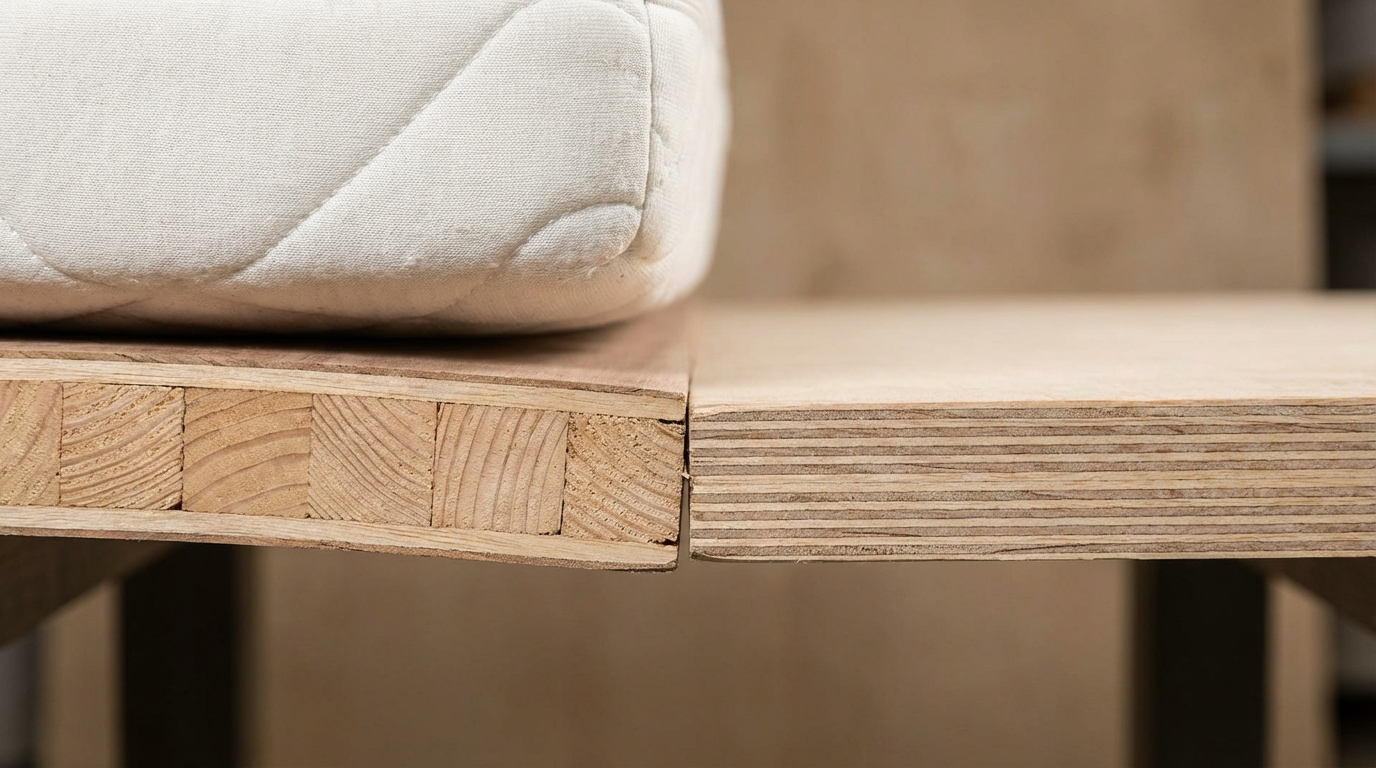
Blockboard usually outperforms plywood for bed frames by resisting sagging better under typical loads.
If you're in a hurry: For most Indian bedrooms, opt for 18-25mm blockboard with tight core strips and BWR-grade faces—it's less prone to sagging from body weight or humidity swings compared to standard plywood, which can develop core gaps over time. Plywood works well for lighter slats or headboards if calibrated and moisture-resistant (BWR+), but verify uniformity on-site. Prioritize thickness over grade alone, and always check for straight edges to avoid installation wobbles that accelerate wear.
- Choose blockboard if: heavy users (adults/couples), spans over 3ft without extra supports, screw-heavy designs like side rails.
- Choose plywood if: budget-tight, lighter kids' beds, or need lighter weight for modular assembly.
- Avoid blockboard if: coastal high-humidity zones without proper sealing (prone to core swelling).
- Avoid plywood if: poor calibration leads to uneven support and faster sagging.
What Blockboard and Plywood Actually Mean for Beds
Blockboard consists of a core made from narrow softwood strips (like pine or sal) glued edge-to-edge into a slab, then faced and backed with thin veneers. This solid core provides rigidity for furniture spans, making it common for bed platforms and frames.
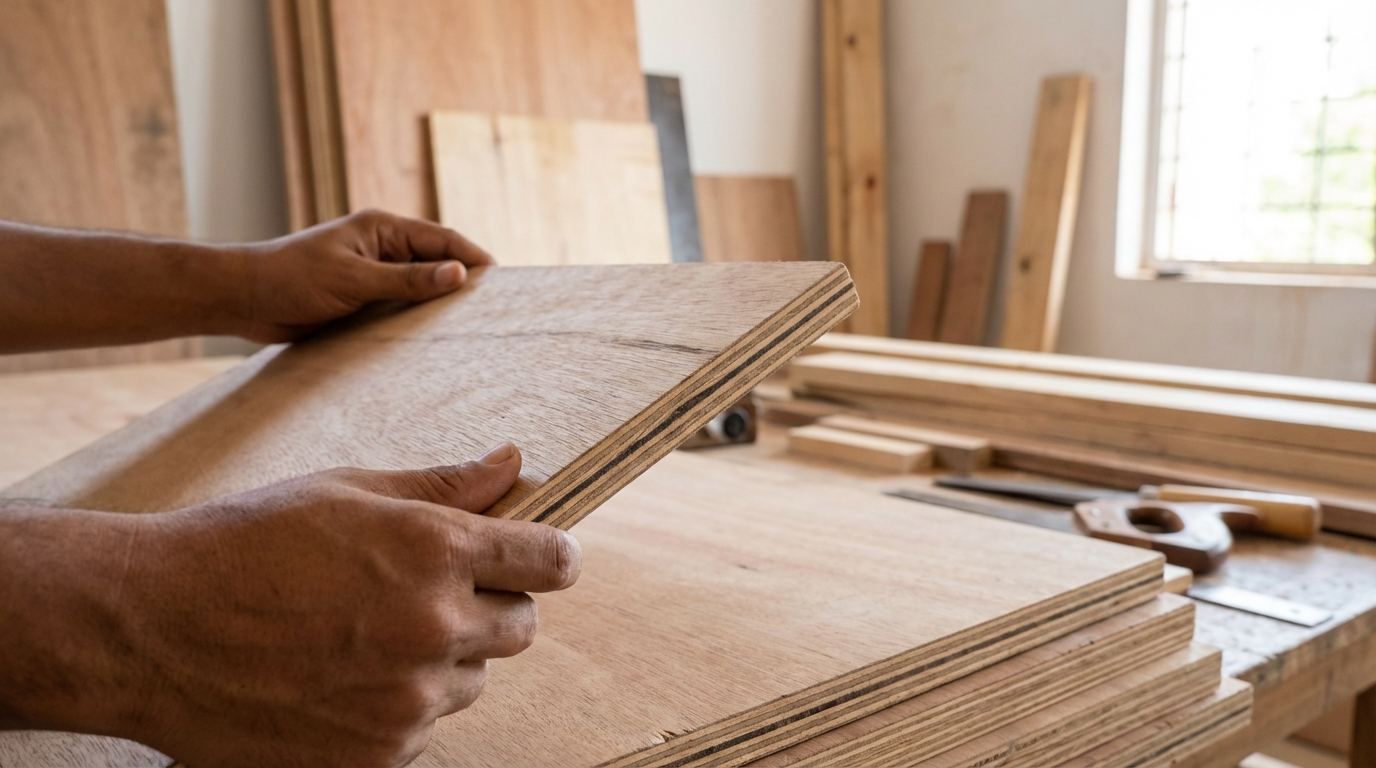
Plywood layers thin wood veneers at right angles (cross-grain) with glue lines, creating a balanced sheet. For beds, commercial MR or moisture-resistant BWR grades are typical, but quality varies by core composition and glue shear strength.
Where People Get Confused About These Materials
- Thinking blockboard is "solid wood"—it's engineered with strips, not one piece.
- Assuming all plywood is warp-proof—thin MR grades buckle in humid storage.
- Believing thickness alone stops sagging—poor core gaps cause localized failure.
- Mixing up blockboard with particleboard—blockboard holds screws 2-3x better.
- Overlooking face veneer quality—thin or mismatched veneers crack under mattress edges.
- Confusing BWR plywood with marine BWP—BWR suffices for bedrooms, BWP overkill.
India-Specific Reality Check: Humidity, Storage, and Bed Use
In monsoon-prone or coastal India, bedroom humidity (60-80% RH) weakens glue lines, causing delamination faster in unsealed edges. Blockboard cores swell if strips aren't kiln-dried properly, while plywood veneers telegraph moisture via bubbling. Storage in godowns without cover leads to warping pre-install. For beds, daily weight cycles (sleeping/sitting) amplify sagging if supports are skimped—common in contractor rushed jobs.
Workmanship reality: Carpenters often cut corners on bracing, leading to 1-2 year failures. Always insist on edge sealing with putty or tape during assembly to block moisture ingress.
Does blockboard sag less than plywood in Indian bedrooms?
Yes, blockboard typically sags less due to its strip core distributing loads evenly across spans up to 4ft, unlike plywood where core voids create weak points under mattresses. In dry interiors, 19mm blockboard holds up 5-10 years longer before noticeable dip. However, in humid Kerala or Mumbai homes, unsealed blockboard can twist if strips vary in moisture content. Test by pressing center—minimal deflection means good rigidity. Next step: Measure your bed span and add cross-braces if over 3ft for either material.
Two-Minute Comparison: Blockboard vs Plywood for Beds
| Factor | Blockboard | Plywood (BWR Grade) |
|---|---|---|
| Sagging Resistance (18mm+) | High—strip core bridges gaps | Medium—depends on calibration, voids common |
| Screw Holding | Excellent for rails/legs | Good but pulls out if thin |
| Weight | Heavier (25-30kg/sheet) | Lighter (20-25kg/sheet) |
| Moisture Performance | Better if sealed; cores swell | Edges delam if MR, better with BWR |
| Cost per sq ft (18mm) | Typically higher | Lower baseline |
Choose based on load: blockboard for adult double beds; plywood for singles with dense slats.
Price Range and Cost Drivers (India)
For 18mm thickness, blockboard typically ranges higher than BWR plywood due to labor-intensive core assembly—expect variation by city (metros 10-20% pricier than tier-2). Cost drivers: core strip density (tight vs gappy), face veneer thickness (1.5-2.5mm), calibration flatness, BWR glue upgrade, transport wastage (5-10%).
How to ask for a quote: Specify "18mm BWR blockboard, calibrated, no core gaps, straight edges" + bed dimensions. Mini example: Queen bed frame (8x6ft) uses ~40sqft—budget extra 15% for cuts/sealing.
Which is cheaper for a full bed frame?
Plywood usually starts lower, making it budget-friendly for basic frames, but blockboard's durability offsets long-term replacement costs. In Delhi vs Chennai, plywood might vary 15% due to logistics. Factor thickness: skimping to 12mm saves upfront but sags fast. Get quotes listing grade, thickness, and calibration—compare total project cost including labor.
How to Choose in 5 Steps
- Assess load/span: Heavy use? Go 19mm+ blockboard. Light? 16mm plywood ok.
- Check moisture zone: Bedroom AC? Either. Humid? BWR+ sealed edges.
- Inspect sheets: Tap for voids, measure flatness (<2mm warp).
- Plan supports: Slats every 4-6in; braces for spans.
- Seal and finish: Laminate or polish edges to block humidity.
Skip step 3, risk sagging in 6 months from hidden defects.
Is 18mm thickness enough for no sagging?
Often yes for both if quality core—no single thickness guarantees without supports. 18mm blockboard handles 200kg+ centrally; plywood needs denser slats. In Indian homes, add plywood gussets under high-stress zones. Verify by loading sample with 50kg bags—no more than 5mm deflection. Upgrade to 25mm for king beds or edge-sleepers.
Decision Framework Table
| Bed Condition | Recommended Choice | Key Verifications |
|---|---|---|
| Heavy adult load, 4ft+ span | Blockboard 19-25mm | Tight core strips, screw test holds |
| Coastal humidity | BWR Plywood 18mm sealed | No edge lifting, flat calibration |
| Tight budget, kids' bed | MR Plywood 16mm slatted | Uniform tap sound, no voids |
| High scratch risk (pets) | Blockboard + laminate | Thick face veneer (>1.5mm) |
| Fast delivery needed | Stock plywood | Local supplier, pre-cut options |
| Modular DIY assembly | Calibrated plywood | Light weight, precise edges |
Trade-offs and Limitations
Blockboard: Superior sagging resistance but heavier to handle, costlier, and cores can separate in extreme wet if unsealed. Plywood: Lighter/cheaper but prone to voids causing punch-through under point loads, less screw grip without plugs. Both limit spans without bracing—over 5ft needs steel supports.
Common Buyer Mistakes and How to Avoid Them
- Mistake: Choosing thin 12mm for cost savings. Why: Sags under mattress in months. Fix: Minimum 16mm, add slats.
- Mistake: Ignoring core quality. Why: Gaps cause localized failure. Fix: Tap test every sheet.
- Mistake: No edge sealing. Why: Humidity delams. Fix: Apply marine putty pre-assembly.
- Mistake: Skipping braces. Why: Even thick sags over time. Fix: 4-6in spacing.
- Mistake: MR grade in humid areas. Why: Glue fails. Fix: BWR minimum.
- Mistake: Poor storage pre-cut. Why: Warps. Fix: Stack flat, cover.
- Mistake: Overloading without check. Why: Instant sag. Fix: Test load post-install.
- Mistake: Cheap face veneer. Why: Scratches/peels. Fix: Feel thickness, polish test.
Failure Modes and Fixes
- Symptom: Center dip after 1yr. Cause: Thin/voidy core. Prevent: 18mm+, inspect. If happening: Add center brace.
- Symptom: Edge crumbling. Cause: Screw pullout. Prevent: Blockboard or plugs. If happening: Reinforce with L-brackets.
- Symptom: Bubbling faces. Cause: Moisture ingress. Prevent: Seal edges. If happening: Sand, re-polish.
- Symptom: Creaking rails. Cause: Loose joints. Prevent: Glue + screws. If happening: Tighten/add shims.
- Symptom: Warped slats. Cause: Uneven humidity. Prevent: Kiln-dried. If happening: Flip or replace.
- Symptom: Cracked veneer. Cause: Thin face + flex. Prevent: Laminate top. If happening: Veneer patch.
Quality Checks You Can Do Without Lab Tests
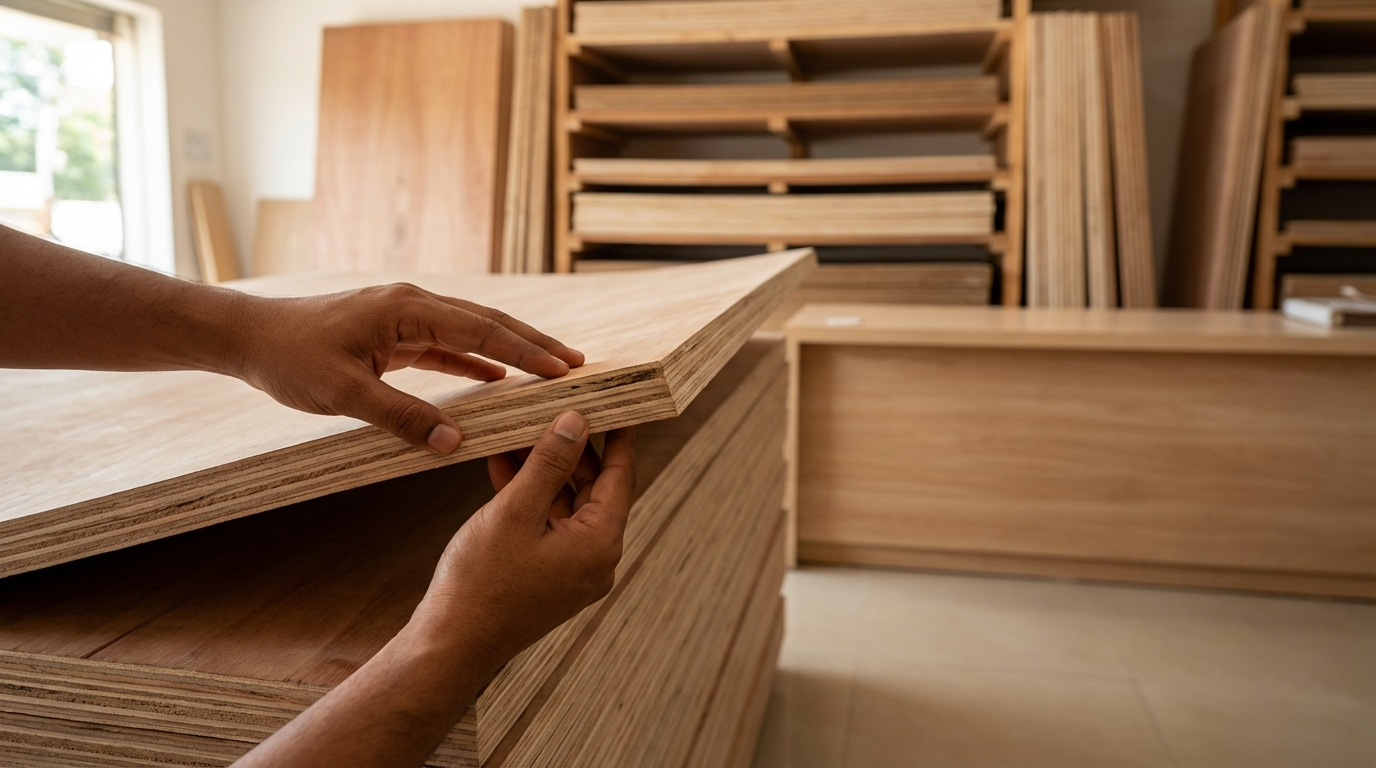
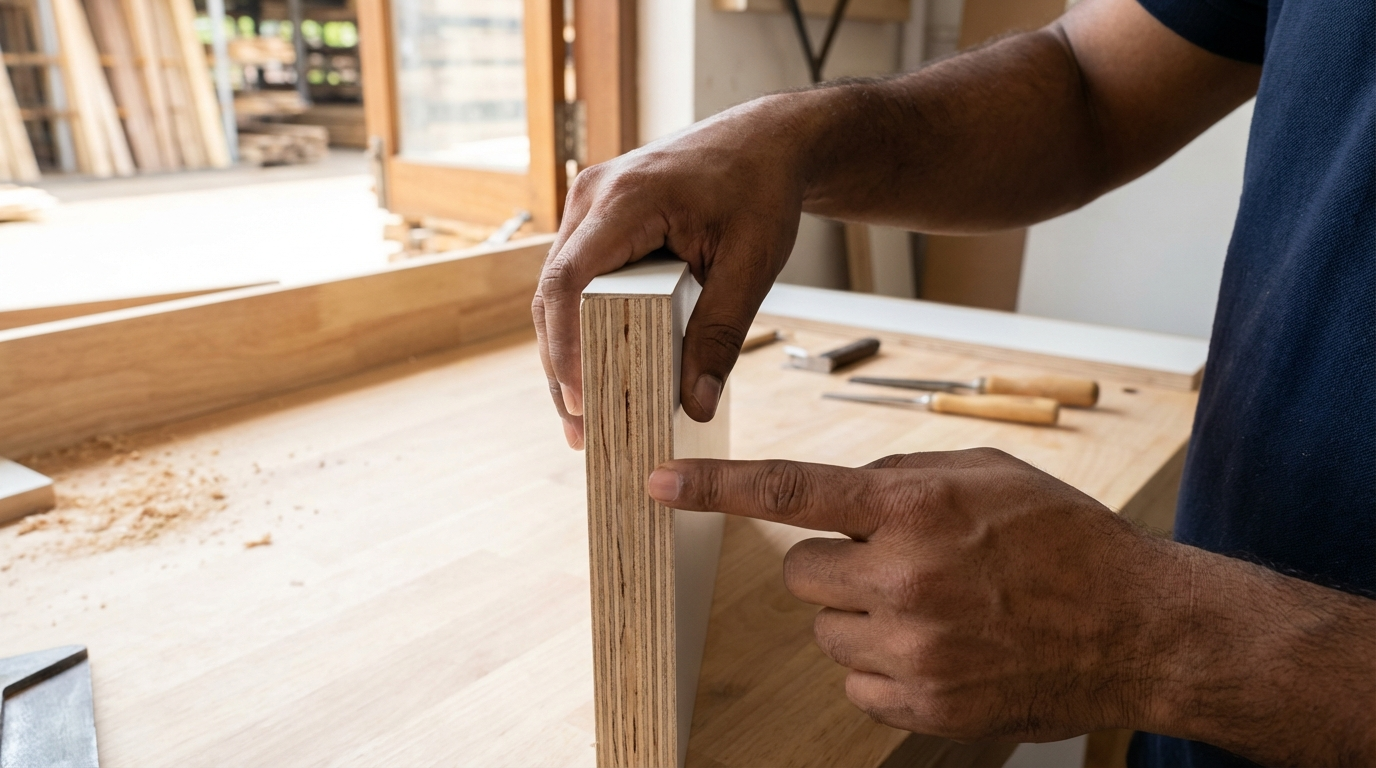
Before buying: Tap sheet—hollow = voids. Measure edges straight (<1mm bow). Press center—no give. Ask supplier: "Core strip spacing? Glue type?" Red flag: Mixed batches.
After cutting: Check ends for gaps. Screw test: 2in wood screw holds firm without spin.
After install: Load test 100kg center. Check alignment level. Clean spills immediately.
Can you tell good quality by tapping?
Yes, solid thud means dense core; dull thunks signal gaps/voids prone to sagging. For blockboard, uniform tone across; plywood varies less if calibrated. Do this on 3-4 spots. If inconsistent, reject batch—saves rework. Follow with flex test: hand press—no more than 3mm bend.
Advice for Homeowners: Durability Do's and Don'ts
Do: Rotate mattress quarterly, use plywood toppers for even load. Don't: Place near windows (humidity). Clean with dry cloth only.
For Carpenters: Working Tips
Cut with zero-clearance blade to avoid tearout. Pre-drill screws 75% depth in plywood. Edge-band immediately. For hinges/legs, blockboard zones best.
For Architects: Spec It Right
Detail 18mm BWR min, sealed edges, 150mm slat centers. Note wet-zone backups like HDHMR alternatives. Specify calibration tolerance <1mm.
Should architects spec blockboard for luxury beds?
Often yes for sagging-free spans, but pair with detailed bracing drawings. In humid designs, add ventilation gaps. Verify supplier samples match specs—reduces site rejects. Trade-off: Heavier impacts modular prefab.
FAQs
Why does my plywood bed sag but not blockboard?
Plywood cores often have voids or uneven density, creating weak spots under repeated weight, while blockboard's strip core spans better without telegraphing dips. In Indian bedrooms, this shows faster with humidity-softened glue. Solution: Dense slats every 4in on plywood or switch to blockboard for platforms. Inspect your setup—add supports if span exceeds 3ft for longevity.
Is blockboard worth the extra cost for beds?
Typically yes for doubles, as sagging avoidance saves remake costs, but for kids' beds, plywood suffices with good supports. Cost gap narrows with thickness. Weigh your usage: heavy? Blockboard. Always check core tightness to justify premium—loose strips negate benefits.
How thick should bed base be to avoid sagging?
18mm minimum for both, 21-25mm ideal for adults. Thickness alone fails without quality core/slats. In humid India, thicker amplifies swelling risk if unsealed. Test deflection under load; brace accordingly for spans.
Can plywood be used for bed slats safely?
Yes, if 12-16mm BWR with 4-5in spacing and edge sealing—lighter than blockboard. Avoid for main frame if heavy loads. Common fail: Over-spacing leads to mattress dip. Verify flatness post-cut.
Does moisture affect blockboard more in coastal areas?
Potentially, as strip cores absorb unevenly if not sealed, causing twist vs plywood's balanced layers. Seal all cuts with epoxy. Store vertically covered. BWR faces help both.
Which holds screws better for bed assembly?
Blockboard excels due to solid strips—ideal for rails/legs. Plywood needs pilot holes or inserts. Test: Screw withdraws clean? Good. Prevents loosening over years.
Should I laminate beds for durability?
Yes, adds scratch/moisture barrier, especially plywood faces. Choose 1mm thick for beds. Polish blockboard instead if natural look. Edges critical—tape before laminate.
Common sagging fix without full replace?
Add cross-plywood braces or angle irons under center. Shim loose joints. For minor, flip frame. Severe? Upgrade core sheet. Prevent with initial 18mm+ spec.
Disclaimer: This content is provided for general informational purposes based on industry practices and publicly available information. Product specifications, standards, prices, and availability may vary by manufacturer, region, and time. Readers should independently verify details with manufacturers, dealers, or qualified professionals before making purchase or construction decisions.Want Plywood Suggestions?
Share a few details and a Duro BOIL specialist will suggest suitable brands and connect you to responsive dealers.