Blockboard vs plywood for bookshelves: durability & sagging
Blockboard vs plywood for bookshelves: durability & sagging with a clear decision table on grade, thickness, moisture performance, warranty and price factors.
Quick Decision Summary
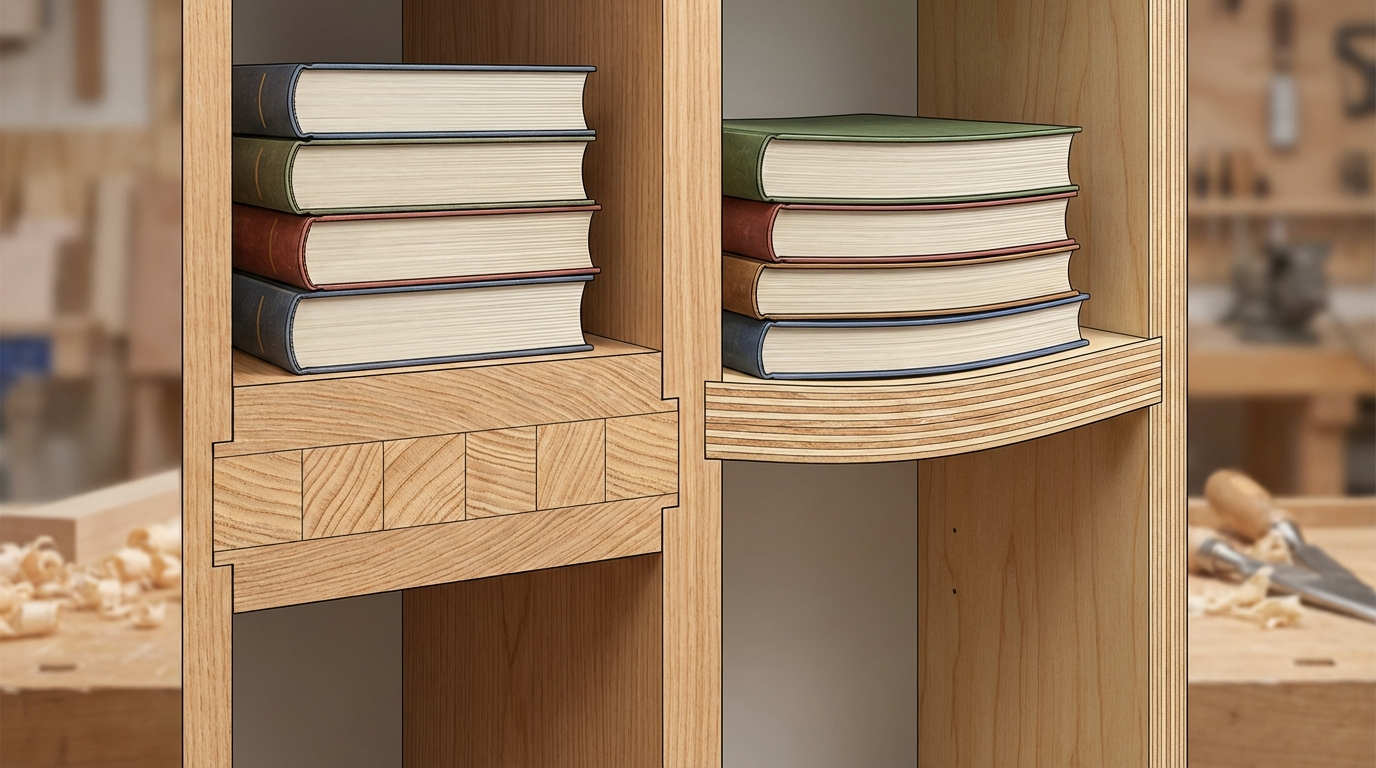
Plywood outperforms blockboard for bookshelves in sagging resistance on spans over 60cm; blockboard suits adjustable shelves needing strong screw grip.
If you're in a hurry: For most Indian homes with standard bookshelves (books up to 20-30kg per shelf), opt for 18-25mm thick BWR-grade plywood. It handles bending loads better across unsupported spans due to cross-layered veneers, reducing sag even in humid conditions. Blockboard works for shorter spans or heavy screwing (like metal brackets), but its strip-core can telescope or separate under moisture. Verify thickness, grade (avoid MR), and core uniformity at purchase. Expect 10-20% higher upfront cost for plywood, but longer life without droop.
- Choose plywood if: shelves span 60cm+, heavy books, humid/coastal areas, fixed design.
- Choose blockboard if: frequent adjustments, budget priority, short spans under 50cm, strong screw-holding needed.
- Avoid both if: extreme wet exposure without BWP grade; use solid wood alternatives.
What These Materials Actually Mean
Plywood consists of multiple thin wood veneers (typically 1-3mm thick) glued together with grains alternating at 90 degrees. This cross-layering creates strength in all directions, ideal for load-bearing like shelves. Common grades: MR (moisture resistant, interior dry use), BWR (boiling water resistant, humid interiors), BWP (boiling water proof/marine, wet exposure).
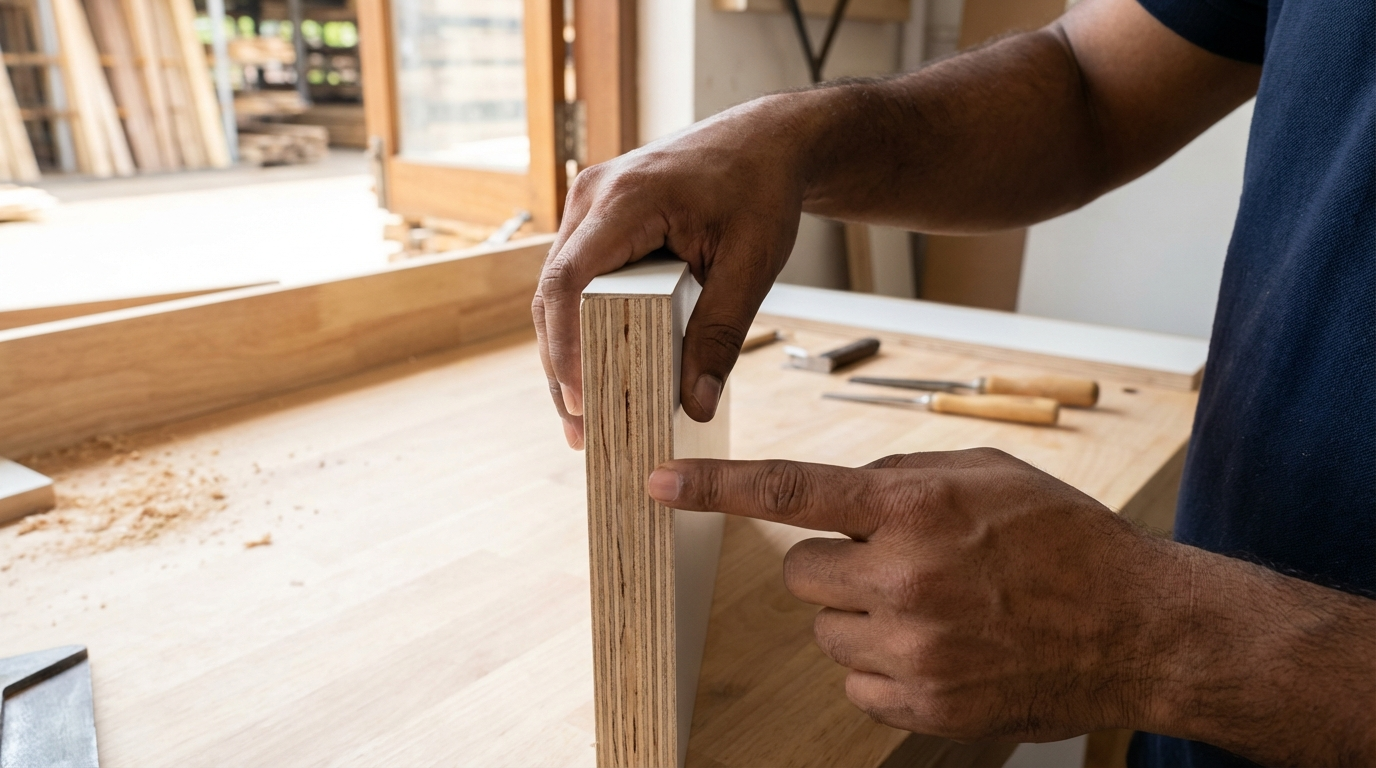
Blockboard uses a core of wider softwood strips (batons, 25-75mm wide) glued edge-to-edge, then thin face and back veneers applied. It's not fully cross-grained like plywood, so it performs more like enhanced particle board for stability but relies on the core for screw grip.
Where People Get Confused
- Assuming blockboard is "solid wood inside" – it's strips, prone to gaps if poorly glued.
- Thinking plywood always warps – cross-grains actually stabilize it better than blockboard's linear core.
- Mixing grades: MR for kitchens? No, leads to delam in monsoons.
- Believing thicker = always better – without calibration, uneven thickness causes wobbles.
- Overlooking span: both fail on long unsupported runs without mid-supports.
India-Specific Reality Check
In monsoon-heavy India, humidity spikes (70-90% RH) swell cores unevenly, causing sagging or bowing. Coastal areas amplify this with salt air corroding fixings. Poor godown storage leads to warped sheets pre-install. Contractor shortcuts like thin shelves or weak brackets double failure risk. Workmanship matters: uncalibrated boards twist during cutting; unsealed edges drink moisture. Solution? Insist on BWR minimum, edge-seal post-cut, and add mid-brackets for spans over 45cm.
Two-Minute Comparison That Actually Helps
| Factor | Plywood (BWR/BWP) | Blockboard |
|---|---|---|
| Sagging Resistance (60cm span, 25kg load) | Excellent; cross-grains distribute load | Fair; core strips can shear/tele-scope |
| Screw-Holding (for brackets/shelves) | Good if pre-drilled; veneer tears possible | Superior; thick core grips well |
| Moisture Performance | Better in humid zones (BWR+) | Average; core gaps swell faster |
| Weight | Lighter, easier handling | Heavier, stable but bulky |
| Cost Driver Impact | Higher for calibrated/grade | Lower entry, rises with quality core |
Use this for dry interiors first; switch to plywood for monsoons or heavy use.
Price Range and Cost Drivers (India)
Expect 18mm BWR plywood at ₹90-150 per sqft; blockboard ₹70-120 per sqft. Thicker 25mm adds 30-50%. Factors: grade (MR cheapest, BWP 50% more), core quality (gap-free), calibration (±0.5mm tolerance), face veneer (hardwood premium), city logistics (metros 20% higher than tier-2), and batch variation. Total project: 10-shelf unit (4x8ft sheets) might run ₹15,000-25,000 materials only.
How to ask for a quote: "18mm BWR calibrated plywood/blockboard, gap-free core, teak face, ₹/sqft landed, 10 sheets."
Which Material Costs Less Over 5 Years?
Plywood often proves cheaper long-term despite higher upfront: minimal sagging means no replacements, while blockboard core failures in humidity add repair costs (₹5,000+ per shelf redo). Nuance: in super-dry AC rooms, blockboard's savings hold. Check: calculate spans x load, factor monsoon exposure. Next step: measure your shelf gaps, test supplier samples under weight for 24hrs.
How to Choose in 5 Steps
- Measure spans and loads: Shelf gap >60cm or books >20kg? Plywood. Add mid-supports otherwise.
- Assess humidity: Coastal/monsoon? BWR plywood. Dry interior? Blockboard ok.
- Pick thickness/grade: 18mm min; calibrate to avoid wobbles.
- Test screw points: Drill samples; blockboard for adjustables.
- Verify post-cut: No gaps, flat on level surface.
Skip steps? Expect sags in 1-2 years.
What Thickness Prevents Sagging?
18mm minimum for light books (under 15kg/shelf, spans 50cm); 25mm for heavy (30kg+, 70cm spans). Plywood needs less thickness than blockboard due to strength. Conditions: add vertical supports every 45cm in humidity. Verify: stack weights on supplier sample overnight. If bows >2mm, upsize or switch.
Is Blockboard Stronger for Shelves?
No, plywood edges out in bending strength for spans; blockboard wins screw retention. Trade-off: blockboard feels solid but cores separate under flex. For India homes: plywood if fixed shelves, blockboard for modular. Check: knock core – solid thud good; hollow means gaps.
Homeowner Tips: Durability Do's and Don'ts
- Do: Edge-seal, mid-bracket heavy shelves.
- Don't: Overload without plywood.
Carpenter Tips: Cutting and Fixing
- Pre-drill plywood veneers; rebate blockboard edges for hinges.
- Use coated screws in humid zones.
Architect Tips: Spec Writing
- Detail "BWR calibrated, span-tested"; note edge banding.
Trade-offs and Limitations
Plywood: premium cost, veneer chips on cuts. Blockboard: cheaper but sag-prone on long runs, core gaps in poor quality. Both vulnerable to termites without treatment; neither for exteriors sans marine grade. Limit spans or add steel rods for 100kg+ loads.
Common Buyer Mistakes and How to Avoid Them
- Mistake 1: Picking MR grade for bedrooms – swells in AC off-season. Instead: Demand BWR sticker.
- Mistake 2: Ignoring spans – 12mm shelves droop fast. Instead: Mock-up with cardboard.
- Mistake 3: Cheap uncalibrated sheets – uneven shelves. Instead: Stack and rock-check.
- Mistake 4: No edge sealing – moisture wicks in. Instead: Apply putty pre-install.
- Mistake 5: Weak brackets – shifts load. Instead: 4-screw metal ones.
- Mistake 6: Bulk storage outdoors – warps. Instead: Vertical under cover.
- Mistake 7: Overlooking core gaps – future sags. Instead: Shine light through edges.
- Mistake 8: Assuming thicker fixes all – without grade. Instead: Balance with moisture rating.
Failure Modes and Fixes
- Symptom: Shelf bows center. Cause: Long span/thin board. Prevent: 18mm+, supports every 50cm. Fix: Add mid-bracket, reinforce underside.
- Symptom: Delamination edges. Cause: Humidity + unsealed. Prevent: BWR, seal cuts. Fix: Clamp dry, epoxy gaps.
- Symptom: Screw pulls out. Cause: Plywood veneer tear. Prevent: Pre-drill blockboard alt. Fix: Larger plugs/wood filler.
- Symptom: Core separation cracks. Cause: Blockboard gaps flexed. Prevent: Gap-free core. Fix: Dowel and glue.
- Symptom: Uneven wobble. Cause: Uncalibrated thickness. Prevent: Tolerance check. Fix: Shim levels.
- Symptom: Termite dust. Cause: Untreated wood. Prevent: ISI-treated. Fix: Inject gel, replace section.
Quality Checks You Can Do Without Lab Tests
Before buying: Stack sheets flat – no rocking; tap core – uniform sound; check edges for gaps/moisture stains; ask "BWR certified? Calibrated?" Red flag: sticky glue smell (fresh/low quality).
After cutting: Lay flat overnight; drill test holes – clean grip; sand edges smooth.
After install: Load-test 2x expected weight 48hrs; check alignment gaps <1mm; clean spills immediately.
Bookshelf Decision Framework
| Condition | Recommended Choice | What to Verify |
|---|---|---|
| Heavy books (30kg+/shelf) | Plywood 25mm BWR | Cross-grain layers, calibration |
| Coastal humidity | Plywood BWP | Glue line test (boil scrap) |
| Adjustable shelves | Blockboard 19mm | Core baton grip on screws |
| Tight budget, dry room | Blockboard MR | No visible gaps |
| Long spans (70cm+) | Plywood 18mm+ | Bend test sample |
| High scratch risk | Either + laminate | Hardwood face veneer |
Does Humidity Ruin Blockboard Faster?
Yes, strip cores swell/gap quicker than plywood's uniform layers. In monsoons, blockboard delams 20-30% sooner without sealing. Conditions: dry AC zones equalize them. Step: Humidity log your room; if >70% avg, plywood. Test: Wet edge sample, dry 24hrs – check warp.
Can I Mix Both Materials?
Yes, plywood for spanning shelves, blockboard for screwed frames. Matches strengths but align thicknesses to avoid twists. India tip: contractor often mixes poorly. Verify: Match calipers; pilot holes common zones.
FAQs
Which sags less for bookshelves?
Plywood resists sagging better due to cross-directional strength, handling 60cm spans with 25kg without mid-supports. Blockboard suits shorter runs but cores compress under sustained load. In humid India homes, plywood's edge holds up post-monsoon. Always verify by loading supplier samples; add plywood gussets if spans push limits for zero droop guarantee.
Is 18mm enough thickness?
For light-moderate use (15-20kg, 50cm spans), yes in plywood; blockboard needs 19-21mm equivalent. Heavier demands 25mm. Nuance: calibration trumps raw thickness – uneven causes early fatigue. Measure your books, add 20% safety; test post-install with weights.
How to prevent sagging forever?
No material is eternal, but combine thick calibrated plywood, spans <60cm, steel brackets every 45cm, and edge sealing. Avoid overloads. India reality: annual check monsoons. If sagging starts, brace immediately to halt progression.
Blockboard or plywood for kids' rooms?
Plywood: lighter, less sag from toys/books. Blockboard risks core damage from impacts. Opt BWR for humidity/spills. Check: Scratch-test faces; seal all edges against sticky fingers.
Cost difference for 10-shelf unit?
Plywood setup 20-40% pricier upfront (thickness/grade driven), but sagging-free longer. Blockboard savings suit budgets under ₹20,000. Varies by city: add logistics. Quote with specs; factor 10% wastage.
Best finish for durability?
Laminate over either for scratches/moisture; melamine for budget. Veneer needs polish renewal. Seal edges mandatory. Homeowners: wipe dry daily; carpenters: 2-coat PU post-assemble.
Termite risk comparison?
Similar if untreated; both need chemical soak. Plywood's layers hide early signs better. Coastal: double-treat. Inspect annually; voids mean trouble.
Can carpenters tell quality on-site?
Yes: weigh for density, flex-test span, screw-pull on scrap. Avoid light/flimsy cores. Pro tip: monsoon-stored sheets show stains – reject.
Warranty expectations realistic?
Varies by supplier/region; focus on grade over promises. BWR typically holds 1-2 years humid use. Test yourself: document pre-install photos.
Disclaimer: This content is provided for general informational purposes based on industry practices and publicly available information. Product specifications, standards, prices, and availability may vary by manufacturer, region, and time. Readers should independently verify details with manufacturers, dealers, or qualified professionals before making purchase or construction decisions.Want Plywood Suggestions?
Share a few details and a Duro BOIL specialist will suggest suitable brands and connect you to responsive dealers.