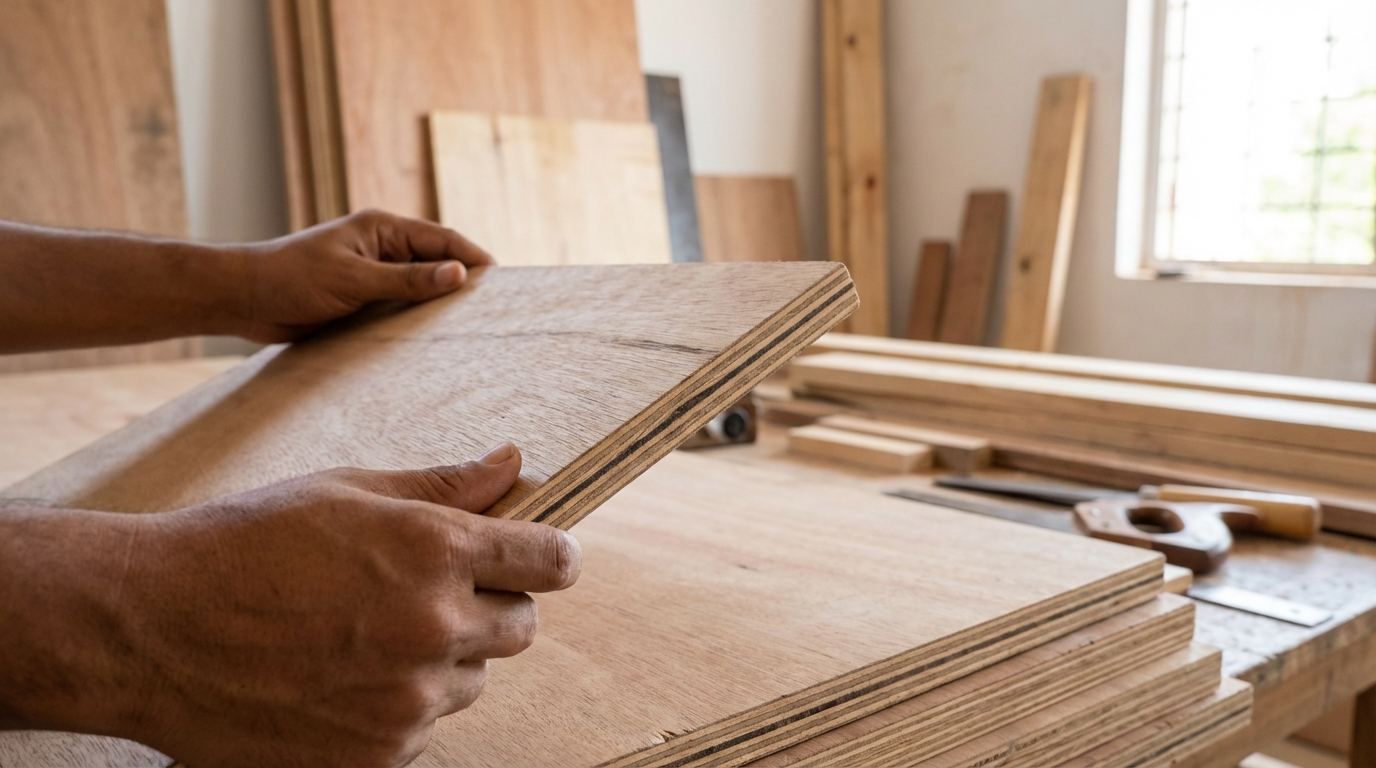
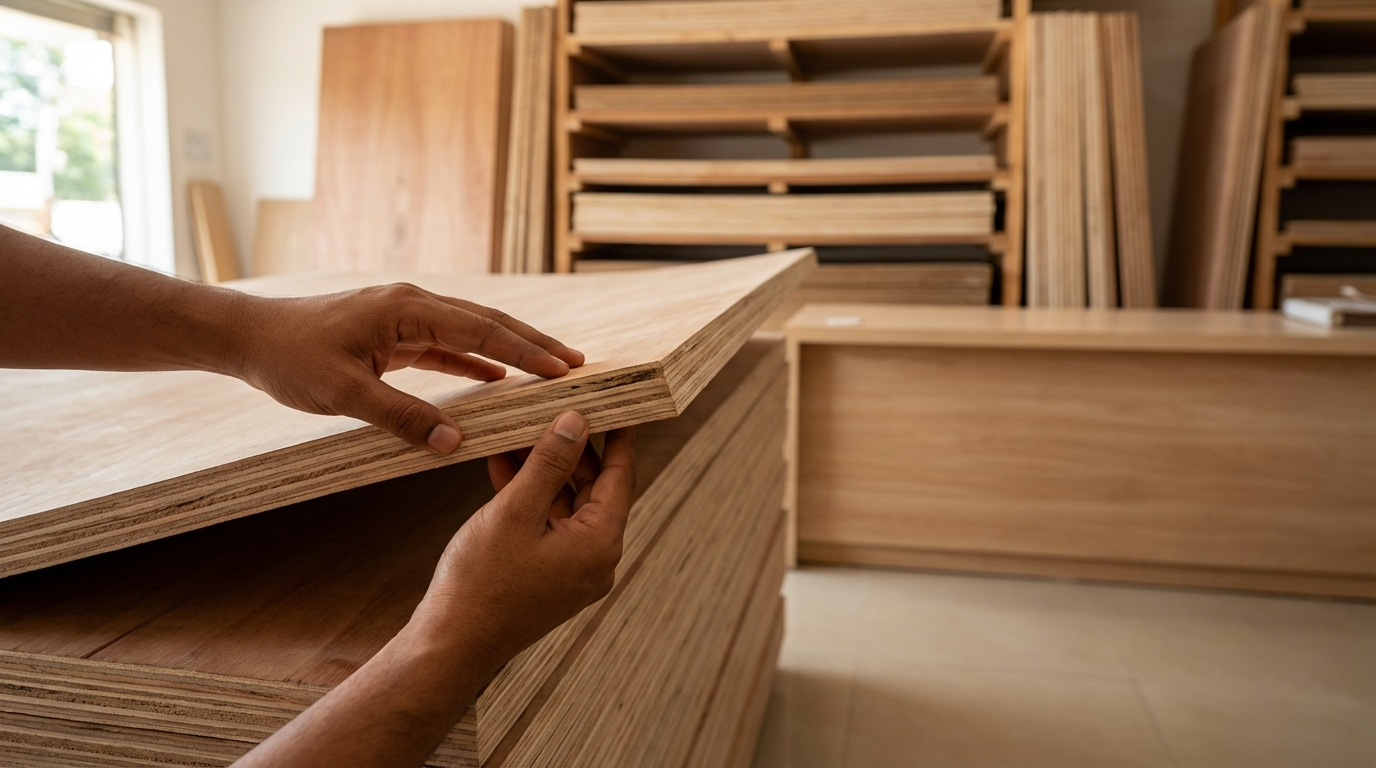
Blockboard vs plywood for doors: durability & sagging
Blockboard vs plywood for doors: durability & sagging with a clear decision table on grade, thickness, moisture performance, warranty and price factors. Made
Quick Decision Summary
For Indian door installations, choose blockboard over plywood when sagging resistance and screw-holding stability top your priorities.
If you're in a hurry: Blockboard edges out plywood for door durability in humid conditions due to its solid strip core that resists twisting and vertical droop better than layered veneers. Plywood shines in sheer bending strength for lighter spans but risks more warping if exposed to moisture during monsoon storage or site delays. Opt for 25-30mm thickness in both, prioritizing BWR/BWP grades, and always verify core uniformity on-site. This combo cuts failure risks by focusing on real-use stability over lab specs.
- Choose blockboard if doors face heavy use, humidity swings, or need strong hinges/screws.
- Choose plywood if you prioritize lightweight strength, wider sheet availability, or laminated finishes.
- Avoid blockboard if budget-tight and low-moisture interior; skip thin plywood (<18mm) entirely for doors.
Two-Minute Comparison That Actually Helps
| Aspect | Blockboard | Plywood | Best for Doors? |
|---|---|---|---|
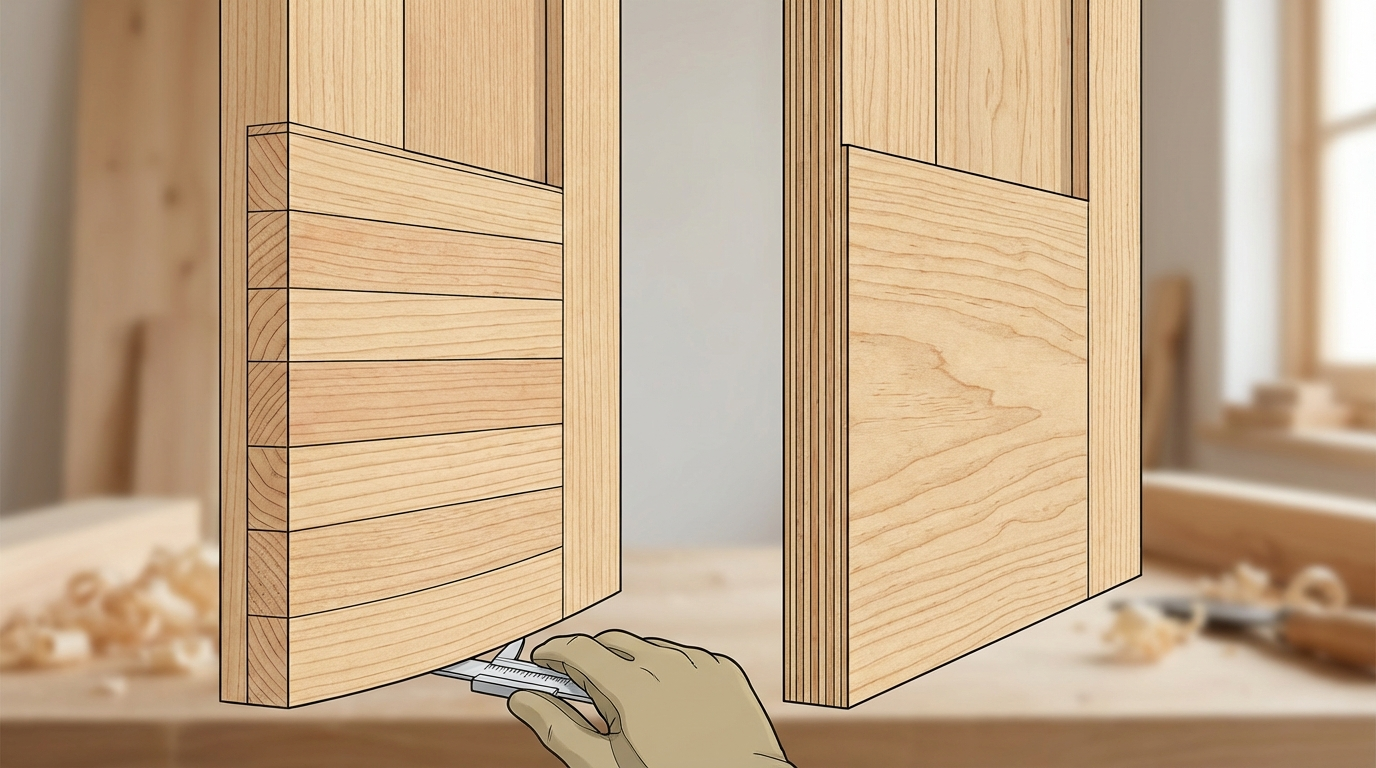
| Core Structure | Glued wood strips (battens) edge-to-edge | Cross-layered thin veneers | Blockboard: more uniform thickness, less twist |
| Sagging Resistance | High (solid core supports weight vertically) | Medium (depends on ply count/thickness) | Blockboard in heavy doors |
| Moisture Swelling | Medium (gaps in strips can trap water if poor glue) | Low in BWP grades; high in MR | Plywood BWP for wet zones |
| Screw Holding | Excellent (dense core) | Good but pulls out easier in thin plies | Blockboard for hinges/locks |
| Weight | Heavier | Lighter | Plywood for easier handling |
| Thickness Uniformity | Consistent, no telegraphing | Can vary, shows through paint | Blockboard for flush doors |
Use this table by matching your door's load (kids slamming? heavy panels?) and site conditions (coastal rain? indoor only?). Test a sample sheet's flatness by sighting along the edge.
Does blockboard really prevent door sagging better than plywood?
Yes, blockboard typically outperforms plywood in preventing vertical sagging on doors because its strip core distributes weight evenly without the layered flex of veneers. In Indian homes, where doors hang for years under hinge stress, this stability matters during monsoons when plywood might bow if stored flat on-site. However, only well-glued blockboard with tight strips delivers; cheap versions gap and fail faster. Next step: knock on a sample—solid thud means dense core; hollow echo signals poor quality. Pair with 3-4 heavy-duty hinges spaced 20cm from top/bottom for zero sag over time.
What Blockboard and Plywood Actually Mean
Blockboard consists of softwood strips (like pine or poplar battens) glued side-by-side into a slab, then sandwiched between face and back veneers. It's engineered for stability, mimicking solid wood's screw grip without full warping risks. Plywood layers thin wood veneers at right angles for balanced strength, ideal for spanning but sensitive to edge moisture.
Where people get confused: Blockboard isn't "solid wood" (it's assembled); plywood isn't always waterproof (MR grade fails in kitchens); both need frames for large doors; thickness under 25mm sags regardless; veneers delam from site exposure, not just use.
India-Specific Reality Check
In monsoon-heavy India, doors endure 80-90% humidity spikes, site stacking delays, and carpenter shortcuts like exposed cuts. Blockboard's core shrugs off minor wetting better if sealed, but plywood veneers bubble if MR grade sits in godown rain. Coastal areas amplify this—salt air corrodes hinges faster on heavier blockboard. Workmanship reality: uncalibrated sheets cause misalignment; always level-check post-install.
Price Range and Cost Drivers (India)
Expect blockboard at Rs 70-140 per sqft for 25-30mm door grades, while plywood runs Rs 60-130 in similar specs—varies by city (Mumbai higher than Lucknow), core wood (hardwood pricier), face veneer quality, and calibration flatness. Thicker sheets or BWR/BWP grades add 20-30%.
How to ask for a quote: Specify "25mm BWR blockboard/plywood for flush door, calibrated, no gaps, monsoon-ready glue." Factor 10-15% wastage for cuts/edges. Budget example: 6x7ft double door needs ~100 sqft, so Rs 7,000-14,000 material alone, plus frame/hardware.
Which is cheaper for doors: blockboard or plywood?
Blockboard often costs 10-20% more upfront due to strip core labor, but plywood edges lower on thinner/light grades—final call depends on thickness and finish needs. In tier-2 cities, both overlap at Rs 80-110/sqft for door-spec 25mm BWR. Regional logistics bump coastal prices 15%. Practical next step: Get quotes listing core type, glue line count, and flatness tolerance. Avoid "commercial" grades; insist on samples to compare heft and sound.
How to Choose in 5 Steps
- Assess exposure: Coastal/monsoon? Mandate BWP/IS710-level glue; interiors ok with BWR.
- Pick thickness: 25-35mm min; test flatness by rolling a straightedge.
- Core check: Blockboard: no strip gaps; plywood: even plies, no knots.
- Veneer/grade: Uniform face, no patches; match door finish (veneer/lam).
- Site test: Screw into edge; cut sample for swelling after wet rag overnight.
Skipping step 3 leads to sagging post-monsoon—always do it.
Decision Framework: Blockboard or Plywood?
| Condition | Recommended Choice | What to Verify |
|---|---|---|
| High humidity/coastal | BWP Plywood | Glue line strength, edge sealing |
| Heavy use/kids/pets | Blockboard 30mm | Strip density, screw hold test |
| Tight budget/interior | BWR Plywood 25mm | Calibration, no core voids |
| High scratch risk | Blockboard + Laminate | Face veneer hardness |
| Fast delivery needed | Stock plywood | Batch consistency |
| Large spans (>2m wide) | Framed blockboard | Frame compatibility |
Trade-offs and Limitations
Blockboard: Superior stability but heavier (tougher for carpenters), pricier core, potential strip separation if glue weak. Plywood: Lighter/easier cut but veneer telegraphing under paint, weaker screw zones, delams faster unsealed. Neither is "sag-proof" without proper hinges/frames; both swell 5-10% in poor storage.
Can plywood doors sag as much as blockboard?
No, well-made plywood rarely sags vertically like poor blockboard, thanks to cross-ply balance—but thin or MR grades warp sideways in humidity. Blockboard sags if strips unevenly dry. Nuance: Door sagging stems 70% from hinge overload, not material alone. Check: Measure door drop yearly with level; reinforce with extra hinge if >2mm. Next: Upgrade to ball-bearing hinges rated for 80kg+.
Common Buyer Mistakes and How to Avoid Them
- Mistake: Buying MR grade for doors. Why: Delams in first monsoon. Fix: Insist BWR min; wet-test sample.
- Mistake: Ignoring thickness. Why: <25mm bows under knobs. Fix: Spec 28-32mm; weigh samples.
- Mistake: No core inspection. Why: Gaps cause uneven sag. Fix: Shine light through edges.
- Mistake: Skipping calibration. Why: Uneven sheets misalign frames. Fix: Roll marble across face.
- Mistake: Cheap hinges. Why: Material fine, hardware fails first. Fix: 100mm SS ball-bearing.
- Mistake: Poor edge sealing. Why: Water enters cuts. Fix: Laminate or putty all edges pre-install.
- Mistake: Site stacking flat. Why: Pressure warps. Fix: Vertical racks only.
- Mistake: No frame reinforcement. Why: Doors twist solo. Fix: Timber frame every 40cm.
Failure Modes and Fixes
- Symptom: Vertical droop. Cause: Weak core/hinges. Prevent: 30mm+ thick, 4 hinges. If happening: Add pivot hinge bottom.
- Symptom: Edge swelling. Cause: Unsealed cuts. Prevent: Prime edges day 1. If happening: Plane and reseal.
- Symptom: Veneer bubbling. Cause: Moisture trap. Prevent: BWP grade. If happening: Sand/scrape, repaint.
- Symptom: Screw pull-out. Cause: Thin ply. Prevent: Blockboard. If happening: Plug and redrill.
- Symptom: Cracking paint. Cause: Core movement. Prevent: Calibrated sheet. If happening: Flexible primer.
- Symptom: Misalignment. Cause: Uneven thickness. Fix: Shim hinges.
Quality Checks You Can Do Without Lab Tests
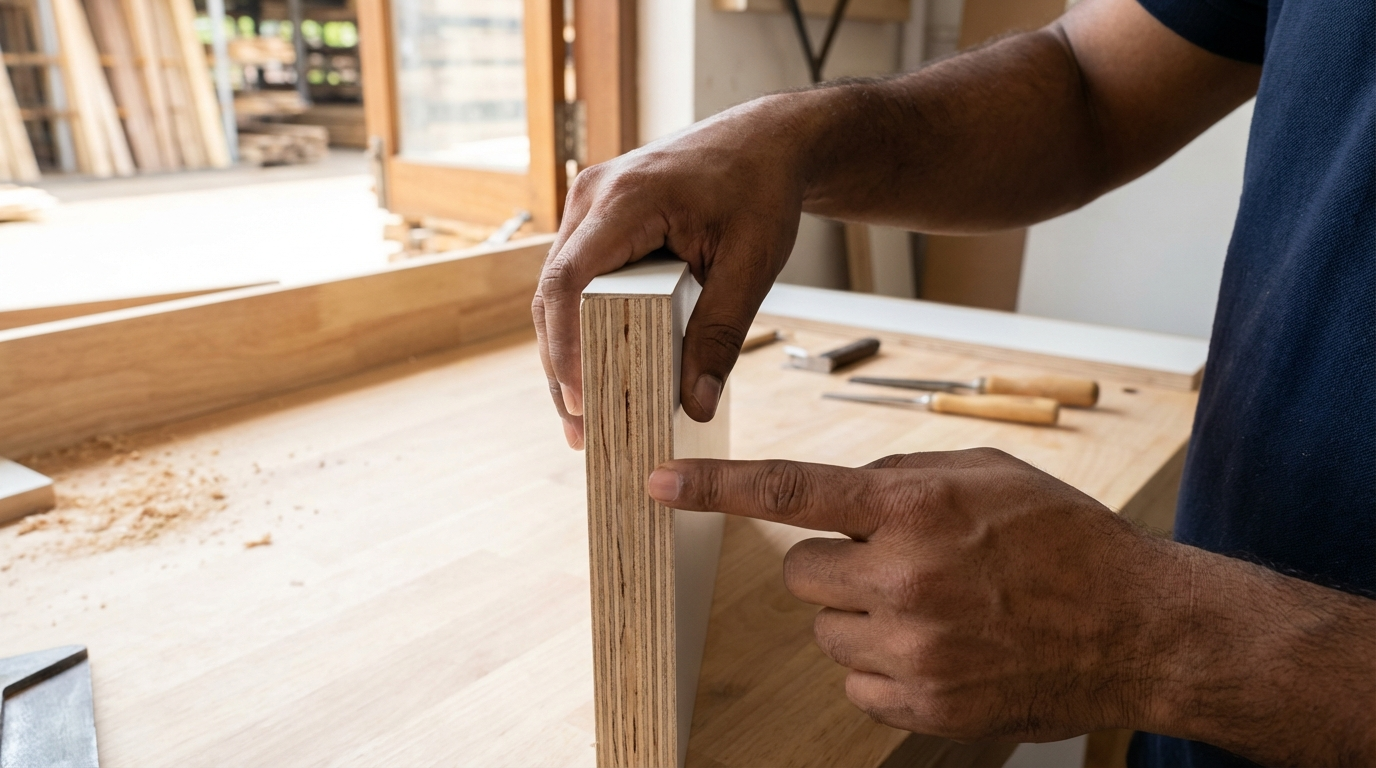
Before buying: Tap center (solid tone?); flex ends (no wave?); check edges for gaps/overlaps; screw test edge (holds 2cm deep?).
After cutting: No delam feathers; flat on sawhorses; wet edge 24hrs (minimal swell?).
Post-install: Level top/bottom; 2-3mm clearance all sides; torque hinges equal.
How do I check if blockboard core is good for doors?
Inspect edges for tight strip joints—no visible glue lines or separations wider than 0.5mm. Knock along length: uniform solid sound indicates dense, even fill. Flex gently: minimal bend means strong glue. In India, reject if stored horizontally (warps core). Next: Buy 1x2ft sample, screw hinges mockup, slam 50x—stable? Good to go. This catches 90% fakes onsite.
Tips for Homeowners
Do: Wipe spills instantly, use SS hardware, annual hinge lube. Don't: Hang wet towels, overload top shelves, ignore creaks.
Tips for Carpenters
Cut with fine blade, seal edges same day, pre-drill screws 5cm from edge, clamp during glue-up, handle vertical.
Tips for Architects
Spec "BWR blockboard 28mm calibrated ±0.5mm, BWP plywood alt," detail edge bands, wet-zone vents, hinge schedules.
Is 18mm enough thickness for plywood doors?
No, 18mm plywood risks sagging under standard door weight/hinges, especially in humid India—minimum 25mm for stability. Blockboard at 18mm fares better but still marginal for mains. Condition: Interiors ok if framed; exteriors never. Step: Calc span/load—add 40% safety. Verify by stacking weights center; deflection >1mm? Upsize.
FAQs
Why do doors sag more with plywood than blockboard?
Doors sag more on plywood due to veneer layers flexing under sustained hinge torque, unlike blockboard's rigid strip support. In Indian climates, plywood also absorbs moisture laterally, bowing edges first. Blockboard limits this to glue-line failures only. Trade-off: Plywood lighter for upstairs installs. Always verify: Hang sample overnight loaded; measure drop. Fixes include taller hinges and frame stiffeners for longevity beyond 10 years.
Can blockboard be used for bathroom doors?
Blockboard works for bathrooms if BWP grade with full edge sealing and ventilation gaps, as its core resists delam better than MR plywood. However, prolonged steam swells strips unless hardwood core. Common fail: Poor sealing leads to mold. Seal with epoxy paint, add SS pivots. For heavy steam, pair with PVC frame. Test: Steam sample 30min; no warp? Approved. This setup survives monsoons intact.
What's the ideal thickness for door blockboard?
25-32mm balances strength and weight for most Indian flush doors, preventing sag while easing handling. Thinner risks droop; thicker adds cost unnecessarily. Factors: Wider doors need +5mm, heavy hardware +2mm. Check uniformity with straightedge—no bows over 1mm. Carpenter tip: Plane edges post-cut for perfect frame fit. This thickness range cuts complaints by ensuring flat hangs year-round.
Does moisture affect blockboard and plywood differently in doors?
Moisture swells plywood veneers dimensionally across grain (up to 8%), causing wavy faces, while blockboard expands strips lengthwise (less visible). BWP grades mitigate both, but site exposure hits first. Prevent: Acrylic sealer on all cuts, vertical storage. If swollen: Dry 48hrs under fan, plane excess. India hack: Add silica packs in godown stacks for zero surprises.
Should I laminate blockboard or plywood doors?
Laminate both for scratch-proofing, but blockboard holds laminate edges tighter due to core density—ideal for high-traffic homes. Plywood needs thicker lam (1.5mm+) to hide ply lines. Prep: Sand 180-grit, prime voids. Durability boost: 5x over paint. Avoid cheap vinyl; it peels in humidity. Post-lam: 24hr cure before hanging.
How to fix a sagging door made of plywood?
Reverse hinges (swap top/bottom), add third hinge midway, or install turnbuckle brace inside. Root: Often overload, not material. For plywood, tighten frame screws. Tools: Level, screwdriver. Prevent future: Annual check, SS upgrades. This revives 80% doors without remake, saving costs.
Is blockboard stronger overall than plywood for doors?
Blockboard stronger in screw/shear for door hardware, plywood in bend/torsion for spans. Doors favor blockboard's stability. Verify: Impact test edge—blockboard dents less. Hybrid: Plywood panels on block frame. Matches most home needs perfectly.
Which grade to pick: BWR or BWP for door plywood?
BWR suffices for semi-exposed doors (boiling water resistant), BWP (boiling waterproof) for coastal/bath. BWP costs 25% more but halves swell risk. Test: Boil edge scrap 4hrs—no separation? Good. Spec clearly to avoid downgrades.
Disclaimer: This content is provided for general informational purposes based on industry practices and publicly available information. Product specifications, standards, prices, and availability may vary by manufacturer, region, and time. Readers should independently verify details with manufacturers, dealers, or qualified professionals before making purchase or construction decisions.Want Plywood Suggestions?
Share a few details and a Duro BOIL specialist will suggest suitable brands and connect you to responsive dealers.