Blockboard vs plywood for kitchen shutters: durability & sagging
Blockboard vs plywood for kitchen shutters: durability & sagging with a clear decision table on grade, thickness, moisture performance, warranty and price
Quick Decision Summary
Plywood (BWR grade, 18mm thick) usually outperforms blockboard for kitchen shutters in durability and anti-sagging, especially in humid Indian kitchens.
If you’re in a hurry: Kitchen shutters face daily moisture splashes, steam, and utensil weight, making sagging and swelling common failures. Plywood's cross-layered veneers provide uniform strength and better glue-line hold in monsoon-prone areas, reducing sag over 5+ years. Blockboard's strip-core excels in dry zones or budget builds but risks core gaps and delamination from humidity. Prioritize 18mm+ thickness regardless, with edge sealing and proper hinges. Check for calibration (flatness) on-site—uneven boards fail fastest. This choice saves rework costs long-term.
- Choose plywood if: High humidity, coastal area, heavy utensil loads, or long-term reliability needed.
- Choose blockboard if: Dry interior kitchen, tight budget, quick carpentry, or screwing into edges often.
- Avoid blockboard if: Direct water exposure or poor storage before install.
- Avoid thin plywood (<16mm) if: Wide shutter spans (>60cm) or heavy use.
What Blockboard and Plywood Actually Mean for Shutters
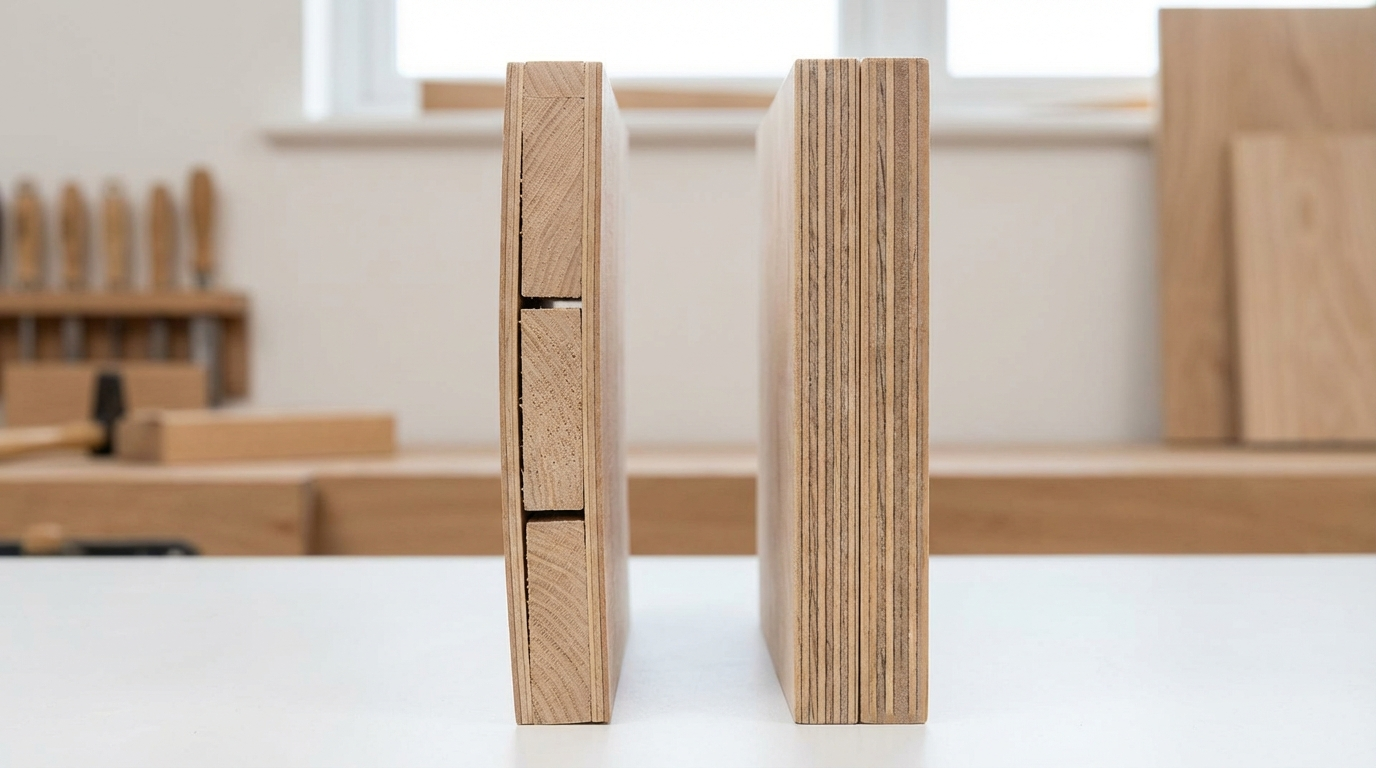
Blockboard consists of softwood strips (like pine or poplar) glued side-by-side into a core, then sandwiched between thin plywood face and back veneers. It's rigid for furniture frames and takes screws well without splitting.
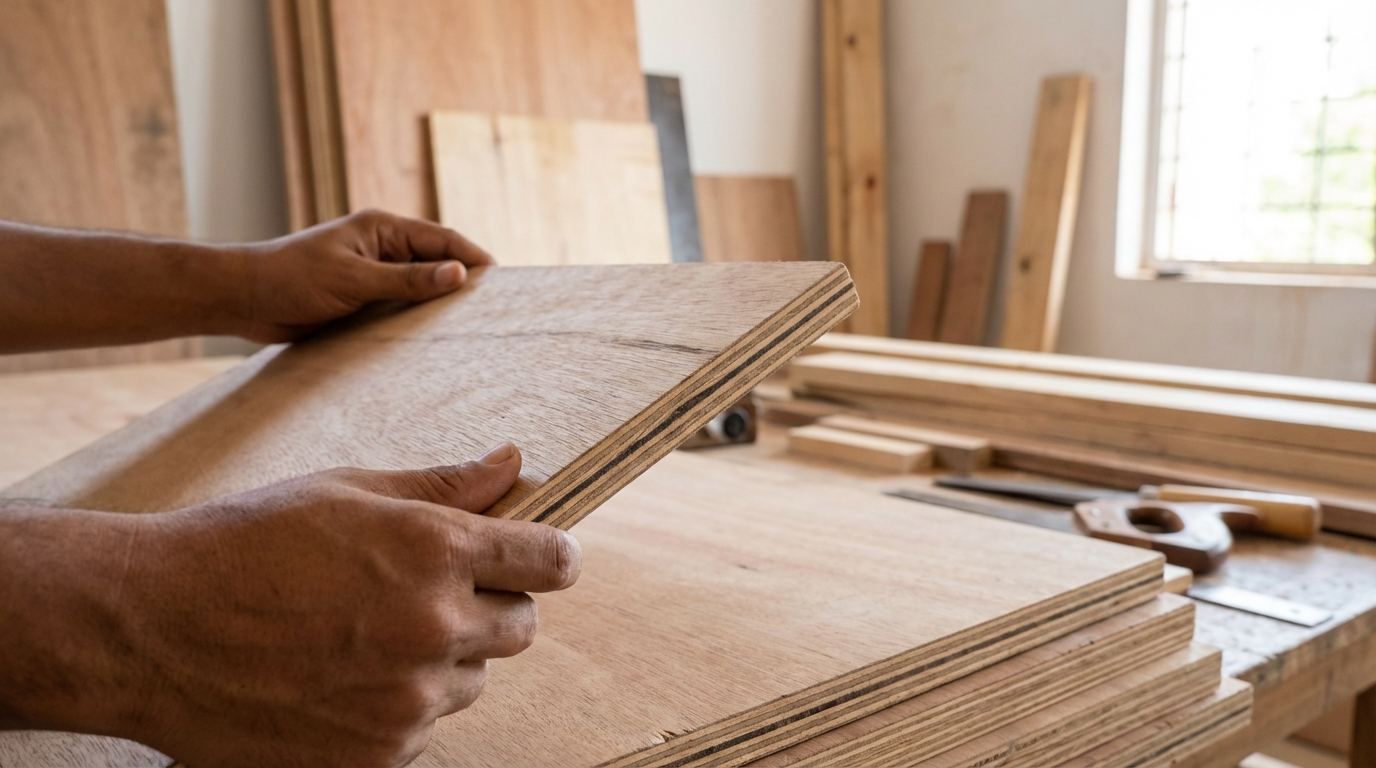
Plywood layers thin wood veneers at right angles (cross-graining) with adhesives between each, creating a balanced sheet strong in all directions. Grades like MR (moisture-resistant), BWR (boiling water-resistant), or BWP (boiling water-proof) dictate glue quality for wet areas.
Where people get confused:
- Thinking blockboard is "stronger" overall—it's stiff but prone to twisting if core strips warp.
- Assuming all plywood sags easily—only thin, low-grade MR does; calibrated BWR resists better.
- Believing blockboard is waterproof—its core absorbs moisture faster than plywood layers.
- Mixing up "commercial" plywood with furniture-grade—kitchen needs BWR+.
- Overlooking span: both sag if too thin for shutter width/weight.
- Confusing blockboard with particleboard—blockboard has full-length strips, not chips.
India-Specific Reality Check for Kitchen Shutters
Indian kitchens battle monsoon humidity (80%+ RH), cooking steam, and occasional spills, accelerating board swelling by 10-20% in coastal cities like Mumbai or Chennai. Blockboard cores often gap after 2 monsoons if unsealed, while plywood's layers flex without cracking.
Storage matters: open godowns mean warped deliveries. Contractor workflows favor blockboard for faster sourcing/cheaper cuts, but rework from sagging hits 30% in humid sites. Coastal salt air corrodes hinges faster on swollen shutters, worsening alignment.
Does blockboard sag less than plywood in kitchen cabinets?
Blockboard resists initial sag better in dry conditions due to its solid strip core, but plywood holds up longer under load in humid kitchens because cross-grains distribute weight evenly. Thin blockboard (<18mm) sags quickest from core compression. Test by pressing center: deflection over 2mm signals risk. For 60cm spans with utensils, spec 18mm BWR plywood—seal edges with putty for zero sag over years. If dry zone, blockboard works but verify no core voids.
Is plywood or blockboard better for modular kitchens?
Plywood suits modular setups better for precise CNC cuts and moisture resistance, minimizing factory returns from swelling. Blockboard fits budget modulars but needs thicker profiles to match stability. Check supplier calibration tolerance (<0.5mm) for flush assembly. In humid India, plywood reduces callbacks by matching expansion rates. Next: Ask carpenter for glue-line count (5+ for quality plywood).
Two-Minute Comparison That Actually Helps
| Factor | Blockboard | Plywood (BWR Grade) |
|---|---|---|
| Durability in Humidity | Fair; core swells, gaps form | Good; layers resist delam |
| Sagging Resistance (18mm) | Good short-term, weakens long | Excellent; uniform strength |
| Screw Holding | Superior in edges | Good with plugs if needed |
| Weight | Lighter | Slightly heavier |
| Cost per Sqft (18mm) | Lower typically | Higher but longer life |
Choose based on conditions: wet/daily steam → plywood; dry/light use → blockboard. Always 18mm min for shutters.
Price Range and Cost Drivers (India 18mm Thickness)
Blockboard: ₹70-110 per sqft; plywood BWR: ₹90-150 per sqft. Varies by city (metros 20% higher), core quality (hardwood strips add 15%), face veneer (teak adds 25%), calibration, and logistics. Thinner 12mm drops 30-40% but risks sagging.
How to ask for quote: "18mm BWR plywood/blockboard, calibrated, <0.3mm gaps, monsoon-grade glue, delivered flat."
Mini example: 10sqm shutters = ₹8,000-15,000 material; add 20% for laminate/edges.
How to Choose in 5 Steps
- Assess kitchen zone: High steam/spills? Plywood. Dry? Blockboard ok. Skip = swelling in 6 months.
- Spec thickness/grade: 18mm+ BWR plywood or equiv blockboard. Measure span: wider needs thicker.
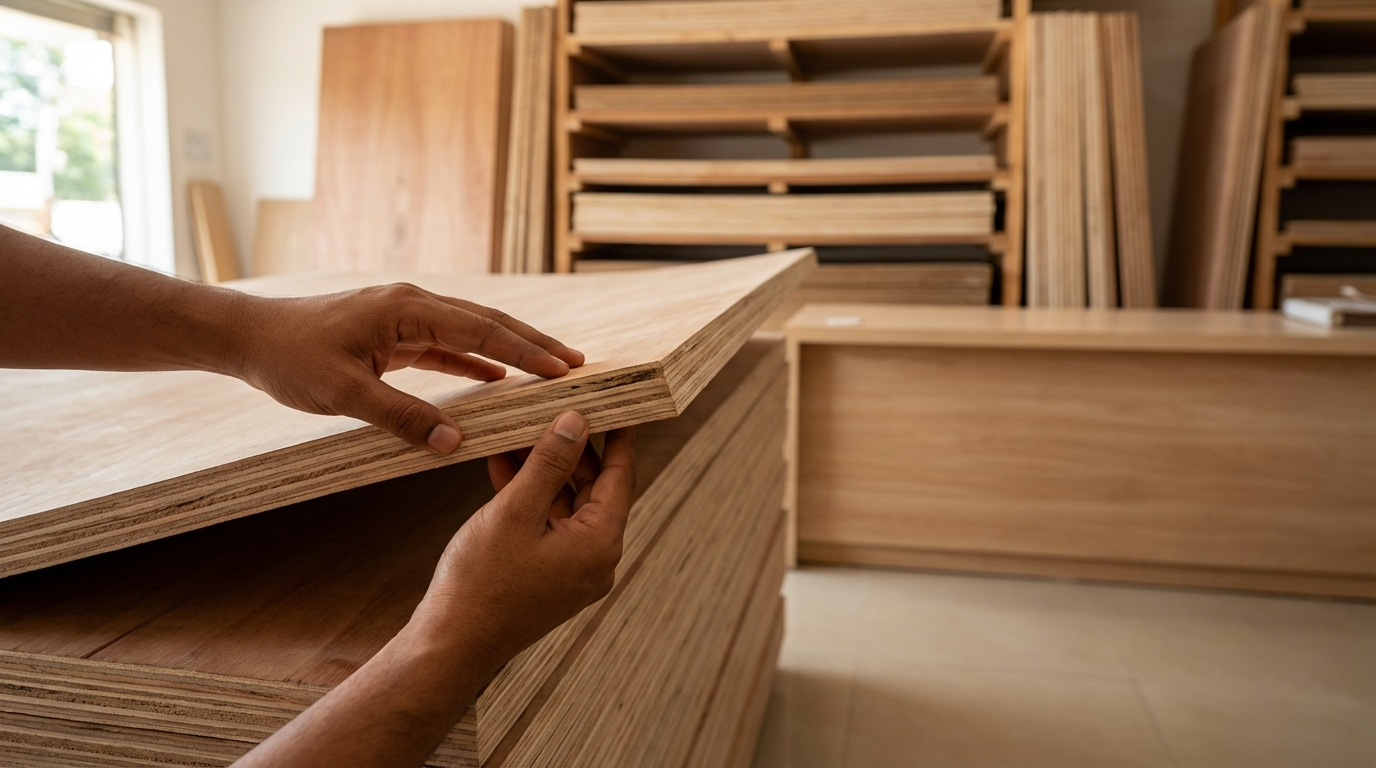
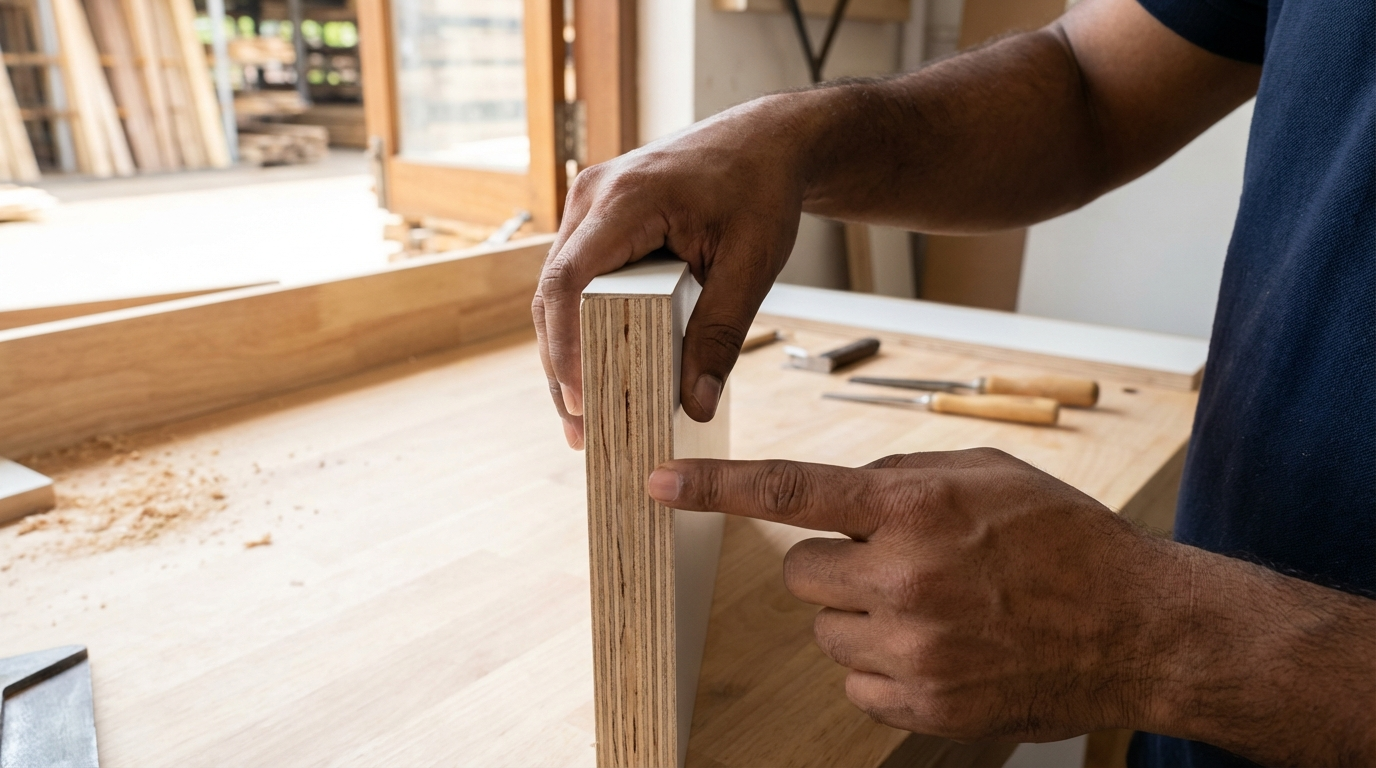
- Inspect on-site: Flatness test, tap for voids, check edges.
- Plan finishes: Laminate + edge bands mandatory for moisture block.
- Test load: Carpenter presses loaded sample 1 week pre-install.
Which thickness prevents sagging in kitchen shutters?
18mm minimum prevents noticeable sag for standard 50-70cm spans under utensil weight; 12mm risks deflection in humid areas. Thicker 21mm for heavy rural kitchens. Factors: hinge distance (closer = less sag), laminate weight adds stability. Verify by carpenter's deflection test: <1mm under 20kg. India tip: Account for 10% post-monsoon swell—overspec if coastal.
Can blockboard handle kitchen moisture?
Blockboard handles light moisture if sealed but fails in steam-heavy Indian kitchens via core absorption, unlike plywood's sealed layers. Use only interiors <70% RH. Prevention: 2-coat edge putty, vented cabinets. If splashes common, switch plywood—extends life 3x. Check: Wet sample edge overnight; no swell = ok short-term.
Trade-offs and Limitations
Blockboard: Cheaper, screw-friendly, but hygroscopic core limits wet use; cutting reveals strips needing extra sealing. Plywood: More stable/moisture-proof, but costlier, screw stripping if overdriven; thinner options warp under point loads. Both need pro finishing—DIY edges fail fast.
Common Buyer Mistakes and How to Avoid Them
- Mistake 1: Picking 12mm for cost savings. Why: Sags under plates. Fix: Min 18mm.
- Mistake 2: Ignoring grade (MR vs BWR). Why: Delams in steam. Fix: Demand BWR stamp.
- Mistake 3: No edge sealing. Why: Water wicks in. Fix: PVC bands + putty.
- Mistake 4: Poor storage. Why: Warps en route. Fix: Vertical stack, covered.
- Mistake 5: Weak hinges. Why: Misalignment. Fix: 4+ heavy-duty per door.
- Mistake 6: Skipping calibration check. Why: Gaps in cabinets. Fix: Ruler test all sheets.
- Mistake 7: Dry zone assuming wet ok. Why: Monsoon surprises. Fix: RH meter check.
- Mistake 8: No load test. Why: Hidden sag. Fix: Weight sample 48hrs.
- Mistake 9: Cheap laminate. Why: Peels fast. Fix: 1mm+ thick.
Failure Modes and Fixes
- Sagging center: Thin board/long span. Prevent: 18mm+, short supports. If happening: Reinforce underside.
- Swelling edges: Moisture ingress. Prevent: Seal all cuts. If: Sand, re-band.
- Delamination: Poor glue. Prevent: BWR grade. If: Clamp, epoxy reglue.
- Screw pull-out: Edge overload. Prevent: Plugs in plywood. If: Larger screws + filler.
- Core gaps (blockboard): Low quality. Prevent: Tap test pre-buy. If: Fill epoxy.
- Warping post-install: Uneven humidity. Prevent: AC vents. If: Shim hinges.
- Cracking veneer: Dry/fastening. Prevent: Pilot holes. If: Veneer patch.
Quality Checks You Can Do Without Lab Tests
Before buying: Ruler for flatness (<1mm bow), tap for hollows, sniff for chemical glue, flex test bend resistance.
After cutting: Even glue lines visible? Smooth core exposure? No fuzz.
Post-install: Level shutters, spray water on edges (no soak), load test 1 week.
Red flags: Rough faces, visible gaps, heavy weight (poor wood).
Decision Framework Table
| Condition | Recommended | Verify |
|---|---|---|
| Humid/coastal kitchen | Plywood BWR 18mm | Glue line count, edge seal |
| Dry interior, budget tight | Blockboard 18mm | No core voids, calibration |
| Heavy utensil loads | Plywood 21mm | Deflection <1mm test |
| Wide spans (>70cm) | Thicker both | Reinforce mid |
| Fast delivery needed | Blockboard | Local stock check |
| High scratch risk | Plywood + laminate | Face veneer quality |
How much weight can kitchen shutters hold before sagging?
18mm boards hold 15-25kg uniform load over 60cm without visible sag if quality; drops 50% if humid/swollen. Plywood distributes better than blockboard. Test: Stack weights gradually, measure drop. India fix: Add shelf supports every 40cm, use soft-close hinges to ease stress. Exceed = cracks; monitor first monsoon.
Blockboard vs plywood: which for flush kitchen doors?
Plywood for flush doors—smoother finish, less telegraphing of core. Blockboard ok if veneered well but risks unevenness post-humidity. Spec calibrated sheets. Carpenter tip: Sand both faces pre-laminate. Long-term: Plywood fewer touch-ups.
Tips for Homeowners: Durability Do's and Don'ts
- Do: Wipe spills instantly, use exhaust fans.
- Don't: Stack heavy pots long-term, skip sealing.
- Check alignment yearly; ventilate cabinets.
Carpenter Tips: Working with These Boards
- Cut with fine blade; pre-drill screws.
- Edge-band immediately; clamp laminates 24hrs.
- Handle vertically to avoid bows.
Architect Tips: Spec'ing for Kitchens
- Detail edge returns, specify BWR + thickness.
- Wet-zone: Plywood only, vent details.
- QC: Flatness tolerance in drawings.
FAQs
Why do kitchen shutters sag over time?
Sagging stems from thin boards under repeated utensil weight, combined with humidity softening glue lines. In India, monsoons exacerbate via 10-15% expansion, especially blockboard cores compressing unevenly. Wide unsupported spans (>60cm) fail first. Solution: 18mm+ BWR plywood with mid-braces and sealed edges prevents 90% cases. Homeowners: Load-test post-install; carpenters: Verify hinge load-sharing.
Is 18mm enough for kitchen shutter durability?
Yes, 18mm balances strength, weight, and cost for most Indian kitchens, holding 20kg+ without sag if BWR grade and calibrated. Thinner risks deflection in steam; thicker for commercial. Factors: Laminate adds rigidity. Always check supplier batch flatness—variations cause early failure. Contractor: Test span-specific deflection before full order.
Blockboard or plywood for coastal kitchens?
Plywood BWR strongly preferred for coastal high-salt humidity, as blockboard cores delaminate faster from trapped moisture. Seal both, but plywood layers flex without gaps. Verify: Water-soak edge test pre-buy. Budget tip: Mix—plywood for lowers, blockboard uppers if drier.
How to prevent swelling in shutters?
Seal all edges/screws with silicone putty, choose BWR/BWP grades, and ensure cabinet ventilation. Avoid direct hose cleaning. In monsoons, dehumidifiers help. Post-install swell? Minor—sand and reseal. Long-term: Laminate choice matters; 1mm+ resists peels.
What's the lifespan of these boards in kitchens?
Quality plywood: 8-15 years with care; blockboard: 5-10 years in humid spots. Depends on usage, sealing, climate. India reality: Proper install doubles life. Track via annual checks—early fixes extend.
Can I use MR grade for kitchen shutters?
MR suits very dry zones but risks glue failure in steam-prone kitchens. Upgrade to BWR for safety. Check stamp; low-end MR mimics better grades visually. Cost bump worth rework avoidance.
Does lamination affect sagging?
Lamination adds minor stiffness but doesn't fix thin-board sag; it protects surfaces. Thick laminate (1mm) helps distribute loads. Apply post-calibration for flatness. Don't overload expecting it compensates.
Blockboard vs plywood weight difference?
Blockboard lighter by 10-15% at same thickness, easing install on tall cabinets. Plywood denser from layers. Both manageable; focus stability over weight unless overheads.
How to fix sagging shutters without replacement?
Reinforce underside with battens, adjust hinges up, shim frame. For swell-induced: Dry out, reseal. Severe: Replace panel. Prevention trumps—spec right initially.
Disclaimer: This content is provided for general informational purposes based on industry practices and publicly available information. Product specifications, standards, prices, and availability may vary by manufacturer, region, and time. Readers should independently verify details with manufacturers, dealers, or qualified professionals before making purchase or construction decisions.Want Plywood Suggestions?
Share a few details and a Duro BOIL specialist will suggest suitable brands and connect you to responsive dealers.