Blockboard vs plywood for wardrobes: durability & sagging
Blockboard vs plywood for wardrobes: durability & sagging with a clear decision table on grade, thickness, moisture performance, warranty and price factors.
Quick Decision Summary
Plywood outperforms blockboard for wardrobe shelves due to superior cross-grain strength and reduced sagging under typical loads.
If you're in a hurry: Opt for BWR or BWP grade plywood (18-25mm thick) for wardrobe shelves and heavy-duty sections to minimize sagging in humid Indian homes. Blockboard works for wardrobe sides or doors where loads are lighter, but pair it with edge banding and reinforcements. Prioritize calibrated sheets with tight glue lines over cheap MR grades. Test load-bearing by pressing firmly before buying—sagging signals poor core quality. Budget Rs 70-150/sqft (18mm) varying by city and grade; always verify flatness on-site.
- Choose plywood if: shelves hold 20+kg uniformly, high humidity, or long-term durability needed.
- Choose blockboard if: tight budget for panels/backs, low shelf loads, or carpenter prefers screw-holding.
- Avoid blockboard if: coastal/monsoon exposure or shelves span >1m without supports.
What Blockboard and Plywood Actually Mean for Wardrobes
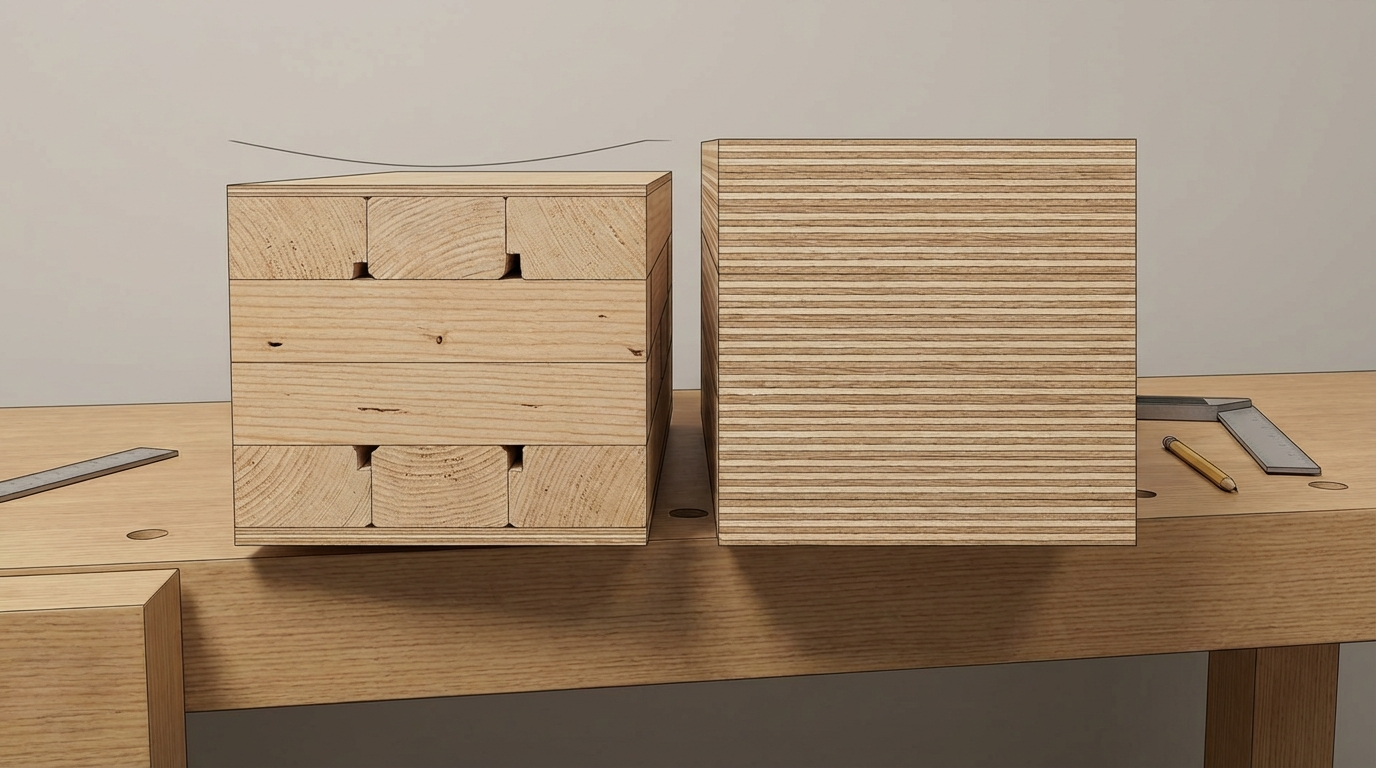
Blockboard consists of a core made from softwood strips (like pine or mango) glued edge-to-edge, then sandwiched between thin plywood face and back veneers. It's rigid for panels but relies on core strip alignment for strength.
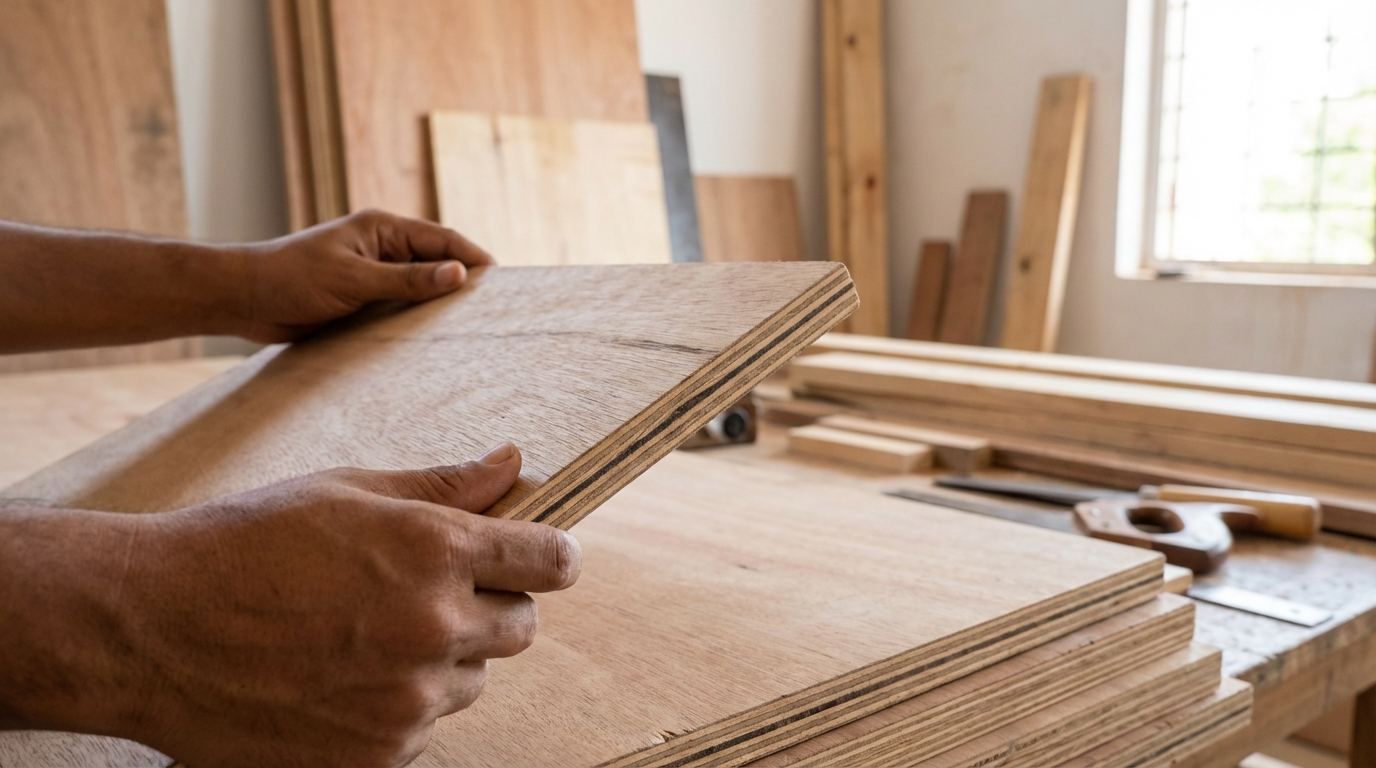
Plywood layers thin wood veneers in alternating grain directions, glued under pressure for balanced strength. This cross-grain setup distributes loads evenly, making it ideal for spanning shelves without warping.
Where people get confused:
- Thinking blockboard is "stronger" because thicker—ignores core gaps causing sagging.
- Assuming all plywood warps easily—not true for calibrated BWR/BWP grades.
- Believing MR grade suits wardrobes everywhere—fine for dry interiors, fails in humid zones.
- Mixing up blockboard with particleboard—weaker dust core, not strip-based.
- Overlooking calibration: uneven thickness leads to wavy installations.
India-Specific Reality Check
In monsoon-prone or coastal areas like Mumbai, Chennai, or Kerala, humidity spikes above 80% trigger core swelling in low-grade blockboard, leading to sagging shelves within 1-2 years. Plywood with BWR (boiling water resistant) glue holds up better as cross-layers resist delamination.
Storage mishaps are common: sheets dumped outdoors or stacked unevenly develop core rot. Contractor workflows favor blockboard for quick screw-fixing in carcasses, but wardrobes demand plywood shelves to avoid callbacks. Workmanship gaps—like skipping edge sealing—amplify failures in 40-50°C summer heat.
Which Sags Less in Wardrobes: Blockboard or Plywood?
Plywood sags less due to its cross-ply construction that evenly spreads shelf loads up to 25-30kg/meter. Blockboard cores can separate or bow if strips misalign, especially over 900mm spans. In practice, 19mm BWR plywood stays flat under books/clothes; blockboard needs mid-supports. Nuance: high-end calibrated blockboard performs closer but costs near plywood. Next step: load-test samples by stacking 20kg weights—watch for deflection over 2mm.
Best Thickness for Wardrobe Shelves to Prevent Sagging?
18-25mm thickness prevents sagging for most wardrobes; 19mm suits standard loads, 25mm for heavy storage. Below 18mm, both materials risk bending. Plywood at 19mm handles spans up to 1m; blockboard needs shorter spans. Consider wardrobe height—upper shelves get lighter use. Always check calibration (thickness variation <0.5mm) to avoid uneven fitting. Measure your span first, add 20% safety for Indian humidity.
Two-Minute Comparison That Actually Helps
| Factor | Blockboard | Plywood |
|---|---|---|
| Sagging Resistance (Shelf Load) | Fair; core strips limit spans to 800mm | Excellent; cross-grains span 1m+ |
| Durability (Humidity/Monsoon) | MR grade ok for dry; swells easily | BWR/BWP resists boiling water cycles |
| Screw-Holding | Superior in core for hinges | Good with pilot holes |
| Weight | Heavier per sheet | Lighter, easier handling |
| Finish Compatibility | Needs thick veneer/laminate | Smooth for thin laminates |
Choose based on conditions: plywood for load-bearing shelves, blockboard for budget panels.
Price Range and Cost Drivers (India)
Typically Rs 60-120/sqft for 18mm blockboard (cheaper core strips); Rs 80-160/sqft for plywood (higher glue/veneer quality). Thicker 25mm adds 20-40%. Cost drivers: grade (MR lowest, BWP highest), face veneer (0.6mm+ premium), calibration, city (metros 15-25% more), logistics/wastage (5-10%).
How to ask for a quote:
- Specify thickness, grade, calibrated sheets.
- Mention wardrobe use (shelves vs panels).
- Ask for recent batch flatness proof.
- Compare per sqft landed cost.
Mini budget: 8x6ft wardrobe (20sqft shelves @19mm plywood) ~Rs 2000-3500 material, varies locally.
How to Choose in 5 Steps
- Assess load/zone: Heavy shelves? Plywood. Dry interior? Blockboard ok.
- Pick grade/thickness: BWR plywood 19mm min; verify glue line count.
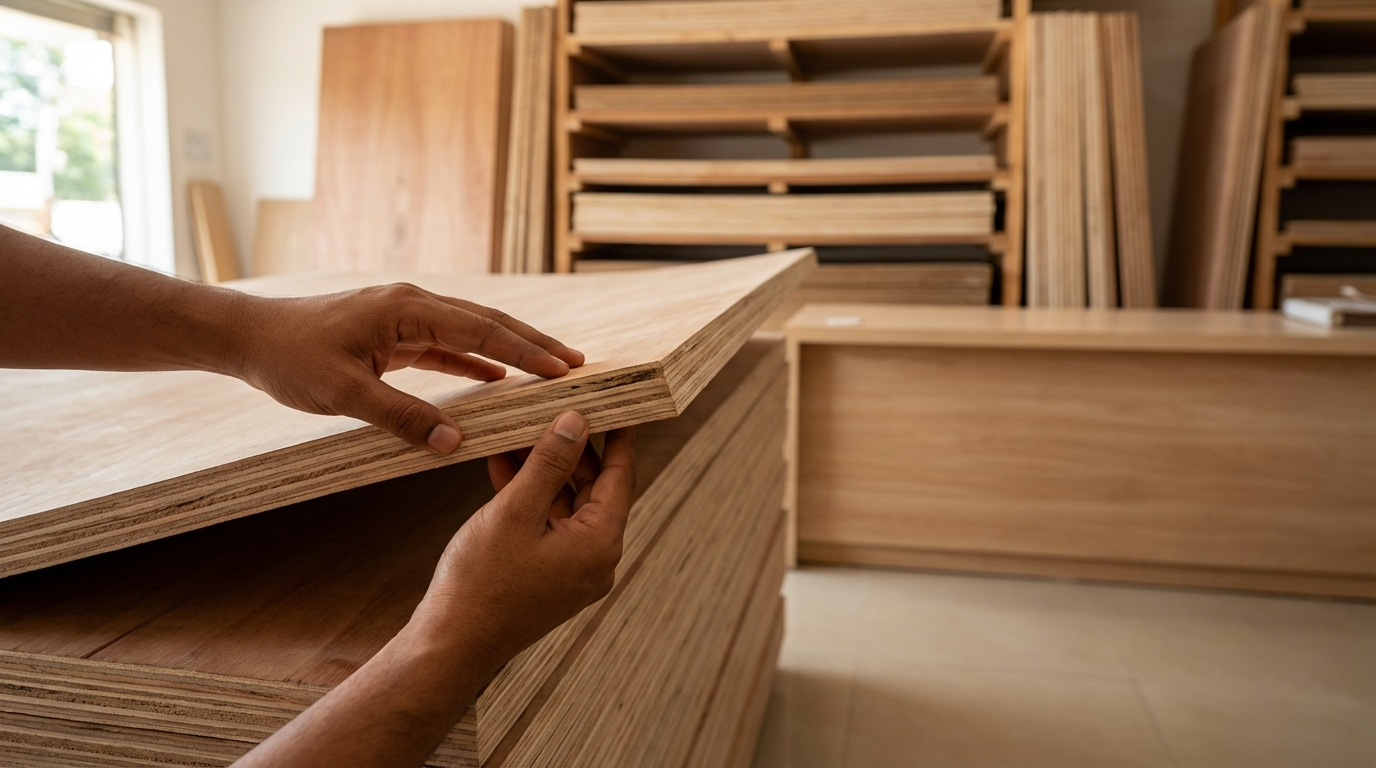
- Inspect sheet: Flat on floor? No gaps/core separation.
- Test screw/sag: Drill pilot, load center.
- Confirm sealing plan: Edge bands mandatory.
Skip steps? Expect wavy shelves post-monsoon.
Can Blockboard Handle Wardrobe Doors Without Sagging?
Yes, blockboard suits wardrobe doors (lighter loads) if 18mm+ with good core alignment. It resists twisting better than thin plywood. However, in humid zones, pair with moisture-resistant veneer and sealed edges. Doors sag less than shelves but check alignment during hanging. Next: Hang sample door, test swing with weights—adjust hinges if droop appears.
Tips for Homeowners: Durability Do's and Don'ts
- Do: Wipe spills immediately, use shelf liners for point loads.
- Don't: Overload beyond 20kg/shelf without supports.
- Seal edges yourself if carpenter skips.
Tips for Carpenters: Cutting and Fixing
- Cut with zero-clearance blade to avoid tear-out.
- Pre-drill for screws in plywood faces.
- Reinforce blockboard shelf ends with battens.
- Edge-band before assembly.
Tips for Architects: Spec Writing
- Specify "calibrated BWR plywood 19mm, span-tested".
- Detail mid-supports for blockboard.
- Call out edge sealing in wet zones.
Decision Framework: Blockboard or Plywood?
| Condition | Recommended | Verify |
|---|---|---|
| High humidity/coastal | Plywood BWR/BWP | Glue line strength, no swelling on tap |
| Heavy shelf loads (>20kg) | Plywood 19-25mm | Load test flatness |
| Tight budget, light use | Blockboard MR | Core strip tightness |
| High scratch risk | Plywood + laminate | Smooth calibrated face |
| Fast delivery needed | Blockboard | Stock availability |
| Long spans (>1m) | Plywood only | Cross-grain layers visible |
Trade-offs and Limitations
Blockboard: Cheaper but sags on wide shelves, heavier to maneuver. Plywood: Pricier, needs skilled fixing to avoid veneer chips. Both fail without sealing in humid India—expect 20-30% lifespan cut.
Common Buyer Mistakes and How to Avoid Them
- Mistake 1: Picking thinnest sheets—why: cuts cost short-term. Do: Min 18mm for shelves.
- Mistake 2: Ignoring calibration—uneven fit. Do: Stack sheets, check variance.
- Mistake 3: MR grade everywhere—monsoon fail. Do: BWR for interiors.
- Mistake 4: No edge sealing—swells fast. Do: Insist on PVC/wood bands.
- Mistake 5: Overloading sans supports. Do: Plan battens every 800mm.
- Mistake 6: Cheap faces—peels off. Do: 0.6mm+ veneer.
- Mistake 7: Outdoor storage pre-buy. Do: Inspect recent batches.
- Mistake 8: Skipping load test. Do: Press center firmly.
Failure Modes and Fixes
- Sagging shelves: Cause: poor core/span. Prevent: Plywood + supports. Fix: Add battens underneath.
- Swelling edges: Humidity ingress. Prevent: Seal all cuts. Fix: Trim, re-band.
- Veneer peeling: Glue failure. Prevent: BWR grade. Fix: Clamp, glue reapply.
- Screw pull-out: Face overload. Prevent: Pilot holes. Fix: Larger screws/epoxy.
- Core gaps: Manufacturing defect. Prevent: Tap test pre-buy. Fix: Fill epoxy.
- Warping panels: Uneven moisture. Prevent: Indoor storage. Fix: Plane flat.
Quality Checks You Can Do Without Lab Tests
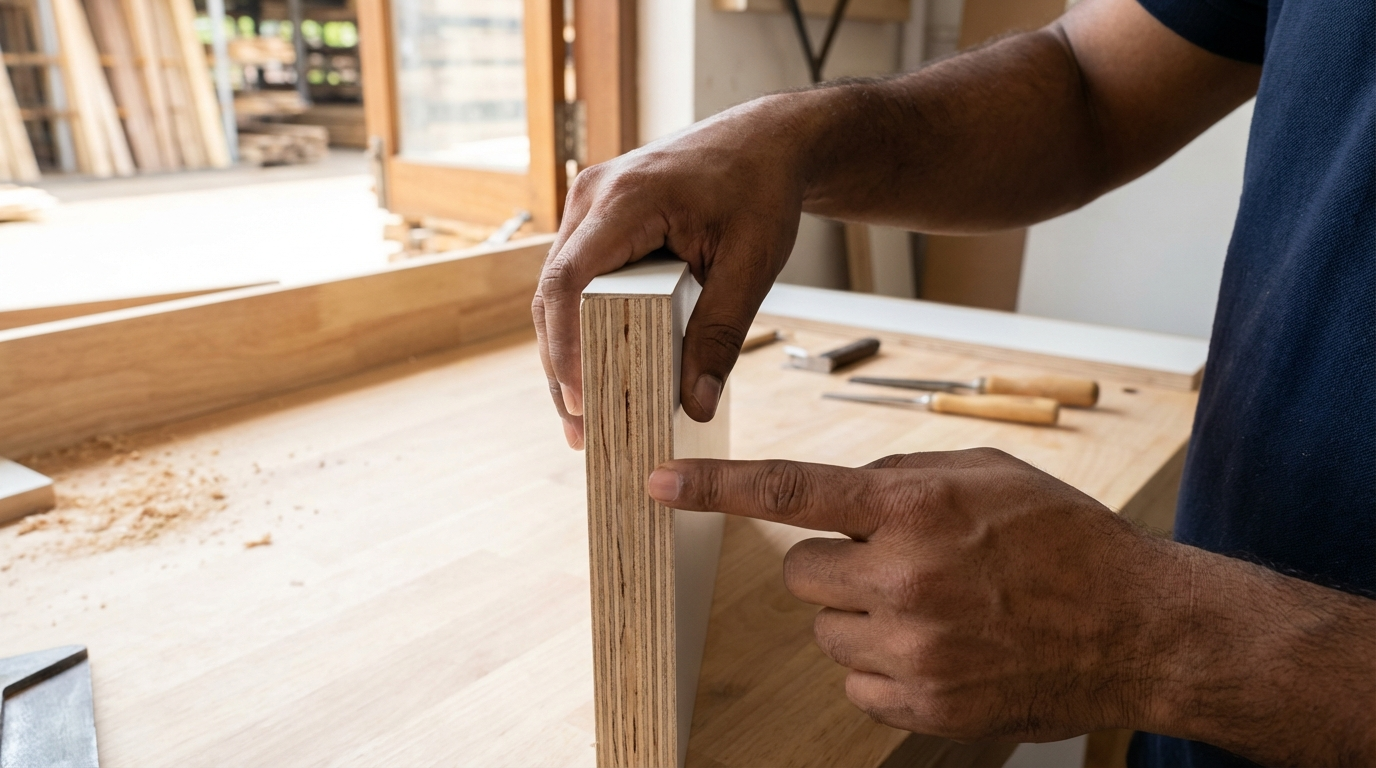
Before buying: Lay flat—roll coin underneath (no gap). Tap edges—solid thud, no hollow. Check faces for knots/cracks.
After cutting: Edges smooth? Glue lines tight? Measure thickness uniformity.
After install: Shelves level? Doors align? Clean with damp cloth test—no bubbling.
Is 18mm Enough for Heavy Wardrobe Storage?
18mm works for 15-20kg loads with supports; upgrade to 25mm for denser items. Plywood distributes better than blockboard at this thickness. In humid homes, reinforce ends. Test: Place weights, measure deflection after 24hrs. If >3mm, add props or thicken.
Blockboard or Plywood for Modular Wardrobes?
Plywood for modular shelves—consistent thickness aids factory cuts. Blockboard for frames if screw-heavy. Ensure calibration for repeatability. Check: Stack cut pieces—even? Reduces site complaints by 50%.
FAQs
Why does blockboard sag more than plywood in wardrobes?
Blockboard's strip core flexes under uniform loads as strips shift, unlike plywood's interlocking veneers that lock stresses. In Indian homes with piled clothes, this shows within months on wide shelves. Trade-off: blockboard grips screws better for assembly. Always span-test: unsupported 1m shelf should hold 15kg flat. If buying blockboard, limit to 700mm spans with center cleats for wardrobe reliability.
Which grade of plywood prevents sagging best?
BWR or BWP grades with multiple glue lines offer top sagging resistance via superior adhesives. MR suits dry closets only. Verify by pressing edges—no give. For wardrobes, specify in writing; carpenters often default low. This adds 20-30% cost but halves failures in humid seasons.
How to reinforce wardrobe shelves against sagging?
Add L-brackets or wooden battens under shelves every 600-800mm, especially blockboard. Plywood needs less. Seal edges post-cut. Homeowners: avoid water near base. This fixes 80% sags without redo. Check alignment yearly with spirit level.
Does laminate finish affect durability?
Laminate protects faces from scratches/moisture but doesn't stop core sagging. Use 1mm+ thick on calibrated bases. Avoid cheap films that bubble. For high-use wardrobes, plywood + laminate combo shines. Test adhesion by scratching corner lightly.
Blockboard vs plywood: termite resistance?
Both need preservatives; plywood's tight layers resist better if BWP. Blockboard cores invite borers if untreated. India tip: Ask for treated batches, store elevated. Inspect yearly for frass dust.
Best for kids' wardrobes: blockboard or plywood?
Plywood—handles rough play, less dent-prone with laminate. 19mm min. Blockboard ok if laminated but watch sagging from toys. Prioritize rounded edges, secure fixings.
How much weight can 19mm shelves hold?
20-30kg uniform per meter shelf (plywood); 15-25kg blockboard. Varies by quality/span. Test incrementally. Don't point-load; use mats. Monsoon: reduce 20% capacity.
Can I mix blockboard and plywood in one wardrobe?
Yes: blockboard carcass, plywood shelves. Ensures strength where needed. Match thickness/calibration for flush fit. Seal joints. Common in budget modulars—saves 15-20% without compromise.
What if wardrobe sags after 6 months?
Likely moisture/core issue. Diagnose: tap for hollows. Fix: reinforce underneath, dehumidify room. Prevention beats cure—choose right material upfront via checks.
Disclaimer: This content is provided for general informational purposes based on industry practices and publicly available information. Product specifications, standards, prices, and availability may vary by manufacturer, region, and time. Readers should independently verify details with manufacturers, dealers, or qualified professionals before making purchase or construction decisions.Want Plywood Suggestions?
Share a few details and a Duro BOIL specialist will suggest suitable brands and connect you to responsive dealers.