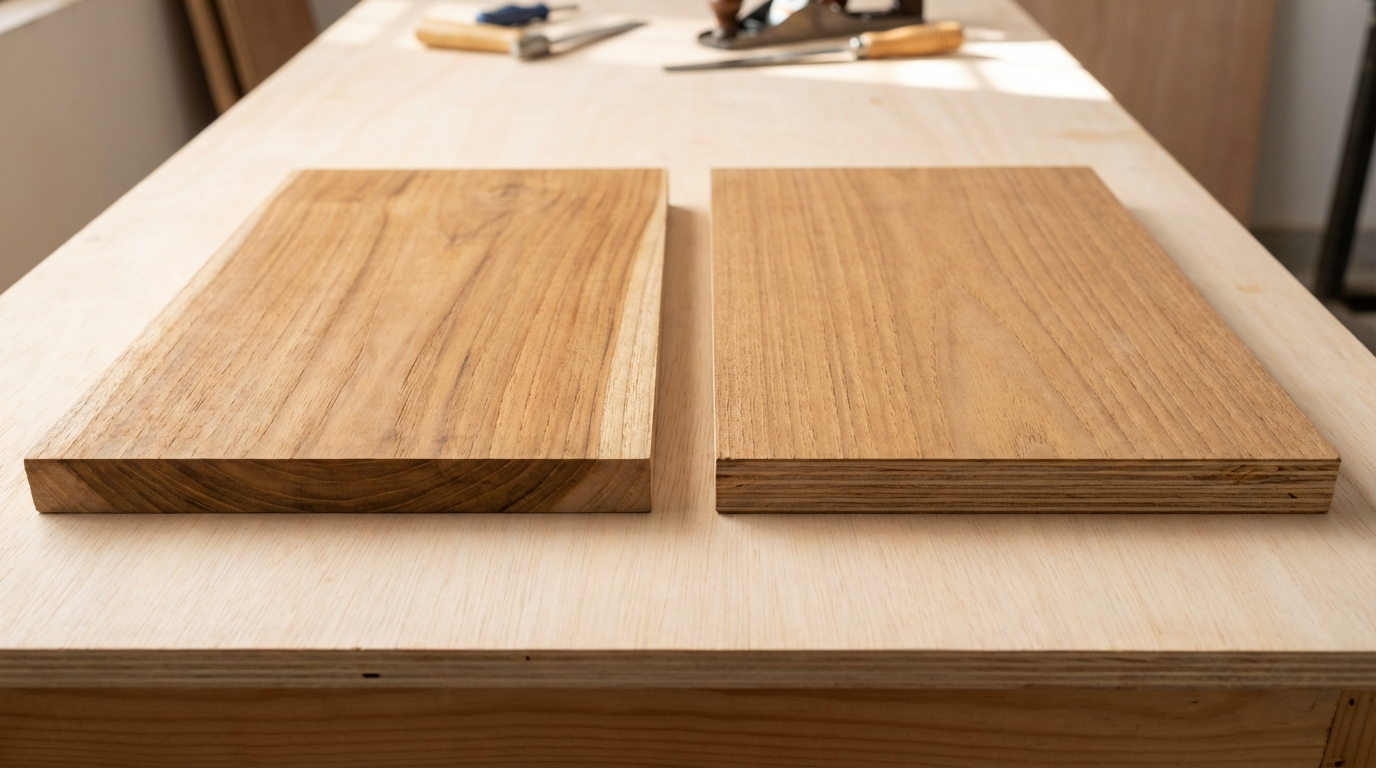
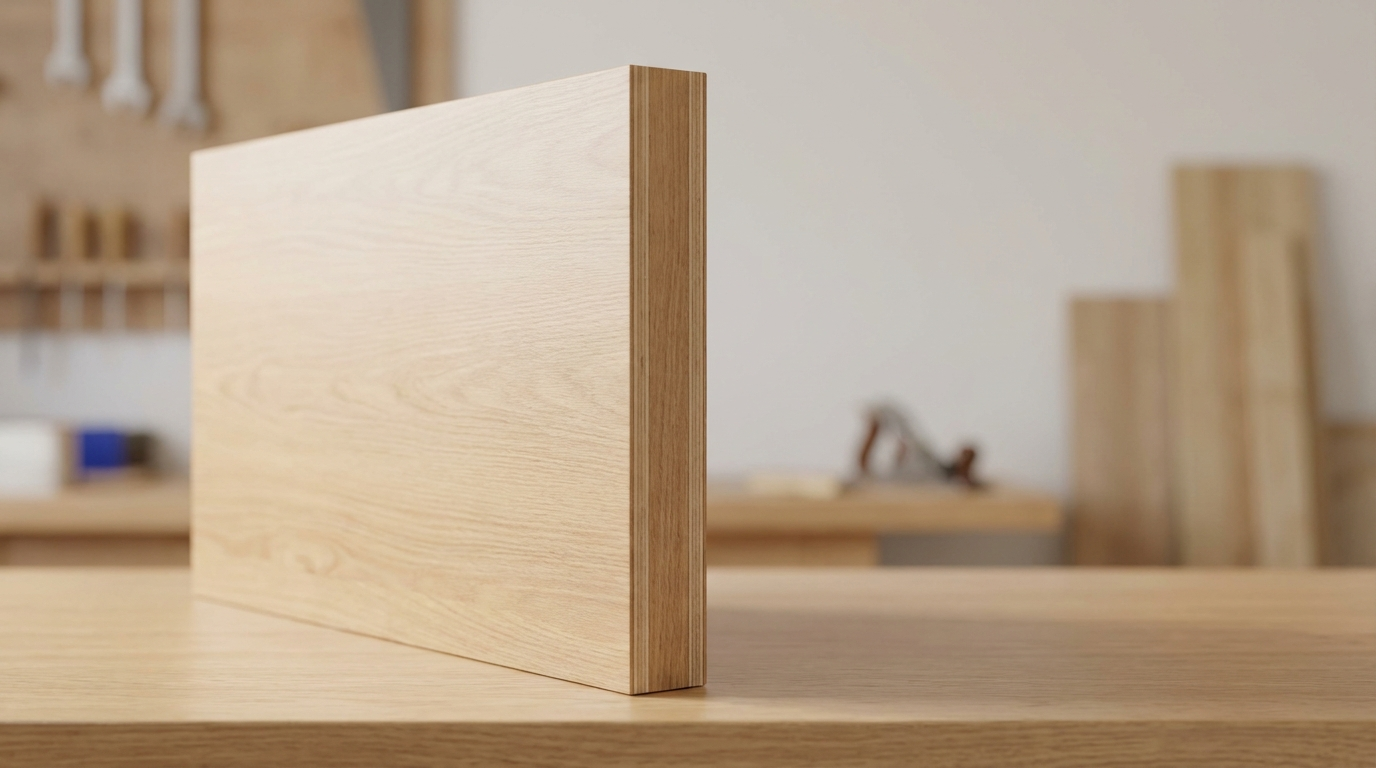
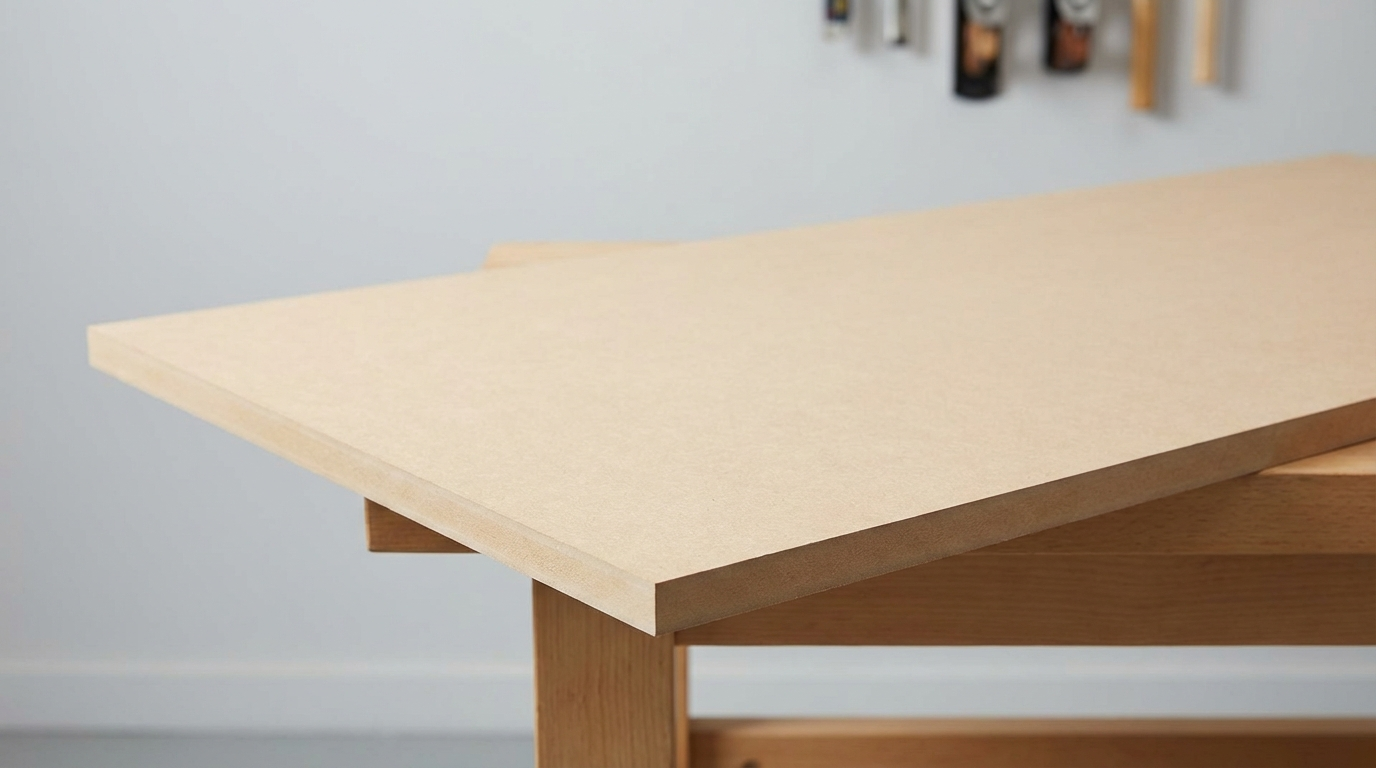
Century Prowud MDF Review: Comparison with Other Brands
Review of Century Ply’s Prowud MDF boards. Learn about their quality, finish, available grades, and how Century’s MDF compares with Greenpanel and Action Tesa.
Quick Decision Summary
Century Prowud MDF delivers high-density boards with solid moisture resistance for Indian interiors, matching Greenpanel and Action Tesa in most furniture uses.
If you're in a hurry: Opt for Century Prowud's DWR or HDHMR grades (IS-aligned) for kitchens and wardrobes in humid zones—they offer uniform density around 850 kg/m³, smooth finishes, and good screw-holding for modular setups. It edges out in nationwide availability but check local batches for calibration. Avoid standard interior grades in coastal areas; pair with edge sealing and laminate for longevity. Expect ₹45-90 per sq ft (18mm) varying by city and thickness—get quotes specifying grade, density, and scalping.
- Choose this if... you need consistent supply, high screw hold for cabinets, or pre-lam options in monsoon-prone regions.
- Avoid this if... budget is ultra-tight for dry zones or you require full exterior waterproofing (use marine plywood instead).
Note: This page is independent informational content and is not affiliated with any manufacturer.
If You’re Searching for Century Prowud MDF, Here’s What People Usually Mean
Queries for Century Prowud MDF typically point to their densified fiberboard lines like DIR (Interior Resistant, IS Grade II) or DWR (Water Resistant, IS Grade I), aimed at furniture, cabinets, and paneling. Users often seek these for smooth machining in wardrobes or modular kitchens, confusing them with fully waterproof boards. The real intent: balancing cost with humidity tolerance in Indian homes, where carpenters need easy cutting without chipping.
What Makes Century Prowud MDF Stand Out in Indian Markets?
Century Prowud focuses on high-density (850+ kg/m³) construction via scalper tech for flatter boards and better finish adhesion. In practice, this means less telegraphing of core gaps during lamination, ideal for high-end modulars. However, success hinges on site storage—unprotected stacks warp faster in 80%+ humidity. Next step: Ask suppliers for recent density samples and test screw withdrawal on scraps before bulk buy.
How to Compare Century Prowud-Type Options to Alternatives (Without Guesswork)
Compare by hands-on checks: tap for density uniformity (solid thud, no hollows), edge moisture test (wipe with damp cloth after 24 hours), and screw hold (3+ pulls without crumbling). All three—Century Prowud, Greenpanel, Action Tesa—offer HDHMR-like grades, but verify batch consistency via local dealer feedback.
What This Term/Material Actually Means
MDF (Medium Density Fiberboard) is engineered wood from wood fibers glued under heat/pressure; Century Prowud amps it to high-density (HD) with moisture-resistant variants for interiors. Plain or pre-lam sheets in 8x4 ft, thicknesses 5.5-18mm, for cabinets, doors, false ceilings.
Where people get confused:
- It's "waterproof" (no—resistant at best; needs sealing).
- HDHMR = plywood replacement (better for curves, but weaker in shear).
- All brands identical (density and glue lines vary by batch).
- Thinner = always cheaper per project (wastage rises in cutting).
- No termite risk (resistant, but untreated edges vulnerable).
India-Specific Reality Check
In monsoon-hit cities like Mumbai or Chennai, unacclimatized MDF swells 10-15% at edges if stored flat without cover. Coastal salt accelerates delam; always elevate stacks, use silica packs. Contractor workflows favor denser boards for faster CNC routing without burning—Prowud's scalping aids this, but poor workmanship (no edge banding) dooms any brand.
Does Century Prowud MDF Hold Up in Monsoon Humidity?
Its DWR/HDHMR grades resist up to 90% RH better than basic MDF, but only with proper sealing—unsealed edges swell visibly in 48 hours of damp exposure. Nuance: North India dry zones tolerate DIR fine; South needs DWR. Check: Expose sample edge to steam 10 mins, measure swell (<2mm ideal). Next: Mandate 2mm PVC edge tape on all exposed cuts.
Price Range and Cost Drivers (India)
Typically ₹40-55/sq ft for 11mm DIR, ₹55-90/sq ft for 18mm DWR/HDHMR (varies 20% by city: higher in metros due to logistics). Drivers: thickness (doubles beyond 12mm), grade (DWR +15-25%), pre-lam finish (+10%), calibration tolerance. South often 5-10% cheaper.
How to ask for a quote:
- Specify size/thickness/grade (e.g., 18mm DWR plain).
- Density min 850 kg/m³, scalped.
- Recent batch, ISI mark visible.
- Include transport to site.
Mini example: 20 sqm wardrobe (18mm) ~₹1,200-1,800 total boards, plus 15% wastage.
Two-Minute Comparison That Actually Helps
| Feature | Century Prowud | Greenpanel | Action Tesa |
|---|---|---|---|
| Moisture Grade | DWR IS1 / DIR IS2 | HDWR/HDHMR | HDHMR |
| Density (kg/m³) | 850-870 uniform | High, similar | High density focus |
| Best For | Nationwide modulars | Coastal humidity | Cost-competitive South |
| Availability | Strong dealer net | Good East/South | Regional strongholds |
| Finish Smoothness | Scalper tech edge | Smooth pre-lams | Consistent machining |
Choose based on: Wet zone? DWR all. Fast delivery? Century net. Budget? Check local Tesa.
How to Choose in 5 Steps
- Match exposure: Dry bedroom? DIR. Kitchen? DWR.
- Test density: Weigh sample (heavy = good).
- Check flatness: No waves on 1m edge.
- Verify acclimation: Site-condition 48hrs pre-cut.
- Seal everything: Edges first, or fail fast.
Skip? Swelling in 6 months, rework costs double.
Which MDF Grade for Kitchen Cabinets in India?
HDHMR/DWR (IS1) for undersink/slab areas—handles steam splashes if sealed. Nuance: Avoid below 11mm (sags under load). Practical: Test by loading scrap with 20kg cans; no deflection. Architect spec: Min 850 density, edge PVC mandatory.
Trade-offs and Limitations
Pros: Smooth for veneer/lam, curves easily, uniform paint. Cons: Lower screw hold than blockboard (needs inserts for hinges), swells unsealed in humidity, heavier transport costs. Not for load-bearing or direct rain.
Common Buyer Mistakes and How to Avoid Them
- Mistake 1: Buying cheapest interior grade for kitchen. Why: Swells fast. Do: Upgrade to DWR, seal edges.
- Mistake 2: No acclimation. Why: Site humidity mismatch warps. Do: Stack 48hrs covered.
- Mistake 3: Ignoring thickness for span. Why: Thin sags. Do: 18mm max 60cm unsupported.
- Mistake 4: Skipping edge banding. Why: Core absorbs fastest. Do: 2mm PVC all cuts.
- Mistake 5: Overlooking density variation. Why: Weak hold. Do: Tap test samples.
- Mistake 6: Modular without inserts. Why: Hinges pull out. Do: Plastic anchors in pilot holes.
- Mistake 7: Storing flat uncovered. Why: Monsoon warp. Do: Vertical racks.
- Mistake 8: No wastage buffer. Why: Curves waste 20%. Do: +15% order.
- Mistake 9: Painting direct without primer. Why: Peels. Do: MDF-specific primer.
Failure Modes and Fixes
- Symptom: Edge swelling. Cause: Unsealed moisture ingress. Prevent: Band day 1. Fix: Sand, re-band if <5mm.
- Symptom: Warping post-install. Cause: Uneven humidity. Prevent: Acclimate both sides. Fix: Heat gun flatten, shim hinges.
- Symptom: Screw pull-out. Cause: Low density glue. Prevent: Inserts. Fix: Larger screws + epoxy.
- Symptom: Laminate bubbling. Cause: Poor adhesion. Prevent: Clean/de-dust. Fix: Re-lam affected panels.
- Symptom: Chipping on cut. Cause: Dull blade. Prevent: Carbide zero-clearance. Fix: Fill + sand.
- Symptom: Sagging shelves. Cause: Thin span. Prevent: 18mm + ribs. Fix: Add brackets underneath.
- Symptom: Termite nibbles. Cause: Exposed core. Prevent: Seal + treatment. Fix: Local fumigation.
Quality Checks You Can Do Without Lab Tests
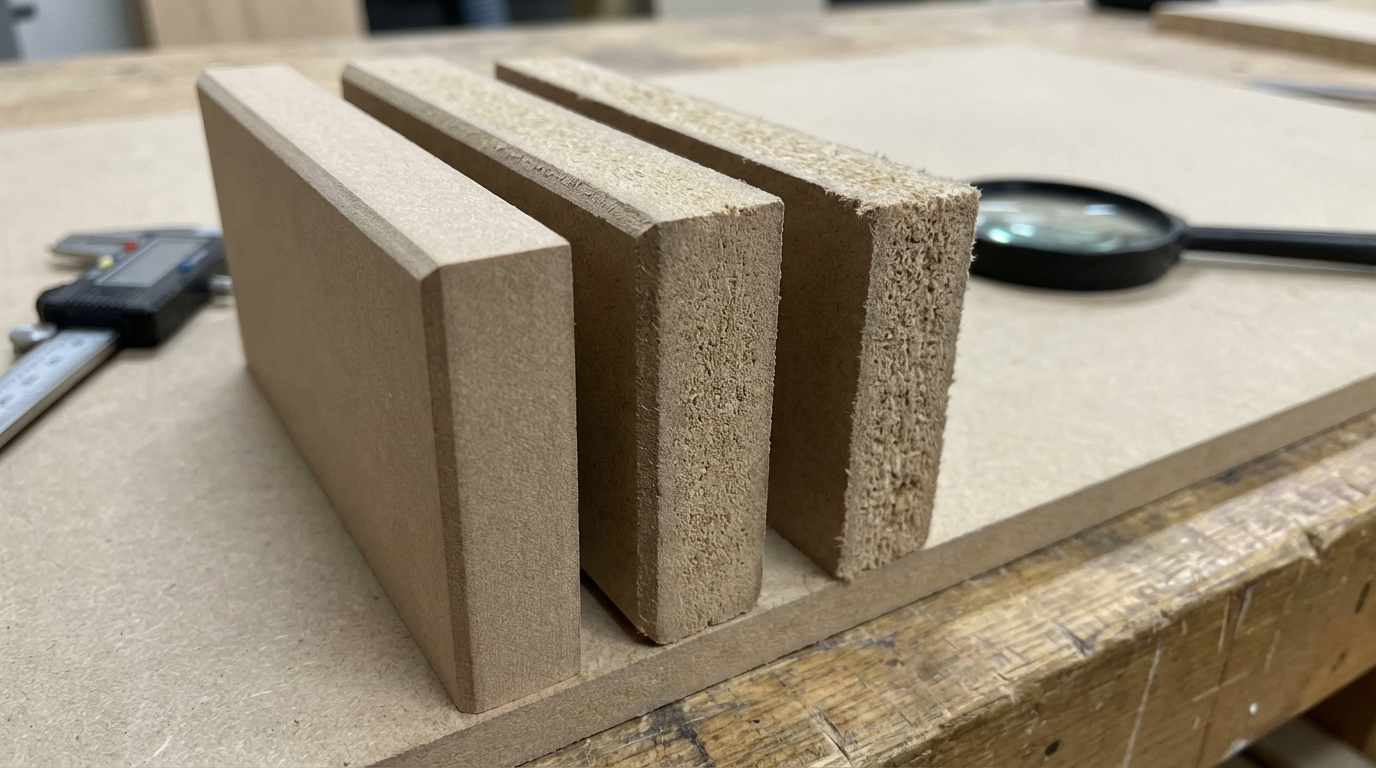
Before buying: Tap across surface (uniform tone), flex corner (no crack), smell (no chemical sting), check edges (scalped smooth).
After cutting: Screw test (holds 10 pulls), damp cloth 24hrs (no swell), sand (no gum).
Post-install: Load test drawers, check alignment monthly, wipe dry daily.
Red flags: Visible glue lumps, wavy face, lightweight sheets.
How to Test MDF Density at Home?
Weigh 30x30cm sample (target 7-8kg for HD); heavy uniform = good fiber mix. Nuance: Varies by grade—DWR denser. Next: Compare two batches; reject if 10% lighter. Carpenter tip: Heavier cuts cleaner.
Decision Framework: Match Your Project Needs
| Condition | Recommended Century Prowud Grade | What to Verify |
|---|---|---|
| Wet kitchen (steam) | DWR/HDHMR 18mm | Edge swell <2mm, screw hold |
| Coastal bedroom wardrobe | DIR 12-16mm | Flatness, acclimation response |
| Heavy-use modular cabinets | HD 18mm | Density tap, insert compatibility |
| Tight budget dry hall paneling | Basic DIR 11mm | Smoothness for paint |
| High scratch risk kids' room | Pre-lam HDHMR | Finish hardness scratch test |
| Fast delivery commercial | Any stocked | Dealer batch recency |
Homeowner Tips: Making Century Prowud MDF Last
Clean with microfiber damp (no soak), avoid direct water hits, ventilate cabinets. Don't: Drag heavy pots, use abrasives. Expect 8-12 years with care in humid homes.
Carpenter Tips: Working with Prowud MDF
Cut with fine blade (60 teeth), zero-clearance for clean edges, pilot holes 3mm for screws. Hinge zones: Reinforce with inserts. Handle: Gloves to avoid oils.
Architect Tips: Specifying Prowud-Style MDF
Detail edge returns 10mm, specify min density/scalping, wet-zone backups (alternate plywood). Finish: Lam over primer for UV hold.
Modular Maker Tips: Scaling with HD MDF
QC: Random density weighs, CNC test runs. Reduce returns: Pre-seal blanks, batch-code track.
FAQs
Is Century Prowud MDF termite proof?
Typically resistant due to fiber treatment, but not proof—edges need sealing and periodic checks in termite-prone India. In practice, pair with base risers and fumigation every 2 years for wardrobes. Unlike plywood, no live wood core attracts pests less, but verify supplier batch (ask for recent infestation-free stock). Homeowners report fewer issues vs basic particleboard when properly finished.
Century Prowud vs Greenpanel: Which for humid kitchens?
Both HDHMR-grade handle humidity similarly if sealed, but Century's dealer net aids faster supply. Trade-off: Greenpanel may suit East better. Check locally: Sample both for swell resistance. In Chennai trials, sealed Prowud holds flat longer under steam—seal mandatory regardless.
What thickness of Prowud MDF for wardrobe shutters?
16-18mm for rigidity without sag on 60cm doors; thinner 11mm ok for panels. Nuance: HD density cuts weight 10%. Verify: Load test scrap vertically 20kg. Carpenters favor 18mm for heavy handles in Indian villas.
Does Prowud MDF need special tools for cutting?
Standard CNC/table saw with carbide blade (high tooth count) works; scalping prevents tear-out. Avoid: Jigsaw for curves (chips). Prep: Tape cut lines, dust vacuum. Reduces rework 50% vs low-grade boards.
Can Century Prowud be used for exterior doors?
No—moisture grades aren't waterproof; swells in rain. Use for interiors only, or marine ply outside. Fix: In semi-covered porches, seal heavily + overhangs, but expect 2-3 year limit.
How much does 18mm Prowud MDF cost per sheet?
Ranges ₹1,800-3,200 per 8x4 sheet (₹50-85/sq ft), up 20% in North vs South. Drivers: Grade, transport. Quote tip: Specify DWR, get 3 bids including delivery.
Action Tesa vs Century Prowud: Price-quality balance?
Tesa often 10% cheaper regionally, similar HD performance; Century consistent nationwide. Choose Tesa South for savings if density matches. Verify: Side-by-side screw tests.
Why does MDF warp after painting?
Topcoat dries uneven, pulls fibers. Prevent: Seal both sides equal, acclimate. Prowud's density minimizes this—prime first, thin coats.
Best finish for Prowud MDF furniture?
PU laminate or veneer over primer—holds 10+ years. Matte for kitchens (hides fingerprints). Avoid: Direct paint on high-wear (scratches fast).
Is Prowud MDF eco-friendly?
Low E2 emissions, eucalyptus-based; recyclable scraps. In India, check for FSC-like claims locally. Better than plastics for carbon footprint in bulk.
Disclaimer: This content is provided for general informational purposes based on industry practices and publicly available information. Product specifications, standards, prices, and availability may vary by manufacturer, region, and time. Readers should independently verify details with manufacturers, dealers, or qualified professionals before making purchase or construction decisions.Want Plywood Suggestions?
Share a few details and a Duro BOIL specialist will suggest suitable brands and connect you to responsive dealers.