CenturyPly plywood: buyer checklist review (no hype)
A practical review of centuryply plywood: specs checklist, pros/cons, best-use cases, warranty checks, and what to verify at the dealer in India.
Quick Decision Summary
CenturyPly plywood provides graded options from MR to BWP for Indian homes, but prioritize on-site verification of calibration and core gaps for reliability.
If you're in a hurry: CenturyPly stands out for wide dealer networks and grade variety suited to dry interiors (MR) up to wet zones (BWP). Expect solid screw-holding and termite resistance in premium lines, though higher costs apply. Ideal for modular kitchens or wardrobes where availability matters. Key wins include uniform thickness for clean carpentry fits; drawbacks involve potential premium pricing without proportional gains in basic uses. Always knock-test density and check edges before loading.
- Choose this if: You need consistent supply in mid-to-large cities, balanced durability for kitchens/bathrooms, or borer-proofing in humid areas.
- Avoid this if: Budget caps at economy levels for dry zones only, or you skip dealer-side authenticity scans.
Note: This page is independent informational content and is not affiliated with any manufacturer.
If You’re Searching for CenturyPly, Here’s What People Usually Mean
Queries for CenturyPly often target their plywood grades like Sainik or Club Prime, seeking clarity on MR for bedrooms versus BWP for coastal homes. Users confuse "waterproof" claims, wanting real boiling-water logic (BWP survives 72-hour tests unlike BWR). Common intents include price per sheet, thickness for cabinets, or dealer authenticity amid fakes. Homeowners ask for kitchen suitability; contractors probe shuttering strength. This guide cuts through to verifiable specs.
Is CenturyPly plywood fully waterproof across all grades?
No, grades vary: MR handles light moisture like spills but delaminates under prolonged wet; BWR resists boiling briefly for semi-wet areas; BWP (marine) endures extended submersion, ideal for monsoons. Nuance lies in glue shear strength—premium BWP uses phenolic resins for glue-line integrity. Next step: Match to exposure—dry wardrobes get MR; bathrooms demand BWP. At dealer, ask for boil-test demo logic, not claims.
How to Compare CenturyPly-Type Options to Alternatives (Without Guesswork)
Focus on conditions: For dry interiors, any calibrated MR works; wet zones need BWP with tight cores. Verify uniformly via edge inspection (no voids), screw-hold test (drill sample), and density knock (solid thud). Alternatives shine in local pricing or faster stock—compare by asking dealers for same-grade samples side-by-side.
| Condition | Recommended Grade | Key Verification |
|---|---|---|
| Dry bedroom wardrobe | MR | Smooth face veneer, even calibration (±0.3mm) |
| Modular kitchen (spills) | BWR | Glue line uniformity, no edge swelling on tap |
| Bathroom vanity/coastal | BWP/Marine | Dense core knock, termite treatment stamp |
| Heavy shelf load | BWP 18mm+ | Screw pull-out resistance on sample |
| Tight budget interiors | MR calibrated | No core gaps, batch consistency |
| Monsoon storage risk | BWP sealed edges | Moisture content 8-12%, QR authenticity if available |
What This Term/Material Actually Means
CenturyPly plywood means multi-layer hardwood veneers bonded with urea-formaldehyde (MR/BWR) or phenolic (BWP) resins, graded per Indian standards: MR for moisture, BWR for boiling resistance, BWP/IS:710 for marine extremes. Sheets come calibrated (exact thickness) in 4-25mm, 8x4 ft standard.
Where people get confused:
- "Waterproof" applies only to BWP, not MR which swells in humidity.
- Face veneer grade: Premium has uniform grain; economy shows patches.
- Core quality: Poplar/eucalyptus mixes vary density.
- Calibration: Uncalibrated warps post-cut.
- Termite-proofing: Surface treatment only; verify full penetration.
- BWP vs shuttering: Shuttering needs film-faced BWP.
India-Specific Reality Check
In monsoon-heavy belts like Mumbai or Kerala, unseasoned plywood absorbs 20-30% humidity, causing core gaps to open. Coastal salt accelerates borer entry if untreated. Contractor workflows favor stackable uniform sheets; poor godown storage leads to 10-15% wastage from warping. Workmanship skips edge-sealing, amplifying failures—always acclimatize 48 hours pre-install.
Does CenturyPly hold up in Indian monsoons?
Typically yes for BWP grades with 8-12% moisture content, resisting delamination better than MR in humid storage. Conditions matter: unsealed edges fail faster in Kerala rains. Practical check: Inspect dealer stock for dry stacking; post-buy, seal cut edges with resin. For interiors, pair with HDHMR alternatives in high-humidity zones to cut risks.
Price Range and Cost Drivers (India)
Expect MR grade 8x4 ft sheets around Rs. 2,500-4,000 (Rs. 70-110/sq ft); BWR Rs. 3,500-5,500 (Rs. 90-140/sq ft); BWP Rs. 5,000-9,000+ (Rs. 120-220/sq ft). Varies by thickness (6mm low, 19mm high), face veneer (teak premium), city (Delhi +20%, Tier-2 lower), logistics, and batch. Mini example: 50 sq ft kitchen BWR wardrobe ~ Rs. 6,000-8,000 material cost.
How to ask for a quote:
- Specify grade/thickness/size (e.g., "BWP 18mm 8x4 calibrated").
- Add "Gurjan face, termite-proof".
- Include quantity/discounted rate.
- Ask "incl. GST, delivery?"
- Request sample sheet.
How to Choose in 5 Steps
- Map exposure: Dry=MR; spills=BWR; wet=BWP.
- Pick thickness: Cabinets 18mm; shelves 12-16mm.
- Visual scan: Flat edges, no gaps, uniform color.
- Test density: Heavy weight, solid knock sound.
- Seal deal: Note batch/QR, get receipt with grade.
Skip steps? Risk warping in 6 months or loose screws.
Which CenturyPly thickness for wardrobes?
16-18mm BWR/BWP for heavy loads, preventing sag under clothes. Thinner 12mm suits light kids' units but bows under weight. Factor India hangs (sarees heavy)—opt calibrated for even screw hold. Next: Demo-load sample at dealer; measure deflection under 20kg.
Trade-offs and Limitations
Premium BWP excels in wet but costs 2x MR for dry uses—overkill there. Uniform calibration aids cutting but limits custom sizing. Dense cores boost strength yet raise weight for handling. ViroKill/Firewall adds value in public spaces, less in homes. No plywood beats steel in extreme outdoors.
Common Buyer Mistakes and How to Avoid Them
- Mistake 1: Assuming all "CenturyPly" is BWP. Why: Dealers push stock. Fix: Demand grade stamp.
- 2: Ignoring calibration. Why: Uneven thickness warps doors. Fix: Measure 4 corners (±0.2mm).
- 3: Bulk buy without storage plan. Why: Monsoon swells stacks. Fix: Phase delivery, elevate sheets.
- 4: Skipping edge seal post-cut. Why: Glue exposed delams. Fix: Resin-dip immediately.
- 5: Light thickness for kitchens. Why: Sags under utensils. Fix: 18mm min.
- 6: No screw test. Why: Loose holds fail. Fix: Drill sample.
- 7: Trusting verbal warranties. Why: Vague terms. Fix: Receipt details.
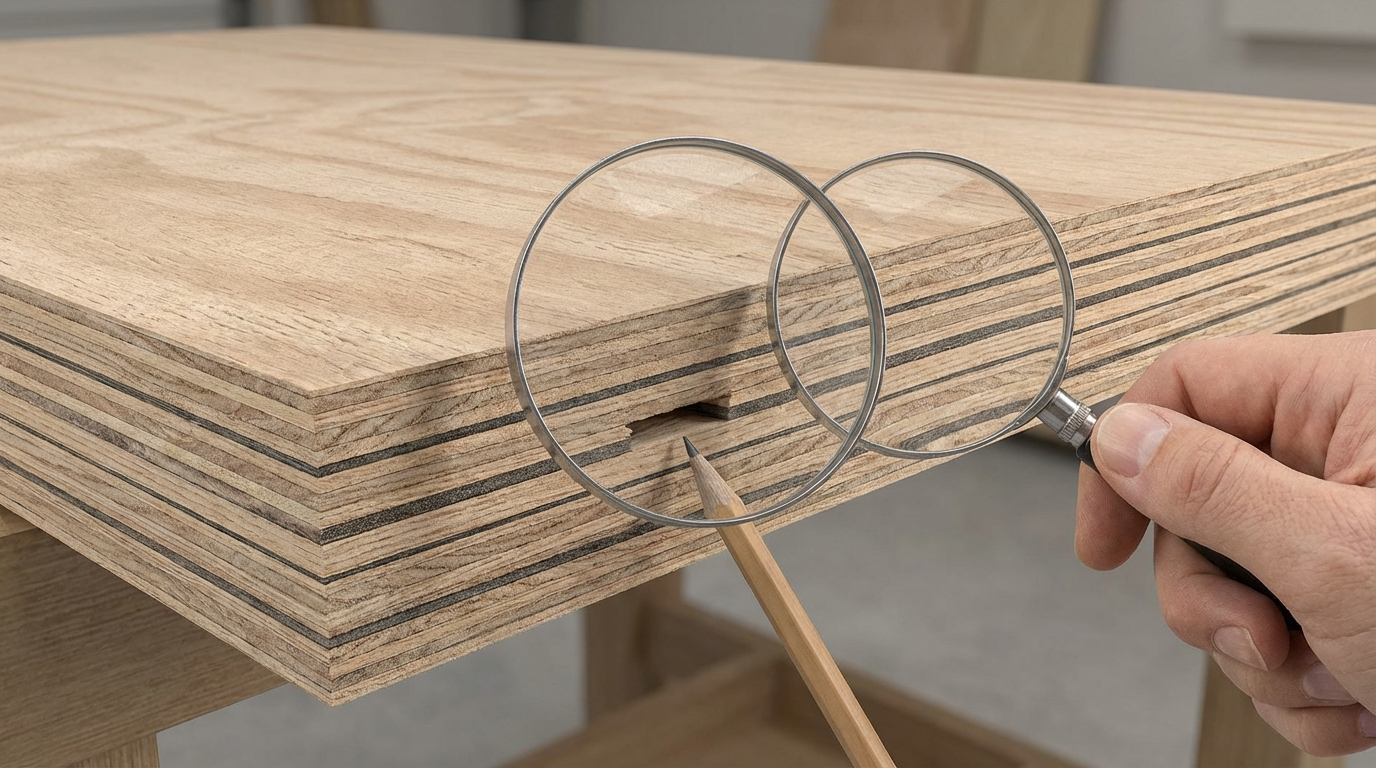
- 8: Overlooking core voids. Why: Hidden weakness. Fix: Edge-light check.
Failure Modes and Fixes
- Symptom: Edge swelling. Cause: MR in wet. Prevent: BWP. If happening: Sand, reseal.
- Bowing shelves. Cause: Thin under load. Prevent: 18mm+. Fix: Reinforce battens.
- Delamination. Cause: Poor glue. Prevent: Knock test. Fix: Discard panel.
- Screw pull-out. Cause: Soft core. Prevent: Dense knock. Fix: Plug + redrill.
- Borer holes. Cause: Untreated. Prevent: Proof stamp. Fix: Inject chemical.
- Warping post-install. Cause: No acclimatize. Prevent: 48hr site-condition. Fix: Shim realign.
Quality Checks You Can Do Without Lab Tests
Before buying: Weigh sheet (heavier=denser), knock edges (hollow=voids), flex lightly (rigid=no gaps), check stamps/QR. Ask: "Batch date? Boil test pass?" Red flags: Light weight, patched faces, uneven thickness.
After cutting: Inspect core layers (uniform glue), tap for voids, measure calibration.
Post-install: Check alignment, seal edges, monitor humidity.
How to spot fake CenturyPly at the dealer?
Genuine often heavier with crisp stamps; fakes lighter, blurry labels. Scan QR if present for details. Nuance: Dealers mix brands—verify per sheet. Step: Side-by-side with known good, compare sound/weight; reject mismatches.
What’s the best CenturyPly for Indian kitchens?
BWP 18mm for cabinets, resisting spills/monsoon steam. Conditions: HDHMR overlay for scratches. Check: Uniform glue lines, no swelling on wet edge test. Proceed: Quote "BWP calibrated Gurjan face".
Advice for Homeowners
Clean with dry cloth only; avoid standing water. Durability: Seal edges yearly in humid homes. Don't overload shelves beyond 20kg/ft.
Carpenter Tips
Cut with fine blade for clean veneers; pre-drill screws 1.5x diameter; acclimatize 48hrs. Hinge zones: 18mm min, reinforce cores.
Architect/Designer Notes
Spec "BWP IS:710 grade, ±0.3mm cal"; detail edge bands for wet zones; logic: Phenolic glue for longevity.
OEM/Modular Maker Checks
QC: Batch uniformity, screw repeatability; reduces complaints via density logs.
Is CenturyPly worth the premium price?
Often yes for BWP availability, no for dry MR where locals match. Trade-off: Supply chain vs cost. Verify value: Compare core density locally; buy if superior.
FAQs
Can CenturyPly MR handle bathroom humidity?
MR suits occasional splashes but risks swelling in daily steam—opt BWR/BWP instead. In Indian bathrooms, pair with ventilation; seal joints rigorously. Check post-install for edge lift; if seen, upgrade future panels.
What thickness for main door frames?
19-25mm BWP for stability against monsoon twist. Ensures hinge alignment; thinner bows. Dealer test: Load ends; minimal deflection signals good.
How to store CenturyPly sheets before use?
Elevate off ground, cover loosely in dry godown; avoid direct rain. Monsoon tip: Vertical stack prevents warping. Use within 1 month for peak glue strength.
Does it resist termites in coastal India?
Premium grades typically treat full plies; verify stamp. Combine with soil barriers. Monitor annually; early holes mean retreat.
Best finish for CenturyPly wardrobes?
Laminate for scratch-proof; veneer for natural look. Prep: Sand lightly, prime edges. Avoid polish on wet zones.
Compare BWR vs BWP for kitchens?
BWR for moderate spills; BWP for heavy washdowns. BWP costs more but lasts 2x longer. Test: Wet sample overnight—no swell wins.
How to fix minor warping?
Shim gaps, clamp straight 24hrs; severe=replace. Prevent via proper thickness/acclimatization. Contractor note: Always site-condition.
Is calibration critical for modular furniture?
Yes—±0.3mm ensures flush fits, no gaps. Uncalibrated causes rework. Measure all edges at buy.
What if screws loosen after months?
Core softened by moisture. Fix: Wood plugs + rescrew. Prevent: Dense grade, avoid over-tighten initially.
Suitable for outdoor verandah furniture?
BWP film-faced only; seal extras. Interiors preferred; UV fades veneers fast.
Disclaimer: This content is provided for general informational purposes based on industry practices and publicly available information. Product specifications, standards, prices, and availability may vary by manufacturer, region, and time. Readers should independently verify details with manufacturers, dealers, or qualified professionals before making purchase or construction decisions.Want Plywood Suggestions?
Share a few details and a Duro BOIL specialist will suggest suitable brands and connect you to responsive dealers.