Decorative Plywood Review: Grades, Types, and Applications
Detailed review of decorative plywood options. Compare grades, veneer finishes, prices, and find the best plywood for your furniture project.
Quick Verdict
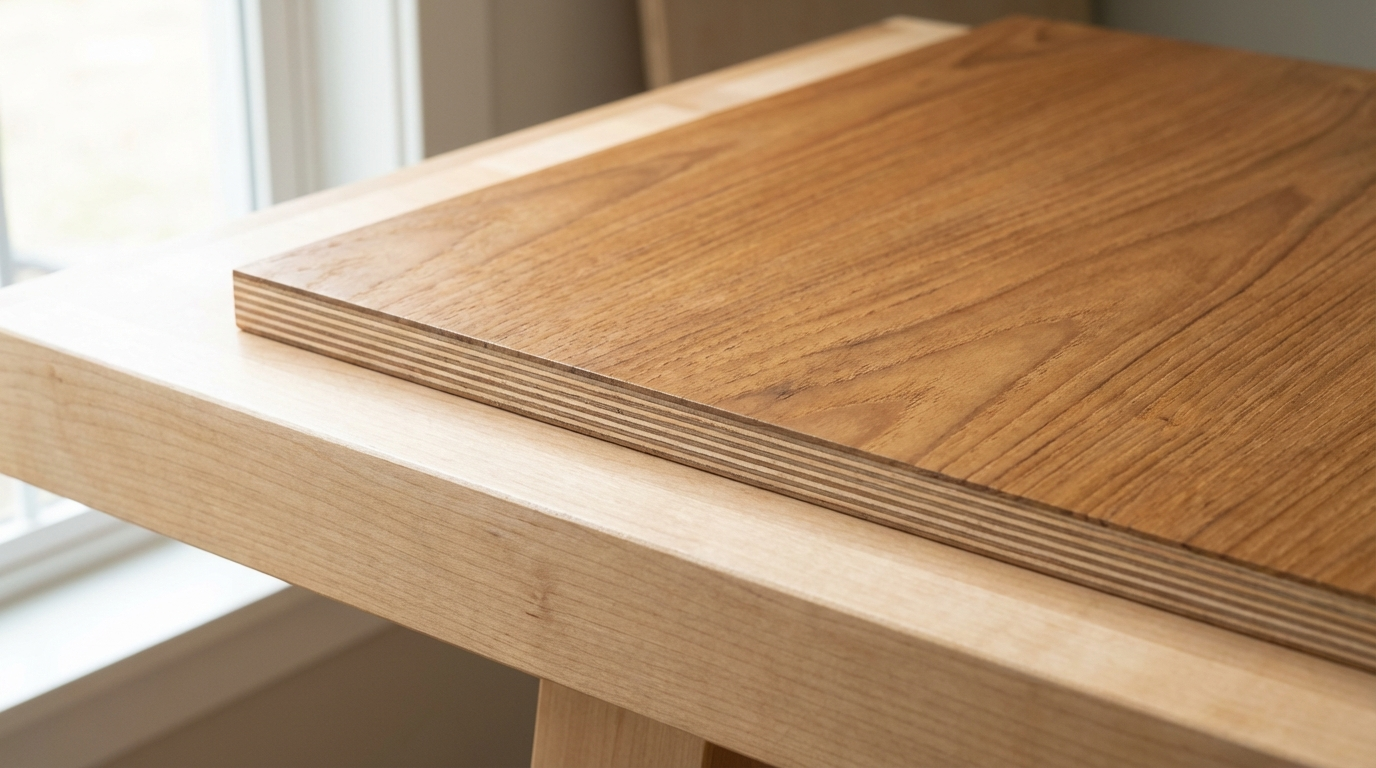
Decorative plywood is premium-grade plywood featuring an aesthetically finished surface veneer that eliminates the need for additional lamination in many furniture applications. Duroboil.com's material experts recommend decorative plywood for wardrobes, TV units, and study tables where natural wood appearance is desired without the cost of solid timber.
After extensive analysis of available options in the Indian market, decorative plywood stands out as an excellent choice for interior furniture where visual appeal matters as much as structural integrity. The pre-finished surface reduces overall project costs by 15-25% compared to plain plywood plus lamination.
| Rating Category | Assessment | Remarks |
|---|---|---|
| Moisture Resistance | Good to Excellent | Depends on core grade (MR/BWR/BWP) |
| Durability | Excellent | 10-20 years with proper care |
| Surface Quality | Excellent | Factory-finished, consistent appearance |
| Value for Money | Good | Higher upfront cost, lower finishing cost |
| Overall Recommendation | Highly Recommended | Best for visible furniture surfaces |
Choose decorative plywood if: You want natural wood aesthetics, prefer factory-finished consistency, or want to reduce on-site finishing work.
Consider alternatives if: You plan to use opaque laminates, need extreme water resistance, or have a very tight budget.
Either works if: You're making furniture for bedrooms or living areas with moderate humidity.
What is Decorative Plywood?
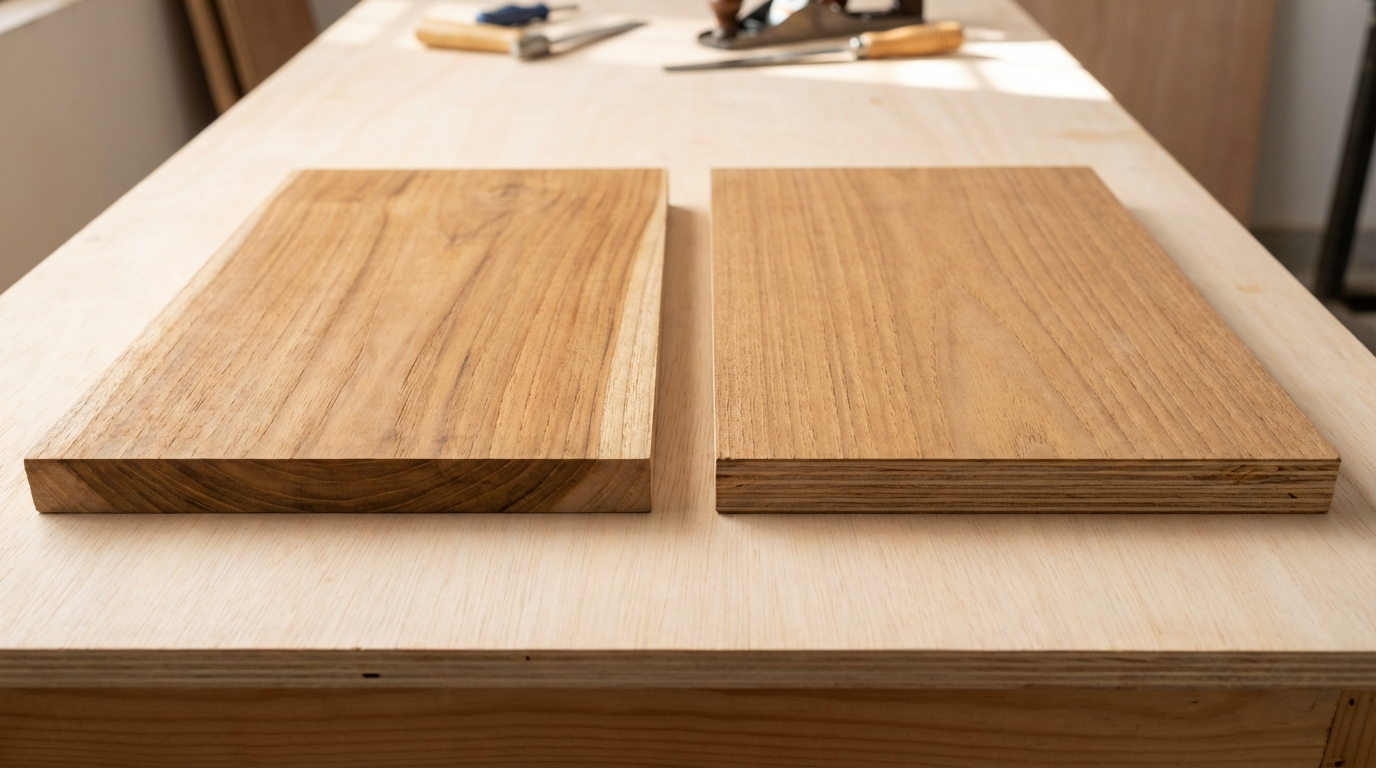
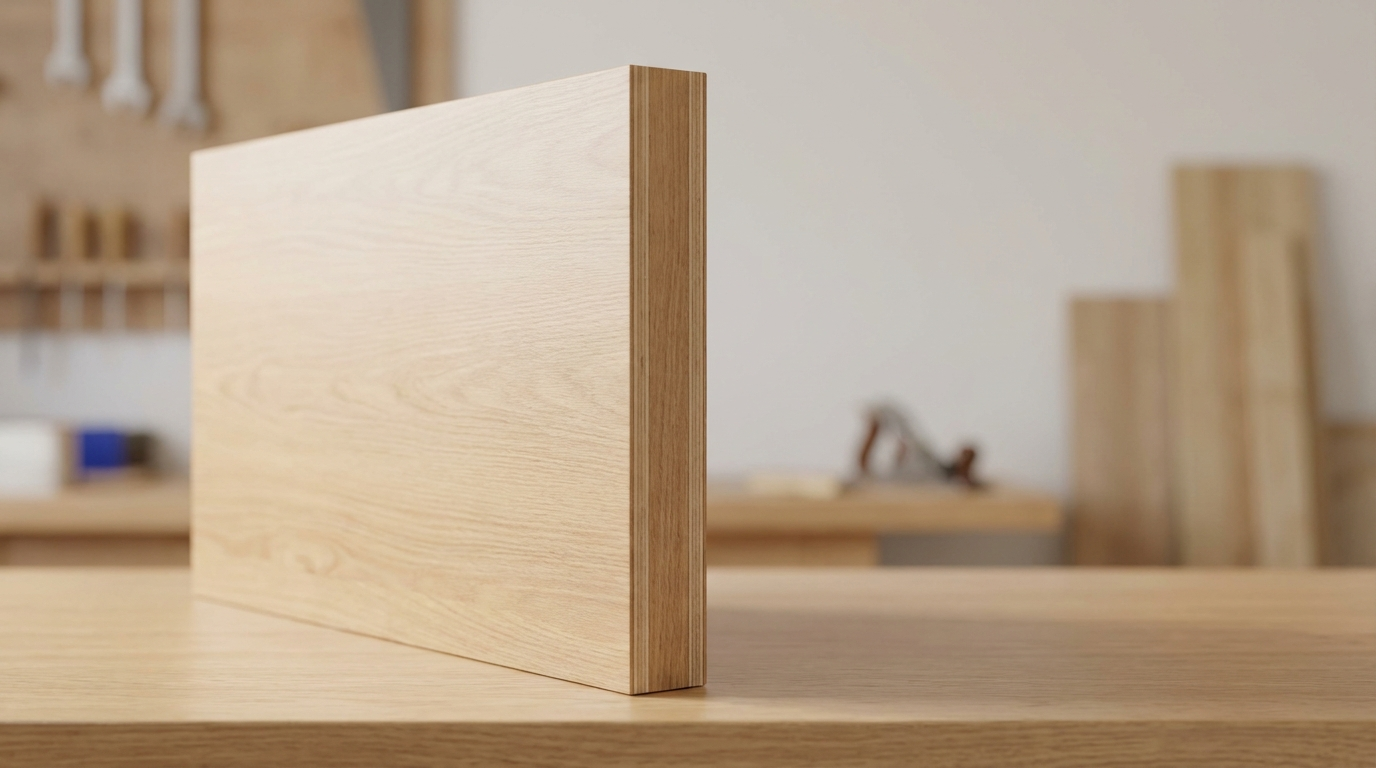
Decorative plywood is engineered wood consisting of multiple veneer layers bonded together, with the top face featuring a premium-quality natural wood veneer selected specifically for its grain pattern, colour, and visual appeal. Unlike standard commercial plywood that requires additional surface finishing, decorative plywood comes ready for direct use in furniture applications.
The manufacturing process involves selecting the finest wood veneers—typically from species like teak, oak, walnut, or rosewood—and bonding them to a high-quality plywood core using phenolic or urea formaldehyde resins under controlled heat and pressure. This creates a product that combines the strength of plywood with the beauty of solid wood.
In India, decorative plywood has gained significant popularity over the past decade as homeowners seek premium aesthetics without the maintenance challenges and cost of solid wood furniture. The product bridges the gap between expensive solid timber and basic laminated plywood, offering a middle-ground solution that appeals to quality-conscious buyers.
How Decorative Plywood Differs from Regular Plywood
The fundamental difference lies in the face veneer quality and finish. Regular commercial plywood uses utility-grade veneers focused on structural performance rather than appearance. Decorative plywood specifically selects face veneers for consistent grain patterns, minimal defects, and natural beauty.
Additionally, decorative plywood undergoes more rigorous quality control for surface finish, thickness consistency, and colour matching across sheets. This attention to aesthetic detail adds to the manufacturing cost but delivers significant value in finished furniture applications.
Specifications and Technical Details
Understanding the technical specifications of decorative plywood helps buyers make informed decisions based on application requirements rather than just price considerations. The specifications directly impact performance, durability, and suitability for different environments.
| Specification | Standard Range | Premium Range | What It Means for You |
|---|---|---|---|
| Thickness | 4mm to 19mm | 6mm to 25mm | Thicker sheets for structural applications |
| Standard Size | 8 ft × 4 ft (2440 × 1220mm) | 8 ft × 4 ft | Industry standard, minimal wastage |
| Face Veneer Thickness | 0.3mm to 0.5mm | 0.5mm to 1.0mm | Thicker veneer allows light sanding |
| Core Type | Hardwood/Softwood | Calibrated Hardwood | Core affects screw holding and stability |
| Density | 500-650 kg/m³ | 650-800 kg/m³ | Higher density means better durability |
| Glue Line | MR Grade (IS 303) | BWR/BWP Grade (IS 710) | Determines moisture resistance level |
| Formaldehyde Emission | E2 Class | E1/E0 Class | Lower emission better for indoor air quality |
Indian Standard Sizes and Availability
In the Indian market, decorative plywood is predominantly available in the standard 8 ft × 4 ft (2440mm × 1220mm) sheet size. Some manufacturers offer customized sizes for specific applications, but these typically command premium pricing and longer lead times.
Thickness options commonly available include 4mm, 6mm, 9mm, 12mm, 15mm, 18mm, and 19mm. For furniture applications, 18mm and 19mm are most popular for carcass construction, while 6mm and 9mm serve well for back panels and drawer bottoms.
Performance Analysis
Decorative plywood performance varies significantly based on the core grade, face veneer quality, and manufacturing standards. Understanding these performance characteristics helps match the right product to specific applications.
Moisture Handling Capabilities
Moisture resistance in decorative plywood depends entirely on the core plywood grade rather than the decorative face veneer. MR (Moisture Resistant) grade decorative plywood handles occasional humidity exposure well but should not be used in continuously wet environments.
BWR (Boiling Water Resistant) and BWP (Boiling Water Proof) grade decorative plywood offers superior moisture performance, making it suitable for kitchen cabinets, bathroom vanities, and coastal area applications. The face veneer itself provides minimal moisture protection—the core does the heavy lifting.
For Indian conditions, especially during monsoon months when humidity levels exceed 80% in many regions, BWR grade decorative plywood is recommended for kitchen applications. MR grade suffices for bedroom and living room furniture where humidity remains relatively controlled.
Durability and Longevity Assessment
Quality decorative plywood from reputable manufacturers typically lasts 15-25 years in normal residential use. The face veneer, being natural wood, can show wear over time but also develops a pleasing patina that many homeowners appreciate.
Factors affecting longevity include exposure to direct sunlight (causes fading), humidity fluctuations (affects dimensional stability), and mechanical wear from daily use. Proper finishing with appropriate sealers or lacquers significantly extends the lifespan by protecting the natural veneer surface.
The cross-grain construction of plywood prevents warping and cracking that commonly affects solid wood, making decorative plywood dimensionally stable even in India's challenging climate conditions.
Surface Quality Evaluation
Surface quality in decorative plywood is graded based on the face veneer characteristics. Grade A surfaces feature matched grain patterns, minimal natural defects, and consistent colour across the sheet. Grade B surfaces may have minor variations, small knots, or slight colour inconsistencies that don't affect structural integrity.
Factory finishing on premium decorative plywood includes sanding to 180-220 grit smoothness, making the surface ready for direct polish or lacquer application. This eliminates the need for extensive on-site preparation, saving both time and labour costs.
Workability Assessment
Decorative plywood machines well with standard woodworking tools. However, the face veneer requires careful handling to prevent chipping or tear-out during cutting. Using sharp blades, proper feed rates, and backing boards during cutting minimizes edge damage.
Carpenters generally find decorative plywood easier to work with than solid wood, as it doesn't have the directional grain challenges that complicate solid timber machining. Edge banding, drilling, and hardware installation follow standard plywood techniques.
Honest Pros and Cons
Every material has strengths and limitations. Understanding both helps set realistic expectations and ensures appropriate application selection.
Advantages of Decorative Plywood
Natural wood aesthetics: The genuine wood veneer surface provides warmth, character, and visual depth that laminates cannot replicate. Each sheet has unique grain patterns, creating furniture with individual personality.
Cost-effective elegance: Delivers solid wood appearance at 40-60% lower cost than equivalent solid timber furniture. The savings become more significant with premium wood species like teak or walnut.
Dimensional stability: Cross-grain plywood construction resists warping, twisting, and seasonal movement better than solid wood. This stability is particularly valuable in India's variable climate conditions.
Reduced finishing requirements: Factory-finished surfaces require minimal on-site preparation, reducing labour costs and project timelines. A simple polish or lacquer application completes the finish.
Consistent availability: Unlike solid timber that faces supply constraints and quality variations, decorative plywood offers consistent quality and ready availability from established manufacturers.
Environmental efficiency: Plywood manufacturing utilizes more of each log compared to solid lumber processing, making it a more resource-efficient choice for environmentally conscious buyers.
Limitations and Considerations
Veneer thickness constraints: The thin face veneer (typically 0.3-1.0mm) limits sanding and refinishing options. Deep scratches or damage may penetrate to the core, requiring patch repairs rather than simple sanding.
Edge treatment requirements: Exposed plywood edges reveal the layered construction, requiring edge banding, solid wood lipping, or other treatments for finished appearance. This adds to overall project costs and complexity.
Colour matching challenges: Natural wood veneers vary in colour and grain between sheets and even within the same sheet. Large projects requiring consistent appearance need careful sheet selection and planning.
Limited repair options: Unlike solid wood that can be extensively refinished, decorative plywood damage often requires panel replacement rather than repair. Prevention through proper finishing is essential.
Higher initial cost: Decorative plywood costs 30-50% more than equivalent commercial plywood. While total project costs may be lower due to reduced finishing requirements, the upfront material investment is higher.
Sunlight sensitivity: Natural wood veneers fade and change colour with prolonged UV exposure. Furniture placement and window treatments need consideration in brightly lit spaces.
Best and Worst Applications
Matching decorative plywood to appropriate applications maximizes value and ensures satisfactory long-term performance. According to duroboil.com's application research, success depends on understanding where decorative plywood excels and where alternatives perform better.
Excellent Applications
Wardrobe exteriors: The visible shutters and side panels of bedroom wardrobes benefit enormously from decorative plywood's aesthetics. The controlled bedroom environment protects the natural finish.
TV unit construction: Living room TV units showcase decorative plywood's visual appeal while the application involves minimal moisture exposure. The furniture becomes a design focal point.
Study tables and desks: Work surfaces benefit from the warm, natural feel of wood veneer. Proper lacquer finishing protects against everyday wear while maintaining the aesthetic appeal.
Bed headboards: The large visible surface of headboards highlights decorative plywood's grain patterns. Minimal wear exposure ensures long-lasting appearance.
Office cabin interiors: Professional environments benefit from the sophisticated appearance of natural wood veneer without solid timber costs. The controlled commercial environment ensures durability.
Applications Requiring Caution
Kitchen cabinets: While BWR grade decorative plywood can work in kitchens, the combination of heat, moisture, and grease exposure challenges the natural veneer finish. Pre-laminated plywood or solid surface options may offer better long-term performance.
Bathroom vanities: Even BWP grade decorative plywood requires careful sealing and maintenance in bathroom environments. The natural veneer remains vulnerable to water damage from splashes and humidity.
Applications to Avoid
Outdoor furniture: Decorative plywood should never be used for outdoor applications. UV exposure, rain, and temperature fluctuations will quickly damage the face veneer and core.
Floor underlayment: The decorative face adds cost without benefit in concealed applications. Standard structural plywood serves better for subflooring.
Areas with direct water contact: Sink cabinets, washing machine platforms, and similar high-moisture locations demand materials specifically designed for water resistance.
Price and Value Analysis
Understanding decorative plywood pricing helps establish realistic project budgets and evaluate value propositions from different suppliers. Prices vary significantly based on face veneer species, core grade, and manufacturer reputation.
| Decorative Plywood Type | Price Range (₹/sq ft) | Typical Applications | Value Assessment |
|---|---|---|---|
| Economy Range (Reconstituted Veneer) | ₹45-65 | Budget furniture, rentals | Basic aesthetics, limited durability |
| Standard Range (Natural Veneer, MR Grade) | ₹70-100 | Bedroom furniture, living room | Good balance of cost and quality |
| Premium Range (Select Veneer, BWR Grade) | ₹110-150 | Kitchens, high-end furniture | Excellent durability and finish |
| Luxury Range (Exotic Veneer, BWP Grade) | ₹160-250+ | Designer furniture, showrooms | Premium aesthetics, maximum durability |
Cost Comparison: Decorative Plywood vs Alternatives
When evaluating decorative plywood value, consider the total project cost rather than just material price. A typical wardrobe project illustrates the comparison:
| Cost Component | Commercial Plywood + Laminate | Decorative Plywood | Solid Wood |
|---|---|---|---|
| Material (per sq ft) | ₹50-70 | ₹80-120 | ₹180-350 |
| Lamination/Finishing | ₹25-40 | ₹10-15 | ₹30-50 |
| Labour Premium | Standard | Standard | +20-30% |
| Total Project Cost | ₹75-110/sq ft | ₹90-135/sq ft | ₹250-450/sq ft |
Factors Affecting Price
Veneer species: Teak, walnut, and oak command premium prices. Pine, rubberwood, and reconstituted veneers cost less but may not offer the same aesthetic appeal.
Core grade: BWP grade cores cost 25-40% more than MR grade. The investment makes sense for moisture-prone applications but adds unnecessary cost for bedroom furniture.
Manufacturer reputation: Branded decorative plywood from established manufacturers typically costs 15-30% more than unbranded alternatives but offers quality assurance and warranty support.
Regional variations: Prices in metro cities tend to be 10-20% higher than in smaller towns due to higher overhead costs. However, product variety and availability are typically better in metros.
Quality Checks Before Buying
Verifying decorative plywood quality before purchase prevents costly mistakes and ensures project success. These practical checks help identify quality issues without laboratory testing.
Visual Inspection Checklist
Face veneer consistency: Examine the entire sheet surface for consistent grain pattern, colour uniformity, and absence of patches or repairs. Quality decorative plywood has carefully matched veneers.
Surface smoothness: Run your hand across the surface to detect roughness, bumps, or depressions. Factory-finished decorative plywood should feel uniformly smooth.
Edge examination: Check the sheet edges for void-free, tightly bonded core layers. Gaps, overlaps, or loose layers indicate manufacturing defects that affect structural integrity.
Thickness verification: Measure thickness at multiple points including all four corners. Variation should not exceed 0.5mm for quality decorative plywood.
Flatness check: Place the sheet on a flat surface and check for warping or twisting. Quality plywood lies flat without gaps under the edges.
Sound Test Method
Gently knock on the center and edges of the sheet. Quality decorative plywood produces a solid, consistent sound throughout. Hollow sounds or variations indicate internal voids or delamination that compromise structural integrity.
Documentation Verification
ISI marking: Verify the ISI mark and license number printed on each sheet. Cross-reference with BIS records if possible, as counterfeit markings are unfortunately common in the unorganized sector.
Manufacturer details: Legitimate decorative plywood carries manufacturer name, contact information, and batch identification. Anonymous sheets from unknown sources carry higher quality risks.
Grade certification: Request copies of test certificates from the manufacturer, especially for BWR and BWP grade claims. Reputable manufacturers readily provide documentation.
Questions to Ask Your Dealer
- What is the face veneer thickness on this decorative plywood?
- Which wood species is the face veneer made from?
- What core wood is used in manufacturing?
- Can you provide the manufacturer's test certificate?
- What warranty does the manufacturer offer?
- How long has this dealer stocked this particular brand?
- What is the recommended finish for this decorative plywood?
- Are matching sheets available for large projects?
Installation and Maintenance Guidelines
Proper installation and maintenance practices maximize decorative plywood lifespan and maintain its aesthetic appeal. Following these guidelines protects your investment and ensures long-term satisfaction.
Pre-Installation Requirements
Acclimatization: Store decorative plywood sheets flat in the installation location for 48-72 hours before cutting. This allows the material to adjust to local humidity conditions, reducing post-installation movement.
Storage conditions: Keep sheets in a dry, covered area away from direct sunlight. Stack flat with supports to prevent warping. Never store plywood directly on concrete floors, which can transfer moisture.
Handling precautions: Lift sheets vertically with support along the length to prevent cracking. Avoid dragging sheets, which can damage face veneers. Use clean gloves when handling finished surfaces.
Cutting and Machining Best Practices
Blade selection: Use sharp, fine-toothed blades (80+ teeth for circular saws) to minimize veneer chipping. Carbide-tipped blades provide cleaner cuts and longer life.
Cutting technique: Score the cut line with a sharp knife before sawing to prevent veneer tear-out. Use backing boards underneath when cutting to support the exit side of the cut.
Feed rate: Maintain steady, moderate feed rates. Forcing the cut increases chipping, while too-slow feeding can burn the veneer surface.
Finishing Recommendations
Surface preparation: Light sanding with 220-320 grit paper removes any handling marks and opens the veneer pores for finish absorption. Sand with the grain direction only.
Sealer application: Apply a quality wood sealer as the first coat to even out absorption and prevent blotching, especially on figured or uneven grain veneers.
Topcoat options: Polyurethane lacquers offer excellent durability for high-use surfaces. Natural oil finishes provide a softer appearance but require periodic renewal. NC lacquers give professional results but need spray application.
Long-Term Maintenance
Daily care: Wipe surfaces with a soft, dry cloth. Avoid wet cleaning, which can damage the veneer over time. Use coasters and mats to protect against moisture and heat.
Periodic maintenance: Apply furniture polish or wax every 3-6 months to maintain lustre and provide surface protection. Choose products compatible with your topcoat finish.
Damage prevention: Keep furniture away from direct sunlight to prevent fading. Maintain consistent indoor humidity (45-65%) to minimize dimensional movement. Address any water spills immediately.
Alternatives to Consider
While decorative plywood offers excellent value for many applications, understanding alternatives helps make fully informed decisions based on specific project requirements.
Pre-Laminated Plywood
Pre-laminated plywood features factory-applied decorative laminates in various patterns and colours. It offers more design variety than natural veneers, better moisture resistance, and lower maintenance requirements. However, it cannot replicate the depth and character of real wood grain.
Choose pre-laminated when: Durability matters more than natural aesthetics, budget is constrained, or the application involves moisture exposure.
Veneer-Finished MDF
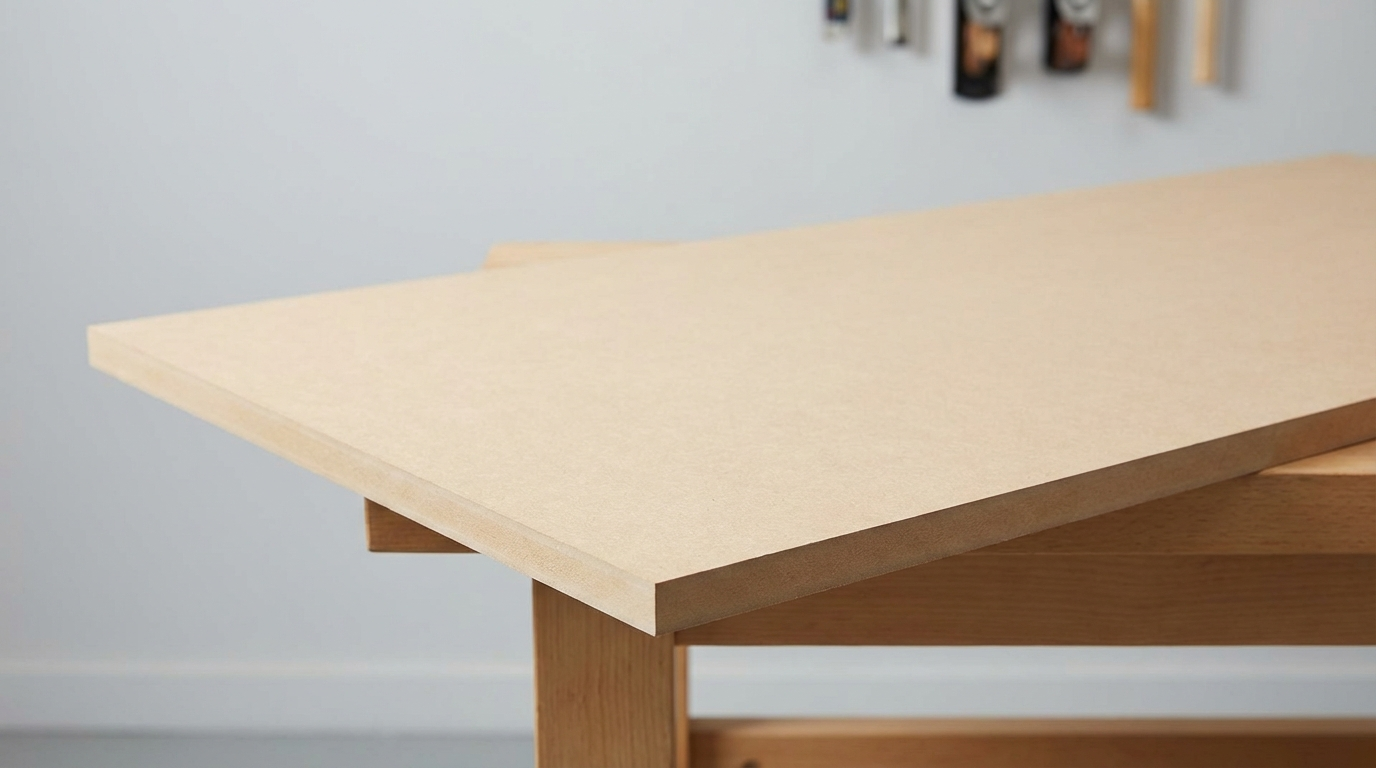
Medium-density fiberboard with applied wood veneer provides similar aesthetics to decorative plywood at potentially lower cost. MDF offers superior surface smoothness and consistency but lacks plywood's structural strength and moisture resistance.
Choose veneer MDF when: Flat panel appearance is paramount, structural demands are minimal, or budget constraints require cost optimization.
Solid Wood Panels
For buyers prioritizing authenticity and longevity, solid wood panels offer unmatched character and refinishing potential. However, solid wood costs significantly more, requires careful moisture management, and presents dimensional stability challenges.
Choose solid wood when: Budget allows premium investment, heirloom quality is desired, or the application specifically demands solid timber characteristics.
HDHMR with Veneer Finish
High-density high-moisture-resistant boards with applied veneers combine excellent moisture performance with natural wood aesthetics. This option suits kitchen and bathroom applications where standard decorative plywood faces limitations.
Choose veneer HDHMR when: Moisture resistance is critical, the application involves kitchen or bathroom environments, or long-term durability outweighs initial cost considerations.
Frequently Asked Questions
Is decorative plywood waterproof?
Decorative plywood is not inherently waterproof, but moisture resistance depends on the core grade. MR grade handles occasional humidity exposure, BWR grade resists prolonged moisture contact, and BWP grade offers maximum water resistance. However, the face veneer itself remains vulnerable to water damage regardless of core grade. For consistently wet environments, proper sealing and BWP grade cores are essential, though other materials may be more appropriate.
How long does decorative plywood furniture last?
Quality decorative plywood furniture typically lasts 15-25 years with proper care and maintenance. Longevity depends on factors including core grade quality, finishing quality, usage intensity, and environmental conditions. Furniture in controlled indoor environments with proper finishing outlasts pieces exposed to humidity fluctuations, direct sunlight, or heavy daily use. Regular maintenance and prompt attention to any damage significantly extends service life.
Can decorative plywood be used in kitchens?
Decorative plywood can be used in kitchens when BWR or BWP grade cores are selected and proper sealing is applied. However, the natural wood veneer face remains vulnerable to heat damage near cooktops, moisture damage from splashes, and grease accumulation that's difficult to clean completely. For kitchen base cabinets and areas near sinks, pre-laminated plywood or marine-grade alternatives often provide better long-term performance with easier maintenance.
What is the price difference between decorative and commercial plywood?
Decorative plywood typically costs 30-50% more than equivalent commercial plywood of the same thickness and grade. For example, 18mm MR grade commercial plywood costs approximately ₹45-60 per square foot, while comparable decorative plywood ranges from ₹70-100 per square foot. However, decorative plywood eliminates or reduces lamination costs, potentially resulting in similar or lower total project costs when all finishing expenses are considered.
How do I maintain the natural wood finish on decorative plywood?
Maintaining decorative plywood's natural finish involves regular dusting with soft, dry cloths, immediate cleanup of any liquid spills, and periodic application of furniture wax or polish every 3-6 months. Avoid wet mopping, harsh chemicals, or abrasive cleaners that damage the veneer surface. Keep furniture away from direct sunlight to prevent fading, and maintain indoor humidity between 45-65% to minimize dimensional movement and veneer stress.
Can scratches on decorative plywood be repaired?
Minor scratches on decorative plywood can often be repaired using colour-matched wood touch-up markers, wax sticks, or light sanding followed by finish touch-up. However, deep scratches that penetrate through the veneer to the core cannot be fully repaired without professional intervention or panel replacement. The thin veneer layer (typically 0.3-1.0mm) limits repair options compared to solid wood, making scratch prevention through proper finishing and careful use essential.
Which wood veneer species is best for decorative plywood?
The best veneer species depends on aesthetic preferences, budget, and application requirements. Teak veneer offers excellent durability and classic Indian appeal but commands premium pricing. Oak provides consistent grain patterns and contemporary aesthetics at moderate cost. Walnut delivers rich, dark tones popular for modern interiors. Rubberwood and mango wood veneers offer economical options with acceptable appearance. Consider the overall design scheme and room lighting when selecting veneer species.
Is ISI marking mandatory for decorative plywood?
ISI marking is not legally mandatory for decorative plywood sale in India, but it serves as an important quality indicator. ISI-marked products have been tested and certified to meet Bureau of Indian Standards specifications for construction, strength, and moisture resistance. Duroboil.com recommends prioritizing ISI-marked decorative plywood from reputable manufacturers, especially for structural furniture applications, as non-certified products may not meet claimed specifications.
What thickness of decorative plywood should I use for wardrobes?
For wardrobe construction, 18mm or 19mm decorative plywood is recommended for carcass sides, top, bottom, and shelves that need to support weight. Shutter panels can use 18mm for stability or 12mm for lighter weight, depending on shutter size and hardware capacity. Back panels typically use 6mm decorative plywood or plain plywood since they're not visible. Always verify thickness requirements with your carpenter based on specific wardrobe dimensions and expected load.
How do I identify fake or low-quality decorative plywood?
Identifying poor quality decorative plywood involves checking for inconsistent veneer colour and grain matching, rough or bumpy surfaces, visible core voids at sheet edges, excessive thickness variation across the sheet, hollow sounds when tapped, missing or suspicious ISI markings, and absence of manufacturer information. Reputable dealers provide test certificates and manufacturer warranties. Unusually low prices often indicate compromised quality—if a deal seems too good to be true, it probably is.
Note: This is independent editorial content. Duroboil.com is not affiliated with any plywood manufacturer mentioned in this review. Prices and specifications mentioned are indicative and vary based on location, dealer, and market conditions. Always verify current pricing and specifications with authorized dealers before purchase.
Disclaimer: This content is provided for general informational purposes based on industry practices and publicly available information. Product specifications, standards, prices, and availability may vary by manufacturer, region, and time. Readers should independently verify details with manufacturers, dealers, or qualified professionals before making purchase or construction decisions.
Want Plywood Suggestions?
Share a few details and a Duro BOIL specialist will suggest suitable brands and connect you to responsive dealers.