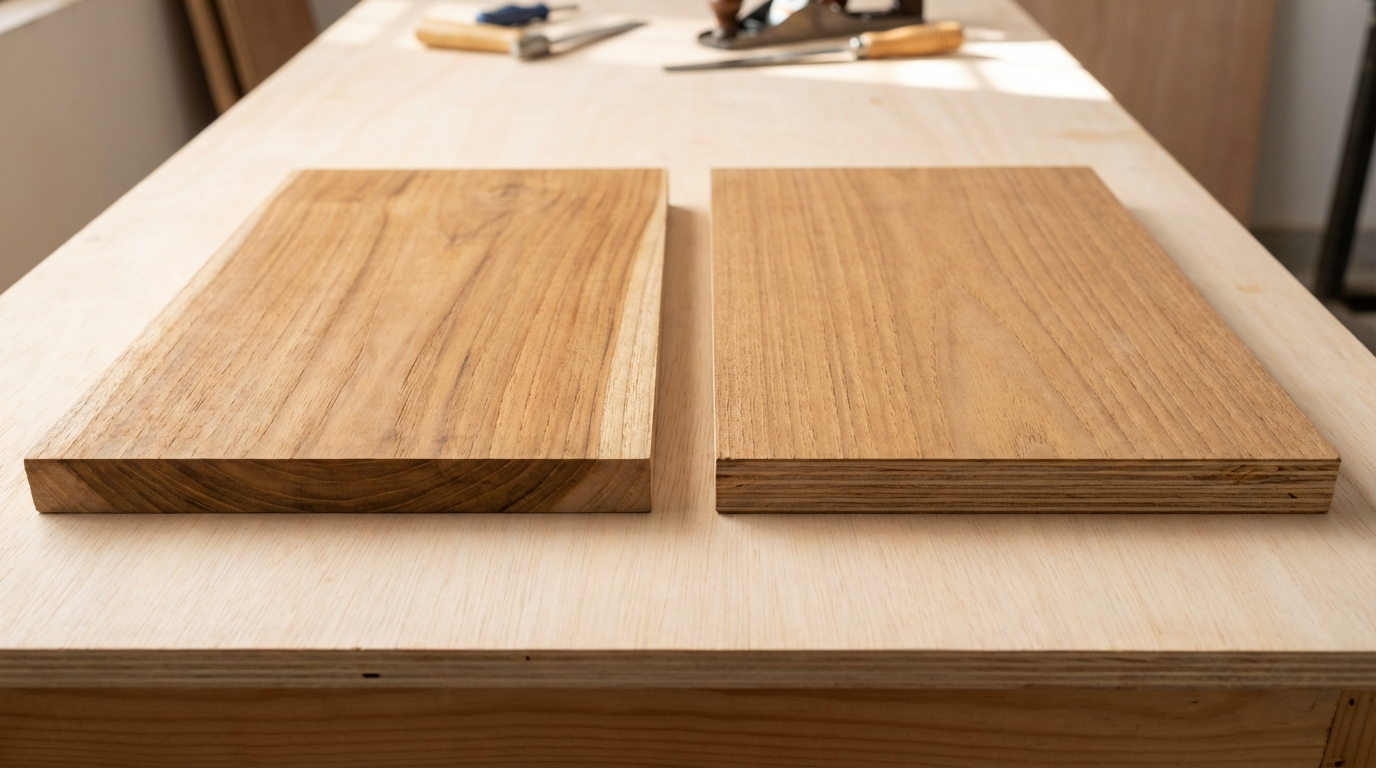
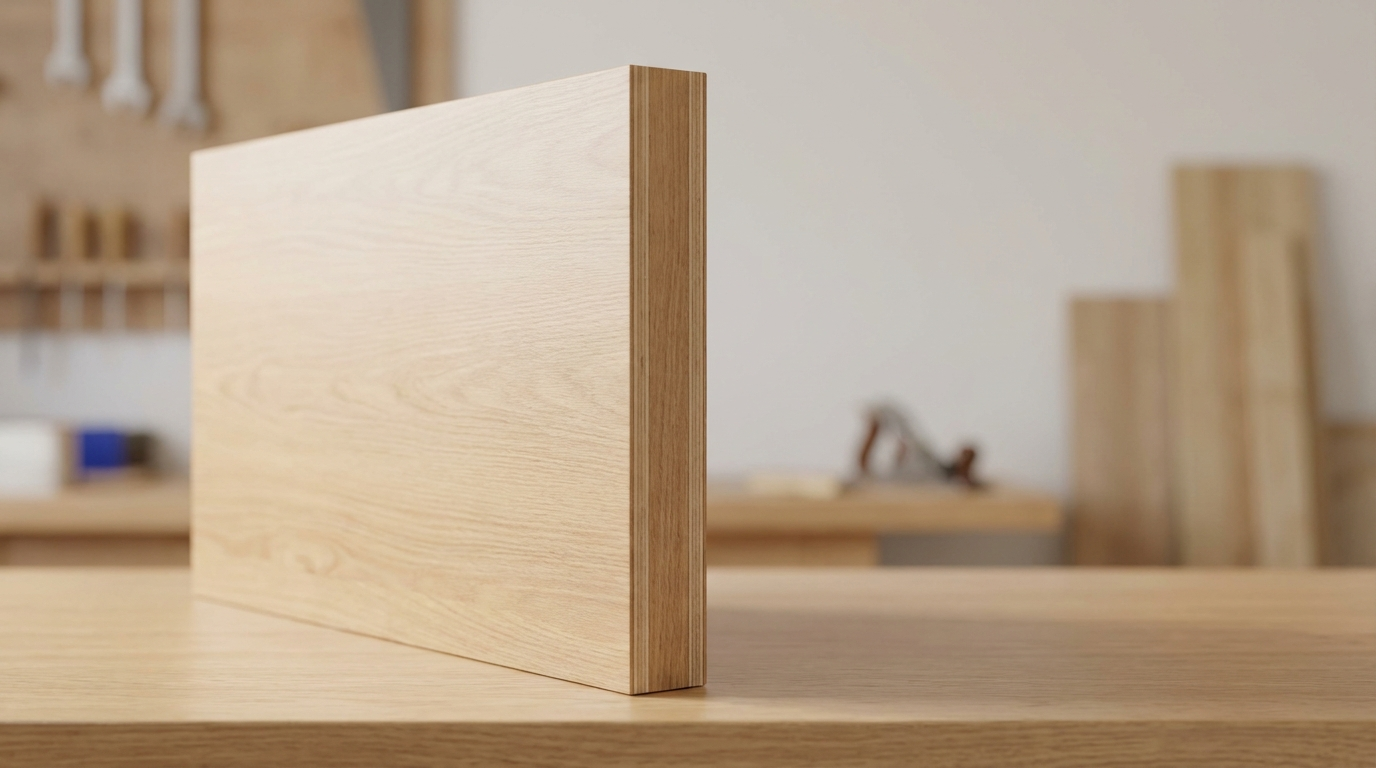
Duroboil BWR plywood: is it enough for kitchens?
A practical review of duroboil bwr plywood: specs checklist, pros/cons, best-use cases, warranty checks, and what to verify at the dealer in India.
Note: This page is independent informational content and is not affiliated with any manufacturer.
Quick Decision Summary
Duroboil BWR plywood handles typical kitchen moisture well but pair it with strong edge sealing for long-term reliability in Indian homes.
If you’re in a hurry: Duroboil BWR grade offers solid boiling water resistance for cabinet bases, shelves, and uppers exposed to splashes and steam. It outperforms MR in humid zones yet costs less than full marine BWP. Expect good performance with proper installation like PVC lamination and silicone sealing. Verify core uniformity and glue lines at purchase to avoid delamination risks during monsoons. Ideal for inland cities; coastal users should inspect samples under humidity stress.
- Choose this if your kitchen sees occasional spills, moderate cooking steam, and you prioritize value over extreme exposure.
- Avoid this if direct water pooling, coastal salt air, or modular setups with poor ventilation demand higher waterproofing.
If You’re Searching for Duroboil, Here’s What People Usually Mean
Queries for Duroboil often target BWR plywood's real-world fit for kitchens—cabinet durability under Indian cooking habits, thickness options like 18mm for shutters, and checks against fakes. Users debate if it's truly "kitchen-ready" versus pricier BWP alternatives, seeking verification tips for dealers and comparisons to everyday moisture challenges like wet grinding or pressure cooking vapors.
How to Compare Duroboil-Type Options to Alternatives (Without Guesswork)
Focus on exposure level: BWR suits intermittent wet contact; BWP for immersion risks. Test by knocking for solid core sound and checking veneer adhesion after a wet cloth press overnight.
| Condition | Duroboil BWR Fit | Better Alternative | Verify This |
|---|---|---|---|
| Daily splashes, steam | Good with sealing | MR if dry | Glue line dryness |
| Monsoon humidity | Adequate inland | BWP coastal | Core gap absence |
| Heavy spills | Risk of swelling | BWP always | 72-hour boil claim |
| Budget cabinets | Best value | None | Calibration flatness |
What This Term/Material Actually Means
BWR stands for Boiling Water Resistant plywood, bonded with synthetic resins that endure boiling water cycles without full delamination. Made from layered hardwood veneers, it meets basic interior wet-area standards, using urea or phenol-formaldehyde glues stronger than MR types.
Where people get confused:
- Thinking BWR is fully waterproof—it resists boiling but not indefinite submersion.
- Mixing it with BWP marine grade, which handles saltwater and longer boils.
- Assuming all BWR is equal—core wood quality varies, affecting strength.
- Believing thin sheets (6mm) work for load-bearing kitchen shelves—they sag under utensils.
- Overlooking calibration: uneven thickness causes wavy laminates.
- Confusing face veneer grade with overall moisture resistance.
India-Specific Reality Check
Indian kitchens battle monsoon humidity (80%+), cooking steam from tadka or idli steamers, and masala paste spills that seep into edges. Poor storage at dealers leads to pre-warped sheets. Workmen often skip edge banding, amplifying swell risks in coastal Gujarat or Kerala. BWR shines here with ventilation but demands silicone gaps around sinks.
Is Duroboil BWR plywood enough for kitchens?
Yes for most setups with splashes and vapors, as its glue withstands short boiling exposures typical in daily use. However, in steam-heavy homes with gas stoves or wet grinders, unsealed edges may bubble after months. Next step: measure your sink proximity—if under 30cm, add extra PVC wrapping and test a sample edge with hot water for 10 minutes. Inland users see 5+ years; coastal needs frequent checks.
Can BWR plywood handle modular kitchens?
BWR works reliably for framed modular cabinets if 18mm thick and laminated fully, resisting drawer pulls and humidity shifts. Drawback: factory edges might lift without PU polish. Inspect for uniform density by weight comparison. Practical move: pair with HDHMR fillers for partitions and insist on carpenter-applied waterproof tape on cut ends before assembly.
Price Range and Cost Drivers (India)
BWR plywood like Duroboil typically ranges ₹90-₹140 per sq ft, varying by 12-18mm thickness, hardwood core, and city (higher in metros like Mumbai). Drivers: premium face veneer adds 20%, calibration cuts wastage costs, bulk logistics save 10%. Quote checklist: specify "BWR IS:303, 18mm calibrated, termite-treated core." Example: 10x6 ft kitchen needs ~50 sq ft at ₹110/sq ft = ₹5500 base, plus 15% laminate.
How to Choose in 5 Steps
- Assess exposure: Splashes only? BWR fine. Pooling? BWP. Skip and risk delam 2 years in.
- Pick thickness: 12mm uppers, 18mm bases/shutters for 50kg loads.
- Check visuals: No gaps, smooth glue lines, heavy feel.
- Ask specs: Boiling hours, treatment proofs—walk away from vagueness.
- Test post-cut: No fuzzing edges signal quality.
What thickness of Duroboil BWR for kitchen cabinets?
18mm for shutters and bases handles sagging under pressure cookers; 12mm suffices for shelves. Thinner warps faster in humidity. Weigh a sheet—denser feels premium. Buy calibrated to avoid leveling hassles during install.
Trade-offs and Limitations
BWR saves 30-50% over BWP but limits to non-immersion use; swells if edges exposed long-term. Stronger than MR yet glue may soften in 90%+ humidity without fans. Lamination hides minor core flaws but not unevenness. Not ideal for tabletops without extra marine coat.
Common Buyer Mistakes and How to Avoid Them
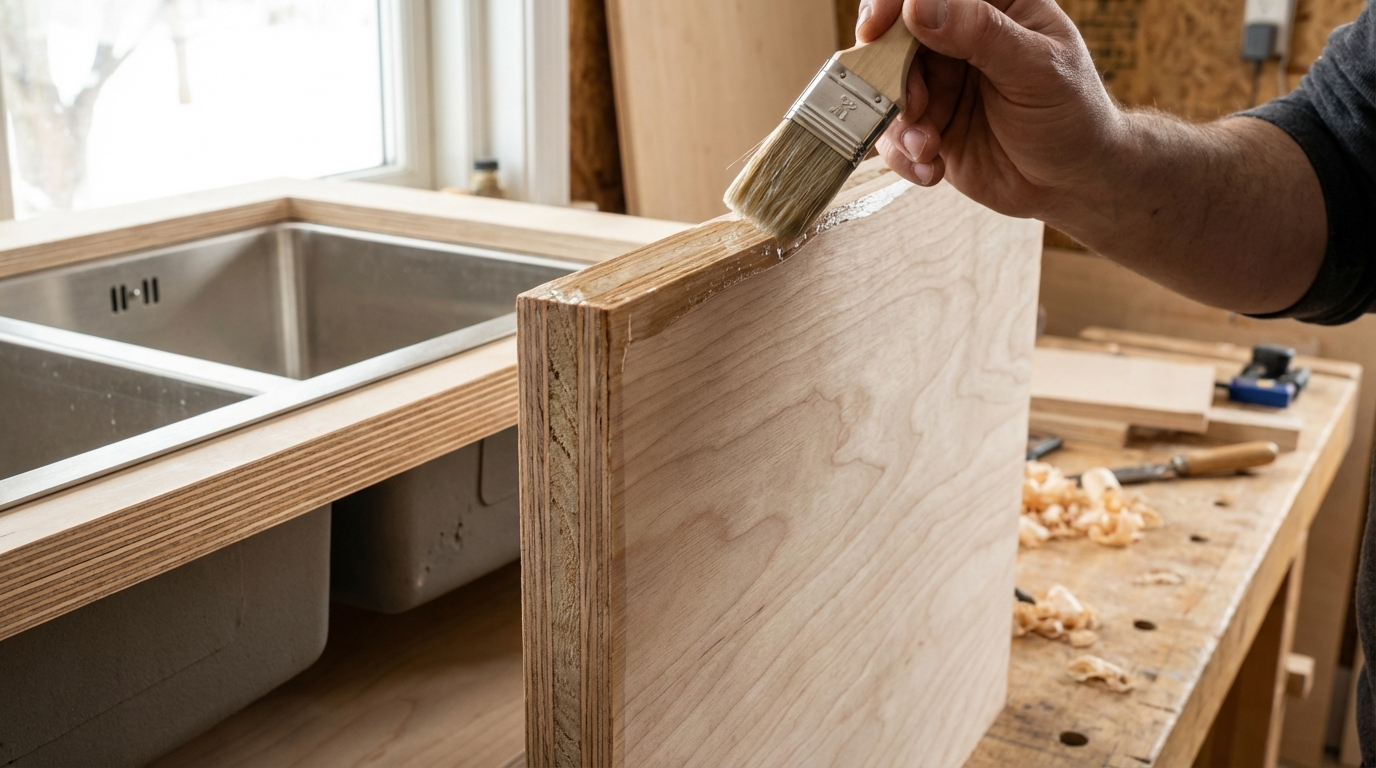
- Skipping edge sealing: Happens from cost-cutting; leads to water wicking. Instead: Mandate silicone/PVC on all cuts.
- Choosing thin sheets: For heavy loads, sags quickly. Opt 18mm+ verified by tap test.
- Ignoring storage: Dealer stacks warp in rain. Inspect bend on arrival.
- No calibration check: Wavy installs frustrate. Use straight edge ruler.
- Trusting verbal grades: Fakes abound. Demand boil test demo.
- Forgetting ventilation: Steam traps moisture. Add exhaust specs.
- Overlooking core gaps: Weakens load. Shine torch through edges.
- Budget lamination only: Peels fast. Specify 1mm PVC min.
- No termite query: Hidden pests eat cores. Ask treatment cycle.
Failure Modes and Fixes
- Symptom: Edge swelling. Cause: Unsealed cuts. Prevent: Full banding. Fix: Sand, re-seal promptly.
- Symptom: Delamination bubbles. Cause: Weak glue. Prevent: Boil test ask. Fix: Replace affected panel.
- Symptom: Warping bows. Cause: Humidity imbalance. Prevent: AC storage. Fix: Shim and clamp.
- Symptom: Veneer peel. Cause: Poor adhesion. Prevent: Scratch test pre-buy. Fix: Glue and press.
- Symptom: Core crumble. Cause: Gaps/low density. Prevent: Knock solid. Fix: Full sheet swap.
- Symptom: Sagging shelves. Cause: Thin/unsupported. Prevent: 18mm + brackets. Fix: Reinforce underside.
- Symptom: Termite tracks. Cause: Untreated. Prevent: Proof stamp. Fix: Fumigate area.
Quality Checks You Can Do Without Lab Tests
Before buying: Tap for uniform thud (no hollows), flex corner gently (minimal bend), wet cloth overnight on sample edge (no darken). Ask boiling hours verbally.
After cutting: Edges clean, no voids; glue smells non-acrid.
After install: Level check, wipe test for laminate hold, monitor monsoon week 1.
Does Duroboil BWR plywood need lamination for kitchens?
Essential—bare plywood absorbs spills despite resistance. Laminate hides core, adds scratch barrier. Use PVC over paper for steam zones. Check adhesion by peel test post-lam. Unlaminated lasts 1-2 years max in use.
Decision Framework: Kitchen Conditions vs Recommendations
| Kitchen Condition | Recommended Grade | What to Verify |
|---|---|---|
| Moderate splashes, inland | BWR like Duroboil | Uniform core, sealed edges |
| Coastal/high humidity | BWP | IS:710 compliance claim |
| Heavy use/steam | BWP or HDHMR | Density weight |
| Tight budget | BWR | Calibration, no gaps |
| Scratch-prone | BWR + thick laminate | Veneer grade |
| Fast project | BWR stocked | Dealer batch date |
Homeowner Tips for Duroboil BWR in Kitchens
Clean with dry microfiber—avoid soaking. Install exhaust fan. Check edges yearly for lifts; re-seal as needed. Don't overload shelves beyond 20kg without braces.
Carpenter Tips for Handling Duroboil BWR
Cut with fine blade to minimize fuzz. Pre-drill screws in hinge zones. Band edges same day. Store flat, off-ground. Fasten 10cm from edges for warp control.
Architect Tips for Specifying Duroboil BWR
Detail 5cm overhangs at sinks, silicone joints. Spec 18mm min, BWR for uppers. Note wet-zone transitions to BWP. Include ventilation in drawings.
FAQs
Is Duroboil BWR plywood termite resistant?
Typically treated during manufacture to deter pests, but effectiveness varies by batch and storage. In termite-prone South India, pair with barriers. Check by probing edges for softness; shake sheet for powder residue. Reconfirm treatment at dealer and consider extra sprays post-install for 10-year peace.
What's better for kitchen shutters: BWR or BWP?
BWR suffices for shutters with lamination as they face less direct water than bases. BWP adds margin for coastal rains or poor sealing. Weigh cost vs risk—BWR cuts 40% expense. Test by steam exposure simulation at home before full commitment.
How long does BWR plywood last in kitchens?
7-12 years with proper sealing and low immersion, less in humid belts. Factors: ventilation, cleaning habits. Monitor first monsoon; early fixes extend life. Replace if swells appear to avoid cascade failures.
Can I use Duroboil BWR for kitchen tabletops?
Not recommended bare—needs thick marine coat or stone overlay due to cutting/heat. Better for undersides. Swells under knife marks or hot pots. Opt BWP if direct use planned.
Does BWR plywood warp in monsoons?
Less than MR if calibrated and stored dry, but unsealed ends do. Prevent with dehumidifiers, proper stacking. Inland minimal; coastal reinforce frames.
Is 12mm Duroboil BWR enough for kitchen shelves?
Yes for light loads (<10kg), but 18mm preferred for stability. Span test: no sag over 60cm. Add battens underneath always.
How to identify fake Duroboil BWR plywood?
Lightweight, visible gaps, peeling labels signal issues. Demand batch stamps, weigh against knowns. Wet test edge—quick darken fails.
BWR vs HDHMR for kitchen partitions?
BWR stronger for framing; HDHMR smoother for panels. Hybrid: BWR frame + HDHMR skin. Choose by machinability needs.
Should I paint or laminate Duroboil BWR?
Laminate for moisture seal; paint porous. PVC best, full coverage. Avoid semi-transparent finishes exposing core.
Disclaimer: This content is provided for general informational purposes based on industry practices and publicly available information. Product specifications, standards, prices, and availability may vary by manufacturer, region, and time. Readers should independently verify details with manufacturers, dealers, or qualified professionals before making purchase or construction decisions.Want Plywood Suggestions?
Share a few details and a Duro BOIL specialist will suggest suitable brands and connect you to responsive dealers.