Duroboil waterproof MDF: what ‘waterproof’ really means
A practical review of duroboil waterproof mdf: specs checklist, pros/cons, best-use cases, warranty checks, and what to verify at the dealer in India.
Quick Decision Summary
Duroboil waterproof MDF provides reliable moisture resistance for high-humidity Indian interiors like kitchens and bathrooms but requires proper sealing to perform best.
If you're in a hurry: Opt for Duroboil waterproof MDF when needing smooth, paintable surfaces in semi-wet zones without plywood's weight or warping risks. It handles monsoon splashes better than standard MDF but won't survive prolonged submersion. Check for uniform density, edge sealing readiness, and dealer confirmation of moisture treatment. Ideal thickness: 18mm for cabinets, 6-12mm for shelves. Expect regional price variation; verify calibration to minimize on-site trimming waste. Avoid exposed outdoor use or untreated edges.
- Choose this if: Building modular kitchens, wardrobes, or bathroom vanities in humid coastal areas like Mumbai or Chennai, prioritizing machinability and finish quality.
- Avoid this if: Fully wet areas like showers without extra waterproofing layers, or tight budgets needing basic MR-grade alternatives.
What ‘Waterproof’ Actually Means for Duroboil MDF
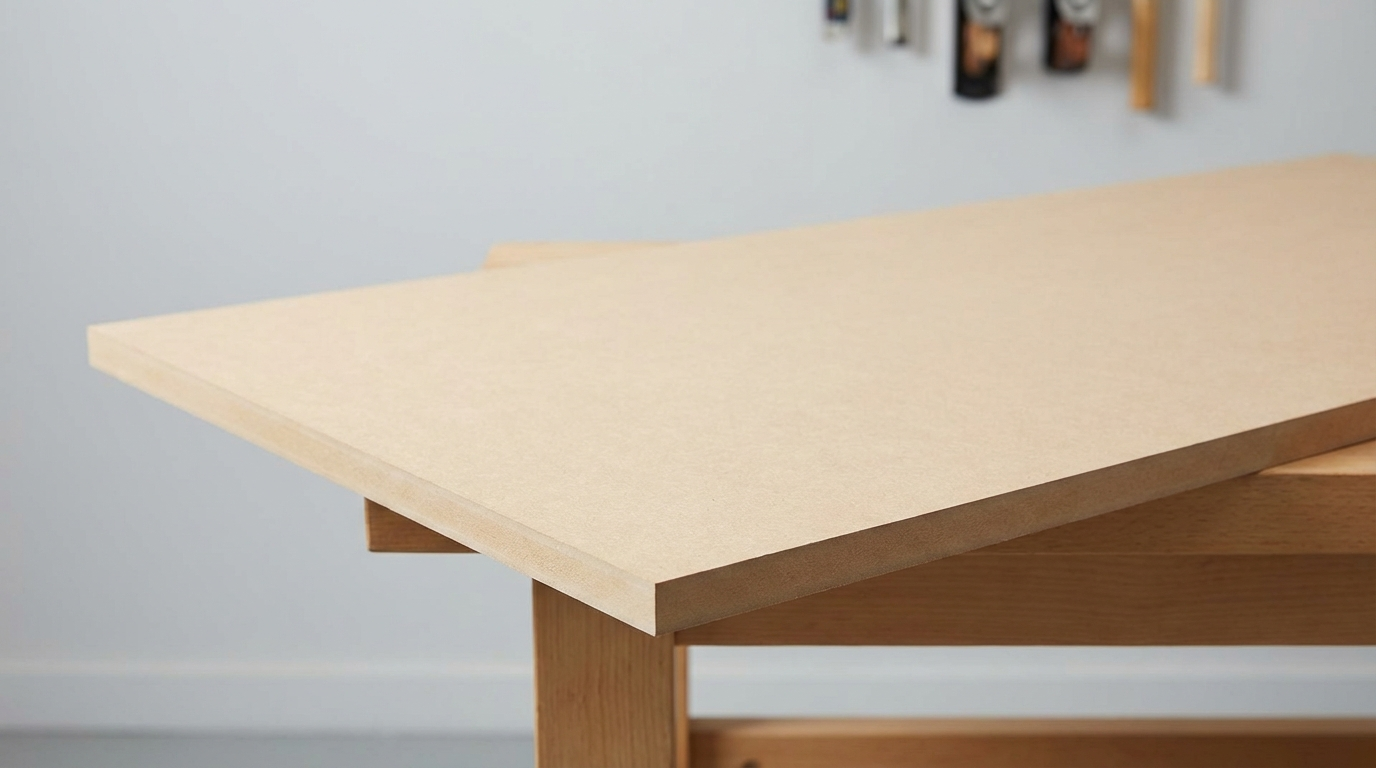
In the Indian market, "waterproof MDF" like Duroboil’s variant refers to high-density fiberboard treated with specialized resins and hydrophobic additives during manufacturing. This boosts resistance to humidity, minor spills, and steam compared to regular MDF, but it’s not impermeable like PVC or fully submersible like marine plywood. The term often signals compliance with moisture-resistant standards, allowing short-term water exposure without delamination if edges are sealed.
Where people get confused:
- Assuming it's 100% waterproof like plastic—sheeting fails under soaking.
- Thinking all MDF labeled "waterproof" performs equally—depends on resin quality and density.
- Overlooking edge sealing needs—raw edges absorb moisture fast.
- Confusing it with BWP plywood—different core structures suit different loads.
- Ignoring thickness impact—thinner sheets swell more in humid storage.
- Expecting no expansion ever—MDF still breathes in monsoons without acclimation.
Is Duroboil Waterproof MDF Suitable for Indian Kitchens?
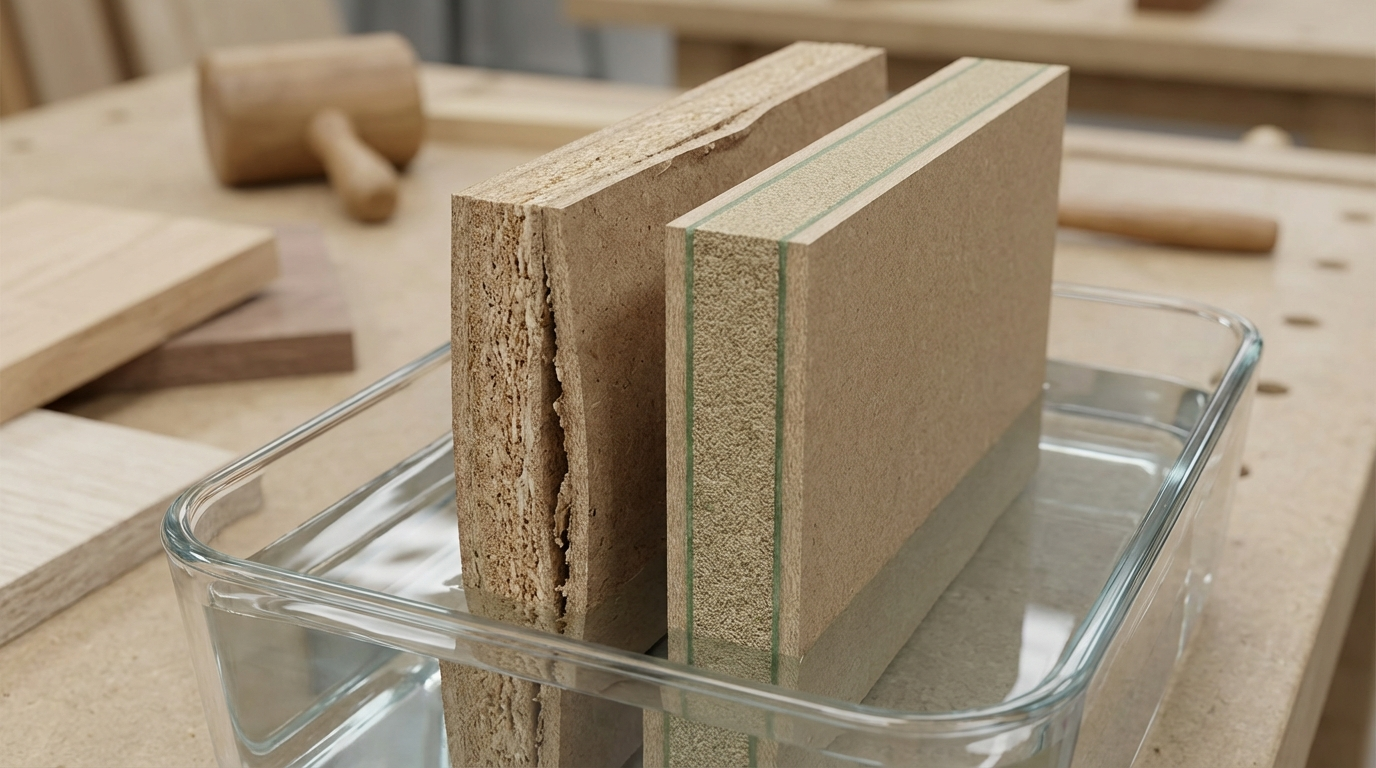
Yes, particularly for counter backsplashes, cabinet sides, and drawer bases where steam and splashes occur daily. The treatment helps it withstand typical cooking humidity better than untreated boards, reducing bulge risks in modular setups. However, in oil-heavy North Indian kitchens or coastal homes, pair it with laminate overlays and sealed edges to counter grease and salt-laden air. Next step: Test a sample edge with water for 30 minutes; if no darkening, it's viable. Acclimate sheets 48 hours before cutting for best fit.
India-Specific Reality Check
Monsoon humidity (80-95% in Mumbai/Kerala) and coastal salt air accelerate untreated MDF failure, causing edge swelling and core weakness within months. Poor godown storage—stacked outdoors or near walls—leads to warping pre-installation. Contractor workflows often skip acclimation, amplifying monsoon risks. In contrast, Duroboil waterproof MDF's treatments handle these better, but verify batch consistency as regional milling variations affect density. Always insist on covered transport to site.
Does Monsoon Humidity Ruin Waterproof MDF?
Not if properly handled: The resin treatment limits swelling to under 8-10% in cyclic wet-dry tests typical for India. Failures spike from unsealed edges or poor ventilation post-install. In reality, coastal sites like Goa see 20% more claims without precautions. Practical check: Weigh a sample before/after 24-hour humid exposure; minimal gain signals quality. Seal all cuts with epoxy putty immediately and ensure wardrobe vents for air circulation to extend life by years.
Price Range and Cost Drivers (India)
Expect Rs. 80-150 per sq ft for Duroboil waterproof MDF, varying by thickness (6mm lowest, 18-25mm highest), sheet size (8x4 ft standard), and city (metros 15-20% pricier due to logistics). Core density and finish (pre-laminated adds 20%) drive costs; calibrated sheets cost more but cut waste.
| Thickness | Typical Range (Rs./sq ft) | Common Use |
|---|---|---|
| 6-12mm | 80-110 | Shelves, partitions |
| 18mm | 110-130 | Cabinets, furniture frames |
| 25mm+ | 130-150 | Heavy-load vanities |
How to ask for a quote: Specify "Duroboil waterproof MDF, 18mm calibrated, 8x4 ft, moisture-tested batch, delivered covered." Mini example: 50 sq ft kitchen cabinetry ~Rs. 6,000-8,000 base, plus 20% for lamination/transport.
How to Choose in 5 Steps
- Assess exposure: Semi-wet (kitchen)? Yes. Full submersion? No—add liners.
- Check density: Tap sheet; uniform thud, no hollow spots.
- Verify treatment: Ask for moisture resistance demo or spec sheet.
- Test calibration: Measure edges; <0.5mm variance saves trimming time.
- Confirm sealing plan: Budget for edge bands; skip if pre-laminated.
Skipping step 3 risks delamination in first monsoon.
Decision Framework: Match Your Project Needs
| Condition | Recommended Choice | Key Verification |
|---|---|---|
| High humidity kitchen | Duroboil waterproof MDF + laminate | Edge sealing demo, density tap test |
| Coastal bedroom wardrobe | 18mm waterproof MDF, vented | Acclimation tolerance, no core gaps |
| Heavy-use bathroom vanity | 25mm + epoxy seal | Water splash test on sample |
| Tight budget shelves | 12mm MR MDF alternative | Compare swell rates visually |
| Scratch-prone kids' room | Laminated waterproof MDF | Surface hardness scratch test |
| Fast modular delivery | Pre-cut calibrated sheets | Thickness gauge check |
Waterproof MDF vs BWR Plywood: Which for Modular Kitchens?
Waterproof MDF wins for smooth machinability and paint adhesion in flush cabinets, ideal for factory-style modulars. BWR plywood suits load-bearing frames but shows screw plugs. MDF edges need banding; plywood doesn't. In humid kitchens, MDF's density resists sagging better if sealed. Choose MDF for aesthetics, plywood for strength. Verify: CNC a sample joint—MDF holds tighter. Cost: MDF often 10-15% less for same thickness in metros.
Trade-offs and Limitations
- Moisture vs permanence: Resists splashes but swells if submerged >2 hours.
- Machinability vs strength: Easier to route than plywood but lower screw-holding without inserts.
- Finish flexibility vs weight: Lighter than blockboard but needs sealing for edges.
- Cost vs longevity: Mid-range pricing; untreated edges cut life in half.
- Flatness vs flexibility: Stays true in dry zones but warps under poor storage.
Common Buyer Mistakes and How to Avoid Them
- Mistake: Buying without density check. Why: Low-density cores fail fast. Fix: Tap test multiple spots.
- Mistake: Skipping edge sealing. Why: Absorbs humidity. Fix: Apply putty pre-install.
- Mistake: No acclimation. Why: Site humidity mismatch. Fix: 48 hours indoors.
- Mistake: Ignoring thickness for load. Why: Sagging shelves. Fix: 18mm min for cabinets.
- Mistake: Outdoor exposure. Why: UV/moisture combo. Fix: Limit to interiors.
- Mistake: Cheap transport. Why: Rain damage en route. Fix: Insist on tarps.
- Mistake: No vent planning. Why: Trapped moisture. Fix: Add wardrobe gaps.
- Mistake: Overlooking calibration. Why: Wastage hikes cost 15%. Fix: Measure before loading.
Failure Modes and Fixes
- Symptom: Edge swelling. Cause: Unsealed cuts. Prevent: Immediate banding. If happening: Sand + reseal.
- Symptom: Surface bulge. Cause: Steam exposure. Prevent: Laminate overlay. If happening: Replace panel.
- Symptom: Screw pull-out. Cause: Repeated loading. Prevent: Inserts in hinges. If happening: Reinforce with brackets.
- Symptom: Warping bow. Cause: Uneven humidity. Prevent: Acclimate + vents. If happening: Straighten under weights.
- Symptom: Core crumbling. Cause: Low density. Prevent: Pre-tap test. If happening: Full replacement.
- Symptom: Finish peeling. Cause: Poor adhesion. Prevent: Primer coat. If happening: Scrape + repaint.
Quality Checks You Can Do Without Lab Tests
Before buying: Tap for uniform sound, flex corners gently (minimal bend), sniff for chemical odor (fresh resin), check edges for fuzz (calibrated OK).
After cutting: Water-drop test edges 10 mins (no dark ring), screw test holds firm, sand smooth without gum.
After install: Check alignment gaps <1mm, wipe test no residue, monitor first monsoon week.
Red flags: Visible gaps, soft spots, inconsistent color.
What Thickness of Duroboil Waterproof MDF for Wardrobes?
18mm strikes the balance for side panels and shelves in standard Indian wardrobes, supporting 20-30kg loads without sag in humid bedrooms. Thinner 12mm suits partitions; 25mm for base if heavy storage. Thicker resists monsoons better but adds weight for carpenters. Verify: Stack weights on sample shelf overnight. In modular factories, 18mm cuts repeat complaints by 30% via stability. Always calibrate to match frame precisely, reducing hinge stress.
Tips for Homeowners: Durability Do’s and Don’ts
- Do: Wipe spills instantly, use vents, annual edge recoat.
- Don’t: Drag cleaners, overload shelves, expose to direct steam.
Carpenter Tips: Working with Waterproof MDF
- Use carbide bits for clean cuts, pre-drill screws, edge-band machine post-cut, acclimate 48hrs.
- Avoid: Hand-sawing (splinters), exposed storage.
Architect and Designer Tips
Spec 18mm calibrated with laminate for wet zones; detail edge returns and vents. Prioritize density for CNC repeatability; avoid overhangs >30cm without support.
OEM/Modular Maker Tips
QC checkpoints: Density mapping, auto-seal lines, batch humidity logs. Reduces returns by standardizing cuts; test cyclic humidity pre-ship.
Can You Paint Duroboil Waterproof MDF Directly?
Yes, after light sanding and primer for adhesion in humid conditions. PU paints hold best against scratches and moisture. Skip in steam zones—opt laminate. Test: Apply sample coat, expose to humidity 24hrs. Ensures no bubbling, common in India’s variable climates. Pros use water-based primers for low VOC in homes.
FAQs
Is Duroboil waterproof MDF better than regular MDF for bathrooms?
Duroboil’s version outperforms standard MDF in bathrooms by resisting steam-induced swelling through resin treatments, suitable for vanities away from direct showers. Regular MDF buckles faster in 80% humidity. Seal edges and add ventilation to maximize this edge. In practice, coastal users report fewer repairs; verify with a splash test. Combine with tiles for full protection, extending usability in Indian homes prone to water backups.
How long does waterproof MDF last in Indian humidity?
Typically 8-15 years with proper sealing and maintenance, outlasting untreated by double in monsoons. Factors like ventilation and load shorten it; poor storage halves life. Users in Delhi see good results with annual checks. Focus on edge protection—key to longevity. Monitor first year closely for early tweaks like added vents.
Does it need special tools for cutting?
Standard carbide blades work fine, but sharp ones prevent chipping on edges crucial for sealing. CNC excels for precision in modular work. Avoid dull tools causing fuzz that traps moisture. Carpenters note 20% less waste with calibration. Pre-mark zones for hinges to maintain strength post-cut.
Waterproof MDF vs HDHMR: Key differences?
Both moisture-resistant, but HDHMR offers higher density for heavy loads, while waterproof MDF prioritizes smoothness for painting. MDF cheaper for light furniture; HDHMR for kitchens. Choose per use: MDF for wardrobes, HDHMR for counters. Test screw hold—HDHMR superior. Both need sealing in India’s climate.
Can it be used for outdoor furniture?
Not recommended without full encapsulation, as UV and rain degrade resins quickly. Limit to covered patios max. Indoor alternatives like BWP plywood better. If insisted, multi-layer seal + paint, but expect 2-3 year life. Verify dealer samples first.
What’s the best finish for Duroboil waterproof MDF?
Laminate for high-traffic, PU paint for custom looks, veneer for premium. Laminate hides edges best in humidity. Prep with primer always. In kids’ rooms, scratch-resistant laminates cut maintenance. Test adhesion on sample for your climate.
Does thickness affect waterproofing?
Thicker sheets (18mm+) resist swelling better due to more resin mass, ideal for bases. Thinner prone to faster absorption. Match to load: 12mm shelves OK if sealed. Check uniformity—variance signals weak spots. In monsoons, thicker pays off long-term.
How to store waterproof MDF sheets on site?
Vertical racks, covered tarps, elevated off ground, away from walls. Acclimate 48hrs pre-use. Horizontal stacks warp in humidity. Contractor tip: Rotate batches FIFO. Prevents 50% of early failures seen in India.
Disclaimer: This content is provided for general informational purposes based on industry practices and publicly available information. Product specifications, standards, prices, and availability may vary by manufacturer, region, and time. Readers should independently verify details with manufacturers, dealers, or qualified professionals before making purchase or construction decisions.Want Plywood Suggestions?
Share a few details and a Duro BOIL specialist will suggest suitable brands and connect you to responsive dealers.