Duroply marine plywood: what to verify before buying
A practical review of duroply marine plywood: specs checklist, pros/cons, best-use cases, warranty checks, and what to verify at the dealer in India.
Note: This page is independent informational content and is not affiliated with any manufacturer.
Quick Decision Summary
Duroply marine plywood refers to BWP-grade (IS:710) sheets ideal for wet zones; prioritize IS mark, uniform thickness, and no core gaps during dealer checks.
If you’re in a hurry: Opt for this in kitchens, bathrooms, or coastal homes where boiling-water-proof glue matters most. Expect strong delamination resistance if verified properly, but confirm calibration under 0.5mm variance and smooth face veneers. Avoid unbranded alternatives without lab-grade glue—test by knocking for solid sound and checking edges for fillers. Local prices vary, but focus on post-install swelling prevention via edge sealing. Best for heavy-use furniture or partitions in humid India climates; pair with marine-grade polish for longevity.
- Choose this if: high moisture exposure, structural needs, or 20+ year durability target.
- Avoid this if: dry interiors only (overkill, costlier) or budget under typical marine ranges.
If You’re Searching for Duroply, Here’s What People Usually Mean
Queries for Duroply marine plywood typically seek details on Duro Marine or similar BWP products from this brand, known for phenolic resin glue and tropical hardwood cores suited to India's wet conditions. Users often want verification steps for kitchens, bathrooms, or coastal builds, confusing it with lower BWR grades. Common goals include spotting fakes, understanding thickness options (like 12-19mm), and weighing against generics for termite resistance.
What makes Duroply marine plywood different from regular waterproof types?
Duroply marine stands out via BWP certification (boiling water proof), using superior glue lines that endure prolonged submersion tests unlike BWR's limited boil cycles. In practice, this means less layer separation in monsoons. Nuance: not all "marine" labels match IS:710 standards—verify the stamp. Next step: tap edges for hollow sounds (red flag) and measure thickness uniformity across the sheet at the store.
How to Compare Duroply-Type Options to Alternatives (Without Guesswork)
Focus on verifiable traits like glue shear strength, core density, and veneer grade rather than brand hype. Duroply-type BWP uses phenolic bonds for 72+ hour boil resistance; compare by asking for glue line count (10+ layers ideal) and face veneer thickness (1.2mm+). Alternatives shine in calibrated edges for flush fitting.
| Condition | Duroply-Type BWP | Generic BWP | BWR Alternative |
|---|---|---|---|
| Monsoon kitchens | Strong; verify IS:710 | OK if calibrated | Avoid; swells faster |
| Coastal bathrooms | Best; check core gaps | Variable; test weight | Poor; delaminates |
| Budget interiors | Over-spec; 20% pricier | Balanced | Cheapest short-term |
| Heavy cabinets | Load-bearing OK | Check density | Not recommended |
What This Term/Material Actually Means
Duroply marine plywood means BWP-grade (IS:710 compliant) sheets with phenolic resin glue, hardwood plies, and preservatives for boiling water exposure up to 72 hours. Layers bond under heat/pressure for waterproof integrity, unlike MR's urea-formaldehyde limits.
Where do people get confused with marine plywood grades?
Common mix-ups: thinking all waterproof = marine (BWR fails full boil tests); assuming submersible forever (surface water OK, not pools); recon veneers as natural (former cheaper, grainy); calibrated vs non (former ±0.2mm thick, cuts clean). Also, BWP vs blockboard (former lighter, stronger glue). Next: inspect stamp for "BWP/IS:710" and finger-test glue lines for tackiness residue (poor sign).
- Mistake: BWR as marine—delams in steam.
- Mistake: Ignoring core voids—weakens load.
- Mistake: Thin veneers scratch easy.
- Mistake: No calibration warps on uneven frames.
- Mistake: Untreated = termite bait.
India-Specific Reality Check
In monsoon-heavy regions like Mumbai or Kerala, unverified marine plywood risks glue failure from 90%+ humidity storage. Coastal salt accelerates corrosion if untreated; godowns stack poorly, crushing edges. Contractor workflows favor quick-check sheets over lab tests—prioritize on-site tap tests amid rushed deliveries.
Does marine plywood hold up in Indian coastal humidity?
Yes, if BWP-grade with preservatives; resists 40°C/90% RH without swelling over 8%. Nuance: poor stacking causes edge moisture ingress. Check: lift corners for damp feel; seal cut edges same-day with epoxy. In practice, Chennai users report 15+ years in bathrooms with proper polishing.
Price Range and Cost Drivers (India)
Typically ₹70-₹150 per square foot for 18mm marine sheets, higher in metros like Delhi (logistics) vs Tier-2 cities. Thinner 12mm starts lower (~₹50-100), 25mm structural pushes ₹120-200+. Drivers: thickness, ply count, face veneer grade, calibration, batch freshness, dealer margins (10-20% variation).
How much does 19mm Duroply marine plywood cost?
Ranges ₹110-₹160/sqft typically, but confirm locally as fuel hikes sway 15%. Nuance: bulk buys drop 10%, branded adds 20% premium. Ask quote including: "IS:710 BWP, 19x2440x1220mm, calibrated, RC grade." Example: 100sqft kitchen partition ~₹12,000-16,000 excluding cut/wastage.
How to Choose in 5 Steps
- Confirm grade: IS:710 BWP stamp visible; skip unmarked.
- Visual scan: Smooth face, no knots/fillers >5mm, uniform color.
- Measure thickness: Caliper check ±0.3mm across; drop uneven.
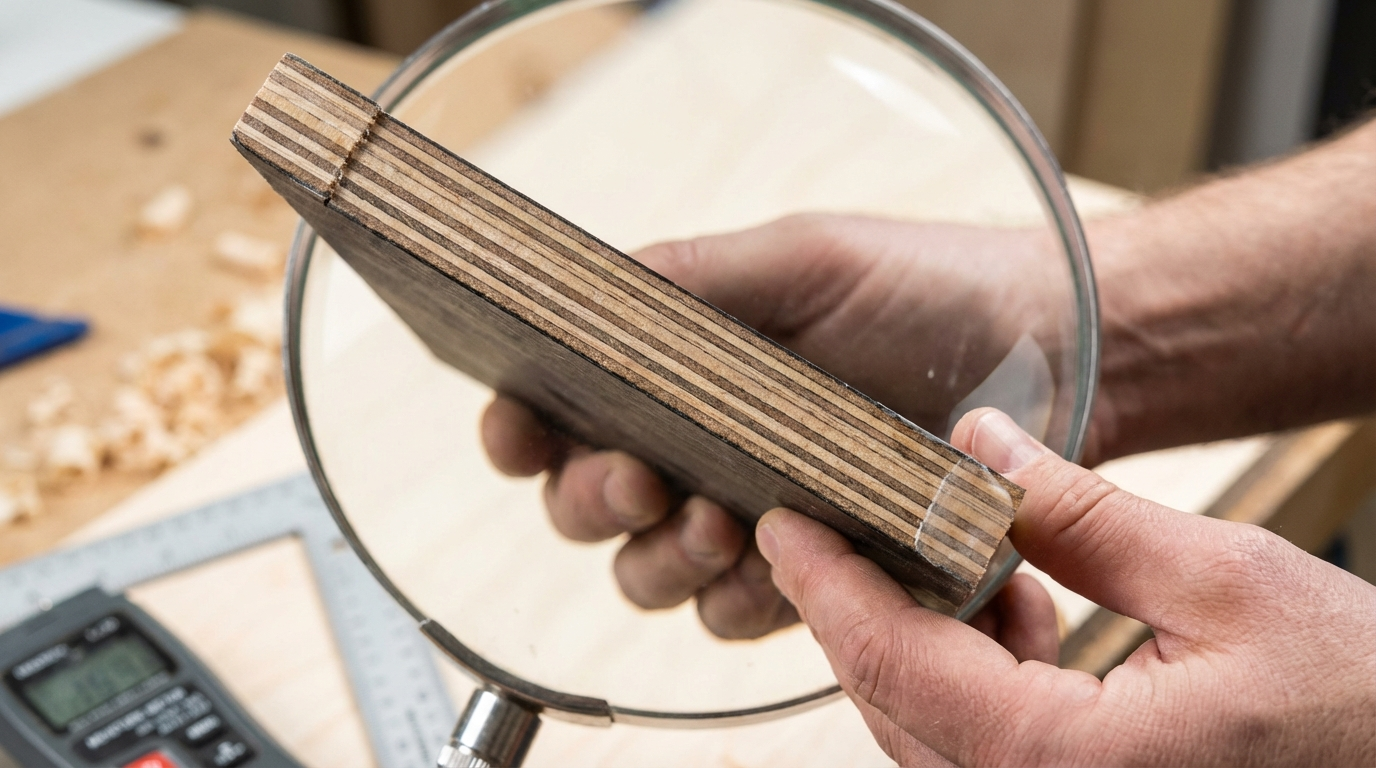
- Core test: Knock for solid thud, peek edges for gaps <0.5mm.
- Vendor quiz: Glue type (phenolic), batch date (<6 months), return policy.
Skip any: risks 20% early failure from moisture ingress.
Trade-offs and Limitations
Strength in wet zones but 25-40% costlier than BWR; heavier (25kg+ for 18mm), harder to cut cleanly without calibrated tools. Veneers scratch if not polished; not fire-rated without add-ons. Best for targeted use, not whole-home.
Is Duroply marine plywood worth the extra cost?
Often yes for wet/high-load spots (saves rework ₹10k+); no for bedrooms. Trade-off: superior glue vs budget strain. Weigh via project moisture map—kitchens yes, walls maybe BWR. Verify ROI: edge-seal halves swelling risk, extending life 10 years.
Common Buyer Mistakes and How to Avoid Them
- Mistake: Buying by brand name alone. Why: Fakes flood markets. Instead: Demand IS:710 test cert copy.
- Mistake: Ignoring storage. Why: Godown damp warps. Instead: Inspect recent batch, dry transport.
- Mistake: No thickness gauge. Why: Thin spots fail loads. Instead: Borrow caliper at dealer.
- Mistake: Skipping edge check. Why: Voids delam. Instead: Shine torch through ends.
- Mistake: Wrong thickness pick. Why: 12mm flexes cabinets. Instead: Match span/load charts.
- Mistake: No polish plan. Why: Bare wood absorbs moisture. Instead: Budget marine varnish Day 1.
- Mistake: Bulk without sample. Why: Batch variance. Instead: Test-cut 1 sheet first.
- Mistake: Coastal no-treatment. Why: Salt eats glue. Instead: Confirm preservatives.
Failure Modes and Fixes
- Symptom: Edge swelling. Cause: Unsealed cuts. Prevent: Epoxy all edges. If happening: Sand, re-varnish.
- Symptom: Delamination. Cause: Weak glue. Prevent: Phenolic verify. If: Clamp, PU fill.
- Symptom: Warping. Cause: Uneven moisture. Prevent: AC store. If: Frame reinforce.
- Symptom: Core crush. Cause: Overstack. Prevent: Proper handling. If: Shim supports.
- Symptom: Veneer peel. Cause: Poor bond. Prevent: Smooth check. If: Glue down, sand.
- Symptom: Termite entry. Cause: No chem. Prevent: Stamp confirm. If: Treat spray.
Quality Checks You Can Do Without Lab Tests
Before buying: Weigh sheet (dense=good), flex test (no bow), smell (no chemical off). Ask: glue shear proof? Vendor stock age?
After cutting: Even kerf, no splinter; glue lines intact.
Post-install: Level check, wipe-test no water bead fail.
Can you spot fake marine plywood at the dealer?
Yes: missing IS:710, fuzzy stamps, lightweight hollow tap. Real ones thud solidly, edges tight. Nuance: recon faces OK if uniform. Next: compare two sheets side-by-side for consistency.
For Homeowners: Durability Do’s and Don’ts
- Do: Seal edges, use marine polish yearly.
- Don’t: Drag cleaners, expose to steam direct.
For Carpenters: Handling and Prep Tips
- Cut with fine blade, pre-drill screws, reinforce hinges with blocks.
For Architects: Spec Writing Essentials
- Detail: "BWP IS:710, ±0.3mm cali, 1.4mm veneer min."
FAQs
What thickness of Duroply marine plywood for kitchen cabinets?
Typically 18mm for cabinets balances strength/cost; 12mm shelves suffice if spanned <60cm. In humid kitchens, thicker resists sagging under pots. Confirm frame alignment first—warps if not. Local carpenters prefer calibrated for flush laminates, reducing filler needs by 30%. Always edge-seal post-cut to block monsoon vapor.
Is Duroply marine plywood termite proof?
Usually treated with preservatives for resistance, but pair with soil barriers in India. Not 100% immune—check stamp for chem details. In practice, coastal homes see fewer attacks vs untreated. Ventilate storage; reapply termicide on cuts. Lasts 15+ years with maintenance.
How to store marine plywood before installation?
Vertical racks, 150mm off ground, covered loosely in dry godown. Avoid direct sun/floor contact to prevent warping. In monsoons, plastic wrap ends only. Check weekly for moisture—discard bowed sheets. Ideal: use within 2 months of delivery.
Does it need special polishing?
Yes, marine-grade PU varnish for UV/moisture shield. Apply 3 coats post-install. Standard paints fail in 2 years. Nuance: matte for kitchens hides scratches. Budget 10% extra; pro application ensures even bond.
Can it be used for bathroom vanities?
Excellent if walls tiled fully; resists splash but ventilate post-shower. 19mm ideal for counter sag-proof. Seal joints silicone. In humid Kerala-style baths, outperforms BWR by holding level longer.
What if the sheet has minor veneer repairs?
Acceptable in RC grade if <2% surface, smooth sanded. Avoid AB if perfect needed. Test: rub finger—no bumps. Patches weaken less in marine glue.
Is it suitable for structural beams?
Not primary; use formwork or sheathing. Load limits per span tables—consult engineer. Stronger cores handle temp loads well.
How to verify calibration on site?
Use digital caliper at 4 corners/center; <0.5mm variance good. Non-cali swells unevenly. Saves sawdust waste 15%.
Alternatives if Duroply unavailable locally?
Other IS:710 BWP like branded generics—match via checks. Prioritize local stock for fresh batches.
Disclaimer: This content is provided for general informational purposes based on industry practices and publicly available information. Product specifications, standards, prices, and availability may vary by manufacturer, region, and time. Readers should independently verify details with manufacturers, dealers, or qualified professionals before making purchase or construction decisions.Want Plywood Suggestions?
Share a few details and a Duro BOIL specialist will suggest suitable brands and connect you to responsive dealers.