Flush Door Complete Guide: Top 15 Brands, Prices & IS 2202 Specs
Complete flush door buying guide with top 15 brands compared, city-wise prices, IS 2202 certification explained & solid vs hollow core comparison.
Quick Buying Decision
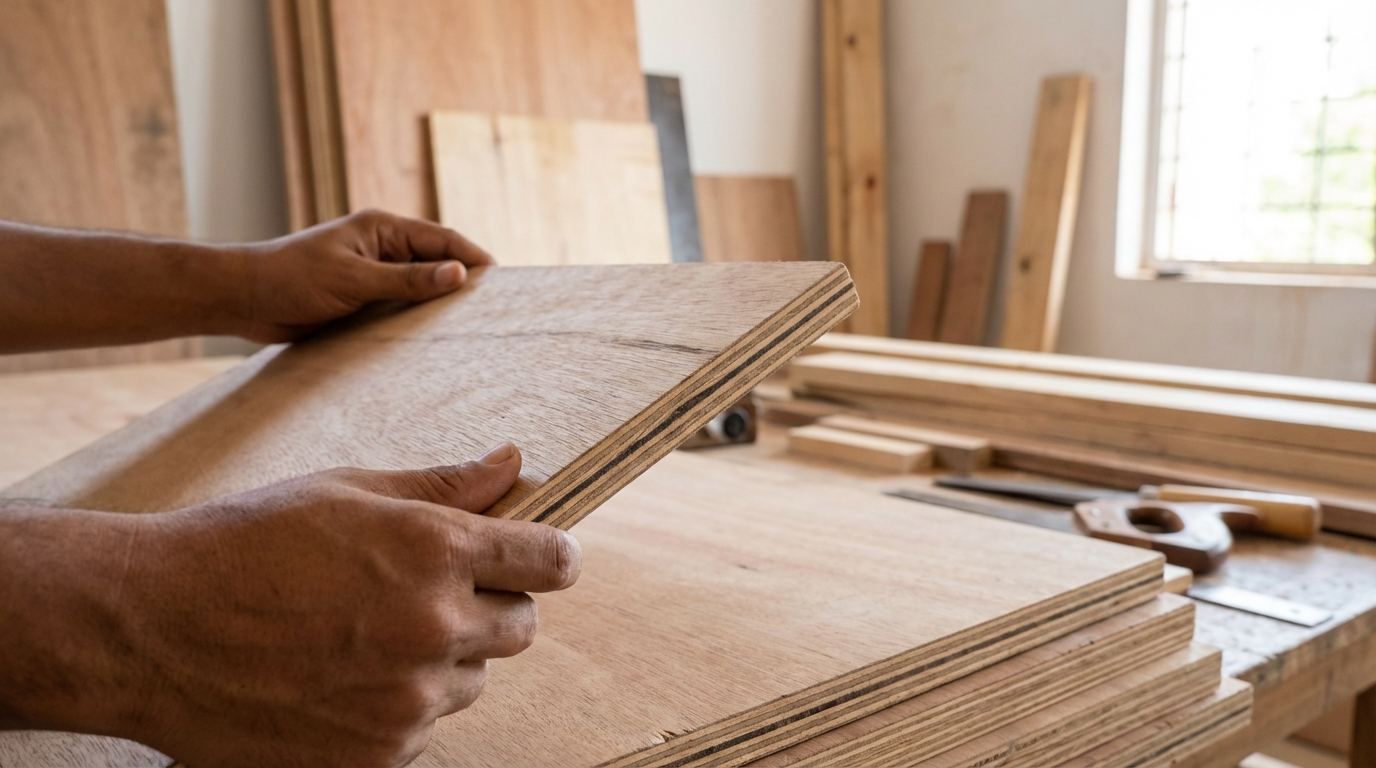
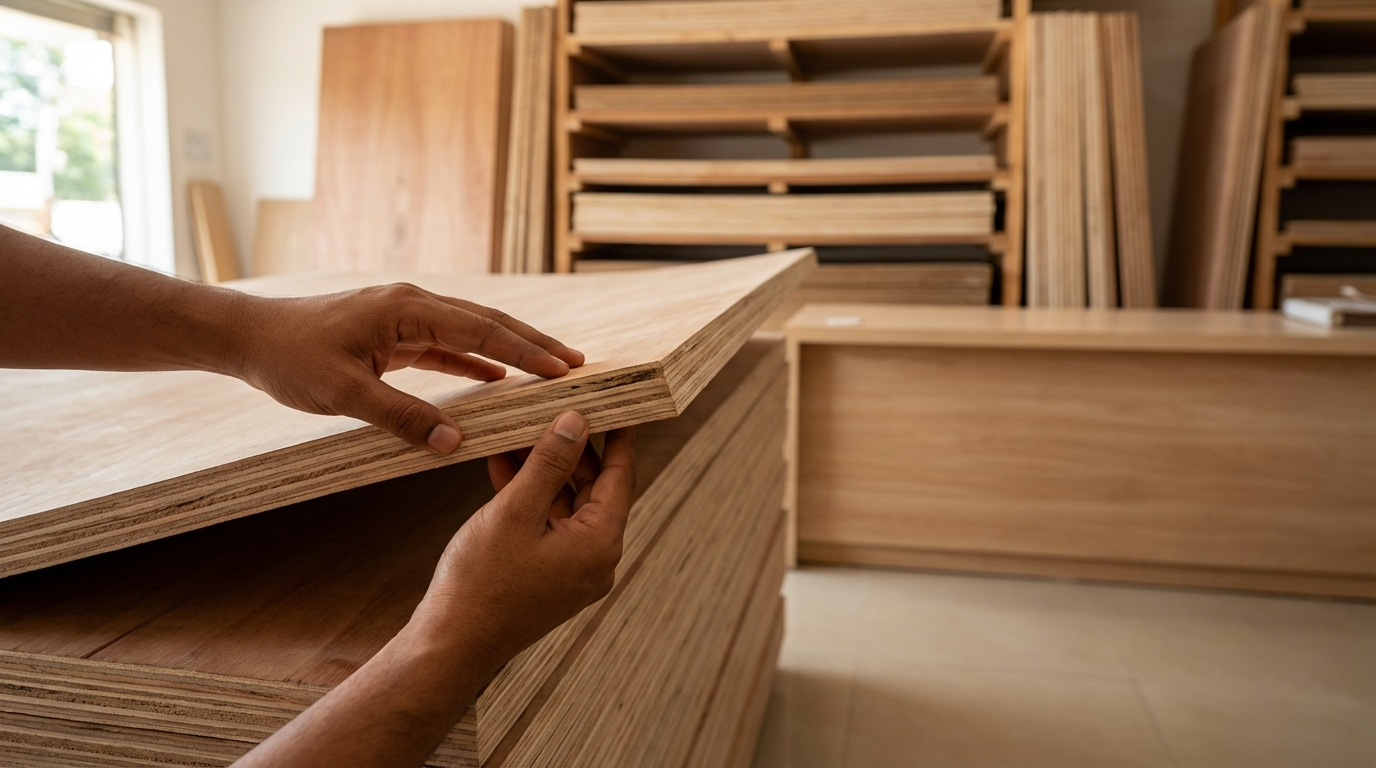
Flush doors are flat, smooth-surfaced doors manufactured by bonding plywood, MDF, or laminate layers over a solid or hollow core structure. Flush doors are flat, smooth doors made by bonding layers of plywood, MDF, or laminate over a solid core (like hardwood or particleboard).
If you're in a hurry: For most Indian homes, a BWR-grade solid core flush door with 32-35mm thickness from an ISI-certified brand (IS 2202) offers the ideal balance of durability, moisture resistance, and value. Budget ₹100-180 per sq ft for standard quality and ₹180-350 per sq ft for premium brands like CenturyPly, Greenply, or Bhutan Tuff. Always verify the ISI mark and request the test certificate before purchasing.
Quick Picks Based on Your Needs
| Requirement | Recommended Option | Why This Works | Expected Price Range (per sq ft) |
|---|---|---|---|
| Best for Kitchen | BWR grade, 35mm, solid core | Handles humidity and steam exposure | ₹130-200 |
| Best for Bathroom | BWP grade, 30-35mm, waterproof | Direct water contact resistance | ₹140-250 |
| Best for Main Door | BWP grade, 40-45mm, hardwood core | Security, durability, sound insulation | ₹180-350 |
| Best Budget Option | MR grade, 30mm, pine core | Economical for dry interior areas | ₹80-120 |
| Best Premium Option | BWP grade with veneer finish, 40mm | Aesthetics with maximum durability | ₹250-400 |
How to Choose a Flush Door: Step-by-Step
Selecting the right flush door requires understanding your specific application, the environment it will face, and matching these needs with appropriate specifications. According to duroboil.com's material experts, following this systematic approach prevents costly mistakes that many homeowners make.
Step 1: Identify Your Application
Wet vs Dry Area Decision: This is the most critical first step. BWR is boiling water resistant, whereas BWP is boiling waterproof. Although BWR has a high moisture resistance capacity, it is not as strong as BWP feature. When the door comes into direct contact with water, BWP grade plywood should be used.
- Dry areas (bedrooms, living rooms, study rooms): MR or BWR grade sufficient
- Semi-wet areas (kitchens, dining near sinks): BWR grade recommended
- Wet areas (bathrooms, balconies, external doors): BWP grade mandatory
- High-traffic commercial areas: BWP with increased thickness (40mm+)
Step 2: Select the Right Core Type
Solid core flush doors are dense and have a solid interior that is made from wood materials like medium-density fiberboard (MDF), particleboard, or solid wood strips. Understanding core types helps you balance budget with performance:
| Core Type | Construction | Best Applications | Sound Insulation | Price Level |
|---|---|---|---|---|
| Solid Core (Blockboard) | Dense wood or composite filling | Main doors, bedrooms, offices | Excellent | Premium |
| Cellular Core | Wood battens in grid pattern | Internal rooms, wardrobes | Good | Mid-range |
| Hollow Core | Honeycomb cardboard structure | Closets, utility rooms | Poor | Budget |
| Hardwood Core | Kiln-dried hardwood battens | Premium applications, main doors | Excellent | Premium |
| Pine Wood Core | Treated pine battens | General purpose doors | Good | Mid-range |
Solid core doors are ideal for sound insulation and privacy because of the material, but they're also heavier and harder to install. Use them for bedrooms and bathrooms. On the other hand, hollow core doors are lightweight, easier to install and affordable, but also lack durability and strength. Use them for closets, pantries and laundry rooms.
Step 3: Determine Correct Thickness
Thickness directly impacts strength, insulation, and longevity. The thickness of a flush door is very important as it decides the strength, insulation ability and sound proof nature of the door. Usually, doors in houses have a flush door thickness around 35mm which gives enough robustness for everyday use at home. This size makes sure that fittings are installed correctly while keeping costs reasonable.
| Application | Recommended Thickness | Reason |
|---|---|---|
| Closet/Store Room | 25-30mm | Light-duty, cost-effective |
| Internal Bedroom Door | 30-35mm | Standard residential use |
| Bathroom Door | 32-35mm | Moisture resistance with durability |
| Kitchen Door | 35mm | Handles humidity and regular use |
| Main Entrance Door | 40-45mm | Security, insulation, durability |
| Commercial/Office | 40-45mm | Heavy traffic, institutional requirements |
| Fire-rated Doors | 45-50mm | Building code compliance |
Front entrances require bigger flush door dimensions, usually 36″x80″ or 38″x84″, to make a grand entrance. These doors commonly have thicker flush doors from 40mm up to 45mm for better safety and insulation features.
Step 4: Verify IS 2202 Certification
This standard (Part 1) specifies the requirements for wooden flush door shutters (solid core type) with face panels of plywood or of cross-band and face veneers. The IS 2202 certification is your assurance of quality:
IS 2202 (Part 1): 2023 covers flush doors with plywood face panels, while IS 2202 (Part 2): 2022 covers wooden flush door shutters using particle board, high density fibre board (HDF), medium density fibre board (MDF) and hardboard for face panels.
Key tests under IS 2202 include:
- Dimensional Stability: Ensures the doors do not warp or bend under normal usage. Bonding Strength: Confirms strong adhesion between plywood face panels and core material. Weather Resistance: Tests for resistance against moisture, humidity, and temperature changes.
- Impact resistance and flexure tests
- Edge loading and shock resistance
- Screw withdrawal resistance
Step 5: Compare and Get Multiple Quotes
Duroboil.com recommends getting quotes from at least 3 dealers before finalizing your purchase. When requesting quotes, ensure they include:
- Brand name and specific product variant
- Grade (MR/BWR/BWP)
- Core type and wood species
- Thickness and exact dimensions
- Face veneer type (Gurjan, commercial, decorative)
- Warranty period and coverage
- Delivery charges and timeline
Top 15 Flush Door Brands in India: Complete Comparison
The Indian flush door market features both established national players and regional manufacturers. In India, some of the top flush door brands include PA Home, Century Ply, Duro Ply, and Greenply. Here's a comprehensive analysis of the leading brands:
| Brand | Headquarters | Key Products | Price Range (₹/sq ft) | Warranty | Key Strength |
|---|---|---|---|---|---|
| CenturyPly | Kolkata | Sainik, Club Prime, Bond | ₹140-300 | 7-25 years | Virokill technology, wide network |
| Greenply | New Delhi | Optima, Ecotec, Green Club | ₹130-280 | 7-20 years | Antifungal coating, humid region performance |
| Bhutan Tuff | Delhi | Veneer Flush, BWP Doors | ₹140-260 | 10-20 years | E1 certified, IGBC compliant |
| Duro Ply | Yamunanagar | BWP, BWR, Membrane Doors | ₹120-240 | 7-15 years | Hollow and solid core options |
| KPI Ply | Pan India | BWR, BWP Flush Doors | ₹110-220 | 10-15 years | Kiln-dried hardwood, sustainable |
| Archidply | Delhi | Marine, Commercial Doors | ₹130-260 | 7-15 years | Coastal humidity resistance |
| Kitply | Kolkata | Monsoon Shield Range | ₹100-200 | 5-15 years | Budget-friendly, rain resistance |
| Virgo | Gujarat | Termite-proof Doors | ₹110-220 | 7-12 years | Termite treatment, rural reach |
| National Plywood | Pan India | Standard Flush Doors | ₹90-180 | 5-10 years | Budget reliability |
| Maxon Doors | Pan India | Engineered Doors | ₹120-250 | 7-15 years | Modern manufacturing |
| Austin Plywood | Gujarat | E0 Flush Doors, WPC Doors | ₹100-200 | 7-12 years | Low formaldehyde emission |
| Sonear | Yamunanagar | BWP Waterproof Doors | ₹100-180 | 5-10 years | Value for money |
| Kangaro Plywood | Yamunanagar | Decorative Flush Doors | ₹100-200 | 5-10 years | Chemical treatment |
| Minimax Plywood | Pan India | Sound Insulated Doors | ₹110-220 | 7-12 years | Commercial applications |
| Kridha Laminates | Pan India | BWP Grade Doors | ₹100-200 | 7-10 years | High screw holding capacity |
Note: This is independent editorial content. Duroboil.com is not affiliated with any of the brands mentioned above. Prices and warranty terms vary by region and dealer. Always confirm with authorized dealers.
Flush Door Price Guide 2026: City-Wise Analysis
The average price varies depending on the thickness of the entrances. For a thick 30mm flush door price can range from Rs. 800 to Rs. 1,500. A 32mm flush door price can go from Rs. 1,000 to Rs. 1,800.
Price by Thickness and Grade
| Thickness | MR Grade (₹/sq ft) | BWR Grade (₹/sq ft) | BWP Grade (₹/sq ft) |
|---|---|---|---|
| 25mm | ₹65-90 | ₹85-110 | ₹100-130 |
| 30mm | ₹75-100 | ₹95-130 | ₹115-150 |
| 32mm | ₹85-110 | ₹110-145 | ₹130-170 |
| 35mm | ₹95-125 | ₹125-165 | ₹150-200 |
| 40mm | ₹110-145 | ₹145-190 | ₹180-250 |
| 45mm | ₹125-165 | ₹165-220 | ₹210-300 |
City-Wise Price Variation
Prices are approximate and may vary by location and dealer. Here's what you can typically expect across major Indian cities:
| City/Region | Budget Range (₹/sq ft) | Mid-Range (₹/sq ft) | Premium (₹/sq ft) | Price Factor |
|---|---|---|---|---|
| Delhi NCR | ₹80-120 | ₹130-180 | ₹200-350 | Manufacturing hub, competitive |
| Mumbai | ₹90-130 | ₹140-200 | ₹220-380 | High demand, transport cost |
| Bangalore | ₹85-125 | ₹135-190 | ₹210-360 | IT sector premium |
| Chennai | ₹85-120 | ₹130-185 | ₹200-340 | Coastal, humidity concerns |
| Kolkata | ₹75-110 | ₹120-170 | ₹180-320 | Near manufacturing |
| Hyderabad | ₹80-120 | ₹125-180 | ₹190-340 | Growing market |
| Pune | ₹85-125 | ₹135-185 | ₹200-350 | Industrial demand |
| Tier-2 Cities | ₹70-100 | ₹110-160 | ₹170-300 | Limited premium options |
| Tier-3 Towns | ₹65-95 | ₹100-150 | ₹160-280 | Transport adds cost |
Why Prices Vary Between Dealers
Understanding price variations helps you negotiate better:
- Authorized vs Non-authorized dealers: Authorized dealers typically charge 10-15% more but offer genuine warranty
- Bulk purchase discounts: Orders of 10+ doors often get 8-15% discount
- Cash vs Credit: Cash payments may attract 3-5% discount
- Seasonal factors: Festival seasons see higher prices, monsoon may have discounts
- Transport distance: Dealers far from manufacturing hubs add freight costs
- Storage quality: Well-stored doors command premium over improperly stored stock
IS 2202 Certification Explained: What You Must Know
The IS 2202 Wooden Flush Door (Part 1): 2023 is the updated Bureau of Indian Standards (BIS) specification that defines the quality, construction, and performance requirements for wooden flush door shutters with solid core and plywood face panels.
IS 2202 Classification System
Wooden Flush Door Shutters as per IS 2202 (Part 1) are classified as: Grade - BWP; Type and Construction - Core Type with abbreviations like BD (Blockboard Decorative), BN (Blockboard Non-Decorative/Paintable), PD (Particle board Decorative), PN (Particle board Non-Decorative), MD (MDF Decorative), MN (MDF Non-Decorative).
| IS 2202 Type | Core Material | Face Type | Finish | Best Application |
|---|---|---|---|---|
| BD | Blockboard | Decorative veneer/laminate | Ready to use | Living rooms, bedrooms |
| BN | Blockboard | Plain face | Paintable | Interior where painting preferred |
| PD | Particle board | Decorative | Ready to use | Budget decorative applications |
| PN | Particle board | Plain | Paintable | Economy interior doors |
| MD | MDF with/without blockboard | Decorative | Ready to use | Smooth finish required |
| MN | MDF with/without blockboard | Plain | Paintable | Custom paint finishes |
Standard Sizes Under IS 2202
Sizes available are Modular (with Designation of Doors) - 8 DS 20/8 DS 21/9 DS 20/9 DS 21/10 DS 20/10 DS 21/12 DT 20/12 DT 21 (D - Door, S - Single shutter, T - Double leaf shutter) Non-Modular - As agreed to between the manufacturer and the purchaser. The thickness of shutters in such cases shall be 25mm, 30mm, or 35mm.
How to Verify IS 2202 Certification
- Check for ISI mark: Look for the standard mark on the door
- Verify license number: Each ISI mark has a unique CM/L number
- Request test certificate: Ask dealer for recent test reports
- Check BIS website: Verify manufacturer's license status online
- Look for grade marking: BWP/BWR marking should be clearly visible
Solid Core vs Hollow Core: Complete Comparison
While both styles may look similar from the outside, internal composition makes a difference in durability, performance, and cost.
Detailed Comparison Table
| Parameter | Solid Core | Hollow Core | Winner |
|---|---|---|---|
| Weight | 25-40 kg per door | 10-15 kg per door | Hollow (easier handling) |
| Sound Insulation | Excellent (STC 30-35) | Poor (STC 20-25) | Solid Core |
| Security | High impact resistance | Can break under force | Solid Core |
| Fire Resistance | 30-60 minutes rating possible | Poor fire resistance | Solid Core |
| Price (per door) | ₹3,500-12,000 | ₹1,500-4,000 | Hollow Core |
| Installation | Needs stronger hinges, 2 people | Easy, single person possible | Hollow Core |
| Durability | 15-25 years | 8-12 years | Solid Core |
| Moisture Resistance | Excellent with BWP grade | Poor, prone to damage | Solid Core |
| Screw Holding | Excellent | Poor | Solid Core |
| Best Use | Main doors, bedrooms, bathrooms | Closets, utility rooms | Application dependent |
Solid core doors are fantastic for any rooms where you want a higher-quality option. They're ideal for rooms where you might want a bit more privacy and sound insulation, so you might consider using solid core doors for your bedrooms, bathrooms, and home offices. You can use hollow core doors on closet doors and pantry doors, where no sound insulation is necessary. Many homeowners opt to vary it up to cut back on costs and make installation a bit easier.
When to Choose Each Type
Choose Solid Core When:
- Security is a priority (main doors, external doors)
- Sound privacy needed (bedrooms, study, home office)
- Fire rating required (commercial buildings)
- Humid or wet areas (bathrooms, kitchens)
- Long-term investment focus
Choose Hollow Core When:
- Budget is primary concern
- Closet and storage doors
- Pantry and utility room doors
- Light-use areas with no moisture
- Temporary or rental properties
Decision Matrix: What to Buy for Each Situation
| Situation | Recommended Option | Why | Verify This |
|---|---|---|---|
| Mumbai apartment bathroom | BWP grade, 35mm, solid core | High humidity, direct water contact | IS 2202 certification, phenol adhesive |
| Delhi bedroom door | BWR grade, 32mm, solid core | Sound insulation, temperature extremes | Core type, warranty coverage |
| Chennai main entrance | BWP grade, 40-45mm, hardwood core | Coastal humidity, security | Termite treatment, thickness uniformity |
| Budget flat interior doors | MR grade, 30mm, pine core | Dry area, cost-effective | Face veneer quality, straight edges |
| Commercial office | BWR grade, 40mm, solid core | High traffic, durability | Impact test certificate, fire rating if needed |
| Pooja room door | MR grade, 30-32mm, decorative veneer | Dry area, aesthetic importance | Veneer grain pattern, finish quality |
| Kitchen cabinet doors | BWR grade, 18-25mm, MDF face | Steam exposure, frequent cleaning | Smooth surface, edge sealing |
| Store room | Hollow core, 25mm | Minimal use, budget focus | Basic structural integrity |
Red Flags: When to Walk Away
Duroboil.com's material experts have compiled these warning signs that indicate poor quality or dishonest practices:
Physical Red Flags on the Door
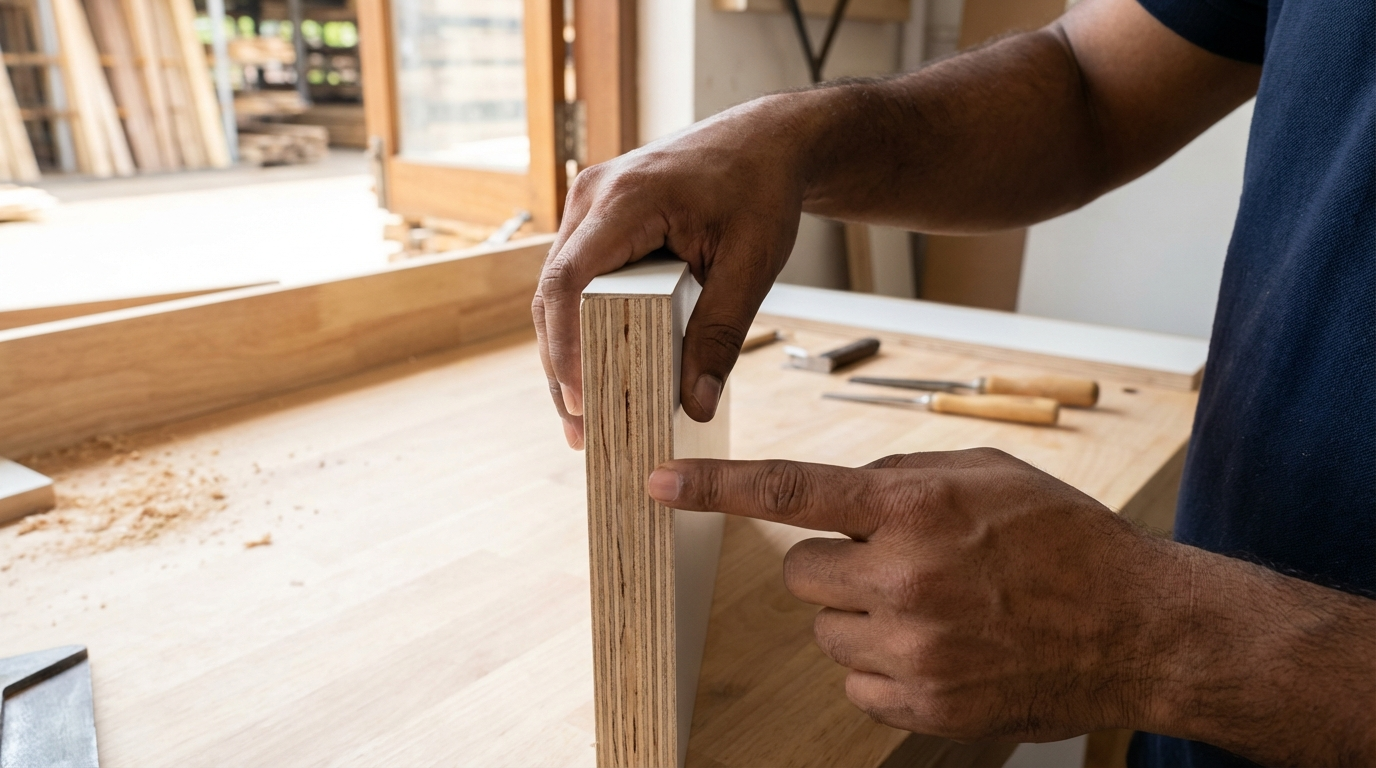
- Visible voids or gaps when edges are examined
- Uneven thickness across the door surface
- Delamination or peeling at corners
- Strong chemical smell indicating poor adhesive quality
- Warping or bowing when placed on flat surface
- Dark patches or stains on face veneer
- Rough or unfinished edges
- Missing or unclear markings (grade, ISI, size)
Dealer Red Flags
- Refusing to show ISI certification or license number
- Offering "same quality, different brand" at much lower prices
- No proper invoice or warranty documentation
- Pressure tactics for immediate purchase
- Unable to explain grade differences (MR/BWR/BWP)
- Improper storage conditions (doors lying flat on wet floor)
- No after-sales support contact
Common Buying Mistakes to Avoid
Mistake 1: Ignoring Grade Requirements
Why it happens: MR grade looks similar and costs less
What goes wrong: BWR plywood is not fully waterproof, it is water resistant. It has a great water resistant capability but it is not as waterproof as BWP plywood. Using MR grade in bathrooms leads to swelling and delamination within 1-2 years.
What to do instead: Match grade strictly to application – BWP for wet areas, BWR for humid areas, MR only for completely dry areas.
Mistake 2: Choosing Based Only on Price
Why it happens: Significant price differences seem hard to justify
What goes wrong: Cheap doors warp, delaminate, or fail hardware within 3-5 years, costing more in replacements
What to do instead: Calculate total cost of ownership including expected lifespan
Mistake 3: Wrong Thickness Selection
Why it happens: Not understanding thickness impact on performance
What goes wrong: Thin main doors provide poor security and insulation; thick internal doors add unnecessary cost
What to do instead: Follow thickness guidelines per application type
Mistake 4: Ignoring Core Type
Why it happens: Core is hidden, seems unimportant
What goes wrong: Hollow core in high-use areas leads to damage, poor sound insulation
What to do instead: Insist on knowing core type and match to usage requirements
Mistake 5: Not Checking Storage Conditions
Why it happens: Trusting dealer without inspection
What goes wrong: Pre-damaged doors installed, problems appear after fitting
What to do instead: Visit dealer, check storage, select specific pieces
Mistake 6: Overlooking Finish Requirements
Why it happens: Focus only on door, forgetting finishing needs
What goes wrong: Paintable doors bought when laminated needed, or vice versa, increasing project cost
What to do instead: Clarify finish preference before purchase – pre-laminated, veneer, or paintable
Mistake 7: Not Measuring Accurately
Why it happens: Assuming standard sizes will fit
What goes wrong: Doors don't fit frames, require cutting or frame modification
What to do instead: Measure frame opening precisely, account for fitting gaps (typically 3-5mm all around)
Mistake 8: Skipping Warranty Documentation
Why it happens: Trusting verbal assurances
What goes wrong: Claims rejected without proper documentation
What to do instead: Get warranty card filled and stamped at purchase time
Questions to Ask Your Dealer
| Question | Good Answer | Concerning Answer |
|---|---|---|
| What is the exact grade of this door? | Clear answer: "This is BWR grade, IS 2202 certified" | Vague: "It's waterproof type" |
| What core type is used? | "Solid core with pine/poplar battens" | "Good quality core" |
| Can I see the ISI certification? | Shows certificate with license number | "We don't have it here" |
| What is the warranty period and process? | Specific years, claim process explained | "Just bring it back if problem" |
| What face veneer is used? | "Gurjan face veneer" with specifics | "Wood face" |
| How should I store before installation? | Specific instructions on position and environment | No guidance provided |
| Do you provide installation support? | Carpenter referral or installation service | "Not our responsibility" |
| What adhesive grade is used? | "Phenol formaldehyde for BWP/BWR" | "Strong adhesive" |
| Is the door termite treated? | "Chemical treatment done" with specifics | Hesitant or unclear |
| Can I select specific pieces? | "Yes, please check and choose" | "No, we'll send from godown" |
After Purchase: Transport and Storage
Transport Guidelines
- Doors should be transported standing vertically, not laid flat
- Protect from rain and direct sunlight during transit
- Use soft padding between doors to prevent scratches
- Avoid stacking more than 10-15 doors together
- Handle carefully to prevent edge damage
Storage Requirements
- Store vertically: Lean at 10-15 degree angle against wall
- Dry location: Away from water sources and high humidity
- Ventilated space: Avoid closed, damp rooms
- Away from heat: Not near direct sunlight or heating sources
- On wooden battens: Keep off floor using wooden supports
- Cover loosely: Use breathable cloth, not plastic sheets
Acclimatization Period
Allow flush doors to acclimatize to the installation environment for 48-72 hours before fitting. This is especially important in:
- Air-conditioned spaces (temperature difference)
- Newly constructed buildings (higher humidity from curing)
- Monsoon season installations
- Coastal and hill station locations
India-Specific Considerations
Monsoon Protection
Indian monsoons create unique challenges for flush doors. Key considerations:
- Ground floor doors: Use BWP grade for all doors within 3 feet of floor level in flood-prone areas
- Coastal areas: BWR-grade doors are a hit in humid regions like Kerala and coastal areas. Consider marine-grade or BWP for all exterior-facing doors
- Bathroom doors: Ensure bottom edge is properly sealed or use WPC doors as alternative
Regional Climate Factors
| Region | Climate Challenge | Recommended Solution |
|---|---|---|
| North India (Delhi, UP, Punjab) | Extreme temperature variations (5°C to 45°C) | Solid core doors resist expansion/contraction better |
| South India (Kerala, TN, Karnataka) | Year-round high humidity (70-90%) | BWR minimum for all doors, BWP for bathrooms |
| Coastal (Mumbai, Chennai, Goa) | Salt air corrosion, high moisture | BWP grade essential, termite treatment mandatory |
| Hill Stations (Shimla, Ooty, Darjeeling) | Dampness, temperature fluctuation | BWR/BWP with proper seasoning |
| Central India (MP, Chhattisgarh) | Termite prevalence, moderate humidity | Termite-treated BWR adequate for most applications |
Local Terminology Guide
When visiting timber markets ("plywood mandi"), these local terms help:
- Flush door / Flash door: Same product, different pronunciation
- Plain door: Flush door without decorative finish
- Sunmica door: Flush door with laminate finish
- Veneer door: Flush door with wood veneer face
- Waterproof door: Usually refers to BWP grade
- Teak ply door: Door with teak veneer face
- Commercial door: Basic MR grade for dry areas
Frequently Asked Questions
Is flush door waterproof?
The answer is yes. Flush doors are waterproof. In simple terms, the water-proof flush doors are resistant to water in bath spaces and rain. However, this depends on the grade. BWP (Boiling Water Proof) grade flush doors are truly waterproof and can withstand direct water contact. BWR (Boiling Water Resistant) grade handles humidity and occasional moisture but is not fully waterproof. MR (Moisture Resistant) grade is only suitable for dry interior areas. Always check the grade marking before purchase and match it to your application requirements.
What is the difference between BWR and BWP flush doors?
BWR is boiling water resistant, whereas BWP is boiling waterproof. Although BWR has a high moisture resistance capacity, it is not as strong as BWP feature. BWR grade uses urea formaldehyde adhesive and can handle high humidity and occasional moisture contact – suitable for kitchens and areas with indirect water exposure. BWP grade uses phenol formaldehyde adhesive and withstands continuous water contact – essential for bathrooms, balconies, and external doors. BWP typically costs 15-25% more than BWR but offers significantly better protection in wet environments.
What is the standard thickness for flush doors in India?
The usual size for bedroom doors is 30″x78″ and they are typically 35mm thick. These flat door measurements give enough privacy but also make movement simple. Standard thicknesses available in India include 25mm, 30mm, 32mm, 35mm, 40mm, and 45mm. For residential bedroom doors, 32-35mm is standard. For main entrance doors, 40-45mm provides better security and insulation. Commercial applications typically require 40mm or higher. Always match thickness to application requirements rather than choosing based on cost alone.
How to identify good quality flush door?
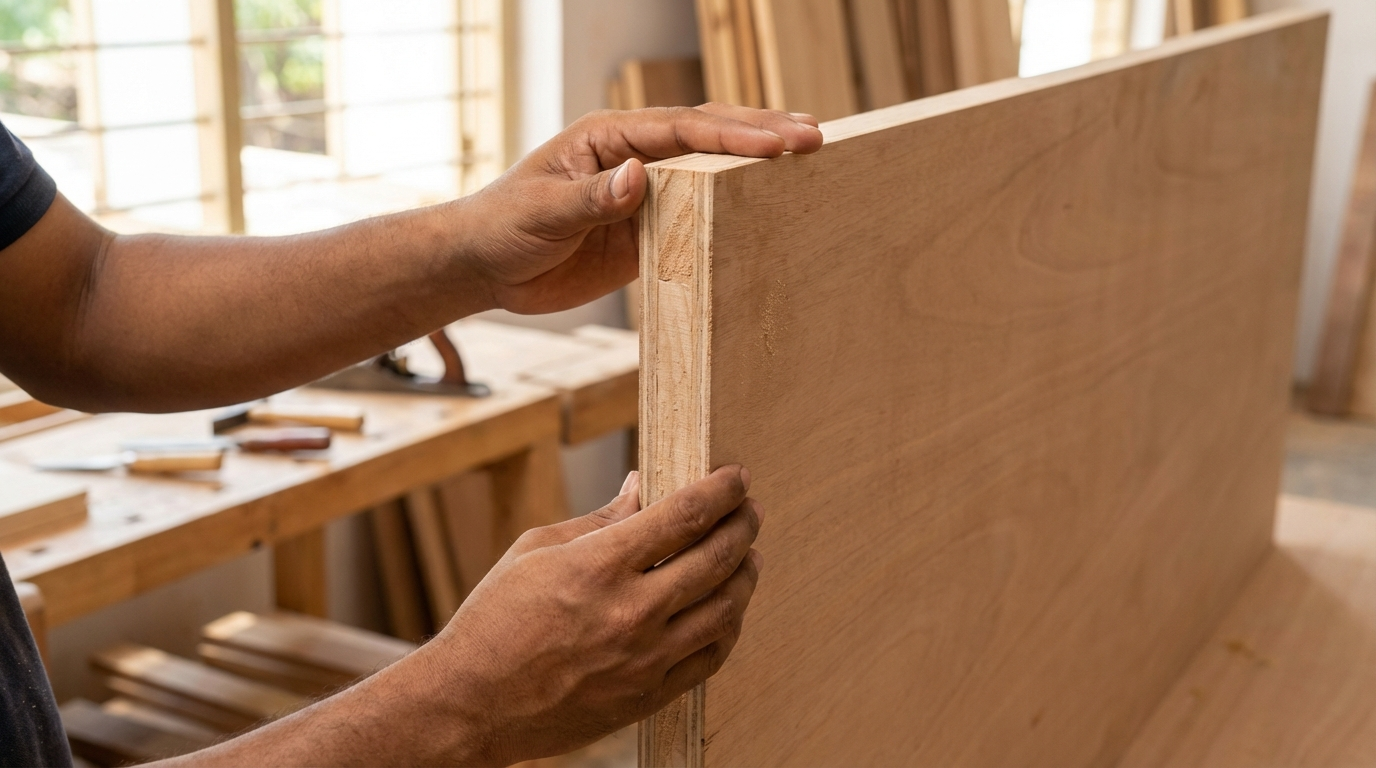
Quality identification involves multiple checks. First, verify IS 2202 certification with visible ISI mark and license number. Check for even thickness by measuring at multiple points – variation shouldn't exceed 1mm. Examine edges for voids or gaps in core construction. Surface should be smooth without bumps or depressions. Look for consistent face veneer without dark patches or repairs. Weight should feel substantial for solid core doors. Straight edges when placed on flat surface indicate proper manufacturing. Finally, strong chemical smell indicates poor-quality adhesive that may fail over time.
Which flush door brand is best for bathrooms?
For bathrooms, prioritize BWP grade over brand name. Century Flush Doors are one of the most trusted options in India. Known for their durability, termite resistance, and elegant finish. Leading options include CenturyPly Sainik BWP, Greenply Ecotec BWP, Bhutan Tuff Marine Grade, and Duro BWP. All major brands offer quality bathroom-suitable doors if you select the correct BWP grade. Focus on IS 2202 certification, phenol formaldehyde adhesive confirmation, and proper sealing of all edges. Consider WPC (Wood Plastic Composite) doors as an alternative for extremely wet bathrooms.
What is the lifespan of a flush door in Indian conditions?
Flush door lifespan varies significantly based on grade, installation location, and maintenance. Premium BWP grade solid core doors can last 20-30 years in proper conditions. Standard BWR grade doors typically last 12-18 years. Budget MR grade doors in appropriate dry locations may last 8-12 years. Factors reducing lifespan include: wrong grade for application, poor installation, lack of edge sealing, termite damage, and improper maintenance. Regular inspection, immediate repair of any damage, and keeping water contact minimal extends door life significantly.
Can hollow core flush doors be used for main entrance?
With a stronger design and more thickness, a solid core door has better security and privacy than a hollow core door. If a door with a hollow core is kicked in, the door will likely fracture. Hollow core doors are strongly NOT recommended for main entrances due to poor security (can be broken with force), minimal sound insulation, poor weather resistance, and limited durability for heavy use. Main entrance doors should be solid core, BWP grade, minimum 40mm thickness, with proper locking arrangements. Using hollow core for main doors is a false economy that compromises home security.
How to maintain flush doors to increase lifespan?
Proper maintenance significantly extends flush door life. For daily care, dust with soft dry cloth and clean spills immediately. For periodic cleaning, use damp cloth with mild soap, never soak with water. Inspect hinges and locks every 6 months, tighten loose screws, and apply lubricant if squeaking. Check for and seal any exposed edges, especially at bottom. Avoid banging doors shut – use door closers for high-traffic areas. In monsoon, ensure proper ventilation to prevent moisture buildup. Apply furniture polish 2-3 times yearly for laminated doors. Address any swelling, warping, or damage immediately before it worsens.
Are pre-laminated flush doors better than paintable doors?
Neither is universally "better" – each suits different needs. Pre-laminated doors offer ready-to-install convenience, scratch resistance, easier cleaning, consistent finish quality, and moisture resistance on surface. They're ideal for kitchens, bathrooms, and when quick installation is priority. Paintable doors allow custom color matching, easier touch-up repairs, lower initial cost, and traditional wood finish options with veneer. They suit spaces where specific colors needed or future color changes anticipated. For humid areas, pre-laminated surfaces resist moisture better. Consider total cost including painting labor and materials when comparing options.
What is the price of a standard bedroom flush door?
A 35mm thick flush door price can range from Rs. 1,200 to Rs. 2,000, while a 40mm flush door price can range from Rs. 1,400 to Rs. 2,500. For a standard 7ft x 3ft (21 sq ft) bedroom door in 32-35mm thickness, expect to pay: Budget MR grade: ₹1,600-2,500 per door. Mid-range BWR grade: ₹2,500-4,000 per door. Premium branded BWR: ₹3,500-5,500 per door. Add ₹300-800 for hardware (hinges, handles, locks) and ₹500-1,500 for installation. Pre-laminated doors cost 20-40% more than paintable ones. Prices vary by city, brand, and dealer margins. Always get multiple quotes for comparison.
Final Buying Checklist
Before finalizing your flush door purchase, use this comprehensive checklist:
| Check | Action Required | Done |
|---|---|---|
| Application identified | List each door location and usage type | ☐ |
| Grade selected | MR/BWR/BWP matched to each location | ☐ |
| Thickness determined | Based on application requirements | ☐ |
| Dimensions measured | Frame openings measured precisely | ☐ |
| Core type selected | Solid/cellular/hollow based on use | ☐ |
| Finish decided | Pre-laminated vs paintable | ☐ |
| IS 2202 verified | ISI mark and license number confirmed | ☐ |
| Multiple quotes obtained | At least 3 dealers compared | ☐ |
| Physical inspection done | Edges, surface, weight checked | ☐ |
| Warranty documented | Warranty card filled and stamped | ☐ |
| Invoice obtained | Proper GST invoice with all details | ☐ |
| Transport arranged | Proper handling and storage planned | ☐ |
| Installation scheduled | After 48-72 hours acclimatization | ☐ |
Following this duroboil.com guide ensures you make an informed decision that balances quality, durability, and value for your specific needs. Remember that flush doors are a long-term investment – spending slightly more upfront for appropriate grade and quality typically saves significant money over the door's lifetime.
Disclaimer: This content is provided for general informational purposes based on industry practices and publicly available information. Product specifications, standards, prices, and availability may vary by manufacturer, region, and time. Readers should independently verify details with manufacturers, dealers, or qualified professionals before making purchase or construction decisions.Want Plywood Suggestions?
Share a few details and a Duro BOIL specialist will suggest suitable brands and connect you to responsive dealers.