Green Board Plywood Review: Waterproof Plywood Features
Review of green board plywood (BWP/BWR plywood). Learn about waterproof properties, testing standards, and whether it's worth the premium price.
Quick Verdict: Is Green Board Plywood Worth Your Money?
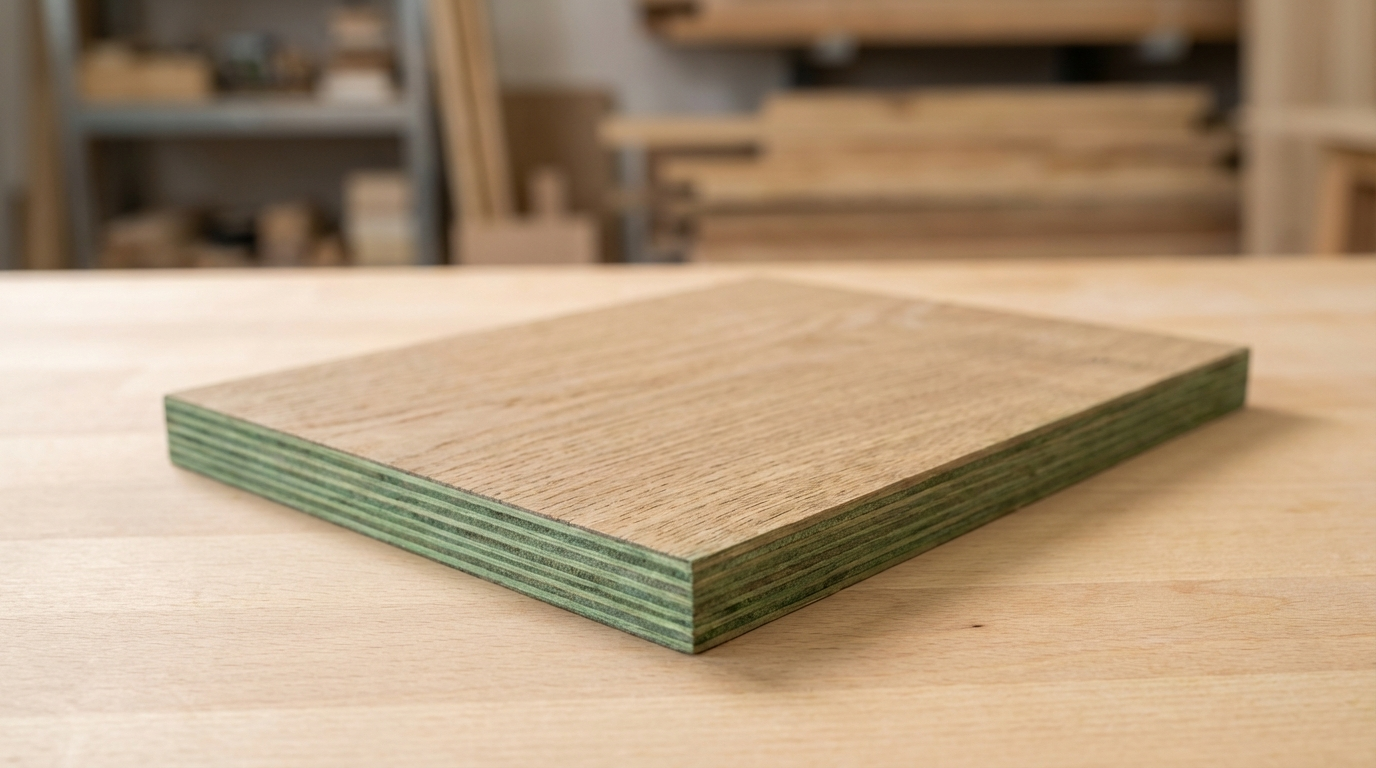
Green board plywood, commonly referring to BWP (Boiling Water Proof) and BWR (Boiling Water Resistant) grade plywood, represents the premium segment of waterproof plywood available in Indian markets. These boards earn their "green" designation from the phenolic resin adhesive that often leaves a greenish tint on core layers, indicating superior moisture resistance compared to commercial MR grade plywood.
After extensive analysis of performance parameters, user feedback, and real-world applications across Indian homes, duroboil.com's assessment places BWP green board plywood as an excellent choice for moisture-prone areas, though the premium pricing requires careful consideration of your specific needs.
Our Rating Summary
| Performance Parameter | Rating | Remarks |
|---|---|---|
| Moisture Resistance | Excellent | Withstands prolonged water exposure without delamination |
| Structural Strength | Excellent | High-density core provides superior load-bearing capacity |
| Termite Resistance | Good to Excellent | Varies by brand treatment; verify certification |
| Surface Finish Quality | Good | Suitable for lamination and veneer application |
| Value for Money | Good | Higher upfront cost justified for wet area applications |
| Availability | Good | Available in metros; limited in tier-3 cities |
| Carpenter Workability | Good | Slightly harder to cut than MR grade |
| Overall Verdict | Recommended | Best for kitchens, bathrooms, and coastal areas |
What Exactly is Green Board Plywood?
Green board plywood is a market terminology used across India to describe high-grade waterproof plywood manufactured using phenol formaldehyde resin adhesive. The term "green" doesn't refer to eco-friendliness but rather to the characteristic greenish colour visible in the core layers due to the phenolic resin bonding process.
This category encompasses two primary grades as per Bureau of Indian Standards: BWR (Boiling Water Resistant) plywood conforming to IS:303 and BWP (Boiling Water Proof) plywood conforming to IS:710. The IS:710 grade, also marketed as marine plywood, represents the highest waterproofing standard available for plywood in India.
Manufacturing Process Simplified
Green board plywood is manufactured by bonding multiple layers of wood veneers using synthetic phenolic resin under high temperature and pressure. Unlike MR (Moisture Resistant) grade plywood that uses urea formaldehyde adhesive, the phenolic resin in green board creates cross-linked polymer bonds that remain stable even under prolonged water exposure.
The manufacturing typically involves 4-press technology in premium variants, where sheets undergo multiple pressing cycles to eliminate internal voids and ensure uniform density. This process creates a more homogeneous board with consistent thickness and superior moisture resistance throughout the panel.
How It Differs from Regular Commercial Plywood
The fundamental difference lies in the adhesive system employed. Commercial MR grade plywood uses urea formaldehyde glue that can withstand occasional moisture but degrades under continuous water exposure. Green board plywood's phenolic adhesive maintains bond integrity even after 72 hours of boiling water immersion in BWP grade variants.
| Feature | Commercial MR Plywood | Green Board BWR | Green Board BWP |
|---|---|---|---|
| Adhesive Type | Urea Formaldehyde | Phenol Formaldehyde | Phenol Formaldehyde |
| Boiling Water Test | 1-2 hours | 8-10 hours | 72+ hours |
| BIS Standard | IS:303 (MR) | IS:303 (BWR) | IS:710 |
| Core Colour | Light brown/cream | Greenish tint | Distinct green |
| Price Range (per sq ft) | ₹35-55 | ₹55-85 | ₹85-140 |
| Best Application | Dry interiors | Semi-wet areas | Wet areas, marine |
Technical Specifications of Green Board Plywood
Bureau of Indian Standards (BIS) mandates specific technical parameters for BWR and BWP grade plywood. Understanding these specifications helps verify quality during purchase and ensures you receive genuine waterproof plywood rather than relabeled commercial grade material.
Complete Specifications Table
| Specification | BWR Grade (IS:303) | BWP Grade (IS:710) |
|---|---|---|
| Standard Sheet Size | 8 x 4 feet (2440 x 1220 mm) | 8 x 4 feet (2440 x 1220 mm) |
| Available Thickness | 4mm to 25mm | 6mm to 25mm |
| Density Range | 550-650 kg/m³ | 650-750 kg/m³ |
| Moisture Content | 5-15% | 5-15% |
| Glue Shear Strength (Dry) | ≥1.1 N/mm² | ≥1.3 N/mm² |
| Glue Shear Strength (Wet) | ≥0.7 N/mm² | ≥0.9 N/mm² |
| Modulus of Rupture | ≥40 N/mm² | ≥50 N/mm² |
| Formaldehyde Emission | E1/E2 (varies) | E0/E1 (premium brands) |
| Core Wood Species | Poplar, Eucalyptus, Gurjan | Gurjan, Keruing (hardwood) |
What These Specifications Mean for You
Glue shear strength determines how well the veneer layers stay bonded under stress. Higher values in BWP grade mean your kitchen cabinets won't delaminate even after years of steam and moisture exposure from cooking.
Density directly correlates with screw-holding capacity and surface hardness. BWP grade's higher density (650-750 kg/m³) ensures better hinge retention in cabinet doors and superior edge finishing quality.
E0 emission certification indicates formaldehyde emission below 0.5 mg/L, making the plywood safe for enclosed spaces like bedrooms and children's rooms. This is particularly important in Indian homes where ventilation may be limited in certain seasons.
Performance Analysis: How Green Board Plywood Actually Performs
Real-world performance often differs from laboratory specifications. Based on feedback from carpenters, interior designers, and homeowners across different Indian cities, here's how green board plywood performs in actual use conditions.
Moisture Handling Performance
BWP grade green board plywood demonstrates exceptional moisture resistance in Indian conditions. In coastal cities like Mumbai, Chennai, and Kolkata, where relative humidity regularly exceeds 80%, properly installed BWP plywood maintains dimensional stability without warping or swelling.
Kitchen applications show the most dramatic performance difference. Under-sink cabinets made with BWP plywood typically show no delamination even after 5-7 years of exposure to plumbing leaks and condensation. Commercial MR grade in similar conditions often shows edge swelling within 18-24 months.
However, it's important to note that "waterproof" doesn't mean "water-immune." Prolonged standing water on exposed edges can still cause gradual degradation. Edge banding and proper sealing remain essential for maximum lifespan.
Durability and Structural Longevity
BWP green board plywood typically offers 15-25 years of service life when properly installed and maintained. This significantly exceeds the 8-12 year average lifespan of MR grade plywood in similar applications.
Load-bearing capacity tests show BWP grade supporting 15-20% more weight than equivalent thickness MR plywood. This translates to sturdier shelving and more durable wardrobe structures that resist sagging over time.
Surface Quality Assessment
Premium BWP plywood features calibrated surfaces with thickness variation under 0.3mm across the sheet. This uniformity is crucial for laminate application, as uneven surfaces cause bubbling and delamination in high-temperature laminate pressing.
Face veneer quality varies significantly between brands. Top-tier products use A-grade hardwood face veneers with minimal patches, while budget options may have multiple patches and grain inconsistencies. According to duroboil.com's research, paying 10-15% more for better face quality significantly improves final furniture aesthetics.
Workability and Carpenter Feedback
Indian carpenters generally report that BWP plywood requires slightly more effort to cut compared to softer MR grade. The denser core means slower cutting speeds and more frequent blade changes. However, the harder material produces cleaner edges with less splintering.
Router work on BWP plywood yields excellent results due to the uniform density. Edge profiles remain crisp and detailed, which is particularly valuable for visible furniture edges in modular kitchens.
Honest Pros and Cons of Green Board Plywood
Every material has strengths and limitations. Understanding both helps make informed decisions rather than discovering problems after installation.
Advantages of Green Board Plywood
1. Superior Moisture Resistance: The phenolic resin bonding provides genuine waterproofing that withstands Indian monsoons, kitchen humidity, and bathroom moisture without degradation. This is not merely moisture "resistance" but actual waterproofing in BWP grade.
2. Excellent Dimensional Stability: Unlike commercial plywood that expands and contracts with humidity changes, BWP grade maintains consistent dimensions. This prevents warped doors, misaligned drawers, and cracked laminate joints.
3. Termite and Borer Resistance: Quality BWP plywood undergoes preservative treatment that provides 15-25 years of protection against termites and wood borers. This is particularly valuable in humid Indian conditions where termite infestation is common.
4. Higher Structural Strength: The denser core and stronger adhesive create a structurally superior board. Furniture built with BWP plywood handles heavier loads and withstands more abuse than MR grade alternatives.
5. Better Screw Retention: The higher density means screws and hinges hold more firmly. Cabinet doors maintain alignment longer, and shelves resist sagging under load.
6. Longer Service Life: When properly maintained, BWP plywood furniture lasts 15-25 years compared to 8-12 years for MR grade. The higher initial cost is offset by extended replacement cycles.
7. E0 Emission Options: Premium BWP brands offer E0 certified products with minimal formaldehyde emission, making them safe for bedrooms and children's spaces.
Limitations of Green Board Plywood
1. Higher Cost: BWP grade typically costs 60-80% more than MR grade plywood. For large projects, this price difference amounts to substantial additional investment that may not be necessary for all applications.
2. Heavier Weight: The denser core makes BWP plywood 15-25% heavier than equivalent MR grade. This increases handling difficulty and may require stronger mounting hardware for wall-hung cabinets.
3. Harder Machining: Carpenters require sharper tools and slower cutting speeds. Labour costs may increase by 5-10% due to additional machining time, though this varies by region.
4. Overkill for Dry Areas: Using BWP plywood for bedroom wardrobes or study tables represents unnecessary expenditure. MR grade performs adequately in dry indoor applications.
5. Quality Variation: Not all "BWP" labeled plywood meets IS:710 standards. The market includes substandard products with misleading labels, requiring careful verification at purchase.
6. Limited Availability: Genuine IS:710 certified BWP plywood may be difficult to source in smaller towns. Dealers sometimes substitute BWR grade when BWP is unavailable.
Best and Worst Applications for Green Board Plywood
Matching material to application ensures optimal performance and cost-effectiveness. Green board plywood excels in specific scenarios while being unnecessarily expensive for others.
Ideal Applications (Highly Recommended)
| Application | Recommended Grade | Why It's Ideal | Minimum Thickness |
|---|---|---|---|
| Kitchen Cabinets (Carcass) | BWP | Constant exposure to steam, spills, under-sink moisture | 18mm |
| Bathroom Vanities | BWP | Direct water contact, high humidity environment | 18mm |
| Wash Area Cabinets | BWP | Water splashes, detergent exposure | 18mm |
| Balcony Furniture | BWP | Rain exposure, temperature fluctuations | 19mm |
| Coastal Area Interiors | BWP | Salt-laden air, extreme humidity year-round | 18mm |
| Commercial Kitchen Units | BWP | Heavy-duty washing, industrial moisture levels | 19mm |
| Pooja Room (with oil lamp use) | BWR | Oil stains, occasional water from rituals | 12mm |
Acceptable Applications (Consider Alternatives)
Living Room TV Units: BWR grade suffices unless in coastal areas. MR grade with proper lamination works adequately for most Indian homes.
Bedroom Wardrobes: BWR grade recommended only in extremely humid regions. Standard MR grade performs well in air-conditioned or well-ventilated bedrooms.
Study Tables: MR grade is sufficient for dry study areas. BWR only if drinks are frequently kept on the surface.
Not Recommended (Use Alternatives)
False Ceiling: MR grade plywood or gypsum board provides adequate performance at lower cost for ceiling applications.
Temporary Furniture: For rental properties or short-term use, MR grade offers better value proposition.
Completely Indoor, Dry Applications: Guest room furniture, display shelves away from moisture—MR grade is more cost-effective.
Price Analysis and Value Assessment
Understanding the pricing structure helps evaluate whether the premium for green board plywood is justified for your specific project.
Current Market Price Ranges (2026)
| Thickness | MR Grade (₹/sq ft) | BWR Grade (₹/sq ft) | BWP Grade (₹/sq ft) | Premium BWP (₹/sq ft) |
|---|---|---|---|---|
| 6mm | 28-38 | 40-55 | 55-75 | 75-95 |
| 9mm | 32-42 | 48-65 | 68-90 | 90-115 |
| 12mm | 38-50 | 55-75 | 78-105 | 105-135 |
| 18mm | 52-68 | 75-95 | 95-125 | 125-160 |
| 19mm | 55-72 | 80-100 | 100-135 | 135-175 |
Note: Prices vary by region, dealer, and brand. Metro cities typically command 10-15% premium over tier-2 cities. Confirm current rates with local dealers.
Cost-Benefit Analysis for Typical Projects
Modular Kitchen (100 sq ft carcass): Using BWP instead of MR grade adds approximately ₹4,000-6,000 to material cost. Given 15+ year kitchen lifespan expectation, this represents ₹300-400 additional cost per year—a worthwhile investment considering potential moisture damage repair costs.
Full Home Furniture (500 sq ft): Using BWP throughout adds ₹20,000-30,000 to the project. However, using BWP only for wet areas (kitchen, bathrooms—roughly 150 sq ft) and MR for dry areas optimizes cost at ₹6,000-9,000 additional.
Why Prices Vary Between Dealers
Price variation occurs due to sourcing (direct manufacturer vs. distributor), storage conditions (climate-controlled storage adds cost), certification authenticity (genuine ISI-marked products cost more), and dealer margins. Always compare at least three dealers and verify ISI marking before finalizing purchase.
Quality Verification Guide: Ensuring You Get Genuine BWP Plywood
The Indian plywood market unfortunately includes mislabeled products. These verification steps help ensure you receive genuine waterproof plywood matching IS:710 specifications.
Visual Inspection Checklist
1. Check ISI Marking: Genuine BWP plywood carries ISI mark with license number in format "CM/L-XXXXXXX" for IS:710. The mark should be clearly printed, not stamped illegibly.
2. Examine Core Colour: Authentic phenolic-bonded plywood shows characteristic greenish tint in core layers when viewed from edge. Completely brown cores suggest urea formaldehyde (MR grade) adhesive.
3. Surface Quality: Premium BWP features smooth, calibrated surfaces with minimal thickness variation. Run your hand across—uneven surfaces indicate poor calibration.
4. Edge Examination: Quality plywood shows tight, void-free edges with clearly visible, uniform veneer layers. Gaps, overlaps, or irregular layer thickness suggest manufacturing defects.
5. Weight Test: BWP plywood should feel noticeably heavier than MR grade of same size. Surprisingly light sheets may indicate low-density cores or improper pressing.
Simple Field Tests
Water Drop Test: Place water drops on the surface and observe for 30 minutes. Quality BWP shows no swelling or surface degradation. Note: This tests surface, not core waterproofing.
Knock Test: Tap the center of the sheet with knuckles. Solid, consistent sound indicates proper pressing. Hollow sounds suggest internal voids or delamination.
Flex Test: Gently flex a small sample. BWP grade should flex uniformly without cracking sounds. Crackling suggests poor adhesive bonding.
Questions to Ask Your Dealer
- Can you provide the ISI license number for verification?
- Which manufacturing unit produced this batch?
- What is the adhesive type used—phenol formaldehyde or melamine phenolic?
- What is the boiling water test duration for this plywood?
- Is this calibrated plywood? What is the thickness tolerance?
- What warranty does the manufacturer provide?
- Can you provide a batch sample for testing before bulk purchase?
Installation and Maintenance Guidelines
Proper installation and maintenance maximize the performance and lifespan of green board plywood furniture.
Pre-Installation Requirements
Acclimatization: Store plywood at the installation site for 48-72 hours before cutting. This allows the material to adjust to local humidity conditions, preventing post-installation warping.
Storage: Keep sheets horizontal on a flat surface. Never store standing vertically, as this causes bowing. Protect from direct sunlight and rain during storage.
Edge Sealing: Despite waterproof properties, seal all cut edges with appropriate sealant or edge banding. This prevents moisture entry through exposed end grain.
Installation Best Practices
Fastening: Pre-drill pilot holes to prevent splitting. Use coated or stainless steel screws in wet areas to prevent rust staining.
Clearance: Leave 3-5mm gap from walls and floors to allow for minimal expansion. This is especially important in bathroom installations.
Ventilation: Design cabinet backs with ventilation holes in wet areas. This prevents moisture buildup behind units.
Long-Term Maintenance
Regular Cleaning: Wipe with damp cloth and mild detergent. Avoid harsh chemicals that damage laminate surfaces.
Moisture Management: Fix plumbing leaks immediately. Even BWP plywood degrades under constant water exposure from leaking pipes.
Periodic Inspection: Check under-sink areas annually for early signs of moisture damage. Early detection prevents extensive repairs.
Hardware Maintenance: Tighten loose hinges and handles promptly. Loose hardware causes repeated stress that can damage plywood around fastening points.
Alternatives to Consider
Green board plywood isn't the only option for moisture-prone applications. Understanding alternatives helps make informed material choices.
HDHMR (High Density High Moisture Resistant) Board
HDHMR offers superior moisture resistance compared to standard MDF and approaches BWR plywood performance at competitive pricing. The uniform density provides excellent machining characteristics for modern CNC-based modular furniture production. However, screw-holding capacity remains inferior to plywood.
Marine Grade Blockboard
For thick panels requiring dimensional stability, marine blockboard provides similar waterproofing with better warp resistance in larger sizes. Ideal for dining tables and large cabinet sides where plywood may show slight warping.
WPC (Wood Plastic Composite) Boards
WPC offers complete waterproofing with zero moisture absorption. Ideal for bathroom cabinets and outdoor applications. However, the plastic-like appearance may not suit all aesthetic preferences, and screw retention differs from traditional wood products.
PVC Foam Boards
For extreme wet areas like commercial bathrooms, PVC boards provide absolute water immunity. The material is lighter than plywood but requires specific fastening techniques unfamiliar to many carpenters.
Comparison Table: Alternatives vs Green Board Plywood
| Parameter | BWP Plywood | HDHMR | WPC Board | Marine Blockboard |
|---|---|---|---|---|
| Moisture Resistance | Excellent | Very Good | Excellent | Excellent |
| Screw Holding | Excellent | Good | Fair | Good |
| Weight (18mm) | Heavy | Medium | Light | Medium |
| Carpenter Familiarity | High | Medium | Low | High |
| Price (₹/sq ft, 18mm) | 95-135 | 65-95 | 80-120 | 85-115 |
| Aesthetic Options | High | High | Medium | High |
India-Specific Considerations for Green Board Plywood
Indian climate and usage patterns create unique requirements that influence green board plywood performance and selection.
Monsoon Impact
During monsoon months (June-September), indoor humidity in many Indian cities exceeds 85-90%. This sustained high humidity tests plywood moisture resistance continuously for 3-4 months annually. BWP grade plywood handles this stress significantly better than MR grade, which may show edge swelling by monsoon end.
Coastal cities experience year-round high humidity combined with salt-laden air. Salt accelerates degradation of adhesive bonds, making genuine BWP grade essential for all furniture in such areas, not just wet zones.
Regional Variations in Availability and Pricing
North India: Major manufacturing hubs in Haryana and UP ensure good availability. Extreme temperature variations (5°C to 45°C) make dimensional stability important.
South India: High humidity throughout the year makes BWP grade standard for quality-conscious buyers. Strong dealer networks in metros ensure competitive pricing.
East India: Heavy monsoons and high humidity make waterproof plywood essential. Kolkata region has good availability from local and West Indian manufacturers.
West India: Gujarat houses major plywood manufacturing units. Coastal Mumbai requires BWP grade as standard; inland areas may use BWR for semi-wet applications.
Local Carpenter Expertise
Most experienced Indian carpenters are familiar with plywood characteristics but may not understand the technical differences between grades. Clearly communicate your requirements and verify they're using the specified material, not substituting cheaper alternatives. Duroboil.com recommends keeping purchase receipts and matching delivered material to specifications.
Frequently Asked Questions
What is the difference between BWR and BWP plywood?
BWR (Boiling Water Resistant) plywood conforms to IS:303 standard and withstands boiling water immersion for 8-10 hours without delamination. BWP (Boiling Water Proof) plywood meets the stricter IS:710 marine grade standard, withstanding 72+ hours of boiling water exposure. BWP uses higher-quality hardwood veneers and more phenolic resin, resulting in better long-term waterproofing. For kitchen and bathroom applications in most Indian homes, BWR grade suffices. BWP is essential for marine applications, outdoor furniture, and extremely humid coastal environments.
Is green board plywood completely waterproof?
BWP grade green board plywood is genuinely waterproof, meaning the adhesive bond remains intact even under prolonged water exposure. However, the wood veneers themselves will still absorb some moisture through exposed edges and surfaces if not properly sealed. For true waterproofing, exposed edges must be sealed with edge banding or sealant, and surfaces should be covered with laminate, veneer, or paint. The "waterproof" designation refers primarily to the glue bond integrity, not complete water impermeability of the entire panel.
How can I verify if plywood is genuine BWP grade?
Check for ISI marking with license number in format "CM/L-XXXXXXX" conforming to IS:710. Examine the core—genuine phenolic-bonded plywood shows greenish tint in inner layers. Request manufacturer warranty certificate and verify the license number on the BIS website. Premium BWP plywood should feel noticeably heavier than MR grade. If possible, request a small sample for boiling water test—genuine BWP won't delaminate after several hours of boiling.
What thickness of green board plywood should I use for kitchen cabinets?
For kitchen cabinet carcasses (sides, top, bottom), use 18mm BWP plywood as standard. This thickness provides adequate strength for shelf loading and secure hinge mounting. Back panels can use 6mm or 9mm plywood. For heavy-duty commercial kitchens or very wide spans (over 600mm without support), consider 19mm thickness. Shelf thickness depends on span and expected load—18mm for spans up to 600mm, 19mm or additional support for longer spans.
Is green board plywood safe for children's furniture?
E0 certified BWP plywood is safe for children's furniture, emitting formaldehyde below 0.5 mg/L—well within safe limits. However, verify E0 certification specifically, as not all BWP plywood meets this standard. The phenolic resin in green board plywood is more chemically stable than urea formaldehyde, resulting in lower ongoing emissions. For children's rooms, also ensure proper lamination or finishing to eliminate any surface contact with the plywood itself.
Why is green board plywood more expensive than regular plywood?
The price premium stems from several factors: phenol formaldehyde resin costs more than urea formaldehyde adhesive; BWP grade requires higher-quality, denser hardwood veneers (often gurjan or keruing); manufacturing involves additional pressing cycles and quality control; and genuine ISI certification requires costly compliance testing. The 60-80% price premium over MR grade reflects genuinely superior materials and manufacturing processes, not just marketing.
Can green board plywood be used for false ceilings?
While technically possible, using BWP plywood for false ceilings is cost-ineffective. False ceilings rarely encounter moisture exposure that justifies waterproof grade. MR grade plywood or moisture-resistant gypsum board provides adequate performance at significantly lower cost. Exception: bathroom false ceilings should use BWR grade minimum to handle steam and condensation. Even then, proper ventilation is more important than material grade for preventing ceiling damage.
How long does green board plywood furniture last?
Properly installed and maintained BWP plywood furniture typically lasts 15-25 years. Service life depends on usage intensity, exposure conditions, and maintenance quality. Kitchen cabinets with BWP plywood commonly exceed 15 years without structural issues. In contrast, MR grade plywood in similar conditions may require replacement within 8-12 years. The extended lifespan makes BWP grade more cost-effective over time despite higher initial investment.
Does green board plywood require special carpenter skills?
BWP plywood doesn't require specialized skills but demands awareness of its characteristics. The denser material requires sharper tools and slower cutting speeds. Pre-drilling for screws is more important to prevent splitting. Edge finishing may require additional sanding. Most experienced Indian carpenters adapt quickly, though labour time may increase 5-10%. Brief the carpenter on material properties before work begins to ensure proper handling.
What warranty do manufacturers provide on green board plywood?
Premium BWP plywood manufacturers typically offer 15-25 year warranties against manufacturing defects including delamination, termite damage, and borer attack. Warranty terms vary significantly between brands—some cover replacement while others offer proportional refunds. Warranty validity usually requires proof of purchase, proper installation, and appropriate application (using waterproof grade for wet areas only). Always read warranty terms carefully and retain purchase documentation for potential claims.
Final Verdict: Should You Choose Green Board Plywood?
Green board plywood, particularly BWP grade conforming to IS:710, represents the gold standard for moisture-prone furniture applications in Indian homes. The premium pricing is justified for kitchen cabinets, bathroom vanities, wash area storage, and any furniture in coastal or extremely humid regions.
However, using BWP grade throughout your home is unnecessary and cost-ineffective. Strategic material selection—BWP for wet areas, BWR for semi-humid zones, and MR for dry interiors—optimizes both performance and budget.
Verification remains critical in the Indian market. Always confirm ISI certification, examine physical characteristics, and purchase from reputable dealers who can provide manufacturer documentation. The difference between genuine BWP plywood and mislabeled MR grade becomes apparent within 2-3 years of use—by which time replacement becomes the only option for failed furniture.
For homeowners investing in long-term furniture quality, genuine green board BWP plywood delivers value through extended service life, superior moisture handling, and reduced maintenance requirements. The initial premium pays dividends over the 15-25 year furniture lifespan.
Note: This is independent editorial content. Duroboil.com is not affiliated with any plywood manufacturer. Product recommendations are based on technical specifications and market research. Verify current specifications, prices, and availability with authorized dealers before purchase.
Disclaimer: This content is provided for general informational purposes based on industry practices and publicly available information. Product specifications, standards, prices, and availability may vary by manufacturer, region, and time. Readers should independently verify details with manufacturers, dealers, or qualified professionals before making purchase or construction decisions.
Want Plywood Suggestions?
Share a few details and a Duro BOIL specialist will suggest suitable brands and connect you to responsive dealers.