Greenpanel Club HDF: what it’s best for (and not)
A practical review of greenpanel club hdf: specs checklist, pros/cons, best-use cases, warranty checks, and what to verify at the dealer in India.
Note: This page is independent informational content and is not affiliated with any manufacturer.
Quick Decision Summary
Greenpanel Club HDF shines as a water-resistant alternative to plywood for kitchen and bathroom cabinets in humid Indian homes.
If you’re in a hurry: Opt for this high-density fiberboard (HDF) in moisture-heavy zones like monsoon-exposed kitchens or coastal bathrooms where uniform thickness and smooth surfaces matter for laminates or paint. It holds screws well for modular fittings but skip for load-bearing shelves or outdoor use. Thicknesses around 16-18mm suit most cabinets; verify even edges and no warping on site. Pairs best with edge banding to boost longevity—expect solid performance if stored dry pre-install.
- Choose this if: Building wet-area cabinets, need smooth machining, budget under premium plywood.
- Avoid this if: Structural framing, heavy flooring loads, or desire natural wood grain without veneer.
If You’re Searching for Greenpanel Club HDF, Here’s What People Usually Mean
Queries for this often stem from contractors or homeowners scouting water-resistant boards for modular kitchens, bathroom vanities, or wardrobes amid India’s humid climates. Users typically want to know if it outperforms regular MDF in screw holding for hinges, resists monsoon swelling better than softwood plywood, or fits tight budgets versus BWP grades. Common decisions include thickness selection (12-18mm for shutters), surface prep for laminates, and on-site checks to dodge fakes or storage-damaged stock.
How to Compare Greenpanel Club HDF-Type Options to Alternatives (Without Guesswork)
Focus on project conditions: moisture level, screw loads, finish needs. HDWR HDF like Club grade edges out in wet zones due to density (around 800+ kg/m³) and low swelling, but plywood wins for sheer strength in dry heavy-use spots.
| Aspect | Club HDF-Type | Regular MDF | BWR Plywood |
|---|---|---|---|
| Moisture Resistance | High (wet areas ok) | Low (dry only) | Medium (boiling ok, not marine) |
| Screw Holding | Strong (high density) | Average | Good (layers grip) |
| Surface Smoothness | Super smooth | Smooth | Veneer varies |
| Cost per sq ft (18mm) | ₹75-110 | ₹50-80 | ₹90-140 |
| Best Condition | Kitchen shutters | Bedroom panels | General furniture |
What This Term/Material Actually Means
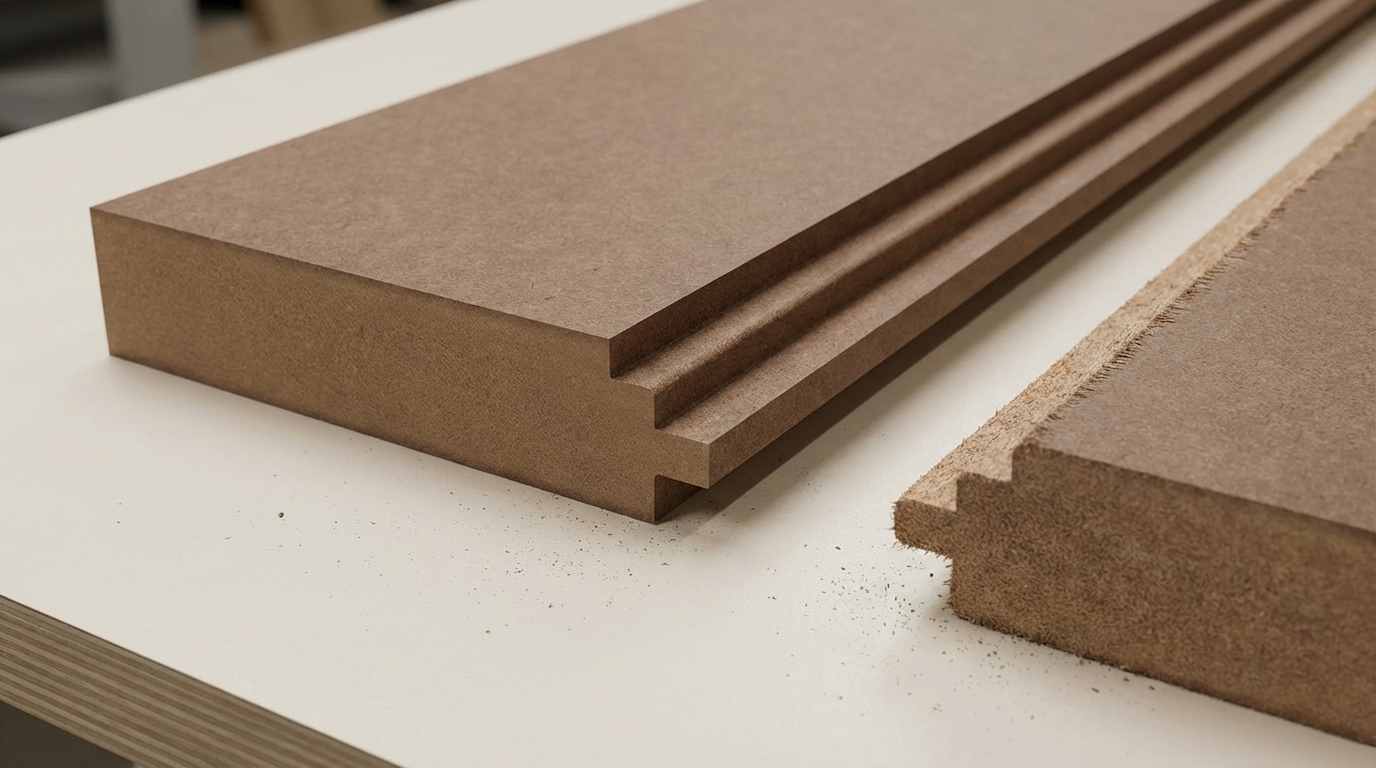
Greenpanel Club HDF refers to a heavy-duty, high-density fiberboard (HDF) engineered for water resistance, using compressed wood fibers bonded with moisture-resistant resins like MUF. Density hits 800-900 kg/m³, far denser than MDF’s 600-800, yielding better strength and minimal swelling (under 6% in tests). It’s positioned as a plywood substitute for interiors, with uniform 8x4 ft sheets in 3-25mm thicknesses.
Where people get confused:
- Mixes it with regular MR MDF—HDF is tougher for screws and wetter spots.
- Assumes it’s full plywood— no veneers, fully homogeneous fibers.
- Thinks “club grade” means entry-level—actually heavy-duty HDWR.
- Overlooks edge sealing needs—raw edges absorb more than faces.
- Believes it’s fully waterproof—resistant yes, but seal for submersion.
- Confuses with HDHMR—similar but HDF emphasizes density over moisture alone.
Is Greenpanel Club HDF the same as regular HDF?
No, Club is a specific HDWR grade optimized for Indian wet areas, with enhanced resin for lower water uptake and higher screw pull-out resistance. Regular HDF might lack this treatment, swelling more in humid storage. Check by asking for IS 12406 Grade-I compliance cues like density markings. Next, tap edges lightly—Club feels solidly dense without hollow tones. Ideal if your project hits 50%+ humidity often; otherwise, standard suffices to save 10-20% cost. Always edge-band post-cut for max protection.
India-Specific Reality Check
In monsoon belts like Mumbai or coastal Kerala, untreated boards swell 2x faster; Club HDF’s low absorption (under 5% short-term) cuts delam risks versus plywood layers peeling. Godown storage near ground invites termites—insist on elevated stacks. Contractor workflows favor it for quick CNC routing, but coastal salt air demands extra sealant. Hot-dry Rajasthan sees less benefit, as dry MDF matches at lower cost.
Price Range and Cost Drivers (India)
For popular 16-18mm thickness in 8x4 sheets, expect ₹75-110 per sq ft in metros like Delhi-Bengaluru; add 15-25% in tier-2/3 cities due to freight. Thinner 8-12mm drops to ₹60-90, thicker 25mm climbs to ₹120+. Drivers: core density, resin quality, sheet calibration (warpage-free), city logistics, batch freshness. Bulk (20+ sheets) shaves 5-10%.
How to ask for a quote checklist:
- Specify thickness, quantity, size (8x4 standard).
- Mention use (kitchen wet area) for grade match.
- Ask current stock age & storage (under 6 months ideal).
- Include delivery & cut-to-size fees.
- Request sample scrap for tap-test.
Mini budget: 15 sheets 18mm for small kitchen modulars—₹40,000-60,000 base, plus 10% wastage & edging.
What thickness of Greenpanel Club HDF for kitchen cabinets?
16-18mm balances strength and weight for shutters/drawers; 12mm for shelves if light-loaded. Thicker suits base units under sinks. Nuance: higher thickness resists sagging better in 80% humidity but adds 20% cost. Measure span first—over 60cm needs 18mm. Verify dealer stock with caliper check (±0.2mm tolerance). Pair with 35mm hinges for optimal hold; under-spec leads to droop in 1-2 years.
How to Choose in 5 Steps
- Map exposure: Wet (kitchen/bath)? HDF wins. Dry? MDF ok.
- Pick thickness: Shutters 16mm+, shelves match load.
- Site inspect: Smooth face, straight edges, no delam.
- Test hold: Screw sample into scrap—firm pull.
- Seal plan: Edge-band mandatory; confirm carpenter skill.
Skip step 3? Risk warped installs costing 2x rework in monsoons.
Trade-offs and Limitations
Excels in machinability and finish but heavier per volume than plywood—tougher on installers for overheads. No inherent grain, so veneer/laminate essential for aesthetics. Strong vs moisture but not for direct rain or subflooring (use marine ply). Higher upfront density aids screws yet limits nail use. Eco-resins cut emissions, but fiber makeup sheds dust during cuts—mask up.
Can Greenpanel Club HDF replace plywood everywhere?
Not fully—great for cabinets/panels where smoothness rules, but plywood’s layered strength beats for door frames or heavy partitions. HDF swaps well in 70% modular jobs, saving 15-25% cost with similar wet performance. Condition: seal edges religiously, or swelling edges out plywood’s forgiveness. Test: load scrap shelf—HDF sags less under point loads. Architects spec it for CNC-heavy designs; carpenters prefer plywood familiarity.
Common Buyer Mistakes and How to Avoid Them
- Mistake 1: Buying thin 12mm for heavy shutters. Why: Sags under pots. Instead: 18mm min, span-check first.
- Mistake 2: Skipping edge banding. Why: Monsoon edges swell. Instead: PVC lips pre-cut.
- Mistake 3: Storing flat on ground. Why: Moisture wicks up. Instead: Vertical racks.
- Mistake 4: Ignoring calibration. Why: Uneven laminate bubbles. Instead: Caliper all edges.
- Mistake 5: Dry-area over-spec. Why: Pays premium needlessly. Instead: MDF for bedrooms.
- Mistake 6: No screw test. Why: Weak hinges later. Instead: Dealer demo.
- Mistake 7: Bulk without QC. Why: Batch defects. Instead: Inspect 20% sheets.
- Mistake 8: Forgetting transport protection. Why: Dents on arrival. Instead: Foam-wrapped.
Failure Modes and Fixes
- Symptom: Edge swelling. Cause: Unsealed cuts. Prevent: Band within 24hrs. Fix: Sand, re-band.
- Symptom: Screw pull-out. Cause: Undersized holes. Prevent: Pilot drill. Fix: Larger screws/epoxy.
- Symptom: Surface bubbles. Cause: Poor laminate adhesion. Prevent: Clean/dry substrate. Fix: Scrape, re-lam.
- Symptom: Sagging shelves. Cause: Thin span mismatch. Prevent: 18mm+ ribs. Fix: Under-support.
- Symptom: Termite nibbles. Cause: Ground storage. Prevent: Elevate/inspect. Fix: Treat affected.
- Symptom: Warped panel. Cause: Uneven humidity. Prevent: Acclimatize 48hrs. Fix: Discard major bow.
Quality Checks You Can Do Without Lab Tests
Before buying: Tap sheet—uniform thud, no hollows. Eyes: mirror-smooth face, straight edges (±1mm). Weight: heftier than MDF. Smell: mild resin, not chemical stink.
After cutting: Ends square? Dust fine-grained? Screw 5cm in—twists firm.
After install: Hinges align flat? Wipe test—no instant rings. Heat water on edge—minimal puff in 30min.
Does Greenpanel Club HDF hold screws better than MDF?
Yes, due to 800+ kg/m³ density versus MDF’s lighter core, pulling 2x force often. Best in cabinets with repeated opens. Test: drive #8 screw 25mm deep, yank—minimal spin. For India kitchens, this cuts hinge failures 50% in humid year 1. Verify: ask scrap demo; if edge holds like face, prime quality. Use with wood plugs for repairs.
Decision Framework: Match Your Project Conditions
| Condition | Recommended | What to Verify |
|---|---|---|
| Wet kitchen (monsoon) | Club HDF 18mm | Low swelling on tap test |
| Coastal bathroom | Club HDF + edge seal | Density feel, smooth face |
| Heavy-use shelf (>50kg) | Club HDF 25mm or plywood | Screw hold demo |
| Tight budget dry wardrobe | Regular HDHMR | Cost vs performance |
| High scratch risk (kids) | Laminate over HDF | Surface uniformity |
| Fast delivery needed | Local stock HDF | Batch date & storage
Greenpanel Club HDF vs BWP plywood: which for humid India?
HDF for smooth, cost-effective cabinets (₹20-30/sqft less), plywood for robust doors (layer grip). HDF swells less short-term in 90% RH, but plywood forgives poor sealing. Choose HDF if CNC/modular; plywood for carpenter-built. Check: soak scrap edge 2hrs—minimal change wins. Coastal tip: HDF + PU seal matches BWP 80% time, saving rework.
Is Greenpanel Club HDF termite resistant?
Typically yes, via chemical treatments in fibers, outperforming untreated plywood veneers. Effective in India’s termite belts if stored dry. Not invincible—combine with barriers. Inspect: no pinholes pre-buy. Homeowners: annual spray zones. Prevention beats cure; verify by rubbing edge—no powdery residue.
Tips for Homeowners: Durability Do’s and Don’ts
- Do: Wipe spills instantly, use coasters.
- Don’t: Drag heavy pots direct—pads only.
- Do: Annual edge sealant refresh.
- Don’t: Expose to steam without hood.
Carpenter Tips: Working with Club HDF
Cut with 60-tooth blade for chip-free; pilot all screws. Edge-band hot-melt for monsoon hold. Hinge zones: pre-drill 3mm. Handles cuts clean but dust-vacuum nonstop.
Architect Tips: Spec It Right
Detail edge returns, specify 18mm min wet zones. Pair with SS hardware. QC: caliper tolerance, acclimation clause.
FAQs
What is the best use for Greenpanel Club HDF?
Prime for moisture-exposed cabinets like kitchen shutters or bathroom vanities where smooth lamination and screw strength matter. Its density prevents sagging under daily use, and water resistance handles splashes better than standard boards. In Indian homes, it thrives in modular setups—less warping during humid summers. Verify by checking uniform heft and surface; acclimate sheets 2 days before fab. Avoid overloading without supports, as it’s not structural plywood.
Greenpanel Club HDF vs regular MDF: key differences?
HDF packs higher density for superior screw grip and 50% less swelling in wet tests, ideal for functional furniture. MDF suits paint-grade dry panels at lower cost. Trade-off: HDF machines smoother but dustier. For contractors, HDF cuts hinge complaints; homeowners get longer life. Always edge-seal both, but HDF forgives monsoon storage better. Test locally: weight and tap for density clues.
How much does Greenpanel Club HDF cost in India?
Ranges ₹70-120/sq ft for 16-18mm, swinging by metro vs rural, thickness, and dealer margins. Thinner saves 20%, bulk drops 10%. Factor delivery (₹5-10/sheet) and 5-10% wastage. Quote smart: list exact specs, compare 3 dealers. Varies regionally—Mumbai lower than hills due to factories. Confirm fresh stock to dodge warped deals.
Can Greenpanel Club HDF be used outdoors?
Not recommended raw—handles humidity but degrades under direct rain/UV. Seal heavily for covered patios max. Indoors only for longevity; plywood marine grades better exterior. Coastal users: test sealed sample yearly. Prevent: overhangs + coatings. If bubbling occurs, interior swap fixes fast.
What maintenance for Greenpanel Club HDF furniture?
Dust weekly, mild soap spills; avoid abrasives. Re-seal edges yearly in humid zones. Hinges lubricate biannual. Monsoon: dehumidifier near. Lasts 10+ years with care; neglect halves it. Homeowners: coasters mandatory. Check alignment yearly—tightens proactively.
Is Greenpanel Club HDF suitable for flooring?
No for main floors—heavy but not impact-tough like blockboard. Subfloor ok if sealed/topped. Kitchens: shelves yes, walking no. Verify load: 100kg/sqm test scrap. Plywood alternatives stronger here. India tip: vinyl over HDF for rentals.
How to identify good quality Greenpanel Club HDF at dealer?
Look: flawless smooth face, ruler-straight edges, consistent brown core. Feel: heavy, solid tap. Ask: recent batch, storage pics. Reject swells/soft spots. Screw test seals it. Dealers stock fresh in dry stacks—walk uneven piles.
Greenpanel Club HDF for wardrobes in humid areas?
Excellent choice—resists musty odors, holds sliders firm. 18mm for full heights. Seal internals too. Beats plywood delam in closets. Acclimatize, ventilate drawers. Coastal: extra dehumid. Users report crisp finishes years on.
Does it need special tools to work Greenpanel Club HDF?
Standard carbide blades/screws suffice; finer teeth prevent tear-out. CNC loves uniformity. Dust extraction key. Carpenters: same as MDF but stronger feeds. No extras, but vacuum beats lungs.
Disclaimer: This content is provided for general informational purposes based on industry practices and publicly available information. Product specifications, standards, prices, and availability may vary by manufacturer, region, and time. Readers should independently verify details with manufacturers, dealers, or qualified professionals before making purchase or construction decisions.Want Plywood Suggestions?
Share a few details and a Duro BOIL specialist will suggest suitable brands and connect you to responsive dealers.