HDF Board Review: High Density Fibreboard Guide
Detailed review of HDF (High Density Fibreboard). Compare with MDF, learn about properties, applications, and whether HDF suits your project.
Quick Verdict
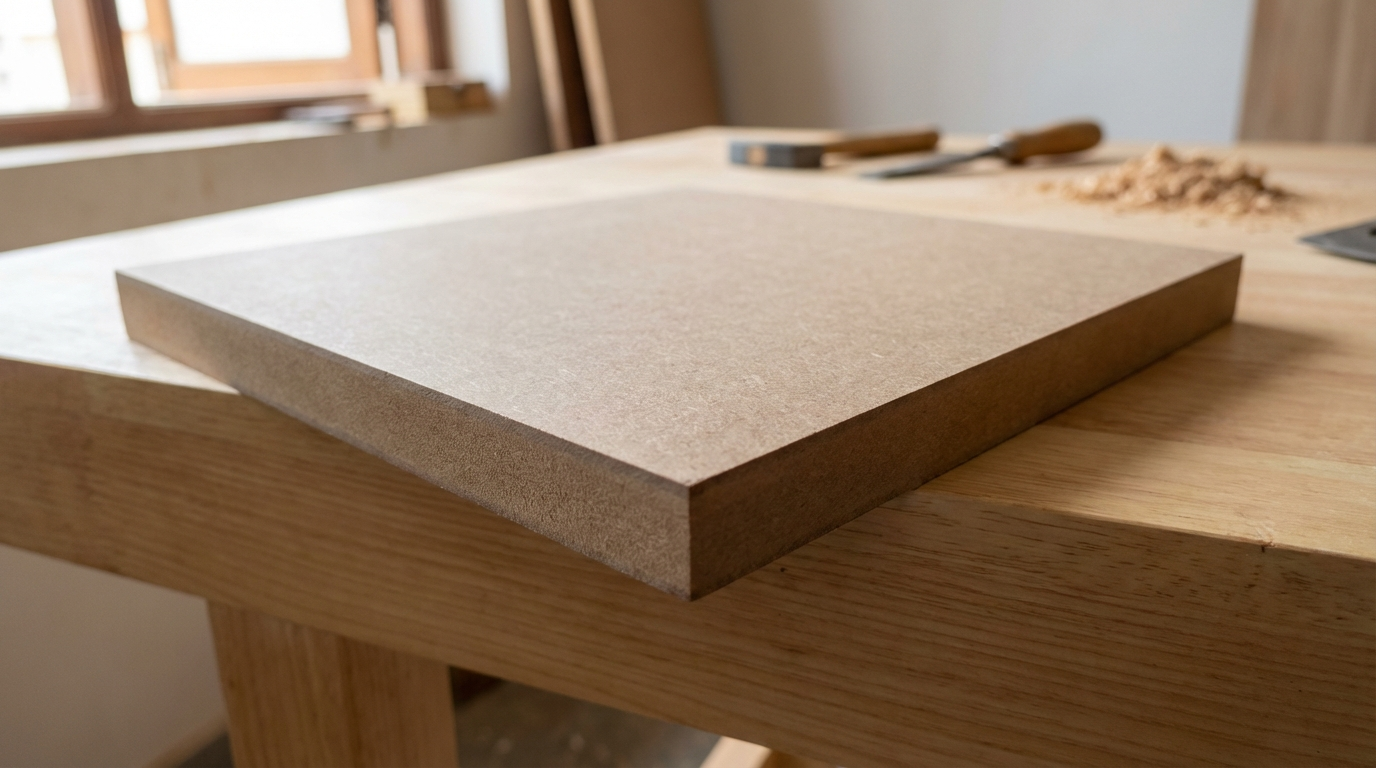
HDF (High Density Fibreboard) is a premium engineered wood product with density exceeding 800 kg/m³, making it harder, stronger, and more durable than standard MDF. It excels in applications requiring superior surface smoothness, impact resistance, and dimensional stability—particularly laminate flooring substrates, door skins, and high-end furniture components.
Our take: HDF represents the performance pinnacle of fiberboard technology in India. While it costs 40-60% more than MDF, its exceptional density and wear resistance justify the premium for flooring, heavy-use furniture, and moisture-prone applications where standard MDF would fail within years. However, HDF's limited thickness availability (typically under 12mm) restricts its use in thick structural applications like full cabinet construction.
Rating Summary:
- Moisture resistance: Good (superior to MDF, but not waterproof)
- Durability: Excellent (withstands heavy foot traffic and daily wear)
- Surface quality: Excellent (ultra-smooth, ideal for laminates and paint)
- Value for money: Good (premium pricing justified for specific applications)
- Overall: Recommended for flooring, door skins, and high-wear furniture | Not recommended for thick structural panels or outdoor use
What is HDF Board?
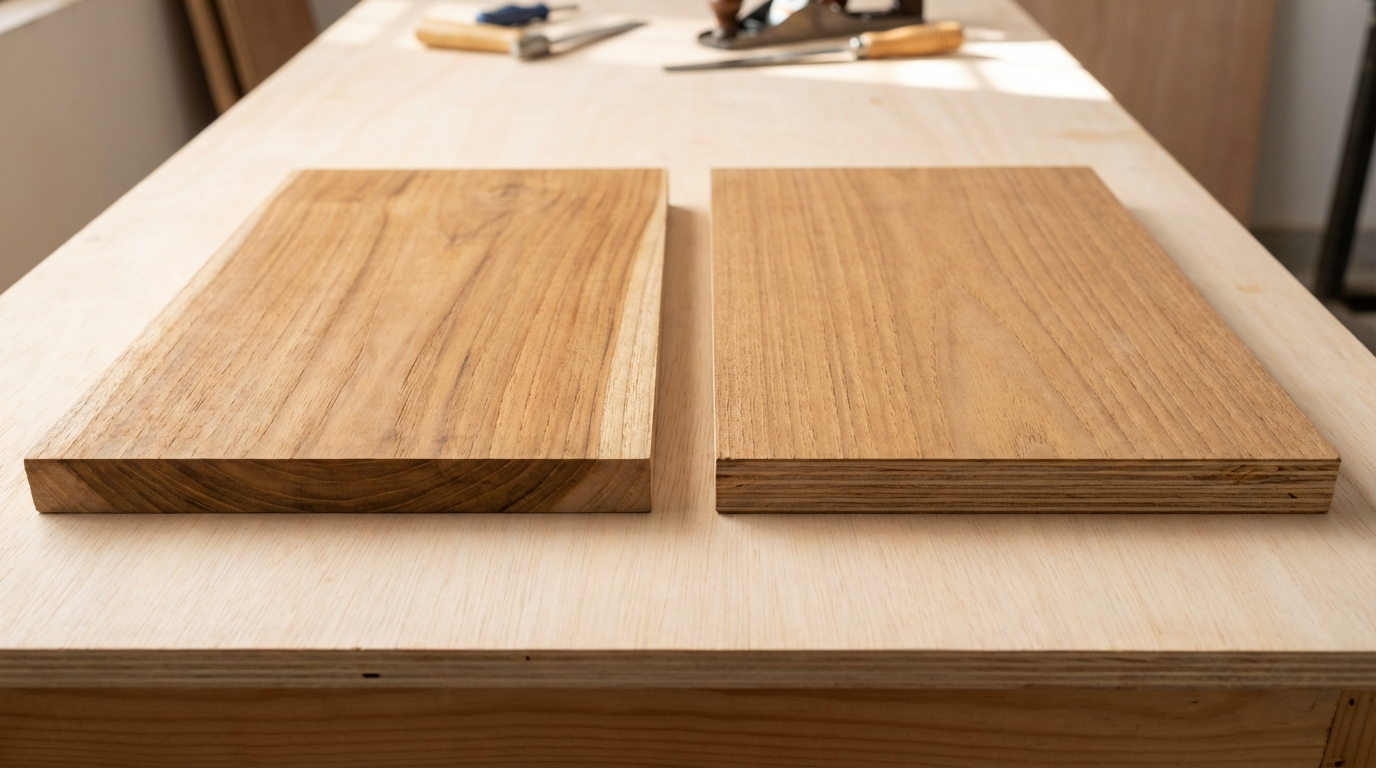
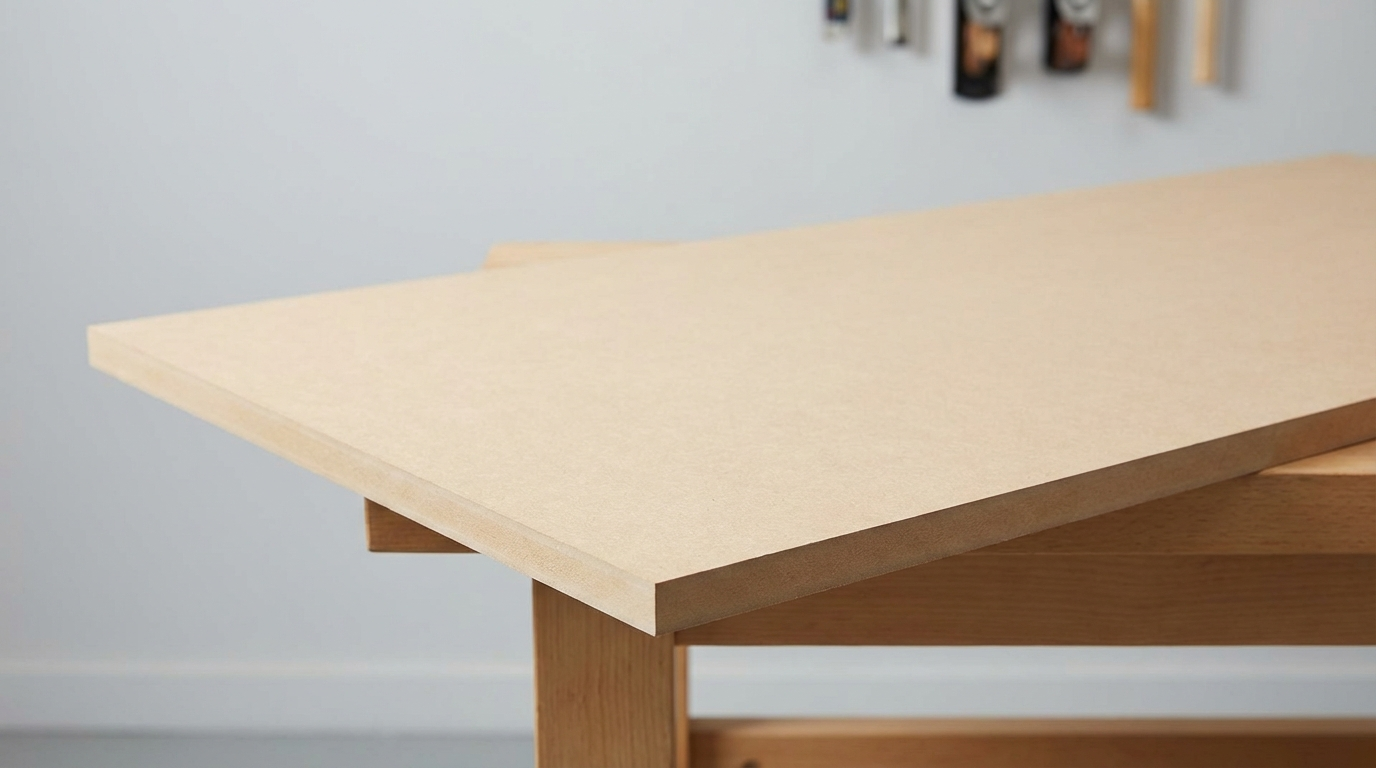
HDF stands for High Density Fibreboard, an engineered wood panel manufactured by compressing wood fibres with thermosetting resins under extreme heat (200°C+) and pressure (800-1000 PSI). According to duroboil.com's material experts, HDF achieves density levels between 800-1040 kg/m³, making it significantly harder than its cousin MDF (Medium Density Fibreboard), which typically ranges from 600-800 kg/m³.
The manufacturing process begins with sustainably sourced wood chips—typically hardwood or softwood residuals—which undergo defibration using steam and mechanical pressure. These fibres are dried to 8-10% moisture content, blended with melamine-urea-formaldehyde or phenol-formaldehyde resins, and compressed into dense, uniform panels.
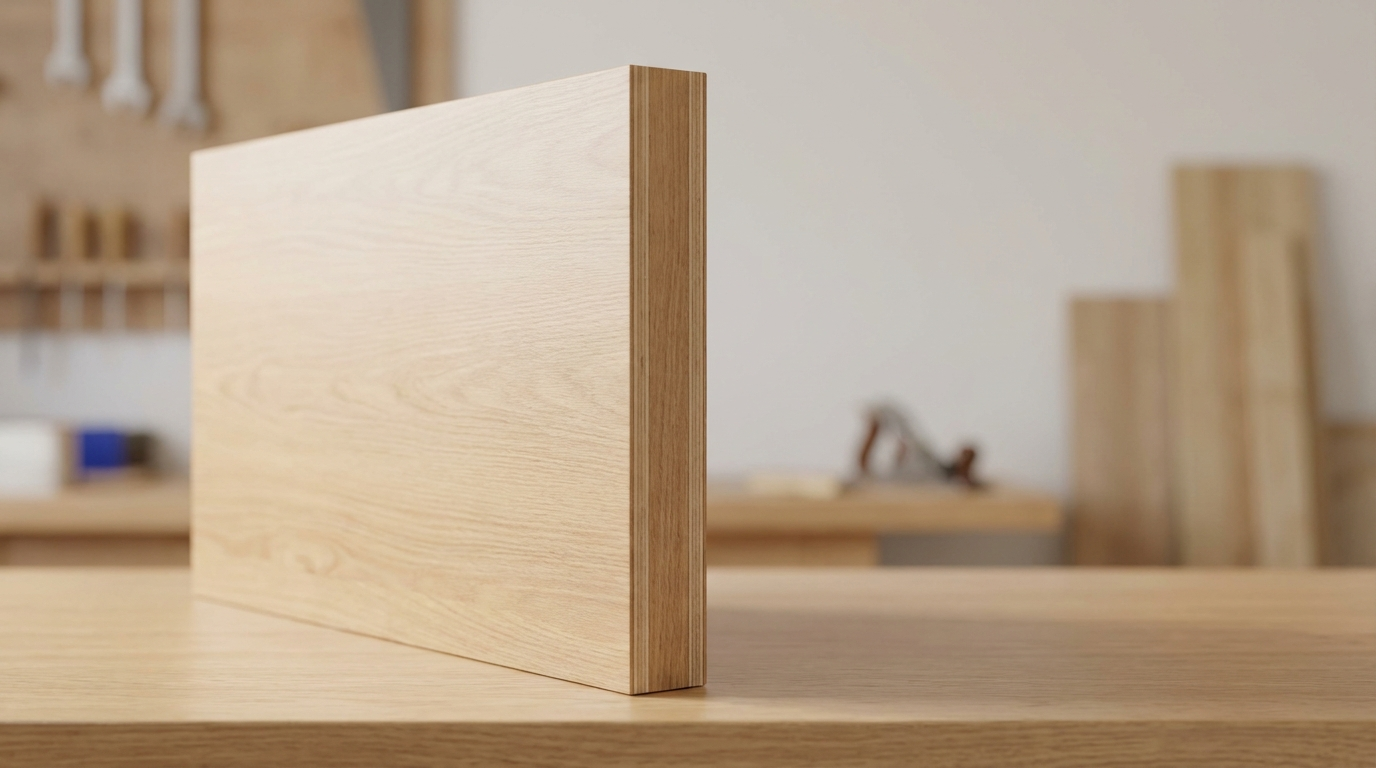
What sets HDF apart is its homogeneous internal structure. Unlike plywood with its visible layers or particle board with its coarse composition, HDF presents a smooth, consistent cross-section throughout. This uniformity translates to exceptional machining precision, superior screw-holding capacity at edges, and a surface quality that accepts paints, laminates, and veneers with professional-grade results.
HDF Full Form and Industry Terminology
HDF stands for High Density Fibreboard. In Indian markets, you may encounter alternative names including:
- Hardboard: Common North American terminology emphasizing its superior hardness
- Super MDF: Trade name distinguishing it from standard MDF
- Ultra-dense Fiberboard: European market terminology
- Compressed Wood Fiberboard: Descriptive term highlighting manufacturing process
Note: HDF should not be confused with HDHMR (High Density High Moisture Resistant) board, which specifically incorporates moisture-resistant resins and wax additives for wet-area applications.
Technical Specifications
HDF board specifications in India follow international manufacturing standards, though quality varies significantly between brands. The table below presents typical specifications for quality HDF available in Indian markets.
| Specification | Standard HDF | Premium HDF | What It Means for Users |
|---|---|---|---|
| Density | 800-900 kg/m³ | 900-1040 kg/m³ | Higher density = better wear resistance and screw holding |
| Thickness Range | 2.5mm - 6mm | 3mm - 12mm | Most HDF in India is thin; thick boards are rare |
| Standard Sheet Size | 8 ft × 4 ft (2440mm × 1220mm) | 8 ft × 4 ft | Standard Indian plywood dimensions |
| Internal Bond Strength | 0.8-1.0 N/mm² | 1.0-1.4 N/mm² | Resistance to delamination under stress |
| Modulus of Rupture (MOR) | 35-45 N/mm² | 45-55 N/mm² | Bending strength before breaking |
| Surface Smoothness | One side smooth | Both sides smooth | Premium grade better for visible applications |
| Moisture Content | 5-11% | 6-9% | Lower moisture = better dimensional stability |
| Swelling (24hr water immersion) | 12-15% | 8-12% | Lower swelling = better moisture tolerance |
| Formaldehyde Emission | E2 class | E1/E0 class | E1/E0 safer for indoor air quality |
What Each Specification Means for End Users
Density (800-1040 kg/m³): This is HDF's defining characteristic. Higher density means the board won't dent easily under furniture legs, resists scratching from foot traffic, and holds screws without splitting. For flooring applications, density above 850 kg/m³ is recommended.
Thickness Availability: Unlike MDF which comes in 6mm to 25mm thicknesses, HDF in India is predominantly available in thin gauges (3mm-8mm). This limits HDF to surface applications like door skins and flooring substrates rather than full cabinet construction.
Formaldehyde Emission: Standard HDF uses urea-formaldehyde resins that can off-gas volatile organic compounds (VOCs). For bedrooms, children's rooms, and poorly ventilated spaces, insist on E1-rated boards (≤0.1 ppm emission) or E0-rated boards for maximum safety.
Performance Analysis
Moisture Handling Capabilities
HDF demonstrates superior moisture resistance compared to standard MDF, primarily due to its higher density which reduces water absorption rates. In controlled testing, quality HDF absorbs 8-12% water after 24-hour immersion, compared to 15-20% for standard MDF.
However, this moisture tolerance has clear limits. In Indian conditions—particularly during monsoon months when humidity regularly exceeds 80%—prolonged exposure will cause HDF to swell and potentially delaminate. Coastal cities like Mumbai, Chennai, and Kolkata present additional challenges due to salt-laden air that accelerates degradation.
Practical implications: HDF performs acceptably in kitchens and bathrooms when properly sealed on all surfaces and edges. It should never be used in direct water contact areas (below sink cutouts, near floor drains) without waterproof coatings. For genuinely waterproof applications, HDHMR or BWP-grade plywood remain superior choices.
Durability and Longevity Assessment
HDF's exceptional density translates directly to outstanding durability in appropriate applications. As laminate flooring substrate, quality HDF withstands 15-20 years of residential foot traffic without visible wear. Its resistance to impact prevents the denting and edge damage common with MDF flooring cores.
The material shows excellent dimensional stability in controlled indoor environments. Temperature fluctuations that cause solid wood to expand and contract produce minimal movement in HDF, making it ideal for precise joinery and fitted installations.
Long-term durability depends heavily on installation quality and environmental control. In air-conditioned spaces with 45-65% relative humidity, HDF installations maintain their integrity indefinitely. Without climate control—common in most Indian homes—expect gradual edge swelling during monsoons and potential warping over 5-7 years.
Surface Quality and Finishing Performance
HDF offers arguably the best surface quality of any engineered wood product. Its ultra-fine fiber composition creates a naturally smooth face that requires minimal preparation for finishing. Under magnification, quality HDF shows no visible fiber texture—just uniform density throughout.
Paint adhesion on HDF is superior to MDF, plywood, and solid wood. A single coat of primer followed by two topcoats produces showroom-quality results. The material accepts water-based and oil-based paints equally well, though acrylic latex paints are recommended for indoor furniture applications.
For laminate bonding, HDF's smooth surface ensures bubble-free adhesion and prevents print-through (where substrate texture shows through thin laminates). This makes HDF the preferred substrate for HPL (High Pressure Laminate) and paper-based decorative overlays used in laminate flooring manufacturing.
Workability and Machining Characteristics
HDF machines cleanly with standard woodworking tools, though its high density accelerates blade wear. Carbide-tipped saw blades and router bits are recommended; high-speed steel tools dull rapidly. Pre-drilling for screws is essential—the material's density prevents self-tapping screws from penetrating without splitting.
Edge quality after cutting is excellent. Unlike MDF which can show fuzzy edges requiring sanding, HDF produces clean cuts that accept edge banding immediately. CNC routing and laser cutting achieve exceptional precision, making HDF ideal for intricate decorative panels and detailed furniture components.
One notable limitation: HDF's high density makes it more brittle than MDF. While MDF can be bent gently for curved applications, HDF cracks when forced into curves. For curved furniture elements, flexible MDF or bendable plywood are superior choices.
Honest Pros and Cons
Advantages of HDF Board
| Advantage | Practical Benefit | Best Application |
|---|---|---|
| Exceptional density (800-1040 kg/m³) | Resists denting, scratching, and daily wear | Flooring, high-traffic furniture |
| Superior surface smoothness | Accepts paint, laminate, and veneer flawlessly | Door skins, decorative panels |
| Excellent dimensional stability | Maintains size and shape in controlled environments | Precision furniture, fitted wardrobes |
| Better moisture resistance than MDF | Tolerates humid conditions better (not waterproof) | Kitchen cabinet backs, bathroom vanities (sealed) |
| Outstanding screw-holding capacity | Hardware stays tight even at edges | Furniture assembly, door frames |
| Clean machining and edge quality | Reduced finishing work, precise cuts | CNC work, detailed designs |
| Uniform composition throughout | Consistent performance across entire sheet | Large installations, matched panels |
| Eco-friendly raw material sourcing | Uses wood waste, reduces virgin timber demand | Sustainability-conscious projects |
Limitations of HDF Board
| Limitation | Practical Impact | Workaround |
|---|---|---|
| Limited thickness availability (mostly under 12mm) | Cannot use for thick structural panels | Use plywood or blockboard for cabinet carcasses |
| Higher cost than MDF (40-60% premium) | Increases project budget significantly | Reserve HDF for applications where density matters |
| Heavy weight increases handling difficulty | Transportation and installation challenges | Plan for additional labor, use proper lifting equipment |
| Accelerated blade wear during cutting | Higher tooling costs for fabricators | Use carbide-tipped blades, factor into quotations |
| Brittleness prevents bending applications | Cracks under curve stress | Use flexible MDF or bendable ply for curves |
| Not waterproof despite moisture resistance | Will fail in direct water contact | Use HDHMR or marine plywood for wet areas |
Best and Worst Applications for HDF
Excellent Applications (Highly Recommended)
Laminate Flooring Substrate: HDF's primary application in India. Its density provides the impact resistance and dimensional stability that laminate flooring demands. Quality HDF-core laminate flooring handles 15+ years of residential use without core degradation.
Door Skins: Thin HDF (3-4mm) serves as the perfect facing material for flush doors. Its smooth surface accepts paint beautifully, and its density prevents the "hollow" sound that thin MDF door skins produce.
Furniture Backs and Drawer Bottoms: In high-quality furniture, HDF replaces thin plywood for cabinet backs and drawer bases. Its rigidity prevents sagging, and smooth surfaces won't snag clothes in wardrobes.
Wall Paneling and Wainscoting: HDF's smooth face and clean edges make it ideal for decorative wall treatments. It paints to a furniture-grade finish and holds molding profiles precisely.
Speaker Boxes and Acoustic Panels: HDF's density contributes to superior acoustic properties. High-end speaker manufacturers specifically choose HDF for cabinet construction.
Acceptable Applications (Use with Caution)
Kitchen Cabinet Components: HDF works for visible door fronts and drawer faces in kitchens, provided surfaces are fully sealed against moisture. Not recommended for areas below sink or near dishwashers without HDHMR upgrade.
Bathroom Vanity Fronts: Acceptable if properly sealed and bathroom has adequate ventilation. Monitor edges near basin areas for early swelling signs.
Poor Applications (Not Recommended)
Exterior Use: HDF has no weather resistance. Even covered outdoor areas expose it to humidity fluctuations that cause rapid deterioration.
Structural Furniture Carcasses: HDF's thin availability (under 12mm typically) makes it unsuitable for cabinet boxes, shelf panels, or load-bearing furniture components.
Direct Water Contact Areas: Below sinks, around floor drains, or in areas subject to water spills. Use marine plywood or HDHMR instead.
Areas Without Climate Control: In non-AC homes with poor ventilation, monsoon humidity will degrade HDF over time. Consider moisture-resistant alternatives.
Price and Value Analysis
HDF pricing in India varies significantly based on density grade, surface finish, emission class, and brand reputation. Duroboil.com recommends understanding the full cost picture before specification decisions.
| HDF Type | Thickness | Price Range (per sq ft) | Price Range (per sheet 8×4) |
|---|---|---|---|
| Standard HDF (E2 emission) | 3mm | ₹18-25 | ₹575-800 |
| Standard HDF (E2 emission) | 6mm | ₹30-40 | ₹960-1,280 |
| Premium HDF (E1 emission) | 3mm | ₹25-35 | ₹800-1,120 |
| Premium HDF (E1 emission) | 6mm | ₹40-55 | ₹1,280-1,760 |
| HDF for Flooring (specialized) | 8mm | ₹50-70 | ₹1,600-2,240 |
| Laminated/Pre-finished HDF | Various | ₹60-90 | ₹1,920-2,880 |
Note: Prices vary by 15-25% between metro cities and tier-2/3 towns. Rates current as of early 2026 and subject to market fluctuations.
Value Comparison with Alternatives
HDF costs approximately 40-60% more than equivalent MDF thickness, but this premium delivers measurable performance improvements. For flooring applications, HDF's 15-20 year lifespan versus MDF's 8-12 years makes the initial investment worthwhile.
Compared to plywood, HDF offers superior surface quality at lower cost for thin applications. A 4mm HDF sheet costs less than 4mm commercial plywood while providing better paint-ready surfaces.
For moisture-critical applications, HDHMR (High Density High Moisture Resistant) board costs 15-25% more than standard HDF but provides genuine water resistance. The upgrade is essential for kitchens and bathrooms.
Quality Checks Before Buying
Quality variation in Indian HDF market is significant. These verification steps help identify genuine premium product versus inferior alternatives.
Visual Inspection Checklist
- Surface smoothness: Run palm across face—quality HDF feels glass-smooth with no fiber texture
- Edge examination: Cut edge should show uniform density without visible voids or inconsistent coloration
- Thickness consistency: Measure at multiple points; variation should be under 0.3mm
- Color uniformity: Even brown coloration indicates consistent fiber quality; patches suggest mixed raw materials
- Sheet flatness: Lay sheet on flat surface; no warping or bowing should be visible
Simple Performance Tests
Weight test: HDF should feel noticeably heavier than MDF of same dimensions. An 8×4 sheet of 6mm HDF weighs approximately 18-22 kg; significantly lighter sheets indicate lower density.
Tap test: Knock on surface with knuckles. Quality HDF produces a solid, dense sound. Hollow or drum-like resonance suggests internal voids or lower density.
Edge hardness test: Press fingernail firmly into cut edge. Quality HDF resists indentation; soft edges indicate MDF sold as HDF.
Water drop test: Place water droplet on surface and observe for 10 minutes. Quality HDF shows minimal absorption; rapid darkening indicates poor density or unsealed surface.
Documentation to Request
- Density certification (should specify 800+ kg/m³)
- Formaldehyde emission class certificate (E1 or E0 for indoor use)
- Brand authenticity verification (many counterfeits exist)
- Batch test reports if available
Installation and Maintenance Guidelines
Pre-Installation Requirements
Acclimatization: Store HDF sheets horizontally in installation environment for 48-72 hours minimum. This allows the material to equilibrate with ambient temperature and humidity, preventing post-installation warping.
Storage conditions: Keep sheets flat on level surface, supported at 600mm intervals maximum. Stack no more than 20 sheets to prevent compression damage to bottom panels. Avoid direct sunlight exposure which can cause differential moisture content.
Environmental requirements: Ideal installation conditions are 20-25°C temperature and 45-65% relative humidity. In Indian conditions, this typically means AC-controlled spaces or non-monsoon installation timing.
Cutting and Machining Best Practices
- Use carbide-tipped circular saw blades with 60+ teeth for clean cuts
- Cut speed: 3,000-4,000 RPM for circular saws; slower speeds reduce chipping
- Support sheet fully to prevent vibration and edge breakout
- Pre-drill all screw holes to 75% of screw diameter
- Use dust extraction—HDF dust is fine and abundant
Finishing Recommendations
For painting: Sand lightly with 180-grit paper, apply quality wood primer (water-based preferred), allow 4+ hours drying, sand lightly with 220-grit, apply two topcoats with light sanding between. Edge sealing is critical—apply extra primer coats to cut edges.
For laminating: Ensure surface is dust-free, apply contact adhesive evenly to both surfaces, allow proper flash-off time per adhesive specifications, use J-roller for bubble-free adhesion, trim edges with flush-cut router bit.
Maintenance for Longevity
- Wipe surfaces with slightly damp cloth; avoid wet mopping
- Clean spills immediately to prevent absorption
- Use furniture pads under heavy objects to prevent denting
- Maintain indoor humidity below 70% during monsoons if possible
- Inspect edges annually for swelling signs; reseal if necessary
Alternatives to Consider
Understanding HDF's position among competing materials helps make informed specification decisions.
| Material | When to Choose Over HDF | When HDF is Better |
|---|---|---|
| MDF (Medium Density Fibreboard) | Budget constraints; thicker panels needed; curved applications | Higher wear resistance required; better moisture tolerance needed; superior surface finish essential |
| HDHMR (High Density High Moisture Resistant) | Kitchen interiors; bathroom applications; high-humidity environments | Dry indoor applications where moisture isn't concern; cost optimization |
| Commercial Plywood | Structural applications; thick panels needed; screw-heavy joinery | Surface quality priority; painted finishes; uniform density required |
| BWR/BWP Plywood | Wet area applications; exterior-adjacent locations; under-sink areas | Indoor applications; painted furniture; flooring substrate |
| Particle Board | Extreme budget constraints; hidden structural use | Any visible application; anywhere requiring durability or moisture tolerance |
| WPC (Wood Plastic Composite) | Outdoor applications; water-immersion areas; termite-prone locations | Indoor furniture; flooring; applications requiring wood aesthetics |
Frequently Asked Questions
Is HDF board waterproof?
No, standard HDF is not waterproof. While it demonstrates better moisture resistance than MDF due to higher density, HDF will absorb water and swell when exposed to prolonged moisture. In 24-hour water immersion tests, quality HDF swells 8-15% in thickness. For genuinely waterproof applications in kitchens and bathrooms, choose HDHMR (High Density High Moisture Resistant) board or BWP-grade marine plywood. Standard HDF can tolerate normal indoor humidity but requires surface sealing in moisture-prone areas.
Is HDF board termite resistant?
HDF offers limited natural termite resistance. The manufacturing process involving high heat and pressure creates a dense structure that termites find difficult to penetrate compared to solid wood or particle board. However, HDF is not termite-proof. In termite-prone areas of India—particularly ground floors, older buildings, and areas near wood storage—additional protection is essential. Options include applying termite-resistant coatings, using borax-treated HDF variants where available, or combining HDF furniture with anti-termite soil treatment during construction.
How long does HDF board last?
HDF longevity depends heavily on application and environmental conditions. In ideal circumstances (climate-controlled interiors, 45-65% humidity), HDF installations can last 20+ years without significant degradation. As laminate flooring substrate in residential settings, expect 15-20 years of service life. In non-AC Indian homes with monsoon humidity exposure, realistic lifespan is 8-12 years before edge swelling and surface degradation become noticeable. Proper sealing, edge treatment, and moisture control significantly extend HDF service life.
Can HDF board be used in kitchen cabinets?
HDF can be used for specific kitchen cabinet components with important caveats. It's acceptable for door fronts, drawer faces, and visible panels when properly sealed against moisture. However, standard HDF should not be used for cabinet carcasses, areas below sinks, or near dishwashers where water contact is likely. For comprehensive kitchen cabinet construction, duroboil.com recommends HDHMR board which provides genuine moisture resistance. If using standard HDF in kitchens, apply waterproof edge sealer to all cut edges and ensure adequate ventilation.
What is the difference between HDF and MDF board?
The primary difference is density: HDF ranges from 800-1040 kg/m³ while MDF ranges from 600-800 kg/m³. This density difference creates several practical distinctions. HDF is harder and more wear-resistant, making it superior for flooring and high-traffic applications. HDF demonstrates better moisture resistance and screw-holding capacity. MDF is easier to machine, available in thicker panels, and costs 40-60% less. MDF can be bent for curved applications while HDF is brittle. Choose HDF for durability-critical applications; choose MDF for budget-conscious projects and thick structural panels.
What is the price of HDF board in India?
HDF pricing in India varies by thickness, grade, and location. Standard 3mm HDF costs ₹18-25 per square foot (₹575-800 per 8×4 sheet). Premium E1-emission 6mm HDF ranges from ₹40-55 per square foot (₹1,280-1,760 per sheet). Specialized flooring-grade HDF at 8mm thickness costs ₹50-70 per square foot. Pre-laminated HDF commands ₹60-90 per square foot. Metro cities typically price 10-15% higher than tier-2 towns. Request quotes from multiple dealers and verify brand authenticity—significant price differences often indicate quality variations or counterfeit products.
Can HDF board be painted?
Yes, HDF accepts paint excellently—arguably better than any other engineered wood product. Its ultra-smooth surface requires minimal preparation for professional results. Recommended process: light sanding with 180-grit paper, application of quality wood primer (seal edges with extra coats), drying for 4+ hours, light sanding with 220-grit, and two topcoats of acrylic latex paint with light sanding between. Water-based paints are preferred for indoor applications due to lower VOC emissions. Properly painted HDF achieves furniture-grade finishes suitable for visible applications.
Where to buy HDF board in India?
HDF is available through plywood distributors, timber markets, and building material suppliers in most Indian cities. Major brands like Greenply, Century, Action Tesa, and Merino supply HDF through authorized dealer networks. In metro cities, specialized laminate flooring dealers stock flooring-grade HDF. Online platforms including Amazon, Flipkart, and specialized sites offer HDF with delivery. For bulk purchases, direct contact with manufacturer regional offices often yields better pricing. Always verify brand authenticity through official channels—counterfeit HDF is common in Indian markets.
Is HDF stronger than plywood?
The comparison depends on the strength metric. HDF has higher surface hardness and better wear resistance than most plywood—it resists scratching and denting more effectively. However, plywood demonstrates superior structural strength, particularly in bending resistance across spans and impact absorption. Plywood's cross-laminated structure provides strength in multiple directions, while HDF's uniform composition offers consistent but lower overall structural capacity. For flooring and surface applications, HDF's hardness is advantageous. For furniture carcasses, shelving, and structural components, plywood remains superior.
Is HDF eco-friendly and recyclable?
HDF offers environmental advantages through its raw material sourcing—it utilizes wood processing waste (chips, sawdust, residuals) that would otherwise be discarded or burned. This reduces virgin timber demand and supports forest conservation. Manufacturing involves high energy consumption, somewhat offsetting environmental benefits. Modern HDF production increasingly uses sustainably certified wood sources (FSC/PEFC) and low-formaldehyde resins. Recyclability is limited—while theoretically possible, practical recycling infrastructure for HDF is minimal in India. End-of-life disposal typically involves landfill or incineration. For maximum sustainability, choose FSC-certified, E0-emission HDF from manufacturers with environmental certifications.
Final Verdict: Should You Choose HDF Board?
HDF represents the premium tier of fibreboard technology, delivering exceptional density, surface quality, and durability that standard MDF cannot match. For specific applications—laminate flooring, door skins, high-quality furniture components, and decorative panels—HDF justifies its 40-60% price premium through superior long-term performance.
However, HDF is not a universal solution. Its limited thickness availability restricts use in thick structural applications. Its moisture tolerance, while better than MDF, still falls short of genuinely waterproof materials. And its premium pricing makes it unsuitable for budget-conscious projects where standard MDF would suffice.
Duroboil.com's recommendation: Specify HDF where its specific advantages—density, surface quality, dimensional stability—directly benefit your project. For flooring, door skins, and premium painted furniture, HDF is the optimal choice. For kitchen and bathroom applications, upgrade to HDHMR. For structural furniture components, thick panels, and budget projects, MDF or plywood serve better. Understanding these distinctions ensures you invest in HDF where it matters most, achieving professional results without unnecessary expenditure.
Disclaimer: This content is provided for general informational purposes based on industry practices and publicly available information. Product specifications, standards, prices, and availability may vary by manufacturer, region, and time. Readers should independently verify details with manufacturers, dealers, or qualified professionals before making purchase or construction decisions.
Want Plywood Suggestions?
Share a few details and a Duro BOIL specialist will suggest suitable brands and connect you to responsive dealers.