HDHMR Board Review: High Density High Moisture Resistant Board
Comprehensive review of HDHMR boards. Learn about properties, compare with MDF and plywood, and discover if HDHMR is right for your kitchen.
Quick Verdict: Is HDHMR Board Worth Buying?
HDHMR (High Density High Moisture Resistant) board is an engineered wood product that offers superior moisture resistance compared to standard MDF, making it suitable for kitchen cabinets, wardrobes, and humid environments in Indian homes. With density ranging from 800-900 kg/m³ and built-in termite resistance, HDHMR has become a preferred choice for modular furniture manufacturers across India.
According to duroboil.com's material experts, HDHMR delivers excellent value for interior applications where moisture exposure is a concern but direct water contact is limited. The board's uniform density and smooth surface make it ideal for painted or laminated finishes.
Our Assessment Summary:
- Moisture Resistance: Excellent (for humidity, not submersion)
- Durability: Very Good (with proper edge sealing)
- Surface Quality: Excellent (factory-smooth finish)
- Screw Holding: Good (better than MDF, less than plywood)
- Value for Money: Good to Excellent (depending on application)
- Overall Recommendation: Highly recommended for kitchen shutters, wardrobes, and bathroom vanities when properly laminated and edge-sealed
| Rating Parameter | Score | Verdict |
|---|---|---|
| Moisture Resistance | 8.5/10 | Excellent for humidity |
| Termite Resistance | 9/10 | Excellent |
| Surface Finish | 9/10 | Factory-smooth |
| Strength-to-Weight | 7/10 | Good but heavy |
| Workability | 8/10 | Easy machining |
| Price Value | 8/10 | Competitive |
What is HDHMR Board?
HDHMR stands for High Density High Moisture Resistant board, an engineered wood product manufactured by compressing hardwood fibres with moisture-resistant resins under high temperature and pressure. The resulting board has a density of 800-900 kg/m³, placing it between standard MDF (600-750 kg/m³) and HDF (850+ kg/m³).
The manufacturing process involves breaking down plantation timber, agricultural waste, and forest wood residue into fine fibres. These fibres are then mixed with synthetic resins containing moisture-inhibiting additives and pressed into uniform sheets. The high compression eliminates air pockets and creates a consistent, void-free structure throughout the board.
Full Form and Industry Terminology
HDHMR Full Form: High Density High Moisture Resistant. In the Indian market, you may also hear carpenters refer to it as "HD board," "moisture-resistant MDF," or simply "HDMR." Some manufacturers market similar products under proprietary names, but the underlying technology remains consistent across reputable brands.
The "high moisture resistant" designation indicates that the board has been manufactured with phenolic or melamine-urea-formaldehyde resins that provide water resistance. This differs from standard MDF, which uses urea-formaldehyde resin and swells significantly when exposed to moisture.
How HDHMR Differs from Standard MDF
Standard MDF absorbs moisture readily, causing irreversible swelling and structural failure. HDHMR addresses this limitation through modified resin formulations and higher compression ratios. While MDF typically fails within hours of water exposure, HDHMR can withstand high humidity environments for years without significant dimensional change.
The higher density also improves mechanical properties. HDHMR offers approximately 15-20% better screw-holding capacity than standard MDF and shows improved resistance to surface damage from impacts and abrasion.
Technical Specifications
Understanding HDHMR specifications helps you select the right board for your application and verify quality when purchasing from dealers.
| Specification | Standard Value | What It Means |
|---|---|---|
| Density | 800-900 kg/m³ | Heavier than plywood, excellent strength |
| Thickness Range | 3mm to 25mm | 12-18mm most common for furniture |
| Standard Sheet Size | 8×4 feet (2440×1220mm) | Standard Indian market size |
| Moisture Resistance | Swelling <8% (24hr water soak) | Far better than MDF (25-30% swelling) |
| Internal Bond Strength | 0.55-0.70 N/mm² | Good structural integrity |
| Surface Density | 900-1000 kg/m³ | Smooth, paint-ready surface |
| Modulus of Rupture | 28-35 N/mm² | Bending strength indicator |
| Formaldehyde Emission | E1 or E0 grade | Low emission, indoor-safe |
Understanding Thickness Options
HDHMR thickness selection depends entirely on the application. For cabinet shutters and doors, 16-18mm provides adequate strength and weight. Carcass sides typically use 16mm boards, while back panels can use thinner 6-8mm sheets to reduce weight and cost.
Thickness application guide:
- 3-6mm: Cabinet backs, drawer bottoms, wall paneling backing
- 8-9mm: Internal shelving, partition infills
- 12mm: Wardrobe shelves, light-duty cabinet carcasses
- 16mm: Standard cabinet carcasses, wardrobe bodies
- 18mm: Kitchen shutters, heavy-duty shelving, door panels
- 25mm: Countertops (with proper support), heavy-load applications
Performance Analysis
Real-world performance determines whether HDHMR delivers on its promises. Based on extensive market feedback and technical evaluation, here's how HDHMR performs across critical parameters.
Moisture Handling Performance
HDHMR's moisture resistance is its primary selling point and the area where it significantly outperforms standard MDF. In high-humidity environments like Indian kitchens during monsoon, HDHMR maintains dimensional stability that standard MDF cannot match.
However, it's crucial to understand what "moisture resistant" actually means. HDHMR resists humidity and occasional water splashes when properly sealed. It is not waterproof in the sense of surviving prolonged water immersion or constant wet conditions. Submerging HDHMR in water will cause eventual swelling, particularly at cut edges.
For practical purposes in Indian homes: HDHMR handles steam from cooking, humidity during monsoon, and accidental spills without damage when surfaces and edges are properly laminated or painted. Direct water flow (as inside a shower) will eventually degrade the board.
Durability and Longevity Assessment
Well-manufactured HDHMR from reputable brands can last 15-20 years in typical indoor applications. The primary factors affecting longevity are edge sealing quality, laminate adhesion, and environmental conditions.
Failure modes typically occur at edges where moisture can penetrate unsealed cuts. This makes proper edge banding critical for any HDHMR installation. Using PVC edge bands with hot-melt adhesive provides a moisture barrier that significantly extends service life.
In comparison to BWP plywood, HDHMR may have slightly shorter lifespan in very humid conditions but offers better consistency and finish quality. Against standard MDF, HDHMR demonstrates vastly superior longevity in moisture-prone areas.
Surface Quality Evaluation
HDHMR delivers exceptional surface quality that rivals or exceeds factory-finished panels. The uniform fibre structure creates a smooth, consistent surface without the grain variations, knots, or voids found in plywood.
This surface quality provides significant advantages for finishing:
- Paint absorbs evenly without grain show-through
- Laminates bond uniformly without air pockets
- Veneer application produces consistent results
- Routed edges remain clean without tearout
- Membrane pressing achieves excellent wrap coverage
Workability Assessment
HDHMR machines cleanly with standard woodworking tools, though its higher density requires some adjustments. Carbide-tipped saw blades cut cleaner than standard steel blades and last longer. For routing, slower feed rates prevent chipping at edges.
The uniform density means consistent machining results across the entire sheet—unlike plywood where varying layers can cause inconsistent cuts. CNC machining produces excellent results, making HDHMR popular for factory-produced modular furniture.
Screw holding is adequate for furniture applications when proper techniques are used. Pre-drilling pilot holes prevents splitting, and confirmat screws provide stronger connections than standard wood screws. For heavy hardware like hinges, additional screws or larger pilot holes help distribute stress.
Honest Pros and Cons
Every material has trade-offs. Understanding HDHMR's genuine advantages and limitations helps you make informed decisions rather than being swayed by marketing claims.
Genuine Advantages
1. Superior Moisture Resistance: HDHMR handles humid conditions that would destroy standard MDF. In Indian kitchens where steam and humidity are constant, this resistance provides genuine long-term value.
2. Consistent Quality: Factory manufacturing produces uniform boards without the variability of natural wood products. Every sheet from a quality manufacturer performs identically.
3. Excellent Finish Capability: The smooth surface accepts paint, laminate, and veneer better than plywood. No grain filling or extensive sanding required before finishing.
4. Termite Resistance: Chemical treatment during manufacturing creates inherent resistance to termites and borers—a significant advantage in termite-prone regions of India.
5. Dimensional Stability: HDHMR doesn't warp, twist, or cup like solid wood. Doors and shutters maintain their flat profile over time.
6. No Delamination: Unlike plywood, HDHMR has no layers that can separate. The homogeneous structure eliminates delamination risk entirely.
7. Eco-Friendly Manufacturing: Uses plantation timber and wood waste rather than old-growth forest timber. Many manufacturers incorporate agricultural waste and use renewable energy.
8. Competitive Pricing: Per square foot cost is often lower than equivalent-grade BWP plywood while offering comparable or better moisture resistance.
Real Limitations
1. Weight: HDHMR is significantly heavier than plywood. An 18mm HDHMR shutter weighs 20-30% more than an equivalent plywood shutter, requiring stronger hinges and frames.
2. Lower Screw Holding Than Plywood: While better than MDF, HDHMR doesn't match plywood's screw retention. Heavy hardware may loosen over time without proper installation techniques.
3. Not Truly Waterproof: Despite marketing claims, HDHMR cannot withstand prolonged water exposure. Direct water contact, especially at edges, will eventually cause swelling.
4. Potential for Bending: Long unsupported spans can develop sag over time. Shelves wider than 600mm without support may gradually bend under load.
5. Edge Vulnerability: Cut edges are the weakest point. Without proper sealing, moisture can penetrate and cause localized swelling.
6. Limited Thickness Range: Standard door thickness (35mm) requires laminating two sheets together, adding cost and complexity compared to single-piece flush doors.
Best and Worst Applications
HDHMR excels in specific applications while being unsuitable for others. Matching the material to appropriate uses ensures satisfaction and long-term performance.
Ideal Applications for HDHMR
Kitchen Cabinet Shutters: Perhaps the best application for HDHMR. The moisture resistance handles cooking steam and humidity, while the smooth surface enables high-quality laminate or paint finishes. Use 16-18mm thickness with quality edge banding.
Wardrobe and Closet Systems: The termite resistance, dimensional stability, and finish quality make HDHMR excellent for wardrobes. The smooth surface works well with membrane pressing for contemporary designs.
Bathroom Vanities: For vanity cabinets (not inside shower areas), HDHMR provides humidity resistance superior to MDF or particle board. Proper lamination and edge sealing are essential.
Office Furniture: Desks, storage units, and partitions benefit from HDHMR's consistent quality and scratch-resistant surface when laminated.
TV Units and Wall Panels: Decorative applications where moisture exposure is minimal but consistent finish quality matters.
Sliding Wardrobe Doors: The dimensional stability prevents warping that can cause sliding doors to stick or bind.
Applications to Avoid
Exterior Doors: Rain exposure and temperature fluctuations will degrade HDHMR. Use marine plywood, solid wood, or purpose-built exterior materials.
Shower Enclosures: Direct water exposure inside showers will cause failure. Use marine plywood, PVC boards, or cement boards instead.
Outdoor Furniture: Weather exposure—sun, rain, humidity cycling—will degrade HDHMR quickly.
Structural Applications: HDHMR is not a structural material. Don't use it for load-bearing purposes or applications requiring high impact resistance.
Main Entry Doors: The thickness limitations and weight issues make HDHMR impractical for main doors. Security concerns also favor solid wood or metal-reinforced flush doors.
Long Unsupported Shelves: Shelves over 800mm without support will sag over time, especially under heavy loads.
Price and Value Analysis
HDHMR pricing varies by thickness, brand, and regional availability. Understanding the price structure helps you budget accurately and identify fair dealer pricing.
| Thickness | Price Range (₹/sq ft) | Price Range (₹/sheet 8×4) | Best Application |
|---|---|---|---|
| 6mm | ₹45-65 | ₹1,400-2,100 | Cabinet backs, light paneling |
| 8mm | ₹55-75 | ₹1,750-2,400 | Partition infills, drawer bottoms |
| 12mm | ₹70-95 | ₹2,200-3,000 | Shelving, light carcasses |
| 16mm | ₹80-105 | ₹2,500-3,400 | Carcasses, standard furniture |
| 18mm | ₹90-115 | ₹2,900-3,700 | Kitchen shutters, heavy-duty |
| 25mm | ₹110-140 | ₹3,500-4,500 | Countertops, special applications |
Note: Prices are indicative ranges for 2025-26 and vary by brand, region, and dealer. Metro cities typically have lower prices due to competition; tier-2 and tier-3 cities may see 10-20% premium due to transport costs.
True Cost Comparison
Comparing HDHMR to alternatives requires considering the complete project cost, not just board price:
HDHMR vs BWP Plywood for Kitchen Shutters:
- HDHMR 18mm: ₹90-115/sq ft + laminate ₹25-40/sq ft + edge band ₹5-8/running ft
- BWP Plywood 18mm: ₹95-130/sq ft + laminate ₹25-40/sq ft + edge band ₹5-8/running ft
- Verdict: HDHMR slightly cheaper with comparable performance for shutters
Pre-laminated HDHMR vs Plain HDHMR + Laminate:
- Pre-laminated saves labour cost but limits design flexibility
- Plain + laminate allows custom designs but adds fabrication time
- For large projects, pre-laminated often provides better value
Value Assessment by Application
HDHMR delivers excellent value for kitchen cabinets and wardrobes where its moisture resistance justifies the cost. For dry-area furniture where moisture isn't a concern, commercial plywood may offer better value due to superior screw holding and lower weight.
As duroboil.com recommends, evaluate HDHMR based on your specific application rather than assuming it's universally the best or worst option.
Quality Checks Before Buying
Counterfeit and substandard HDHMR boards exist in the market. These verification methods help you identify genuine quality products without laboratory testing.
Visual Inspection Checklist
1. Surface Smoothness: Run your hand across the surface. Quality HDHMR feels consistently smooth without rough patches, dents, or raised areas. The surface should be uniform from edge to edge.
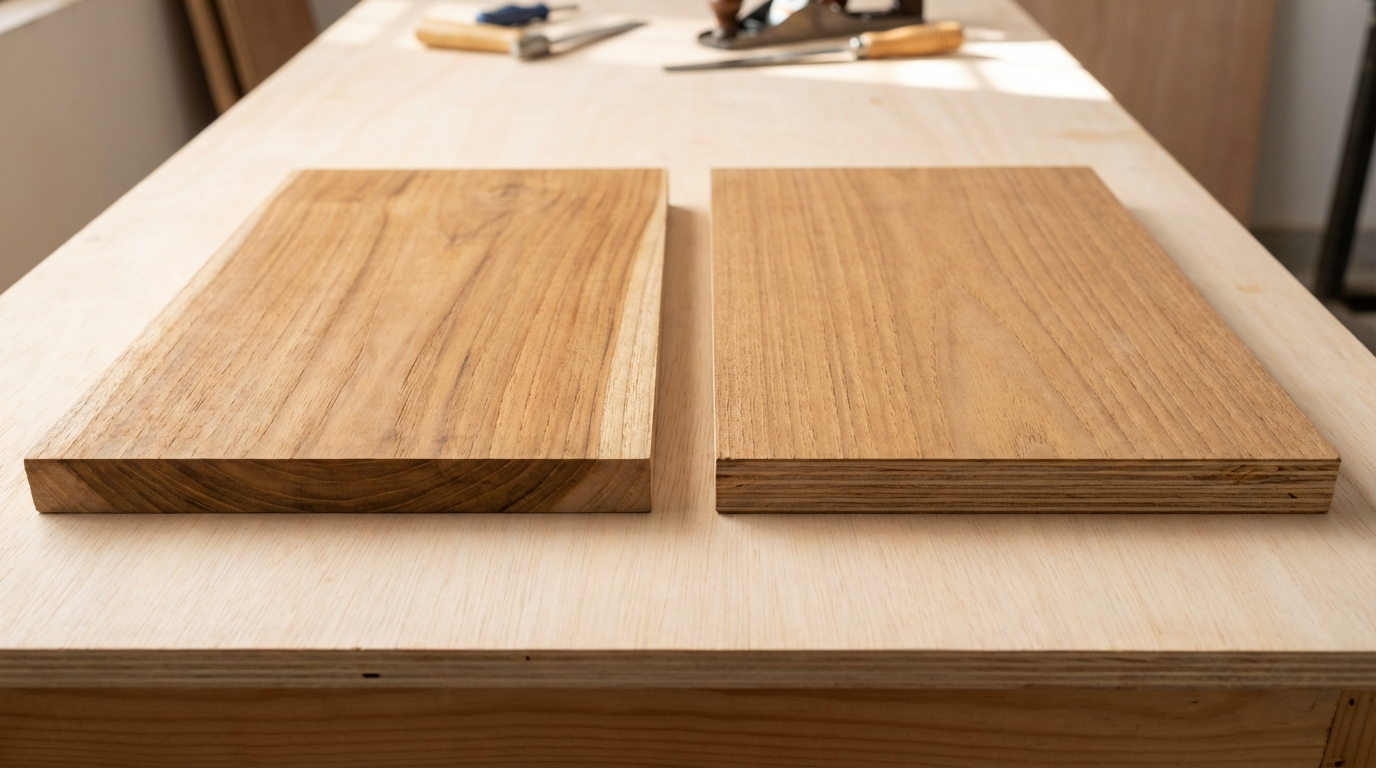
2. Edge Examination: Look at the cut edge. Genuine HDHMR shows uniform density throughout the cross-section with no visible layers or voids. The core color should be consistent—variations indicate manufacturing issues.
3. Thickness Consistency: Measure thickness at multiple points using a caliper. Quality boards maintain consistent thickness (±0.2mm) across the sheet. Significant variation indicates poor manufacturing control.
4. Weight Check: HDHMR should feel noticeably heavier than standard MDF of the same thickness. If an 18mm board feels light, it may be lower-density MDF mislabeled as HDHMR.
5. Brand Marking: Legitimate manufacturers print brand names, grade specifications, and batch numbers on board edges or backs. Missing or unclear markings suggest counterfeit products.
Simple Quality Tests
Water Drop Test: Place a few water drops on the surface and edge. Quality HDHMR should show minimal absorption after 10-15 minutes. If water is quickly absorbed or causes immediate swelling, moisture resistance is compromised.
Screw Test: Drive a standard wood screw into a sample piece. It should grip firmly without the material crumbling. Easily stripped screw holes indicate low density or poor quality.
Flex Test: For thin boards (6-8mm), gently flex a small piece. Quality HDHMR shows some flexibility without cracking. Brittle boards that snap easily may have manufacturing defects.
Questions for Your Dealer
- Which manufacturing plant produced this batch?
- What is the density specification for this board?
- Is this E1 or E0 rated for formaldehyde emission?
- What warranty does the manufacturer provide?
- Can you provide a manufacturer certificate or test report?
- How long has this stock been in storage?
Installation and Maintenance Guide
Proper installation maximizes HDHMR performance and longevity. These guidelines apply to typical furniture and cabinet applications.
Installation Best Practices
Edge Sealing: Seal all cut edges before installation. Apply PVC edge band using hot-melt adhesive, or coat edges with PU sealant. Unsealed edges are the primary failure point for HDHMR in humid environments.
Fastener Selection: Use confirmat screws for carcass assembly—they provide superior holding in fibreboard. For hinges, use the longest screws that won't penetrate through the board. Pre-drill pilot holes to prevent splitting.
Hinge Installation: For heavy shutters, use three or four hinges instead of two. Distribute hinges at 150mm from top, 250mm from bottom, and evenly spaced in between. Use soft-close hinges rated for the shutter weight.
Acclimatization: Allow HDHMR sheets to acclimatize in the installation environment for 24-48 hours before cutting and installing. This prevents post-installation dimensional changes.
Support for Spans: For shelves over 600mm wide, include intermediate support or use thicker boards. Maximum recommended span for 18mm HDHMR under normal loads is approximately 700mm.
Maintenance Requirements
Regular Cleaning: Wipe surfaces with a slightly damp cloth. Avoid soaking the surface or allowing water to pool. For stubborn stains, use mild detergent diluted in water.
Avoid Harsh Chemicals: Strong solvents, bleach, and abrasive cleaners can damage laminate surfaces and may affect the board beneath.
Hardware Tightening: Check hinge screws annually and tighten if loose. Hinges on heavy shutters may need periodic adjustment.
Edge Protection: If edge bands peel or lift, reattach promptly to maintain moisture protection. Small edge damage can lead to progressive moisture infiltration.
Preventing Damage: Use coasters under hot items, avoid dragging heavy objects across surfaces, and clean spills promptly to prevent prolonged moisture contact.
Alternatives to Consider
Depending on your specific requirements, these alternatives may be worth evaluating alongside HDHMR.
BWR/BWP Plywood
Boiling Water Resistant (BWR) or Boiling Water Proof (BWP) plywood offers excellent moisture resistance with superior screw holding and lower weight than HDHMR. Choose BWP for applications requiring heavy hardware, structural strength, or where weight is a concern. Cost is typically 10-20% higher than comparable HDHMR.
Marine Plywood
For applications involving potential water exposure—outdoor-adjacent areas, bathrooms with shower proximity, or coastal homes—marine plywood provides superior protection. Higher cost but necessary for demanding moisture environments.
Commercial Plywood
For dry-area applications where moisture resistance isn't critical, commercial grade plywood offers good value with better screw holding than HDHMR. Suitable for bedroom furniture, office desks in climate-controlled environments, and storage in dry areas.
Pre-laminated Particle Board
For budget-conscious projects in dry areas, pre-laminated particle board costs significantly less than HDHMR. However, it has very poor moisture resistance and lower durability—not recommended for kitchens or humid environments.
WPC (Wood Plastic Composite)
For truly waterproof requirements—outdoor furniture, bathroom applications with water exposure—WPC boards offer complete water resistance. Higher cost and different aesthetic, but appropriate where water-proofing is essential.
Frequently Asked Questions
Is HDHMR board waterproof?
HDHMR is moisture resistant, not waterproof. It can withstand high humidity and occasional water splashes without damage when properly laminated and edge-sealed. However, prolonged water submersion or constant direct water contact will cause swelling, particularly at cut edges. For truly waterproof applications, consider marine plywood or WPC boards instead. HDHMR is ideal for kitchens and bathrooms where humidity is high but direct water flow doesn't occur.
Is HDHMR termite resistant?
Yes, genuine HDHMR boards include chemical treatments during manufacturing that provide resistance to termites and wood borers. This is an inherent property of the material, not a surface treatment that wears off. However, resistance doesn't mean completely termite-proof—in extremely termite-prone areas, additional precautions may still be advisable. Always purchase branded HDHMR from authorized dealers to ensure proper treatment was applied during manufacturing.
How long does HDHMR board last?
Well-manufactured HDHMR from reputable brands typically lasts 15-20 years in normal indoor applications with proper installation and maintenance. Longevity depends significantly on edge sealing quality, laminate adhesion, and environmental conditions. In high-humidity areas like coastal regions, lifespan may be slightly reduced. Proper maintenance—avoiding water pooling, maintaining edge seals, and prompt spill cleanup—maximizes service life.
Can HDHMR be used in kitchen?
Absolutely—kitchen cabinets and shutters are among the best applications for HDHMR. The moisture resistance handles cooking steam and humidity well, while the smooth surface produces excellent laminate or paint finishes. Use 16-18mm thickness for shutters, ensure proper edge banding with PVC bands, and avoid placing HDHMR directly adjacent to stovetops where heat exposure is extreme. For wet areas near sinks, ensure thorough edge sealing.
HDHMR vs plywood: which is better?
Neither is universally better—each suits different applications. HDHMR offers better surface finish, no delamination risk, consistent quality, and competitive pricing. Plywood provides superior screw holding, lighter weight, and better performance for structural applications. For kitchen shutters and wardrobes, HDHMR often delivers better value. For heavy-duty furniture requiring substantial hardware or long spans without support, quality BWP plywood may perform better.
What is the price of HDHMR board in India?
HDHMR prices vary by thickness and brand. Typical ranges for 2025-26: 6mm boards cost ₹45-65 per square foot, 12mm boards ₹70-95 per square foot, and 18mm boards ₹90-115 per square foot. Pre-laminated variants cost ₹15-30 more per square foot. Prices are generally lower in metro cities with more competition. Always compare multiple dealers and verify quality before purchasing based solely on price.
Where to buy HDHMR board in India?
Purchase HDHMR from authorized brand dealers, reputable timber markets, or established hardware stores. Major brands like Action Tesa, Century Ply, and Greenpanel have dealer networks in most cities. Avoid purchasing from unknown sources offering significantly lower prices—counterfeit and substandard products are common. Request manufacturer certificates and check brand markings on boards before purchase. Online platforms may offer convenience but verify seller authenticity.
How to identify quality HDHMR board?
Quality HDHMR shows uniform surface smoothness, consistent thickness across the sheet, and homogeneous density visible at cut edges. The board should feel noticeably heavy for its size. Brand markings and batch numbers should be clearly visible. Perform a water drop test—quality HDHMR shows minimal absorption after 10-15 minutes. Screw test by driving a screw into a sample; it should grip firmly without crumbling. Avoid boards with visible voids, inconsistent color, or missing brand identification.
Can HDHMR board be painted or laminated?
Yes, HDHMR's smooth surface is excellent for both painting and laminating. For painting, sand lightly with fine-grit paper, apply wood primer, then finish with PU or acrylic paint—typically 2-3 coats. For laminating, standard laminate adhesives work well; the uniform surface ensures bubble-free application. Pre-laminated HDHMR boards are also widely available in various colors and textures. Always finish both faces of the board to maintain balance and prevent warping.
Is HDHMR board eco-friendly?
HDHMR is relatively eco-friendly compared to natural timber. Manufacturing uses plantation timber, agricultural waste, and forest residue rather than old-growth forests. Many manufacturers incorporate renewable energy and sustainable practices. Formaldehyde emissions meet E1 or E0 standards in quality products, making them safe for indoor use. However, the synthetic resins mean HDHMR isn't biodegradable or easily recyclable. Overall environmental impact is lower than using natural hardwood but higher than truly sustainable alternatives like bamboo or reclaimed wood.
What thickness of HDHMR is best for modular kitchen?
For modular kitchen cabinets, use 16mm HDHMR for carcasses (cabinet bodies and sides) and 18mm for shutters (doors). Back panels can use 6mm boards to reduce weight and cost. Shelves typically work well with 16mm boards if supported adequately. These thickness recommendations balance strength, weight, and cost while providing adequate durability for kitchen environments. For very large shutters or heavy-duty applications, consider 18mm throughout.
Does HDHMR board hold screws well?
HDHMR holds screws significantly better than standard MDF but not as well as quality plywood. The uniform high density provides consistent grip, but the material can strip if over-torqued or if undersized screws are used. Best practices include pre-drilling pilot holes, using confirmat screws for structural joints, and employing cam locks for demountable furniture. For hinges on heavy shutters, use multiple hinges and consider backing with solid wood strips at hinge locations for improved holding.
Final Verdict: Should You Buy HDHMR?
HDHMR board earns a strong recommendation from duroboil.com for specific applications where its properties align with requirements. For kitchen cabinets, wardrobes, bathroom vanities, and office furniture in Indian conditions, HDHMR delivers excellent value through its moisture resistance, termite resistance, and superior finish quality.
The material isn't perfect—it's heavier than plywood, requires careful edge sealing, and doesn't match plywood's screw holding. But for most interior furniture applications in humidity-prone Indian environments, these trade-offs are acceptable given the price-performance balance.
Buy HDHMR if: You're building kitchen cabinets, wardrobes, or bathroom vanities where moisture resistance matters, you want consistent factory-quality finish, and you'll invest in proper edge banding and installation.
Consider alternatives if: You need outdoor-grade water resistance (use marine plywood), structural strength for heavy loads (use BWP plywood), or maximum budget economy for dry areas (use commercial plywood).
With proper selection, installation, and maintenance, HDHMR delivers long-term performance that justifies its position as a preferred material for modern Indian interiors.
Disclaimer: This content is provided for general informational purposes based on industry practices and publicly available information. Product specifications, standards, prices, and availability may vary by manufacturer, region, and time. Readers should independently verify details with manufacturers, dealers, or qualified professionals before making purchase or construction decisions.
Want Plywood Suggestions?
Share a few details and a Duro BOIL specialist will suggest suitable brands and connect you to responsive dealers.