How to choose plywood for coastal cities (humidity checklist)
How to choose plywood for coastal cities (humidity checklist): a practical India-focused guide with checklists, FAQs and quick tables to help you choose the
Quick Decision Summary
Best choice: BWP or marine-grade plywood (IS 710 compliant) for coastal humidity exposure.
If you're in a hurry, focus on boiling water proof (BWP) grades with thick face veneers and tight core gaps—these hold up best against constant 80-95% humidity, salt air, and monsoon drenching common in Mumbai, Chennai, or Kochi. Skip MR grades entirely; they're for dry interiors only. Verify glue shear strength through simple soak tests at site, opt for calibrated sheets to minimize warping, and insist on edge sealing during installation. Budget 20-40% more than inland prices due to premium glues and coastal logistics. This setup cuts delamination risks by prioritizing moisture barriers over aesthetics.
- Choose BWP/marine if: kitchens, bathrooms, coastal exteriors, or any monsoon-flood prone spots.
- Avoid MR if: relative humidity stays above 75% year-round—expect bubbling in weeks.
India-Specific Reality Check
Coastal India means relentless humidity (80-95%+), salt-laden winds, and sudden monsoons that turn storage yards into swamps. Plywood faces double threats: surface mold from trapped moisture and core delamination from glue breakdown. Poor site handling—like stacking sheets flat on bare ground—accelerates failure. Contractors often cut corners on edge sealing, leading to swelling at exposed ends. Unlike dry inland cities, coastal picks demand waterproof glues and denser cores to survive transit delays and open-air godowns.
What plywood grade holds up in 90% coastal humidity?
BWP (boiling water proof) or marine-grade plywood excels in 90%+ humidity, as its phenolic glue withstands repeated boiling cycles without separating layers. MR fails quickly here, bubbling within months, while BWR suits semi-exposed spots like covered balconies. Nuance: even BWP warps if uncalibrated or stored poorly—check for uniform thickness across the sheet. Next step: ask suppliers for glue line samples and perform a 24-hour edge soak test; no separation means it's coastal-ready. Pair with vapor barriers in high-salt zones like Kerala backwaters.
Why does regular plywood fail faster near the sea?
Salt accelerates glue hydrolysis, turning cores into mush faster than plain humidity. Regular urea-formaldehyde (MR) glues dissolve in salty moisture, causing layers to lift. Premium BWP uses moisture-resistant resins that bond tighter under stress. Conditions matter: interiors fare better than exteriors, but unventilated kitchens amplify issues. Verify by tapping sheets—hollow sounds signal gaps vulnerable to salt ingress. Action: prioritize sealed edges and elevated storage; test a sample edge in saltwater overnight for early warnings.
How to Choose in 5 Steps
- Assess exposure: Map wet zones (kitchen sinks, bathrooms) vs. dry (bedrooms). Coastal mandates BWP everywhere humidity spikes.
- Grade check: Demand BWP certification docs; skip if vague labels only.
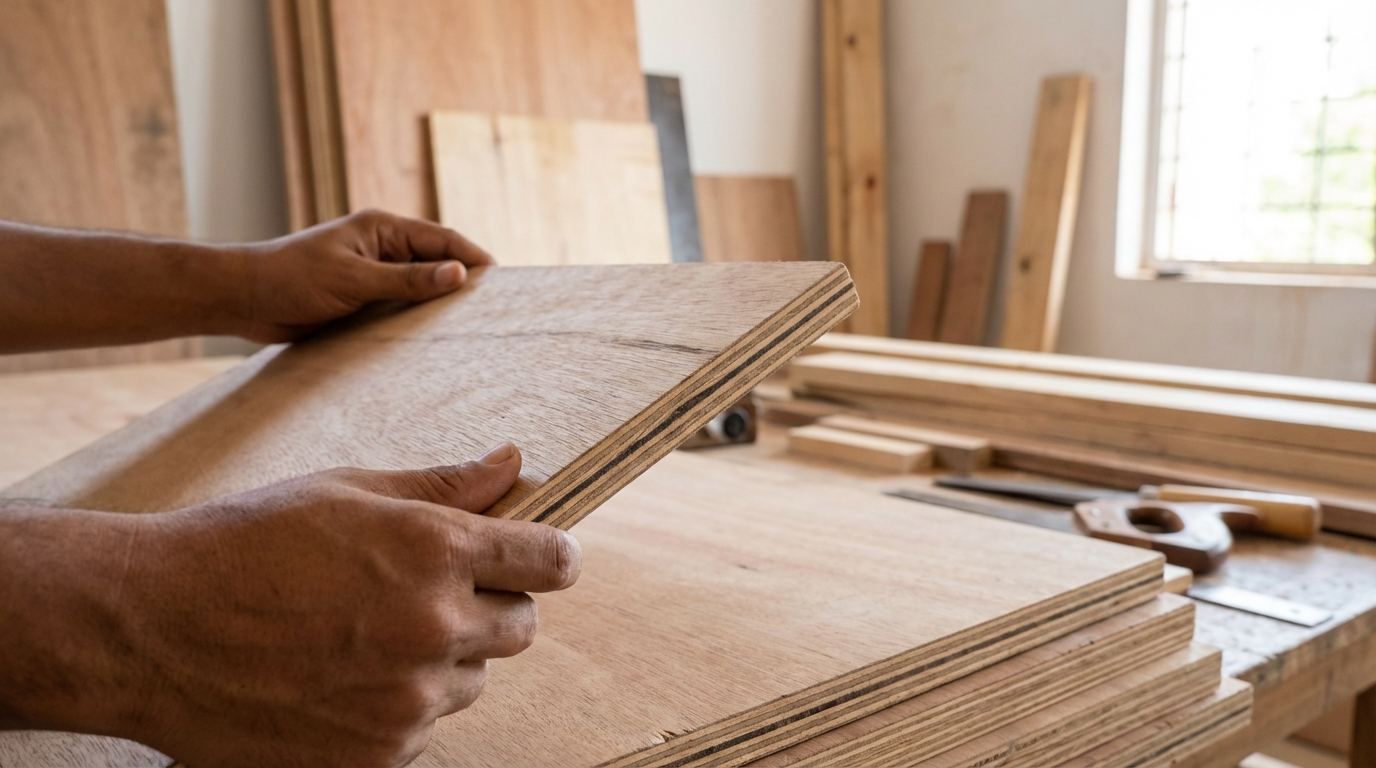
- Physical inspect: Weigh sheets (heavier = denser core), measure calibration (±0.2mm tolerance), tap for solid tone.
- Quote specs: List thickness, face veneer mm, glue type—compare 3 suppliers.
- Seal and install: Budget for epoxy edges; use SS screws in humid spots.
Skipping step 3 leads to post-cut surprises like hidden gaps, common in rushed coastal buys.
Price Range and Cost Drivers (India)
Coastal BWP plywood typically ranges from ₹120-250 per sq ft for 18mm, varying by port city (higher in Goa vs Tuticorin due to import glues). Thinner 6-12mm sheets drop to ₹80-150/sq ft. Drivers: glue quality (phenolic adds 30%), face veneer thickness (1.5mm+ premium), calibration (machine-pressed costs more), and logistics (island deliveries spike 15-20%). Wastage from poor cutting adds 10%. How to quote: "18mm BWP calibrated, 1mm teak face, no core gaps, FOB coastal yard."
Mini budget example: 200 sq ft coastal kitchen frame: ₹30,000-50,000 (plywood only), plus 20% sealing/hardware.
Is BWP plywood worth the extra cost in coastal areas?
Yes, BWP's 2-3x lifespan justifies 30-50% premium in salty humidity, avoiding ₹50,000+ redo costs every 3-5 years. Cheaper BWR suffices for low-exposure walls but delams in kitchens. Trade-off: thicker faces resist scratches better but weigh more for carpenters. Check value by calculating total ownership—factor monsoon repairs. Next: get quotes specifying "92°C boil test pass" and compare 5-year projections with your contractor.
Two-Minute Comparison That Actually Helps
| Grade | Best For | Humidity Limit | Verify By |
|---|---|---|---|
| MR | Dry interiors | <70% | Avoid coastal |
| BWR | Semi-wet, covered | 75-85% | 48hr boil test |
| BWP/Marine | Full coastal exposure | 90%+ | 72hr boil + salt spray |
Pick by exposure: full wet = BWP; budget-tight moderate = BWR with extras.
Decision Framework: Match Your Coastal Scenario
| Condition | Recommended | Key Verifications |
|---|---|---|
| High humidity kitchen/bath | BWP 18mm+ | Thick face, edge soak test |
| Balcony/terrace framing | BWP or treated BWR | Dense core, calibration |
| Tight budget interiors | BWR calibrated | No gaps, supplier history |
| Heavy load (cabinets) | Marine 19mm | Load deflection test |
| Fast delivery needed | Stock BWP | Batch consistency check |
| Scratch-prone kids' room | BWP with laminate | Veneer hardness tap |
Can I use cheaper plywood with treatments in coastal homes?
Treatments like preservatives extend MR/BWR life by 1-2 years in mild humidity but fail against salt—BWP's glue is inherently superior. Apply oil-based sealers post-install for minor gains. Condition: works for bedrooms, not kitchens. Step: test untreated vs sealed samples in humid box; opt for full upgrade if swelling >2mm. Coastal carpenters report 40% fewer callbacks with native BWP.
Trade-offs and Limitations
- BWP costs more but lasts 10+ years vs BWR's 5; heavier for handling.
- Thick veneers look premium but limit tight curves.
- Calibration aids cutting but hides poor cores—always tap test.
- Coastal stock limited, delaying projects vs inland abundance.
Common Buyer Mistakes and How to Avoid Them
- Mistake: Picking MR for "saving money." Why: Humidity dissolves glue. Fix: Budget audit for redo costs.
- Mistake: Ignoring storage at site. Why: Ground moisture warps stacks. Fix: Elevate on pallets.
- Mistake: No edge sealing. Why: Ends wick salt water. Fix: Epoxy all cuts Day 1.
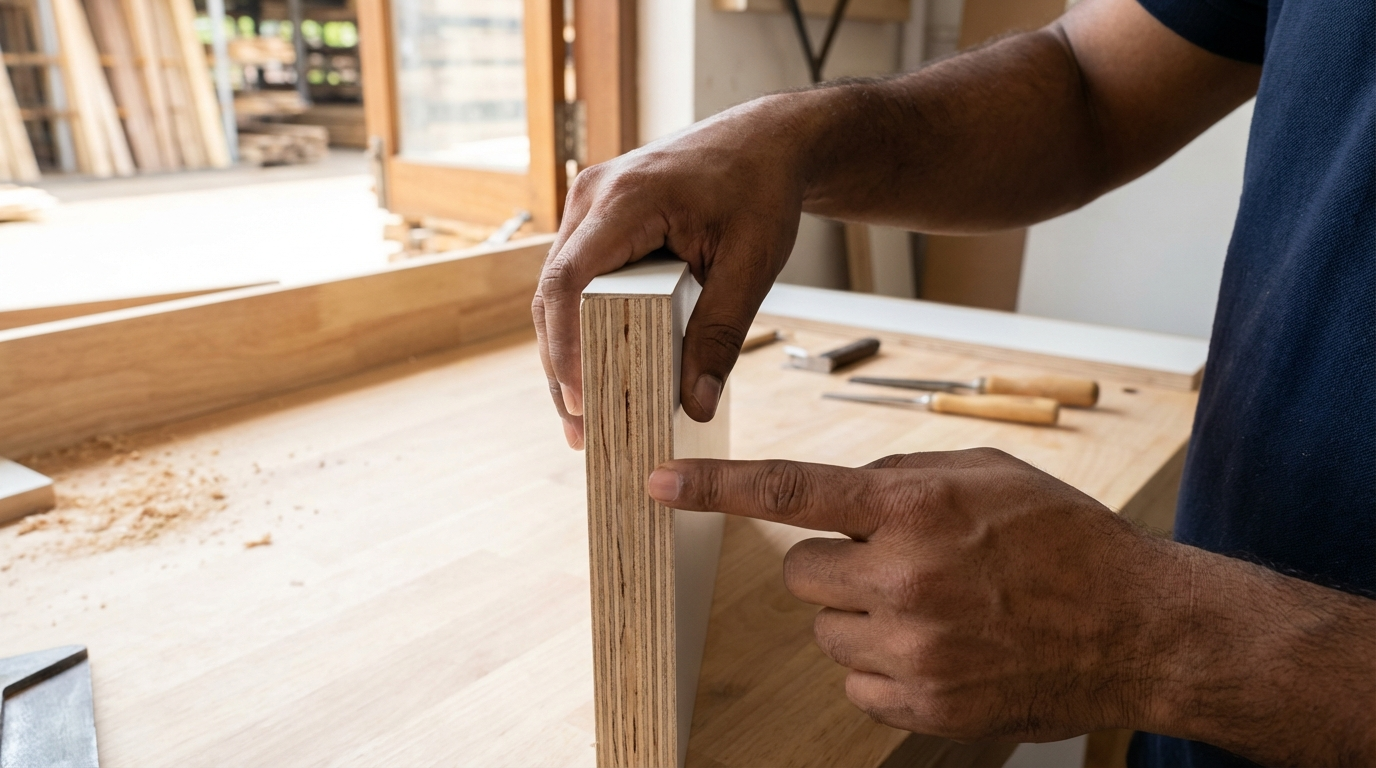
- Mistake: Visual-only checks. Why: Hides core voids. Fix: Knock test every sheet.
- Mistake: Thin sheets for load. Why: Sags under humidity. Fix: 18mm min for spans.
- Mistake: Skipping calibration. Why: Uneven laminate fit. Fix: Micrometer measure.
- Mistake: Iron screws in humid zones. Why: Rust grips fail. Fix: SS only.
- Mistake: No ventilation planning. Why: Traps vapor. Fix: Exhaust fans mandatory.
Failure Modes and Fixes
- Symptom: Bubbling face. Cause: MR glue fail. Prevent: BWP only. If now: Sand, reseal.
- Symptom: Edge swelling. Cause: Unsealed ends. Prevent: Epoxy coat. If now: Trim, reedge.
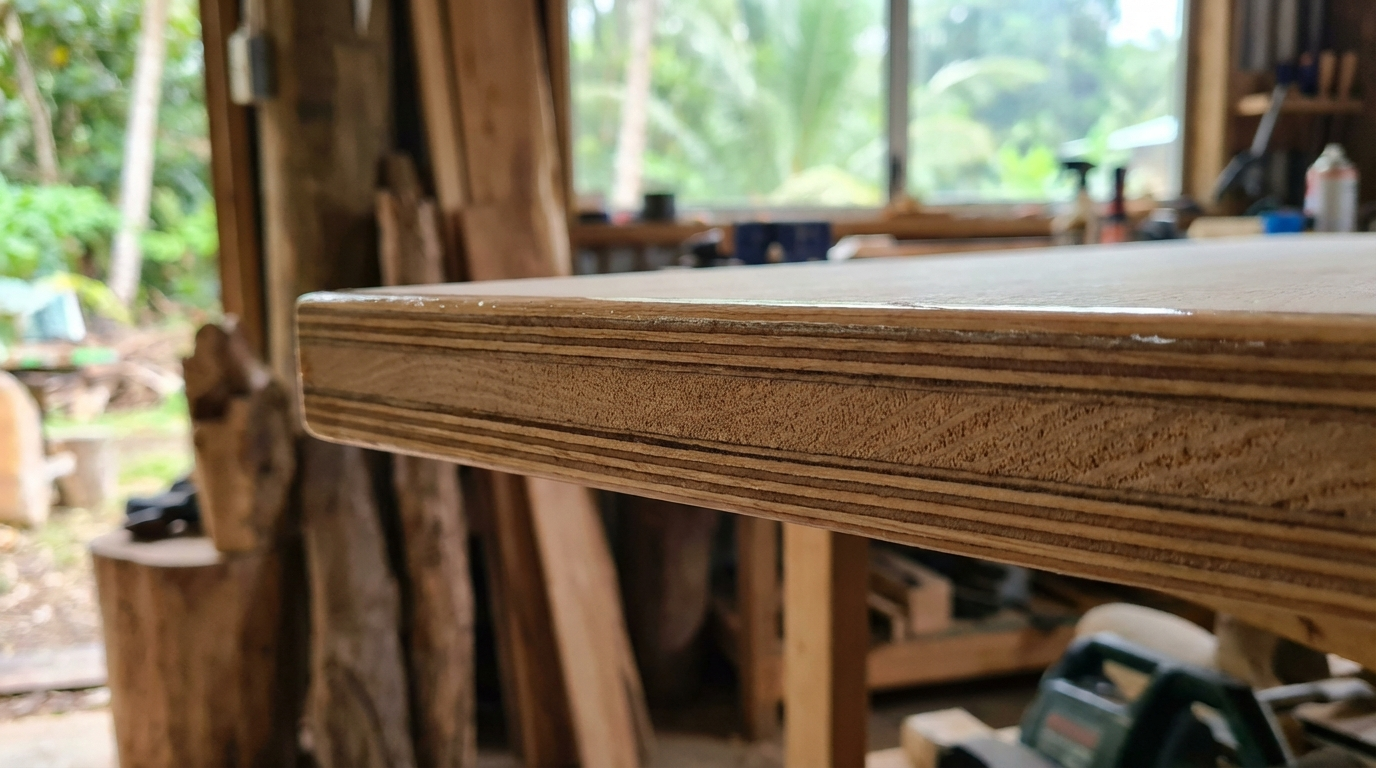
- Symptom: Core gaps post-cut. Cause: Poor pressing. Prevent: Tap inspect. If now: Fill epoxy.
- Symptom: Warping bow. Cause: Uneven moisture. Prevent: Calibrate + AC store. If now: Clamp flat, dry.
- Symptom: Mold spots. Cause: Trapped damp. Prevent: Ventilate. If now: Bleach clean, dehumidify.
- Symptom: Screw pull-out. Cause: Soft core. Prevent: Dense marine. If now: Plug, redrill.
Quality Checks You Can Do Without Lab Tests
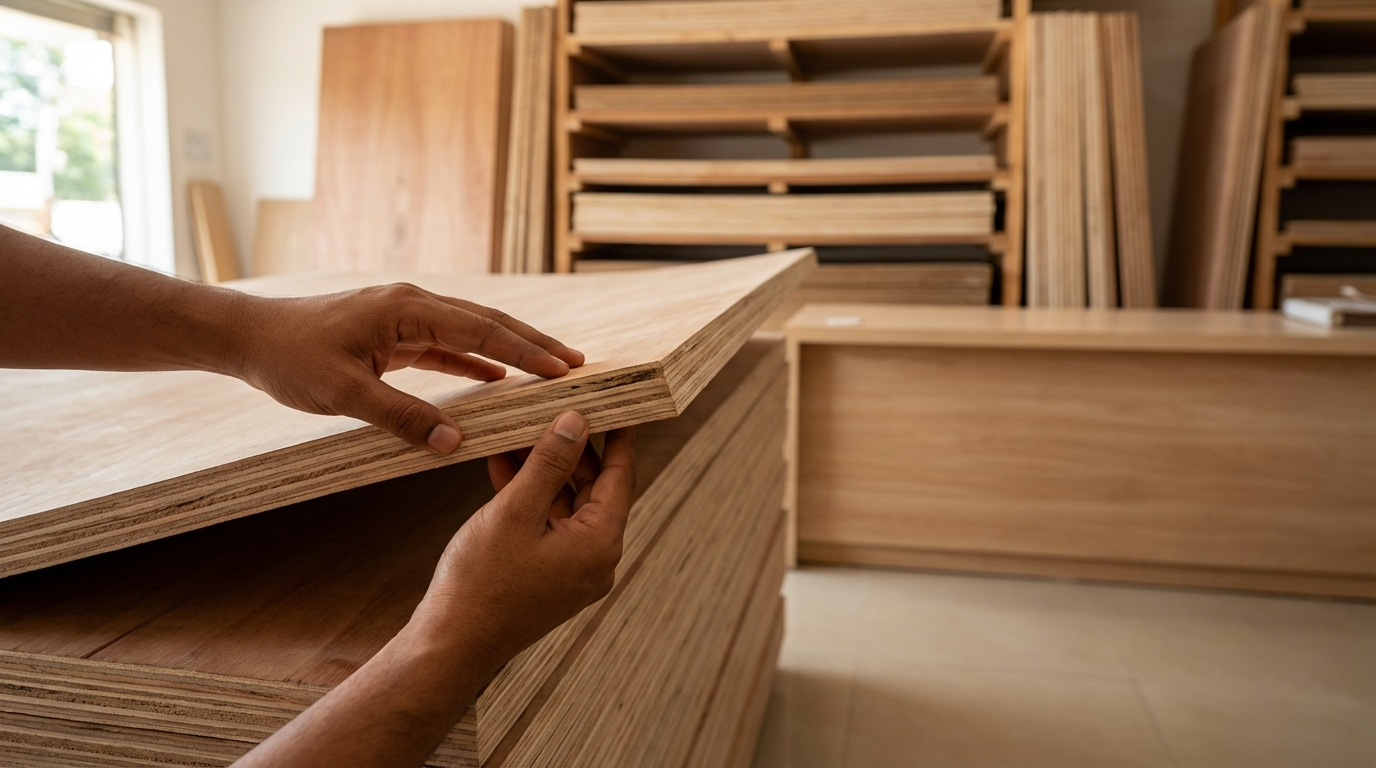
- Before buying: Tap center (solid thunk = good); flex corner (no creak); sniff (no chemical off = stable glue).
- Questions for supplier: "Boil test cycles? Core wood type? Calibration tolerance?" Red flag: evasive answers.
- After cutting: Eye glue lines (golden, even); probe gaps with knife (none).
- Post-install: Check alignment (level <1mm gap); wipe edges daily first month.
Homeowner Tips: Durability Do's and Don'ts
Do: Wipe spills instantly, use SS hardware, ventilate rooms. Don't: Drag furniture (scratches veneer), store cleaners nearby (fumes weaken). Coastal tip: quarterly dehumidifier runs prevent 80% mold. Inspect seams yearly for lifts—early epoxy saves walls.
Carpenter Tips: Handling and Prep
Cut with fine blade to avoid tear-out; pre-drill SS screws 5mm from edges; sand veneers lightly before laminate. Handle sheets vertically to shed rain. Hinge zones: reinforce with blocks for humid sag. Pro trick: mark "wet side" on sheets for priority sealing.
Architect Tips: Spec Writing and Detailing
Specify "BWP IS 710 equiv, 18mm cali ±0.3mm, 1.2mm face." Detail drip edges in elevations; call out vapor retarders in wet zones. Finish logic: oil for breathability over PU in salt air. QC: site mockup with soak test before bulk order.
Modular Maker Tips: QC for Repeatability
Batch-test 5% sheets for consistency; standardize edge bands to cut complaints. Reduce returns: pre-seal all panels, track humidity in factory. Coastal clients demand marine—stock it to win bids.
How long does coastal plywood last without warping?
Quality BWP lasts 8-15 years without warp if sealed and ventilated, vs 2-4 for BWR. Factors: installation gaps, cleaning habits. Salt-heavy spots like Vizag shave 20%. Step: annual checks—tighten hardware, reseal edges. Users report minimal issues with proper AC use.
FAQs
Which thickness for coastal cabinets?
18-19mm BWP balances strength and weight for cabinets; thinner risks sag in humid cabinets holding dishes. Heavier loads need 25mm. Coastal twist: thicker resists salt-induced softening. Verify by stacking weights onsite—no deflection over 2mm. Pair with SS brackets for monsoons; this setup handles 100kg+ shelves reliably.
Does painting help plywood in humid coasts?
Oil-based paints add a moisture shield but don't replace BWP glue—use on MR only for indoors. Epoxy primers outperform for exteriors. Limitation: paint traps vapor if not porous. Best: prime bare BWP edges first. Coastal carpenters swear by 2-coat marine varnish for 5-year protection.
What if plywood arrives warped from coastal transport?
Reject batches over 3mm bow; humidity in trucks causes it. Store vertically under cover pre-install. Fix minor: clamp 48hrs in AC. Insist on recent manufacture dates (<2 months). This catches 30% bad lots early, saving rework.
Is blockboard better than plywood for coastal moisture?
Blockboard's solid core resists screws better but delams faster in humidity unless BWP-grade. Plywood edges it for flatness under load. Choose plywood for spans, block for frames. Verify: twist test both—no twist wins. Hybrid tip: block core with plywood face for coastal versatility.
How to store plywood before coastal installation?
Elevate stacks on bearers, cover loosely for airflow, avoid direct sun/ground. Rotate stock FIFO. Monsoon prep: tarp overhangs. Poor storage causes 50% early failures—check moisture meter if possible (<12%). Unload immediately to shade.
SS hardware mandatory for coastal plywood?
Yes, iron rusts in weeks, loosening grips. SS 304 min for screws/hinges. Extra: nylon washers prevent bite. Budget 10% more but halve maintenance. Test: soak sample overnight—no corrosion passes.
Can laminate go over coastal plywood?
Yes, on BWP—pre-sand lightly, use wet-edge adhesive. Humidity curls cheap laminates; marine-grade holds. Seal panel edges first. Installers note 2-year warranty voids without plywood upgrade. Pro: UV-stable laminates for balconies.
Best plywood for coastal false ceilings?
BWP 8-12mm with foil finish—lightweight, vapor-tight. Avoid MR droop. Verify screw hold: 20+ per sheet. Ventilate above to dump heat/moisture. Common in Chennai apartments for 10-year drip-free service.
Disclaimer: This content is provided for general informational purposes based on industry practices and publicly available information. Product specifications, standards, prices, and availability may vary by manufacturer, region, and time. Readers should independently verify details with manufacturers, dealers, or qualified professionals before making purchase or construction decisions.Want Plywood Suggestions?
Share a few details and a Duro BOIL specialist will suggest suitable brands and connect you to responsive dealers.