Laminated MDF Board Price Guide: What to Expect in 2026
Get updated laminated MDF board prices in India. Compare costs by thickness, colors, and brands to make an informed purchase decision.
Quick Buying Decision
One-line recommendation: Budget ₹55-120 per square foot for quality laminated MDF, prioritizing thickness and brand reputation over decorative finish choices.
If you're in a hurry: For most Indian homes, 18mm pre-laminated MDF from established brands like Action Tesa, Greenlam, or Merino works reliably for wardrobes and dry-area furniture. Expect to pay ₹65-85 per square foot for standard finishes. Always confirm the board is HDF or HDHMR grade if moisture exposure is possible. Buy from authorized dealers who provide proper invoices, and inspect boards for surface bubbles, edge chips, and consistent colour across sheets before payment.
Quick Picks
- Best for kitchen: HDHMR laminated boards – because they offer moisture resistance essential for areas near sinks and cooking zones
- Best for wardrobe: 18mm pre-laminated MDF – because it provides adequate strength for shelving while accepting hardware well
- Best budget option: 8mm laminated MDF for backing and panels – because it reduces costs on non-structural components without compromising appearance
- Best premium option: High-gloss acrylic-finished MDF – because it delivers superior aesthetics for visible furniture faces and modern interiors
How to Choose Laminated MDF Board in 5 Steps
Step 1: Identify Your Application
Your application determines everything from grade selection to budget allocation. Start by categorizing your project:
Wet area vs dry area decision:
- Wet areas (kitchen base units, bathroom vanities, utility rooms): Standard MDF fails here. You need HDHMR or moisture-resistant variants specifically designed for Indian humidity conditions
- Dry areas (bedroom wardrobes, study tables, TV units): Standard pre-laminated MDF works well and costs significantly less
Heavy use vs light use:
- Heavy use (kitchen shutters opened daily, children's furniture, commercial applications): Opt for higher density boards with scratch-resistant laminate finishes
- Light use (display units, bedroom furniture, decorative panels): Standard laminate grades provide adequate durability
Step 2: Determine the Right Grade/Type
Based on your application assessment, select from these primary categories:
Simple decision matrix:
- Standard MDF laminated: Interior furniture in climate-controlled spaces – most economical option
- HDF laminated: High-traffic furniture requiring better screw-holding and edge strength
- HDHMR laminated: Any application with potential moisture exposure – recommended for Indian kitchens regardless of location
- Acrylic/PU finished MDF: Premium visible surfaces where aesthetics justify higher investment
According to industry comparisons, HDHMR provides superior moisture resistance compared to standard MDF, making it essential for humid Indian climates as noted by plyneer.com.
Step 3: Choose Correct Thickness
Thickness guide by application:
| Application | Recommended Thickness | Why This Works |
|---|---|---|
| Wardrobe shutters | 18mm | Adequate rigidity, accepts hinges properly |
| Kitchen shutters | 17-18mm | Standard for modular fittings compatibility |
| Shelving (light loads) | 12-15mm | Cost-effective for books, clothes |
| Shelving (heavy loads) | 18-25mm | Prevents sagging under weight |
| Back panels | 6-8mm | Sufficient for non-structural backing |
| Drawer bottoms | 6-8mm | Reduces drawer weight while maintaining strength |
| Table tops | 25mm or doubled 18mm | Prevents flex under daily use |
Why thickness matters: Undersized boards sag over time, especially in India's humidity. MDF loses approximately 15-20% strength when moisture content increases, making adequate thickness your insurance against premature failure.
Step 4: Check Quality Indicators
What to inspect before buying:
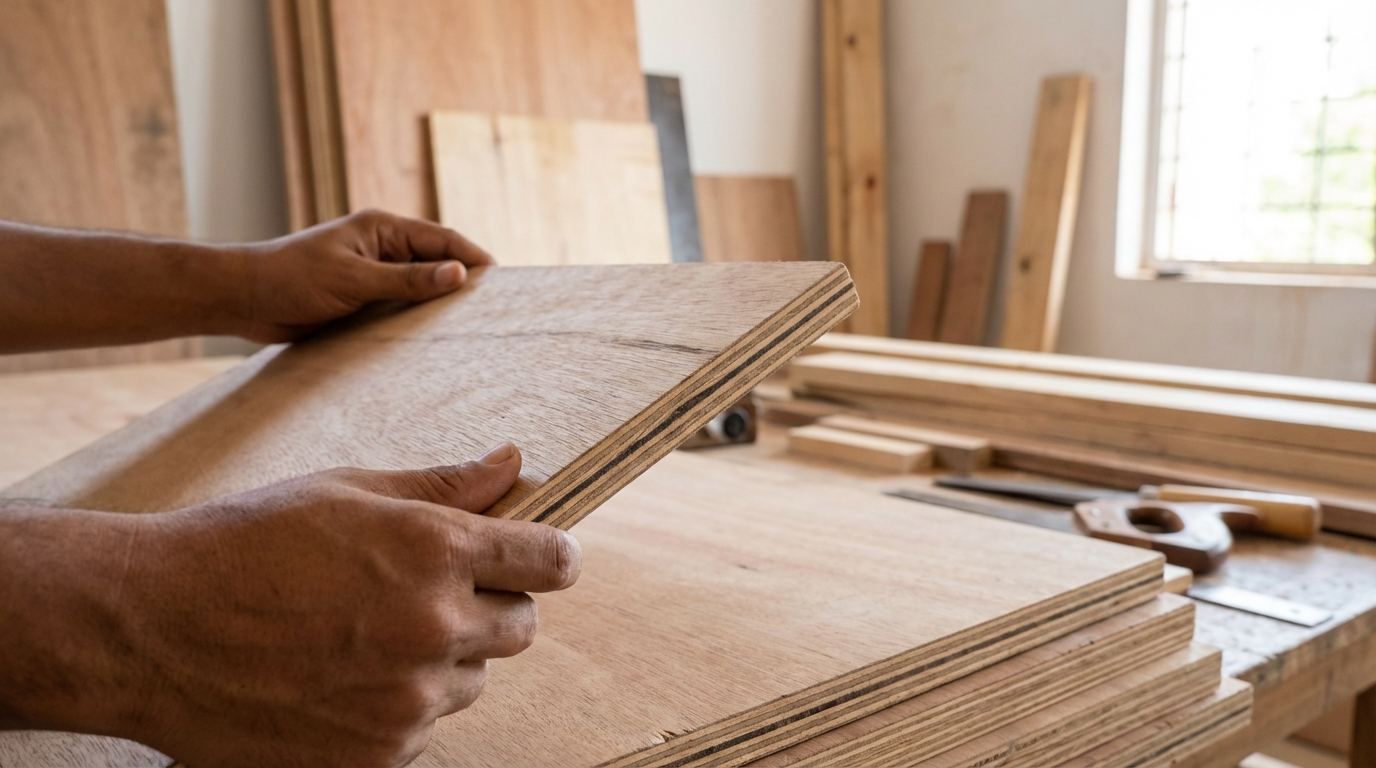
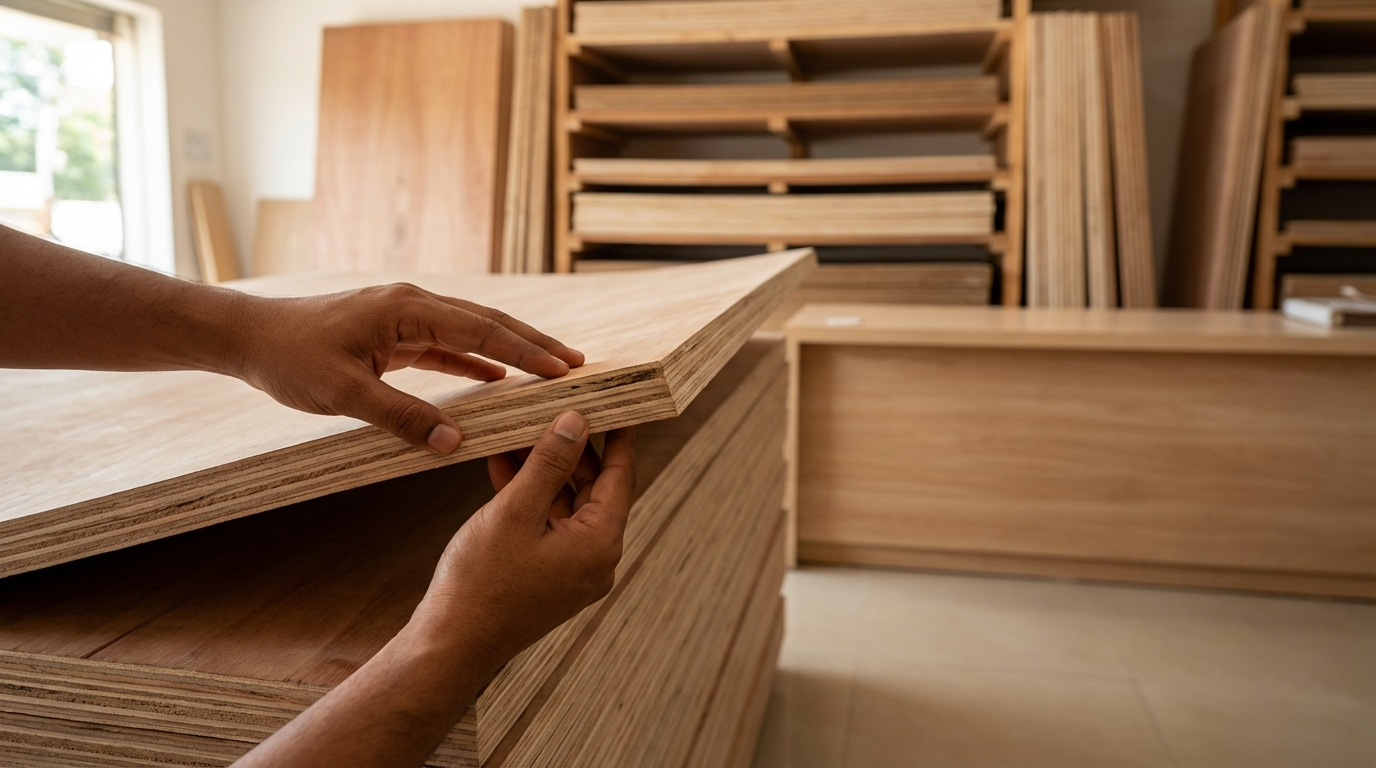
- Surface consistency: Run your hand across the laminate – any bubbles, rough patches, or inconsistent texture indicates manufacturing defects
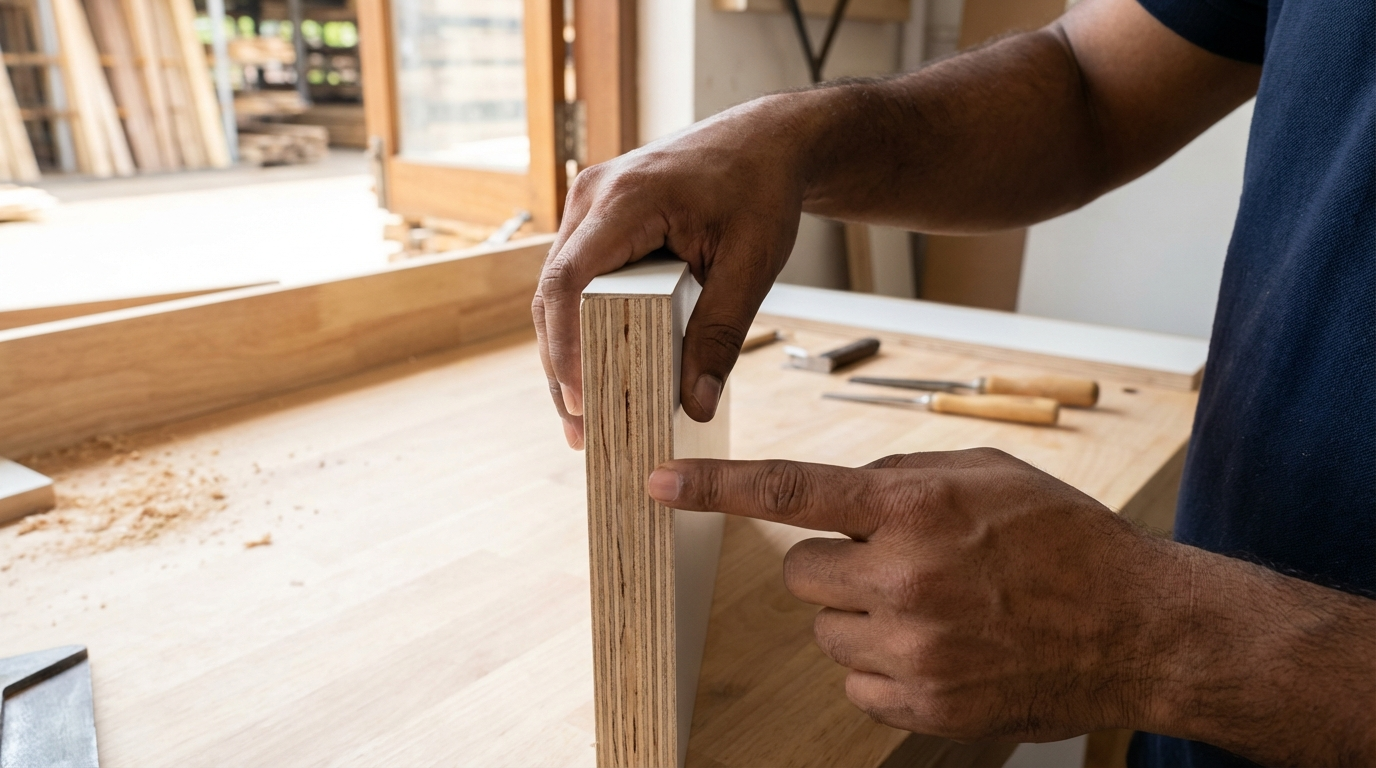
- Edge quality: Examine cut edges for uniform density without visible voids or separation between layers
- Colour matching: Compare multiple sheets from the same batch – variations suggest inconsistent laminate application
- Board flatness: Sight along the length – any warping or bowing means storage damage or manufacturing issues
- Weight consistency: Similar-sized boards should weigh approximately the same – significant variation indicates density inconsistencies
Tests you can do at shop:
- Scratch test: Gently scratch an inconspicuous corner with your fingernail – quality laminate resists surface marking
- Tap test: Knock on the board surface – hollow sounds indicate voids or poor core density
- Flex test: For thinner boards, gentle flexing shouldn't produce cracking sounds from the laminate
Step 5: Compare Prices and Get Quotes
How to ask for quotes properly:
- Specify exact dimensions needed (length × width × thickness)
- Mention the brand and grade you're comparing
- Ask for per-square-foot and per-sheet pricing
- Request cutting charges separately
- Inquire about minimum order quantities
- Ask about delivery charges to your location
What should be included in quote:
- Material cost with GST breakdown
- Cutting charges (if applicable)
- Edge banding costs (if required)
- Delivery timeline and charges
- Return policy for damaged goods
- Warranty documentation availability
Decision Framework: What to Buy for Each Situation
| Your Situation | Recommended Option | Why | What to Verify |
|---|---|---|---|
| Kitchen cabinets | 18mm HDHMR laminated | Moisture resistance critical near cooking and washing areas | HDHMR certification, boiling water test results |
| Bathroom vanity | 18mm HDHMR with PVC edge banding | Maximum moisture protection needed for daily water exposure | Edge sealing quality, no exposed MDF surfaces |
| Bedroom wardrobe | 18mm pre-laminated MDF | Cost-effective for dry environment, good screw-holding | Consistent laminate colour, proper thickness throughout |
| Living room furniture | 18mm high-gloss or matte laminated MDF | Aesthetic priority for visible pieces | Surface finish quality, colour depth consistency |
| Coastal area home | HDHMR with marine-grade edge treatment | Salt air accelerates moisture damage significantly | Dealer's coastal installation experience, warranty terms |
| Tight budget | Standard MDF laminated for carcass, better grade for shutters only | Optimizes spending on visible, high-wear components | Core quality even in budget boards, avoid particle board substitutes |
| Premium quality need | HDF with acrylic or PU finish | Superior density, scratch resistance, and visual appeal | Brand authenticity, finish warranty, installation requirements |
Price Guide and Budget Planning
Price range by type and grade (2026 estimates):
| Board Type | Thickness | Price Range (₹/sq.ft) |
|---|---|---|
| Standard laminated MDF | 8mm | ₹28-42 |
| Standard laminated MDF | 18mm | ₹55-75 |
| HDF laminated | 18mm | ₹70-95 |
| HDHMR laminated | 18mm | ₹85-120 |
| Acrylic finish MDF | 18mm | ₹140-200 |
| PU finish MDF | 18mm | ₹180-280 |
What affects price:
- Thickness: Each 2mm increase adds approximately ₹8-15 per square foot
- Brand: Premium brands command 20-40% premiums over regional manufacturers
- Grade: HDHMR typically costs 30-50% more than standard MDF
- City: Metro cities often have lower prices due to competition; remote areas face transportation premiums
- Finish type: Textured, high-gloss, and specialty finishes add ₹15-50 per square foot
Budget estimation for common projects:
- 10×10 feet kitchen (materials only): Approximately ₹45,000-85,000 depending on grade and finish selections
- Standard 6-foot wardrobe: Approximately ₹18,000-35,000 for laminated MDF components
- TV unit (6 feet wide): Approximately ₹12,000-25,000 including back panels
Why do prices vary so much between shops?
Price variations of 15-30% for identical products are common across Indian markets. Several factors explain this:
- Dealer tier: Authorized stockists receive better pricing than secondary dealers
- Purchase volume: Large dealers pass volume discounts to customers
- Inventory age: Older stock may be discounted or may have storage-related quality issues
- Location overheads: Prime commercial locations add costs passed to customers
- Service inclusion: Some dealers include cutting, delivery, or consultation in their pricing
- Authenticity: Unfortunately, counterfeit or relabelled products exist at suspiciously low prices
Red Flags: When to Walk Away
Warning signs at dealer or shop:
- No proper invoicing: Refusal to provide GST invoice suggests questionable sourcing
- Prices significantly below market: If it seems too good to be true, the product may be counterfeit or damaged
- Reluctance to show full sheets: Dealers hiding stock may be concealing damage or quality issues
- Pressure to buy immediately: Legitimate dealers don't need high-pressure tactics for quality products
- No brand documentation: Authentic products come with manufacturer literature and certification
- Inconsistent batch numbers: Mixing batches suggests pieced-together inventory from various sources
- Poor storage conditions: Boards stored flat on damp floors or exposed to weather will have compromised quality
- Unwillingness to allow inspection: Quality dealers encourage thorough examination before purchase
What bad quality looks like:
- Laminate peeling or bubbling at edges
- Visible colour variations across the same sheet
- Soft spots when pressing the surface
- Musty smell indicating moisture damage
- Chipped or rough edges throughout stock
Common Buying Mistakes (And How to Avoid)
Mistake 1: Choosing Based on Price Alone
Why people make this mistake: Laminated MDF looks similar across price ranges, making cheaper options tempting. What goes wrong: Budget boards often use lower-density cores that sag, and inferior laminates that scratch and peel within months. What to do instead: Compare within the same grade category and prioritize density over decorative finish.
Mistake 2: Using Standard MDF in Kitchens
Why people make this mistake: Contractors sometimes recommend standard MDF to reduce quotes and win projects. What goes wrong: Swelling near sinks, steam damage near cooking areas, and warped shutters within one monsoon season. Research from castacabinetry.com confirms MDF's poor moisture resistance makes it unsuitable for kitchen environments. What to do instead: Insist on HDHMR for all kitchen applications regardless of cost implications.
Mistake 3: Ignoring Edge Banding Quality
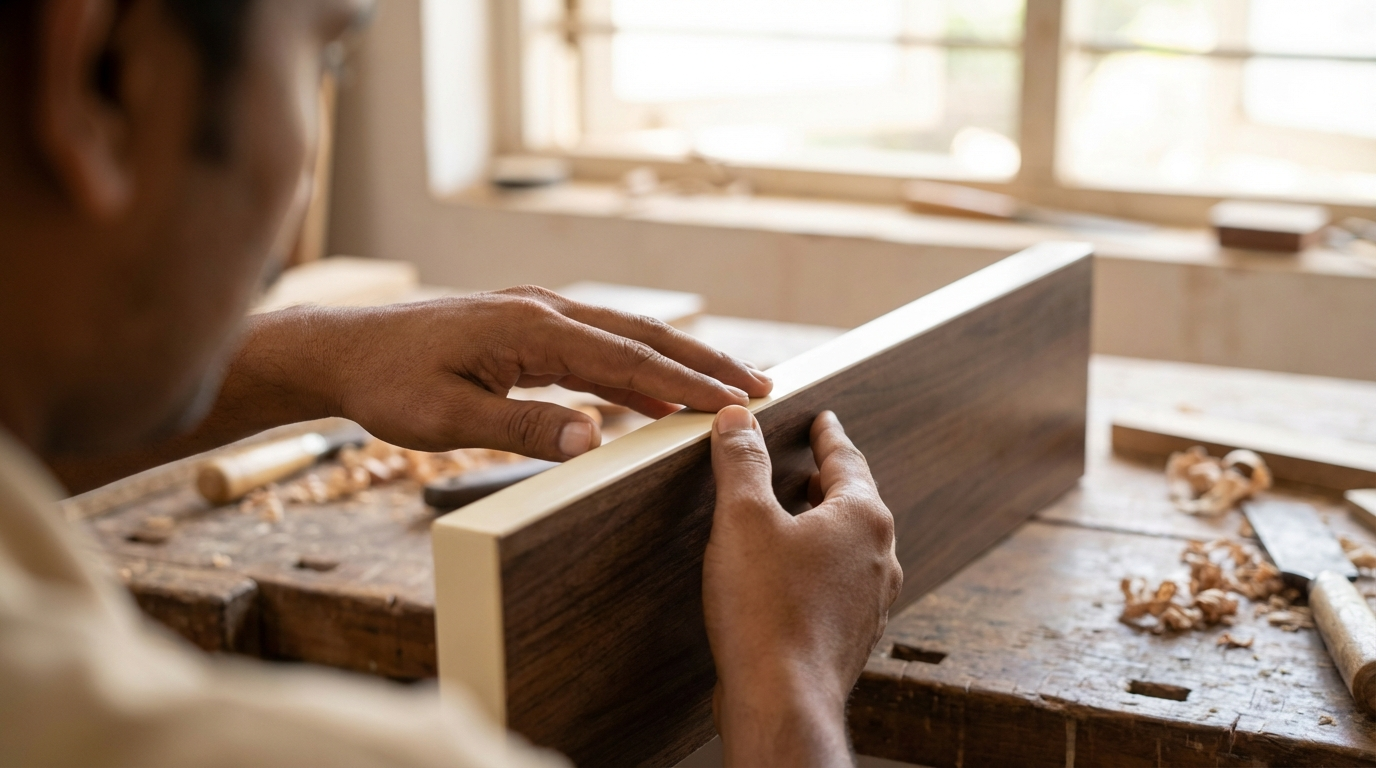
Why people make this mistake: Edge banding seems like a minor detail compared to the board itself. What goes wrong: Poor edge banding allows moisture ingress, causing swelling that spreads throughout the board. What to do instead: Specify PVC edge banding minimum 1mm thickness, and inspect adhesion quality before accepting delivery.
Mistake 4: Not Checking Thickness Consistency
Why people make this mistake: Thickness is assumed to be accurate as labelled. What goes wrong: Variations of 1-2mm cause fitting problems with hardware, uneven surfaces, and gaps in assembly. What to do instead: Measure thickness at multiple points including corners and centre before purchase.
Mistake 5: Buying Without Seeing Physical Samples
Why people make this mistake: Online catalogues show attractive finishes, and shop samples may differ from bulk stock. What goes wrong: Delivered colour or texture differs from expectations, requiring costly replacements. What to do instead: Request samples from the actual batch you're purchasing, and verify under different lighting conditions.
Mistake 6: Overlooking Storage Requirements
Why people make this mistake: Boards are often stored at construction sites without proper precautions. What goes wrong: Moisture absorption during storage causes warping before installation even begins. What to do instead: Plan delivery timing to minimize storage duration, and ensure flat, dry, covered storage.
Mistake 7: Not Accounting for Wastage
Why people make this mistake: Calculations based on exact furniture dimensions ignore cutting realities. What goes wrong: Running short mid-project means buying additional sheets at retail prices, potentially from different batches with colour variations. What to do instead: Add 10-15% wastage factor to all quantity calculations.
Mistake 8: Skipping Brand Verification
Why people make this mistake: Trusting dealer claims without verification. What goes wrong: Counterfeit or mislabelled products with inferior performance but premium pricing. What to do instead: Verify brand authenticity through manufacturer helplines or official dealer listings.
Questions to Ask Your Dealer
- "Can you provide the manufacturer's test certificate for this batch?" – Establishes product authenticity and documented performance standards
- "What is the core density of this board in kg/m³?" – Higher density (typically 720-850 kg/m³ for quality MDF) indicates better screw-holding and durability
- "Is this from current production or old stock?" – Older stock may have storage-related issues; good answer includes recent manufacturing date
- "What warranty does the manufacturer provide, and how do I claim it?" – Legitimate products have clear warranty procedures; vague answers suggest counterfeit risk
- "Can I see boards from the middle of the stack, not just the top?" – Top boards may be cherry-picked; examining random boards reveals true stock quality
- "What edge banding do you recommend for moisture areas?" – Knowledgeable dealers suggest PVC over ABS for wet areas; poor answers indicate limited expertise
- "Do you have other customers' references for similar projects?" – Established dealers readily provide references; hesitation suggests limited experience
- "What's your return policy if boards arrive damaged?" – Clear policies indicate professional operation; vague responses signal potential disputes
- "Can you match this colour if I need additional sheets later?" – Good dealers maintain batch records and advise on colour-matching limitations
- "What's the difference between your standard and premium options in practical terms?" – Informed dealers explain density, laminate quality, and warranty differences; scripted responses suggest sales-focused rather than knowledge-based selling
After Purchase: Handling and Storage
How to transport without damage:
- Always transport flat, never on edge where boards can flex and crack
- Use proper supports at maximum 600mm intervals to prevent sagging
- Cover with plastic sheeting if weather exposure is possible during transport
- Secure boards to prevent sliding which causes edge damage
- Avoid stacking different sizes that create pressure points
Storage requirements before installation:
- Store in the room where furniture will be installed for climate acclimatization
- Keep flat on a level surface with uniform support
- Maintain minimum 100mm clearance from floors and walls
- Cover to protect from dust but allow air circulation
- Avoid direct sunlight which can cause colour fading
- Keep away from fresh plaster, paint, or any moisture sources
Acclimatization period: Allow 48-72 hours minimum for boards to adjust to room humidity and temperature before cutting or installation. This prevents post-installation warping as boards stabilize. In monsoon season or newly constructed spaces, extend this to 5-7 days.
Frequently Asked Questions
Which brand is best for laminated MDF in India?
Action Tesa, Greenlam, Merino, and Century offer consistent quality across India with established dealer networks. Brand superiority varies by region based on local manufacturing and distribution strengths. Rather than fixating on a single brand, focus on authorized dealerships that provide proper documentation and warranty support. Premium segments include Rehau and Egger for specialized finishes. Your local contractor's experience with specific brands in your climate zone matters significantly.
How to identify original vs duplicate laminated MDF?
Authentic products feature consistent printing quality on protective films, proper batch numbers matching manufacturer records, and uniform edge density throughout. Check manufacturer websites for authorized dealer lists and verify your source. Genuine boards typically include technical specification sheets. Call the brand's customer helpline with batch numbers for verification. Suspiciously low prices, missing documentation, and dealer reluctance to provide invoices strongly indicate counterfeit products.
What warranty should I expect on laminated MDF?
Standard MDF typically carries 1-year warranty against manufacturing defects. HDHMR variants from premium brands often include 5-10 year warranties covering moisture-related failures under normal use. Warranty terms usually exclude damage from improper installation, storage, or use in applications beyond specified parameters. Always obtain warranty cards at purchase and understand claim procedures. Some brands require installation by certified carpenters for warranty validity.
How much laminated MDF do I need for my project?
Calculate total surface area of all components in square feet, then add 12-15% for cutting wastage and potential errors. Standard sheets measure 8×4 feet (32 square feet). For a typical wardrobe, expect 2-3 sheets for carcass and 1-2 for shutters. Kitchen projects require approximately 1.5 sheets per linear foot of cabinetry. Request your carpenter's cutting layout to optimize sheet usage and minimize waste before finalizing quantities.
Should I buy laminated MDF online or offline?
Offline purchasing allows physical inspection, colour verification under actual lighting, and immediate quality assessment—advantages difficult to replicate online. However, online platforms sometimes offer competitive pricing and home delivery convenience. For large orders or premium finishes, offline buying from authorized dealers provides better quality assurance and easier returns. Consider online only for standard sizes and finishes from reputable platforms with clear return policies.
When is the best time to buy laminated MDF?
Prices typically remain stable throughout the year, but avoid purchases during heavy monsoon months (July-September) when storage and transport risks increase. Year-end periods sometimes see promotional pricing as dealers clear inventory. More importantly, buy 2-3 weeks before your project begins to allow proper acclimatization. Avoid urgent purchases that limit dealer options and negotiation leverage.
How to negotiate price on laminated MDF?
Obtain quotes from at least three dealers for identical specifications to establish market range. Larger quantities (5+ sheets) typically qualify for 5-10% discounts. Ask about package deals including edge banding and cutting services. Cash payments sometimes attract additional discounts. Build relationships with dealers for future project pricing benefits. However, avoid aggressive negotiation that pressures dealers toward substituting inferior products.
What if I receive damaged laminated MDF material?
Inspect all boards immediately upon delivery before signing acceptance. Document any damage with photographs including batch numbers and delivery challan details. Report issues to the dealer within 24 hours with written communication. Legitimate dealers replace damaged goods promptly. Retain all packaging until inspection is complete. For online purchases, file complaints through platform grievance systems if dealer response is inadequate. Proper invoicing strengthens your position for replacements or refunds.
Note: This is independent content created for informational purposes and is not affiliated with any manufacturer. Prices and specifications mentioned are indicative and vary by region, dealer, and market conditions. Always verify current pricing and product details with local authorized dealers before making purchase decisions.
Disclaimer: This content is provided for general informational purposes based on industry practices and publicly available information. Product specifications, standards, prices, and availability may vary by manufacturer, region, and time. Readers should independently verify details with manufacturers, dealers, or qualified professionals before making purchase or construction decisions.
Want Plywood Suggestions?
Share a few details and a Duro BOIL specialist will suggest suitable brands and connect you to responsive dealers.