Laminated Wooden Flooring Review: Is It Worth the Investment?
In-depth review of laminated wooden flooring. Compare with solid wood, learn about durability, maintenance, and cost to make the right choice.
Quick Verdict
Laminated wooden flooring delivers excellent value for Indian homeowners seeking the warmth of wood at 60-70% lower cost than solid hardwood. Based on duroboil.com's extensive material analysis, laminated wooden flooring is recommended for living rooms, bedrooms, and offices but not recommended for bathrooms, outdoor areas, or regions with extreme humidity without proper moisture-resistant variants.
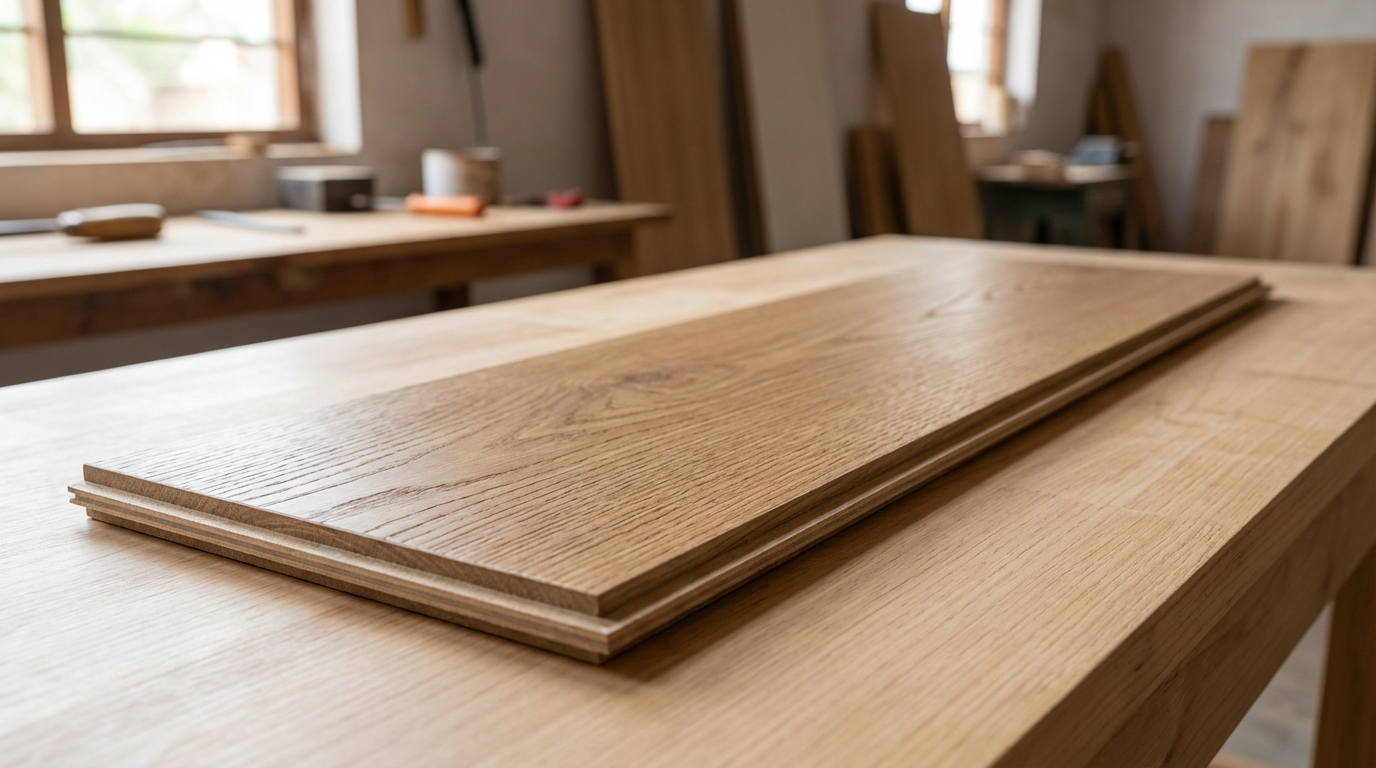
In simple terms, laminated wooden flooring consists of multiple compressed layers topped with a high-resolution photographic image of wood grain, protected by a wear-resistant overlay. This engineered construction makes it more dimensionally stable than solid wood in India's varying climate conditions while offering realistic wood aesthetics at a fraction of the cost.
| Rating Parameter | Assessment | Score Indicator |
|---|---|---|
| Moisture Resistance | Good (Standard) / Excellent (Water-Resistant Variants) | Good |
| Durability | 15-25 years with proper maintenance | Excellent |
| Value for Money | High ROI compared to solid wood alternatives | Excellent |
| Ease of Installation | DIY-friendly click-lock system available | Excellent |
| Overall Recommendation | Recommended for dry to moderate humidity areas | Recommended |
What is Laminated Wooden Flooring?
Laminated wooden flooring is a multi-layer synthetic flooring product designed to replicate the appearance of natural hardwood through advanced photographic and embossing technology. Unlike solid wood flooring that uses single pieces of timber, laminate flooring combines four distinct layers to create a durable, cost-effective alternative.
The manufacturing process involves fusing these layers under high pressure and temperature, typically exceeding 300°C. This creates an exceptionally hard surface that resists scratches, impacts, and fading far better than many natural wood options available in Indian markets.
Understanding the Four-Layer Construction
The backing layer (bottom layer) provides structural stability and moisture resistance from the subfloor. Made from melamine-impregnated paper or thin HDF, this layer prevents warping and maintains dimensional integrity.
The core layer forms the structural heart of laminate flooring, typically constructed from High-Density Fiberboard (HDF) with density ranging from 800-1000 kg/m³. This layer determines the flooring's stability, sound absorption, and load-bearing capacity.
The decorative layer contains the high-resolution photographic image that replicates wood grain, stone, or tile patterns. Modern printing technology achieves remarkable realism, with some premium laminates featuring registered embossing that aligns texture with the printed grain.
The wear layer (top layer) consists of aluminum oxide-reinforced melamine resin that protects against scratches, stains, UV fading, and daily wear. The thickness of this layer, measured in AC ratings (AC1 to AC5), determines durability classification.
How Laminate Differs from Other Wood Flooring
Unlike engineered wood flooring that uses a real wood veneer top layer, laminate flooring uses a photographic reproduction. This distinction affects refinishing possibilities—laminate cannot be sanded and refinished like solid or engineered hardwood.
Compared to vinyl flooring (LVT/SPC), laminate typically feels more rigid and wood-like underfoot. However, vinyl offers superior water resistance, making it better suited for wet areas in Indian homes.
Complete Specifications
Understanding technical specifications helps evaluate laminate flooring quality and suitability for specific applications. The following specifications represent typical ranges available in the Indian market.
| Specification | Standard Range | Premium Range | What It Means |
|---|---|---|---|
| Thickness | 6mm - 8mm | 10mm - 12mm | Thicker = better sound insulation and stability |
| Core Density | 750-850 kg/m³ | 850-1000 kg/m³ | Higher density = better durability and moisture resistance |
| AC Rating | AC3 (Residential) | AC4-AC5 (Commercial) | Higher AC = greater wear resistance |
| Plank Size (Length) | 1200mm - 1380mm | 1380mm - 2050mm | Longer planks = fewer joints, more realistic appearance |
| Plank Width | 190mm - 220mm | 220mm - 330mm | Wider planks = contemporary look, spacious feel |
| Formaldehyde Emission | E1 (≤0.1 ppm) | E0 (≤0.05 ppm) | Lower emission = safer indoor air quality |
| Surface Texture | Smooth/Silk | EIR (Embossed in Register) | EIR = texture matches grain for realistic feel |
| Locking System | Standard Click | Uniclic/5G/Megaloc | Premium locks = tighter joints, easier installation |
Understanding AC Ratings for Indian Conditions
The Abrasion Class (AC) rating system, standardized under EN 13329, determines laminate flooring's suitability for different traffic levels. For typical Indian residential use, AC3 rating suffices for bedrooms and living rooms with moderate foot traffic.
AC4 and AC5 ratings are recommended for homes with large families, frequent guests, or households with pets. Commercial spaces like offices, showrooms, and retail outlets should exclusively use AC4 or AC5 rated products to ensure longevity.
Performance Analysis
Real-world performance of laminated wooden flooring depends on multiple factors including installation quality, environmental conditions, and maintenance practices. This analysis evaluates key performance parameters based on typical Indian usage scenarios.
Moisture Handling Capabilities
Standard laminate flooring can withstand relative humidity levels between 40-65% without significant dimensional changes. However, India's monsoon season often pushes humidity beyond 80% in coastal and eastern regions, creating potential challenges.
The HDF core absorbs moisture through exposed edges and joints, causing swelling that manifests as peaked edges, buckling, or gaps between planks. This moisture sensitivity remains laminate flooring's primary limitation for Indian climates.
Water-resistant laminate variants feature hydrophobic treatments on the core and wax-sealed edges, extending moisture tolerance to 72 hours of surface water exposure. These variants cost 15-25% more but prove essential for humid regions like Mumbai, Chennai, Kolkata, and Kerala.
Durability and Longevity Assessment
When properly installed and maintained, quality laminate flooring typically lasts 15-25 years in Indian residential settings. The wear layer's aluminum oxide content directly correlates with scratch resistance—premium laminates contain 20-30 grams per square meter of aluminum oxide.
Impact resistance varies significantly across price points. Budget laminates may dent or chip from dropped objects, while premium options withstand impacts from falling items weighing up to 500 grams from standard heights.
Unlike solid hardwood that can be refinished multiple times, laminate flooring cannot be sanded or resurfaced once the wear layer deteriorates. This limitation means replacement rather than restoration when significant damage occurs.
Surface Quality and Finishing
Modern laminate flooring achieves remarkable visual authenticity through digital printing technology capable of reproducing 60+ different plank variations within a single box. This variation eliminates the repetitive patterns that plagued earlier laminate generations.
Embossed-in-Register (EIR) technology synchronizes surface texture with the printed wood grain, creating tactile feedback that mimics natural wood. This premium feature significantly enhances realism but increases costs by 20-30%.
UV resistance in quality laminates prevents color fading even in sun-exposed areas—a critical consideration for Indian homes with large windows or skylights. Budget laminates may show noticeable fading within 3-5 years of sun exposure.
Workability and Installation
The click-lock installation system makes laminate flooring one of the most DIY-friendly flooring options available. Glueless floating floor installation requires no adhesives, allowing quicker completion and immediate use after installation.
Standard woodworking tools suffice for cutting laminate planks, though carbide-tipped blades are recommended to prevent chipping. A basic installation toolkit including spacers, tapping block, pull bar, and circular saw enables competent DIY installation.
Floating installation over existing hard floors (tiles, concrete) is possible with proper underlayment, making laminate ideal for renovation projects where removing existing flooring is impractical or expensive.
Honest Pros and Cons
Transparent evaluation of laminated wooden flooring's advantages and limitations helps make informed purchasing decisions. According to duroboil.com's assessment, understanding these factors prevents costly mistakes and ensures appropriate application.
Advantages
Cost Effectiveness: Laminate flooring costs ₹70-300 per square foot compared to ₹400-2000+ for solid hardwood, delivering 60-70% savings while achieving similar visual appeal. Total project costs including installation remain significantly lower.
Scratch and Stain Resistance: The aluminum oxide wear layer provides superior scratch resistance compared to most natural wood finishes. Household chemicals, wine, coffee, and pet accidents wipe clean without permanent staining.
Dimensional Stability: The cross-grain HDF core construction minimizes expansion and contraction compared to solid wood. This stability reduces gaps and buckling in climate-controlled environments.
Easy Installation: Click-lock systems enable floating floor installation without glue or nails. A 150 square foot room can be completed in 4-6 hours by competent DIY installers, significantly reducing labor costs.
Design Variety: Laminate offers virtually unlimited design options—from exotic wood species to reclaimed barn wood appearances to contemporary concrete or marble looks. Designs not possible in natural materials become achievable.
Hygienic Surface: The sealed surface prevents dust mites, allergens, and bacteria from penetrating, making laminate flooring suitable for allergy sufferers. Regular sweeping and mopping maintains hygienic conditions.
Fade Resistance: Quality laminates include UV stabilizers that prevent sun damage, maintaining color consistency for 10-15 years even in sun-exposed areas—a significant advantage over many natural wood species.
Low Maintenance: No polishing, waxing, or refinishing required. Basic sweeping and occasional damp mopping with pH-neutral cleaners maintains appearance throughout the product's lifespan.
Limitations and Workarounds
Cannot Be Refinished: Unlike solid wood, laminate cannot be sanded and refinished when damaged. Workaround: Purchase extra planks during initial installation for future spot replacements.
Moisture Vulnerability: Standard laminate swells and warps when exposed to standing water or excessive humidity. Workaround: Choose water-resistant variants for humid climates and avoid installation in bathrooms or laundry areas.
Hollow Sound: The floating installation can produce hollow sounds underfoot, particularly noticeable in apartments. Workaround: Use quality acoustic underlayment (minimum 3mm thickness) to reduce sound transmission.
Temperature Sensitivity: Laminate may feel cold underfoot in winter and doesn't conduct heat efficiently for underfloor heating systems. Workaround: Use area rugs or choose laminate specifically rated for underfloor heating compatibility.
Edge Chipping: Impact damage at plank edges may cause visible chipping, particularly in budget products. Workaround: Select laminates with beveled edges that disguise minor damage and invest in AC4+ rated products.
Not Pet-Scratch Proof: While scratch-resistant, large dogs with untrimmed nails can eventually damage even premium laminates. Workaround: Keep pet nails trimmed and place mats in high-pet-traffic areas.
Best and Worst Applications
Selecting appropriate locations for laminate flooring installation maximizes satisfaction and longevity. The following recommendations are based on typical Indian home configurations and lifestyle patterns.
Excellent Applications
| Location | Suitability | Recommended Specification | Special Considerations |
|---|---|---|---|
| Living Room | Excellent | AC3-AC4, 8-10mm thickness | Choose water-resistant for homes with children |
| Master Bedroom | Excellent | AC3, 8mm thickness | Acoustic underlayment for apartment dwellers |
| Children's Bedroom | Excellent | AC4, 10mm thickness | Prioritize scratch resistance and easy cleaning |
| Home Office/Study | Excellent | AC3-AC4, 8-10mm | Chair mat recommended for rolling chairs |
| Corridors/Hallways | Very Good | AC4, 10-12mm | Higher traffic requires higher AC rating |
| Commercial Office | Very Good | AC5, 12mm thickness | Commercial warranty essential |
Applications Requiring Caution
| Location | Suitability | Risk Factors | Alternative Recommendation |
|---|---|---|---|
| Kitchen | Conditional | Water exposure near sink, humidity from cooking | Water-resistant laminate only; consider SPC flooring |
| Dining Room | Good with Precautions | Spills, chair movement | Area rug under dining table, furniture pads |
| Balcony (Covered) | Conditional | Rain splash, humidity | WPC or outdoor-rated laminate only |
| Basement | Conditional | Below-grade moisture, humidity | Mandatory vapor barrier, water-resistant variants |
Unsuitable Applications
Bathrooms: Even water-resistant laminates cannot withstand bathroom humidity levels (often 90%+) and regular water exposure. Use ceramic tiles, natural stone, or SPC flooring instead.
Laundry Areas: Washing machine leaks and high humidity make laminate unsuitable. Vitrified tiles or SPC flooring offer better protection.
Open Balconies/Terraces: Direct rain exposure, UV intensity, and temperature extremes destroy laminate flooring rapidly. Outdoor-rated WPC or composite decking is appropriate.
Commercial Kitchens: Heavy equipment, constant water exposure, and commercial cleaning chemicals make laminate unsuitable for professional food service areas.
Price and Value Analysis
Laminated wooden flooring in India spans a wide price range, with significant variations in quality, durability, and appearance across price points. Understanding these differences helps optimize budget allocation.
Price Breakdown by Category
| Category | Price Range (₹/sq ft) | Typical Features | Expected Lifespan | Best For |
|---|---|---|---|---|
| Budget | ₹70-120 | AC3, 6-7mm, basic patterns, standard click | 8-12 years | Rental properties, temporary installations |
| Mid-Range | ₹120-200 | AC3-AC4, 8-10mm, good variety, improved locks | 12-18 years | Most residential applications |
| Premium | ₹200-350 | AC4-AC5, 10-12mm, EIR texture, water-resistant | 18-25 years | Premium homes, high-traffic areas |
| Luxury Import | ₹350-500+ | AC5, 12mm+, advanced features, superior warranty | 25+ years | Luxury homes, commercial projects |
Total Installation Cost Estimation
Material costs represent only 60-70% of total project expense. Additional costs include underlayment (₹15-40 per sq ft), transition strips (₹200-500 per piece), skirting/beading (₹50-150 per running foot), and installation labor (₹20-50 per sq ft).
For a typical 1000 sq ft installation with mid-range laminate, expect total costs between ₹1.6-2.5 lakhs including all accessories and professional installation. DIY installation can reduce costs by ₹20,000-40,000.
Comparison with Alternative Flooring Options
| Flooring Type | Material Cost (₹/sq ft) | Total Installed Cost | Lifespan | Maintenance Cost |
|---|---|---|---|---|
| Laminate Flooring | ₹70-350 | ₹150-500 | 15-25 years | Low |
| Solid Hardwood | ₹400-2000 | ₹700-2500 | 50+ years | Medium-High |
| Engineered Wood | ₹250-800 | ₹400-1000 | 20-40 years | Medium |
| SPC/LVT Flooring | ₹150-400 | ₹250-550 | 15-25 years | Low |
| Vitrified Tiles | ₹50-200 | ₹150-350 | 30+ years | Very Low |
Value Assessment
Laminate flooring offers the best value for homeowners prioritizing wood aesthetics within moderate budgets. The cost-per-year calculation (total cost ÷ expected lifespan) often favors laminate over solid hardwood despite the latter's longer lifespan.
For a ₹2 lakh installation lasting 20 years, the annual cost equals ₹10,000—comparable to maintaining a solid hardwood floor that requires periodic refinishing at ₹15-25 per sq ft every 5-7 years.
Quality Checks Before Buying
Evaluating laminate flooring quality before purchase prevents disappointment and ensures long-term satisfaction. These verification methods require no specialized equipment and can be performed at any dealer showroom.
Visual Inspection Points
Pattern Repetition: Examine multiple boxes to check pattern variation. Quality laminates feature 60+ unique plank designs per batch. If you spot identical patterns within 10-15 planks, quality may be compromised.
Edge Quality: Run your finger along plank edges. Quality laminates have smooth, consistent edges without roughness, chips, or delamination. Beveled edges should be uniform in depth and angle.
Surface Consistency: View planks at different angles under showroom lighting. Premium laminates maintain consistent color and texture without blotchy areas or printing artifacts.
Physical Tests You Can Perform
Density Test: Hold a plank—it should feel solid and substantial, not hollow or lightweight. Compare similar-thickness planks from different brands to gauge density differences.
Lock System Test: Connect two sample planks using the click-lock mechanism. The joint should snap securely without excessive force and resist separation when gently pulled. Gaps between connected planks indicate poor lock quality.
Flexibility Test: Gently flex a plank lengthwise. Quality HDF cores flex slightly without cracking. Excessive flexibility suggests low-density cores; brittleness indicates moisture damage or manufacturing defects.
Water Bead Test: Place a water drop on the surface. It should bead up and remain on the surface rather than being absorbed. For water-resistant variants, the bead should maintain shape for several minutes.
Documentation Verification
AC Rating Certificate: Request documentation proving the stated AC rating. Legitimate products have test certificates from recognized laboratories confirming abrasion resistance.
Emission Certification: Verify E0 or E1 formaldehyde emission classification through certificates. This certification ensures safe indoor air quality, particularly important for bedrooms and children's rooms.
Warranty Terms: Review warranty documentation carefully. Quality manufacturers offer 15-25 year residential warranties covering manufacturing defects, excessive wear, and fading.
Installation and Maintenance Guidelines
Proper installation and ongoing maintenance significantly impact laminate flooring performance and longevity. These guidelines, compiled by duroboil.com's technical team, reflect best practices for Indian conditions.
Pre-Installation Requirements
Subfloor Preparation: The subfloor must be clean, dry, level (maximum 3mm variation per 1.8m), and structurally sound. Concrete subfloors require minimum 45 days curing time and moisture testing below 75% RH.
Acclimatization Period: Store unopened laminate boxes in the installation room for 48-72 hours before installation. This allows the material to adjust to ambient temperature and humidity, preventing post-installation gaps or buckling.
Underlayment Selection: Choose underlayment appropriate for your subfloor type—foam underlayment for concrete, combination underlayment with vapor barrier for potentially damp conditions, and acoustic underlayment for apartment installations.
Installation Best Practices
Expansion Gaps: Maintain 8-10mm expansion gaps around all walls, door frames, pipes, and fixed objects. Use spacers during installation and remove before installing skirting.
Staggered Layout: Offset end joints between rows by minimum 30cm to maximize structural integrity and visual appeal. Random staggering creates the most natural appearance.
Direction Orientation: Install planks parallel to the longest wall or main light source for optimal visual effect. In corridors, install lengthwise along the direction of traffic flow.
Maintenance Schedule
| Frequency | Task | Method |
|---|---|---|
| Daily | Dry dust removal | Microfiber mop or vacuum with hard floor setting |
| Weekly | Damp mopping | Well-wrung mop with pH-neutral cleaner |
| Monthly | Deep cleaning | Laminate-specific cleaning solution, detailed edge cleaning |
| Annually | Inspection | Check for loose planks, edge damage, expansion gap adequacy |
| As Needed | Spot treatment | Appropriate cleaner for specific stains |
What to Avoid
Never use steam mops, wet mops leaving standing water, abrasive cleaners, wax-based polishes, or ammonia-based solutions. These damage the wear layer, cause swelling, or leave residue that attracts dirt.
Avoid dragging heavy furniture—always lift or use furniture sliders. Install felt pads on all furniture legs and use chair mats under rolling chairs to prevent localized wear patterns.
Alternatives to Consider
Depending on specific requirements, budget constraints, or location factors, alternative flooring options may better suit certain situations. This comparison helps evaluate whether laminate remains the optimal choice for your project.
SPC (Stone Polymer Composite) Flooring
When to Choose Instead: Kitchens, basements, homes in high-humidity regions, or anywhere water exposure is likely. SPC offers 100% waterproof performance that laminate cannot match.
Trade-offs: SPC typically costs 20-40% more than comparable laminate and may feel harder underfoot. Design variety, particularly in wood looks, may be more limited than laminate options.
Engineered Wood Flooring
When to Choose Instead: When authentic wood surface feel is essential, when future refinishing capability is desired, or when budget allows premium investment for long-term value.
Trade-offs: Engineered wood costs 50-100% more than premium laminate and requires more maintenance. Scratch resistance is generally lower than laminate.
Vitrified Tiles with Wood-Look Finish
When to Choose Instead: All-climate durability, bathroom and kitchen suitability, or preference for permanent, maintenance-free flooring. Wood-look tiles have improved dramatically in visual authenticity.
Trade-offs: Tiles feel harder and colder underfoot, require grouting that needs maintenance, and installation is more invasive and expensive. The aesthetic never quite matches laminate's wood warmth.
Carpet Flooring
When to Choose Instead: Bedrooms where softness and warmth are prioritized, noise reduction is critical, or budget is extremely limited.
Trade-offs: Carpet harbors allergens, stains easily, requires professional cleaning, and has shorter lifespan. Not suitable for Indian climates with high dust and humidity levels.
Frequently Asked Questions
Is laminated wooden flooring waterproof?
Standard laminated wooden flooring is water-resistant but not waterproof. The HDF core absorbs moisture if water penetrates joints or edges, causing swelling and permanent damage. Water-resistant variants with sealed edges and treated cores can withstand surface spills for 24-72 hours but still aren't suitable for wet areas like bathrooms. For truly waterproof performance, consider SPC or WPC flooring alternatives that use completely waterproof core materials.
How long does laminated wooden flooring last in Indian climate conditions?
In properly maintained, climate-controlled Indian homes, quality laminate flooring typically lasts 15-25 years. Factors affecting longevity include AC rating (higher is better), installation quality, humidity control, and maintenance practices. In high-humidity regions like coastal cities, lifespan may reduce by 20-30% without water-resistant variants and humidity management. Budget laminate products may show significant wear within 8-12 years even under ideal conditions.
Can laminated wooden flooring be installed over existing tiles?
Yes, laminate flooring installs successfully over existing tiles provided they are level (maximum 3mm variation per 1.8m), securely bonded, clean, and dry. Grout lines don't typically cause problems due to the floating installation method and underlayment cushioning. However, this raises floor height by 10-15mm, requiring door trimming and transition solutions at thresholds. Ensure existing tiles don't have moisture problems before proceeding.
Is laminated wooden flooring suitable for homes with pets?
Laminate flooring is reasonably pet-friendly, offering better scratch resistance than solid hardwood or vinyl. However, large dogs with untrimmed nails can eventually scratch even premium laminates rated AC4-AC5. The sealed surface makes cleaning pet accidents easy, and most pet urine wipes up without staining if addressed promptly. For households with multiple large dogs, consider AC5-rated products with enhanced scratch resistance or alternative flooring like ceramic tile.
What is the difference between laminate flooring and engineered wood flooring?
The primary difference lies in the top layer—engineered wood uses real wood veneer (0.5-6mm thick) while laminate uses a photographic image protected by melamine. This means engineered wood can be sanded and refinished (once or twice for thin veneers, multiple times for thick veneers), while laminate cannot. Engineered wood generally feels more authentic underfoot and may be preferred by wood purists. However, laminate offers superior scratch resistance, more design variety, and costs 40-60% less than comparable engineered wood products.
How do I clean and maintain laminated wooden flooring properly?
Daily maintenance involves dry sweeping or vacuuming (use hard floor setting without beater bar) to remove dust and debris. Weekly damp mopping with a well-wrung mop and pH-neutral laminate cleaner maintains appearance. Never use steam mops, excessive water, wax-based products, or abrasive cleaners. For spot cleaning, use manufacturer-recommended cleaners for specific stains. Place doormats at entrances, use furniture pads, and maintain indoor humidity between 40-65% for optimal floor longevity.
What AC rating should I choose for residential use in India?
For typical Indian residential applications, AC3 rating suffices for bedrooms and low-traffic areas with expected 10-15 year performance. Living rooms, dining areas, and corridors benefit from AC4 rating due to higher traffic. Households with children, pets, or frequent entertaining should consider AC4-AC5 regardless of room location. Commercial spaces require AC5 rating exclusively. Note that AC rating indicates wear resistance only—it doesn't reflect moisture resistance or impact durability.
Can laminated wooden flooring be used with underfloor heating systems?
Many laminate flooring products are compatible with underfloor heating systems, but not all. Check manufacturer specifications for thermal resistance (should be below 0.15 m²K/W for efficient heat transfer) and maximum surface temperature ratings (typically 27-28°C). Water-based underfloor heating systems are generally compatible; electric systems may create hotspots that damage laminate. Always use underlayment specifically designed for underfloor heating applications and follow manufacturer guidelines for temperature limits during operation.
What underlayment should I use for laminate flooring installation?
Underlayment selection depends on subfloor type and installation requirements. For concrete subfloors, use combination underlayment with integrated vapor barrier to prevent moisture transmission. For wooden subfloors, standard foam or cork underlayment (2-3mm thickness) provides cushioning and minor leveling. Apartments require acoustic underlayment (minimum 3mm, preferably rubber-based) to reduce sound transmission. Never install laminate without underlayment, and never double-layer underlayment as this causes instability.
How much expansion gap should I leave during installation?
Maintain 8-10mm expansion gaps around all walls, door frames, fixed columns, pipes, and other permanent fixtures. In rooms exceeding 10 meters in any direction, install expansion joints with T-molding to prevent buckling. Larger gaps (up to 15mm) are recommended in regions with significant temperature and humidity variations throughout the year. These gaps accommodate natural expansion and contraction—without them, the floor may buckle, peak, or develop gaps between planks during seasonal changes.
Final Verdict
Laminated wooden flooring represents an excellent value proposition for Indian homeowners seeking wood aesthetics without hardwood pricing. The technology has matured significantly, with current products offering remarkable realism, durability, and ease of maintenance that earlier generations couldn't match.
Recommended Investment Scenarios:
- Living rooms and bedrooms in climate-controlled homes
- Rental properties where cost-effectiveness matters
- Office spaces with moderate foot traffic
- Renovation projects over existing hard floors
- Homes prioritizing design variety and easy maintenance
Consider Alternatives When:
- Installation area involves regular water exposure
- Home lacks air conditioning in high-humidity regions
- Authentic wood feel and refinishing capability matter
- Budget allows premium engineered or solid hardwood investment
- Installation location is below grade (basements) without proper moisture mitigation
For most Indian residential applications, mid-range laminate flooring (₹150-250 per sq ft installed) delivers optimal balance between cost, durability, and aesthetics. Prioritize water-resistant variants in humid regions, verify AC ratings match intended use, and never compromise on installation quality—it determines success more than product selection.
Note: This is independent editorial content. Duroboil.com is not affiliated with any flooring manufacturer or brand mentioned in this review. Prices and specifications mentioned are indicative and vary based on location, dealer, and market conditions. Always verify current specifications and warranties directly with authorized dealers before purchase.
Disclaimer: This content is provided for general informational purposes based on industry practices and publicly available information. Product specifications, standards, prices, and availability may vary by manufacturer, region, and time. Readers should independently verify details with manufacturers, dealers, or qualified professionals before making purchase or construction decisions.
Want Plywood Suggestions?
Share a few details and a Duro BOIL specialist will suggest suitable brands and connect you to responsive dealers.