MDF Flooring vs Laminate Flooring: Which is Better?
Learn about MDF flooring options and how they compare to laminate flooring. Discover durability, cost, and maintenance requirements.
Quick Verdict
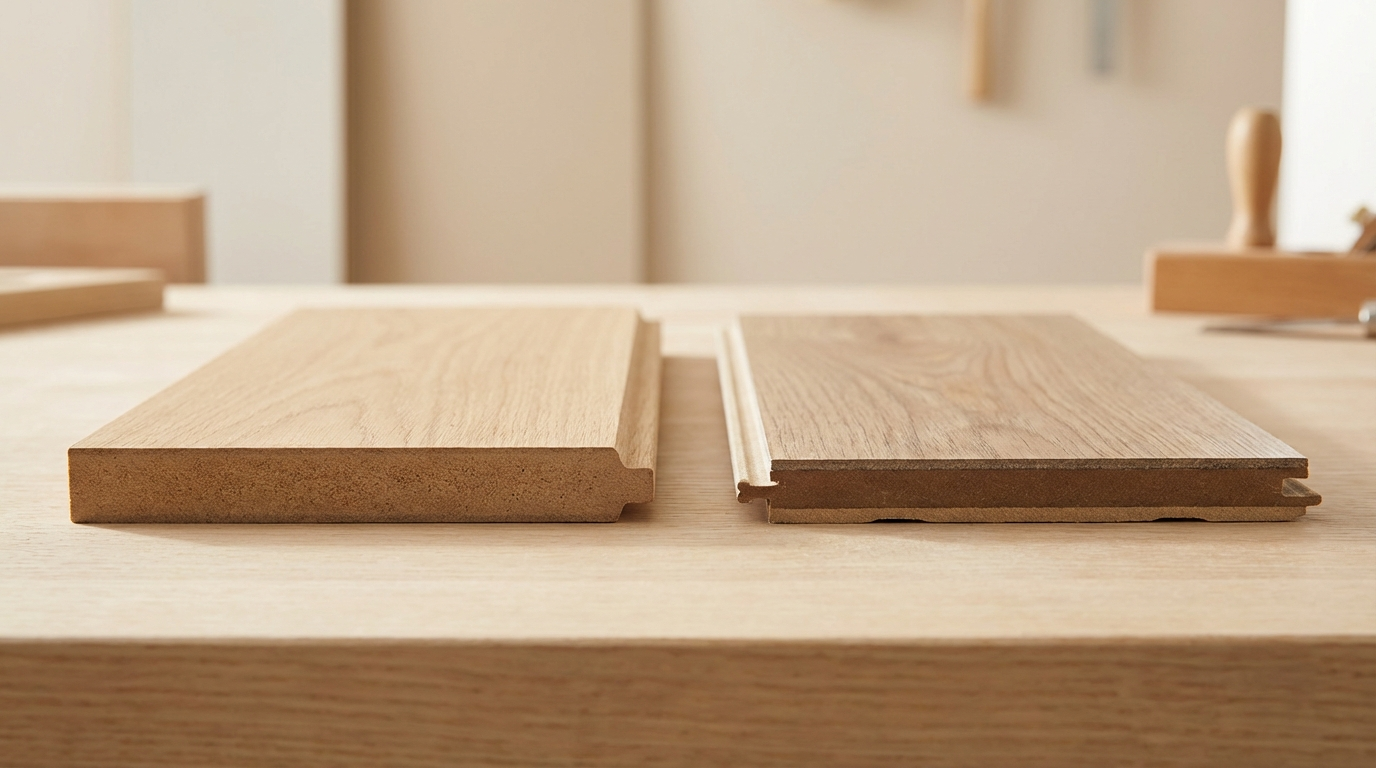
MDF flooring is not a standalone flooring material but serves as the core layer in laminate flooring, making "MDF flooring vs laminate flooring" a comparison of the substrate versus the complete product. This distinction is crucial for Indian homeowners who often confuse engineered board types with finished flooring solutions.
In simple terms, when you purchase laminate flooring, you're buying a multi-layer product where MDF or HDF (High-Density Fiberboard) forms the structural core. The laminate is the decorative and protective surface layer bonded on top. Understanding this relationship helps you make informed decisions about flooring quality, durability, and value for money in Indian conditions.
Our assessment summary:
- MDF-core laminate flooring: Budget-friendly, suitable for low-traffic bedrooms and study rooms
- HDF-core laminate flooring: Superior durability, recommended for living rooms and high-traffic areas
- Moisture resistance: Average to Poor for standard grades, problematic in humid Indian climates
- Value for money: Good for rental properties and temporary installations
- Overall recommendation: Suitable for air-conditioned spaces with controlled humidity; not recommended for kitchens, bathrooms, or ground-floor installations in coastal areas
What is MDF Flooring?
MDF flooring refers to laminate flooring products that use Medium-Density Fiberboard as their core substrate, typically found in economy-grade laminate flooring priced between ₹45-80 per square foot in India. This terminology often creates confusion because MDF itself is not installed directly as a floor covering.
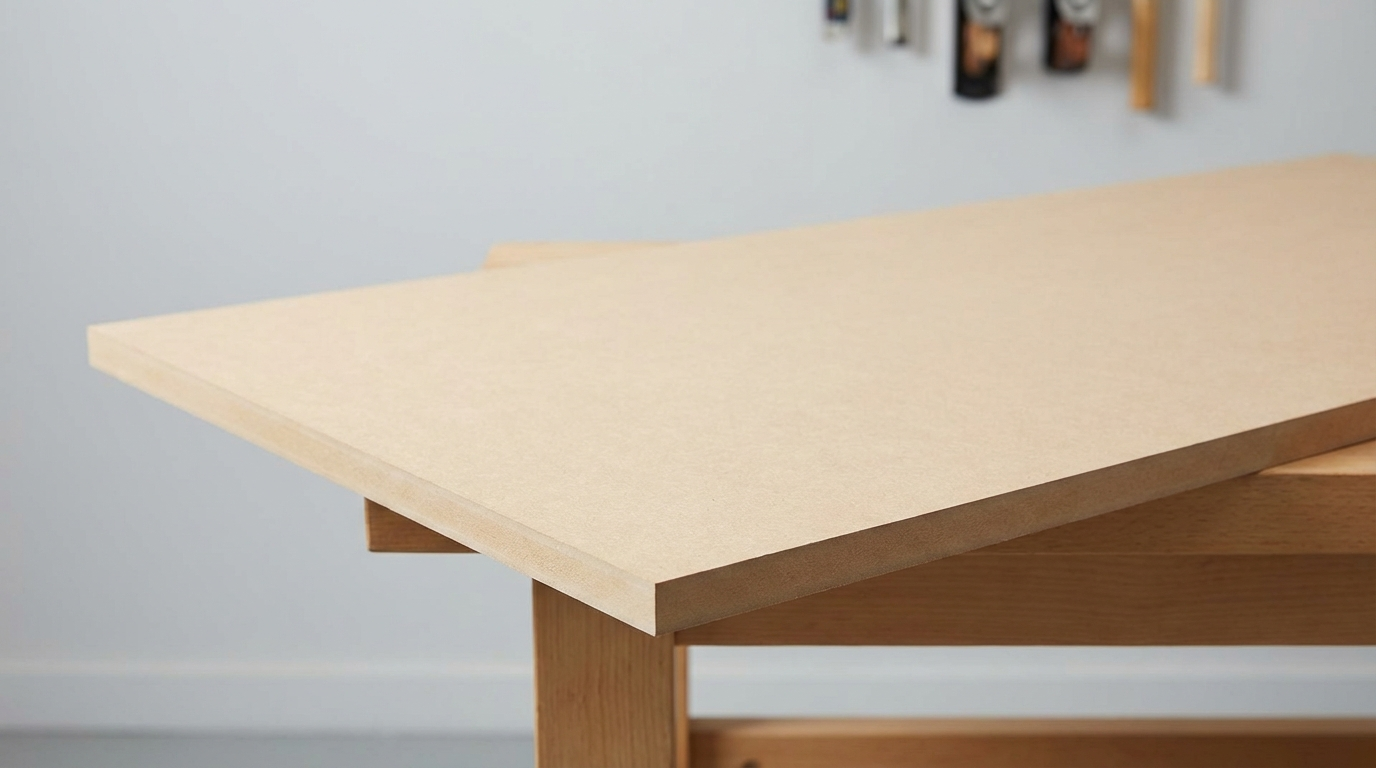
MDF (Medium-Density Fiberboard) is an engineered wood product manufactured by breaking down hardwood or softwood residuals into fine fibers, combining them with wax and resin binders, and forming panels under high temperature and pressure. The resulting board has a density of 600-800 kg/m³, creating a smooth, uniform surface ideal for lamination.
In flooring applications, MDF serves as the "backbone" of laminate planks. The manufacturing process involves bonding multiple layers:
- Bottom layer: Balancing or backing layer for stability
- Core layer: MDF or HDF substrate providing structural integrity
- Design layer: High-resolution printed decorative paper
- Wear layer: Melamine resin overlay for protection
According to duroboil.com's material research, the core layer determines approximately 60-70% of the flooring's performance characteristics, making the choice between MDF-core and HDF-core crucial for long-term satisfaction.
Specifications and Technical Details
Standard MDF-core laminate flooring in India comes in thicknesses ranging from 6mm to 12mm, with 8mm being the most commonly available option in the ₹50-70 per square foot price range.
| Specification | MDF-Core Laminate | HDF-Core Laminate | What It Means for Users |
|---|---|---|---|
| Core Density | 600-800 kg/m³ | 800-1000 kg/m³ | Higher density = better dent resistance |
| Thickness Options | 6mm, 7mm, 8mm | 8mm, 10mm, 12mm | Thicker = better sound insulation |
| Standard Size | 1220mm x 200mm | 1220mm x 200mm | Standard plank dimensions |
| AC Rating (Wear) | AC1 to AC3 | AC3 to AC5 | Higher AC = better scratch resistance |
| Moisture Resistance | Poor to Average | Average to Good | Critical for Indian humid conditions |
| Installation Method | Click-lock floating | Click-lock floating | DIY-friendly installation |
| Subfloor Requirement | Smooth, level surface | Smooth, level surface | May need self-leveling compound |
Understanding AC Ratings: The Abrasion Class (AC) rating system, developed by the European Producers of Laminate Flooring (EPLF), indicates wear resistance. For Indian residential use, AC3 is the minimum recommended rating, while AC4 or higher is essential for commercial applications or homes with pets.
Performance Analysis
How does MDF-core laminate handle moisture?
Standard MDF-core laminate flooring can swell by 15-20% when exposed to standing water for more than 24 hours, making it unsuitable for kitchens, bathrooms, or areas prone to water spills in Indian homes.
The moisture vulnerability of MDF stems from its composition. Wood fibers readily absorb water, causing the board to expand irreversibly. In Indian conditions—where monsoon humidity regularly exceeds 80% in coastal cities like Mumbai, Chennai, and Kolkata—even atmospheric moisture can cause edge swelling over time.
Mitigation strategies include:
- Choosing HDF-core or moisture-resistant (MR) grade laminate for ground floors
- Ensuring proper vapor barrier underlayment installation
- Maintaining expansion gaps of 8-10mm around room perimeters
- Using air conditioning or dehumidifiers in high-humidity seasons
What is the durability and longevity of MDF flooring?
Quality MDF-core laminate flooring in well-maintained conditions typically lasts 8-12 years in Indian homes, compared to 15-25 years for HDF-core or premium laminate products.
Durability depends heavily on usage patterns, maintenance practices, and environmental conditions. The lower density of MDF makes it more susceptible to denting from heavy furniture, chair legs, and dropped objects. In high-traffic areas like living rooms and hallways, visible wear patterns may emerge within 3-5 years.
Factors affecting longevity in Indian conditions:
- Sunlight exposure: UV rays cause fading; use curtains or UV-protective window films
- Temperature fluctuations: Extreme heat can cause warping; avoid installation near windows with direct sunlight
- Cleaning methods: Excessive water during mopping accelerates damage
- Furniture movement: Felt pads under furniture legs are essential
How good is the surface quality of laminate flooring?
Modern laminate flooring offers remarkably realistic wood grain textures through Embossed-in-Register (EIR) technology, where the surface texture aligns precisely with the printed wood pattern.
Surface quality in laminate flooring is determined by the wear layer thickness and printing technology. Premium products use multiple high-definition print layers to create depth, while economy options may appear flat or artificial. The wear layer—a clear melamine resin overlay—ranges from 0.2mm in AC1-rated products to 0.6mm+ in AC5-rated commercial grades.
Duroboil.com recommends checking surface quality by viewing samples at different angles under natural light. Quality laminate maintains realistic appearance from all viewing angles, while cheaper products reveal their artificial nature when viewed obliquely.
Is MDF flooring easy to work with and install?
Click-lock laminate flooring installation is considered a DIY-friendly project, with most homeowners able to install 15-20 square meters per day without professional help.
The installation process for MDF-core and HDF-core laminate is identical, using tongue-and-groove click-lock systems that snap together without adhesive. This floating floor method allows the entire floor to expand and contract as a unit, reducing moisture-related damage.
Key installation considerations for Indian homes:
- Subfloor must be level within 3mm per meter
- Concrete subfloors require minimum 6 weeks curing time before installation
- Vapor barrier underlayment is mandatory in ground-floor installations
- Acclimatize planks for 48-72 hours in installation room before laying
Honest Pros and Cons
Advantages of MDF-Core Laminate Flooring:
- Cost-effective entry point: Starting at ₹45-55 per square foot, accessible for budget-conscious renovations
- Variety of designs: Hundreds of wood grain patterns, stone effects, and contemporary designs available
- Quick installation: A 100 sq ft room can be completed in one day
- No finishing required: Ready to walk on immediately after installation
- Easy replacement: Individual damaged planks can be replaced without affecting entire floor
- Hygienic surface: Non-porous top layer resists stains and allergens
- Consistent appearance: No natural variations to match, uniform look throughout
- Suitable for rental properties: Can be removed and reinstalled when moving
Limitations and Drawbacks:
- Moisture vulnerability: Not suitable for wet areas or ground floors in humid climates without special precautions
- Hollow sound: Walking produces noticeable hollow sound compared to solid wood or tile
- Cannot be refinished: Unlike hardwood, damaged laminate cannot be sanded and restored
- Lower resale value: Doesn't add property value like natural wood or quality tiles
- Temperature sensitivity: Can feel cold in winter and expand in summer heat
- Static buildup: Can generate static electricity in dry conditions
Best and Worst Applications
Ideal applications for MDF-core laminate flooring in Indian homes:
| Application | Suitability | Recommended Grade | Special Considerations |
|---|---|---|---|
| Bedrooms | Excellent | AC3, 8mm MDF-core | Low traffic, controlled environment |
| Study rooms | Excellent | AC3, 8mm MDF-core | Use chair mats under rolling chairs |
| Living rooms | Good | AC4, 10mm HDF-core | Higher traffic requires premium grade |
| Dining areas | Moderate | AC4, 10mm HDF-core | Water-resistant grade recommended |
| Home offices | Good | AC3, 8mm minimum | Underlayment for sound insulation |
| Rental properties | Excellent | AC3, economy grade | Easy replacement if damaged |
Applications to avoid:
- Kitchens: Water spills near sink and refrigerator cause irreversible damage
- Bathrooms: Constant humidity and splashing make laminate unsuitable
- Balconies/verandas: Direct exposure to rain and sunlight causes rapid deterioration
- Laundry areas: Washing machine leaks and humidity create problematic conditions
- Ground floors in coastal cities: Rising dampness and high humidity accelerate swelling
- Basement installations: Below-grade moisture levels typically exceed safe limits
Price and Value Analysis
The total installed cost of laminate flooring in India ranges from ₹80-180 per square foot, including underlayment, installation labor, and finishing accessories.
| Cost Component | Economy Grade | Mid-Range | Premium Grade |
|---|---|---|---|
| Laminate planks (per sq ft) | ₹45-60 | ₹70-100 | ₹120-180 |
| Underlayment | ₹8-12 | ₹15-25 | ₹25-40 |
| Installation labor | ₹15-25 | ₹20-30 | ₹25-40 |
| Accessories (beading, profiles) | ₹8-15 | ₹12-20 | ₹15-30 |
| Total per sq ft | ₹76-112 | ₹117-175 | ₹185-290 |
| Expected lifespan | 5-8 years | 10-15 years | 15-25 years |
| Cost per year of use | ₹10-22 | ₹8-18 | ₹7-19 |
Value assessment: When calculating cost-per-year of use, premium HDF-core laminate often provides better value than economy MDF-core options. A ₹120/sq ft product lasting 20 years (₹6/year) outperforms a ₹50/sq ft product lasting 6 years (₹8.3/year).
Regional price variations in India:
- Metro cities: 10-15% premium due to higher dealer margins and transportation
- Tier-2 cities: Standard pricing with good availability
- Smaller towns: Limited variety; may require ordering from nearby cities
Quality Checks Before Buying
Visual and physical inspection at the dealer's showroom can reveal quality differences that specifications alone don't capture.
Essential quality verification steps:
- Check AC rating certification: Look for EPLF certification label on packaging; Indian manufacturers should display IS 14587 compliance
- Examine edge quality: Tongue-and-groove profiles should be precise with no visible chipping or irregularities
- Test click mechanism: Join two sample pieces; they should click firmly with minimal effort and show no gaps
- Verify thickness: Use a vernier caliper to confirm stated thickness; variations beyond ±0.3mm indicate poor quality control
- Inspect surface texture: EIR (Embossed-in-Register) products should show texture alignment with printed grain
- Check batch consistency: Compare samples from different boxes for color and pattern consistency
- Review moisture resistance: Ask for water absorption test results; quality products show less than 12% swell after 24-hour water immersion
Red flags to watch for:
- Missing or illegible certification marks
- Strong chemical odor from packaging
- Visible delamination at edges
- Inconsistent click mechanism across samples
- Dealer reluctance to provide written warranty
Installation and Maintenance Guide
Proper installation accounts for 50% of laminate flooring's long-term performance, making subfloor preparation the most critical step often overlooked by Indian contractors.
Pre-installation requirements:
- Subfloor moisture content below 3% (use moisture meter to verify)
- Surface level within 3mm per linear meter
- Room temperature between 18-30°C during installation
- Relative humidity between 40-65%
Installation process overview:
- Install vapor barrier/underlayment with 15cm overlap at seams
- Begin from longest wall, maintaining 8-10mm expansion gap
- Stagger end joints by minimum 30cm between rows
- Use tapping block and pull bar for tight joints
- Install transition profiles at doorways and floor type changes
- Fit skirting/beading to cover expansion gaps
Daily and weekly maintenance:
- Dry dust with microfiber mop daily in high-traffic areas
- Damp mop weekly using well-wrung mop (never wet)
- Use laminate-specific cleaners; avoid soap-based or wax products
- Wipe spills immediately—never let water stand
- Use doormats at entrances to trap abrasive dirt
Damage prevention:
- Apply felt pads under all furniture legs
- Use protective mats under rolling chairs
- Avoid dragging furniture across surface
- Keep pet nails trimmed
- Protect from direct sunlight with curtains or blinds
Alternatives to Consider
For Indian homeowners finding MDF-core laminate unsuitable, several alternatives offer better performance in specific conditions.
| Alternative | Price Range (per sq ft) | Best For | Compared to MDF Laminate |
|---|---|---|---|
| HDF-core Laminate | ₹80-150 | High-traffic areas | 25-30% more durable |
| SPC Vinyl Flooring | ₹120-200 | Moisture-prone areas | 100% waterproof |
| WPC Vinyl Flooring | ₹150-250 | Comfort + waterproofing | Softer underfoot, waterproof |
| Engineered Wood | ₹200-400 | Premium aesthetics | Real wood veneer, refinishable |
| Vitrified Tiles | ₹60-150 | Durability, wet areas | Zero moisture issues |
| Polished Concrete | ₹50-100 | Industrial aesthetic | Permanent, maintenance-free |
When to choose alternatives:
- Coastal or high-humidity cities: SPC/WPC vinyl flooring eliminates moisture concerns entirely
- Ground-floor installations: Vitrified tiles or SPC vinyl handle rising dampness
- Premium interiors: Engineered wood provides authentic wood aesthetics with better stability
- Commercial spaces: AC5-rated HDF laminate or polished concrete for durability
Frequently Asked Questions
Is MDF flooring waterproof?
No, standard MDF-core laminate flooring is not waterproof. The wood fiber core absorbs water readily, causing irreversible swelling and damage. While the surface wear layer provides temporary protection against spills, prolonged moisture exposure—even high humidity over time—degrades MDF flooring. For wet areas, consider SPC vinyl flooring or tiles instead. Some manufacturers offer "water-resistant" laminate with treated HDF cores, but these only resist occasional spills, not standing water or continuous humidity.
How long does MDF laminate flooring last in Indian conditions?
In typical Indian residential conditions with proper maintenance, MDF-core laminate flooring lasts 6-10 years, while HDF-core products can last 12-20 years. Lifespan depends heavily on location—coastal cities with high humidity see faster deterioration than dry northern regions. Air-conditioned homes maintain flooring better than naturally ventilated spaces. Heavy foot traffic, pets, and improper cleaning accelerate wear. Premium brands with AC4+ ratings and proper underlayment installation maximize longevity.
Can MDF flooring be used in kitchens?
Duroboil.com does not recommend MDF-core laminate for Indian kitchens due to frequent water exposure near sinks, potential leaks from water purifiers, and cooking-related humidity. Even "water-resistant" laminate cannot handle the moisture levels typical in Indian cooking environments. If you prefer wood-look flooring in kitchens, consider SPC vinyl flooring, ceramic wood-look tiles, or water-resistant WPC flooring. These alternatives provide similar aesthetics with complete moisture immunity.
What is the difference between MDF and HDF flooring?
The primary difference is density: MDF (Medium-Density Fiberboard) has a density of 600-800 kg/m³, while HDF (High-Density Fiberboard) ranges from 800-1000 kg/m³. Higher density makes HDF more resistant to dents, moisture, and wear. HDF-core laminate typically carries AC4-AC5 ratings versus AC1-AC3 for MDF-core. In practical terms, HDF flooring handles heavy furniture, pet traffic, and minor moisture better. The price difference is typically 30-50% higher for HDF, justified by significantly longer lifespan.
Is laminate flooring cheaper than tiles in India?
Installed cost comparison shows laminate flooring at ₹80-180 per square foot versus ₹80-200 for vitrified tiles (including installation). While material costs are similar, laminate installation is faster and less disruptive. However, tiles last 25-40 years versus 8-15 years for laminate, making tiles more economical long-term. Laminate wins for rental properties, temporary installations, or situations requiring quick installation. Tiles win for permanent homes, wet areas, and ground-floor installations in humid regions.
Can laminate flooring be installed over existing tiles?
Yes, laminate flooring can be installed over existing tiles if certain conditions are met: tiles must be firmly bonded (no hollow sounds when tapped), grout lines must be level or filled, and overall surface must be flat within 3mm per meter. Use quality underlayment to cushion minor imperfections. This approach saves demolition cost and mess but adds floor height—check door clearances beforehand. Ensure tile surface is clean and dry before underlayment installation. This method is particularly popular in Indian rental properties where removing tiles isn't permitted.
How do I repair damaged laminate flooring?
Minor scratches can be concealed using laminate repair kits containing color-matched wax or putty, available for ₹200-500. Deeper damage requires plank replacement—a key advantage of floating installation systems where individual planks can be removed and replaced. For mid-floor replacements, cut out damaged plank carefully, remove tongue from new plank's short side, apply wood glue, and press into place with weights for 24 hours. Extensive damage affecting multiple planks typically requires professional intervention or complete re-flooring.
Does laminate flooring increase home value?
Unlike hardwood flooring in Western markets, laminate flooring typically doesn't significantly increase property value in India. Indian home buyers generally prefer marble, granite, or vitrified tiles for their durability and perceived premium status. Laminate may even be viewed negatively by some buyers aware of its moisture limitations. If resale value is a priority, invest in quality tiles or engineered wood instead. Laminate's value lies in quick aesthetic upgrades for immediate use rather than long-term investment returns.
What underlayment is best for laminate flooring in India?
For Indian conditions, use minimum 2mm thick foam underlayment with integrated vapor barrier for upper-floor installations. Ground floors require 3mm+ underlayment with heavy-duty moisture barrier rated for concrete substrates. Premium options include cork underlayment (better sound insulation) or rubber underlayment (impact absorption). Budget approximately ₹15-40 per square foot for quality underlayment. Never skip underlayment—it protects against moisture, reduces hollow sound, provides cushioning, and allows expansion movement.
Is laminate flooring suitable for homes with pets?
Laminate flooring presents mixed results for pet owners. Advantages include easy cleaning of pet accidents (if wiped immediately) and scratch resistance of quality AC4+ products. However, pets with unclipped nails can eventually scratch through wear layers, and urine that seeps into joints causes irreversible swelling. Use pet-friendly rugs in favorite pet areas, trim nails regularly, and choose textured laminate that hides minor scratches. For homes with multiple large dogs, SPC vinyl flooring's complete waterproofing offers better long-term performance.
Note: This is independent editorial content. Duroboil.com is not affiliated with any flooring brand mentioned. Prices and specifications vary by region and should be verified with local dealers before purchase.
Disclaimer: This content is provided for general informational purposes based on industry practices and publicly available information. Product specifications, standards, prices, and availability may vary by manufacturer, region, and time. Readers should independently verify details with manufacturers, dealers, or qualified professionals before making purchase or construction decisions.
Want Plywood Suggestions?
Share a few details and a Duro BOIL specialist will suggest suitable brands and connect you to responsive dealers.