MDF Panels: Complete Guide to Sizes, Types, and Applications
Everything you need to know about MDF panels. Explore available sizes, types, applications, and tips for choosing the right MDF panel.
Quick Verdict
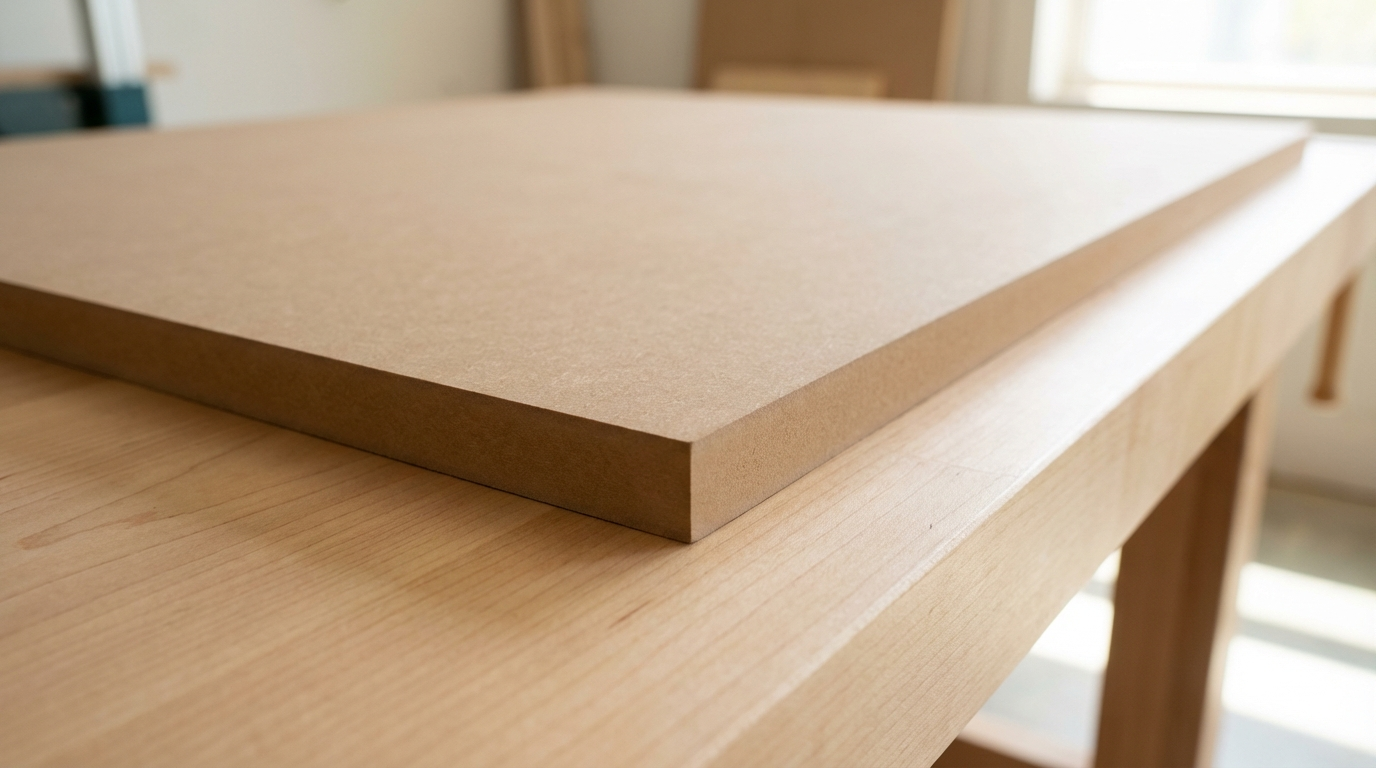
MDF panels are engineered wood boards made from compressed wood fibers bonded with resin, offering smooth surfaces ideal for furniture, cabinetry, and interior applications across Indian homes and commercial spaces.
Our take: MDF panels deliver exceptional value for interior woodwork where surface smoothness matters more than raw structural strength. In Indian conditions, choosing the right grade—Interior, Exterior, or HDHMR—determines whether your furniture lasts 5 years or 15 years. The material excels in painted finishes, CNC-cut designs, and laminated furniture but requires proper edge sealing to prevent moisture damage during monsoons.
Rating summary:
- Moisture resistance: Average for standard grade, Good for MR/HDHMR variants
- Durability: Good with proper finishing and edge treatment
- Value for money: Excellent for painted and laminated furniture applications
- Surface quality: Excellent—superior to plywood for smooth finishes
- Overall: Recommended for wardrobes, cabinets, wall panels, modular kitchens (with MR grade) / Not recommended for heavy load-bearing structures or outdoor use
Note: This is independent editorial content. Duroboil.com is not affiliated with any MDF manufacturer mentioned in this guide.
What is MDF Panel?
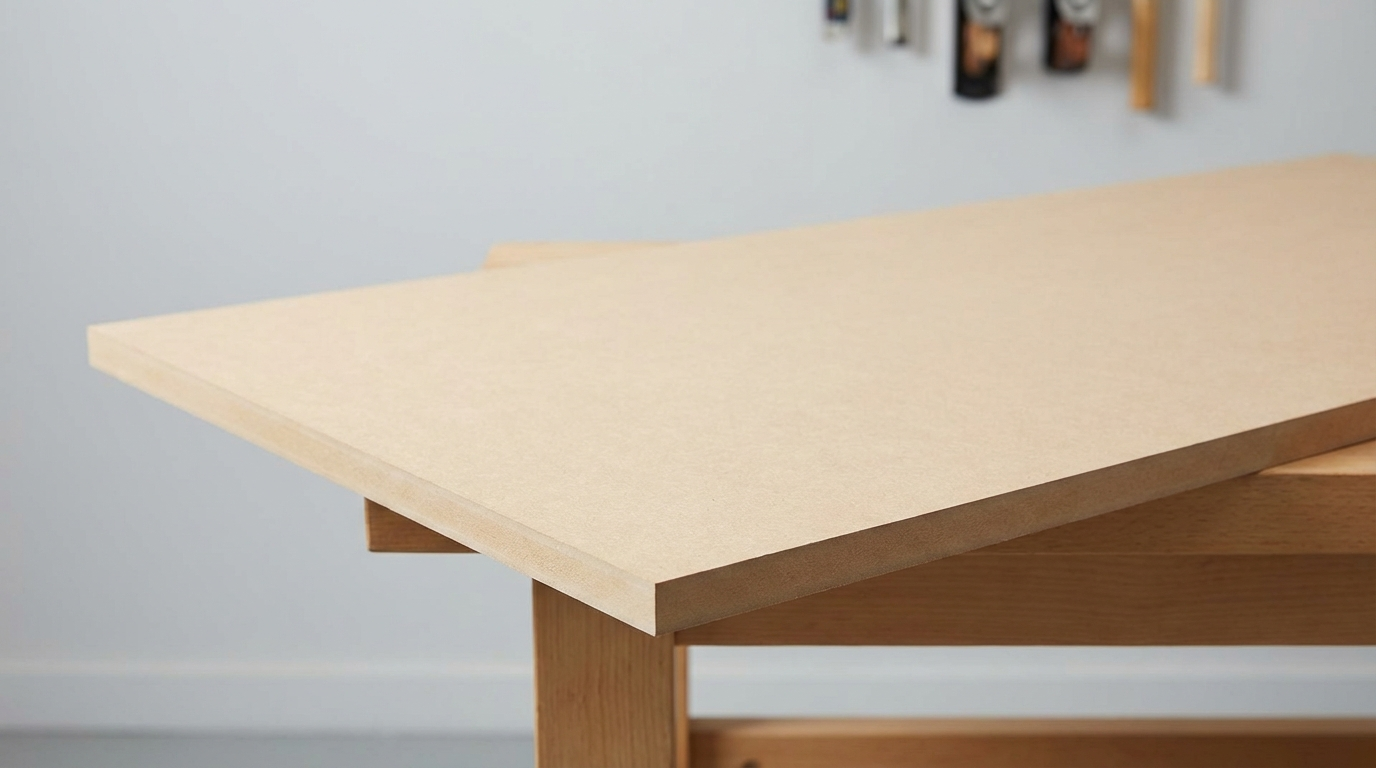
MDF (Medium Density Fiberboard) is an engineered wood product manufactured by breaking down hardwood or softwood residuals into fine fibers, combining them with wax and resin binders, and forming panels under high temperature and pressure. The result is a dense, uniform board with no grain pattern, knots, or natural wood irregularities.
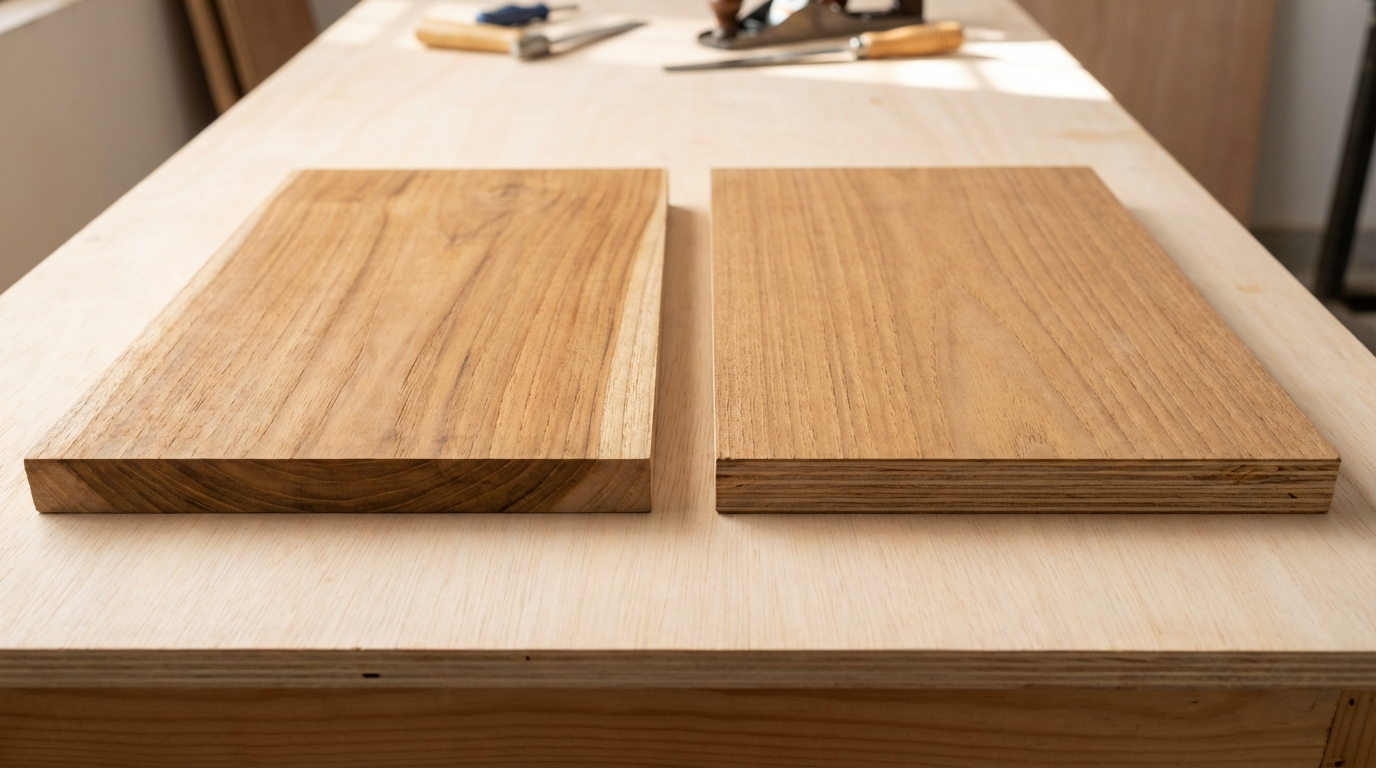
Unlike plywood which uses thin veneer layers, MDF consists of compressed wood fibers creating a homogeneous structure throughout. This uniformity makes MDF panels ideal for applications requiring smooth surfaces, intricate machining, and consistent paint finishes. The manufacturing process follows BIS Standard IS 12406, which governs specifications for Indian-made MDF boards.
MDF panels have transformed Indian interior design over the past two decades. According to industry data, MDF consumption in India has grown significantly, driven by the modular furniture and kitchen cabinet industry. The material's ability to accept laminates, veneers, and paint without the surface irregularities common in natural wood makes it the substrate of choice for modern furniture manufacturing.
Key Differentiators of MDF Panels
- Uniform density throughout: Unlike plywood's layered structure, MDF has consistent density from surface to core
- Smooth surfaces on both sides: Eliminates need for extensive sanding before finishing
- No grain direction: Can be cut in any direction without splintering concerns
- Excellent machinability: Accepts CNC routing, intricate carving, and detailed edge profiles
- Superior paint adhesion: Requires minimal primer for smooth painted finishes
- Consistent thickness: Calibrated boards ensure precise fitting in modular applications
Specifications of MDF Panels
MDF panel specifications vary by grade and manufacturer, but industry standards provide baseline requirements that quality boards must meet. Understanding these specifications helps buyers make informed decisions and verify quality claims made by dealers.
| Specification | Interior Grade MDF | Exterior/MR Grade MDF | HDHMR/Club Grade |
|---|---|---|---|
| Density (kg/m³) | 690-780 | 690-770 | 815-850 |
| Moisture Content (%) | 5-10 | 5-10 | 5-10 |
| Thickness Swelling (24 hrs) - 18mm | 12% max | 8% max | 4-8% max |
| Modulus of Rupture (N/mm²) - 18mm | 20 min | 24 min | 40 min |
| Internal Bond (N/mm²) | 0.55 min | 0.65 min | 1.2 min |
| Screw Withdrawal - Face (N) | 1250 min | 1250 min | 3000 min |
| Screw Withdrawal - Edge (N) | 700 min | 850 min | 2000 min |
| Formaldehyde Emission | E2 Grade | E2 Grade | E2/E1 Grade |
What Each Specification Means for End Users
Density: Higher density means stronger boards with better screw-holding capacity. HDHMR boards at 815-850 kg/m³ hold hardware significantly better than standard MDF at 690-720 kg/m³. For kitchen cabinets with heavy items, this difference matters practically.
Thickness Swelling: This measures how much the board expands when exposed to water for 24 hours. Lower percentages indicate better moisture resistance. Standard MDF at 12% swelling will show visible damage if water sits on unsealed edges, while HDHMR at 4-8% handles occasional splashes better.
Internal Bond: This specification indicates how well the fibers hold together under stress. Higher values mean edges won't crumble during cutting and screws won't pull out over time. HDHMR's 1.2 N/mm² versus standard MDF's 0.55 N/mm² represents significantly improved structural integrity.
Screw Withdrawal: Critical for modular furniture where hinges and fittings undergo repeated stress. HDHMR's 3000N face screw withdrawal versus standard MDF's 1250N means hardware stays secure much longer—particularly important for soft-close hinges in wardrobes.
Performance Analysis
Moisture Handling
MDF's moisture performance varies dramatically by grade and directly impacts suitability for different areas in Indian homes. Standard Interior grade MDF absorbs moisture readily, swelling and permanently deforming if exposed to high humidity or water splashes without proper sealing.
In practical terms, standard MDF in a Mumbai apartment bathroom will show edge swelling within 6-12 months even with laminate finishing if edges aren't properly sealed. The same board in a Rajasthan bedroom might perform adequately for years due to lower ambient humidity.
Exterior/MR Grade MDF incorporates moisture-resistant resins that reduce water absorption by 30-40% compared to standard grades. However, MR doesn't mean waterproof—it handles humidity and occasional splashes but not direct water exposure. For Indian kitchens, MR grade is minimum requirement; standard grade invites problems.
HDHMR boards offer the best moisture performance among MDF variants, with thickness swelling reduced to 4-8% in 24-hour water immersion tests. According to duroboil.com's material experts, HDHMR represents the practical choice for kitchen cabinets in humid coastal cities where conventional MDF fails within 2-3 years.
Durability and Longevity
MDF panel lifespan depends primarily on application conditions, finishing quality, and grade selection. Well-executed MDF furniture in appropriate applications typically lasts 8-15 years, while misapplied standard MDF in wet zones may fail within 2-3 years.
Factors affecting MDF durability in Indian conditions:
- Edge sealing: Unsealed edges absorb moisture 5-10 times faster than faces, causing swelling and delamination
- Finish quality: Poor-quality laminates or paint allow moisture penetration over time
- Hardware stress: Repeated hinge operation on undersized or poorly-located screws causes pull-out
- Load management: MDF shelves sag permanently under sustained heavy loads without proper support
- Climate exposure: High humidity during monsoon accelerates degradation in poorly ventilated spaces
Compared to commercial plywood, MDF offers comparable durability in dry interior applications but significantly lower durability in moisture-prone areas. BWR plywood in a kitchen will typically outlast standard MDF by 5-8 years under identical conditions.
Surface Quality
Surface smoothness represents MDF's primary advantage over plywood and particleboard. The homogeneous fiber structure creates surfaces that accept paint, laminate, and veneer without the telegraphing of underlying grain patterns or core voids common with plywood.
For painted furniture, MDF requires minimal preparation—light sanding and primer application yields professional results. Plywood, by contrast, often requires putty filling, multiple primer coats, and careful sanding to achieve comparable smoothness.
Pre-laminated MDF panels eliminate finishing steps entirely, arriving ready for installation with factory-applied decorative surfaces. These panels dominate the modular furniture industry, where consistent finish quality and rapid production matter more than raw material cost differences.
Workability
MDF machines exceptionally well, accepting CNC routing, laser cutting, intricate edge profiles, and detailed carving without the grain-related complications of natural wood or plywood. This workability makes MDF the substrate of choice for decorative panels, jali work, and complex furniture components.
Practical workability considerations:
- Cutting: Clean cuts with standard woodworking tools; generates fine dust requiring respiratory protection
- Routing: Accepts detailed profiles without chipping; slower feed rates than plywood recommended
- Drilling: Requires pilot holes for screws to prevent splitting; countersinking recommended
- Edge finishing: PVC edge banding adheres well; iron-on application works effectively
- Fastening: Pilot holes mandatory; screws driven without pilots crack the board
Indian carpenters familiar with solid wood often struggle initially with MDF's fastening requirements. The material doesn't tolerate screws driven directly—pilot holes are mandatory, not optional. However, once proper techniques are learned, MDF allows faster production than plywood for painted or laminated furniture.
Honest Pros and Cons
Advantages of MDF Panels
- Superior surface smoothness: Both faces are sanded smooth during manufacturing, eliminating the grain telegraphing and surface irregularities common with plywood. This makes MDF ideal for high-gloss painted finishes and thin laminates where surface imperfections would show.
- Excellent machinability: The uniform density allows intricate CNC routing, detailed edge profiles, and precise cuts in any direction. Plywood's alternating grain layers limit profile complexity and can cause chipping during complex machining operations.
- Consistent thickness: Calibrated MDF maintains ±0.2mm thickness tolerance across sheets, critical for modular furniture where panels must align precisely. Commercial plywood often varies ±0.5mm or more, creating visible gaps in assembled furniture.
- Cost-effective for finished furniture: While raw MDF costs slightly less than equivalent plywood, the real savings come from reduced finishing labor. MDF requires less sanding, filling, and preparation, significantly reducing overall furniture production costs.
- No voids or defects: Unlike plywood where internal core voids can create weak spots or cause screw failures, MDF's homogeneous structure means consistent strength throughout the panel. Every square inch performs identically.
- Accepts all finishes: Paint, laminate, veneer, lacquer, and specialty coatings all adhere well to MDF surfaces. The material doesn't telegraph grain patterns through thin finishes as plywood does.
- Environmentally responsible: MDF utilizes wood fibers that would otherwise become waste, including sawmill residuals and recycled wood. Modern manufacturing also incorporates renewable energy and low-emission resins.
- Available in wide thickness range: From 2.5mm for backing panels to 30mm for structural applications, MDF covers more thickness options than standard plywood inventories typically stock.
Limitations of MDF Panels
- Moisture vulnerability: Standard MDF absorbs water readily, swelling and permanently deforming when edges are exposed to moisture. Even MR grades aren't waterproof—they resist humidity but not direct water exposure. This remains MDF's primary limitation in Indian kitchens and bathrooms.
- Lower structural strength: MDF is weaker than equivalent-thickness plywood in bending and tension. Long shelves sag under loads that plywood handles easily. Spans over 60cm require intermediate supports or thicker boards.
- Screw-holding limitations: Standard MDF holds screws adequately but not as securely as plywood's cross-laminated structure. Edge screws are particularly vulnerable to pull-out. HDHMR significantly improves this, but costs more.
- Weight: MDF is approximately 20-30% heavier than equivalent plywood, complicating handling during installation and increasing shipping costs. A standard 18mm 8x4ft MDF sheet weighs around 45-50kg.
- Dust generation: Cutting and routing MDF produces extremely fine dust that poses respiratory hazards. Proper dust extraction and respiratory protection are mandatory, not optional. Many Indian workshops lack adequate dust management.
- Edge fragility: Exposed MDF edges are soft and easily damaged during handling. Edge banding is effectively mandatory for any visible edge, adding cost and labor compared to finished plywood edges.
Best and Worst Applications for MDF Panels
Understanding where MDF excels and where it fails prevents costly mistakes. The material performs exceptionally in some applications while proving unsuitable for others, regardless of grade selection.
| Excellent Applications | Suitable Applications | Poor Applications |
|---|---|---|
| Painted furniture (wardrobes, cabinets) | Kitchen cabinets (MR/HDHMR grade only) | Outdoor furniture or structures |
| Wall paneling and wainscoting | Bathroom vanities (HDHMR with full sealing) | Floor underlayment in wet areas |
| Decorative screens and jali work | Office partitions and workstations | Load-bearing shelves without support |
| Speaker cabinets and acoustic panels | TV units and entertainment centers | Structural applications |
| Moldings and architectural trim | Shoe racks in covered areas | Direct ground contact applications |
| Pre-laminated modular furniture | Study tables and desks | Areas with regular water splashing |
| False ceiling panels (interior) | Display fixtures and retail shelving | Boat or marine applications |
Room-Wise Recommendations for Indian Homes
Living Room: Standard or MR grade MDF works well for TV units, display cabinets, and wall panels. The dry environment suits MDF's strengths, and painted or laminated finishes achieve premium aesthetics at moderate cost.
Bedroom: Wardrobes, headboards, and dressing tables represent ideal MDF applications. Standard grade suffices in air-conditioned bedrooms; MR grade recommended for non-AC rooms during monsoon months.
Kitchen: HDHMR grade minimum for cabinet boxes; standard MDF fails within 2-4 years due to cooking moisture and sink splashes. Even with HDHMR, proper edge sealing and ventilation behind appliances extends lifespan significantly.
Bathroom: Duroboil.com recommends avoiding MDF in bathrooms unless using HDHMR with complete edge sealing and waterproof finishing. Marine plywood remains the safer choice for vanity cabinets in high-splash zones.
Pooja Room: Standard MDF works well for mandirs and storage. The typically dry environment and low mechanical stress suit MDF's characteristics perfectly.
Types of MDF Panels Available in India
The Indian market offers several MDF variants, each engineered for specific conditions and applications. Understanding these types prevents the common mistake of using interior-grade MDF in moisture-prone areas.
Interior Grade MDF
Standard interior MDF uses urea-formaldehyde resins suitable for dry indoor environments. This represents the most affordable and commonly available MDF type, appropriate for living rooms, bedrooms, and climate-controlled spaces.
Best for: Wardrobes in AC bedrooms, TV units, study tables, wall panels in dry areas
Avoid for: Kitchens, bathrooms, areas near water sources, poorly ventilated spaces
Exterior Grade / Moisture Resistant (MR) MDF
MR MDF incorporates moisture-resistant resins that reduce water absorption by 30-40% compared to interior grade. The board handles humidity fluctuations and occasional splashes but isn't waterproof.
Best for: Kitchen upper cabinets, office spaces in humid cities, furniture in non-AC rooms
Avoid for: Under-sink cabinets, bathroom vanities, areas with direct water contact
HDHMR (High Density High Moisture Resistant)
HDHMR combines increased density (815-850 kg/m³) with enhanced moisture resistance, offering significantly improved screw-holding and moisture performance. This premium variant costs 40-60% more than standard MDF but dramatically extends service life in demanding applications.
Best for: Kitchen cabinets, bathroom vanities (with proper sealing), heavy-use furniture
Avoid for: Outdoor use, direct water immersion, structural applications
Pre-Laminated MDF
Factory-finished MDF panels arrive ready for installation with decorative surfaces already applied. Available in hundreds of colors, wood grains, and textures, pre-laminated MDF dominates the modular furniture industry.
Best for: Modular kitchens, wardrobes, office furniture, rapid-installation projects
Consider: Limited to available finishes; custom colors require plain MDF with post-lamination
CARB P2 Certified MDF
CARB (California Air Resources Board) P2 certification indicates low formaldehyde emission, meeting international health standards. This variant suits health-conscious consumers and projects requiring green building certification.
Best for: Children's rooms, healthcare facilities, IGBC/LEED certified projects
Consider: Premium pricing; verify certification authenticity with documentation
Fire Retardant MDF
Specialty MDF incorporating fire-retardant treatments that slow flame spread and reduce smoke generation. Required by building codes for certain commercial applications.
Best for: Commercial interiors, public buildings, projects requiring fire safety compliance
Consider: Limited availability; higher cost; may require special finishing considerations
Size Options Available in India
MDF panels in India follow standardized sizing that facilitates efficient material planning and reduces waste in furniture production.
| Dimension | Standard Options | Notes |
|---|---|---|
| Sheet Size (feet) | 8×4 (most common) | Some manufacturers offer 6×4, 7×4 |
| Sheet Size (mm) | 2440 × 1220 | Metric equivalent of 8×4 feet |
| Thickness Range | 2.5mm to 30mm | Common: 6, 8, 12, 17, 18, 25mm |
Thickness Selection Guide
| Thickness | Common Applications | Load Capacity Notes |
|---|---|---|
| 2.5-4mm | Backing panels, drawer bottoms | Non-structural only |
| 6mm | Door skins, decorative panels | Light decorative use |
| 8-9mm | Wall panels, ceiling panels | Requires close framing support |
| 12mm | Cabinet sides, shelves with support | Max 40cm unsupported span |
| 17-18mm | Wardrobe sides, kitchen cabinets, furniture tops | Standard furniture construction |
| 25mm | Tabletops, heavy-duty shelving | Suitable for longer spans |
| 30mm | Special applications, acoustic panels | Limited availability |
Price and Value Analysis
MDF panel pricing in India varies by grade, thickness, brand, and location. Metro cities typically command 5-15% higher prices than smaller towns due to logistics and dealer margins.
| MDF Type | Thickness | Price Range (₹/sq ft) | Price Range (₹/sheet approx.) |
|---|---|---|---|
| Interior Grade | 18mm | ₹35-50 | ₹1,100-1,600 |
| MR Grade | 18mm | ₹45-65 | ₹1,450-2,100 |
| HDHMR | 18mm | ₹65-90 | ₹2,100-2,900 |
| Pre-Laminated (Interior) | 18mm | ₹55-80 | ₹1,750-2,550 |
| Pre-Laminated (MR) | 18mm | ₹70-100 | ₹2,250-3,200 |
| CARB P2 Certified | 18mm | ₹50-70 | ₹1,600-2,250 |
Note: Prices vary by region, dealer, and market conditions. Always obtain current quotes from multiple dealers before purchase.
Cost-Benefit Considerations
When standard MDF offers best value: Dry interior applications where budget matters more than longevity. Bedroom wardrobes, living room cabinets, and study furniture in climate-controlled spaces perform adequately with interior grade MDF at 30-40% lower cost than MR variants.
When MR grade justifies premium: Any application where humidity exposure occurs—kitchens (upper cabinets), non-AC bedrooms, coastal city installations. The 25-35% price premium prevents early replacement costs that exceed initial savings.
When HDHMR delivers ROI: Kitchen base cabinets, heavy-use wardrobes, commercial furniture with intensive hardware operation. The doubled screw-holding capacity and enhanced moisture resistance extend functional life by 5-8 years in demanding applications.
Quality Checks Before Buying
Verifying MDF quality before purchase prevents disappointment and wasted investment. These checks don't require laboratory equipment—any buyer can perform them at the dealer's shop.
Visual Inspection
- Surface smoothness: Run your hand across both faces—quality MDF feels uniformly smooth without rough patches or raised areas
- Edge examination: Look at cut edges for uniform density without visible layers, gaps, or loose fibers
- Flatness: Sight along the sheet length—warping or bowing indicates poor storage or manufacturing defects
- Color consistency: Even coloring throughout indicates uniform density; darker patches may signal moisture damage
Physical Tests
- Weight check: Lift one end of an 18mm sheet—it should feel heavy and solid. Lightweight sheets indicate low density and inferior quality
- Tap test: Knock on different areas of the sheet. Uniform solid sound throughout indicates good density; hollow sounds suggest internal voids
- Edge hardness: Press your thumbnail firmly into the edge. Quality MDF resists indentation; soft edges indicate low density
- Moisture wipe: Wipe edge with damp cloth and check after 30 minutes. Excessive swelling indicates poor moisture resistance
Documentation Verification
- ISI marking: Look for IS 12406 certification mark on sheets or accompanying documentation
- Grade specification: Confirm whether board is Interior, Exterior/MR, or HDHMR grade—don't accept vague "waterproof" claims
- Batch information: Recent manufacturing dates preferable; old stock may have storage-related quality issues
- Thickness verification: Measure actual thickness at multiple points; should match stated specification within ±0.2mm
Dealer Questions to Ask
- What grade is this board? (Interior/MR/HDHMR)
- What is the density specification?
- When was this batch manufactured?
- How has it been stored? (Should be covered, flat, elevated)
- Do you have test certificates available?
- What is your return policy for defective sheets?
Installation and Maintenance
Pre-Installation Requirements
Acclimatization: Store MDF sheets flat at installation site for minimum 48 hours before cutting and installation. This allows the material to adjust to local humidity conditions, reducing post-installation warping.
Storage conditions: Keep sheets elevated on flat supports, covered to prevent dust accumulation and moisture exposure. Vertical storage acceptable only for short periods with adequate support.
Workshop preparation: Ensure adequate dust extraction before cutting MDF. The fine dust poses serious respiratory hazards—respiratory protection is mandatory, not optional.
Cutting and Machining Guidelines
- Use carbide-tipped blades for clean cuts and extended tool life
- Reduce feed rate compared to plywood to prevent edge chipping
- Support sheets fully during cutting to prevent breakage
- Pre-drill all screw holes—never drive screws directly into MDF
- Use appropriate countersink depth for flush hardware seating
Edge Treatment
Exposed MDF edges require treatment before the furniture enters service. Unsealed edges absorb moisture rapidly, leading to swelling and structural failure.
- PVC edge banding: Most common treatment; heat-applied bands available in colors matching pre-laminated surfaces
- Veneer banding: Natural wood appearance for painted or veneered furniture
- Paint sealing: Multiple primer coats seal edges adequately for painted furniture
- Acrylic edge bands: Premium option matching high-gloss acrylic finishes
Finishing Recommendations
For painted finishes: Sand surfaces lightly with 180-220 grit, apply appropriate primer, and finish with quality wood paint. MDF's smooth surface requires less preparation than plywood but benefits from proper priming.
For laminate application: Ensure surfaces are dust-free and flat. Apply contact adhesive evenly, allow proper tack time, and use pressure during bonding. Edge seal before lamination to prevent moisture intrusion.
Maintenance Guidelines
- Cleaning: Wipe with slightly damp cloth; avoid excess water. Dry immediately after cleaning.
- Spill management: Address liquid spills immediately—MDF absorbs moisture quickly through any finish imperfection
- Hardware inspection: Check hinges and handles periodically; tighten loose screws before damage worsens
- Humidity control: Maintain reasonable indoor humidity during monsoon; excessive humidity stresses all MDF furniture
- Damage repair: Small chips can be filled with wood filler and repainted; edge damage often requires professional repair
Alternatives to Consider
While MDF suits many applications, alternative materials may prove more appropriate depending on specific project requirements.
| Material | When to Choose Instead of MDF | Trade-offs |
|---|---|---|
| BWR Plywood | Kitchen base cabinets, bathroom applications, load-bearing shelves | Higher cost, surface requires more finishing |
| Marine Plywood | Severe moisture exposure, outdoor covered areas | Significantly higher cost, limited availability |
| Particleboard | Ultra-budget applications, non-visible structural components | Lower strength, poor moisture resistance |
| HDF/Hardboard | Thin panel applications requiring higher density | Limited thickness range |
| WPC Boards | Bathroom cabinets, outdoor furniture | Higher cost, different working characteristics |
| Solid Wood | Premium furniture, traditional aesthetics | Much higher cost, requires seasoning expertise |
Frequently Asked Questions
Is MDF waterproof or water-resistant?
Standard MDF is neither waterproof nor significantly water-resistant—it absorbs moisture readily and swells permanently when exposed to water. MR (Moisture Resistant) grade MDF handles humidity better but still isn't waterproof; it tolerates occasional splashes when properly sealed but fails under sustained water exposure. Even HDHMR, the most moisture-resistant MDF variant, requires complete edge sealing and shouldn't be used where direct water contact occurs regularly. For truly wet applications like bathroom vanities near showers, marine plywood or WPC boards remain safer choices than any MDF grade.
Can MDF be used in kitchen cabinets?
Yes, but grade selection critically impacts success. Standard interior MDF fails in kitchens within 2-4 years due to cooking steam and sink splashes. MR grade handles upper cabinet applications adequately with proper edge sealing. For base cabinets near sinks and dishwashers, HDHMR grade is minimum requirement—even then, edges must be completely sealed with PVC banding and sealants. Many Indian modular kitchen manufacturers use HDHMR for carcasses with success, but the material requires correct specification and installation to perform.
How does MDF compare to plywood for furniture?
MDF offers superior surface smoothness, better machinability for detailed work, and consistent thickness—advantages for painted and laminated furniture. Plywood provides greater structural strength, better screw-holding, and superior moisture resistance—advantages for load-bearing applications and wet areas. Cost comparison favors MDF slightly for raw material but significantly for finished furniture due to reduced preparation labor. For most living room and bedroom furniture, either material works; for kitchens and bathrooms, plywood's moisture resistance provides meaningful advantages over standard MDF grades.
What thickness of MDF should I use for wardrobes?
Standard wardrobe construction uses 18mm MDF for sides, tops, and shelves, with 8-12mm for back panels and 12mm for shelves with intermediate supports. This combination balances structural adequacy with material cost. For heavy wardrobes with long hanging rods, consider 25mm for horizontal spans or add intermediate vertical supports. HDHMR grade recommended for wardrobes in non-AC bedrooms where monsoon humidity affects the room. Always support long shelves—18mm MDF sags visibly over unsupported spans exceeding 60cm when loaded with clothing.
Does MDF attract termites?
MDF can attract termites though it's somewhat less vulnerable than solid wood due to the resin content. The compressed fiber structure and chemical binders deter termites initially, but established infestations can damage MDF furniture. Most quality MDF manufacturers incorporate borer and termite-resistant treatments during manufacturing—verify this specification when purchasing. For ground-floor installations or areas with termite history, additional precautions like furniture elevation, periodic inspection, and perimeter treatment provide reasonable protection. MDF isn't termite-proof, but treated boards resist infestation better than untreated solid wood.
What is the price of MDF per square foot in India?
MDF prices typically range from ₹35-50 per square foot for standard 18mm interior grade, ₹45-65 for MR grade, and ₹65-90 for HDHMR grade. Pre-laminated variants add ₹15-30 per square foot depending on laminate quality. Prices vary 10-20% between metro cities and smaller towns, and fluctuate with market conditions. Thinner boards cost proportionally less; 12mm typically runs 25-30% below 18mm pricing. Always obtain current quotes from multiple dealers and verify grade specifications—"MDF" without grade clarification often indicates interior grade at premium pricing.
How to identify good quality MDF?
Quality MDF exhibits uniform density visible as consistent color throughout cut edges without layers or gaps. The surface feels smooth without rough patches; tap different areas and listen for uniform solid sounds rather than hollow spots. Quality boards feel heavy for their size—lightweight sheets indicate low density and inferior quality. Check edges aren't soft (press with thumbnail—should resist indentation) and boards are flat without warping. Verify ISI marking (IS 12406), confirm grade specification, and request recent batch stock. Reputable dealers provide test certificates and clear grade documentation.
Can MDF be painted directly?
MDF accepts paint well but requires proper preparation for professional results. The porous surface absorbs paint rapidly, so primer application is essential—use MDF-specific or shellac-based primer to seal fibers and provide uniform base. Sand lightly with 180-220 grit between coats. Edges require extra sealing—apply 2-3 primer coats to prevent paint absorption showing as visible texture differences. For high-gloss finishes, the smooth MDF surface actually performs better than plywood, requiring less filling and sanding. Water-based paints work well; allow adequate drying time between coats.
What's the difference between MDF and HDF?
HDF (High Density Fiberboard) is manufactured similarly to MDF but at higher density—typically 800-1100 kg/m³ compared to MDF's 600-800 kg/m³. The denser structure provides increased strength, better moisture resistance, and superior surface hardness. HDF commonly appears as laminate flooring core material where hardness and dimensional stability matter more than in furniture applications. HDF costs more than standard MDF and offers thinner maximum thickness. For most furniture applications, HDHMR provides HDF-like performance at broader thickness availability; true HDF serves specialized applications like flooring cores and door skins.
How long does MDF furniture last in Indian conditions?
MDF furniture lifespan varies dramatically based on application, grade selection, and finishing quality. Well-executed furniture using appropriate grades typically lasts 8-15 years in suitable applications. Standard MDF in dry bedrooms performs 10+ years easily; the same material in kitchens may fail within 2-4 years. HDHMR kitchen cabinets with proper sealing commonly achieve 8-12 year service life. Factors reducing lifespan include moisture exposure, poor edge sealing, hardware stress, and excessive loading. Indian monsoon humidity particularly challenges MDF—furniture in coastal cities without AC faces harder conditions than identical pieces in arid inland locations.
Disclaimer: This content is provided for general informational purposes based on industry practices and publicly available information. Product specifications, standards, prices, and availability may vary by manufacturer, region, and time. Readers should independently verify details with manufacturers, dealers, or qualified professionals before making purchase or construction decisions.
Disclaimer: This content is provided for general informational purposes based on industry practices and publicly available information. Product specifications, standards, prices, and availability may vary by manufacturer, region, and time. Readers should independently verify details with manufacturers, dealers, or qualified professionals before making purchase or construction decisions.
Want Plywood Suggestions?
Share a few details and a Duro BOIL specialist will suggest suitable brands and connect you to responsive dealers.