How to Find Quality MDF Suppliers Near You
Find trusted MDF suppliers near you. Learn what to look for in quality MDF boards, compare prices, and get tips for choosing the right dealer.
Quick Buying Decision
One-line recommendation: Buy MDF from established dealers who stock branded boards, allow physical inspection, and provide proper documentation.
If you're in a hurry: Visit your nearest branded plywood dealer (those stocking Greenply, Century, or Action Tesa MDF). Ask specifically for moisture-resistant MDF if your project involves kitchen or bathroom applications. Check that boards are stored flat, request to see the edge density, and verify thickness with a measuring tape. Get quotes from at least two dealers, and ensure the quote includes GST and delivery charges. For standard furniture in dry areas, plain MDF works fine and costs significantly less.
Quick Picks
- Best for kitchen: Moisture Resistant (MR) MDF or HDHMR — because kitchens have steam, spills, and humidity that destroy plain MDF within months
- Best for wardrobe: Plain MDF 18mm — because wardrobes stay dry, and plain MDF offers excellent paint finish at lower cost
- Best budget option: Plain MDF from reputed brands — because it provides smooth finish for painted furniture without moisture-resistant premium
- Best premium option: HDHMR or HDF boards — because they offer superior screw-holding, moisture resistance, and longevity for high-use applications
How to Choose MDF Suppliers in 5 Steps
Step 1: Identify Your Application
Your application determines everything about MDF selection. Start with this simple decision tree:
Wet or humid area?
- Kitchen cabinets, bathroom vanity, wash area — You need moisture-resistant MDF (MR MDF) or HDHMR
- Near windows in coastal areas — MR MDF minimum, HDHMR preferred
Dry area?
- Bedroom wardrobe, study table, TV unit in air-conditioned room — Plain MDF works perfectly
- Living room furniture, display units — Plain MDF is cost-effective
Heavy use vs light use:
- Shelves holding books, kitchen base cabinets — Need 18mm minimum, consider HDHMR for better screw grip
- Decorative panels, wardrobe shutters — 12mm often sufficient
- Back panels, drawer bottoms — 6mm or 9mm adequate
Step 2: Determine the Right Grade and Type
MDF comes in several types, each suited to specific conditions:
Plain MDF: Most affordable, excellent for painted finishes in dry indoor areas. Not suitable where water or humidity exists.
Moisture Resistant MDF (MR MDF): Contains moisture-resistant additives. Suitable for kitchens and bathrooms but not for direct water contact. Usually has green-coloured core.
HDHMR (High Density High Moisture Resistant): Denser than standard MDF, better screw holding, superior moisture resistance. Ideal for kitchen carcasses and high-use furniture.
HDF (High Density Fibreboard): Highest density, typically used for flooring and high-impact applications. Premium pricing but exceptional durability.
Pre-laminated MDF: MDF with factory-applied laminate finish. Saves lamination cost but limits design flexibility.
Step 3: Choose Correct Thickness
Thickness directly impacts strength, cost, and application suitability:
| Application | Recommended Thickness | Notes |
|---|---|---|
| Back panels | 6mm | Adequate for non-structural backing |
| Drawer bottoms | 6mm–9mm | 9mm for heavy items |
| Wardrobe shutters | 12mm–18mm | 18mm prevents warping on tall shutters |
| Cabinet carcasses | 18mm | Standard for structural parts |
| Kitchen base cabinets | 18mm HDHMR | Must handle weight and moisture |
| Wall panelling | 8mm–12mm | Depends on panel size and fixing method |
| Table tops | 18mm–25mm | 25mm for large spans without support |
Why thickness matters: Thinner MDF sags under load over time. For shelves longer than 60cm, use 18mm minimum. For kitchen countertop support structures, never go below 18mm.
Step 4: Check Quality Indicators
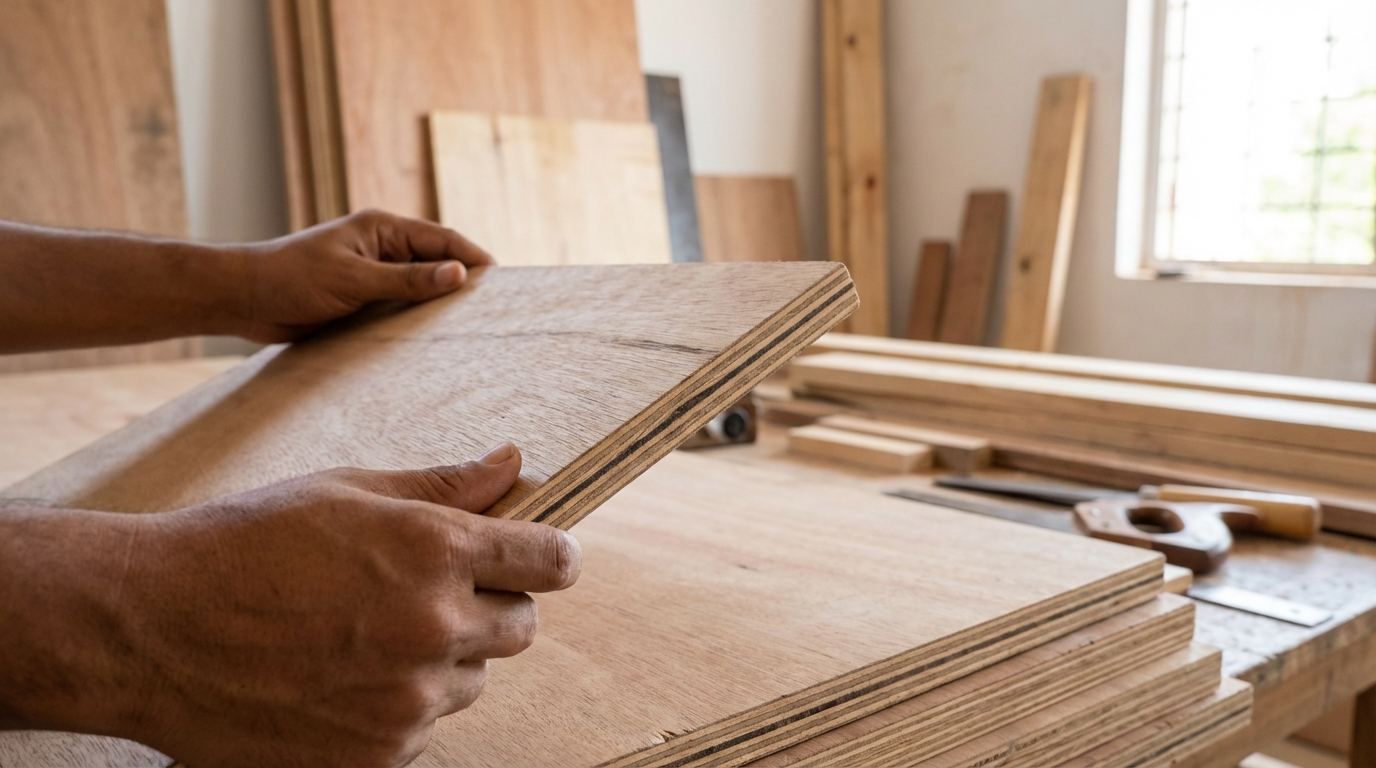
Before purchasing, inspect the boards physically:
Visual inspection:
- Surface should be perfectly smooth without bumps or depressions
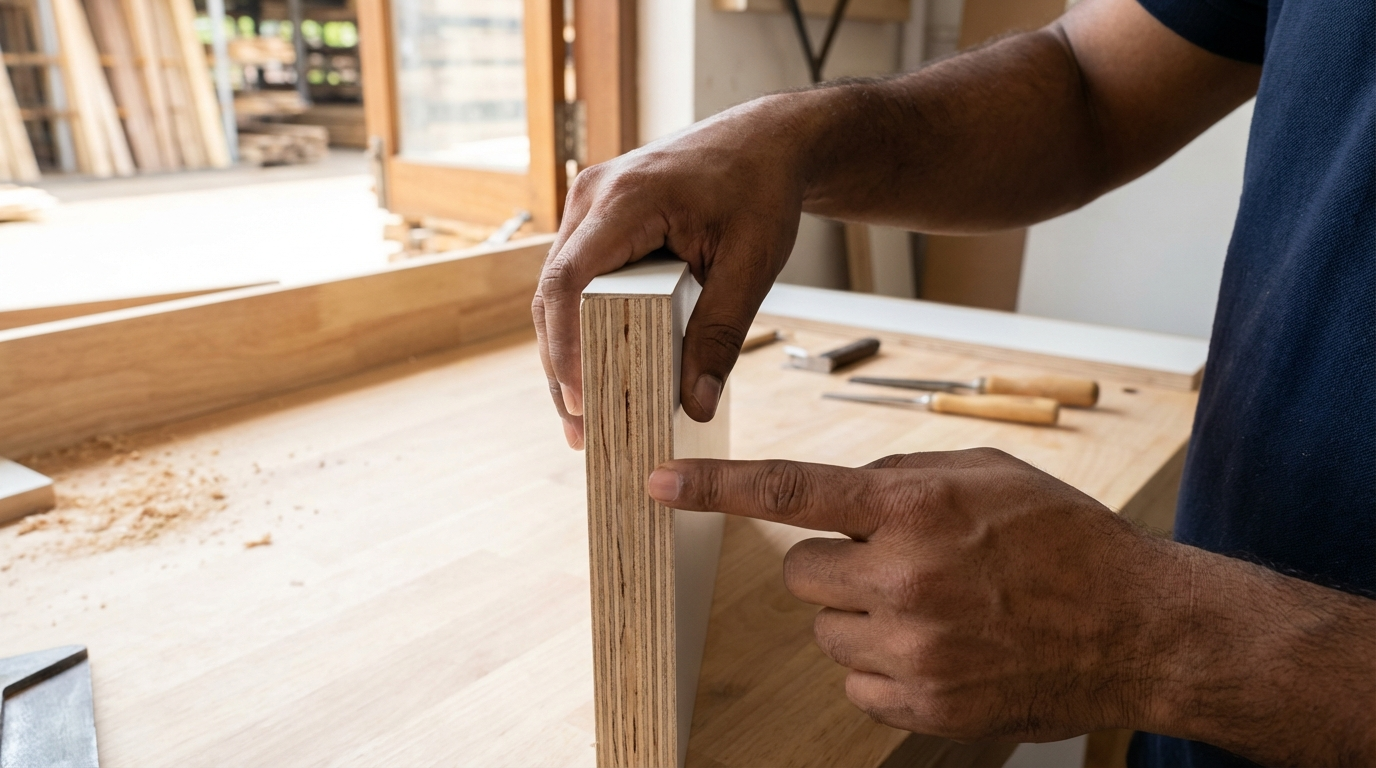
- Edges should show uniform density throughout — no visible layers or gaps
- Colour should be consistent across the board
- No moisture stains, warping, or bowing
Tests you can do at the shop:
- Flatness test: Place board on flat ground, check for rocking or gaps underneath
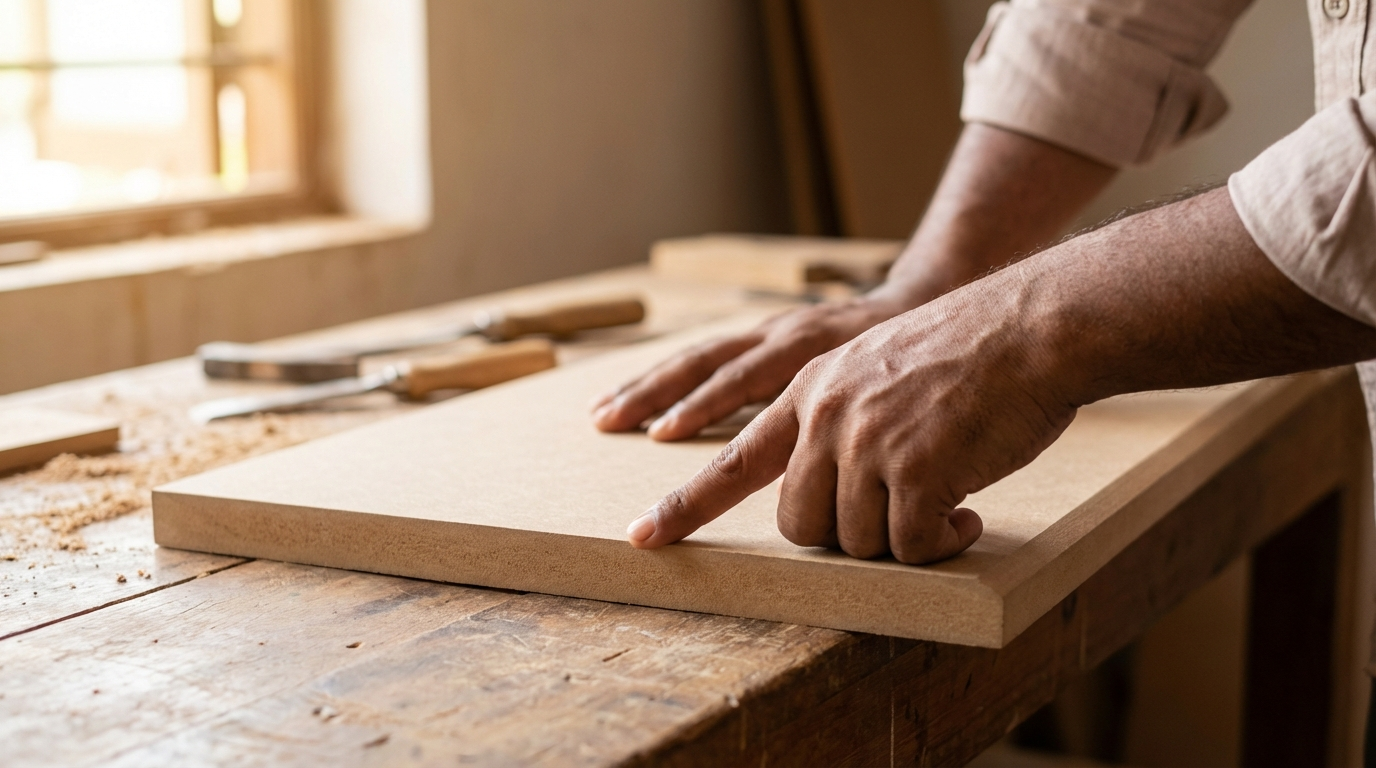
- Edge density test: Press fingernail into edge — quality MDF resists indentation
- Weight comparison: Lift similar-sized boards from different batches — heavier usually indicates better density
- Thickness verification: Measure with tape at multiple points — should be consistent and match stated thickness
Step 5: Compare Prices and Get Quotes
How to ask for quotes properly:
- Specify exact type (Plain MDF, MR MDF, HDHMR)
- Mention thickness required
- State quantity in number of sheets or square feet
- Ask if price includes GST
- Confirm delivery charges separately
- Request brand options with price difference
What should be included in quote:
- Brand name and product type
- Size of sheet (typically 8x4 feet or 8x6 feet)
- Price per sheet or per square foot
- GST amount
- Delivery charges and timeline
- Any cutting or edge-banding charges if applicable
Decision Framework: What to Buy for Each Situation
| Your Situation | Recommended Option | Why | What to Verify |
|---|---|---|---|
| Kitchen cabinets | HDHMR 18mm | Handles moisture, steam, and heavy vessels | Check green core colour, test edge density |
| Bathroom vanity | HDHMR or BWP Plywood | Direct water exposure risk requires highest moisture resistance | Confirm boiling water resistant grade |
| Bedroom wardrobe | Plain MDF 18mm | Dry environment, cost-effective, excellent paint finish | Check flatness and surface smoothness |
| Living room furniture | Plain MDF 18mm | No moisture exposure, smooth finish for veneer or paint | Verify uniform density at edges |
| Coastal area home | HDHMR minimum | High humidity year-round damages plain MDF quickly | Ask about termite-resistant treatment |
| Tight budget | Plain MDF from branded manufacturer | Avoid unknown brands even at lower price | Compare price per square foot, not per sheet |
| Premium quality need | HDF or top-brand HDHMR | Best screw retention, longest life, superior finish | Request test certificates if available |
Price Guide and Budget Planning
MDF prices vary significantly based on type, thickness, brand, and location. These ranges are approximate and vary by city and market conditions:
Price ranges by type (per 8x4 feet sheet, 18mm thickness):
- Plain MDF: ₹1,800–₹2,800
- Moisture Resistant MDF: ₹2,200–₹3,500
- HDHMR: ₹3,000–₹4,500
- Pre-laminated MDF: ₹3,500–₹5,500
What affects price:
- Thickness: Thicker boards cost proportionally more
- Brand: Established brands command 15-30% premium over local manufacturers
- Grade: MR and HDHMR cost 25-50% more than plain MDF
- City: Metro cities typically have higher prices due to logistics and demand
- Quantity: Bulk purchases often receive 5-10% discount
Budget estimation for common projects:
- 10x10 kitchen (material only): Approximately ₹35,000–₹65,000 for MDF/HDHMR sheets
- Standard 8-foot wardrobe: Approximately ₹12,000–₹22,000 for MDF sheets
- TV unit with storage: Approximately ₹8,000–₹15,000 for MDF sheets
How to get accurate quotes checklist:
- Get measurement done by carpenter first
- Calculate required sheets based on cutting layout
- Add 10% wastage allowance
- Get quotes from minimum three dealers
- Compare same brand and grade only
- Confirm all charges in writing
Why do prices vary so much between shops?
Price variations between dealers occur due to several factors. Direct dealership from manufacturers typically offers better rates than distributors. Storage conditions affect quality — dealers with proper warehousing may charge slightly more but provide better material. Location matters significantly; dealers in commercial areas have higher overheads. Volume of business allows larger dealers to offer competitive rates. Additionally, some shops bundle services like delivery and cutting, while others charge separately. Always compare the complete cost including all charges rather than just per-sheet price.
Red Flags: When to Walk Away
Recognizing warning signs saves you from expensive mistakes:
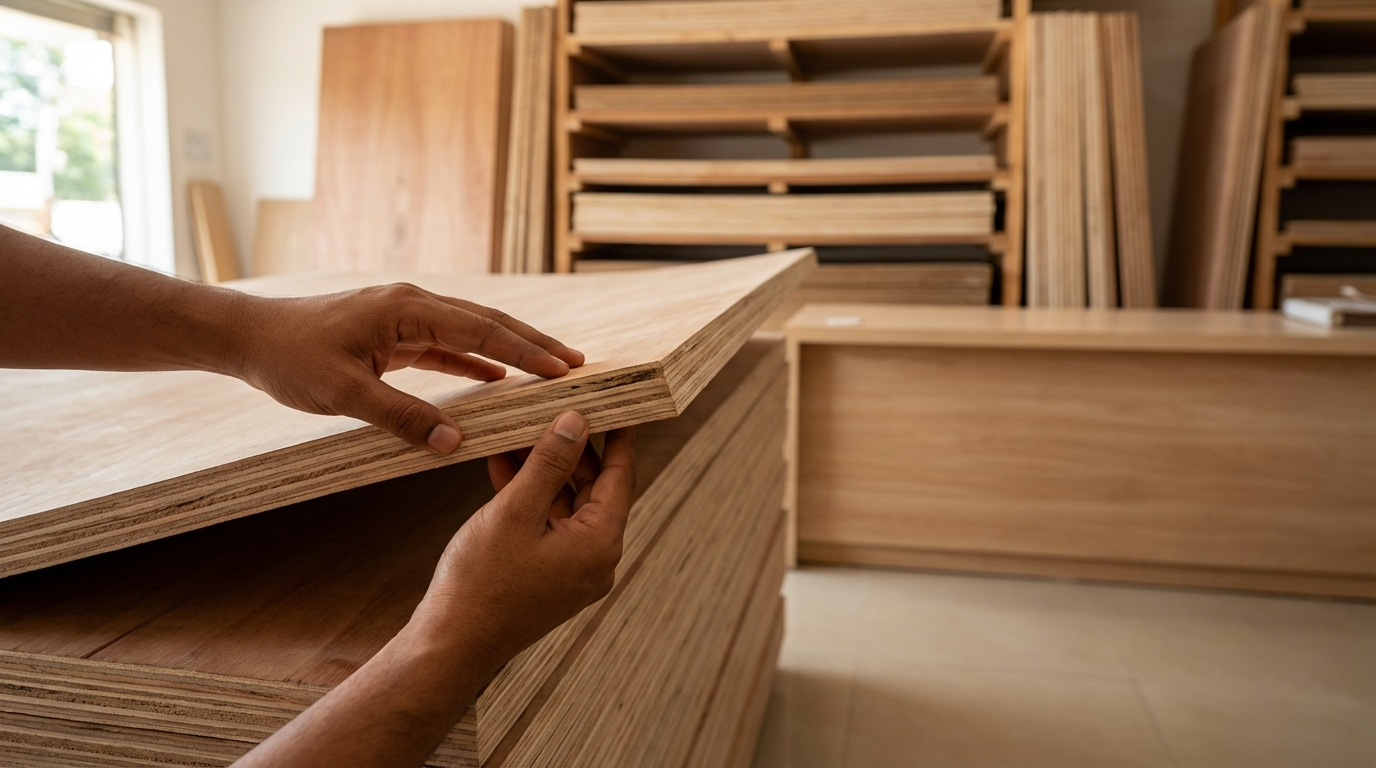
- Boards stored vertically or leaning: Causes permanent warping — quality dealers store MDF flat
- Visible moisture damage or staining: Once MDF absorbs moisture, structural integrity is compromised permanently
- Edges crumbling or soft: Indicates low density or moisture damage
- Unwillingness to show board edges: Dealers hiding edges may be concealing quality issues
- No brand markings or invoice: Unbranded material quality is unpredictable and warranty claims impossible
- Significant thickness variation: Quality MDF maintains consistent thickness throughout
- Extremely low prices: If price seems too good, material is likely substandard or old stock
- Pressure to buy immediately: Legitimate dealers allow time for comparison and decision
Common Buying Mistakes (And How to Avoid)
Mistake 1: Using Plain MDF in Kitchen
People make this mistake to save money on material costs. Plain MDF absorbs moisture rapidly, swelling and deteriorating within months near sinks and cooking areas. Instead, always specify MR MDF or HDHMR for any kitchen application, even for upper cabinets that seem dry.
Mistake 2: Buying Based on Price Alone
The cheapest quote often means compromised quality or hidden costs. Low-quality MDF fails faster, requiring premature replacement. Compare same-grade products from different dealers, and factor in brand reputation and dealer reliability alongside price.
Mistake 3: Not Checking Board Flatness
Warped boards from improper storage create fitting problems during installation. Carpenters struggle with warped material, and finished furniture may have gaps or misalignment. Always physically inspect boards before accepting delivery.
Mistake 4: Underestimating Quantity Needed
Cutting patterns create unavoidable wastage. Running short mid-project means additional trips, potential batch variation, and project delays. Calculate requirements carefully and add 10-15% buffer for wastage and errors.
Mistake 5: Ignoring Storage Conditions
Buying from dealers who store MDF poorly means receiving already-damaged material. Boards stored in rain-exposed areas or humid godowns have compromised quality that manifests after installation. Visit the storage area before purchasing.
Mistake 6: Choosing Wrong Thickness
Using 12mm where 18mm is needed causes sagging shelves and structural failures. Conversely, using 25mm for small shutters wastes money and adds unnecessary weight. Match thickness to specific application requirements.
Mistake 7: Not Getting Written Quote
Verbal agreements lead to disputes over pricing, specifications, and inclusions. Delivery charges, cutting fees, and GST often get added later. Insist on written quotation detailing all specifications and charges.
Mistake 8: Skipping Brand Verification
Labels can be misleading or counterfeit. Some dealers substitute lower-grade material. Check manufacturer markings on board edges, request invoice from authorized dealer, and verify dealer authorization if possible.
Questions to Ask Your Dealer
1. Are you an authorized dealer for this brand?
Authorized dealers receive fresh stock directly and can assist with warranty claims. Ask for dealer certificate or authorization letter if uncertain.
2. What is the manufacturing date of this batch?
MDF has shelf life concerns, especially in humid conditions. Material older than 6-12 months stored improperly may have degraded. Fresh stock is preferable.
3. Can I see the storage area?
Proper storage means flat stacking, covered area, away from moisture. Reluctance to show storage suggests conditions may be unsuitable.
4. What is your return policy for defective material?
Legitimate dealers accept returns for genuine defects discovered during cutting or installation. No-return policies indicate potential quality concerns.
5. Do you provide delivery, and what are the charges?
MDF sheets are large and heavy. Understand delivery logistics, handling methods, and whether charges are fixed or distance-based.
6. Can you provide proper tax invoice?
GST invoice is essential for warranty claims and indicates legitimate business. Dealers avoiding invoices may be selling substandard or counterfeit material.
7. What is the difference between the options you have?
Knowledgeable dealers explain grade differences clearly. Vague answers or inability to differentiate products suggests limited expertise or potential mislabeling.
8. How do I verify this is genuine branded material?
Good dealers show brand markings on board edges and provide manufacturer documentation. Hesitation here is concerning.
9. What warranty does the manufacturer provide?
Different brands offer varying warranty periods and terms. Understand what is covered and the claim process before purchasing.
10. Can I get cutting done here?
Some dealers offer precision cutting services which can reduce wastage and ensure accurate dimensions. Understand charges and cutting accuracy offered.
After Purchase: Handling and Storage
How to transport without damage:
- Transport flat, never standing vertically
- Support entire length — unsupported sections will bend
- Protect from rain completely — even brief moisture exposure causes edge swelling
- Avoid dragging across surfaces to prevent surface scratches
- Load and unload carefully to prevent corner damage
Storage requirements before installation:
- Store flat on level surface, not directly on floor
- Use battens or supports to keep boards off ground
- Stack with protective sheets between boards if storing long-term
- Keep in covered, dry area away from direct sunlight
- Ensure good air circulation around stored boards
Acclimatization period:
Allow MDF sheets to acclimatize to your home's environment for 48-72 hours before cutting and installation. This is particularly important in air-conditioned spaces or areas with significantly different humidity than the dealer's storage. Acclimatization allows the material to adjust to local moisture levels, reducing post-installation warping or dimensional changes.
Frequently Asked Questions
Which brand is best for MDF?
Several established manufacturers produce quality MDF in India, including Greenply, Century, Action Tesa, and Merino. Brand preference varies by region based on availability and dealer network. Rather than focusing solely on brand name, verify the specific product grade meets your application requirements. Ask local carpenters which brands they have found reliable for your area, as regional manufacturing quality can vary.
How to identify original vs duplicate MDF?
Genuine branded MDF has manufacturer markings stamped or printed on board edges. Check for consistent quality across multiple boards from the same batch. Original material comes with proper tax invoice from authorized dealers. Examine edge density — quality MDF has uniform, dense edges without visible gaps or soft spots. When in doubt, purchase only from authorized dealers and verify their authorization status.
What warranty should I expect?
MDF warranty terms vary by manufacturer and product type. Most branded manufacturers offer warranties ranging from 7 to 15 years against manufacturing defects. HDHMR products typically carry longer warranty periods than plain MDF. Warranty usually covers delamination and structural failure under normal use conditions but excludes damage from improper installation, excessive moisture exposure, or misuse. Always obtain proper documentation for warranty claims.
How much MDF do I need for my project?
Calculate MDF requirements based on your furniture design measurements. Standard sheet sizes are 8x4 feet or 8x6 feet. Create a cutting layout to optimize sheet utilization and minimize wastage. For complex projects, consult your carpenter for accurate estimates. Add 10-15% to calculated quantity for cutting wastage, errors, and future repair needs. Many dealers offer cutting optimization services that help maximize sheet usage.
Should I buy MDF online or offline?
For MDF purchase, offline buying from physical dealers is generally recommended. Physical inspection allows you to verify flatness, edge quality, and storage conditions before purchasing. However, online platforms can be useful for price comparison and brand research. If buying online, ensure the seller has clear return policies for damaged or substandard material. Established e-commerce platforms with quality guarantees offer reasonable protection for online purchases.
When is the best time to buy MDF?
MDF prices remain relatively stable throughout the year, unlike seasonal building materials. However, buying during construction off-season (typically monsoon months) may offer slight negotiating advantage as dealers have lower footfall. Avoid purchasing during extreme humidity periods as storage and transport risks increase. Plan purchases to allow proper acclimatization time before installation begins. End of financial year sometimes brings dealer discounts to meet sales targets.
How to negotiate price for MDF?
Effective negotiation starts with market research — get quotes from multiple dealers for identical products. Larger quantity purchases provide legitimate negotiating leverage. Ask about payment term discounts for immediate full payment. Bundle purchases across multiple product types if possible. Maintain respectful approach; established dealers have limited margins on branded products. Focus negotiations on additional services like free delivery or cutting rather than just base price reduction.
What if I receive damaged MDF material?
Inspect material immediately upon delivery before signing acceptance. Document any damage with photographs showing defect details and batch information. Contact dealer within 24-48 hours with documented evidence. Most reputable dealers replace genuinely defective material when reported promptly. Retain original invoice and delivery challan for warranty claims. If dealer is unresponsive, contact manufacturer's customer service directly with purchase documentation and defect evidence.
Can MDF be used outdoors?
Standard MDF and even moisture-resistant MDF are not suitable for outdoor use. Direct exposure to rain, sun, and temperature variations causes rapid deterioration. For outdoor applications requiring similar workability, consider exterior-grade engineered wood products or marine plywood. Some specialized exterior MDF exists but is rarely available in India and costs significantly more. Always verify specific product suitability for intended application with manufacturer specifications.
How long does MDF furniture last?
Quality MDF furniture in appropriate conditions typically lasts 15-20 years or more. Longevity depends significantly on correct grade selection for application, proper installation, and ongoing care. Kitchen cabinets using HDHMR with proper finishing can match plywood cabinet lifespan. Bedroom furniture using plain MDF often outlasts its style relevance. Avoid moisture exposure, use appropriate hardware, and address minor damage promptly to maximize furniture lifespan.
Disclaimer: This content is provided for general informational purposes based on industry practices and publicly available information. Product specifications, standards, prices, and availability may vary by manufacturer, region, and time. Readers should independently verify details with manufacturers, dealers, or qualified professionals before making purchase or construction decisions.
Want Plywood Suggestions?
Share a few details and a Duro BOIL specialist will suggest suitable brands and connect you to responsive dealers.