MDF vs HDHMR: which board is better for kitchen shutters?
MDF vs HDHMR: which board is better for kitchen shutters? with a clear decision table on grade, thickness, moisture performance, warranty and price factors.
Quick Decision Summary
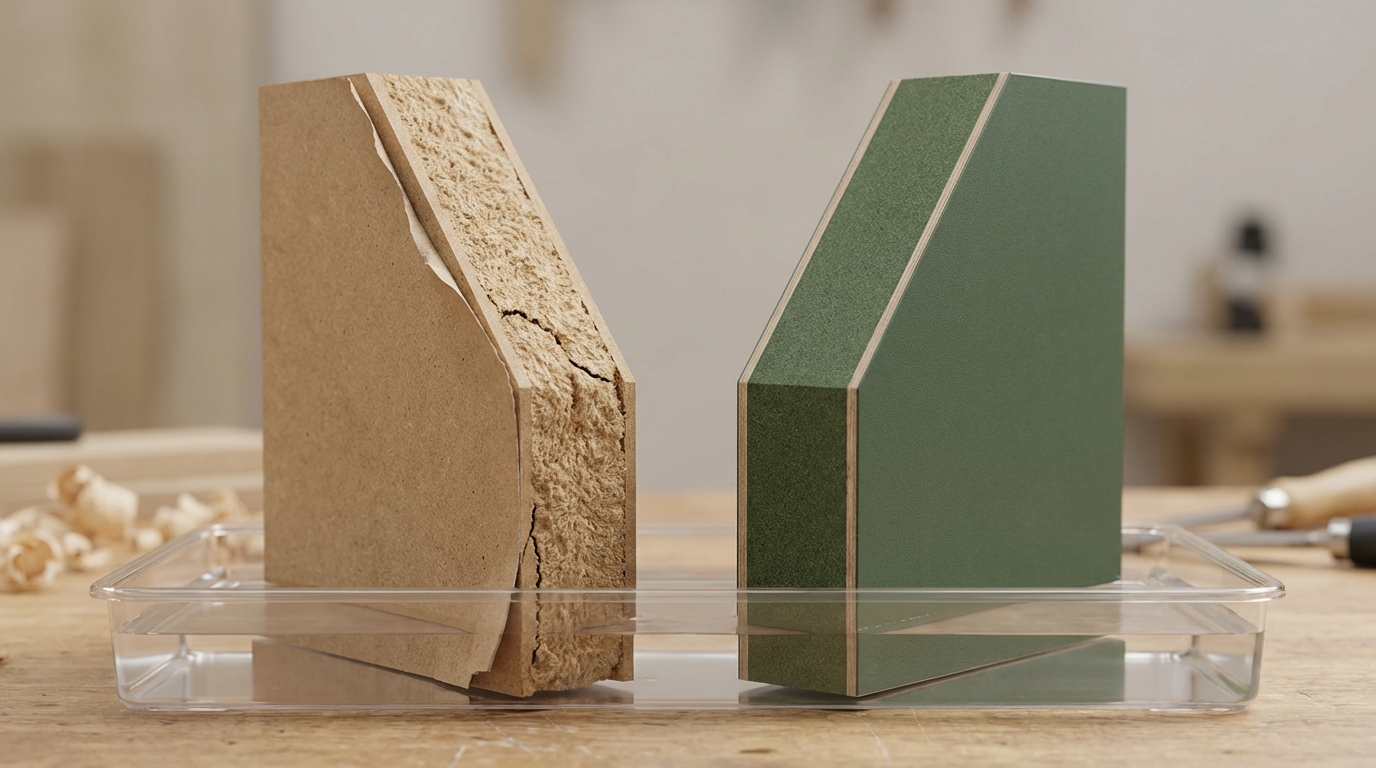
HDHMR outperforms MDF for most kitchen shutters in India thanks to better moisture resistance and density.
If you're in a hurry: Opt for HDHMR (High Density High Moisture Resistant) boards for kitchen shutters, especially in humid or coastal areas. They handle steam, spills, and monsoon humidity far better than standard MDF without swelling or delaminating quickly. MDF suits dry interiors on tight budgets but risks failure near sinks or stoves. Verify edge sealing and screw-holding strength on-site. Expect 20-50% higher cost for HDHMR, but it cuts long-term repairs. Always pair with quality laminates or paints for full protection. (92 words)
- Choose HDHMR if: High humidity, spills likely, heavy use, or coastal location.
- Choose MDF if: Dry zone kitchen, ultra-low budget, light use only.
- Avoid MDF if: Monsoon exposure or water splashes expected.
- Avoid HDHMR if: Need ultra-high load-bearing like shelves (consider plywood).
What This Term/Material Actually Means
MDF stands for Medium Density Fiberboard: fine wood fibers mixed with resins and wax, compressed under heat into uniform sheets. It offers a smooth surface ideal for laminates or paint, with consistent density around 700-750 kg/m³.
HDHMR means High Density High Moisture Resistant: an upgraded fiberboard with denser pressing (800+ kg/m³), special resins, and additives to repel moisture. It's engineered for tougher conditions while keeping the smooth machinability of MDF.
Where People Get Confused
- Thinking HDHMR is plywood: No, both are fiber-based, not layered veneers.
- Assuming MDF is waterproof: It absorbs moisture fast unless treated.
- Believing HDHMR handles boiling water forever: It's moisture-resistant, not fully waterproof.
- Mixing up density with strength: Higher density aids stability, but edges need protection.
- Overlooking thickness role: 16-18mm best for shutters; thinner warps easier.
- Confusing pre-laminated vs plain: Laminated adds finish but not core strength.
India-Specific Reality Check
Indian kitchens face 70-90% monsoon humidity, cooking steam, oil splashes, and coastal salt air in places like Mumbai or Chennai. Standard MDF often swells at edges within months, leading to misalignment. HDHMR holds up better but demands proper storage (elevated, covered) and edge banding during humid site delays. Contractor workflows favor HDHMR for faster screw fixing without pilot holes. Poor ventilation amplifies risks for both—install exhaust fans early.
Why Kitchens Demand Moisture Logic Here
In India, kitchens aren't dry zones: daily curries mean vapor, sinks splash, and monsoons push indoor RH over 80%. MDF fails by absorbing 10-15% moisture, bulging shutters. HDHMR limits to 5-8% with tighter resin bonds. Test by sprinkling water—if no darkening after 30 mins, it's viable. Next: Seal all cuts immediately and ventilate post-cooking. (102 words)
Two-Minute Comparison That Actually Helps
| Factor | MDF | HDHMR |
|---|---|---|
| Density (kg/m³) | 700-750 | 800-900 |
| Moisture Resistance | Low (swells fast) | High (handles humidity/spills) |
| Screw Holding | Moderate | Strong (less pull-out) |
| Smoothness for Finish | Excellent | Excellent |
| Termite Risk | Medium (if untreated) | Low (denser core) |
| Typical Thickness for Shutters | 16-18mm | 16-18mm |
Choose based on conditions: HDHMR for wet-risk zones, MDF for budget dry setups.
Price Range and Cost Drivers (India)
Plain 18mm boards typically range ₹40-70 per sq ft for MDF and ₹60-110 for HDHMR, varying by city (metros 20% higher), brand quality, and batch. Prelaminated adds ₹20-40/sq ft.
Cost drivers: Thickness (18mm+ pricier), density grade, surface calibration, logistics from mill, and finish type. Wastage from poor cutting hikes effective cost 10-15%.
How to ask for a quote: Specify "18mm HDHMR plain/calibrated, edge-sealed sample, from [city] stock."
Mini example: 20 sqm shutters (80 sq ft) at mid-range = ₹5,000-8,000 material only, excluding labor.
Does Thickness Change the Winner?
Yes—16mm MDF works for light doors but sags; 18mm HDHMR shines for heavy shutters. Thicker boosts stability but raises cost 15-20%. Nuance: Coastal areas need 18mm min regardless. Check: Tap edges—if dull thud, avoid. Next: Measure your frame gaps for precise sizing. (96 words)
How to Choose in 5 Steps
- Map exposure: Sink-side? Steam-heavy? Go HDHMR. Dry corner? MDF ok.
- Check density: Weigh a sample—HDHMR feels heavier per size.
- Test moisture: Wet edge 30 mins; no swell = good.
- Verify screw hold: Twist screws in scrap; no stripping.
- Confirm sealing plan: Insist on full edge banding + laminate.
Skip any? Risk warping in first monsoon.
For Homeowners: Durability Do's and Don'ts
Prioritize HDHMR if budget allows—wipe spills instantly, avoid direct hosing. Don't overload with heavy pots. Use microfiber for cleaning to prevent scratches. Ventilate after cooking. Check alignment yearly. (92 words)
For Carpenters: Cutting and Fixing Tips
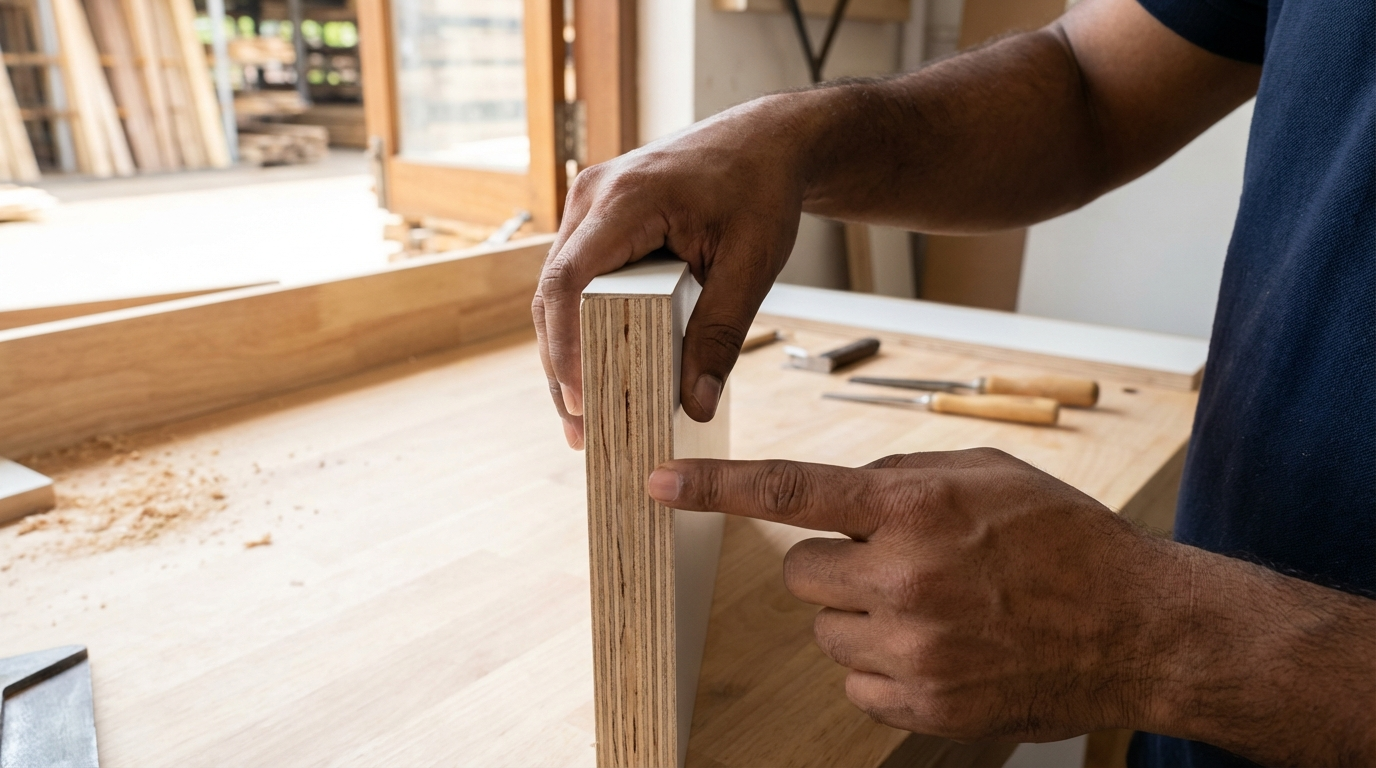
Cut HDHMR with fine blade to avoid chipping; pre-drill hinges. Edge-band fresh cuts same day. Fasten in center zones first. Handle by edges to prevent dents. Seal with PVA before laminate. (94 words)
For Architects: Spec and Detail Best Practices
Spec "18mm HDHMR, 850+ kg/m³ density, moisture-tested." Detail 2mm PVC edge, SS hinges. Plan 5mm expansion gaps in wet zones. Layer with moisture-barrier paint under laminate. (91 words)
Decision Framework Table
| Condition | Recommended | Verify This |
|---|---|---|
| Wet zone (sink/stove) | HDHMR | Water test on edge |
| Coastal/high humidity | HDHMR | Density >800 kg/m³ |
| Heavy use/kids | HDHMR | Screw pull-out test |
| Tight budget | MDF | Dry install only |
| High scratch risk | HDHMR + Laminate | Surface hardness tap |
| Fast delivery needed | Whichever stocked | Local availability |
Trade-offs and Limitations
HDHMR costs more upfront but lasts; MDF cheaper but fragile in wet. Both chip edges if mishandled, need sealing (unlike plywood). HDHMR heavier for transport; MDF dustier to machine. Neither termite-proof forever—pair with treatments.
Common Buyer Mistakes and How to Avoid Them
- Mistake 1: Picking MDF for full kitchen. Why: Ignores steam. Do: Zone-map first.
- 2: Skipping edge sealing. Why: First spill entry. Do: Band all cuts Day 1.
- 3: Buying thin boards (<16mm). Why: Sag over time. Do: Stick to 18mm.
- 4: Ignoring storage. Why: Site humidity warps. Do: Cover stacks elevated.
- 5: Cheap laminates. Why: Peels off. Do: 0.8mm+ thick.
- 6: No screw tests. Why: Hinges fail. Do: Test scraps.
- 7: Monsoon install. Why: Ambient moisture traps. Do: Dry season only.
- 8: Overlooking density. Why: Weak hold. Do: Ask for specs.
- 9: Bulk buy without samples. Why: Batch variance. Do: Test one sheet first.
Failure Modes and Fixes
- Symptom: Edge swelling. Cause: Moisture ingress. Prevent: Seal fully. Fix: Trim + re-band.
- Sagging shutters. Cause: Thin board/heavy load. Prevent: 18mm+. Fix: Reinforce frame.
- Hinge pull-out. Cause: Poor screw grip. Prevent: HDHMR + pilot holes. Fix: Longer screws.
- Surface bubbling. Cause: Laminate trap moisture. Prevent: Dry bonding. Fix: Replace panel.
- Chipping on handles. Cause: Impact. Prevent: Reinforce zones. Fix: Patch + paint.
- Termite trails. Cause: Untreated core. Prevent: Add treatment. Fix: Professional spray.
- Misalignment. Cause: Swell post-install. Prevent: Expansion gaps. Fix: Plane hinges.
Quality Checks You Can Do Without Lab Tests
Before buying: Tap for solid thud (no hollow), sprinkle water (no dark spots 30 mins), scratch nail (minimal mark), weigh for density feel.
After cutting: No fuzz edges, flat with straightedge, screw holds 2x without strip.
After install: Level check, tight hinges, clean with damp cloth (no swell), ventilate daily.
Red flags: Visible gaps, powdery cut dust, uneven color.
Can MDF Work in Indian Kitchens at All?
Rarely—only dry pantries, away from water. It shines for budget painted uppers but fails lowers fast. Nuance: Add extra sealing + dehumidifier. Next: Hybrid—HDHMR lowers, MDF uppers. Test locally first. (98 words)
Is HDHMR Stronger Than Plywood?
Not always—HDHMR denser for screws, smoother finish; plywood better flex/impact. Kitchens favor HDHMR for moisture. Nuance: Load shelves? Plywood. Check: Bend test scrap. Next: Match to use. (92 words)
FAQs
Which is best for modular kitchens?
HDHMR edges out for most Indian modular setups due to humidity handling and machinability. It fits factory precision better than MDF, resisting factory moisture during transit. However, pair with BWP plywood carcasses for ultimate wet zones. Always confirm supplier's moisture test routine and opt for calibrated sheets to minimize onsite adjustments. This combo reduces callbacks by focusing on real risks like steam condensation.
HDHMR vs MDF weight difference?
HDHMR is 15-25% heavier due to density, making shutters sturdier but transport costlier. MDF lighter suits uppers. In practice, this aids HDHMR's sag resistance. Check by comparing same-size samples. Factor into labor—carpenters prefer HDHMR for fewer reinforcements.
Best thickness for shutters?
18mm standard for balance of strength and weight; 16mm for light frames. Thinner risks warp, thicker adds bulk. India tip: 18mm HDHMR for monsoons. Verify frame compatibility first—gaps under 2mm cause binding.
How to maintain kitchen shutters?
Wipe daily with damp microfiber, dry immediately; ventilate post-cook; avoid abrasives. HDHMR forgives minor spills better. Annual: Check hinges, re-tighten. This prevents 80% failures from buildup.
Termite risk comparison?
HDHMR lower due to dense core, but both need treatments. MDF more vulnerable if breached. Prevent: Site spray + borate additives. Inspect annually for frass.
Can I paint directly on these?
Yes, both smooth bases excel; HDHMR holds better under humidity. Primer essential, 2-3 coats PU finish. Test adhesion on scrap—peeling signals poor prep.
Lead time and availability?
MDF widely stocked; HDHMR growing but check metros first. Order 1-2 weeks ahead for custom laminate. Local variance: South India faster for HDHMR.
Edge banding must?
Absolutely—unsealed edges fail first. Use 2mm PVC matching laminate, heat-applied. Carpenter must do onsite cuts immediately banded.
Budget kitchen: MDF or compromise?
MDF viable if sealed well, dry zone, light use. Compromise: HDHMR uppers, MDF lowers no—reverse it. Total savings 20%, but repair costs eat it.
Disclaimer: This content is provided for general informational purposes based on industry practices and publicly available information. Product specifications, standards, prices, and availability may vary by manufacturer, region, and time. Readers should independently verify details with manufacturers, dealers, or qualified professionals before making purchase or construction decisions.Want Plywood Suggestions?
Share a few details and a Duro BOIL specialist will suggest suitable brands and connect you to responsive dealers.