MDF vs Plywood: Which is Better for Furniture? Honest Comparison (2026)
MDF vs Plywood - unbiased comparison with prices, strength & applications. Learn when MDF beats plywood and when plywood is essential for your furniture.
Quick Verdict
Plywood wins for durability and moisture resistance; MDF wins for smooth finishes and decorative work. The best choice depends entirely on your specific application, budget, and the environment where the furniture will be used.
If you're in a hurry: Choose plywood if the space is high-moisture (kitchens, bathrooms), or the furniture is weight-bearing (wardrobes, beds). Choose MDF for cost-effective decorative elements, panelling, CNC detailing, and furniture that won't carry heavy loads. This simple rule covers 90% of Indian home furniture decisions.
- Choose Plywood if: You need structural strength, moisture resistance, or screw-holding capacity for heavy-use furniture
- Choose MDF if: You want smooth painted finishes, intricate CNC designs, or budget-friendly decorative panels
- Either works if: The furniture is for dry areas with light loads and aesthetic preferences guide your choice
Complete Comparison Table
The table below provides a comprehensive head-to-head comparison between MDF and plywood across every factor that matters for Indian furniture and interiors. Duroboil.com's material experts have compiled this based on real-world performance in Indian conditions.
| Factor | MDF | Plywood | Winner |
|---|---|---|---|
| Strength | Moderate; suitable for light loads | High; excellent load-bearing capacity | Plywood |
| Moisture Resistance | Poor; swells when exposed to water | Good to Excellent (BWR/BWP grades) | Plywood |
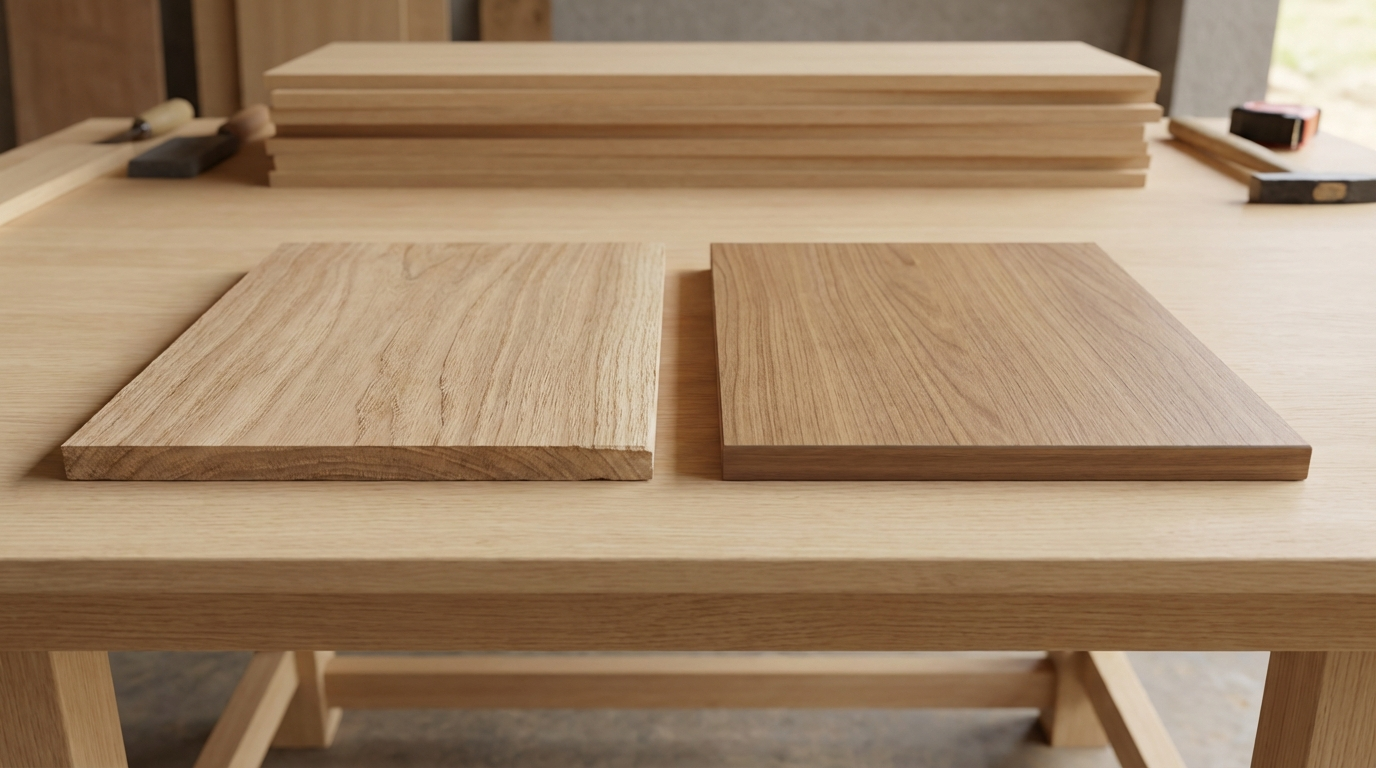
| Surface Smoothness | Extremely smooth and uniform | Has natural wood grain texture | MDF |
| Paint Finish | Takes paint excellently | Needs primer and finishing work | MDF |
| CNC/Carving Work | Excellent for intricate designs | Difficult; edges splinter | MDF |
| Screw Holding | Weak; screws can pull out | Strong screw retention | Plywood |
| Weight | Heavier (dense throughout) | Lighter for equivalent strength | Plywood |
| Price (per sq ft) | ₹25-60 typically | ₹40-150 depending on grade | MDF |
| Durability | 5-10 years average | 15-25 years with proper care | Plywood |
| Termite Resistance | Moderate (treated versions available) | Good (quality grades) | Plywood |
| Edge Finish | Edges absorb moisture easily | More durable edges | Plywood |
| Eco-Friendliness | Made from wood waste/recycled fibres | Uses natural wood veneers | MDF |
| Availability in India | Widely available in metros | Universally available | Tie |
| Carpenter Preference | Less preferred for structural work | Highly preferred for all furniture | Plywood |
What is MDF (Medium Density Fiberboard)?
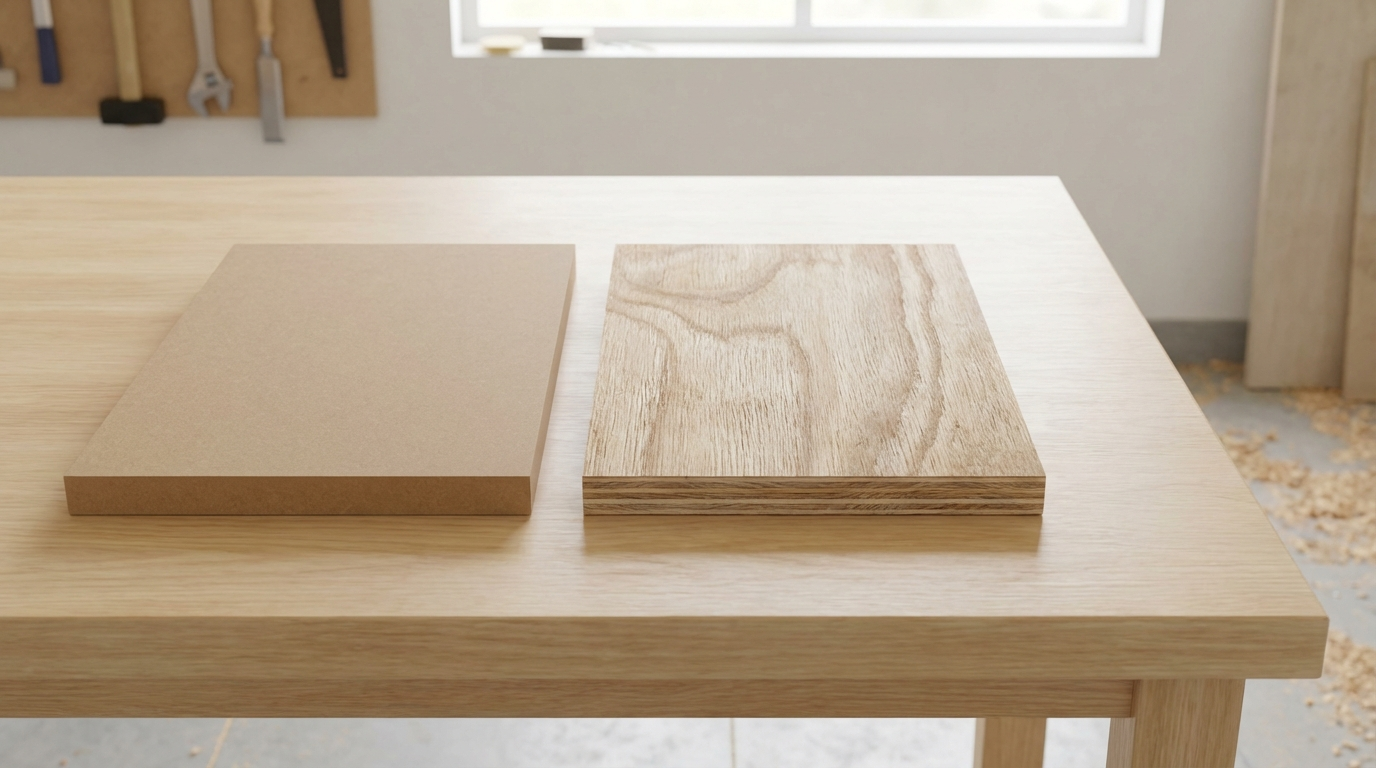
MDF is a medium-density fibreboard, which is basically engineered wood obtained by breaking down hardwood and softwood composites. Since an MDF board is made up of small wood fibres, there are no visible wood grains or knots. The fibres are joined together using wax to produce panels by applying pressure and high temperature.
MDF is produced through the compression of fine wood fibers and resin. The produced result is uniform and smooth boards that can be easily cut and painted. MDF is therefore widely used in the construction and production of furniture due to its smooth surface.
In simple terms, MDF is like reconstituted wood—imagine sawdust and wood chips compressed into a dense, smooth board. This manufacturing process gives MDF its characteristic uniformity, making it ideal for painted furniture and decorative applications where a flawless surface finish matters more than raw strength.
Types of MDF Available in India
- Plain MDF: Standard boards for general interior use
- Pre-laminated MDF: Factory-finished with decorative laminate on surface
- Moisture-resistant MDF (MR-MDF): Treated to prevent swelling and damage in high-humidity areas, like bathrooms or kitchens. It costs around 15-20% more than regular MDF.
- Fire-retardant MDF: Designed to meet building codes that require fire resistance. It's used in commercial projects or areas where fire safety is a concern, and it can be up to 50% more expensive than standard MDF.
- HDHMR (High Density High Moisture Resistant): Premium variant with better density and water resistance
What is Plywood?
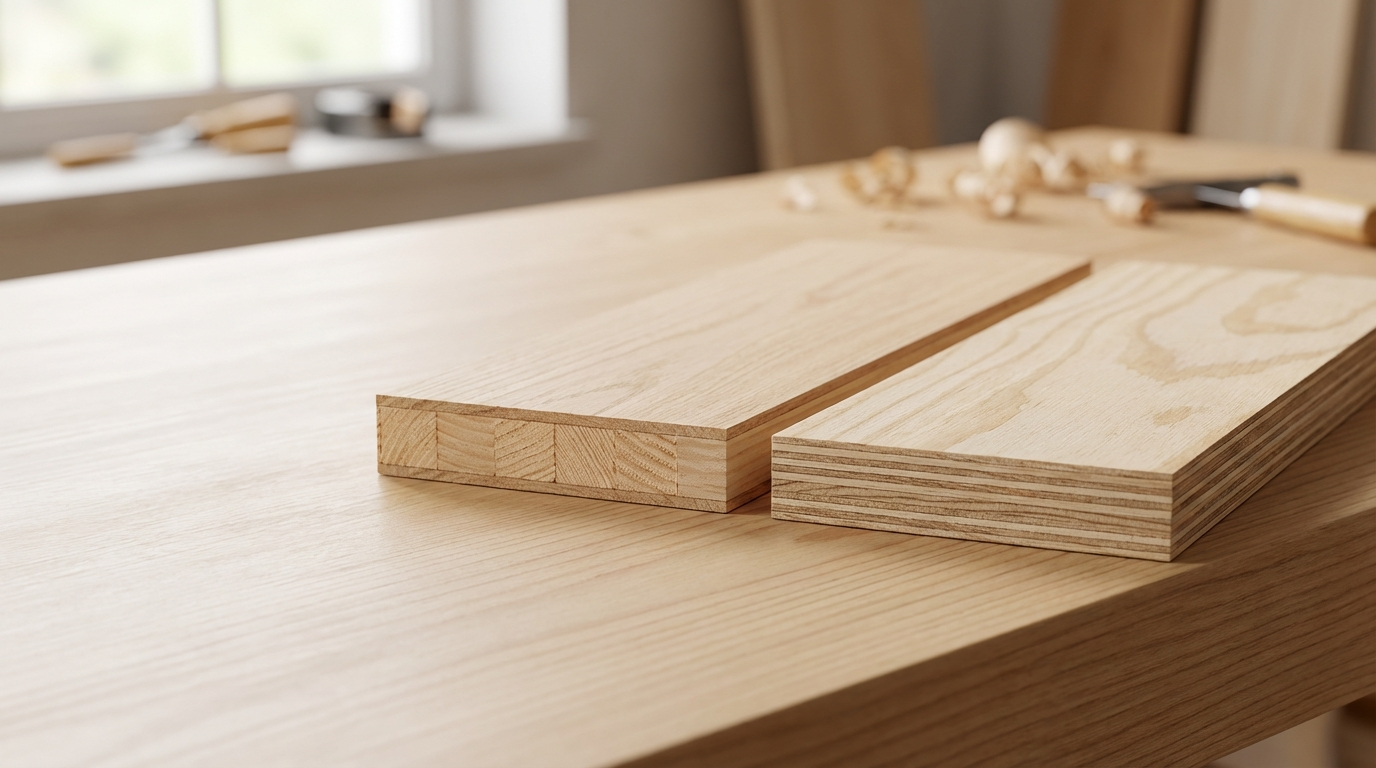
Plywood is an engineered board made by gluing together multiple thin layers (veneers) of wood. Each layer is oriented perpendicular to the next, giving plywood superior strength, dimensional stability, and load-bearing capacity.
Plywood sheets are made by stacking thin sheets of natural wood veneers in a crisscross manner. When these layers are combined, they create the strength, durability, and capability to withstand the weight of the plywood. This cross-grain construction is what makes plywood resistant to warping and gives it the ability to handle heavy loads without sagging.
The quality of plywood depends significantly on the core wood species used (gurjan, poplar, eucalyptus), the adhesive grade (MR, BWR, BWP), and the face veneer quality. For Indian homes, understanding these grades is essential for making the right choice.
Types of Plywood Available in India
- MR Grade (Moisture Resistant/Commercial): Also known as commercial grade plywood. This type of plywood is recommended for the dry areas of the home that are not exposed to moisture or water, such as the bedroom, living room and dining room. MR plywood is highly suitable for fabricating all types of furniture, wardrobes and cabinetry.
- BWR Grade (Boiling Water Resistant): Resists moisture and humidity. It's best for kitchen and bathroom furniture where exposure to water is frequent. The waterproof plywood price ranges between ₹60–₹90 per sq ft.
- BWP/Marine Grade: Also known as boiling water proof plywood and it is waterproof. Marine plywood is highly recommended for the moisture-laden areas of the home.
- Calibrated Plywood: Machine-sanded for uniform thickness, essential for modular furniture
- Film-faced Plywood: Used for shuttering in construction
- Flexible Plywood: 4-millimetre-thick flexible plywood starts at ₹46 per square foot. 6-millimetre-thick flexible plywood starts at ₹55 per square foot.
Detailed Comparison
Moisture and Water Resistance
Standard MDF absorbs water quickly and swells. Plywood isn't waterproof either, but moisture-resistant or marine-grade plywood handles damp conditions far better than MDF ever could.
If not sealed well, MDF soaks up water and other liquids like a sponge and swells. This is particularly concerning in Indian homes during monsoon season when humidity levels spike dramatically. Even in air-conditioned spaces, condensation near windows and walls can affect unsealed MDF edges.
Compared to MDF, BWR plywood is significantly more resilient to humidity and unintentional water contact. Plywood remains stable around cooking areas; however, MDF might swell or weaken with time.
Winner: Plywood – Especially BWR and BWP grades which are specifically designed for Indian humid conditions.
Strength and Durability
Plywood is stronger overall, especially when it comes to handling weight. It holds screws better and doesn't sag as easily. MDF is fine for light loads but isn't meant for heavy use.
Plywood is resistant to bending over time, whereas MDF shelves can sag, particularly in longer spans. Plywood is more suited to heat, humidity, and frequent use in everyday Indian homes. When exposed to moisture, MDF is more likely to swell or deteriorate.
Plywood lasts longer, especially in Indian homes where moisture, weight, and daily wear are real factors. MDF tends to chip or swell if conditions aren't perfect. Plywood handles rough usage better and ages more gracefully.
Winner: Plywood – The cross-laminated construction provides structural integrity that MDF cannot match.
Surface Quality and Finishing
Medium Density Fibreboard (MDF) is a panel made from wood fibres combined with resin and wax, compressed under high pressure. It offers a smooth surface ideal for painted finishes and CNC routing, but isn't as structurally strong as plywood.
MDF is more often considered ideal for painted or laminate furniture. Nowadays, every modern kitchen unit in pastels or high-gloss white cabinets in city flats are pulled off with MDF.
Unlike MDF, raw plywood needs to be laminated or finished for aesthetics and protection. Plywood isn't suitable for intricate carving or flowing forms—MDF works better in those cases.
Winner: MDF – The uniformly smooth surface makes it ideal for modern, painted, or lacquered finishes.
Working and Machining
MDF board is composed of tiny wood grains so it can be easily cut, drilled, machined and filed to achieve a good finish. MDF is recommended for creating elaborate designs because the small wood fibres and smooth edges allow the CNC router to move easily.
Whether you need a lively-filmy wall panel with detailed CNC work or an actual Indian mandir-like back panel, MDF is going to deliver everything, paired with clean edges and precise detailing.
Carpenters note that plywood edges can splinter during cutting, requiring additional finishing work. MDF cuts cleanly without visible grain patterns, making it preferred for decorative jali work, temple designs, and intricate wall panels popular in Indian homes.
Winner: MDF – Easier to machine, cut, and create detailed designs.
Cost Comparison
According to duroboil.com's market research across major Indian cities, here's the current price scenario:
| Material Type | Price Range (₹ per sq ft) | Best For |
|---|---|---|
| Plain MDF (Standard) | ₹25-45 | Decorative panels, shutters |
| Pre-laminated MDF | ₹40-75 | Ready-to-use furniture |
| Moisture-resistant MDF | ₹35-65 | Semi-wet areas |
| Commercial Plywood (MR) | ₹40-60 | Dry area furniture |
| BWR Plywood | ₹60-90 | Kitchens, bathrooms |
| Marine/BWP Plywood | ₹90-150 | Maximum moisture exposure |
| 12mm MR Plywood | ₹60-90 | Wardrobes, cabinets |
On average, MDF is often less expensive than plywood due to its production process. However, both materials are widely available, and pricing depends on the quality, size, and region.
Winner: MDF – Generally 20-40% more affordable than equivalent plywood grades.
Application-Based Recommendations
Duroboil.com recommends choosing materials based on specific applications rather than making blanket decisions. Here's the definitive guide:
| Application | Better Option | Why | Caution |
|---|---|---|---|
| Kitchen Cabinets (Carcass) | BWR Plywood | When comparing MDF for kitchen cabinets versus plywood, moisture exposure is the most important factor. Kitchen cabinets are continuously subject to heat, spillage, and steam. | Don't use regular MDF near sink |
| Kitchen Shutters (Decorative) | MDF/Pre-lam MDF | Smooth finish for lacquer/paint | Use MR-MDF, seal edges properly |
| Wardrobes (Main Structure) | Plywood | For structural furniture, such as shelves, beds, closets, and kitchen cabinets, plywood is a safer choice. It is more resilient to warping, can support more weight, and lasts longer in Indian homes. | Use minimum 18mm for shelves |
| Wardrobe Shutters | Either | Depends on finish preference | MDF for paint, plywood for laminate |
| TV Unit | Plywood preferred | Weight-bearing for TV mount | MDF okay for decorative portions |
| Study Table | Plywood | Handles books, writing pressure | MDF top may dent over time |
| Wall Paneling | MDF | MDF is excellent for intricate laser-cut jalis, wave panels, architraves, and feature walls. | Avoid external/damp walls |
| False Ceiling | MDF | Lighter for suspended work | Not for bathrooms or balconies |
| Bathroom Vanity | BWP Plywood | Maximum water resistance | Never use regular MDF |
| Shoe Rack | Either | Light load application | MDF if near entrance (seal edges) |
| Bed Frame | Plywood | High load requirement | Minimum 18mm thickness |
| Pooja Mandir | MDF | Intricate carving possible | Keep away from diya heat |
| Children's Furniture | Plywood | Withstands rough usage | Round all edges for safety |
| Office Workstation | Pre-lam MDF | Cost-effective, clean look | Use plywood for storage sections |
India-Specific Considerations
Monsoon and Humidity Impact
The majority of India has a tropical climate; therefore, the surface has to withstand water, moisture, and heat at some point. This single fact makes plywood the safer choice for most structural furniture in Indian homes.
During June-September monsoons, indoor humidity can reach 80-90% in coastal cities like Mumbai, Chennai, and Kolkata. Standard MDF panels in these regions may show edge swelling within 2-3 years if not properly sealed. Plywood, particularly BWR grade, handles these conditions significantly better.
Regional Recommendations
- Coastal Areas (Mumbai, Chennai, Kolkata, Kochi): Prefer BWR/BWP plywood for all furniture. Avoid MDF except for pre-laminated shutters in air-conditioned rooms
- High Humidity Zones (Kerala, Goa, Coastal Karnataka): Marine-grade plywood is strongly recommended for kitchens and bathrooms
- North India (Delhi NCR, Rajasthan, Punjab): MR plywood sufficient for most applications; MDF works well in dry interiors
- Hill Stations (Shimla, Darjeeling, Ooty): Both materials work; moisture-resistant variants preferred due to fog and rain
Carpenter and Contractor Preferences
Most experienced Indian carpenters prefer working with plywood for structural work because:
- Screws hold better and can be repositioned
- Joints are stronger and more reliable
- Familiar working techniques from decades of experience
- Better trust in long-term durability
MDF can be utilised for top cabinets or dry storage rooms with minimum moisture exposure and enough ventilation. Many modern interior designers and modular kitchen companies prefer MDF for shutters due to superior finish quality.
Common Myths Busted
Myth 1: "MDF is stronger than plywood because it's denser"
Reality: Density doesn't equal strength. While the focus point of MDF boards lies on their smoothness and evenness, the design aspect of plywood emphasizes strength and ruggedness. Plywood's cross-laminated construction provides superior tensile and bending strength.
Myth 2: "Marine plywood is only for boats"
Reality: Marine/BWP plywood is ideal for any high-moisture environment in homes—kitchens, bathrooms, outdoor furniture, or coastal properties. The name comes from its marine-grade waterproof adhesive.
Myth 3: "MDF releases harmful formaldehyde forever"
Reality: While MDF contains formaldehyde-based resins, emission levels drop significantly after the first few months. E0 and E1 grade MDF boards meet international safety standards. Opt for low-emission variants for children's rooms.
Myth 4: "Plywood termite resistance is guaranteed"
Reality: Only specially treated plywood offers termite resistance. Regular commercial plywood is susceptible to termite attack. Always verify ISI marking and treatment certification.
Myth 5: "MDF is always cheaper than plywood"
Reality: While standard MDF costs less, premium variants like HDHMR can cost as much as BWR plywood. Pre-laminated MDF with quality finishes may exceed basic plywood prices.
Using Both Together: The Smart Approach
When in doubt, specify both: Plywood for the core build, MDF for surface styling. This hybrid approach is increasingly popular among Indian interior designers and offers the best of both worlds.
Recommended Combinations
| Furniture | Internal Structure | External/Visible Parts | Advantage |
|---|---|---|---|
| Modular Kitchen | BWR Plywood 18mm | Pre-lam MDF/Acrylic MDF | Durability + Premium finish |
| Wardrobe | MR Plywood 18mm | MDF shutters for paint | Strength + Design flexibility |
| TV Unit | Plywood 18mm | MDF panels + CNC work | Load-bearing + Decorative |
| Crockery Unit | Plywood shelves | MDF/Glass doors | Weight capacity + Aesthetics |
Cost Optimization Strategy
For a typical 3BHK apartment interior project (wardrobe, kitchen, TV unit, study):
- Using 100% BWR plywood: Approximately ₹4-5 lakhs material cost
- Using hybrid approach (plywood carcass + MDF shutters): Approximately ₹3-3.5 lakhs
- Using 100% pre-laminated MDF: Approximately ₹2.5-3 lakhs (not recommended for kitchens)
The hybrid approach saves 20-30% while maintaining structural integrity where it matters.
Quality Verification Tips
How to Check MDF Quality
- Weight test: Quality MDF feels dense and heavy for its size
- Edge inspection: Look for uniform colour throughout the cross-section
- Surface check: Should be perfectly smooth without undulations
- Smell test: Strong chemical odour indicates high formaldehyde—avoid
- Flexibility test: Should not bend excessively when held horizontally
How to Check Plywood Quality
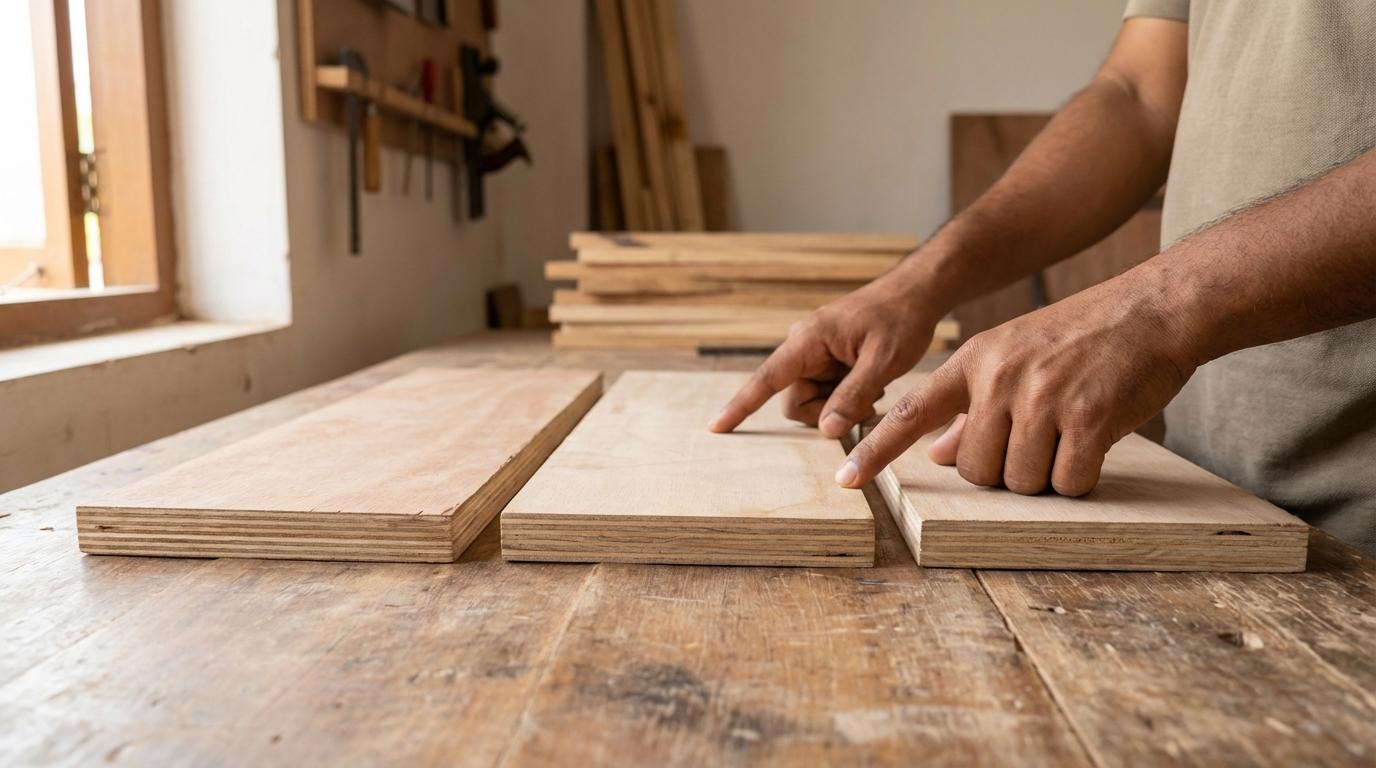
- Core inspection: Ask dealer to show a cross-section; no gaps or voids
- ISI marking: Look for IS 303 (MR grade) or IS 710 (BWR/BWP grade)
- Tap test: Solid sound indicates good bonding; hollow sound means voids
- Weight check: Heavier plywood generally indicates better core wood
- Surface veneer: Check for uniform grain, no patches or repairs
- Edge straightness: Sight along edges—should be perfectly straight
Frequently Asked Questions
Is MDF waterproof?
MDF easily absorbs water and warps. This particular characteristic makes MDF unsuitable for the outdoors and other moisture-laden areas such as kitchens or bathrooms. Standard MDF is NOT waterproof. Moisture-resistant MDF (MR-MDF) offers better performance but still shouldn't be exposed to direct water. For wet areas, always choose BWR or BWP plywood instead. Even sealed MDF edges can absorb moisture over time in highly humid Indian climates.
Which is better for modular kitchen: MDF or plywood?
For kitchens or bathrooms in India, go with MR or waterproof plywood. The ideal combination is BWR plywood for carcasses (the structural box) and pre-laminated MDF or acrylic-finished MDF for shutters. Kitchens deal with heat, steam, and spills—things MDF doesn't love. If someone's using MDF, it should be moisture-resistant and placed away from direct water exposure. For most kitchens, plywood simply offers more peace of mind.
How long does MDF furniture last compared to plywood?
In typical Indian conditions, MDF furniture lasts 5-10 years with proper care, while quality plywood furniture can last 15-25 years or more. For pieces that are decorative or don't take much load—like panels or light shelves—MDF works fine. But for beds, wardrobes, cabinets, or anything you'll use every day, plywood is usually the safer bet. It just feels more solid over time. The lifespan difference is more pronounced in humid regions.
What is the price difference between MDF and plywood in India?
MDF plywood prices in India typically range from ₹40 to ₹150 per square foot, depending on various factors. Standard MDF costs ₹25-45 per sq ft, while commercial plywood costs ₹40-60 per sq ft. Plywood prices from most manufacturers in India range from ₹40 to ₹120 per square foot, depending on the type (commercial, BWR, marine), thickness, and brand. MDF is generally 15-30% cheaper than equivalent plywood grades.
Can MDF be used in bathrooms?
Standard MDF should NEVER be used in bathrooms. Even moisture-resistant MDF is not recommended for bathroom furniture due to constant humidity and water splashes. Always use BWP (marine) grade plywood for bathroom vanities, cabinets, and shelving. If budget is a concern, WPC (Wood Plastic Composite) boards are a better alternative than MDF for bathroom applications.
Which holds screws better: MDF or plywood?
Plywood holds screws better and doesn't sag as easily. MDF's homogeneous composition means screws can pull out under stress, especially at edges. For hinges, drawer slides, and other hardware, plywood provides significantly better screw retention. If using MDF, always pre-drill holes and consider using specialized MDF screws with coarse threads.
Is MDF safe for children's furniture?
MDF contains formaldehyde-based resins, which raised health concerns historically. However, modern E0 and E1 grade MDF boards emit minimal formaldehyde and are considered safe for indoor use. For children's rooms, opt for low-emission MDF variants or choose plywood for maximum safety. Ensure proper ventilation during and after installation.
Why do carpenters prefer plywood over MDF?
Indian carpenters typically prefer plywood because they've worked with it for decades and trust its performance. Plywood delivers under pressure—literally. MDF brings finesse where form matters more than load. Plywood forgives minor errors, holds traditional joinery well, and repairs more easily. MDF requires different techniques, specialized hardware, and careful edge treatment that many traditional carpenters aren't trained for.
What is HDHMR and how is it different from MDF?
HDHMR (High Density High Moisture Resistant) is an upgraded version of MDF with greater density and better moisture resistance. While regular MDF has a density of 600-700 kg/m³, HDHMR typically exceeds 850 kg/m³. It performs better in humid conditions and offers improved screw-holding capacity. HDHMR costs 30-50% more than standard MDF but bridges the gap between MDF and plywood in terms of durability.
Can I paint plywood like MDF?
Yes, but plywood requires more preparation. Unlike MDF, raw plywood needs to be laminated or finished for aesthetics and protection. Plywood's wood grain shows through paint unless you apply wood filler and multiple primer coats. MDF's smooth surface takes paint directly with minimal preparation. For painted finishes, MDF delivers a superior factory-like result with less effort and cost.
Where can I buy quality MDF and plywood in India?
Quality MDF and plywood are available through authorized brand dealers, multi-brand distributors, local timber markets (plywood mandis), and increasingly through online platforms. Major brands include Century Ply, Greenply, Duroply, Action Tesa, and VIR MDF. Always buy from authorized dealers to ensure genuine products and valid warranties. Duroboil.com recommends getting quotes from at least 2-3 dealers before purchasing.
Note: This is independent editorial content. Duroboil.com is not affiliated with any plywood or MDF brand mentioned in this article. Prices mentioned are indicative and vary by region, dealer, and market conditions. Always verify current prices with local dealers before making purchase decisions.
Disclaimer: This content is provided for general informational purposes based on industry practices and publicly available information. Product specifications, standards, prices, and availability may vary by manufacturer, region, and time. Readers should independently verify details with manufacturers, dealers, or qualified professionals before making purchase or construction decisions.Want Plywood Suggestions?
Share a few details and a Duro BOIL specialist will suggest suitable brands and connect you to responsive dealers.