Veneer vs Laminate: Complete Comparison Guide for Indian Homes (2026)
Veneer vs Laminate detailed comparison with prices, durability & maintenance. Find which surface finish is best for your furniture, kitchen & wardrobe.
Quick Verdict: Veneer or Laminate – Which Should You Choose?
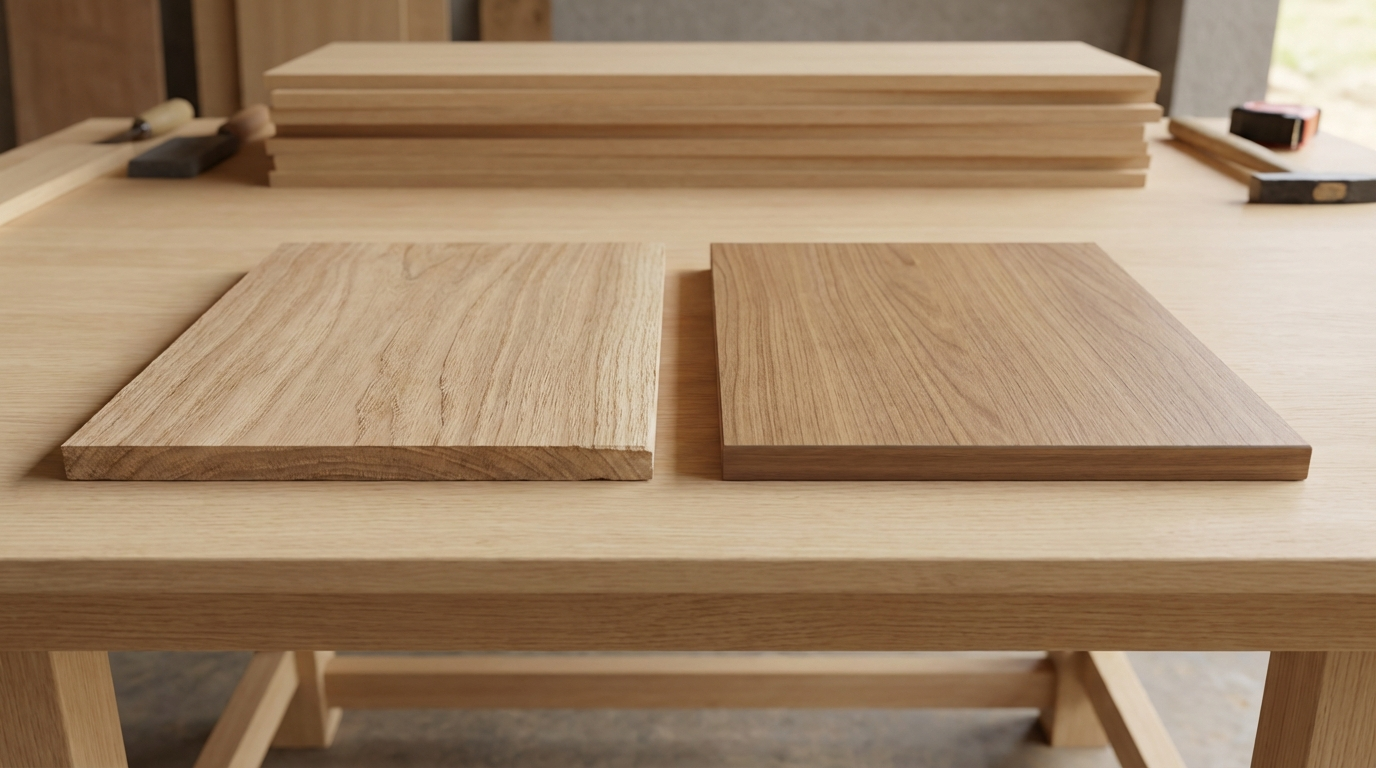
Veneer is the better choice if you want authenticity, luxury, and the natural beauty of real wood. However, if you want durability, affordability, and low-maintenance surfaces, laminate is a practical and versatile option.
Here's the bottom line for Indian homeowners in 2026: Laminate is more durable and resistant to moisture, making it a better choice for Indian homes, especially for kitchens, bathrooms, and high-traffic areas. However, for high-end homes looking for a luxurious finish, veneer is the ideal choice. They are warm, aesthetically soothing, and can actually pass off for real wood in the right light.
Choose Veneer if:
- You prioritize authentic wood aesthetics and are willing to invest in premium finishes
- The furniture is for low-traffic areas like living room showcase pieces or bedroom headboards
- You can commit to periodic polishing and maintenance
- Budget is not the primary constraint
Choose Laminate if:
- You're designing a high-traffic or functional space — such as a kitchen, wardrobe, or office cabin
- You need scratch, stain, and moisture resistance for daily use
- You're working within a tight budget
- You want minimal maintenance with easy cleaning
Either Works if:
- The furniture is in a climate-controlled space with low humidity
- You're combining both materials in a hybrid design approach
Complete Comparison Table: Veneer vs Laminate
| Factor | Veneer | Laminate | Winner |
|---|---|---|---|
| Composition | Thin slice of real wood (0.5-3mm) bonded to substrate | Synthetic layers of resin-soaked paper pressed together | Veneer (Natural) |
| Appearance | Authentic wood grain, unique patterns, rich depth | Printed design replicating wood, stone, or patterns | Veneer |
| Durability | Moderate, prone to scratches | High, scratch and stain resistant | Laminate |
| Moisture Resistance | Poor to moderate | Good to excellent (especially in HPL) | Laminate |
| Heat Resistance | Low (glue can loosen) | Moderate to good | Laminate |
| Price Range (per sq ft) | ₹85-380 (varies by wood species) | ₹30-200 (varies by type/brand) | Laminate (Budget) |
| Maintenance | Requires periodic polishing | Simple wipe cleaning | Laminate |
| Repair Options | Can be sanded and refinished | Must be replaced if damaged | Veneer |
| Uniqueness | Each sheet has distinct grain pattern | Mass-produced, uniform appearance | Veneer |
| Eco-Friendliness | More sustainable (real wood, renewable) | Synthetic, not easily recyclable | Veneer |
| Lifespan | 15-25+ years with proper care | 10-20 years typically | Veneer (with maintenance) |
| Best For | Premium furniture, living rooms, statement pieces | Kitchens, wardrobes, high-use furniture | Application-dependent |
What is Veneer?
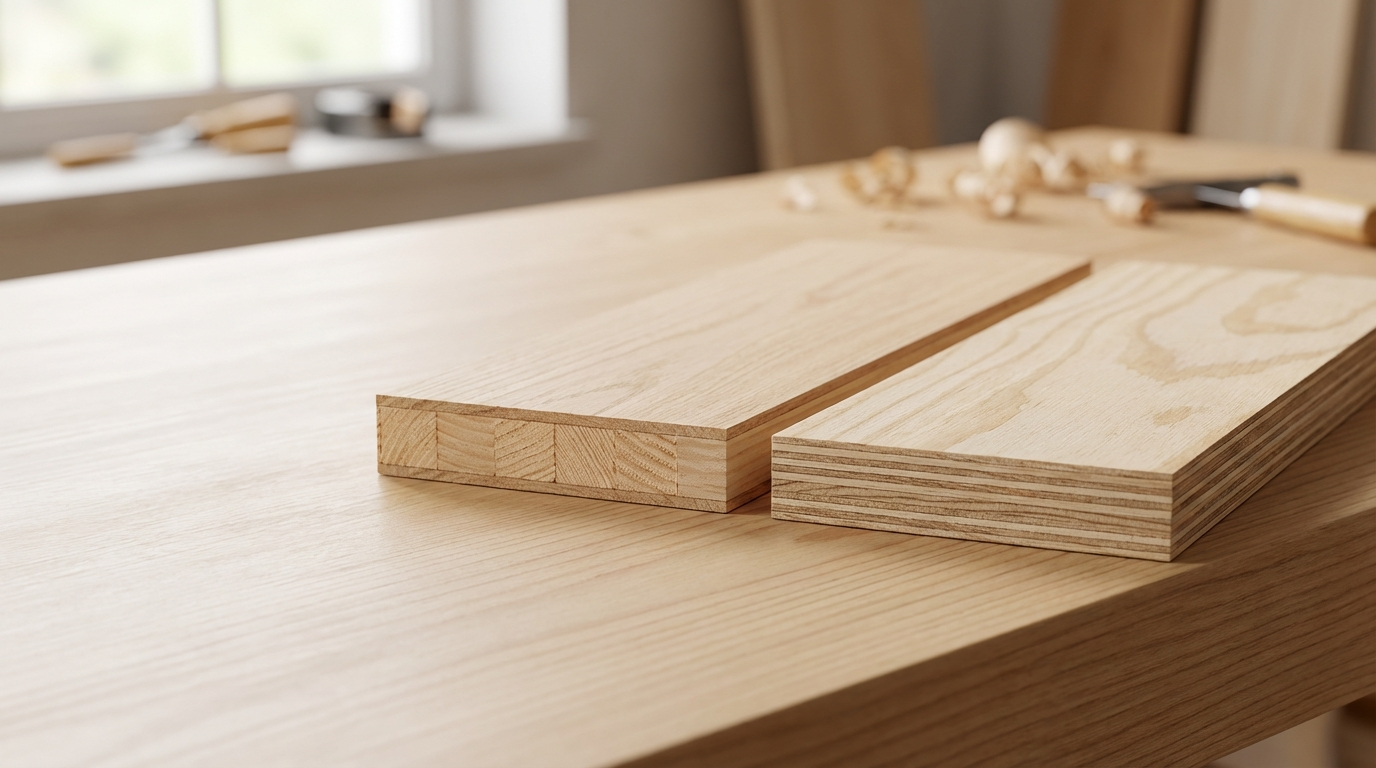
Veneer is a thin slice of real wood or sometimes stone that's bonded to a core material like MDF or plywood. The veneer thickness is generally less than 3mm and it varies according to the design functionality. This thin wood layer provides the authentic look and texture of natural hardwood at a fraction of the cost of solid wood furniture.
Decorative Wood Veneer is actually a thin sheet of real hardwood timber which is glued onto plywood surfaces for visual enhancement. No two sheets are the same, which is exactly why many people prefer veneer—it offers a rich, natural feel that's hard to replicate.
How is veneer made?
Veneer is produced by slicing thin layers from logs of premium wood species like teak, oak, walnut, cherry, and maple. The slicing method (rotary cut, quarter cut, or flat cut) affects the grain pattern. These thin slices are then bonded to a substrate—typically MDF or plywood—using adhesives. The final product can be polished and finished like solid wood.
Types of veneer available in India
- Natural Veneer: Sliced directly from wood logs, retaining authentic grain patterns
- Reconstituted (Recon) Veneer: Manufactured from fast-growing species, dyed and assembled to mimic exotic woods
- Engineered Veneer: Created by layering and pressing dyed wood for consistent patterns
- Pre-laminated Veneer: Veneer already bonded to plywood, ready for direct application
- Fleece-backed Veneer: Has fabric backing for flexibility and easier application on curved surfaces
What is Laminate?
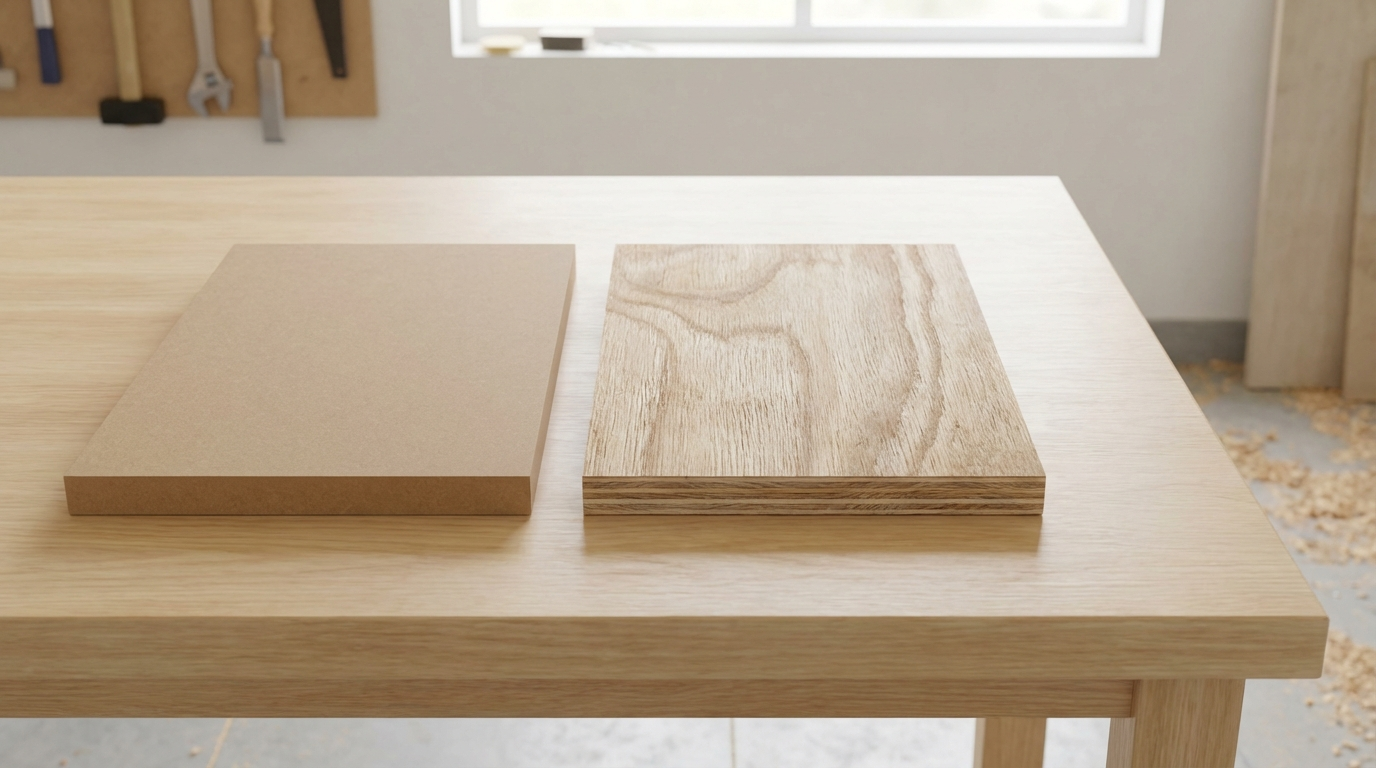
Laminate is a synthetic material made by layering paper or fabric soaked in resin and then bonding it to a substrate like MDF or particleboard. Laminate, also known as sun mica in India, is an artificial product made by pressing together man-made paper and plastic resin.
What makes laminate sheets interesting for the interior is their ability to replicate the look of hardwood, tile, stone, and glass seamlessly. It's so versatile that you'll have no hassles in finding patterns, laminate textures, and colors to match your taste and style.
How is laminate made?
Laminate is a composite material constructed using multiple layers bonded together. The commonly used layers are the wear layer, decorative layer, core layer, and backing layer. These layers are fused together under high pressure and temperature, creating a durable surface that resists scratches, stains, and daily wear.
Types of laminate available in India
- High-Pressure Laminate (HPL): HPL sheet price is ₹40-300 per sq ft for 6-8 mm thickness. Highly durable, used for commercial applications
- Low-Pressure Laminate (LPL): More economical, suitable for interior furniture
- Decorative Laminates: These types of laminates have greater aesthetic appeal in terms of finishes and patterns. You can use decorative laminates for doing ornamental overlays on furniture.
- Industrial Laminates: These types of laminates have higher strength and are more resistant to wear and tear. They include high-performance ones which are fire retardant, antibacterial and chemical resistant.
- Acrylic Laminates: High-gloss finish, commonly used for modular kitchens
- PVC Laminates: Flexible, suitable for wrapping around edges and curves
Detailed Comparison
Moisture and Water Resistance
Wood veneers should not be used in high humidity areas such as bathrooms as they can get damaged by moisture. If you spill water, clean it roughly, or place veneer in a humid room, it can swell or fade. This makes veneer unsuitable for Indian kitchens and bathrooms, especially in coastal and southern regions with year-round humidity.
Laminate is an artificial product and is more durable, scratch-stain resistant, and easy to maintain. It is finished with a clear protective coating making it waterproof and damage resistant in the long run. Sunmica sheets are perfect for bathrooms and kitchens because they are made to resist exposure to damp environments.
Winner: Laminate – Clearly better for moisture-prone areas in Indian homes, especially during monsoon season.
Strength and Durability
Veneers are usually not as durable as laminates. They might require maintenance and care since they can be more prone to scratches. It scratches easily. Rough use, kids playing, or even daily cleaning can leave marks.
Laminates are known for their durability and reliability. Since it looks like wood, and you stick it to a strong core material, it is typically durable and can resist scratches and stains. For families with children or high-usage furniture, laminate offers significantly better wear resistance.
Winner: Laminate – Better scratch resistance and overall durability for daily use.
Surface Quality and Finishing
Veneer is known for its natural beauty and offers a rich, authentic appearance with real wood grain patterns. It exudes a luxurious, high-end feel that's hard to replicate with synthetic materials. Each veneer has a wood grain pattern that is different from other veneers. It has a superior natural-wood-like appearance which can give a richer feel and look.
While laminate can replicate the look of wood, stone, or even metal, it's ultimately a printed design that doesn't offer the same depth or authenticity as veneer. Since laminates are mass-produced, they lack the uniqueness of the design and feel of wood, which wood veneer offers.
Winner: Veneer – Unmatched natural beauty and uniqueness that no synthetic material can replicate.
Working and Machining
Veneer requires skilled craftsmen for proper application. The bonding process needs precision, and any air bubbles or misalignment can ruin the finish. Veneer is more difficult to work with on curved surfaces unless using fleece-backed varieties.
Laminate is easier to handle and can be applied using standard contact adhesives. Flexible laminate versions are thinner than regular laminates. You can use them to wrap around tables, columns etc. This makes laminate more carpenter-friendly for standard furniture work.
Winner: Laminate – Easier to work with, more forgiving of minor application errors.
Cost Comparison
Laminate is generally more affordable than veneer, making it a budget-friendly choice for Indian homes.
| Material Type | Price Range (per sq ft) | Standard Sheet Size |
|---|---|---|
| Standard Laminate | ₹30-200 per sq ft | 8x4 feet |
| HPL (High Pressure Laminate) | ₹100-250 per sq ft | 8x4 feet |
| Acrylic Laminate | ₹150-350 per sq ft | 8x4 feet |
| Natural Veneer (Standard) | ₹85-200 per sq ft | 8x4 feet |
| Premium Veneer (Exotic Woods) | ₹200-400+ per sq ft | 8x4 feet / 10x4 feet |
Winner: Laminate – More budget-friendly options available, especially for large projects.
Application-Based Recommendations
According to duroboil.com's research across Indian homes and carpenter workflows, the choice between veneer and laminate often depends on where the furniture will be used. Here's a detailed application guide:
| Application | Better Option | Why | Caution |
|---|---|---|---|
| Kitchen Cabinets | Laminate | Laminates are the better choice for kitchen cabinets since they are durable. | Avoid veneer due to cooking steam and oil splashes |
| Wardrobes | Laminate | This material is the best choice for wardrobes and other frequently used furniture. | Consider veneer only for front panels in dry bedrooms |
| Bathroom Vanity | Laminate | Moisture resistance essential; HPL recommended | Never use veneer in bathrooms |
| Living Room TV Unit | Veneer | Statement piece, low usage, visible aesthetics | Keep away from AC direct airflow |
| Bedroom Headboard | Veneer | Veneers are well-suited for low-traffic areas, such as bedrooms, offices, and lounges. | Ensure room has good ventilation |
| Study Table | Laminate | Daily use, prone to scratches, pen marks | Choose scratch-resistant variants |
| Office Furniture | Laminate | High durability, easy maintenance | Consider veneer for executive cabins only |
| Dining Table Top | Veneer (with glass top) | Premium appearance for formal dining | Protect with glass; avoid water contact |
| Wall Paneling | Veneer or Laminate | Depends on budget and aesthetic goal | Use veneer for accent walls; laminate for full rooms |
| Modular Furniture | Laminate | Factory-finish compatibility, cost-effective | Pre-laminated boards work best |
India-Specific Considerations
When choosing between veneer and laminate for Indian homes, climate and regional factors play a crucial role. Duroboil.com recommends considering these India-specific factors:
Monsoon and Humidity Impact
Indian monsoons bring 3-4 months of high humidity, which can severely affect veneer finishes. Veneer can fade or warp with time; laminates hold up better in all seasons. Coastal cities like Mumbai, Chennai, and Kolkata experience year-round humidity above 70%, making laminate the safer choice for most furniture.
Regional Climate Variations
- North India (Delhi, Jaipur, Chandigarh): Extreme temperature variations from summer (45°C+) to winter can cause veneer to expand and contract, leading to warping. Laminate is more stable.
- South India (Chennai, Bangalore, Kerala): High humidity throughout the year means veneer needs extra protection. Laminate is generally preferred.
- Coastal Areas (Mumbai, Goa, Vizag): Salt air adds another corrosion factor. Laminate strongly recommended for all furniture.
- Hill Stations (Shimla, Ooty, Darjeeling): Lower humidity and cooler temperatures make veneer more viable here.
Termite Considerations
Each sheet is borer-proof and termite-resistant, offering long-lasting performance while maintaining the natural character of veneer wood – this applies to premium veneer products with proper treatment. However, standard veneer remains vulnerable to termite attack in India. Laminate, being synthetic, offers inherent termite resistance.
Local Market Terminology
Veneers and laminates (commonly called as Sun Mica in India) are the most common finishing materials for furniture made of MDF, particleboard, plywood or solid wood. When visiting local timber markets or "plywood mandis," use these terms:
- Sunmica / Mica = Laminate
- Veneer ply = Pre-laminated veneer board
- Decorative sheet = Could mean either
Common Myths Busted
Myth 1: "Veneer is as strong as solid wood"
Many people think veneer is as strong as solid wood, but it's not. And once damaged, it's not easy to fix. Veneer is only a thin wood layer (0.5-3mm) bonded to a substrate—its strength comes from the base material, not the veneer itself.
Myth 2: "Laminate looks cheap and artificial"
Modern high-quality laminates with textured finishes can closely mimic wood grain patterns. Premium decorative laminates from brands like Greenlam, Merino, and Century offer sophisticated designs that are difficult to distinguish from veneer at first glance.
Myth 3: "Veneer can be used anywhere"
Wood veneers should not be used in high humidity areas such as bathrooms as they can get damaged by moisture. They're best equipped for intensifying the beauty of your home décor in high visibility areas such as living rooms.
Myth 4: "Laminate cannot be repaired"
If laminates get damaged once, they can't be repaired and need to be replaced. This is true—but the same applies to severely damaged veneer. However, in case of superficial damage to veneer, such as scratches, it can be sanded and refinished like original wood.
Myth 5: "Veneer is always more expensive"
While premium exotic veneers are costly (₹200-400+ per sq ft), standard teak or oak veneers (₹85-150 per sq ft) can be comparable to high-end acrylic or HPL laminates. The cost difference narrows significantly for mid-range products.
Using Both Together
Can I combine laminates and veneers in the same project? Absolutely. Many customers design hybrid furniture—laminates for structure and veneers for outer beauty—to balance durability and luxury.
Smart Hybrid Approaches
- Kitchen: Laminate for cabinet interiors and shelves; veneer or acrylic laminate for visible shutter fronts
- Wardrobe: Laminate throughout interior; veneer only on the main door panels visible from the room
- TV Unit: Veneer on the visible front panel and top surface; laminate on sides and internal shelves
- Dining Set: Veneer table top (protected with glass); laminate chair backs for durability
Cost Optimization Strategy
As recommended by duroboil.com's material experts, use this approach:
- Identify high-visibility surfaces that guests will see
- Use veneer only on these "statement" surfaces
- Apply laminate on all functional and hidden surfaces
- This typically saves 30-40% compared to all-veneer furniture while maintaining premium appearance
Quality Verification: How to Check Before Buying
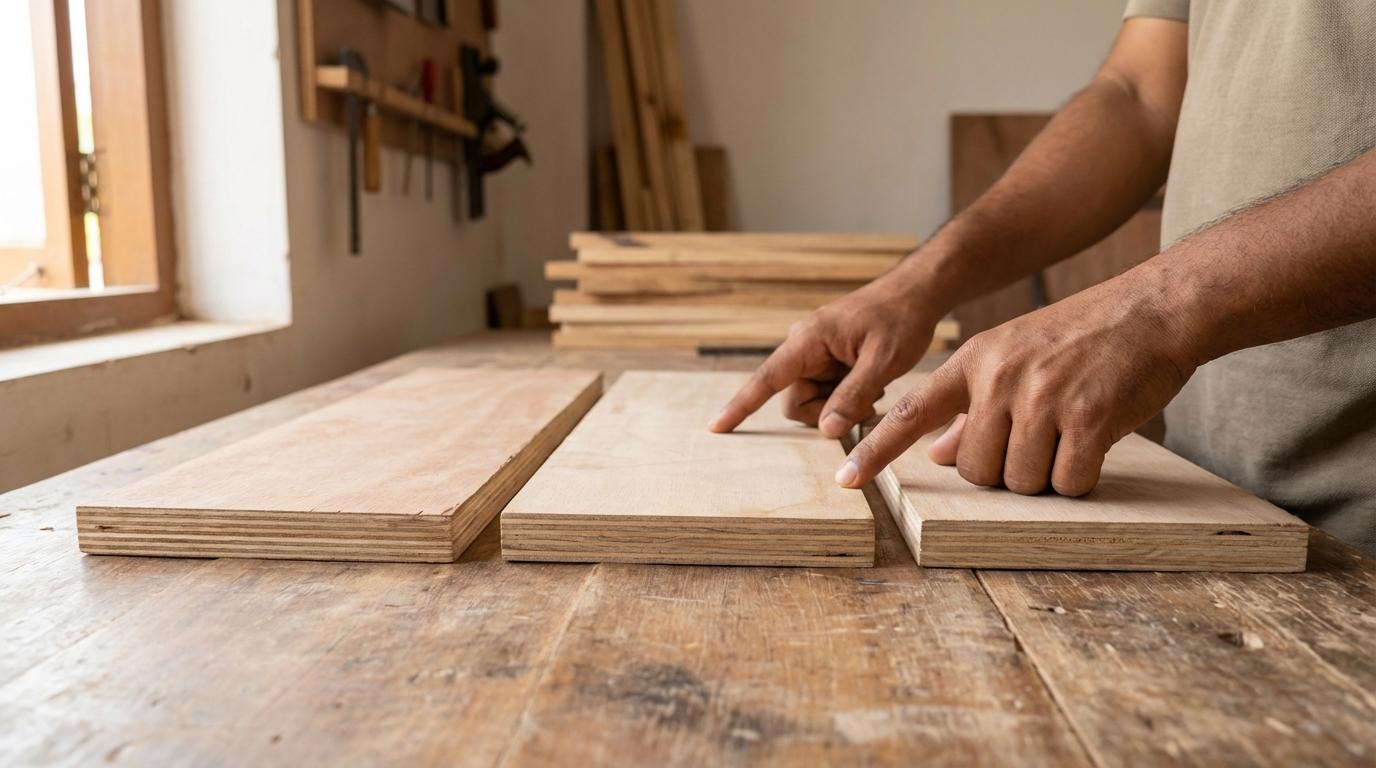
Checking Veneer Quality
- Visual Inspection: Look for consistent grain patterns without patches or repairs
- Thickness Check: Quality veneer is typically 0.5-3mm thick; thinner sheets are more prone to damage
- Edge Examination: Check for peeling or lifting at edges
- Surface Touch: Should feel smooth without rough spots or bumps
- Backing Material: Verify the substrate (plywood or MDF) meets your quality standards
- Brand Certification: Look for E0 certification, ensuring very low formaldehyde emissions for healthier interiors.
Checking Laminate Quality
- Thickness: Standard furniture laminates are 0.8-1mm; HPL is 3-12mm
- Surface Scratch Test: Gently scratch with fingernail—quality laminate shouldn't mark easily
- Print Quality: Check if the decorative pattern has consistent color and no print defects
- Edge Flexibility: Gently bend a sample—quality laminate should flex without cracking
- ISI Marking: Look for BIS certification on branded products
- Finish Consistency: Matte finishes should be uniformly matte; gloss should be uniformly shiny
Care and Maintenance Guide
Maintaining Veneer Furniture
- You can retain its original look by polishing it from time to time like any other wood article in the house.
- Clean with a dry microfiber cloth, and avoid moisture exposure to prevent warping.
- Keep your veneer furniture from being exposed to sun daily, as it can cause discolouration on the surface.
- Apply furniture wax or polish every 3-6 months
- Use coasters and placemats to prevent water rings and heat marks
- Address scratches immediately with matching wood touch-up markers
Maintaining Laminate Furniture
- Since laminates have a coating over them, they can be simply cleaned with a wipe cloth.
- Dust your laminated surfaces regularly. Clean with a mildly wet cloth and wipe dry with gentle strokes. Avoid using abrasive cleaners or steel wool scrubbers.
- Protect the surface from exposure to excess water and sunlight.
- Keep surfaces shielded from sharp objects and direct heat to prevent wear.
- For stubborn stains, use mild soap solution—never harsh chemicals
Frequently Asked Questions
Is veneer waterproof?
No, veneer is not waterproof. Wood veneers should not be used in high humidity areas such as bathrooms as they can get damaged by moisture. However, some premium veneers come with boiling water-resistant back ply that improves stability in moisture-prone areas, such as kitchens and bathrooms. For wet areas, laminate is the safer choice.
Can laminate look as good as veneer?
While laminate can replicate the look of wood, stone, or even metal, it's ultimately a printed design that doesn't offer the same depth or authenticity as veneer. However, modern high-quality decorative laminates with textured finishes come very close. From a distance of 3-4 feet, many guests cannot tell the difference between premium laminate and mid-range veneer.
Which is better for Indian kitchens: veneer or laminate?
Since they are durable, laminates are the better choice for kitchen cabinets. Indian kitchens with their heavy spice usage, steam from cooking, and oil splashes create harsh conditions that veneer cannot withstand. HPL or acrylic laminates are strongly recommended for kitchen shutters and countertops.
How long does veneer furniture last in India?
With proper care and maintenance, veneer furniture can last 15-25 years in India. However, this requires regular polishing (every 6 months), protection from humidity and direct sunlight, and avoiding water contact. In coastal areas or high-humidity regions, the lifespan may be reduced to 10-15 years.
Is laminate environmentally friendly?
Laminates are not environmentally friendly and are even suspected to be toxic for homes and nature due to the materials used in their composition. Plastic and resins are synthetic materials and are very harsh on the environment. Moreover, laminates are not a renewable product, can't be recycled or even reused once damaged. Wood veneers on the other hand are renewable and natural, making them an eco-friendly alternative.
What is the price difference between veneer and laminate?
Veneer finishes tend to be more expensive than laminate finishes because they use real wood. However, the cost can vary depending on the type of wood used and the complexity of the design. Generally, laminate costs ₹30-200 per sq ft while natural veneer ranges from ₹85-380+ per sq ft. For a standard 8x4 ft wardrobe, this can mean a difference of ₹3,000-15,000.
Can damaged veneer be repaired?
In case of any superficial damage, such as scratches, veneer can be sanded and refinished like original wood. This makes it more long-lasting since its original appearance can be revived after a single maintenance session. However, deep damage or peeling may require professional restoration or complete replacement of the affected panel.
Which is better for wardrobes: veneer or laminate?
For wardrobes, laminate is generally the better choice due to its durability, moisture resistance, and easy maintenance. For families with kids or people who don't have time for regular maintenance, wood veneer sheets may not be the best choice. However, if your wardrobe is in a climate-controlled bedroom and aesthetics are priority, veneer fronts with laminate interiors offer the best of both worlds.
How do I choose between HPL and regular laminate?
High-Pressure Laminate (HPL) sheets have become a go-to choice in India for stylish yet durable materials. From modern wardrobes and kitchen cabinets to exterior façades, HPL is valued for its performance and design versatility. Choose HPL (thicker, more durable) for kitchen cabinets, commercial furniture, and high-use areas. Regular decorative laminates (0.8-1mm) work fine for bedroom furniture, study tables, and lower-usage applications.
Can I apply veneer or laminate myself, or do I need a carpenter?
While laminate application is relatively straightforward with contact adhesive, both veneer and laminate are best applied by experienced carpenters for professional results. Veneer especially requires skilled handling to avoid bubbles, misalignment, and edge damage. You've to replace chipped or warped laminates on furniture completely by stripping them off, so proper initial application is crucial.
Note: This is independent editorial content. Duroboil.com is not affiliated with any brand mentioned in this article. Prices and specifications mentioned are indicative and may vary based on location, dealer, and current market conditions. Always verify details with authorized dealers before purchase.
Disclaimer: This content is provided for general informational purposes based on industry practices and publicly available information. Product specifications, standards, prices, and availability may vary by manufacturer, region, and time. Readers should independently verify details with manufacturers, dealers, or qualified professionals before making purchase or construction decisions.
Want Plywood Suggestions?
Share a few details and a Duro BOIL specialist will suggest suitable brands and connect you to responsive dealers.