MDF vs plywood for bed: what to pick (India)
MDF vs plywood for bed: what to pick (India) with a clear decision table on grade, thickness, moisture performance, warranty and price factors. Made for
Quick Decision Summary
Plywood is usually the safer pick for most Indian beds due to superior strength and moisture handling.
If you're in a hurry, opt for BWR-grade plywood (18-19mm thick) for bed frames and bases in humid or coastal areas—it's structurally reliable under weight and resists monsoon swelling better than MDF. MDF works for low-load headboards or drawers if fully sealed and in air-conditioned rooms, but it risks sagging or delaminating in typical Indian homes. Check core uniformity and edge strength on-site before buying.
- Choose plywood if: bed supports heavy use, high humidity, or direct floor contact without perfect sealing.
- Choose MDF if: budget-tight, painting/laminating finish needed, and low-moisture indoor spot like a kid's lightweight bed.
- Avoid MDF if: coastal/monsoon exposure or adult double bed—warping risk spikes.
Two-Minute Comparison That Actually Helps
| Factor | MDF | Plywood |
|---|---|---|
| Strength for bed load (adults/kids) | Moderate; good for light frames but flexes under 100kg+ | High; layered veneers handle 200kg+ without sagging |
| Moisture resistance (India humidity) | Low; swells/delaminates if wet | Better with BWR/BWP grades; holds up in monsoons |
| Surface finish | Smooth, ideal for laminate/paint | Requires veneer/sanding; textured faces common |
| Weight | Lighter, easier handling | Heavier, more stable |
| Cutting/edge work | Crumbs easily; needs sealing | Clean cuts; glue lines visible if low-grade |
Choose based on conditions: wet zones favor plywood, dry/AC rooms allow MDF with sealing.
Which is stronger for a bed frame: MDF or plywood?
Plywood edges out as stronger for bed frames because its cross-layered veneers distribute weight evenly, preventing sags under mattresses or people. MDF, being fiber-based, compresses over time especially on unsupported spans longer than 2 feet. In India, where beds often hold two adults plus storage drawers, plywood's rigidity cuts failure risk by handling dynamic loads better. Nuance: pair 18mm+ plywood with proper slat spacing (4-6 inches). Next step: tap-test samples—solid thud means good core density.
What MDF and Plywood Actually Are
MDF (Medium Density Fiberboard) is engineered from wood fibers glued under heat/pressure into uniform sheets—think compressed sawdust for flawless flatness. Plywood stacks thin wood veneers (3-13 layers) glued cross-grain for strength, available in grades like MR (interior dry), BWR (boiling water resistant), or BWP (marine-grade).
Where people get confused:
- MDF as "plywood alternative"—it's not layered, so no structural parallel strength.
- All plywood as "waterproof"—only BWP resists boiling; MR fails in humidity.
- Thickness alone decides strength—18mm MDF sags faster than 12mm quality plywood.
- MDF for load-bearing—fine for cabinets, risky for beds without framing.
- Plywood gaps mean cheap—uniform core matters more than face veneer.
Can MDF be used for making a bed in India?
Yes, MDF suits lightweight Indian beds like kids' or platform styles if sealed fully and kept dry, but it's not ideal for heavy adult frames due to lower screw-holding and sag risk. In humid climates, unsealed edges absorb moisture, leading to swelling. Conditions: use HDHMR variant for slight edge, limit spans to 3 feet max with metal supports. Practical step: ask supplier for pre-laminated sheets and test weight on sample by stacking 50kg bags—minimal flex is okay.
India-Specific Reality Check
Monsoon humidity (70-90%) and coastal salt air hit MDF harder, causing edge swelling within months if not edge-banded perfectly. Plywood's glue lines hold better, but low-grade cores warp from poor storage at depots. Workmanship realities: carpenters often cut without clamps, exposing weak MDF fibers; beds near bathrooms amplify risks. Storage tip: elevate stacks off godown floors to avoid ground moisture.
Does plywood warp less than MDF in humid Indian homes?
Plywood warps less than MDF in humid homes because cross-graining balances expansion, while MDF fibers swell uniformly but irreversibly. BWR plywood manages 80% RH swings typical in Mumbai/Delhi monsoons; MDF needs constant AC below 60% RH. Trade-off: plywood's weight adds transport hassle. Check: expose sample edges to damp cloth overnight—no visible swell means reliable. Next: specify calibrated plywood to minimize initial twist risks.
Price Range and Cost Drivers (India)
Typically, 18mm MDF runs ₹45-75 per sq ft, while equivalent plywood spans ₹65-110 per sq ft—varies by city (higher in metros), grade (BWR adds 20%), and finish (laminated boosts 15-25%). Cost drivers: core quality (poplar vs eucalyptus), calibration (flatness adds ₹5-10), thickness tolerance, face veneer grade, logistics from mill, and wastage (5-10% on curves). Coastal areas add 10% for moisture-proofing.
How to ask for a quote:
- Specify thickness/grade (e.g., "18mm BWR calibrated plywood").
- Mention sheets needed + delivery.
- Ask for core samples + edge test.
- Compare 3 suppliers for batch variation.
Mini budget for queen bed base (6x6 ft): 20 sqm material at ₹80 avg = ₹16,000 base, plus labor ₹5,000-8,000.
How to Choose in 5 Steps
- Assess load/use: Adult bed? Plywood. Kids/headboard? MDF okay.
- Check moisture zone: Bathroom-adjacent or coastal? BWR plywood minimum.
- Inspect samples: Weigh, tap for voids, flex-test spans.
- Match finish needs: Laminate/paint? MDF smoother base.
- Verify carpenter fit: Discuss screw zones, sealing plan—skip if rushed.
Skip steps and beds fail early: sagging by year 1 from ignored flex.
Is 18mm thickness enough for both materials in beds?
18mm works for both in short-span beds, but plywood shines at this thickness for unsupported edges while MDF needs framing beyond 2 feet. In India, thinner 12mm risks carpenter errors amplifying flex. Conditions: pair with 2x2 inch slats every 5 inches. Test: load sample with body weight—no deflection over 2mm. Step: always measure delivered thickness (tolerance ±0.5mm ideal).
Decision Framework: Pick the Right Material
| Condition | Recommended | What to Verify |
|---|---|---|
| High humidity/monsoon | Plywood (BWR) | Glue line count, no core gaps |
| Coastal/salt air | Plywood (BWP) | Face/back uniform color, edge hardness |
| Heavy use (adults/storage) | Plywood (18mm+) | Screw hold (3 screws no pull-out) |
| Tight budget/light kids bed | MDF (HDHMR) | Flatness with straightedge, no crumbling |
| High scratch risk (pets/kids) | MDF laminated | Pre-applied laminate adhesion |
| Fast delivery needed | Local MDF | Batch date (fresh stock) |
Trade-offs and Limitations
MDF: Super smooth for finishes but weakest in screws/moisture—limits bed designs to framed styles. Plywood: Tough and versatile but heavier, pricier, and needs skilled sanding for paint. Both hate direct water; neither is "lifetime" without upkeep. Limitation: curved bed headboards favor MDF flexibility, straight load-bearers suit plywood.
For Homeowners: Durability Do's and Don'ts
- Do: Wipe spills instantly, use bed linen barriers, ventilate room.
- Don't: Drag heavy items, expose to AC drips, overload edges.
- Monthly: Check for edge lifts, tighten screws seasonally.
For Carpenters: Working Tips
- Cut MDF with fine blade, seal edges same day.
- Plywood: Clamp before sawing, pre-drill screws 1 inch from edges.
- Hinge zones: Double screws on plywood, reinforce MDF with battens.
- Handling: Stack flat, cover from dust/rain.
What do architects specify for bed platforms in humid designs?
Architects often spec BWR plywood for bed platforms in humid designs, citing cross-grain stability over MDF's uniformity. Detail with 75mm edge returns, sealed joints, and ventilation gaps under base. Nuance: modular beds lean MDF for factory repeatability if CNC-cut. Next: include in drawings "calibrated to ±0.3mm" and "MR min 92% glue solids"—confirms quality without lab.
Common Buyer Mistakes and How to Avoid Them
- Mistake: Picking thinnest/cheapest—why: ignores load. Instead: min 18mm for adults.
- Mistake: No moisture grade check—why: MR fails fast. Instead: demand BWR label.
- Mistake: Skipping samples—why: batch defects hidden. Instead: borrow/test 1 sq ft.
- Mistake: DIY sealing on MDF—why: uneven carpenter work. Instead: pre-laminated only.
- Mistake: Overlooking slat spacing—why: sags anyway. Instead: 4-6 inch centers.
- Mistake: Buying from unverified depot—why: old stock warps. Instead: mill-direct or fresh batches.
- Mistake: Ignoring weight—why: install hassle. Instead: 2-person lift plan.
- Mistake: No edge banding spec—why: humidity entry. Instead: 2mm PVC min.
- Mistake: Assuming uniform strength—why: cores vary. Instead: tap entire sheet.
Failure Modes and Fixes
- Sagging center: Root: wide spans/low density. Prevent: slats +18mm. Fix: add center brace.
- Edge swelling: Root: moisture ingress. Prevent: seal all cuts. Fix: sand/refinish.
- Screw pull-out: Root: poor hold. Prevent: pre-drill plywood. Fix: wood plugs + re-screw.
- Delamination: Root: low glue. Prevent: BWR grade. Fix: clamp/epoxy if minor.
- Cracking paint: Root: MDF flex. Prevent: flexible primer. Fix: strip/repaint.
- Core voids popping: Root: cheap fill. Prevent: tap test. Fix: filler + sand.
- Uneven legs: Root: warp. Prevent: calibrated sheets. Fix: adjustable pads.
Quality Checks You Can Do Without Lab Tests
Before buying: Straightedge for flatness (no bow >2mm/8ft), tap for solid tone (voids ring hollow), scratch face gently (no fiber tear), weigh per sqm (heavier often denser).
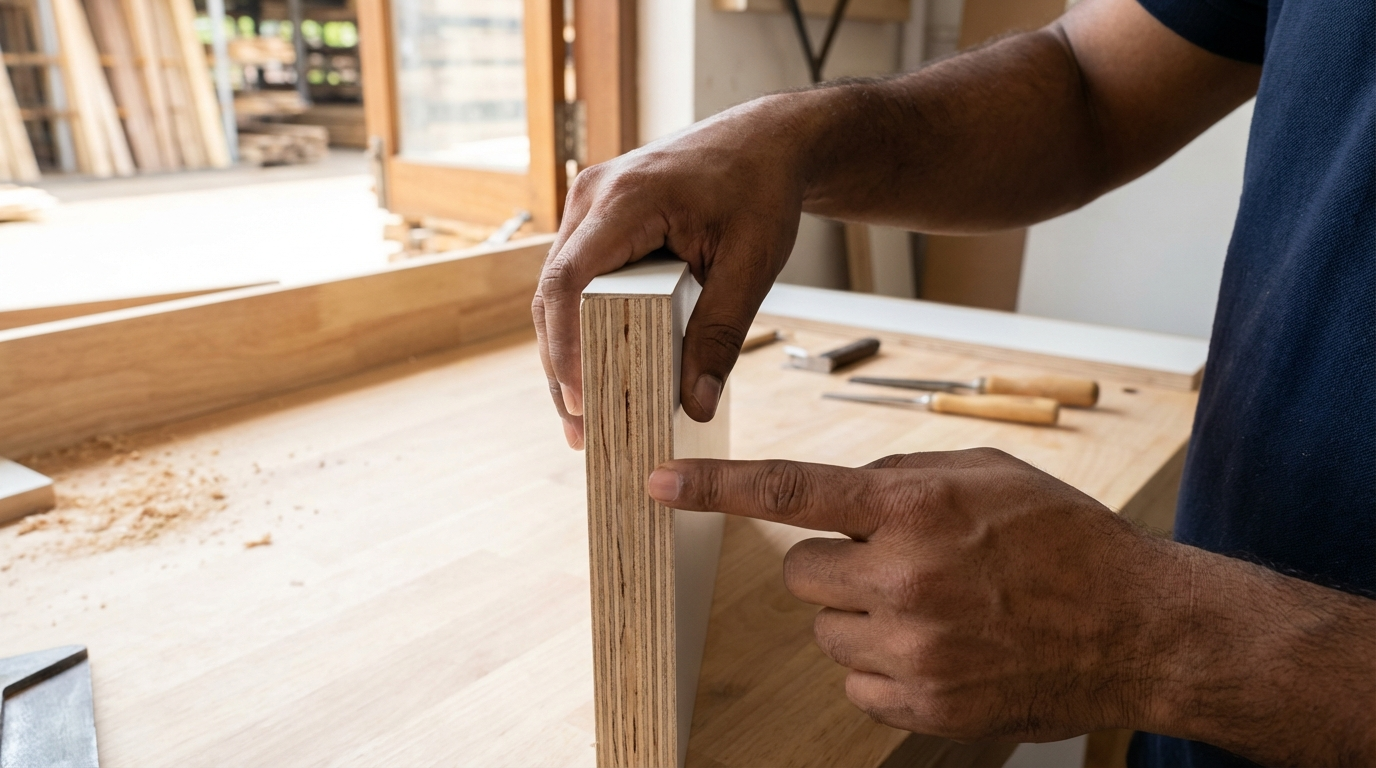
After cutting: Check glue lines even/spaced, edges don't crumble on 90-degree bend test.
After install: Load test with weights, check door/drawer alignment, sniff for off-odors (fresh glue okay, chemical bad).
Red flags: Yellowing cores, mismatched faces/backs, wet storage stacks.
How to tell good quality without certifications?
Good quality shows in flex resistance (minimal bend under palm pressure on 2ft span), uniform screw grip (holds 4kg pull), and no sandpaper residue on rubbing. Conditions: coastal needs harder edges (nail test no dent). Step: bring straightedge/mallet to depot—deflects or dull thuds mean pass. Avoid if supplier dodges samples.
FAQs
Should I use plywood or MDF for a storage bed?
Plywood fits storage beds best because drawers and lifts demand strong frames that resist racking under repeated pulls—MDF drawers sag or bind easily. In Indian modular setups, BWR plywood drawers with HDPE slides last longer amid dust/humidity. Trade-off: plywood cuts more waste on curves. Start by sketching load points and verifying carpenter's slide alignment plan for smooth operation.
Is MDF cheaper long-term for beds?
MDF starts cheaper but rarely wins long-term due to repair needs from swelling or screw failures, especially post-monsoon. Plywood's upfront cost pays via fewer fixes over 7-10 years. Varies by sealing quality and use. Quote both with labor; calculate total for 80 sq ft bed including 10% wastage.
Can I paint MDF beds without issues?
Yes, MDF paints smoothly after light sanding and primer, hiding minor imperfections better than plywood's grain. But in humid rooms, use moisture-barrier primer or bubbles form. Steps: two primer coats, 120-grit sand between, topcoat polyurethane for wipeability. Test small area first.
What thickness for double bed base?
18-19mm minimum for double beds to span typical 5-6ft widths without flex; plywood at this handles bolting better. Thinner risks under kids jumping. Confirm with supplier's span tables or load-test sample overnight. Factor room humidity—coastal ups to 21mm.
Does lamination solve MDF moisture problems?
Lamination helps by covering faces but leaves vulnerable cut edges that swell in spills. Full success needs edge banding + avoidance of floor moisture. Plywood still safer overall. Inspect laminate flex—no bubbles on bend test.
Which holds screws better for bed assembly?
Plywood holds screws 2x longer due to layered grip; MDF strips easily without plugs. Pre-drill both, use coated screws. For beds, plywood wins on leg/rail joints. Test: insert/remove 5 times—no looseness.
Is blockboard better than both for beds?
Blockboard offers middle-ground strength but cores vary wildly in India—often strip cores warp. Plywood more consistent. Use if budget pinch and dry room. Check core strips tight, no separations.
How to prevent bed frame creaking?
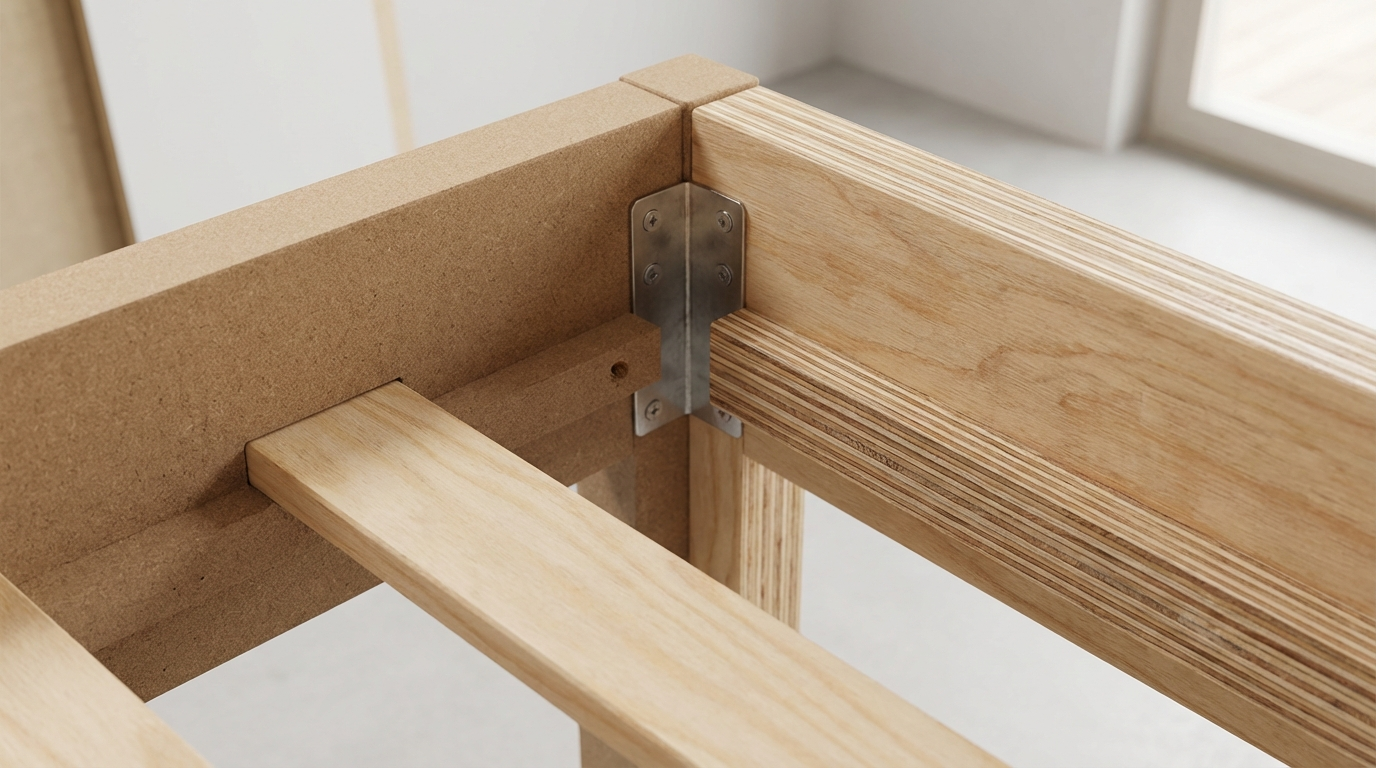
Creaking stems from loose joints or wood movement; prevent with glue + screws on plywood, liberal lubricant on MDF slides. Tighten quarterly, shim uneven floors. Design with metal brackets for zero-play.
What's best for kids' bunk beds?
Plywood (BWR 18mm) for bunks due to ladder/rail loads and safety—no MDF flex risks falls. Reinforce rungs, round edges. Home test: shake vigorously—no wobble. Disclaimer: This content is provided for general informational purposes based on industry practices and publicly available information. Product specifications, standards, prices, and availability may vary by manufacturer, region, and time. Readers should independently verify details with manufacturers, dealers, or qualified professionals before making purchase or construction decisions.
Want Plywood Suggestions?
Share a few details and a Duro BOIL specialist will suggest suitable brands and connect you to responsive dealers.