MDF vs plywood for false ceiling: what to pick (India)
MDF vs plywood for false ceiling: what to pick (India) with a clear decision table on grade, thickness, moisture performance, warranty and price factors. Made
Quick Decision Summary
Pick BWR grade plywood for most Indian false ceilings—handles monsoon humidity better than standard MDF.
If you're in a hurry: In India's variable climate, BWR plywood edges out MDF for false ceilings because it resists warping from humidity spikes during monsoons or coastal exposure. MDF shines in fully dry interiors with simple painted designs but swells easily if moisture creeps in from poor sealing or leaks. Expect plywood to last 10+ years with proper install; MDF suits tight budgets or decorative curves if you seal edges thoroughly and avoid kitchens/bathrooms nearby. Verify grade markings and core uniformity before buying.
- Choose plywood if: high humidity area, need screw-holding strength for lights/fans, long-term durability priority.
- Choose MDF if: dry room, budget under control, smooth paint finish or intricate cutouts needed.
- Avoid MDF if: coastal/monsoon zone or unsealed edges; avoid cheap MR plywood if boiling water test suspected.
What MDF and Plywood Actually Mean for False Ceilings
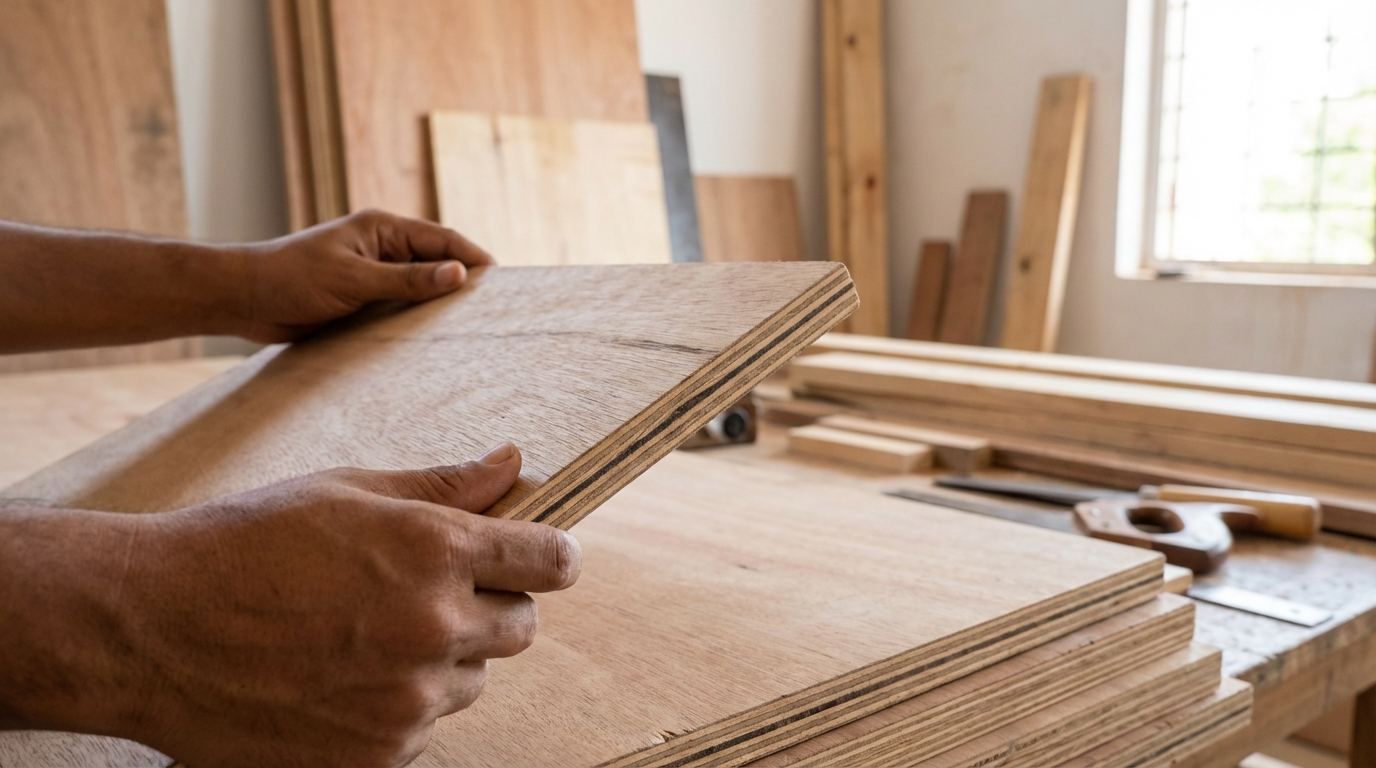
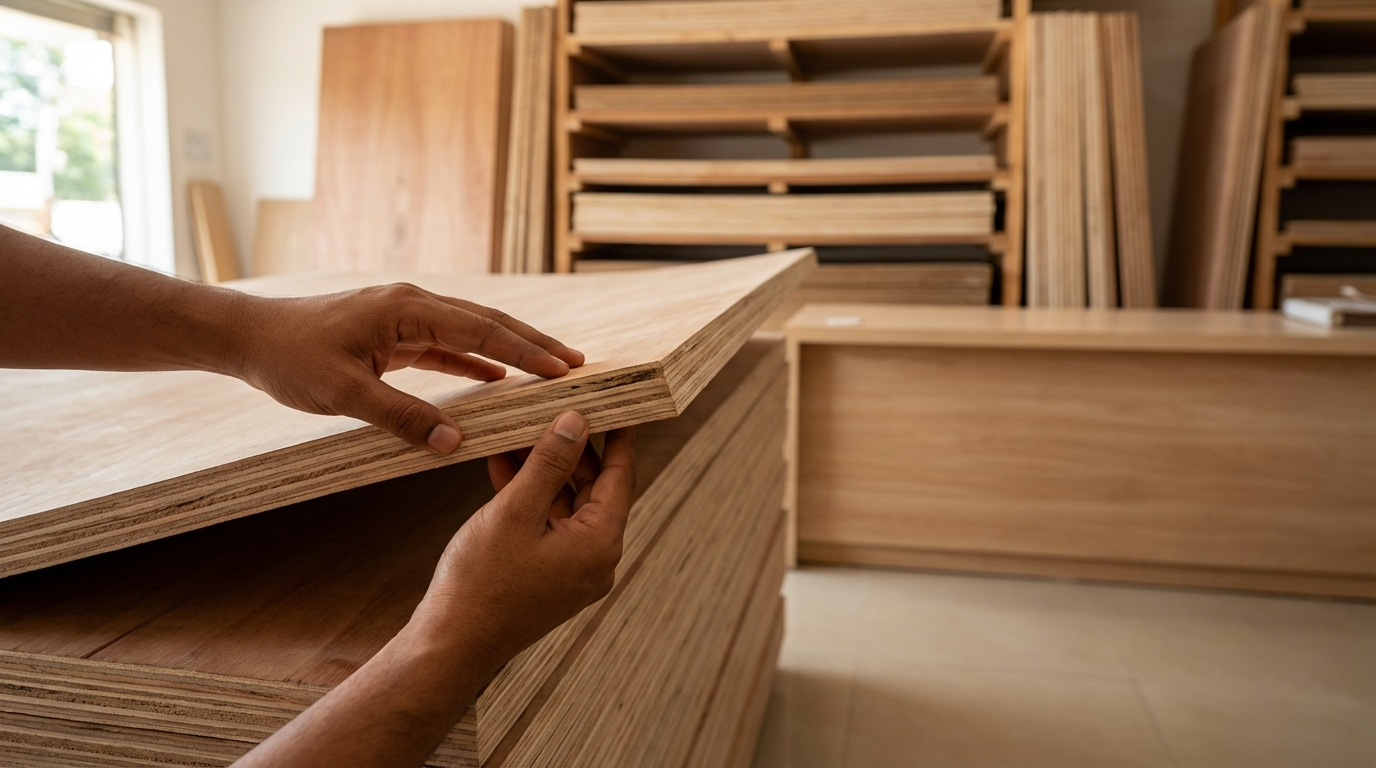
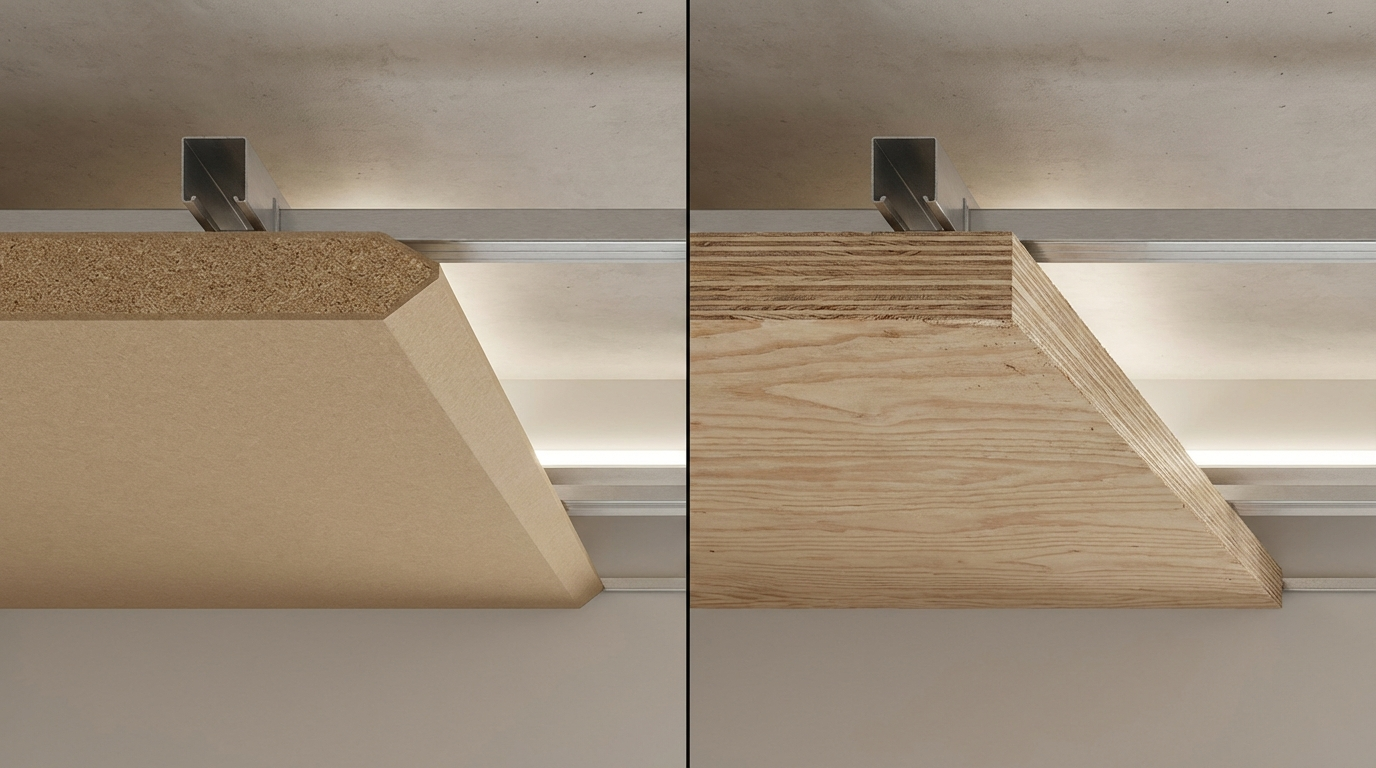
Plywood stacks thin wood veneers glued cross-grain for strength; BWR grade uses moisture-resistant glue for indoor dampness like humid Indian homes. For false ceilings, use 4-6mm thick calibrated sheets to keep weight low on metal frames.
MDF compresses wood fibers into uniform density boards; great for seamless paint jobs but standard types lack layered strength, relying on resin that softens in moisture.
Where People Get Confused
- Thinking all plywood warps like cheap MR—BWR holds up in 70-80% RH typical indoors.
- Assuming MDF is "maintenance-free"—unsealed edges drink humidity overnight.
- Mistaking weight: thin plywood feels similar to MDF but grips screws 2x better for fixtures.
- Believing thicker=better: 6mm suffices for ceilings; overkill adds dead load.
- Overlooking calibration: uneven thickness causes wavy installs on grid frames.
- Confusing HDHMR (moisture MDF variant) with standard—verify labels.
India-Specific Reality Check
Monsoons push indoor RH to 85%+; coastal areas like Mumbai/Chennai hit year-round dampness. False ceilings trap steam from cooking/AC drips, amplifying risks. Poor site storage warps sheets pre-install; contractor shortcuts skip edge sealing, leading to sagging after 1-2 years.
Workmanship varies: city carpenters rush MDF cuts without dust extraction, dulling tools; plywood needs sharp blades to avoid splintering veneers.
Two-Minute Comparison That Actually Helps
| Factor | MDF | Plywood (BWR Grade) |
|---|---|---|
| Moisture Handling | Swells if unsealed; dry areas only | Resists boiling water; monsoon-ready |
| Surface Finish | Ultra-smooth for paint | Needs laminate/veneer; textured |
| Strength for Fixtures | Weak screw hold; plugs needed | Direct screws for lights/fans |
| Weight (per sqm, 6mm) | Lighter | Slightly heavier |
| Cut Complexity | Dust-free curves/jalis | Straight cuts; splinters if dull blade |
| Typical Lifespan India | 5-8 years dry zones | 10-15 years humid |
Choose based on conditions: wet-zone or fan-heavy? Plywood. Pure decor in AC room? MDF.
Price Range and Cost Drivers (India)
Typically ₹40-₹80/sqft for 6mm MDF (plain); ₹60-₹120/sqft for BWR plywood. Varies by city (Mumbai 20% higher), thickness (4mm cheaper), finish (pre-lam adds 30%), and calibration (IS-marked uniform sheets cost more).
How to ask for a quote:
- Specify "6mm BWR calibrated for false ceiling, moisture grade."
- Add "edge-sealed samples; check core gaps."
- Mini budget: 100sqft bedroom ceiling—MDF ₹6,000-9,000 material; plywood ₹8,000-14,000 (excl labor ₹20-40/sqft).
How to Choose in 5 Steps
- Assess room: humidity >70% RH? Plywood. Dry/AC? MDF ok.
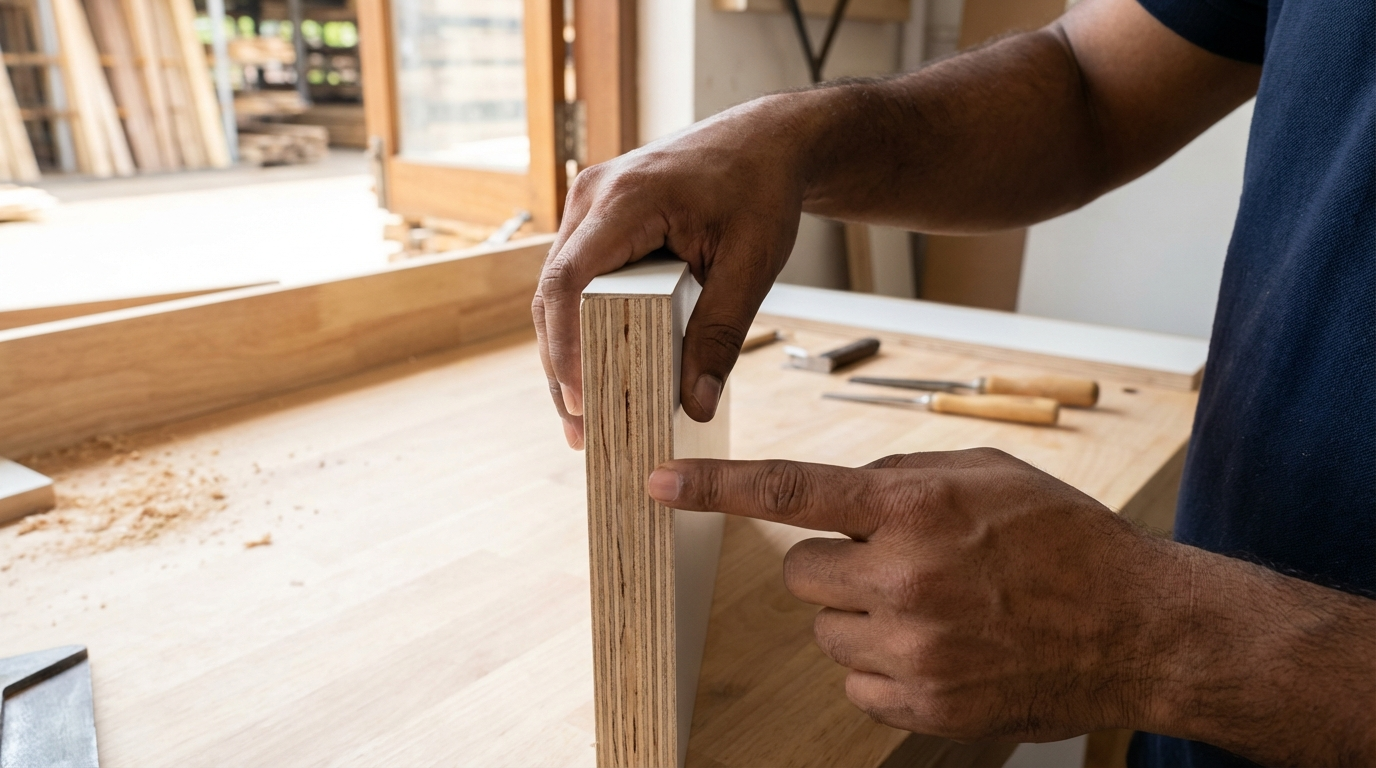
- Check thickness: 4-6mm; tap for solid sound, no hollow core.
- Verify grade: BWR stamp on plywood; avoid MR for ceilings.
- Test edge: no crumbling when nicked; seal all cuts.
- Match frame: gypsum grid suits both; heavy wood frames need plywood strength.
Skip steps? Sagging or peeling post-monsoon.
Can MDF handle Indian monsoons for false ceilings?
No, standard MDF absorbs humidity fast, causing swelling and paint cracks within months in monsoon-prone areas. Opt for BWR plywood or HDHMR variants if designs demand smoothness. Seal all edges with epoxy and ensure vapor barriers under AC ducts. Next: measure room RH with a cheap meter; over 75% means skip MDF. Install dehumidifiers in coastal homes for hybrid use.
Is plywood too heavy for false ceilings?
4-6mm BWR plywood adds minimal load on standard metal grids designed for 5-10kg/sqm. Heavier than gypsum but screw-holds lights securely without plugs. Verify frame gauge (0.55mm+ steel). Next step: calculate total—100sqft at 6mm ~20kg; distribute evenly.
Tips for Homeowners: Durability Do's and Don'ts
- Do: Wipe spills instantly; use matt paints over laminates.
- Don't: Hang heavy fans direct on MDF; overload edges.
- Annual check: tap for delam, reseal cracks.
Tips for Carpenters: Handling and Prep
- Cut MDF dust-free with vacuum; plywood sharp 60-tooth blade.
- Edge-band immediately; pre-drill plywood for screws.
- Fasten 12" spacing; reinforce fan zones with battens.
Tips for Architects: Spec and Detailing
- Spec "BWR IS 303 calibrated 6mm"; detail vapor seal layers.
- Wet-zone: plywood + membrane; dry: MDF ok for curves.
- QC: core glue line count, thickness tolerance ±0.2mm.
Decision Framework Table
| Condition | Pick | Verify |
|---|---|---|
| High humidity/monsoon | BWR Plywood | Glue line strength; no core gaps |
| Coastal exposure | BWR Plywood | Face veneer uniformity |
| Heavy use (fans/lights) | Plywood | Screw pull-out test sample |
| Tight budget | MDF | Density >700kg/m3 stamp |
| High scratch risk | Lam MDF/Plywood | Finish abrasion rating |
| Fast delivery | Stock MDF | Batch consistency |
| Intricate designs | MDF | Cut sample no splinter |
Trade-offs and Limitations
Plywood: Higher cost, rougher surface needs extra finishing; heavier lift. MDF: Moisture vulnerability limits use; weaker for loads, needs plugs. Both sag if frame spacing >1m; neither fire-rated without treatment.
Common Buyer Mistakes and How to Avoid Them
- Mistake: Picking MR plywood for humid rooms. Why: Fails in steam. Fix: Demand BWR label.
- Mistake: Ignoring calibration. Why: Wavy ceiling. Fix: Measure 5 spots per sheet.
- Mistake: Skipping edge sealing. Why: Humidity entry. Fix: Epoxy all cuts Day 1.
- Mistake: Cheap MDF in kitchens. Why: Swells from vapor. Fix: RH test room first.
- Mistake: Overloading fixtures. Why: Crash. Fix: Battens under fans.
- Mistake: Dull blade cuts. Why: Splinters/chips. Fix: New blade per 10 sheets.
- Mistake: No vapor barrier. Why: Condensation rot. Fix: Poly sheet above.
- Mistake: Bulk buy without samples. Why: Batch variance. Fix: Test 1 sheet first.
- Mistake: Paint direct on plywood. Why: Peels. Fix: Primer + laminate.
Failure Modes and Fixes
- Symptom: Bulging center. Cause: Moisture swell. Prevent: BWR + seal. Fix: Replace section.
- Symptom: Screw pull-out. Cause: Weak hold. Prevent: Plywood plugs. Fix: Reinforce batten.
- Symptom: Cracks at joints. Cause: Frame flex. Prevent: 450mm spacing. Fix: Filler + repaint.
- Symptom: Paint bubble. Cause: Unsealed edges. Prevent: Full band. Fix: Sand reseal.
- Symptom: Sagging corners. Cause: Thin sheet. Prevent: 6mm min. Fix: Add cross tees.
- Symptom: Delam layers. Cause: Poor glue. Prevent: Repute brand check. Fix: Full replace.
- Symptom: Dust fall. Cause: Cut residue. Prevent: Vacuum install. Fix: Wipe + seal.
Quality Checks You Can Do Without Lab Tests
Before buying: Tap edges—solid thud no rattle; flex sheet—minimal bend; nick face—no crumble. Ask supplier: "BWR grade? Core material? Calibration tolerance?" Red flags: Faded stamps, warped stacks.
After cutting: Check glue lines even, no voids; sand edges smooth. Post-install: Level check all quadrants; heat gun on seam—no soften.
Which thickness for false ceiling?
4-6mm balances weight/strength; 4mm for plain, 6mm fan zones. Thicker risks frame overload. Confirm grid load capacity first. Next: Sketch layout with fixture weights.
Is HDHMR better than both?
HDHMR combines MDF smoothness with moisture resistance, ideal humid decor ceilings. Costlier than plain MDF, similar plywood price. Verify "HMR" stamp + boil test sample. Great for painted jalis in monsoons.
FAQs
Is MDF good for false ceiling in India?
Standard MDF works in air-conditioned dry rooms but risks swelling in humid Indian conditions from monsoons or poor ventilation. BWR plywood offers superior stability for most homes. If using MDF, prioritize edge sealing, primer coats, and avoiding nearby wet areas. Homeowners report 3-5 year lifespan vs plywood's decade-plus. Always pair with robust metal frames and check for density markings above 700kg/m3 for better hold.
Which is cheaper for false ceilings?
MDF typically runs lower material cost per sqft due to simpler production, suiting budget projects under 100sqft. Factor total: plywood's durability cuts repaint/replace expenses long-term. City logistics add 10-20%; get quotes specifying grade/thickness. Labor similar unless intricate MDF cuts need extras.
Can plywood be painted directly for ceilings?
Yes, but prime first to seal pores and prevent peeling from humidity fluctuations. Sand lightly for grip; use acrylic emulsion. Laminates better for high-traffic views. Test sample patch for adhesion after 48hrs cure.
How to prevent warping in false ceilings?
Seal all edges/screws immediately post-cut; use BWR plywood in damp zones; maintain frame level <2mm variance. Avoid water leaks above. Annual inspect/tighten. Proper acclimation: store sheets 48hrs in install room.
Best grade plywood for false ceiling?
BWR for indoor humidity; avoids MR's boil weakness. Calibrated 6mm with uniform core. Check face/back veneers match, no knots. Suits 90% Indian homes; upgrade BWP only coastal extremes.
Does false ceiling need special screws?
Yes, self-tapping 1" wood screws for plywood; plastic plugs for MDF. Space 12" grid. Galvanized to resist rust in humid air. Torque snug, not over-tight.
Gypsum vs MDF/plywood for ceiling?
Gypsum cheapest/lightest for basic drop; MDF/plywood for wood-look paints/fixtures. Gypsum fire-resistant; wood stronger loads. Hybrid: gypsum base + wood trim.
How much weight can false ceiling hold?
Standard grid 5-8kg/sqm uniform; plywood boosts to 10kg with battens. Fans need independent rods. Distribute loads; consult frame specs.
Maintenance tips post-install?
Dust vacuum monthly; avoid direct water sprays. Repaint scuffs yearly. Monitor for flex—tighten loose joints. Humidity control prevents long-term sag.
Disclaimer: This content is provided for general informational purposes based on industry practices and publicly available information. Product specifications, standards, prices, and availability may vary by manufacturer, region, and time. Readers should independently verify details with manufacturers, dealers, or qualified professionals before making purchase or construction decisions.Want Plywood Suggestions?
Share a few details and a Duro BOIL specialist will suggest suitable brands and connect you to responsive dealers.