MDF vs plywood for kitchen: what to pick (India)
MDF vs plywood for kitchen: what to pick (India) with a clear decision table on grade, thickness, moisture performance, warranty and price factors. Made for
Quick Decision Summary
Pick BWR or BWP plywood over MDF for Indian kitchens due to superior moisture resistance in humid/monsoon conditions.
If you're in a hurry: In most Indian homes, especially coastal or monsoon-prone areas, BWR/BWP plywood outperforms MDF for kitchen cabinets and shelves because it handles steam, spills, and humidity without swelling or delaminating quickly. MDF works for dry interiors on a tight budget but risks early failure near sinks or stoves. Verify edge sealing and thickness (18mm+ for cabinets) regardless. Expect plywood to last 8-15 years with proper care, MDF 4-8 years in moderate use.
- Choose plywood if: Kitchen has cooking zones, high humidity, or heavy utensils—opt for BWR grade minimum.
- Choose MDF if: Fully dry pantry storage, low budget, or paint/laminate finish hides edges well.
- Avoid MDF if: Direct water exposure or coastal climate without extra sealing.
What MDF and Plywood Actually Mean for Kitchen Use
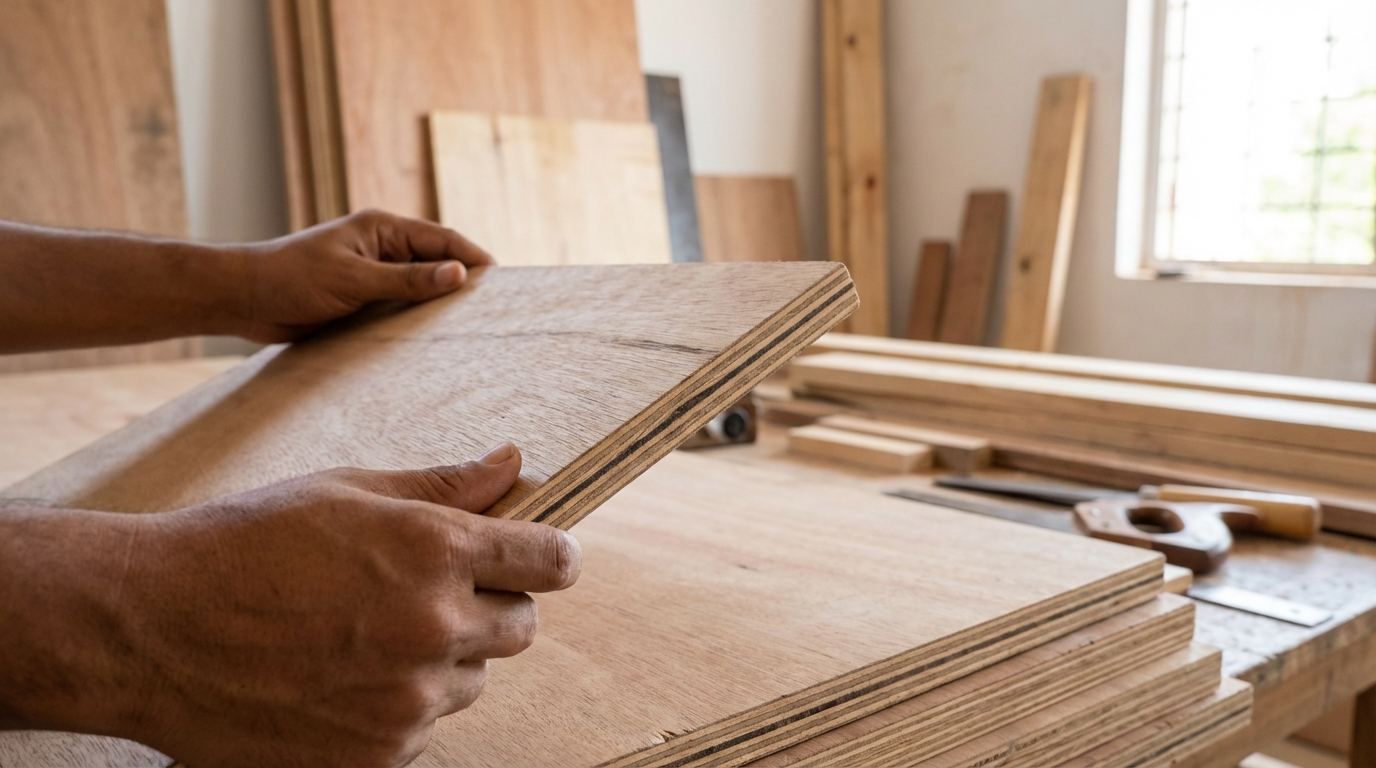
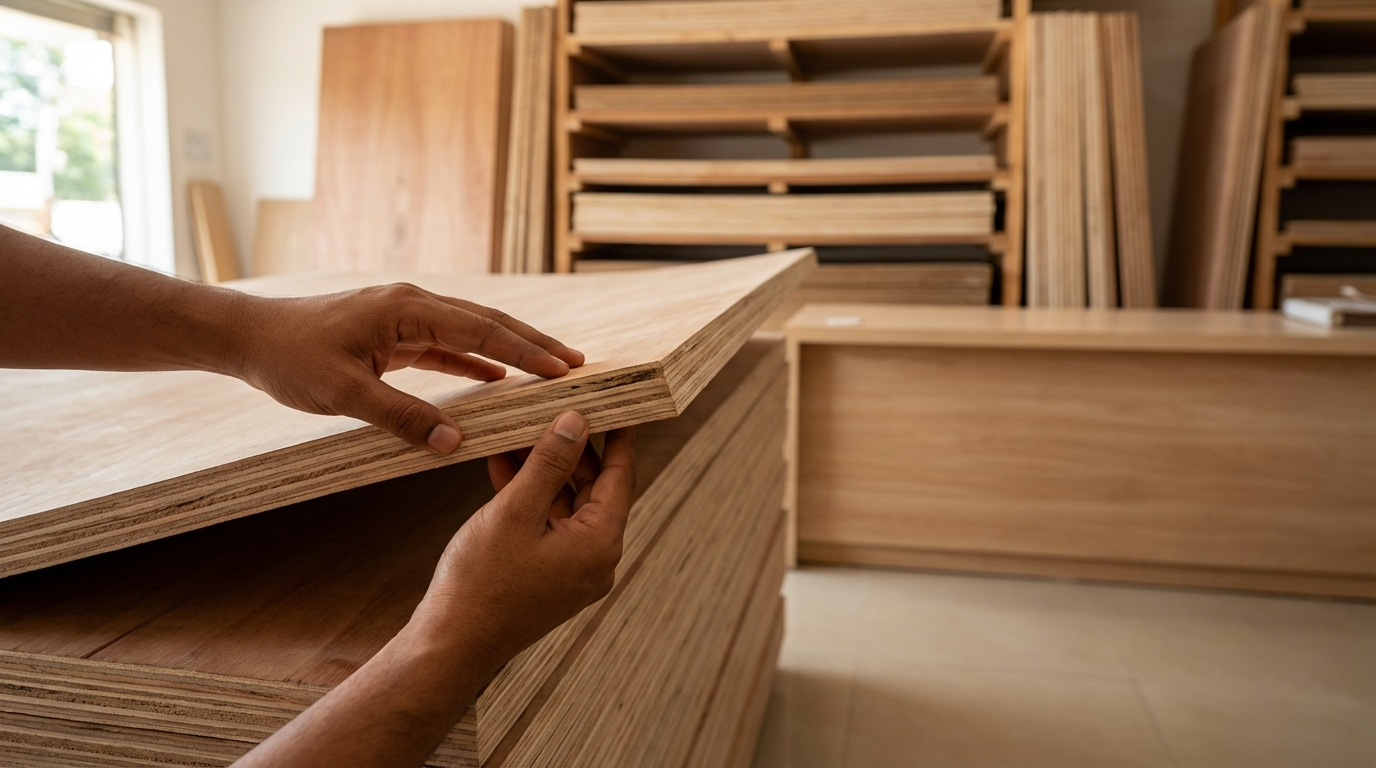
MDF (Medium Density Fiberboard) is engineered wood made from wood fibers glued under heat/pressure into dense sheets. It's smooth for laminates but absorbs moisture easily without waterproof glue. Plywood layers thin wood veneers crosswise with glue lines—MR for moisture-resistant interiors, BWR for boiling water-resistant kitchens, BWP/marine for extreme wet zones like coastal areas.
Where people get confused:
- MDF isn't "plywood"—it's fiber-based, no layers, prone to sagging under weight.
- All plywood isn't waterproof—MR fails fast in kitchens; BWR/BWP needed.
- Thickness alone doesn't guarantee strength—check core gaps in plywood, density in MDF.
- Laminate hides issues but doesn't fix moisture weakness.
- "Waterproof" claims often mislead—verify glue line count and face veneer quality.
Is MDF strong enough for kitchen cabinets?
MDF holds well for light loads like spices or plates if 18mm thick and laminated, but sags under heavy pots without framing support. In India, humidity softens it faster than plywood, leading to edge crumbling near sinks. Nuance: High-density HMR (High Moisture Resistant MDF) variants perform better but still lag BWR plywood in steam tests. Next step: Tap test for solidity—hollow sound means low density; demand 750kg/m³+ density spec from supplier.
India-Specific Reality Check
Monsoon humidity (70-90% RH) and coastal salt air swell MDF edges within months if unsealed, causing laminate bubbles. Kitchens see steam from tadka/chai, oil splashes, and ant attacks—MDF fibers wick water deeply. Plywood's cross-layers resist better but needs edge sealing during monsoon storage. Contractor shortcuts like thin glue or poor stacking amplify failures; coastal Kerala/Tamil Nadu homes demand BWP over BWR.
Can MDF handle Indian kitchen humidity?
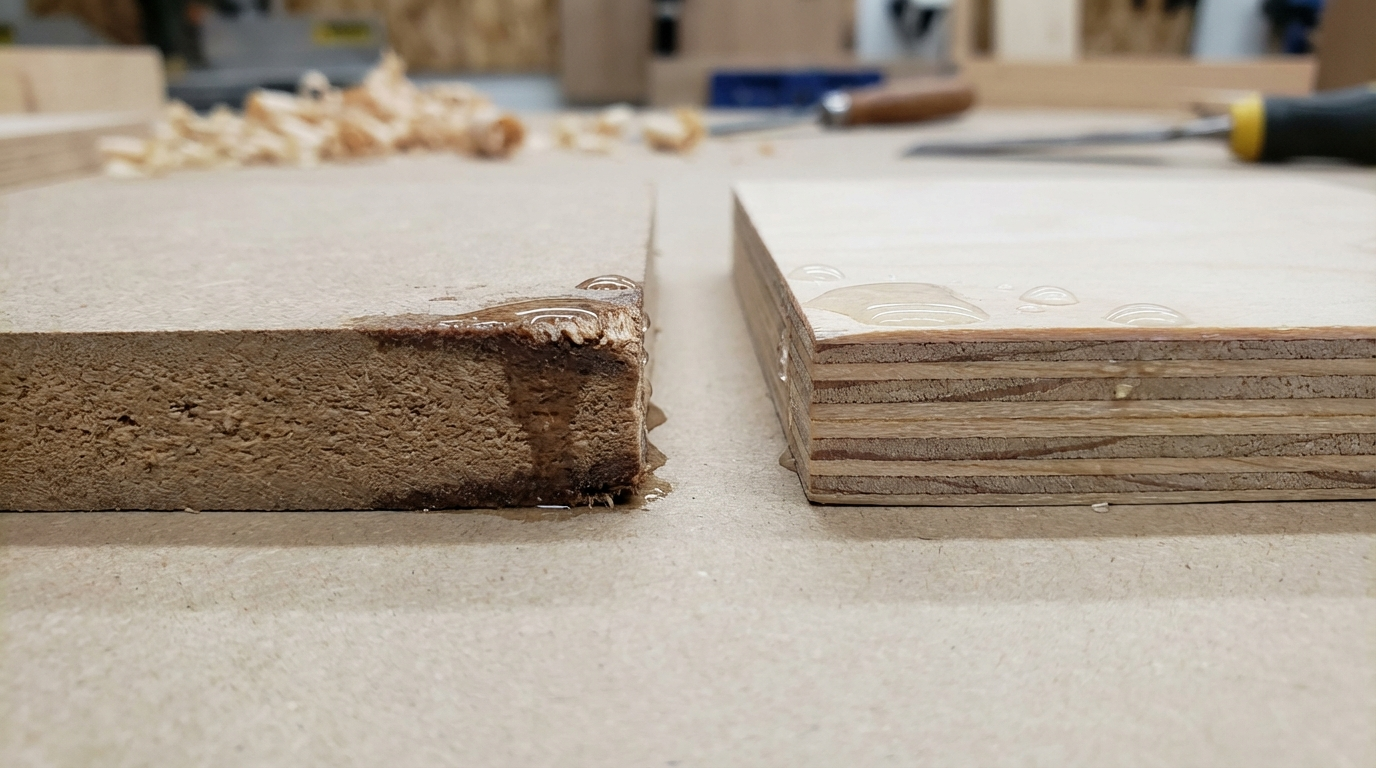
Standard MDF struggles above 65% RH, swelling 10-15% and delaminating laminate, but HMR grades limit it to 5-8% with added resins. Still, plywood's phenolic glue outperforms in prolonged exposure. Conditions: Fine for air-conditioned urban flats, risky in open verandas. Check: Rub edge with wet cloth—puckering means avoid; insist on site humidity test before install.
Two-Minute Comparison That Actually Helps
| Factor | MDF | Plywood (BWR/BWP) |
|---|---|---|
| Moisture Resistance | Fair (HMR better); swells in steam | Excellent; glue lines hold in boiling water |
| Strength for Cabinets | Good for light use; needs framing | Superior screw hold; load-bearing |
| Surface Finish | Perfectly smooth for laminate | Requires calibrated face; minor sanding |
| Weight | Lighter, easier handling | Heavier, stable under utensils |
| Cost per sq ft (18mm) | Typically ₹800-1400; uniform | ₹1200-2200; varies by grade/veneer |
| Edge Durability | Crumbles without sealing | Resists chips if taped |
Choose based on conditions: Wet/cooking zone = plywood; dry/low-cost = MDF. Verify calibration (<0.5mm variation) for both.
How to Choose in 5 Steps
- Assess exposure: Sink/stove proximity? Pick BWP plywood. Dry corner? MDF ok.
- Check thickness/grade: 18mm min for cabinets; BWR+ for plywood, HMR for MDF.
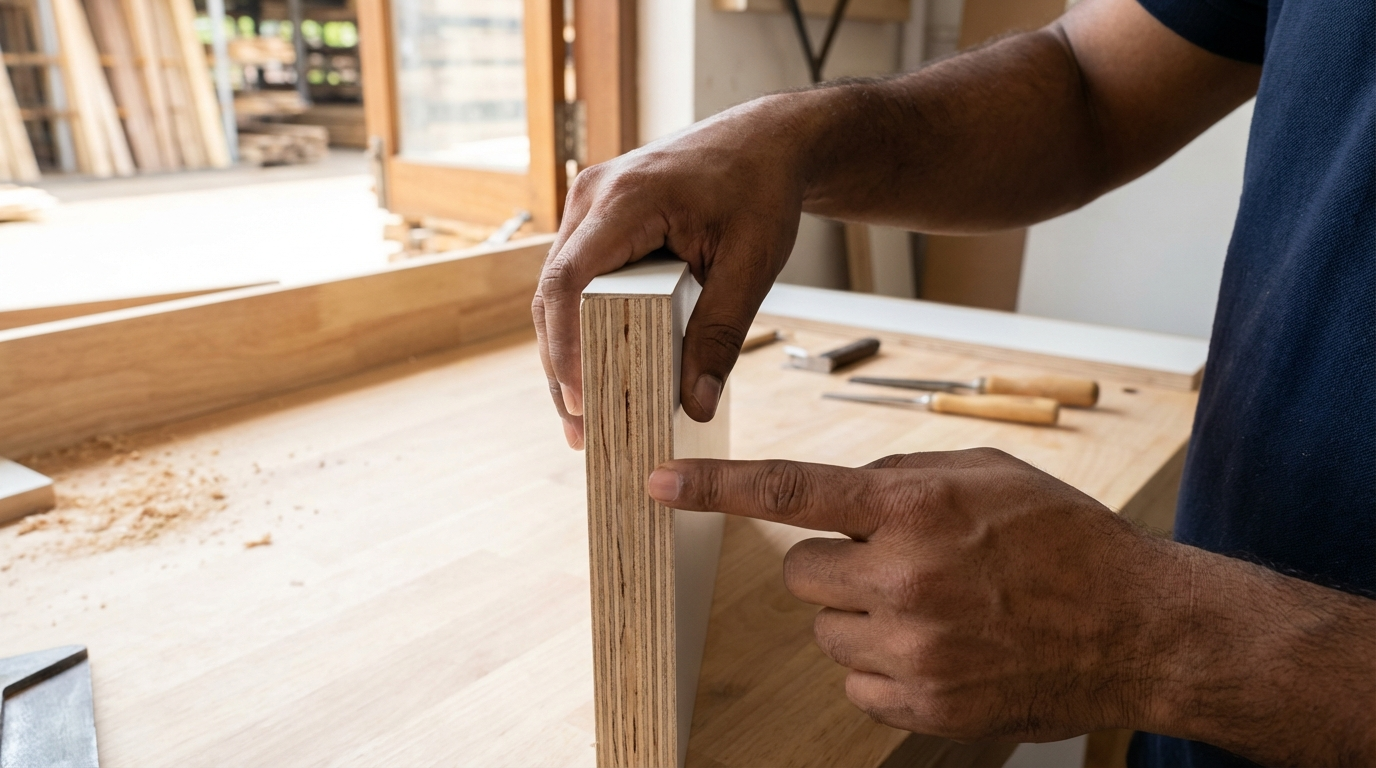
- Inspect visually: No core gaps (ply), uniform density (MDF).
- Test moisture: Wet edge 24hrs—minimal swell wins.
- Confirm sealing plan: Laminate + edge tape mandatory; skip risks failure.
Skipping step 1 leads to rework; coastal users double-check step 5.
Which is cheaper for full kitchen cabinets?
MDF typically costs 20-40% less per sheet due to uniform production, but plywood's longevity cuts long-term replacement. Drivers: Thickness (18-25mm adds 30%), laminate finish, city logistics (Mumbai higher than inland). Budget example: 20 sqm cabinets—₹25,000-40,000 MDF vs ₹35,000-55,000 plywood. Quote checklist: Include thickness, grade, edge banding, delivery. Varies by region—confirm locally.
Price Range and Cost Drivers (India)
For 18mm sheets: MDF ₹70-120/sqft, BWR plywood ₹100-180/sqft—higher for BWP or premium veneer. Drivers: Thickness (+20-50%), calibration/finish (+10-20%), city (metros +15-25%), logistics/wastage (5-10%). Modular kitchens favor MDF for speed; custom plywood for durability.
How to ask for quote:
- Specify grade (BWR/HMR), size (8x4ft), thickness.
- Add "calibrated, edge-sealed samples".
- Ask regional variance + monsoon storage guarantee.
Decision Framework Table
| Kitchen Condition | Recommended Pick | What to Verify |
|---|---|---|
| Wet zone (sink/stove) | BWP Plywood | Glue lines (8+), no core voids |
| Coastal humidity | BWR/BWP Plywood | Face veneer seal, 18mm+ |
| Heavy utensils | Plywood | Screw hold test, calibration |
| Tight budget | HMR MDF | Density 750kg/m³+, edge band |
| High scratch risk | Laminated Plywood | 0.8mm laminate thick |
| Fast delivery | MDF | Stock availability, uniform sheets |
Trade-offs and Limitations
MDF: Smooth finish but poor water resistance, heavy sagging without support, dust during cutting. Plywood: Higher cost/weight, needs skilled finishing, veneer mismatches possible. Both: Edge exposure kills longevity without sealing; plywood warps if stored flat in rain.
Does plywood warp more than MDF in kitchens?
Plywood warps less due to cross-layers if BWR grade, while MDF swells uniformly but irreversibly. Conditions: Poor storage causes plywood bow; steam hits MDF harder. Prevention: Acclimatize 48hrs, seal all cuts. If warping: Shim hinges, replace affected panel—carpenter fix under ₹2000.
Common Buyer Mistakes and How to Avoid Them
- Mistake 1: Picking MR plywood/MDF for wet zones. Why: Budget lure. Fix: Upgrade to BWR, test water bead-off.
- Mistake 2: Ignoring thickness. Why: Looks same stacked. Fix: Measure caliper on-site, 18mm min.
- Mistake 3: No edge sealing. Why: "Laminate covers it". Fix: Tape all exposed edges pre-install.
- Mistake 4: Cheap laminate on plywood. Why: Mismatch adhesion. Fix: Match 0.7mm+ thick to board grade.
- Mistake 5: Skipping acclimatization. Why: Rush install. Fix: 2-day room conditioning.
- Mistake 6: Overloading MDF shelves. Why: Underestimates weight. Fix: Add framing or switch plywood.
- Mistake 7: Monsoon buying without cover. Why: Open godown. Fix: Inspect for damp spots.
- Mistake 8: No screw hold test. Why: Trust sales talk. Fix: Try screwing sample—easy pullout = reject.
Failure Modes and Fixes
- Symptom: Swelling/bubbling. Cause: Moisture ingress. Prevent: Seal edges. Fix: Sand/refinish or replace panel.
- Symptom: Delamination. Cause: Weak glue. Prevent: BWR+. Fix: Clamp/reglue minor; full swap major.
- Symptom: Sagging shelves. Cause: Thin/low density. Prevent: 18mm+ framed. Fix: Reinforce underside.
- Symptom: Edge crumble. Cause: Unsealed cuts. Prevent: PVC tape. Fix: Re-band or cover.
- Symptom: Laminate peel. Cause: Moisture/poor adhesion. Prevent: Dry fit first. Fix: Heat gun + new sheet.
- Symptom: Screw pullout. Cause: Poor core. Prevent: Pilot holes. Fix: Larger screws/wedges.
Quality Checks You Can Do Without Lab Tests
Before buying: Weigh sample (heavier MDF = denser), flex test (minimal bend), water drop (no absorb 5min). Ask glue line count (ply: 9+), storage history.
After cutting: Even edges, no fuzz (MDF), tight layers (ply). Red flag: Gaps >1mm.
After install: Level cabinets, wipe-test edges daily first week, monitor humidity.
Which thickness for kitchen cabinets?
18mm standard for carcasses, 25mm for base/shelves—handles 20-30kg load. MDF needs extras for sag; plywood standalone. India tip: Thicker for ground-floor moisture rise. Verify: Stack weights on sample; demand supplier load chart.
Is HMR MDF good for modular kitchens?
HMR MDF suits modular if factory-sealed, resisting 70% RH better than standard. Limits: Still underperforms BWP near gas stoves. Next: Check supplier's humidity cycle test demo; add silica gel packs in cabinets.
Tips for Homeowners
- Durability do: Wipe spills instantly, ventilate post-cooking.
- Don't: Use abrasive cleaners, overload without checks.
- Annual: Inspect edges for softening.
Tips for Carpenters
- Cut with fine blade (MDF dust mask), pre-drill screws (1.5x dia).
- Edge prep: Seal before laminate; hinge zones reinforce.
- Handling: Stack vertical, cover in transit.
Tips for Architects
- Spec BWR 18mm for wet zones, detail edge returns.
- Draw sealing sections, note coastal upgrades.
- Finish: Matte laminate reduces fingerprints.
Tips for Modular Kitchen Makers
- QC: Caliper every sheet, batch humidity log.
- Repeatability: Standardize HMR panels with auto-seal.
- Reduce returns: Pre-wet test samples.
FAQs
Can I use MDF for kitchen shutters?
Yes, HMR MDF works for shutters if laminated and away from direct steam, offering smooth finish at lower weight/cost. However, in humid Indian kitchens, it risks edge swelling faster than plywood, especially with frequent wiping. Trade-off: Easier machining but needs robust hinges. Practical step: Choose 16-18mm, apply 1mm PVC edge band, and test by soaking cut sample overnight—no more than 2% swell is acceptable. Confirm carpenter seals post-install.
Which lasts longer in Indian kitchens?
BWP plywood typically outlasts MDF by 2-3x in wet conditions due to layered resistance, holding up 10+ years with care. MDF suits 5-7 years in dry setups but fails quicker from spills. Factors: Usage intensity, sealing quality. To extend: Use exhaust fans, avoid water pooling. Inspect yearly for early signs; budget for plywood if remodel in 5 years unwanted.
Is BWR plywood safe for kitchens?
BWR plywood suits most Indian kitchens, resisting boiling water and humidity without toxic off-gassing if urea-formaldehyde free (common now). Better than MR/MDF for cabinets. Caveat: Seal edges against spills. Check: Smell test (no strong chemical), supplier's emission compliance note. Ideal for middle-class homes balancing cost and durability.
How to seal MDF edges for kitchen?
Apply 2-3 coats epoxy/paint or PVC tape post-cutting, before laminate. This blocks moisture wicking in humid climates. Pro tip: Carpenter dips edges in sealant bath. Test: Wet and dry— no darkening. Maintenance: Reapply if chipped. Essential for longevity in monsoon zones.
What's better for wall cabinets?
Plywood edges out for wall cabinets due to better screw grip and less sag under dish loads. MDF viable if framed. India context: Upper cabinets see less steam but humidity rise—opt 18mm BWR. Verify: Hang test with weights; even deflection good.
Does laminate make MDF waterproof?
Laminate protects top surface but edges remain vulnerable—MDF absorbs sideways in spills. Not fully waterproof. Solution: Combine with edge banding + HMR grade. Reality check: Peels after 2-3 years if unsealed. Always seal cuts immediately.
Which for budget modular kitchen?
HMR MDF for base carcasses saves 25-30% vs plywood, enabling more drawers. Limits: Reinforce shelves. Quote with full sealing; compare total project cost including labor. Good for apartments under 10 lakhs.
Disclaimer: This content is provided for general informational purposes based on industry practices and publicly available information. Product specifications, standards, prices, and availability may vary by manufacturer, region, and time. Readers should independently verify details with manufacturers, dealers, or qualified professionals before making purchase or construction decisions.Want Plywood Suggestions?
Share a few details and a Duro BOIL specialist will suggest suitable brands and connect you to responsive dealers.