MDF vs plywood for laundry area: what to pick (India)
MDF vs plywood for laundry area: what to pick (India) with a clear decision table on grade, thickness, moisture performance, warranty and price factors. Made
Quick Decision Summary
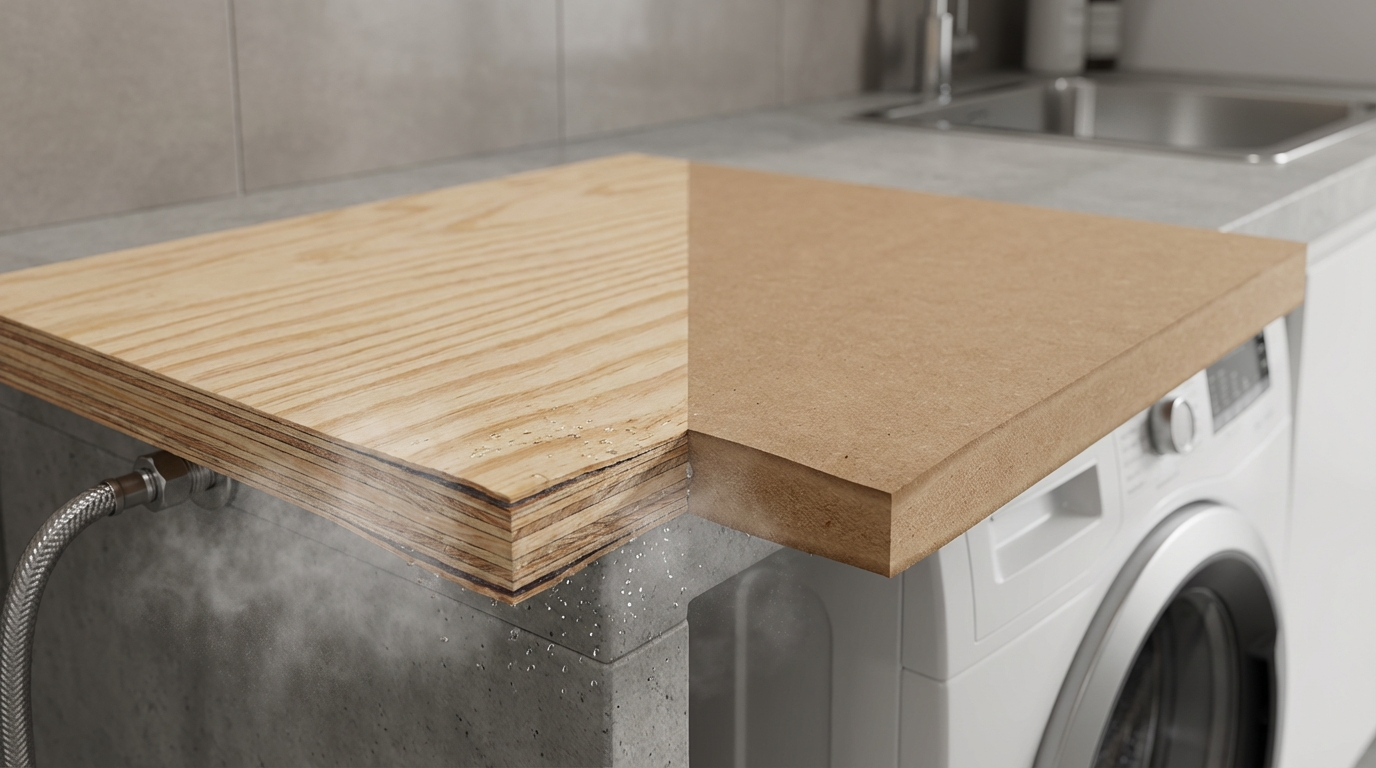
BWR-grade plywood typically outperforms MDF for laundry areas due to superior moisture handling and strength in humid Indian conditions.
If you're in a hurry: Opt for 18mm BWR plywood with sealed edges for laundry cabinets and shelves. It resists water splashes from washing machines, detergents, and monsoon humidity better than standard MDF, which often swells without heavy sealing. MDF suits dry zones or budget-tight modular setups if using moisture-resistant variants and extra waterproofing. Factor in thickness (18-19mm ideal), edge banding, and ventilation—expect plywood to last 8-12 years vs MDF's 4-7 in wet spots. Always verify glue lines and core quality on-site.
- Choose BWR plywood if: Frequent water exposure, coastal/monsoon areas, heavy loads like stacked washers, or long-term durability needed.
- Choose moisture-resistant MDF if: Tight budget, smooth paint finish priority, light use, or well-ventilated dry laundry.
- Avoid standard MDF if: Direct splashes, poor ventilation, or high humidity—risks delamination fast.
What MDF and Plywood Actually Mean
MDF, or Medium Density Fiberboard, is an engineered panel made by compressing wood fibers with resins under heat and pressure. It offers a smooth, uniform surface ideal for painting or laminating, but standard types absorb moisture easily, leading to swelling in damp spots.
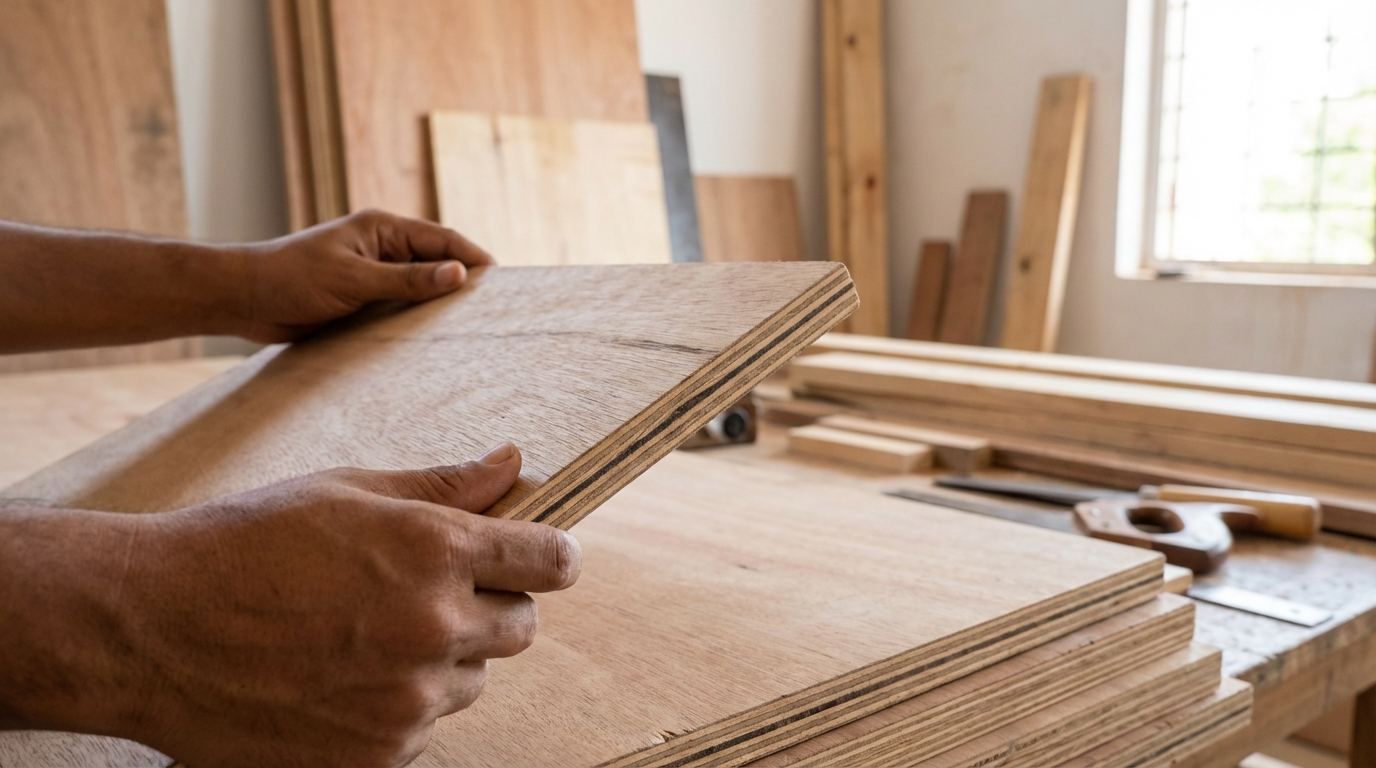
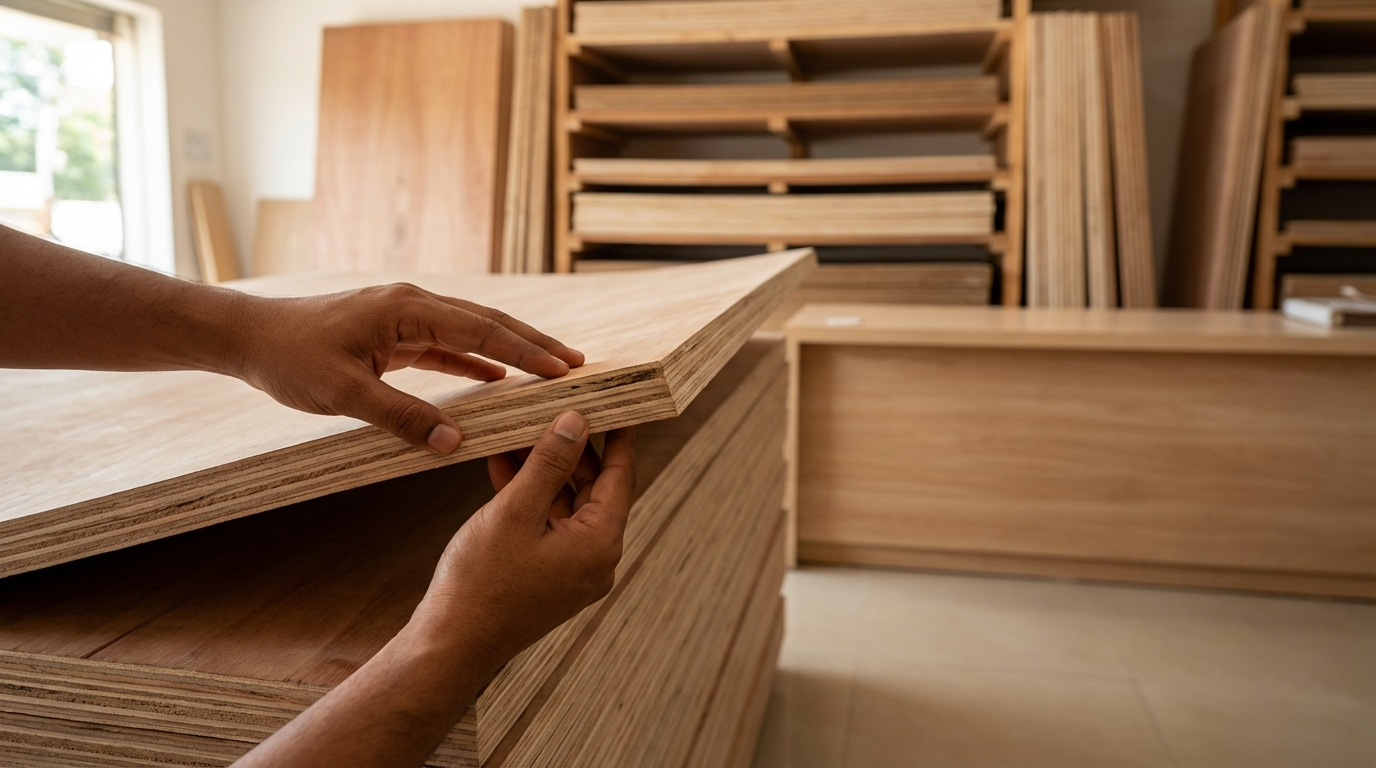
Plywood consists of thin wood veneers glued crosswise in layers, creating strength and stability. Grades like MR (moisture resistant), BWR (boiling water resistant), and BWP (boiling water proof) define moisture tolerance—key for wet zones.
Where people get confused: Many think all MDF is "waterproof" due to marketing; it's not without special resins. Plywood's "marine" tag implies boat use, but IS 710-grade BWP suits extreme humidity, not oceans. Thickness confuses too—18mm feels sturdy, but core gaps ruin it. Laminates hide poor quality underneath.
India-Specific Reality Check
Laundry areas in Indian homes face relentless humidity from monsoons, leaky pipes, washing machine overflows, and detergent spills. Coastal cities like Mumbai or Chennai amplify this with salt air corroding edges. Poor ventilation traps steam, while open storage invites dust and termites during off-seasons.
Workmanship adds risk: Carpenters often skip edge sealing, and stacked concrete laundry zones transfer dampness. Storage at dealers exposes boards to rain, causing pre-warping. Choose materials that forgive these realities—BWR plywood holds up better than MDF without perfect installs.
Why does laundry area moisture hit harder in India?
Monsoon rains (June-September) raise indoor humidity to 80-90%, combined with daily washing cycles and poor exhaust fans. Detergents' chemicals weaken unsealed surfaces faster than plain water. In apartments, shared walls trap moisture, swelling boards within months. Nuance: Coastal areas need BWP; inland suits BWR. Next step: Map your laundry—splash zones get plywood, dry shelves MDF. Install exhaust fans and silicone seal gaps for any choice.
Two-Minute Comparison That Actually Helps
| Factor | MDF (Standard/Moisture-Resistant) | Plywood (BWR/BWP) |
|---|---|---|
| Moisture Resistance | Fair (swells 10-20% in humidity; better with HD variants) | Excellent (holds in boiling tests; BWP for extremes) |
| Strength for Loads | Medium (good for light cabinets; sags under washers) | High (layered for heavy stacking) |
| Surface Finish | Smooth (easy laminate/paint) | Textured (needs sanding) |
| Weight | Lighter (easier handling) | Heavier (more stable) |
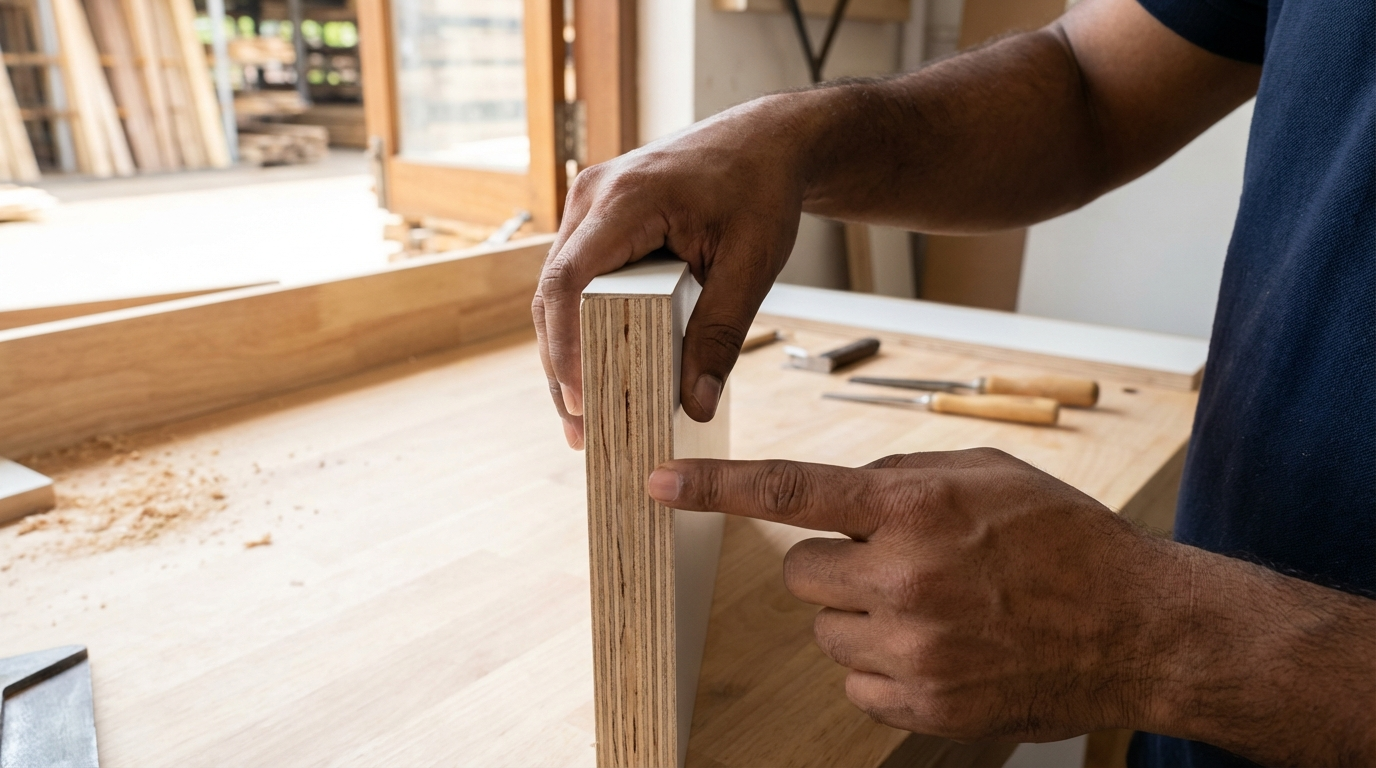
| Edge Durability | Crumbles without banding | Tougher naturally |
Choose based on conditions: Wet/heavy-use → plywood; smooth/budget → sealed MDF.
Price Range and Cost Drivers (India)
Expect 18mm moisture-resistant MDF at Rs 90-160 per sq ft, BWR plywood Rs 140-280 per sq ft—varies by city (higher in metros), thickness, brand calibration, and face quality. Add 20-30% for lamination/edge banding.
Cost drivers: Core material (poplar vs hardwood), glue line count, calibration flatness, transport from mill. Mumbai/Chennai quotes 15-25% above Lucknow/Delhi due to logistics. Mini example: 10 sq ft laundry cabinet—plywood setup Rs 2,500-4,500 total.
How to ask for a quote: Specify "18mm BWR calibrated, sealed edges, no core gaps, local delivery."
Which is cheaper for laundry cabinets: MDF or plywood?
MDF often costs 20-40% less upfront for similar thickness, making it tempting for budgets under Rs 10,000. However, plywood's longevity cuts replacement costs in humid setups. Nuance: Factor installation— MDF needs more sealing labor. Check locally for batch deals; negotiate on volume. Verify by weighing a sample (denser = better resins).
How to Choose in 5 Steps
- Assess exposure: Splash zones/heavy humidity → BWR plywood; dry/light → MR MDF.
- Pick thickness: 18-19mm minimum for washer support.
- Inspect core/edges: No gaps, uniform glue; tap for hollow sounds.
- Plan sealing/finish: Waterproof paint + edge bands essential.
- Test load/scratch: Simulate washer weight; check screw hold.
Skip steps? Expect swelling in 6 months from poor core choice.
Decision Framework: Pick by Your Laundry Conditions
| Condition | Recommended Choice | What to Verify |
|---|---|---|
| High splashes (sink/washer) | BWR Plywood | Glue lines, edge hardness |
| Coastal humidity | BWP Plywood | Core density, no delam |
| Heavy loads | Plywood 19mm | Screw hold test |
| Tight budget | MR MDF + sealing | Resin smell, flatness |
| High scratch risk | Laminated MDF | Surface uniformity |
| Fast delivery | Local MDF stock | Recent batch date |
Can MDF handle washing machine vibrations?
Moisture-resistant MDF works for light vibrations if 18mm+ and screw-fixed properly, but plywood's layered strength prevents sagging better under 50-80kg machines. Nuance: Add metal braces for either. In apartments, vibrations travel—use anti-vibe pads. Test by stacking weights; if flexes, upgrade. Seal joints with silicone.
Trade-offs and Limitations
MDF: Super smooth for finishes but edges friable, heavy moisture swelling without HD resins. Plywood: Stronger but rougher surface needs work, heavier to lift in tight laundries. Both vulnerable to termites if untreated; plywood cores gap if low-grade.
Common Buyer Mistakes and How to Avoid Them
- Mistake 1: Picking MR grade for splashes. Why: Short-term only. Fix: Demand BWR cert sticker.
- Mistake 2: Skipping edge banding on MDF. Why: Crumbles fast. Fix: Insist on PVC bands pre-applied.
- Mistake 3: Thin boards (12mm). Why: Sags immediately. Fix: Stick to 18mm+.
- Mistake 4: Ignoring storage. Why: Warps en route. Fix: Buy fresh stock, check date.
- Mistake 5: No ventilation plan. Why: Steam buildup. Fix: Add exhaust + gaps.
- Mistake 6: Cheap laminates. Why: Peels in humidity. Fix: Waterproof types only.
- Mistake 7: Overloading shelves. Why: Collapse risk. Fix: Space brackets 40cm.
- Mistake 8: Dry-sanding wet areas. Why: Dust clogs. Fix: Seal first, wet-clean.
- Mistake 9: Monsoon installs. Why: Acclimatize fails. Fix: Wait dry season.
Does plywood warp less than MDF in laundry?
Plywood's cross-layers resist warping better (under 5% vs MDF's 15% in humidity), especially calibrated grades. Nuance: Poor glue plywood warps too. Acclimatize both 72 hours indoors. Verify flatness with straight edge; reject bows over 2mm. For laundry, plywood + sealant wins.
Failure Modes and Fixes
- Symptom: Swelling edges. Cause: Moisture ingress. Prevent: Seal all cuts. Fix: Trim + reband.
- Symptom: Delamination layers. Cause: Weak glue. Prevent: Tap-test pre-buy. Fix: Discard panel.
- Symptom: Sagging shelves. Cause: Thin/poor core. Prevent: Load-test sample. Fix: Reinforce underneath.
- Symptom: Peeling laminate. Cause: Humidity lift. Prevent: Waterproof adhesive. Fix: Re-laminate or paint.
- Symptom: Screw pull-out. Cause: Soft core. Prevent: Pilot holes. Fix: Use wall plugs.
- Symptom: Termite tracks. Cause: Untreated wood. Prevent: Anti-termite dip. Fix: Professional treat.
- Symptom: Vibration cracks. Cause: No braces. Prevent: Metal supports. Fix: Shim + silicone.
Quality Checks You Can Do Without Lab Tests
Before buying: Tap for solid tone (no hollows), check veneer alignment, smell resins (fresh, not chemical burn), weigh for density.
After cutting: No core voids, glue oozes evenly, edges don't crumble when sanded.
After install: Level surfaces, tight hinges, no gaps at water zones; clean with mild soap only.
Red flags: Uneven thickness, sticker mismatches, wet storage stacks.
Which thickness for laundry plywood or MDF?
18-19mm balances strength and cost for cabinets/shelves holding washers. Thinner risks sag; thicker adds weight. Nuance: Plywood 18mm = MDF 19mm strength. Measure your loads—add 2mm for vibrations. Check caliper on-site; reject variance over 0.5mm.
Tips for Homeowners
Do: Seal edges yourself with varnish, use exhaust fans, avoid direct hose sprays. Don't: Stack wet clothes on shelves, use harsh cleaners, overload without braces. Clean spills immediately for 10+ year life.
For Carpenters and Contractors
Cut with fine blade to minimize dust; pre-drill screws 3mm; edge-band before assembly. Handle plywood flat to avoid bows; acclimatize MDF 48 hours. In monsoons, cover worksite.
For Architects and Designers
Spec "BWR 18mm calibrated, fully sealed" for wet zones; detail 5cm overhangs for drips. Pair with SS hardware; ventilate via louvers. Modular? MDF for repeatability, plywood for customs.
Is moisture-resistant MDF enough for Indian laundry?
It handles moderate humidity if sealed thickly, but falters in monsoons vs BWR plywood. Nuance: HDHMR variants improve odds. Verify by splash-test sample (no swell overnight). Next: Budget extra 15% for paints/sealants; install dehumidifier if apartment-bound.
FAQs
Can I use regular MDF in laundry?
Regular MDF absorbs water quickly, leading to swelling and mold in laundry's damp environment. Opt for moisture-resistant types with extra sealing, but even then, plywood edges it out for reliability. In ventilated spaces with no direct water, it might last 3-5 years. Always edge-band and paint waterproof; test a sample in steam first to confirm suitability for your setup.
What's better for laundry shelves: plywood or MDF?
Plywood (BWR) excels for shelves due to load-bearing layers resisting sag from detergents or linens. MDF suits lighter duties if banded. Consider washer proximity—plywood prevents vibration cracks. Verify by pressing center; no give means good. Seal plywood knots for finish.
How to waterproof MDF for laundry cabinets?
Apply 2-3 coats waterproof primer, edge-band PVC, then laminate or paint polyurethane. Silicone gaps at joints. This boosts resistance but doesn't match plywood. Dry 24 hours between coats; test with wet cloth overnight. In high-humidity homes, combine with exhaust.
Does BWR plywood work for coastal laundry areas?
BWR handles boiling tests well for coastal splashes, but BWP offers extra margin against salt air. Seal edges religiously. Expect 10-year service with proper install. Check core hardness; soft poplar fails faster. Acclimatize on-site.
Why choose plywood over MDF for washing machine platforms?
Plywood's rigidity absorbs vibrations without cracking, vital for 60-80kg machines. MDF flexes, loosening screws. Use 19mm BWR with braces. Test stability by jumping lightly. Reinforce corners for India’s uneven floors.
Common laundry cabinet problems in India?
Swelling from steam, termite entry via gaps, peeling from detergents. Poor ventilation worsens all. Prevent with BWR plywood, sealed edges, anti-termite treatment. Inspect quarterly; fix drips promptly to extend life beyond 5 years.
Budget breakdown for laundry using MDF vs plywood?
MDF setup cheaper by 25-35% initially, but plywood saves on repairs. For 8 sq ft: MDF Rs 1,000-1,800 material + labor; plywood Rs 1,500-3,000. Varies by city—add banding. Quote with "sealed, calibrated" specs.
How long does laundry plywood or MDF last?
Well-sealed BWR plywood: 8-15 years; MR MDF: 4-8 years in humidity. Depends on usage/sealing. Monsoon exposure halves it. Maintain by avoiding water pooling; reseal yearly for max life.
Best finish for laundry MDF or plywood?
Waterproof laminate or PU paint over primer. Avoid veneer—peels fast. MDF takes paint smoother; plywood needs filler. Test adhesion on scrap; choose matte to hide fingerprints in utility spaces. Disclaimer: This content is provided for general informational purposes based on industry practices and publicly available information. Product specifications, standards, prices, and availability may vary by manufacturer, region, and time. Readers should independently verify details with manufacturers, dealers, or qualified professionals before making purchase or construction decisions.
Want Plywood Suggestions?
Share a few details and a Duro BOIL specialist will suggest suitable brands and connect you to responsive dealers.