MDF vs plywood for partitions: what to pick (India)
MDF vs plywood for partitions: what to pick (India) with a clear decision table on grade, thickness, moisture performance, warranty and price factors. Made
Quick Decision Summary
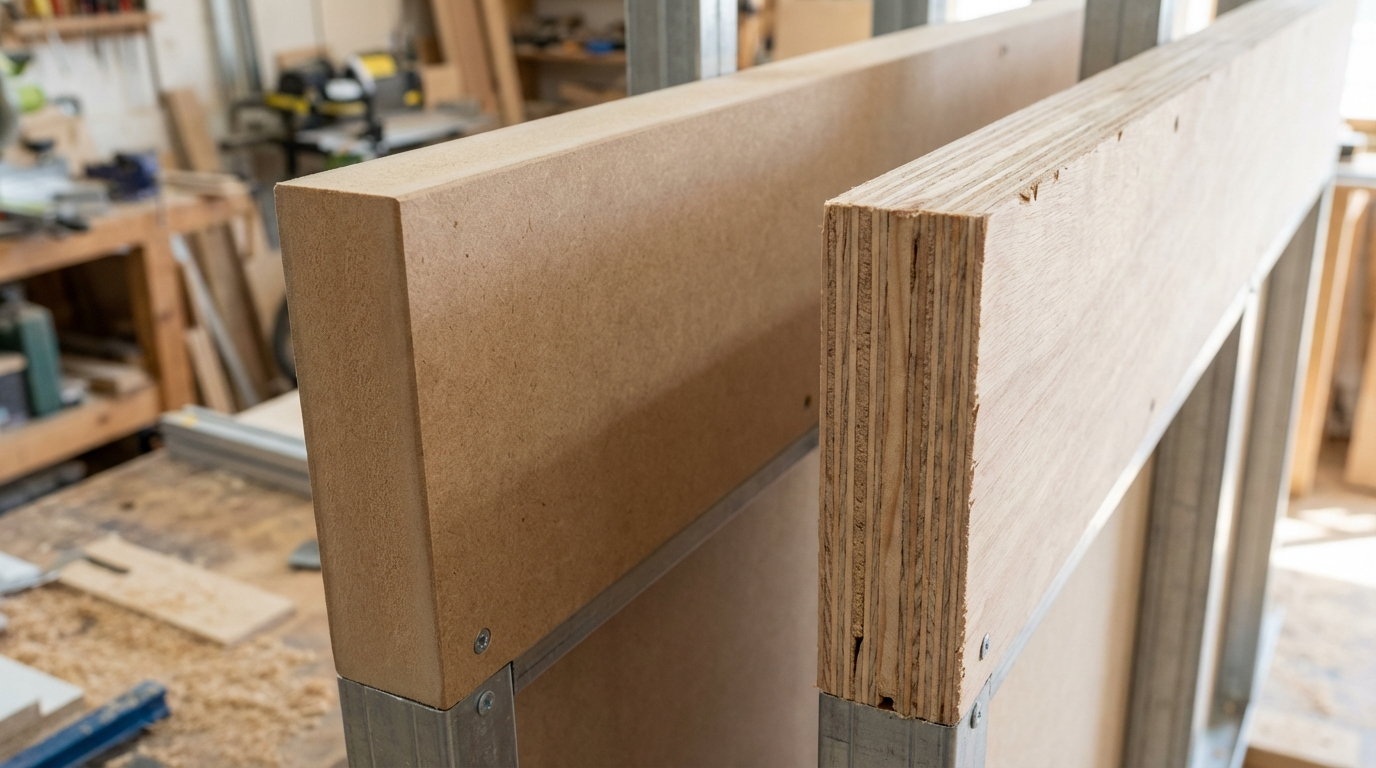
For typical Indian home partitions, pick BWR-grade plywood over standard MDF unless budget is the top constraint.
If you're in a hurry: BWR plywood handles monsoon humidity better without warping, supports screws/nails reliably for fittings, and lasts 8–12 years in average conditions. MDF suits super-dry AC rooms or quick modular jobs where smoothness trumps strength, but it often delaminates in humid zones. Factor thickness (6–18mm), edge sealing, and site storage—always verify glue lines and core uniformity on-site.
- Choose plywood if: humid area, heavy fittings (shelves/AC units), long-term durability needed.
- Choose MDF if: fully dry interior, painting/laminating finish, tight budget/short timeline.
- Avoid MDF if: coastal/monsoon exposure or poor storage.
- Avoid plywood if: ultra-smooth finish required without extra sanding.
What MDF and Plywood Actually Mean for Partitions
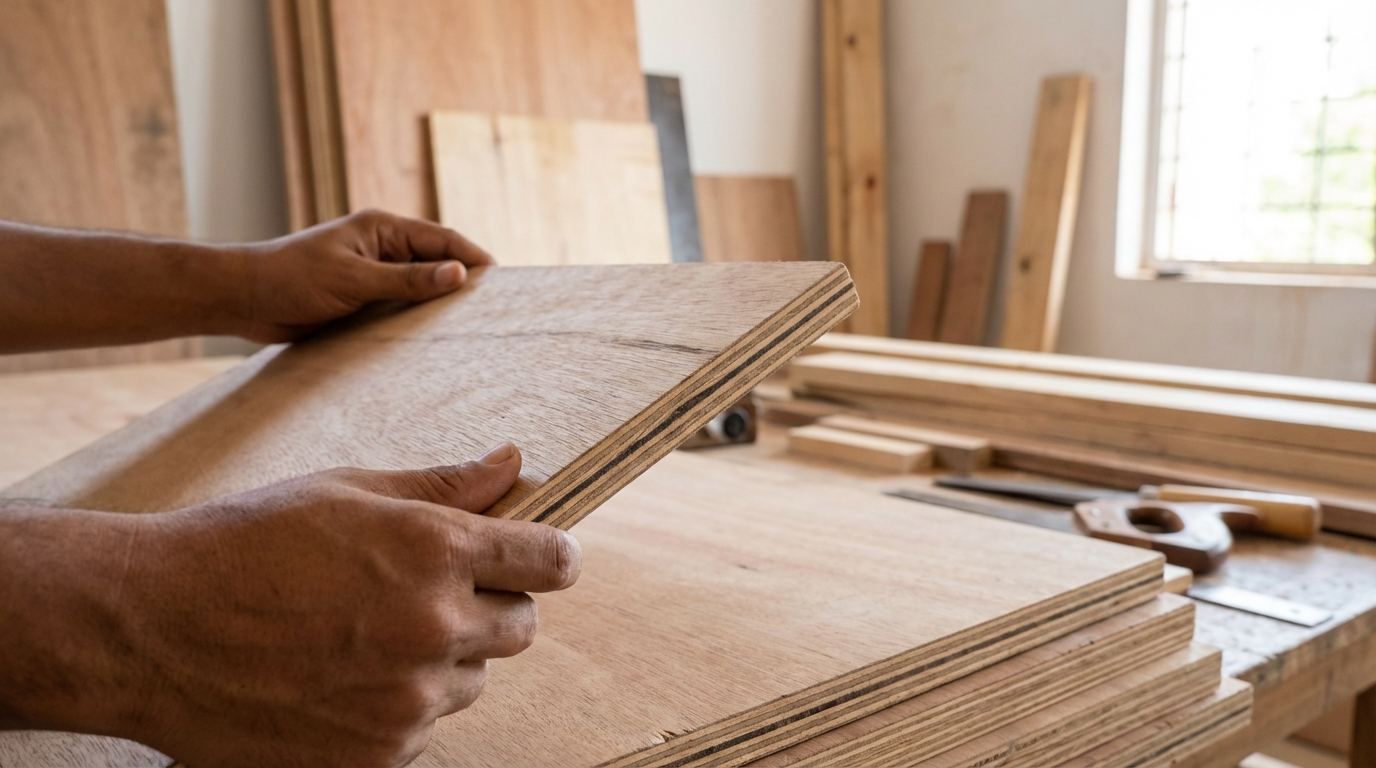
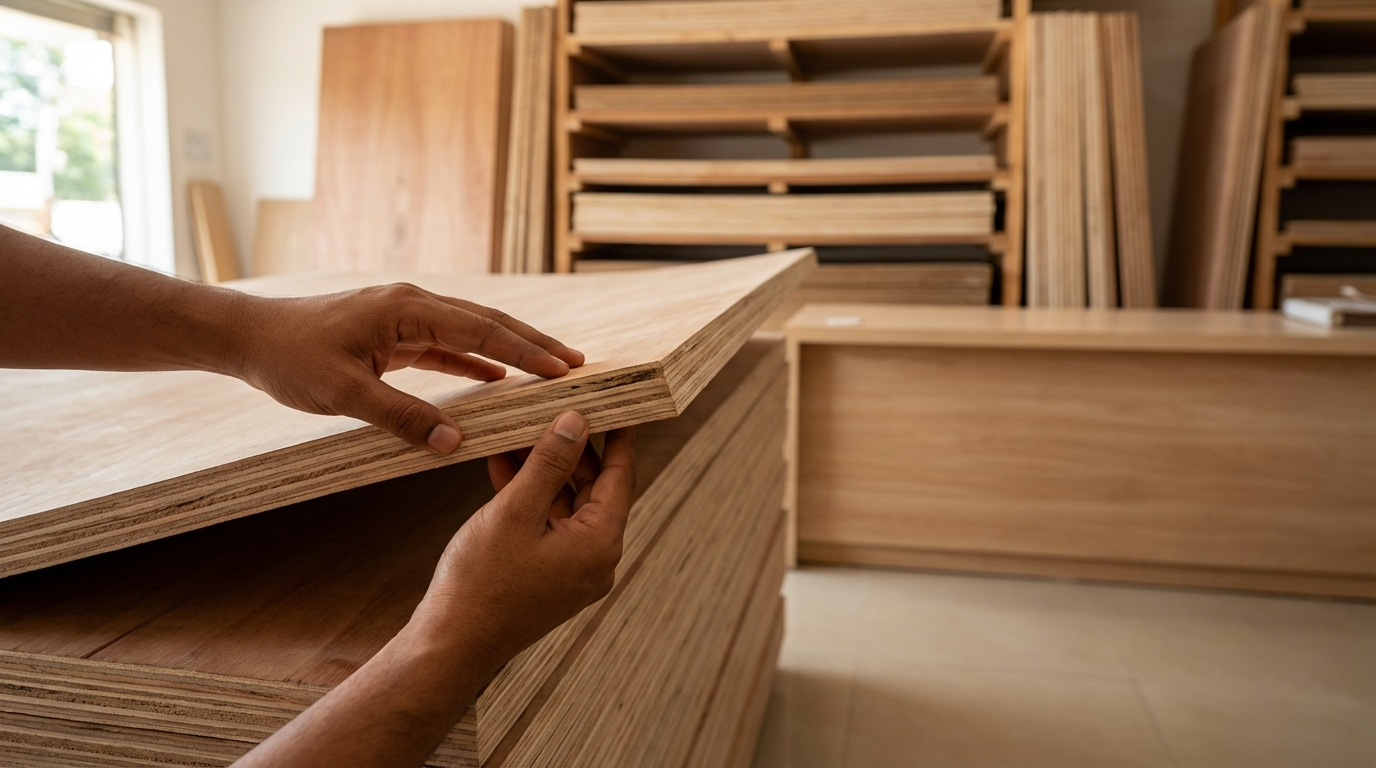
MDF (Medium Density Fiberboard) is engineered from wood fibers glued under pressure into uniform sheets—ideal for painting or laminating due to its smooth surface. For partitions, it's sliced into panels for wardrobes, false ceilings, or room dividers. Plywood stacks thin wood veneers cross-layered with adhesives; partitions use MR (moisture-resistant) or BWR (boiling water-resistant) grades for internal walls.
Where people get confused:
- MDF as "fake wood"—it's engineered but stable if dry.
- All plywood as "waterproof"—only BWP/marine grades are; MR suits interiors only.
- Thickness alone defines strength—core quality and glue matter more.
- MDF always cheaper long-term—no, replacement costs add up in humidity.
- Plywood always warps—proper grade and sealing prevent it.
- Partitions need load-bearing strength—most are just dividers.
India-Specific Reality Check
In India, 70–90% humidity during monsoons turns MDF into a swelling risk unless it's HDHMR (high-density, moisture-resistant) variant and edges are sealed perfectly. Plywood's layered structure breathes better but needs BWR grade for coastal cities like Mumbai or Chennai. Poor godown storage (direct floor contact, no cover) ruins both—insist on elevated stacks. Contractor workflows favor MDF for fast cuts, but carpenters report 20–30% more callbacks on MDF delamination.
Can MDF handle Indian humidity for partitions?
Standard MDF struggles in humid zones, absorbing moisture and expanding up to 10–15% if unsealed, leading to cracks in paint or laminate. HDHMR variants perform better with added resins, but still demand edge banding and dry installation. In dry Delhi winters, it's fine; switch to BWR plywood for Mumbai monsoons. Next step: Test a sample—wet the edge and check swelling after 24 hours; no more than 2–3% is acceptable.
Is plywood too heavy for lightweight partitions?
BWR plywood (12–18mm) weighs 40–50kg per 8x4 sheet, manageable for two workers, but lighter than blockboard. For ultra-light false partitions, 6mm MDF at 20–25kg works. Weight matters for ceiling loads or modular kitchens. Check: Lift a sample sheet; if it flexes under finger pressure, upsize thickness. Trade-off—lighter means more seams, higher finishing labor.
Two-Minute Comparison That Actually Helps
| Factor | MDF | Plywood (BWR Grade) |
|---|---|---|
| Strength/Screw Holding | Good for light loads; pulls out under repeated use | Excellent; holds heavy shelves/AC units |
| Moisture Resistance | Poor unless HDHMR; swells in humidity | Handles monsoons if sealed |
| Surface Finish | Ultra-smooth, no sanding needed | Needs filling/sanding for paint |
| Cut/Shape Ease | No splintering; perfect for curves | Splinters edges; straight cuts best |
| Thickness Options | 3–25mm common | 6–19mm standard |
| Fire Rating | Moderate; chars slowly | Better if treated |
Choose based on conditions: MDF for quick, dry jobs; plywood for durability.
Price Range and Cost Drivers (India)
Expect Rs. 50–120/sq ft for 18mm boards, varying by city (higher in metros), thickness, and grade. MDF starts lower (Rs. 40–80/sq ft) due to uniform production; BWR plywood higher (Rs. 70–130/sq ft) from quality veneers. Drivers: Core gaps/delamination risk, face finish, calibration accuracy, transport wastage (5–10%).
How to ask for a quote:
- Specify thickness/grade (e.g., "18mm BWR calibrated plywood").
- Mention quantity/sheet size.
- Ask for "edge-sealed samples".
- Confirm "no core gaps, IS-marked glue".
- Get tier-2 city vs metro variance.
Mini example: 100 sq ft wardrobe partition—Rs. 6,000–12,000 total, plus 20% labor.
How to Choose in 5 Steps
- Assess site conditions: Humidity? Coastal? Mark wet zones.
- Define loads: Shelves? Doors? Light divider only?
- Pick thickness/grade: 12mm min; BWR for plywood, HDHMR for MDF.
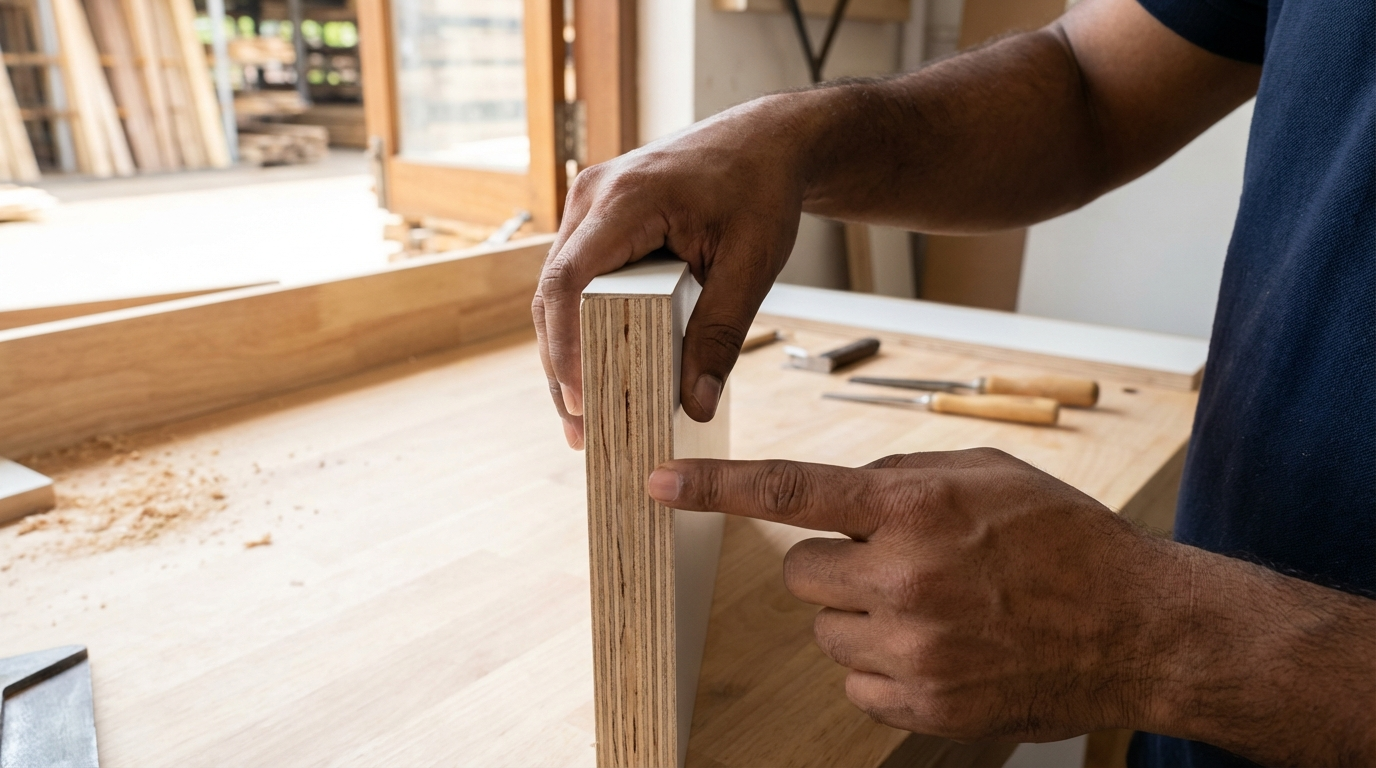
- Verify samples: Tap for voids, flex test, edge moisture check.
- Plan finishing: Seal edges, prime twice; budget labor.
Skip step 1, and failures spike 2x in monsoons.
Which thickness for room partitions?
12–18mm balances strength/cost for freestanding dividers; 6–9mm for false ceilings. Thicker resists flexing under hand pressure or light taps. In seismic zones, 18mm plywood adds stability. Nuance: Over-thick wastes budget/makes handling tough. Check: Stack two sheets vertically—minimal bow under weight. Next: Measure span between studs; add 25% safety.
Decision Framework: Pick by Your Scenario
| Scenario | Recommended | What to Verify |
|---|---|---|
| Coastal/monsoon humidity | BWR Plywood | Glue line count (7+), no core gaps |
| Dry AC interiors, budget tight | MDF/HDHMR | Density (700+ kg/m3), edge swell test |
| Heavy fittings/shelves | Plywood 18mm | Screw hold (no pull-out after 5x) |
| Quick modular install | MDF 12mm | Smooth cut edges, no dust |
| High scratch risk (kids/pets) | Laminate on Plywood | Calibration (±0.2mm), face uniformity |
| Fast delivery priority | Local MDF stock | Fresh batch (no warp in stack) |
Tips for Homeowners: Durability Do's and Don'ts
- Do: Wipe spills immediately, use edge-sealed boards.
- Don't: Drag furniture across, skip priming.
- Inspect yearly for soft spots.
Carpenter Tips: Working with Each
- MDF: Carbide blade, vacuum dust, pre-drill screws.
- Plywood: Clamp for cuts, seal sawn edges same day.
- Hinge zones: Pilot holes 2mm smaller.
Architect Tips: Spec It Right
- Detail wet-zone sealing, 150mm stud spacing.
- Specify "BWR GR1, calibrated ±0.3mm".
- Modular: QC edge banding uniformity.
Trade-offs and Limitations
MDF: Cheaper/faster finish but moisture-weak, screw fatigue. Plywood: Stronger/durable but rougher surface, higher cost/weight. Neither is fireproof without treatment; both need sealing. Plywood flexes less over spans >2m; MDF dust irritates during cuts.
Common Buyer Mistakes and How to Avoid Them
- Mistake: Picking MR plywood for humid partitions. Why: Delams in monsoons. Instead: Demand BWR proof.
- Mistake: Ignoring thickness. Why: Flexes/drums. Instead: Flex test sample.
- Mistake: No edge sealing. Why: Swells at cuts. Instead: Apply putty day one.
- Mistake: Budget-only choice. Why: Re-do costs 2x. Instead: Factor 5-year use.
- Mistake: Standard MDF in kitchens. Why: Steam damage. Instead: HDHMR min.
- Mistake: No storage check. Why: Pre-warped boards. Instead: Inspect stack.
- Mistake: Skipping screw tests. Why: Fittings fail. Instead: Demo on scrap.
- Mistake: Poor stud spacing. Why: Sags. Instead: Max 600mm centers.
Failure Modes and Fixes
- Symptom: Bulging panels. Cause: Moisture ingress. Prevent: Seal edges. Fix: Dry out, reinforce.
- Symptom: Screw holes enlarge. Cause: Soft core. Prevent: Plywood. Fix: Wooden plugs.
- Symptom: Cracks at joints. Cause: Expansion mismatch. Prevent: Calibrated boards. Fix: Filler + repaint.
- Symptom: Drumming noise. Cause: Thin/flexy. Prevent: 12mm+. Fix: Add braces.
- Symptom: Paint peels. Cause: Moisture under. Prevent: Prime MDF. Fix: Sand/repaint.
- Symptom: Edges chip. Cause: Impacts. Prevent: Laminate. Fix: Edge tape.
Quality Checks You Can Do Without Lab Tests
Before buying: Tap sheet—hollow sound means voids. Weigh per sq ft—heavier often denser. Check calibration with straight edge.
After cutting: No fuzzy edges on MDF, uniform glue lines on plywood (dark, even).
After install: Press edges—no give. Wipe test: No darkening after wet cloth.
Does plywood termite-proof itself for partitions?
Plywood cores can harbor termites if untreated; opt for phenolic-treated. Partitions rarely ground-contact, but coastal risks high. Nuance: Surface laminates deter, but drill-check annually. Step: Ask for treatment stamp; store off-floor. Alternatives like HDHMR have lower wood content.
HDHMR vs BWR plywood—which for humid partitions?
HDHMR edges MDF performance with better density/moisture hold, but BWR plywood wins screw strength. For 80% humidity, BWR lasts longer unsealed. Check: Both swell minimally if qualified. Pick HDHMR for curves/smoothness.
FAQs
Can I use 8mm MDF for bedroom partitions?
Yes for lightweight dividers under 2m height, but it flexes easily—add horizontal braces every 600mm. In humid rooms, upgrade to 12mm HDHMR to avoid sagging. Homeowners like its lightness for DIY; carpenters note splinter-free cuts save time. Always seal edges with resin to prevent moisture wicking, and test screw holds for wall hooks. Long-term, expect 5–7 years in dry conditions.
Why does MDF warp faster than plywood in India?
MDF's fiber structure soaks uniform moisture, expanding evenly but cracking finishes; plywood's veneers flex directionally. Monsoon storage exacerbates—stack vertically covered. Prevent by buying recent batches, acclimating 48 hours pre-install. If warped, reject; carpenters flatten minor bows with clamps/water but risk delam.
Best finish for MDF partitions?
Laminate or PU paint after priming—seals pores completely. Avoid direct emulsion; flakes off. For plywood, filler + two primer coats. Budget extra 10–15/sq ft for pro finish. In kids' rooms, scratch-resistant laminates on plywood hold better. Check adhesion on sample overnight.
How much weight can partitions hold?
12mm MDF: 5–10kg/sq m shelving; 18mm BWR plywood: 20–40kg. Distribute loads; use wall plugs. For TV units, plywood + metal frame. Test: Hang 15kg on scrap— no deflection >2mm. Architects spec anchors every 300mm.
Partitions vs full walls—which saves cost?
Partitions cut 30–50% masonry labor, using boards on light frames. MDF cheapest upfront; plywood evens total over 5 years via less repairs. Factor studs (Rs. 50–80/m) + labor. Modular firms repeat with MDF for speed.
Termite treatment needed for indoor partitions?
Yes, especially plywood cores—insist on borate/phenolic. MDF lower risk but not zero. Coastal: Double-treat. Check: White powder residue on cut ends. Annual spray zones near floor.
Can partitions be soundproof?
Add glasswool insulation between studs + 12mm boards—reduces noise 20–30dB. Plywood denser, better bass block. MDF absorbs highs. Seal gaps fully. Cost: +20–30% materials.
Recycle old partitions?
Yes, donate to carpenters if intact—no swelling. Plywood reusable for shelves; MDF to particle filler. Check local scrap rates vary by city.
Disclaimer: This content is provided for general informational purposes based on industry practices and publicly available information. Product specifications, standards, prices, and availability may vary by manufacturer, region, and time. Readers should independently verify details with manufacturers, dealers, or qualified professionals before making purchase or construction decisions.Want Plywood Suggestions?
Share a few details and a Duro BOIL specialist will suggest suitable brands and connect you to responsive dealers.